Home Blog Page 886

AICS, UNESCO join hands for education in marginalized areas in Pakistan

AICS, UNESCO join hands for education in marginalized areas in Pakistan

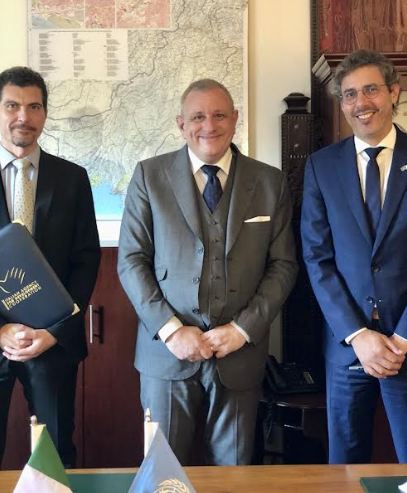
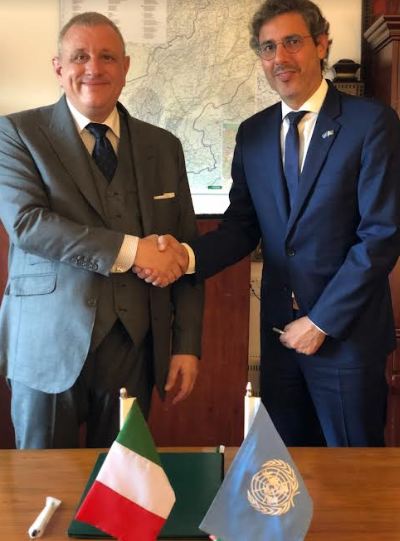
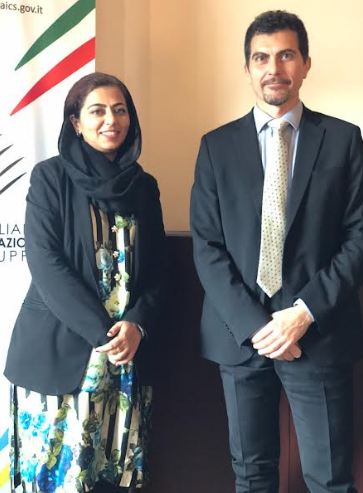
ISLAMABAD, OCT 13 /DNA/ – A new agreement has been signed today between the Italian Government and UNESCO for a project titled “Radio Education”. Thanks to a 990,000 Euro budget, it aims to target children in some of the most remote areas of Pakistan through alternative educational tools to reach students and teachers. H. E Andreas Ferrarese, Ambassador of Italy in Pakistan and Dr. Youssef Filali-Meknassi, UNESCO Pakistan Country Representative, signed the agreement, acknowledged by Mr. Francesco Zatta, AICS Islamabad Head of Office.

“Radio Education” has been designed to expand some of the best practices learned within the framework of the “Support to Girls Right of Education and Safeguarding Cultural Heritage through education in Pakistan”, funded by the Italian Government and implemented by UNESCO, currently in its final phase.

During the observance of lockdown due to COVID-19 pandemic, the closure of schools and difficulties in adopting remote learning techniques limited educational activities, pushing UNESCO and AICS to choose educational programmes that were disseminated by radio and TV, the only media available in these marginalized territories. With the title “Radio – My best friend”, targeting kids in 1st, 2nd and 3rd grades, these radio and TV programmes were implemented thanks to local broadcasters’ support and Pakistan Telecommunication Authority (PTA). Its impact was profoundly recognized, leading to a new project focused towards enhancing this initiative through additional trainings for teachers, extension to other primary school grades and targeted activities to monitor the alarming dropout rate.

The beneficiaries of the “Radio Education – My best friend” project shall be students from six districts in Khyber-Pakhtunkhwa (Kohistan, Mohmand, Swat), Sindh (Tharparkar) and Baluchistan (Ziarat, Jaffarabad). They will be benefiting from an approach that combines involvement of local communities and the support provided by the Interactive Radio Instruction (IRI). This methodology is critical for the integration of educational modules along with interactive activities aimed at promoting local cultural heritage, tangible and intangible, sometimes ignored by communities of beneficiaries.

Ambassador Ferrarese showed great satisfaction for this new Italian commitment. AICS Islamabad Head of Office stressed on the importance of this opportunity, saying that UNESCO represents “a key partner to support Pakistani cultural heritage safeguard, a sustainable development tool that AICS wishes to promote”. UNESCO Country Representative Filali-Mekhnassi highlighted gratitude and said that “UNESCO Islamabad office with the support of AICS is ready to support a vibrant Pakistani culture, that is true to its past and looks to the future by cherishing heritage and unleashing new and inspiring forms of expression for all through a flourishing of arts and culture across Pakistan that enriches lives, celebrates national identity and builds understanding between people.”=DNA

France in favor of abolishment of death penalty: envoy

Ambassador

Ambassador Nicolas Galey says proud to support JPP in its initiatives

ISLAMABAD, OCT 13 /DNA/ – Ambassador of France to Pakistan Nicolas Galey has said France, like its European partners and dozens of countries around the world, many of which represented here firmly opposed to the death penalty in all places and all circumstances.

He expressed these views during a function organized at the French residence.

He said this on the occasion of the 21st World Day against the Death Penalty. He thanked the JPP people for their presence and screening of a documentary.

Ambassador Galey said, his country supported unequivocally the dynamics of the movement in favor of the universal abolition of the death penalty. In 2002 four new States joined this movement (Kazakhstan, Papua New Guinea, Sierra Leone and Central African Republic). The adoption in December 2022 by a historic number of 125 States, of the United Nations General Assembly resolution calling for a universal moratorium on the death penalty is a real progress.

‘Despite this progress, executions continue. In 2022 the number of executions reached highest in five years 883 persons, in 20 countries, were executed that is plus 53% compared to the previous year.

France deplores this trend and calls on these countries to observe moratorium like Pakistan since 2019 – with a view to definitely abolishing the death penalty. In this regard, we call on all states to ratify the second Optional Protocol to the International Covenant on Civil and Political Rights. As we will celebrate the 75th anniversary of the Universal Declaration of Human Rights signed in Paris on 10 December, 1948, France is more than ever committed against the death penalty.

The ambassador said the Capital punishment is a cruel and unjust punishment. In 1948 exactly one century before the Universal Declaration of Human Rights was adopted, Victor Hugo, then a member of the French National Assembly tried to pass a law abolishing the death penalty and uttered these words; “ The death penalty is the special and eternal sign of barbarism. The right of life and death belongs only to God”.

He said as for the supposed exemplary nature of capital punishment it is an illusion and a lie, demonstrated by so many international statistics. They show that many countries that practice capital punishment have a very high crime rate, sometimes among the highest in the world, when criminality is considerably lower in those that have abolished it.

Ambassador Galey added, France strongly believed that justice cannot give to human beings the power of death on other human beings, not only because judicial processes are fallible but essentially because the death penalty is not an implementation of justice; it is a manifestation of vengeance and vengeance is the opposite of justice and of civilization.

He said he was proud to share this conviction against the death penalty with JPP, which is leading a courageous, vigorous and determined action against the capital punishment.

 ‘It is an honour for the French embassy to have contributed to the development of short videos including the one which has been screened’, the ambassador concluded.

Ms Sara Belal from the JPP in her speech thanked the French embassy for supporting their initiatives. She also briefed the audience about the background of the short film and an historical perspective of the death penalty, especially in the context of Pakistani laws.=DNA

Driving Education Reform: DARE-RC’s Vision for Informed Policymaking in Pakistan

Driving Education Reform: DARE-RC's Vision for Informed Policymaking in Pakistan

This significant event brought together a diverse array of participants, including public sector representatives at federal and provincial levels, national and international knowledge partners, civil society organizations, development partners, and academia

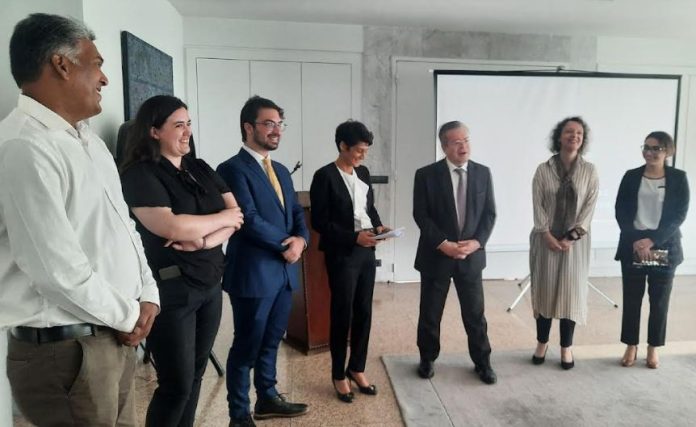
ISLAMABAD, OCT 13 /DNA/  – Education is the cornerstone of progress, and in recognition of its paramount importance, Oxford Policy Management (OPM) Pakistan organized a one-day Research Agenda Co-Creation Workshop under the Data and Research in Education – Research Consortium (DARE-RC) program.

This significant event brought together a diverse array of participants, including public sector representatives at federal and provincial levels, national and international knowledge partners, civil society organizations, development partners, and academia.

The workshop aimed at setting the direction for the entire program through chalking out the contours of the research agenda with a focus on learners, learning environment, and the overall education landscape in Pakistan. The research agenda will serve as a roadmap to prioritize and define the areas in which rigorous and impactful research will be conducted as part of the DARE-RC initiative.

The discussants included Waseem Ajmal Chaudhry, Secretary, Ministry of Federal Education and Professional training (MoFEPT); Abdur Rauf Khan Gandapur, Country Director at OPM Pakistan; Haris Khalique, Program Director, DARE-RC; Muhammad Zaigham Qadeer, Research Director at Pakistan Institute of Education (PIE); Kim Bradford Smith, Education Team Lead, Foreign, Commonwealth & Development Office (FCDO); Dr Jamila Razzaq, Research Director, DARE-RC; Dr Dilshad Ashraf, Deputy Research Director, DARE-RC; and Anza Saqib, Consultant Media and Research Education Parliamentarians’ caucus, Senate of Pakistan. The session was addressed as Chief of Guest by Madad Ali Sindhi, Federal Minister, MoFEPT

In his opening remarks, Abdur Rauf Khan highlighted the role DARE-RC is going to play in shaping the education landscape. He was of the view that DARE-RC is committed to promoting data-driven education policy that is rooted in comprehensive research as the program places a strong emphasis on strengthening the research capacities of local academic institutions and think-tanks, enabling them to actively contribute to the educational transformation of the nation.

In his address as the Guest of Honour, Waseem Ajmal emphasized the foundational challenges in the education sector and the crucial role of researchers and relevant expertise in translating learning objectives into effective teaching materials. He also pointed out the pressing need for comprehensive data to address the multifaceted issues being faced in the education sector. He hoped DARE-RC would be able to connect researchers across Pakistan and work collaboratively with government and policy actors too ensure the research aligns with real-world needs and priorities.

The Federal Minister for Education welcomed the efforts of the NGOs and the civils society in raising the pertinent issues related to the sorry state of education affairs in the country. He rued the indifference shown by political parties towards ensuring that children, especially from the marginalized community in the country, have access to quality education.

Transparency, accountability, and accessibility were recurring themes during the workshop. It was emphasized by the participants that research findings must be made publicly available, as transparency is crucial for holding the government and implementers accountable and for driving improvements in education service delivery. It was also stressed that the research produced under the DARE program should be easily understood and applicable by non-academic audiences, including policymakers and the public.

During the group activities, the participants identified several gaps in the existing data vis-à-vis education. They believed reliable and timely data is missing to address educational woes in the country. They also shed light on the digital divide hindering education expansion and highlighted the intersectionality of gender, climate, and education in the face of climate vagaries and disasters.

The DARE-RC program, championed by OPM and funded by the FCDO, has a mission to forge a comprehensive and accessible body of evidence pertaining to pivotal issues within the education service delivery framework of Pakistan. These issues encompass enabling greater access to education for girls, nurturing an environment for prolonged and improved learning, enhancing teaching quality, fostering accountability, reaching out to marginalized girls and boys, and leveraging technology to enrich the educational experience.= DNA

==========

National Day of Spain celebrated

National Day of Spain celebrated

DNA

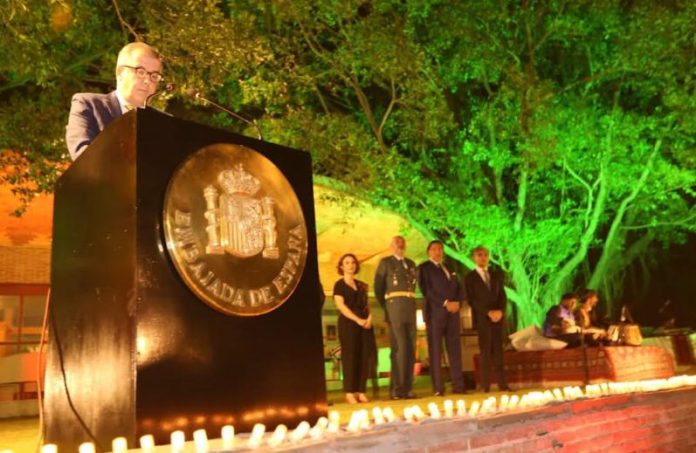
ISLAMABAD: Ambassador of Spain hosted a reception to mark the National Day of Spain. Federal Minister for Privatization Fawad Hassan Fawad was the chief guest while Chief Justice of Pakistan Justice Qazi Faez Isa also attended the reception.

The Minister termed the relations between Pakistan and Spain excellent adding both countries have been cooperating with each other on various regional and multi-lateral forums.

He hoped these relations would further be strengthened even in the days to come.

Ambassador of Spain in his speech shed light on various aspects of the bilateral relations. He said Pakistan was second largest trading partner of Spain in the European Union.

The Ambassador also highlighted the historical and religious importance of Spain.

Admiral Javed Iqbal briefs Senate on Navy’s capabilities and defense strategies

Admiral Javed Iqbal

ISLAMABAD, OCT 13 /DNA/ – Rear Admiral Javed Iqbal (HI), distinguished with the Hilal Imtiaz Military award, led the 53rd staff course delegation comprising faculty and administrative personnel from Naval War College Lahore during their visit to the Parliament House today.

The meeting took place at the Parliament House where Chairman Senate Muhammad Sadiq Sanjrani engaged with Rear Admiral Javed Iqbal in productive discussions concerning professional matters concerning the Pakistan Navy and topics of mutual interest.

Chairman Senate, acknowledging the exemplary professionalism exhibited by the officers and personnel of the Pakistan Navy, commended their valour in creating enduring stories of bravery that resonate with the nation. He emphasized their immense value as vital assets to the nation.

Highlighting the steadfastness and resolve of the Pakistan Navy akin to the Army and Air Force, Chairman Senate underscored their historical response to enemy aggression, fortifying our maritime borders. The discussion also encompassed contemporary challenges and technological advancements occurring on a global scale.

Furthermore, Chairman Senate Muhammad Sadiq Sanjrani emphasized that the indelible contributions of the Pakistan Navy in safeguarding our maritime boundaries would be etched in golden letters in the annals of our nation’s history. He underscored the consistent support provided by the Pakistan Navy during times of natural disasters, standing by the populace and actively engaging in relief efforts. Pakistan Navy’s active involvement in relief operations was duly recognized.

Rear Admiral Javed Iqbal (HI) of the Pakistan Navy presented a comprehensive briefing to Chairman Senate, elaborating on the capabilities of the Pakistan Navy and strategies for fortifying defence mechanisms pertaining to maritime boundaries.

Subsequently, senior officials of the Senate briefed the delegation from the 53rd PN Staff Course during their visit to the Parliament House, elucidating the functioning procedures, legislative processes, and other pertinent matters of the Upper House.

Taliban warn ‘Israel will be wiped off world map’

Taliban warn ‘Israel will be wiped off world map’

KABUL, OCT 11 – In a stern and ominous proclamation, a high-ranking Taliban official in Kabul has sent shivers across the world by asserting that Israel will soon be “erased from the world map.” Mohammad Qasim Khalid, speaking on Wednesday claimed that Israel, in its bid to eliminate Palestine from global geography, now stands at the precipice of being similarly wiped away.

Khalid’s message was conveyed during a gathering in Kabul. He told them, “Your adversaries are on a path to doom.” Khalid went on to predict that Israel’s fate would be sealed by the hands of Palestinians, heralding the long-anticipated “conquest of Al-Aqsa Mosque and Jerusalem.”

Highlighting the significance of Palestine as a concern for the entire Islamic world, Khalid emphasized the urgency of “liberating Al-Aqsa Mosque and Jerusalem”. He called upon Islamic nations to unite in their support for Palestine.

The Taliban official further extended his assurance that both the Taliban and the people of Afghanistan stand unwaveringly beside the “oppressed people and mujahideen of Palestine”, expressing their unyielding solidarity.

In light of the recent clashes initiated by the Palestinian group Hamas against Israel, the Taliban reaffirmed their support for the Palestinian organization, underscoring the right of Palestinians to self-defense. In retaliation, Israeli forces launched airstrikes on Hamas positions in the Gaza Strip, resulting in significant casualties on both sides.

ICC World Cup: Rohit Sharma guides India to thumping win against Afghanistan

ICC World Cup: Rohit Sharma guides India to thumping win against Afghanistan

Arun Jaitley Stadium, Delhi, OCT 11: India beat Afghanistan by eight wickets in the ninth match of the ongoing ICC World Cup 2023 at the Arun Jaitley Stadium, Delhi, on Wednesday.

Rohit Sharma’s unstoppable knock of 131 runs off just 84 deliveries, which included 16 fours and five sixes, was the difference between the two teams as the Blues massively improved their net run rate by chasing down the 273-run target in just 35 overs.

Sharma provided his side with a glittering start, completing his half-century in just 30 balls as the Blues were 94-0 in the first 10 overs.

The dominating start gave the Indian openers much room to play as Sharma’s partner, Ishan Kishan, scored 47 runs but couldn’t complete his half-century as fell prey to Rashid Khan’s googly.

However, Sharma continued with his charge against the Afghani bowlers courtesy of support from Virat Kohli on the other hand but he lost his wicket to Rashid after posting 131 runs.

Kohli was the second top-scorer for the Blues by contributing 55 runs in an important win.

It must be noted that Rohit Sharma broke several records during his remarkable innings against Afghanistan.

He became the player with the most sixes (555) in international cricket, overtaking West Indies’ Chris Gayle.

He also became the batter with the most (7) World Cup centuries, overtaking his countryman Sachin Tendulkar.

The 36-year-old scored his seventh ton in just his 19th World Cup innings, he is followed by Tendulkar who scored six centuries in 44 innings.

Batting first, batting first, Afghanistan set a 273-run target for India courtesy of a 121-run partnership between their skipper Hashmatullah Shahidi and Azmatullah Omarzai with the former contributing 80 runs, and the latter 62.

Jasprit Bumrah was the pick of the bowlers for the home side with his fantastic 4-39 spell in 10 overs while all-rounder Hardik Pandya was the second highest wicket-taker with 2 scalps to his name.

The Blues will now take on Pakistan in the most anticipated match of the World Cup at the Narendra Modi Stadium on October 14.

Both teams are in great form, as Pakistan recorded the biggest chase in the World Cup history against Sri Lanka on Tuesday while India battered Afghanistan today.

Pakistan highlights Kashmir’s UN Resolutions at ISC Roundtable

Pakistan highlights Kashmir's UN Resolutions at ISC Roundtable

ISLAMABAD, OCT 11 /DNA/ – India Study Centre (ISC) at the Institute of Strategic Studies Islamabad (ISSI) hosted a roundtable discussion with Ambassador Yousef Aldobeay, Special Envoy of the OIC Secretary General for Jammu and Kashmir/ Assistant Secretary General for Political Affairs. Dr. Khurram Abbas, Director ISC in his introductory remarks welcomed the delegation and highlighted OIC’s consistent support to Pakistan’s stance on Jammu and Kashmir dispute. He said OIC has always raised a strong voice for the people of Jammu & Kashmir.

Other participants included Mr. Ghulam Muhammad Safi, Former Convener of All Parties Hurriyat Conference (APHC); Ms. Farzana Raqoob, former Minister Azad Jammu and Kashmir; Mr. Altaf Hussain Wani, Chairman of Kashmir Institute of International Affairs; Ambassador Syed Abrar Hussain, former Ambassador of Pakistan and Vice Chairman of Academics IPS; Advocate Nasir Qadri, Chairman of Legal Forum for Kashmir; Sheikh Abdul Mateen, Member, APHC; and academics and young university students.

DG ISSI Ambassador Sohail Mahmood warmly welcomed the delegation and emphasized how Pakistan has been playing a crucial role as a founding member of OIC. Expressing deep concern over the current Palestinian situation, Ambassador Sohail Mahmood stressed that Palestine and Kashmir were two of the oldest disputes on the agenda of the UN Security Council. Both disputes related to the inalienable right of self-determination. And both remain unresolved due to the obstinacy of the occupying powers. He added that the OIC had consistently and unequivocally supported the Kashmiri right to self-determination as per the UN Security Council resolutions. Highlighting the dire human rights situation in IIOJK, he particularly emphasized that the world was seeing the implementation of a sinister design aimed at changing  the demographic structure of the occupied territory, which was a violation of international law and the 4th Geneva Convention. He urged the delegation to implement the OIC Plan of Action on Jammu and Kashmir that was adopted during the 48th Council of Foreign Ministers in March 2022 in Islamabad and the OIC resolutions on Jammu & Kashmir dispute adopted over time.

Speical Envoy Ambassador Yousef Aldobeay underlined that there was a dire need to raise awareness regarding the Jammu and  Kashmir dispute that concerns Muslims around the world. He reafrirmed OIC’s abiding support for the Kashmir cause and added that the OIC had never supported India’s illegal actions in the occupied territory. He reiterated OIC’s demand that the steps taken by the Indian government on 5 August 2019 be reversed. Ambassador Yousef added that Pakistan was looked at as a leading country in the Muslim world and it had played a pivotal role in securing  the UN resolution on combating Islamophobia.

The participants shared their perspectcives on a wide range of aspects, including the historical, legal, human rights and humanitarian, and peace and security dimensions of the Jammu and Kashmir dispute. They enumerated details of Indian atrocities and the effect of human rights abuses and illegal detentions on families and communities. Stressing that the OIC should emphasize to the world community the need for alleviating the sufferings of the Kashmiris under occupation, the participants presented specific recommendations on advancing the Kashmir cause in the political, diplomatic and legal domains. The participants also stressed the importance of proactively pursuing the United Nations for the realization of the Kashmiris’ right to self-determination.

Chairman BoG ISSI Ambassador Khalid Mahmood concluded the session while appreciating the OIC’s historical and steadfast support for the people of Jammu and Kashmir.=DNA

============

BREAKING: Bill limiting CJP powers ‘sustained’ with 10-5 majority

BREAKING: Bill limiting CJP powers ‘sustained’ with 10-5 majority

Special Correspondent

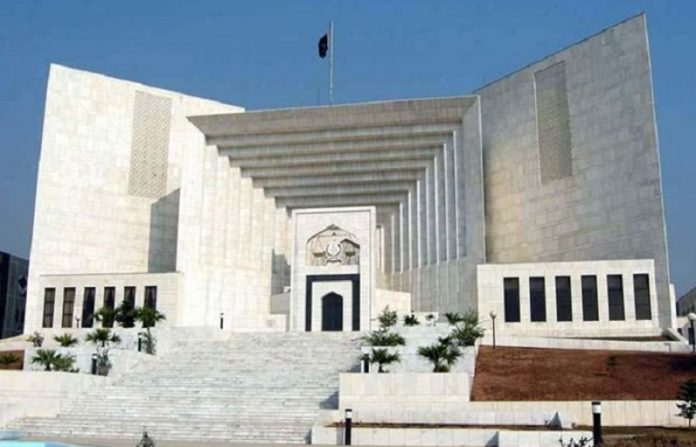
ISLAMABAD: The Supreme Court of Pakistan has struck down the Parliament Act regarding Supreme Court Practice and Procedures. The court said the Parliament overstepped its jurisdiction while making such a law. The court announced this verdict by a majority verdict. 10 judges voted against the Act of Parliament while 5 judges supported the Act.

Earlier, the Chief Justice of Pakistan (CJP) Qazi Faez Isa on Wednesday said the Parliament was not an enemy of the Supreme Court and both institutions could function simultaneously, citing the phrase “live and let live”.

“The world moves forward together, not antagonistically,” the apex judge said.

He passed these remarks while heading the full court bench, consisting of all 15 judges of the top court, hearing a set of petitions challenging the Supreme Court (Practice & Procedure) Act, 2023. The proceedings, like all the previous times, are being streamed live on television.

Headed by CJP Isa, the bench consists Justice Sardar Tariq Masood, Justice Ijazul Ahsan, Justice Syed Mansoor Ali Shah, Justice Munib Akhtar, Justice Yahya Afridi, Justice Aminuddin Khan, Justice Sayyed Mazahar Ali Akbar Naqvi, Justice Jamal Khan Mandokhel, Justice Muhammad Ali Mazhar, Justice Ayesha A. Malik, Justice Athar Minallah, Justice Syed Hasan Azhar Rizvi, Justice Shahid Waheed and Justice Musarrat Hilali.

The practice and procedure law, which was passed by parliament in April, requires a committee of three senior judges to form benches for constitutional matters and suo motu notices.

It has been seen by the petitioners as an attempt by the government to curtail the chief justice’s powers.

In April, the Supreme Court, then led by former chief justice Umar Ata Bandial, barred the government from implementing the law until the petitions challenging it were decided.

At the previous hearing, an exchange between judges and counsel hinted at the disquiet among judges over the court’s workings.

Justice Ijazul Ahsan observed that when the parliament makes a law to interfere in the internal workings of the apex court, the insulation provided to the Supreme Court by being empowered to manage its inner workings goes away, and it opens gates for interference.

Besides, no law can be struck down on the grounds of the floodgates argument, but by the exclusion of cases and in view of the very small number of Article 184(3) cases, the dangers of the floodgates argument are substantially reduced, he said.

After the proceedings adjourned, Advocate Uzair Bhandari requested the CJP to include the names of the associates in the attendance sheet. “Only on condition that the lawyer furnishes an affidavit stating his associates have been remunerated appropriately,” said CJP Isa.

The hearing At the outset of the hearing today, Attorney General for Pakistan (AGP) Mansoor Usman Awan presented his submissions. He said his arguments would be based on the government’s written response submitted in court.

“You are saying you not repeat the arguments but will highlight them,” the CJP said here, to which Awan stated that he would talk about the independence of the judiciary and Article 191 of the Constitution.

Article 191 (Rules of procedure) states: “Subject to the Constitution and law, the Supreme Court may make rules regulating the practice and procedure of the Court.”

The AGP added that three questions were raised during the proceedings on the matter in discussion and he would respond to them. He said Article 191 did not take away the Parliament’s right to legislate.

“Parliament has given the judiciary its independence but has also not limited its right to legislate,” Awan said.

Here, Justice Akhtar recalled that before 1973, changes to SC rules were conditional to the permission of the governor general or president.

For his part, the AGP said there were no restrictions on the Parliament amending rules under Article 191.

“Are you saying that there are no restrictions on the Parliament amending rules formulated by the SC?” Justice Ahsan asked. “So are there no restrictions on SC amending laws created by the Parliament?”

Awan replied that the Parliament was the institution that created laws. He further stated that if the number of pending cases in the apex court crossed 70,000 a need may arise to create another law.

Meanwhile, Justice Naqvi asked if the AGP had brought the record of the number of parliamentarians who had debated on the practice and procedure law. “It is present on the website,” Awan replied.

At one point, CJP Isa said institutions should be “pitted against each other” and there should be mutual respect among them.

“In my opinion, the Parliament respected the SC. If it wanted, the Parliament could have taken another step which it did not. I believe that step was not taken because the Parliament trusts us,” he said.

The top judge further stated that the scope of the matter should not be widened. “Parliament is not our enemy neither does it consider us enemies. Both can be run simultaneously,” he said.

“The world is moving forward while we are going backwards. There are a number of challenges that we are seeing, including climate change,” Justice Isa added and cited the phrase “live and let live”.

He then instructed the AGP to focus on the attack on the Constitution.

Resuming his submissions, Awan said the Constitution did not recognise any convention but didn’t recognise customs or usages having the force of law.

However, Justice Akhtar stressed that the Constitution has to be read on the premise that there have to be constitutional conventions.

For his part, the AGP said the Constitution never acknowledged the CJP as the “master of the roster”. Here, Justice Isa interjected and asked about the genesis of the term and whether it was even used today. Awan replied that the term came from the colonial British times.

The CJP again questioned if such a term existed in Islamic history and criticised the dependence on “colonial masters”.

At one point, Justice Akhtar said that the master of the roster committee, under the new law, would do the same work that the CJP used to do. If you don’t want to give the power to one judge, why give it to three judges, he asked.

“If any CJP has not given the power to full court in the past, then you do it,” the judge remarked.

On the other hand, Justice Ahsan said the foremost question was whether the Parliament was competent and the second was that if the Parliament was competent, some provision of the law inconsistent with the Constitution could be struck down.

“You would have to take us to each provision and justify that it is not in conflict with any provision of the Constitution,” he added, asking the AGP to proceed.

Meanwhile, the CJP said that it wasn’t acceptable that the Parliament was restricted while the SC kept taking decisions, recalling that orders have been passed in the past where judges were restrained from being a part of benches.

Justice Isa expressed displeasure that this was, however, not being discussed by anyone from the petitioners’ side.

“The time has come for the country to move forward. The way courts are used, as they say, ‘misuse of due process’. Guns are being fired from our shoulders and martial laws have been endorsed,” the top judge said.

Institutions, Justice Isa continued, were not perfect but they should be developed and respected. “But anyone who talks about betterment, they are reprimanded,” he said.

“Keep a balanced approach, you are the Attorney General for Pakistan. At the moment, you are an officer of the court, not just representing the government’s approach, because there is no government in the sense that there is a caretaker government and a neutral set-up now,” the CJP told Awan.

The judge added that there was a difference between the government and Parliament.

During the hearing, the AGP revealed the details of judgments taken under Article 184(3) and their outcomes. He said Steel Mills had record losses of Rs206 billion since June 2022.

“Are you trying to say that all this happened because of SC’s action?” CJP Isa asked while Justice Naqvi stated a chargesheet should not be made against the apex court.

“Why are we so scared of listening to the truth?” the top judge said.

On the other hand, Justice Afridi asked what the AGP wanted from the chargesheet. “Do you want us to call the practice and procedure law lawful through the doctrine of necessity?”

Here, the CJP once again questioned, “Why are we scared of criticism”.

Separately, Justice Akhtar reprimanded the AGP and said: “This is not a debate society neither are we sitting here to listen to your lectures.”

British HC Jane Marriott celebrates 40th anniversary of Chevening scholarships

British HC Jane Marriott celebrates 40th anniversary of Chevening scholarships

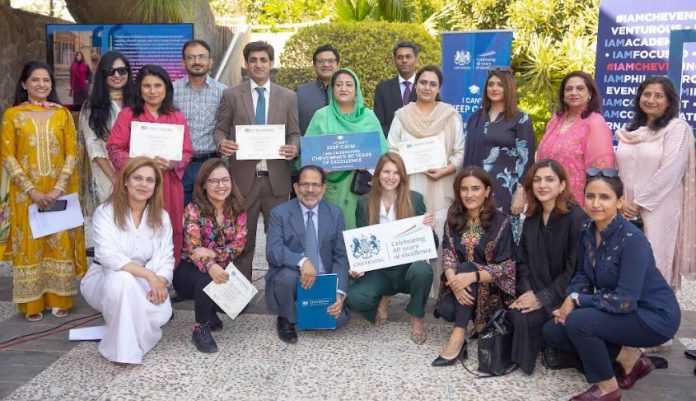
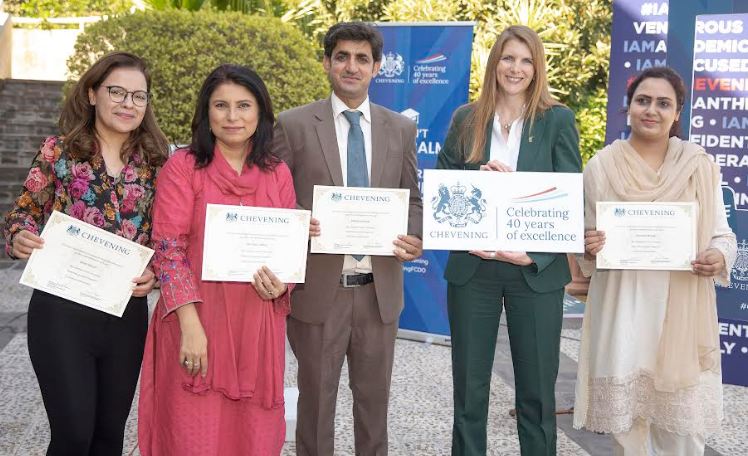
ISLAMABAD, OCT 11 /DNA/ – Some of the 2,000 Chevening alumni from across Pakistan have been brought together to commemorate the 40th anniversary of the UK’s flagship higher education scholarship.

At a special reception hosted by British High Commissioner Jane Marriott CMG OBE, scholars and fellows who have benefitted from the scheme paid tribute to the ‘life-changing’ programme.

British High Commissioner, Jane Marriott CMG OBE, said:

“It has been a privilege to host so many brilliant minds working in different sectors, united by their shared Chevening story. Days like today showcase the true value of Chevening – the journey does not stop on the completion of studies. Over 40 years, we have developed a global network of over 50,000 alumni, many of whom play key leadership roles in their countries.”

Chief data and strategy officer Jazz, Ali Naseer said:

“It’s been 25 years since my Chevening year, but it remains a pivotal moment for me. It showed me various ways to aid Pakistan’s growth. Even outside the public sector, I believe my efforts still make a significant impact.”

Health management expert, Dr Huma Qureshi said:

“Chevening helped me combine management and clinical expertise, enhancing performance in the health field. Thank you, Chevening!”

Applications for Chevening scholarships to study in the UK are open between 12 September and 7 November 2023 – applications can be made on the Chevening website www.chevening.org. The scholarships are fully funded, including fees, flights, visas, accommodation and some spending money. 

Stay Connected

64FansLike
60FollowersFollow

Latest Reviews

Exchange Rates

USD - United States Dollar
EUR
1.17
GBP
1.34
AUD
0.67
CAD
0.73