Home Blog Page 885

Senator Ayesha Farooq spearheads new initiative for child protection in Pakistan

Senator Ayesha Farooq spearheads new initiative for child protection in Pakistan

ISLAMABAD, JUN 26  /DNA/ – The French Embassy in Pakistan, in collaboration with the National Commission on the Rights of Child (NCRC), is proud to announce a new initiative aimed at promoting children’s rights. The event, held at the French Residence, was attended by key figures including Madam Senator Ayesha Farooq, chair of the NCRC, Mr. Allah Dino Khowaja, Secretary of the Ministry of Human Rights, members of Parliament, colleagues from the Diplomatic corps, and representatives from media and organizations dedicated to child protection.

During the event, the French Embassy’s contribution to the NCRC awareness campaign was highlighted. Senator Ayesha Farooq, whose enthusiasm and determination led to this collaboration, will provide further details on the campaign. The initiative includes the creation of short educational videos addressing critical issues such as child labor, sexual abuse, and the right to education.

The French Embassy’s commitment to defending and promoting children’s rights aligns with international standards and highlights the shared priorities of France and Pakistan. This joint effort underscores the importance of protecting children from violations and ensuring their rights are upheld.

Among the many projects that NCRC wanted to launch, we opted for this great idea of making short videos explaining, in a very simple and accessible way, that there are things that should never be imposed on a child – child labor, sexual abuses and being deprived from their right to education.

Defending and promoting children’s rights is an integral part of human rights and of our diplomatic action. France has adhered to all international texts protecting and promoting children’s rights. First of all, of course, the 1989 International Convention on the Rights of the Child, which it signed the next year, like Pakistan. France also joined to the optional protocols, namely those dealing with the involvement of children in armed conflict, the sale of children, child prostitution and child pornography.

Among our priorities, one stands out: the protection of children in armed conflicts. Between 2005 and 2022, the UN has documented more than 315.000 serious violations of children’s rights in conflict-affected regions. In order to protect “children of conflict”, France played a leading role in the adoption of UN Security Council resolutions 1539 and 1612, which established a Monitoring and Reporting Mechanism on Grave Violations against Children in Armed Conflict.

Through this mechanism, the UN Secretary-General publishes a report each year listing the parties to armed conflicts which have been responsible for serious violations against children.

Another factor that particularly hits children is climate change, knowing also that Pakistan is, globally, one of the countries most affected by global warming. This represents an existential threat to the health and well-being of millions of children today, and of the future generations. Globally, more than a billion children currently live in countries at “extremely high risk” of suffering the effects of climate change. As a result, half of the world’s children could be victims of irreparable harm as our planet continues to warm.

Protecting the right of the child is our collective obligation and this commitment is also to be made on the ground, in concrete terms. It involves the responsibility of all stakeholders. In this regard, I would like to pay tribute to the tireless commitment of Mrs. Ayesha Farooq and her great team, as the awareness campaign led by the NCRC responds directly to article 42 of the International Convention on the Rights of the Child, which deals with the commitment to inform children and adults of children’s rights in order to popularize among the general public the rights of children and the risks of

violence, discrimination and exploitation to which they can be submitted. At this point, I would like also to thank Ms. Madeeha Raza who made these animations. A great job, Madam, because explaining complicated or delicate situations to children or their parents in a simple way and in 3 minutes is a real challenge, which you were able to meet brilliantly. I would also like to thank the Embassy team who immediately embraced this project and did their best to make it a reality.

Beside or support to NCRC, this embassy has developed several projects to support children and children’s rights. Four examples: our support to the Prosperity Fellowship Program carried out by the Center for Law & Justice (CLJ), represented here by Mary Gill, whom I warmly greet. This program aims to promote the empowerment of young girls from disadvantaged backgrounds, particularly the families of sanitation workers, to help them escape from their social assignment linked to their belonging to these families.

We are also proud to support the coming project of Group Development Pakistan (GDP) represented here by Mrs. Valérie Khan – bonjour Valérie ! -. And the Embassy is also happy to support the actions of Secours Islamique France in Pakistan where, a month ago, my wife and I attended a great event dedicated in particular to children, at the invitation of Mr. Altaf ABRO, whom I am also happy to say hello here.

Finally, France is very much involved in the eradication of polio in Pakistan, in partnership with the Bill and Melinda Gates Foundation, WHO and the Pakistani authorities, with a project dedicated to children under 5 years old which amounts to a total of 55 million euros. In this regard, let me congratulate you, dear Ayesha Farooq, on your appointment as Prime Minister’s Focal Person for Polio Eradication in Pakistan.

Beyond this, many specific contributions from the French Government have a direct impact on children: 3 million EUR to UNICEF Pakistan last year to support to basic health and immunization in Sindh ; 3 million EUR to UNHCR Pakistan in 2022-23 ; 7 million EUR were given to World Food Program actions in this country after the tragic 2022 floods, for nutrition intervention for pregnant and lactating women and children under 3. More is to come this year including a first grant of 2 million EUR from France’s Food Assistance Program aiming at supporting school-based interventions, including the distribution of school meals, in Baluchistan and South Punjab. And another grant of 1 million EUR, which will take the form of a contribution to strengthen food security and cash transfers in areas impacted by the 2022 floods.

Among the many victims of inequalities, conflicts and natural disasters, children are obviously the most vulnerable. This is why specific actions must be taken to protect and support them. All of us here want to contribute to it and, together, we can do it better. I am therefore very happy with this cooperation between the French Embassy and the NCRC, which unites our will, our means and certainly our heart behind a common objective which is to help the children of Pakistan.
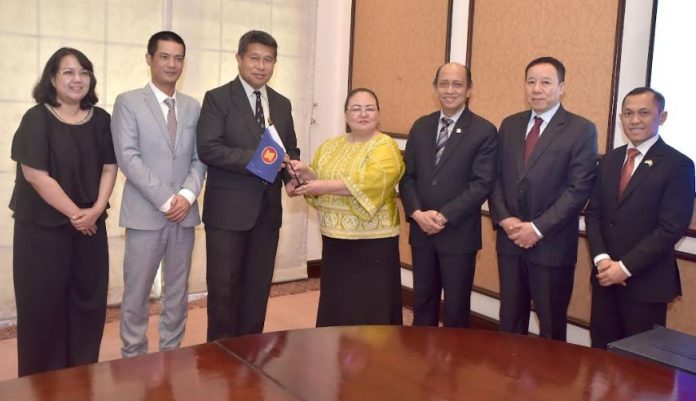
Brunei assumes ACI chairmanship

Brunei assumes ACI chairmanship

ISLAMABAD, JUN 26 /DNA/ – The Ambassador of the Philippines to Pakistan, Ms. Maria Agnes Cervantes officially handed over the Chairmanship of the ASEAN Committee in Islamabad (ACI) to the High Commissioner of Brunei to Pakistan, Col ® Kamal Ahmad during a ceremony held at the Islamabad Serena Hotel.

The ceremony, attended by all ASEAN Heads of Mission in Islamabad, marked a significant transition in leadership within the ASEAN Committee.

The outgoing Chair, expressed her gratitude for the opportunity accorded to her to lead the committee and extended congratulations and heartfelt wishes to the incoming Chair, Brunei, for a successful tenure. =DNA

Seminar on Late Ebrahim Raisi’s vision on Regional Cooperation at IRS

Seminar on Late Ebrahim Raisi’s vision on Regional Cooperation at IRS

ISLAMABAD, JUN 26 /DNA/ – Institute of Regional Studies in collaboration with Asian Institute of Eco-Civilization Research and Development (AIERD) held a seminar On President Raisi’s vision of regional cooperation. Iranian Ambassador to Pakistan, Dr. Reza Amiri Moghadam was the keynote speaker alongwith Pakistan’s Ambassador to Iran, Mohammad Mudassir Tipu. Mr. Shakeel Ahmed Ramay acted as the moderator for the discussion.

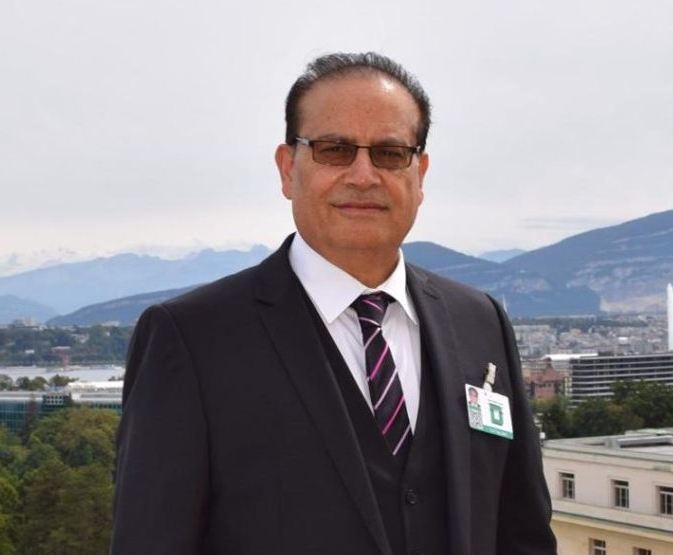
In his welcome address, President IRS Ambassador Jauhar Saleem hailed the ‘Neighbourhood Policy’ of President Ebrahim Raisi (late). He recalled that Ambassador Jauhar pointed out that IRS was the first institution that had arranged a seminar on this policy and highlighted Raisi’s successful diplomacy for revival of ties with UAE and Egypt and rapprochement with Saudi Arabia in 2023. He also underscored that Iran’s relations towards its east, especially with Pakistan have been always cordial and cooperative, which were further strengthened in the wakwe of late President Raisi’s visit to Pakistan. Stressing upon the need of a multilateral cooperative framework, Ambassador Saleem underlined the need for promoting intra regional and inter regional connectivity and cooperation.

Ambassador Reza Amiri thanked IRS for organizing the seminar and noted that regional cooperation was the key agenda during the tenure of President Raisi and Foreign Minister Dr. Amir Abdollahian. That was very much reflected by 28 foreign visits that President Raisi undertook. Ambassador Amiri stressed that President Raisi’s visit to Pakistan was his most extensive visit in which he visited three cities and met with top leadership of the country including the President, Prime Minister, Speaker National Assembly, Chairman Senate and Army Chief. The MoUs signed during the visit in the areas of free trade agreement, economic cooperation and promoting tourism were the attestation to the strong brotherly ties which both Pakistan and Iran share, Ambassador Amiri expressed. He also praised President Raisi’s ambition of prioritizing regional cooperation through SCO, Caspian Sea Summit and BRICS. Ambassador Amiri assured that the new government in Iran would uphold the legacy of President Raisi and continue to promote cooperation vis-à-vis regional states and Pakistan.

Ambassador of Pakistan to Iran, Mr. Mohammad Mudassir Tipu highlighted President Raisi’s dedicated efforts to bolster the enduring cultural and economic bonds with Pakistan. He explained that President Raisi and other Iranian officials shared the deep sense of respect for Quaid e Azam Muhammad Ali Jinnah and Allama Iqbal. President Raisi’s stance on increasing bilateral trade with Pakistan to $10 billion annually and his interest in fostering the security cooperation with Afghanistan exemplified his commitment to economic cooperation and regional stability, Ambassador Tipu said.

Major General Samrez Salik, former DG ISSRA at National Defence University, Islamabad paid rich tribute to President Ebrahim Raisi. While mentioning President Raisi’s achievements, Major General Salik particularly highlighted his contribution to consolidating Pak-Iran relations through trade.

In conclusion, Mr. Zahid Latif Khan, Chairman AIERD, detailed the internal and external policies of Iran under President Raisi. He also suggested that think tanks across Iran and Pakistan should elevate President Raisi’s legacy by collaborating with each other in research.

Top Korean Scientist engages with Pakistan to foster science and technology partnerships

Korea

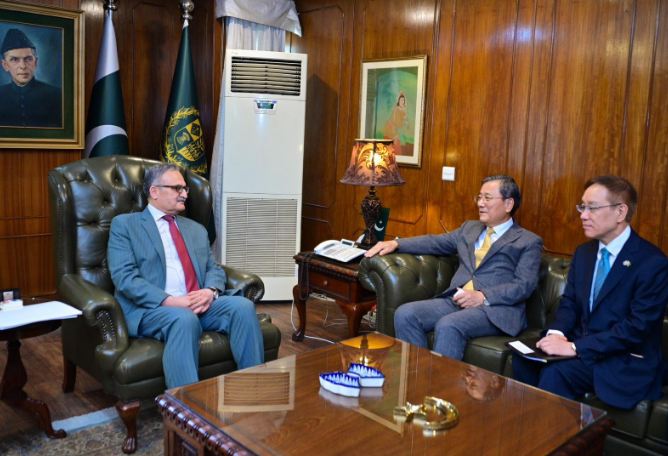
ISLAMABAD, JUN 25 /DNA/ – Eminent scientist and Ambassador of the Republic of Korea for Science and Technology, Professor Dr. Sung-Chul Shin, met with Foreign Secretary Muhammad Syrus Sajjad Qazi today. The discussion focused on enhancing bilateral cooperation in science and technology.

The Foreign Secretary noted the significant advancements of the Republic of Korea in science, technology, and innovation and the importance of bilateral scientific cooperation between the two countries. He also underlined the need for collaboration between Pakistani and Korean educational and research institutions and linkages between scientists and researchers.

Professor Dr. Sung-Chul Shin is visiting Pakistan from June 24 to 27 June 2024, at the invitation of the Ministry of Foreign Affairs to foster collaboration in science and technology between Pakistan and the Republic of Korea.

Pervez Elahi likely to leave PTI

DNA

GUJRAT: The PTI President Pervez Elahi is likely to leave PTI. Sources privy to this development confided to this news agency that Pervez and Ch. Shujaat have already held two meetings on this subject.

Ch. Pervez Elahi was recently released on bail. There were rumours that his release may be part of a deal and he was released only after his solemn assurance that he will leave the PTI.

Pervez Elahi resisted the pressure and refused to part ways with the PTI but he was told that PTI has not future, at least in the foreseeable future so you better reconcile with your cousin Ch. Shujaat and join him.

Sources say after immense pressure from family circles, he has made up his mind to finally divorce the PTI. The decision is likely soon, the sources claim. 

Izzadeen Malik El-Amin Beginnings & Struggles of the Future Champ

Izzadeen Malik El-Amin Beginnings & Struggles

When you see Izzadeen El-Amin Malik step into the ring with confidence and grace, you would never suspect what he’s overcome to get there. All the odds were stacked against him, and he continues to persevere.

Teachers and students who knew Izzadeen in school wrote him off as nothing more than a troublemaker. The anger that no longer gets the best of him wasn’t recognized as a survival skill born of abandonment and childhood abuse. His poor attendance in school was confused with laziness. His schoolyard silence was often mistaken for weakness, not observation and patience. His thin frame was mistaken as fragility, not the facility required for lean speed. His dreams of something more than the status quo misunderstood, as lack of drive.

Izzadeen’s early years

Born on July 18th, 1998, Izzadeen was raised in Luton, UK. His father left when he was just an infant, only a fleeting figure in his life. Raised by his mother, Shazia and his grandparents, Izzadeen felt lost without the male role model he craved. When his mom remarried at the age of 11, his stepfather didn’t embrace him or accept him as his own. Instead, Izzadeen was met with a steady stream of blame, rage, and abuse. Home wasn’t safe. School wasn’t safe. Due to a combination of poor attendance, multiple expulsions for fighting, and unmeasurable grades—Izzadeen’s formal education came to an end at 15 years of age.Due to his childhood, the abuse and traumatic experiences, he had to suffer and seek therapy in his teens the battle wasn’t easy this was all planned against him, in his own words they tried& tried, but it didn’t work he got through it all.

Instead of sitting at home or partying with friends, Izzadeen focused his time and attention on boxing, which he took up as a hobby at the age of 12. More than a channel for his anger and abuse, boxing was a discipline. What began as a healthy place to release, boxing became his art, skill, and passion.

Faith enteredIzzadeen’slife at the age of 16 when he began studying Islam. The pair of boxing and faith provided the perfect balance and guiding light for his life.

Going Pro

Even as a boxer, Izzadeen was underestimated. He hits hard for someone in his weight class. Going Pro in 2021 at the age of 22 was a decision Izzadeen made solo. He fights overseas in Mexico and Colombia without a team or sponsor. Knowing who he is and what he’s here for is the fuel that drives him. His professional record is 7-0 with 6 Knockouts. The boxing world is taking notice, and expectations are high. But winning isn’t Izzadeen’s primary objective.

“I’d rather be a champion outside the ring,” says Izzadeen. “Boxing is part of my life, but it’s not who I am. A belt is just a belt, but it’s more than that for me. I will be the voice for the voiceless. I’m just following the right guidance. Having God and the right people around you that support you and see what you see; that’s all you need.”

Izzadeen is a shining example of transforming pain into the pursuit of excellence in every area of life. He’s a shining example of leveraging faith to overcome the most challenging of circumstances.

Halt Operation Istehkam until…

Qamar Bashir

By: Qamar Bashir

In 2014, I was posted in the Ministry of Information and Broadcasting as Director of Internal Publicity when Imran Khan’s dharnas were in full swing. The entire ministries were cordoned off by PTI and PAT activists, who had established checkpoints and were controlling access points to all the ministries. I was assigned the task of assisting Mr. Irfan Siddiqui, who was tasked with countering the dharna narrative in the media. However, gathering for meetings was an uphill task due to the situation.

The dharnas came to an abrupt halt following the tragic and heart-wrenching Army Public School incident, which shook the very foundation of the nation. This served as a wake-up call for all those at the helm of affairs. The Army Chief, taking a decisive role, brought together all politicians and stakeholders, including arch-rivals PTI, PML(N), PPP, and all religio-political parties, to secure their unconditional consent for the 14-point National Action Plan.

The comprehensive plan addressed all aspects of extremism and violent terrorism and made surgical operations on all elements supporting abetting, facilitating execution of the act of terror. The results were stunning. On the part of the Ministry of Information I was tasked to recommend a counterterrorism narrative which was appreciated by NECTA.

Before NAP, Pakistan experienced high levels of terrorism, with 1,717 incidents and 2,451 fatalities in 2013. Post-implementation, terrorist incidents dropped from 1,206 in 2014 to 319 in 2020, and fatalities decreased from 1,781 to 169 in the same period. The Karachi operation saw a 98% reduction in terrorist activities by 2019. Key measures included blocking 98.3 million unregistered SIMs, establishing special counter-terrorism units, and improving the regulation of religious seminaries, collectively enhancing national security.

The National Action Plan was not the only program which was launched with consensus, but the government achieved consensus for launch of Operation Rah-e-Haq (2007-2009) in Swat Valley and Operation Rah-e-Rast (2009) to re-establish control in Swat against the Talibans after achieving unconditional and undivided public and political support. A media campaign highlighting Taliban atrocities, failed peace agreements underscoring the need for military action, and extensive political dialogue was launched which prepared the entire nation for the operation. 

Success factors included a comprehensive military strategy, coordination with the civilian government, local support, and international assistance. The operation successfully restored government control, improved regional security, initiated rehabilitation and reconstruction efforts, and launched de-radicalization programs, significantly reducing Taliban influence and violence in the Swat Valley.

The government of Pakistan had launched several other key military operations to counter terrorism with stunning success, including Operation Rah-e-Nijat (2009) in South Waziristan, and Operation Zarb-e-Azb (2014-2017) in North Waziristan, which significantly disrupted militant networks. Operation Radd-ul-Fasaad (2017-present) aims to consolidate previous gains through nationwide intelligence-based operations.

Other notable operations include Operation Khyber (2014-2017) in the Khyber Agency, Operation Black Thunderstorm (2009) in Buner and Lower Dir, and Operation Sherdil (2008) in Bajaur Agency. Collectively, these operations have substantially reduced terrorism and improved security across Pakistan.

In 2023, Pakistan faced a surge in terrorism, with nearly 1,000 fatalities, marking the highest toll in six years. Most incidents occurred in Khyber Pakhtunkhwa and Balochistan, primarily perpetrated by groups like TTP, ISKP, and BLA. By mid-2024, fatalities decreased to 810, indicating some improvement but highlighting persistent challenges due to evolving threats from cross-border attacks and militant regrouping. This situation underscores the need for continuous adaptation of counter-terrorism strategies to address the changing dynamics of terrorist threats.

Unlike all other programs which were mostly welcomed by the entire nation,  the recently launched Operation Istehkam-e-Pakistan has met with resistance from the very beginning. Mainstream political party Pakistan Muslim League-Nawaz (PML-N) is offering discreet opposition, Pakistan People’s Party (PPP) with tacit opposition and PTI  and JUI openly and forcefully have  expressed skepticism, suggesting the operation might be politically motivated and used to suppress opposition. Whereas, religious political parties are concerned about potential targeting and discrimination against their members.

Intellectuals and civil society activists worry about human rights violations and the lack of a comprehensive strategy addressing the root causes of extremism and militancy. They call for a more inclusive approach that respects civil liberties while addressing security concerns.

However, all political parties agree that there is an upsurge in acts of terrorism in 2023 and 2024 that needs to be countered, but the government has miserably failed to exploit and cultivate this realization to a level where they willingly agreed to unconditional support for the operation.

The government should have followed the steps it applied before launching other such operations. Instead, without preparing the nation, the operation was announced, perhaps even without taking into confidence its closest allies in the government. In all impropriety, the government should halt the launch of the operation, until it achieves its complete buyout by all stakeholders.

Meanwhile, the government should ensure transparent communication, engaging in dialogue with all political parties, both in government and opposition, religious leaders, and civil society organizations to achieve consensus. It should clearly define the operation’s objectives and scope, targeting only militant groups confined to national borders and criminal networks. The government should specify what new legal instruments are required to achieve operational objectives and launch a public awareness campaign to educate citizens about the operation’s importance and benefits.

Above all, the government should clearly delineate the operation from curbing, ceasing, curtailing, and abrogating any fundamental human rights guaranteed by the Constitution to the people of Pakistan. These include the right to life and liberty (Article 9), equality before the law (Article 25), freedom of speech (Article 19), assembly (Article 16), association (Article 17), movement (Article 15), and religion (Article 20). It also prohibits slavery, forced labor, and trafficking (Article 11). Citizens are entitled to a fair trial and due process (Article 10A), access to information on matters of public importance (Article 19A), upholding dignity, protection from discrimination, and access to justice for all citizens of Pakistan.

By: Qamar Bashir

Former Press Secretary to the President

Former Press Minister to the Embassy of Pakistan to France

Former MD, SRBC

Pakistan High Commissioner highlights IDEAS 2024 as key defence event at UK webinar

Pakistan High Commissioner highlights IDEAS 2024 as key defence event at UK webinar

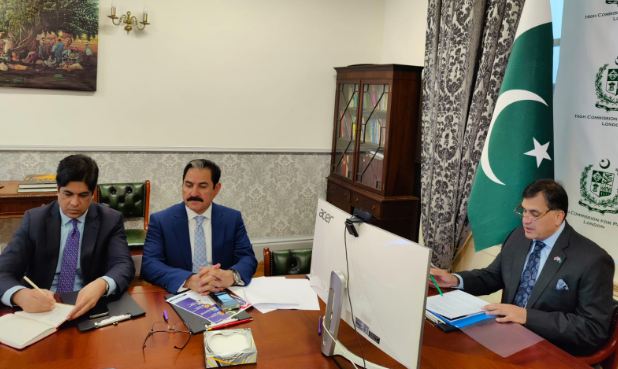
LONDON, JUN 25 /DNA/ – Pakistan’s High Commissioner to the UK, Dr. Mohammad Faisal has said that International Defence Exhibition & Seminar (IDEAS), Pakistan is a mega event that has emerged as the international rendezvous of top entrepreneurs to promote defence collaboration, joint ventures, global peace & prosperity. He was speaking at a webinar titled “Doing Defence & Security Business with Pakistan in perspective of establishing UK Pavilion at IDEAS-2024” organized by Defence Wing of the Pakistan High Commission, London and ADS Group,  Defence & Security Exports at the Department for Business and Trade, UK. The webinar was attended by senior officials from Pakistan High Commission, London; Defence Export Promotion Organization (DEPO), Government of Pakistan;  Department for Business and Trade of UK; British High Commission, Islamabad; IDEAS management and entrepreneurs.

The High Commissioner said that IDEAS, scheduled to take place in November, 2024 at Karachi, is indeed a testimony to our pledge to encourage technological growth. He expressed the hope that IDEAS would pave way for fostering and promoting Pakistan’s strategic relations with UK.

Major General Asad Nawaz Khan, Director General of Defence Export Promotion Organization (DEPO), Government of Pakistan stated that Pakistan has successfully established strategic partnerships with various countries. He added that IDEAS truly demonstrated a successful public-private partnership model. Its participation and international attendance was indeed a manifestation of our deeply embedded and mutually beneficial relations with international fraternity.

Commodore Zeeshan Nabi Shiekh, Defence & Naval Adviser and Shafiq Ahmed Shehzad Minister (Trade) of Pakistan High Commission, London provided an overview of  Pakistan – UK trade potential and opportunities for future collaboration in defence sector.

During the webinar, discussions were held on promoting awareness of the potential commercial opportunities for UK firms to do business in Pakistan. It was assured that Pakistan High Commission, London would provide full facilitation to entrepreneurs & companies from UK intending to participate in IDEAS 2024.

Since its inception in 2000, IDEAS Pakistan has grown exponentially over the years, with 532 exhibitors, 350 delegates from 57 countries participating in the 2022 exhibition.

Chinese scientists cures a patient of diabetes using cell therapy 

ISLAMABAD, JUN 25 (DNA) — In a groundbreaking achievement, Chinese scientists have cured a patient of diabetes using cell therapy for the first time.  This medical breakthrough offers hope to diabetes sufferers worldwide. The collaboration and knowledge-sharing on this advancement across borders can accelerate scientific advancements, Gwadar Pro reported on Tuesday.


“By learning from each other’s successes, Pakistani and Chinese scientists can collectively contribute to diabetes research and patient care”, says Dr. Nauman Niaz, Diabetologist and Endocrinologist in Islamabad. “We can learn from this breakthrough as they can explore stem cell research to develop therapies for diabetes.

Stem cells can be converted into various tissues, including pancreatic cells, which play a crucial role in insulin production”, he said. “They have used islet-like cells from human stem cells to create new pancreas islet tissue. We can study similar approaches to improve islet transplants for diabetes patients. 

The Chinese study also tested a chemical cocktail that transformed stem cells into brain, muscle, kidney, and pancreatic tissue.  Pakistani scientists can investigate similar chemical combinations for effective diabetes treatment”, Dr. Niaz added. Pakistan is faced with an alarming surge in diabetes cases.  According to recent statistics, over 33 million people, or over 26% of the adult population in Pakistan, are living with diabetes.

Obesity and sugar intake are the major causes of diabetes. Moreover, an additional 11 million adults in Pakistan have Impaired Glucose Tolerance (IGT), putting them at a high risk of developing type 2 diabetes.  Experts believe that the situation calls for urgent attention and measures to address this growing health concern. — DNA

Ambassador Imran Ahmed Siddiqui highlights regional cooperation at Tehran ACD Summit

Ambassador Imran Ahmed Siddiqui highlights regional cooperation at Tehran ACD Summit

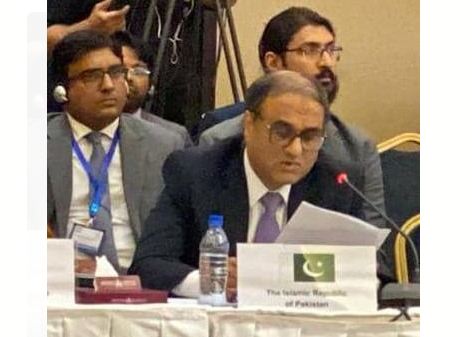
TEHRAN, /DNA/ – Additional Foreign Secretary (Asia & Pacific) Ambassador Imran Ahmed Siddiqui represented Pakistan at the 19th Meeting of the Ministers of Foreign Affairs of the Member States of Asian Cooperation Dialogue (ACD), held in Tehran on 24 June 2024.

He underlined the importance of promoting regional connectivity by leveraging complementarities, tapping the potential of technological zones, capacity building of human resource, enhancing access to financing, and providing a conducive environment for high-quality technology investments.

Ambassador Siddiqui also called for strengthening of sub-regional dialogue and cooperation mechanisms in Asia to address the issues of foreign occupation and persecution in the Middle East and South Asia.

Stay Connected

64FansLike
60FollowersFollow

Latest Reviews

Exchange Rates

USD - United States Dollar
EUR
1.17
GBP
1.35
AUD
0.72
CAD
0.73