Home Blog Page 884

Chili pepper industry thrives in China

Chili pepper industry thrives in China

By Qiu Haifeng

In many regions across China, food is characterized by spicy flavor. According to statistics released by a recent conference on China’s chili pepper industry development, China is the world’s largest producer and consumer of chili peppers, and grows this plant in 28 provinces, autonomous regions and municipalities. The chili pepper industry is constantly expanding in the country.

“Since the introduction of chili peppers to China over 400 years ago when it was originally used for ornamental purposes, people have discovered the diverse values of the plant, including edible and medicinal properties, and the planting scale has expanded accordingly,” said Lin Qiao, associate research fellow at the Agricultural Information Institute of the Chinese Academy of Agricultural Sciences (CAAS).

Chili peppers are nutrient-rich, offer a wide range of flavors and feature a strong growth ability. They can be consumed fresh or processed into chili sauce, dried chili or chili oil. Besides, chili peppers also have significant economic and social value. Compounds like capsaicin and capsanthin found in chilies are utilized in medicine, food, and industry.

Both planting areas and production of chili peppers have been on a steady growth worldwide in recent years, and China’s chili pepper industry has also embraced rapid development.

Statistics from the Food and Agriculture Organization of the United Nations showed that 36.72 percent of the world’s chili peppers were grown in China in 2021.

A significant rise has been observed in both the global and Chinese production of chili peppers in recent years. In particular, the output of chili peppers in China accounts for nearly half of the global total, making the country the world’s largest producer of chili peppers.

The Chinese people’s demand for chili peppers also expanded as the country’s chili pepper production grew. Lin noted that owing to a spicy food craze in recent years, over 500 million people in China eat spicy food, with Jiangxi, Guizhou, Hunan and Sichuan provinces as well as Chongqing municipality as the main consuming regions of chili peppers.

Apart from satisfying domestic demand, Chinese chili peppers are also getting onto the dining tables of consumers around the world. Statistics indicate that China’s chili pepper exports reached $1.7 billion in 2022, a year-on-year increase of 11.6 percent. The United States, Japan and Spain remained the largest three importers of China’s chili peppers, consuming 41.1 percent of the total chili pepper exports from China.

The growing chili pepper industry, while meeting the market demand, has become a pivotal driver for farmer’s income growth in many regions.

“This year our chili pepper harvest was good, with a yield of over 3,000 kilograms per mu (667 square meters),” said chili farmer Tan Baohui in Fuxing village, Yihetala township, Kailu county, Tongliao, north China’s Inner Mongolia autonomous region.

“With the high yield and increased prices, this year I earned 0.2 yuan ($0.03) more per kilogram compared to last year, netting over 5,000 yuan per mu,” Tan noted.

According to an official with the local agricultural and animal husbandry bureau, Kailu county is the county with the largest planting area of red chili peppersin China. The average annual output of red chili peppers in the county is around 1.5 billion kilograms.

More than 60,000 farming households in the county are engaged in chili pepper cultivation, while over 50,000 people work in the chili pepper industry. They generate 360 million yuan in labor income each year.

In Xiaoxian county, Suzhou, east China’s Anhui province, the majority of income of local farmers doesn’t come from the sales of chili peppers, but the seeds of the plant.

“We have a standard greenhouse base for seed breeding, which covers over 300 mu, and we are mainly engaged in the propagation, processing, sales and technological promotion of chili pepper seeds,” said Mu Keli, who heads a demonstration base of scientific research of a seed company in Xiaoxian county.

According to Mu, the standard greenhouse base helps over 100 farming households earn extra income of over 10 million yuan per year through chili pepper seed breeding. This year, the seeds bred at the base were all sold out, and the base is preparing to plant new seedlings, Mu added.

The chili pepper seeds produced in Xiaoxian county are sold throughout China and exported to Japan, South Korea, and Southeast Asia. According to an official with the county’s agricultural and animal husbandry bureau, the county currently produces over 350,000 kilograms of high-quality chili pepper seeds annually, with a revenue close to 1 billion yuan, which directly increases income for over 6,000 farming households.

“From cultivation, seed production, primary processing to advanced processing, the continuous extension of the chili industrial chain has steadily increased the added value of products, further broadening channels for farmers to increase income,” said Lin.

To promote the development the chili pepper industry, regions across China are continuing their efforts.

Guizhou province recently made clear that it will focus on building an “ecological Guizhou chili”brand, and strongly support the applications for local brands, corporate brands and national geographical indication products.

Inner Mongolia autonomous region proposed supports for the development of intensive seed breeding companies, continues to advance large-scale, mechanized development of open cultivation of chili peppers.

Hunan province is integrating cultural resources related to chili pepper, striving to build a new signature for its tourism industry.

To write new chapters of modern Chinese civilization

To write new chapters of modern Chinese civilization

By Wen Hongyan, Yang Xuebo, Xu Qing, Song Jingsi, People’s Daily

The Chinese civilization has weathered vicissitudes and been passed down from generation to generation. It remains the only great ancient civilization that has developed in an unbroken line while retaining a coherent national identity down to the present day.

The five prominent features of continuity, innovativeness, unity, inclusiveness, and peaceful nature together shape the Chinese civilization, forming its profound values and systems.

The Chinese civilization, which has stretched for more than 5,000 years, provides strong cultural-ethical support for Chinese modernization. 

Chinese modernization represents the renewal, not the destruction, of the country’s ancient civilization. It is a modernization originating from China’s own land, not one mimicking other nations. It stems from the continuous development of the Chinese civilization, not from any rupture in its cultural heritage.

Modernization is a comprehensive development process that includes economic, political, cultural, social, and ecological aspects. It is a significant symbol of the development and progress of human civilization.

“As we have upheld and developed socialism with Chinese characteristics and driven coordinated progress in material, political, cultural-ethical, social, and ecological terms, we have pioneered a new and uniquely Chinese path to modernization, and created a new model for human advancement,” said Chinese President Xi Jinping at a ceremony marking the centenary of the Communist Party of China (CPC).

Today, China’s economy is shifting towards high-quality development, and there is a continuous emergence of material achievements, which lays a solid material foundation for Chinese modernization.

Democracy is a common value of all humanity and a distinctive feature of modern political civilization.

When visiting the Gubei civic center in Changning District of Shanghai in November 2019, Xi talked to Chinese and foreign residents attending a consultation meeting on a draft law. He said China is on the path of socialist political advancement with Chinese characteristics, and people’s democracy is a type of whole-process democracy. His remarks revealed the features and advantages of socialist democracy.

The CPC initiated the National People’s Congress and the Chinese People’s Political Consultative Conference, which has a close relation to the Chinese civilization’s people-oriented philosophy, idea of collective governance, political tradition of “republic” and “deliberation,” and political wisdom of “inclusiveness, mutual learning, and seeking common ground while reserving differences.”

China has a unitary state structure and a regional national autonomy system. It conforms to the general trend of cohesion within the Chinese nation and unity in diversity.

China did not follow the old Western path, but rather has created its own modernization path suited to itself. China did not directly copy Western democratic models, but has created its own form of democracy with Chinese characteristics.

Democracy takes different forms, and there is no one-size-fits-all model. It would be totally undemocratic to measure the diverse political systems in the world with a single yardstick or examine different political civilizations from a single perspective.

In today’s China, democracy has turned from a value into an institution and governance mechanism. The 1.4 billion Chinese people are enjoying rights and dignity like never before.

The essence of modernization is the modernization of people. Replacing backwardness with progress and eliminating poverty with prosperity aligns with the historical trend and represents the moral imperative of human progress.

People-centered development philosophy has introduced a series of pioneering initiatives to promote common prosperity and realize fairness and justice, doing everything to resolve the most practical problems that are of the greatest and most direct concern to the people, and making active efforts to solve the most pressing difficulties of high concern to the people. As a result, the people’s sense of gain, fulfillment, and security has become more substantial, better assured, and more sustainable.

China abandons the Western path of modernization that is capital-centered, polarized, full of materialism, expansion and pillage. It represents the direction of the progress of human civilization.

While pursuing happiness for the Chinese people and rejuvenation of the Chinese nation, the CPC has also contributed to human progress and world harmony.

“Hegemonism is not in China’s DNA; nor does China have any motivation to engage in major-power competition. China stands firmly on the right side of history, and believes that a just cause should be pursued for the common good,” said Xi at the closing ceremony of the BRICS Business Forum 2023 on Aug. 22. He once again explained China’s unwavering commitment to the path of peaceful development from the perspective of civilization.

Facing the changes of the world, of the times and of history, the CPC always uphold humanity’s common values of peace, development, equity, justice, democracy and freedom. It is committed to promoting mutual learning among civilizations and advancing human progress.

Chinese modernization, as a new form of human advancement, will draw upon the merits of other civilizations and make the garden of world civilizations more vibrant.

Acting HC Sri Lanka calls on RCCI President Saqib Rafiq

Acting HC Sri Lanka calls on RCCI President Saqib Rafiq

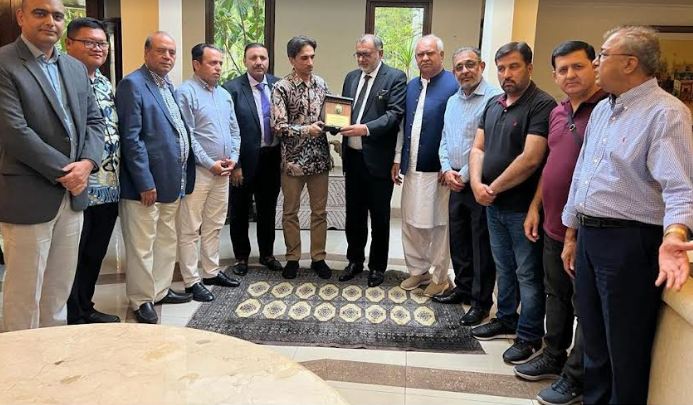
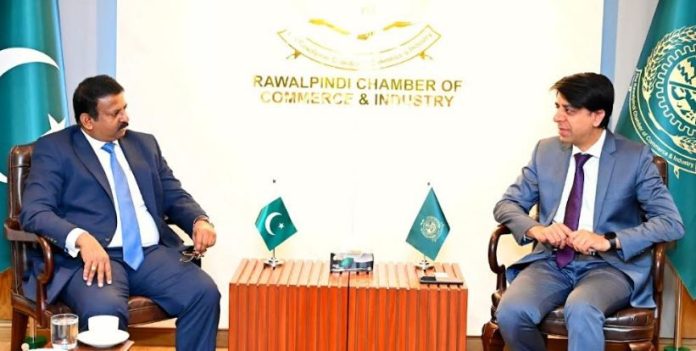
Rawalpindi, OCT 23 /DNA/ – Charge De Affair Augustine Christy Ruban, Sri Lankan High Commission called on Saqib Rafiq, President Rawalpindi Chamber of Commerce and Industry (RCCI) here on Monday.

Matters related to the enhancement of trade relations, close cooperation in various sectors including Pharmaceutical and Tourism, information sharing, chamber to chamber networking and strengthening of cooperation in all the sectors of investment of both countries were discussed during the meeting.

RCCI President Saqib Rafiq gave a summary of current activities and future programs of the chamber. He said that trade relations between Pakistan and Sri Lanka are historic and there is a historical partnership between the two countries. In addition, there is a need to provide a platform for the two countries to forge important trade links. People-to-people contact and religious tourism provide excellent platforms to further expand bilateral cooperation between Pakistan and Sri Lanka, he added.

Charge De Affair Augustine Christy Ruban, in his remarks said that Sri Lanka considers Pakistan an important trade partner in the region. Both countries have close and historical relations and there was wide scope to expand bilateral trade between Sri Lanka and Pakistan, he further added.

Mr. U.L Niyas, Minister Counselor Sri Lanka, Senior Vice President Muhammad Hamza Sarosh, Vice President Mr. Faisal Shahzad and Executive Member Mudassir Maqbool, among others, were also present on the occasion.

Pak vs Afg: Babar leads Pakistan to 282-7 in match against Afghanistan

Pak vs Afg: Babar leads Pakistan to 282-7 in match against Afghanistan

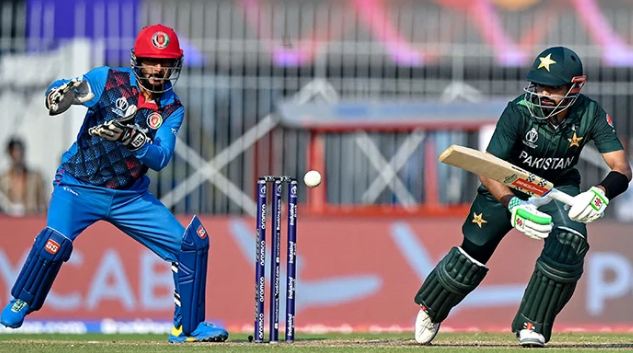
CHENNAI: Pakistan skipper Babar Azam hit a stylish half century to guide his team to a fighting 282-7 in their World Cup match against Afghanistan in Chennai on Monday.

Prolific batter’s 92-ball 74 was ably supported by opener Abdullah Shafique’s 75-ball 58 while Shadab Khan and Iftikhar Ahmed then scored a valuable 40 runs apiece.

On a spin-friendly Chidambaram Stadium pitch, Afghanistan fielded four slow bowlers with 18-year-old left-armer Noor Ahmad grabbing a career best 3-49 on his World Cup debut.

Shadab added a rapid 73 runs with Iftikhar for the sixth wicket as Pakistan added 61 in the last five overs, with Shadab falling off the last delivery.

Iftikhar cracked four sixes and two boundaries while Shadab´s innings featured a six and a four.

Pakistan enjoyed a strong start with a 56-run stand before Azmatullah Omarzai dismissed Imam-ul-Haq for 17 in the 11th over.

Ahmad struck his first blow when he trapped opener Abdullah Shafique for 58 in the 23rd over.

Shafique hit two sixes and five boundaries in his third half century of the World Cup.

Ahmad then dismissed Pakistan´s top scorer in the World Cup Mohammad Rizwan, caught sweeping in his next over to leave Pakistan on 120-3.

Babar also fell to Ahmad when the Pakistan skipper played a tennis-like shot to a delivery that was seemingly out of his reach, ending up straight into the hands of Mohammad Nabi at extra cover.

Babar hit four boundaries and a six and added 43 with Saud Shakeel who made 25.

Afghan spinner Rashid Khan went wicket-less in his ten overs, conceding 41 runs while pacer Naveen-ul-Haq took 2-52.

Afghanistan´s highest successful ODI chase is the 274 they achieved against the United Arab Emirates in Dubai nine years ago.

Pakistan brought in Shadab in place of Mohammad Nawaz who went down with a fever on the morning of the game while Ahmad came for Afghanistan in place of fast bowler Fazalhaq Farooqi.

Pakistan went into the game with two wins and two defeats from four matches while Afghanistan had win against three losses.

Playing XI
Pakistan: Abdullah Shafique, Imam-ul-Haq, Babar Azam (capt), Mohammad Rizwan (wk), Saud Shakeel, Iftikhar Ahmed, Shadab Khan, Usama Mir, Hasan Ali, Shaheen Shah Afridi, Haris Rauf

Afghanistan: Rahmanullah Gurbaz, Ibrahim Zadran, Rahmat Shah, Hashmatullah Shahidi (capt), Azmatullah Omarzai, Ikram Alikhil (wk), Mohammad Nabi, Rashid Khan, Mujeeb Ur Rahman, Naveen-ul-Haq, Noor Ahmad.

Passing out parade of ASSP held at National Police Academy

Passing out parade of ASSP held at National Police Academy

DNA

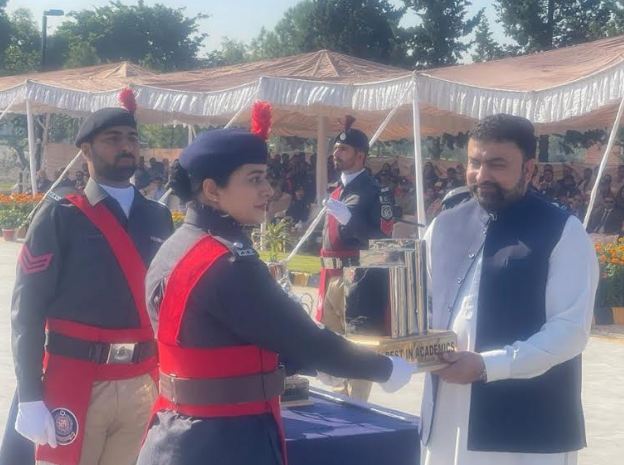
ISLAMABAD: An impressive Passing out Parade of the ASsP (UT) of 25th ICC/49th STP was held at National Police Academy (NPA) Islamabad. Honorable Minister for Interior, Mr. Sarfaraz Ahmed Bugti, was the chief guest on the occasion. The chief Guest congratulated all the graduating officers on the successful completion of their basic training. He appreciated the role of NPA in training the officers of Police Service of Pakistan.

He said that the role and duties of law enforcing agencies is of pivotal importance for the stability and socio-economic advancement of our country. He also said that the whole nation is indebted to police for its sacrifices in the war against terrorism. He reiterated government’s commitment to fulfill the requirements of police and promised to meet demands of NPA at earliest. Earlier, Mr. Salah-ud-Din Khan, Commandant NPA in his welcome address expressed his gratitude to the Chief Guest for sparing time for NPA and the graduating officers and said that the passing out batch consisted of 35 officers, including 08 lady officers and one PAF Officer.

This occasion marks the culmination of a rigorous 18 month calendar which incorporates extensive academic syllabi including various aspects of police management, criminal justice administration, law enforcement, community policing, crime management and policing by objective, physical training as well as acquainting the officers with real time policing. It has been the endeavour of the National Police Academy to incorporate the latest research in its curriculum so that the officers are abreast of latest policing trends.

The officers have also been sensitized about the subjects of public dealing, police media relations and security and safety of vulnerable groups. The course also includes anti-terrorism training for Assistant Superintendents of Police. The Commandant also stated that the NPA’s mission is to impart best possible training not only to the Assistant Superintendents of Police but to all segments of law enforcement irrespective of the fact that they belong to Police or not. This is done keeping in view the complex developments and challenges being faced in the context of the overall crime picture as well as law and order.

 We have developed capacity building courses for all law enforcement agencies including Frontier Constabulary, FIA, Intelligence Bureau, Punjab and Sindh Rangers etc. He also expressed his extreme gratitude to the International Criminal Investigation and Training Assistance Program (ICITAP) run by the Government of The United States, British High Commission, ICRC, UNODC, NCA, Islamabad based N.G.O in the finalization of these courses. He said that these agencies have supported us generously and there is no hesitation in saying that they are true friends of National Police Academy.

The Commandant in his concluding remarks said that the officers graduating today were selected on absolute merit by the Federal Public Service Commission and surely they are the best persons for the assigned job. He was confident to say that they will be a source of pride for the nation and would contribute positively to its well being. The Chief Guest reviewed the smartly turned out parade and awarded trophies to the best in different categories. 1. Mr. Muhammad Saad Bin Ubaid Best in Parade 2. Mr. Ali Abdullah Khalid Best in Firing 3. Capt. (R) Abdullah Shaheryar (Male) Best in Physical (Male) 4. Ms. Shazia Ishaq (Female) Best in Physical (Female) 5. Mr. Tayyab Wazir Best in Riding 6. Ms. Nayyab Ramzan Best in Academics 7. Mr. Adnan Gul Best in Discipline 8. Ms. Nayyab Ramzan All Round Best A large number of serving and retired police officers, representatives from other government departments, foreign diplomats, and relatives of the passing out officers witnessed the parade.

The Price of Litigation: PIDE study exposes costs of legal battles in universities

The Price of Litigation: PIDE study exposes costs of legal battles in universities

The average cost of litigation varies from PKR 50,000 to 200,000 per person for lower scales (BPS 1 to 16) and from PKR 150,000 to 500,000 per person for higher ranks (BPS 17 and above).

The study recommends the implementation of a proper penalty system against the losing party to discourage the unnecessary escalation of matters to court.

Conflict detrimentally impacts the working environment, particularly among faculty members, ultimately affecting the institution’s overall performance.

Islamabad, OCT 23 /DNA/ – The Pakistan Institute of Development Economics (PIDE) conducted a research study titled “Judiciary and Human Resource Management in Universities” to investigate the average number of court cases and their nature, registered by faculty members and other staff against university administrations, as well as the average cost of litigation to resolve these cases.

According to the press release issued by PIDE, the study revealed that, on average, 105 court cases were filed by faculty members against the administration. Of these cases, 50 were from relatively younger universities, while 160 cases belonged to the older universities. The universities were classified into two broad categories in the research: older universities (established before 2005) and younger universities (established after 2005).

In examining the cases filed by faculty, the study found that 58 percent were initiated by academic faculty members, while 42 percent were filed by non-academic staff. Additionally, the majority of these cases related to promotion (65%) and permanent positions (22%), respectively.

The cost of litigation involves both direct and indirect expenses. The direct cost is determined by lawyer fees, which vary based on the nature of the case and the scales and groups of applicants. For lower scales (BPS 1 to 16), the average cost of litigation ranges from PKR 50,000 to 200,000 per person, while for higher ranks (BPS 17 and above), it varies from PKR 150,000 to 500,000 per person. The indirect cost pertains to time, with each case taking, on average, six months in service tribunals. This duration can be extended if the losing party escalates the matter to higher courts, including high courts or supreme courts. This conflict detrimentally impacts the working environment, particularly among faculty members, ultimately affecting the institution’s overall performance.

The study recommends the implementation of a proper penalty system against the losing party to discourage the unnecessary escalation of matters to court. Additionally, it suggests the establishment of an effective and inclusive internal conflict resolution mechanism within institutions. Furthermore, the study identifies one of the main reasons people frequently resort to the courts as the absence of significant penalties in the event of losing a legal case. To address this issue, the study proposes two potential solutions: the development of a structured penalty system, particularly in cases of frivolous or defamatory litigation, and the adoption of more effective and inclusive conflict management mechanisms based on successful models and best practices. These recommendations are designed to promote fair and responsible legal actions while alleviating the burden on the legal system.

ICCI eyes great potential for promoting trade with Indonesia

ICCI eyes great potential for promoting trade and exports with Indonesia

Islamabad, OCT 23 /DNA/ – A delegation of Islamabad Chamber of Commerce and Industry (ICCI) led by its Vice President Engr. Azhar ul Islam Zafar visited the Pakistan Embassy in Jakarta, Indonesia and exchanged views with Faisal Fiaz, Acting Ambassador of Pakistan to Indonesia to further improve bilateral trade ties between the two countries. Muhammad Shabbir, Ch. Muhammad Ali, Hamayun Kabir, Ch. Javed Iqbal, Sheikh Muhammad Ejaz, Akhtar Hussain and others were in the ICCI delegation.

Addressing the delegation, Faisal Fiaz, Acting Ambassador of Pakistan to Indonesia said that the economy of Indonesia is on a sustainable growth trajectory, therefore Pakistan has promising scope to develop close cooperation with it and get easy access to Indonesian and ASEAN markets.  He said that Pakistan-Indonesia bilateral trade in 2022 was around US$ 4.2 billion, which can be further improved by promoting business linkages between the private sectors of both countries. He said that in 2013, Pakistan had signed a preferential trade agreement with Indonesia and stressed that the business community should take full advantage of it to promote trade and exports with Indonesia. He lauded the ICCI delegation for participating in the 38th Trade Expo Indonesia Hybrid Edition 2023 and said that regular exchange of trade delegations is the best way to improve bilateral trade ties between the two countries. He assured that the Pakistan Embassy in Indonesia would fully cooperate with the business community of Pakistan in exploring new avenues of trade promotion with Indonesia.

Speaking on the occasion, Engr. Azhar ul Islam Zafar, Vice President ICCI said that Pakistan and Indonesia are two important countries of the Muslim world and a lot of opportunities are available for private sectors of both countries to enhance cooperation in multiple fields. He said that the purpose of ICCI delegation to visit Indonesia is to explore untapped opportunities of bilateral cooperation between the two countries. He said that Pakistan can export many products to Indonesia including pharmaceuticals, surgical & medical equipment, footballs, leather products. He said that Pakistan and Indonesia can also cooperate in many fields including tourism, IT, pharmaceutical, textile, cooking oil, mines & minerals, leather, e-commerce and others. He said that the Pakistan Embassy in Indonesia should identify the demand of Pakistani products in Indonesia and share this information with chambers of commerce of Pakistan so that the business community could take advantage of them.

ICCI delegation members also spoke on the occasion and shared useful ideas for further improving bilateral trade and economic relations between Pakistan and Indonesia.

CEPA Academy: Your pathway to success in CSS exams unveiled

CEPA Academy: Your pathway to success in CSS exams unveiled

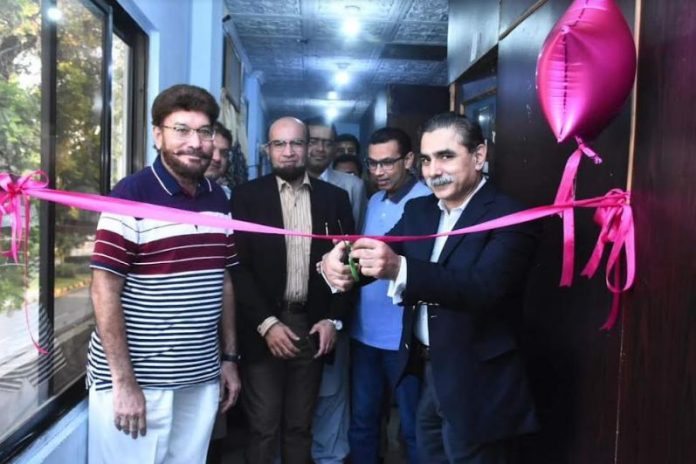
ISLAMABAD, OCT 23 /DNA/ – A formal inauguration ceremony of CEPA (CSS Exam Preparation Academy) took place in Islamabad on October 22, 2023.

CEPA academy is dedicated to providing exceptional mentorship, comprehensive training, and extensive practice for the CSS Exams.

Our team of experienced instructors and experts are committed to helping aspiring candidates excel in their CSS exams and achieve their career goals.

At CEPA, we understand the importance of thorough preparation and guidance, which is why we have designed a curriculum that covers all aspects of the CSS exams, including current affairs, essay writing, English composition, and more.

If you are passionate about pursuing a career in the civil services and want to maximize your chances of success, join CEPA and let us help you unlock your potential!

Pakistan wishes stronger ties with ASEAN countries: FM

Pakistan wishes stronger ties with ASEAN countries: FM

Ansar M Bhatti/DNA

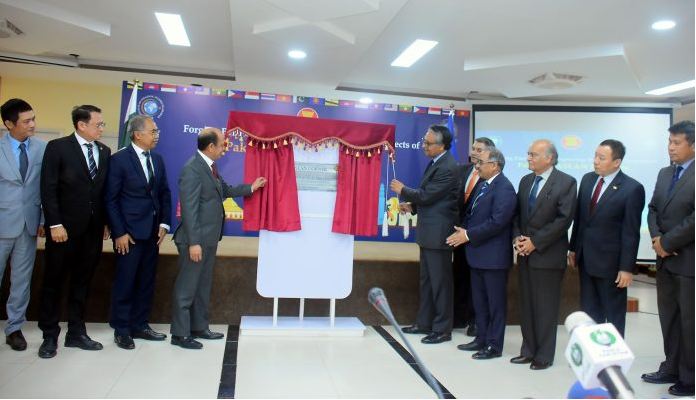
ISLAMABAD, Foreign Minister Jalil Abbas Jilani on Monday terming a peaceful and stable Asia Pacific a priority said Pakistan stands ready to work with the member states of ASEAN (Association of Southeast Asian Nations) for attaining the goals of confidence-building and conflict prevention. Speaking at the inauguration of the ASEAN Corner at the Institute of Strategic Studies Islamabad (ISSI), the foreign minister highlighted Pakistan’s efforts in forging the future prospects of its relations with ASEAN.

Jilani reaffirmed Pakistan’s support for an international order based on peaceful co-existence, amicable settlements of disputes, win-win cooperation, and shared prosperity. He mentioned that Pakistan was fully supportive of the principles of ASEAN and was collaborating in a number of areas including conducting courses on finance and banking. He regretted that the South Asian Association for Regional Cooperation (SAARC) which was established on the same lines of ASEAN despite its potential had fallen victim to India’s policies. The foreign minister said Pakistan was currently facing economic, demographic, and economic and climate change challenges besides the creation of jobs for the young population. He said Pakistan looked forward to meaningful cooperation amongst countries across the globe and termed it incumbent upon to work towards putting Pakistan on the path of sustainable economic growth. For socio-economic development, he said peace and security were a fundamental requisite, hence Pakistan’s priorities in foreign policy towards the neighbourhood, as well as region, was to make it conflict-free and development-driven. He stressed the need to avoid bloc politics and geo-political constructs that did not align with the geographical historical and cultural realities of the distinct regions spanned by the Indian and Pacific Oceans. As a proponent of multilateralism, he said, Pakistan believed that recommitment to the fundamental principles of the United Nations charter was the need of the hour. He emphasized Pakistan’s consistent aspirations for a full dialogue partnership underscoring its continued commitment to ASEAN. Pakistan would remain a strong partner in all endeavours of peace, stability, and development of the region, he said. High Commissioner of Malaysia Mohammad Azhar Mazlan highlighted the importance laid by his country in strengthening the motives of ASEAN. He also stressed joint efforts by the member states to gain the mutual benefits of cooperation.

Ambassador of Indonesia in his speech offered a three-pronged strategy to further cement Pakistan-ASEAN relations. He said both stakeholders have huge potential, which should be explored sooner rather later.

Ambassador of Thailand also spoke on the occasion and said he would like to point out the most important fact about ASEAN which is they way we become ASEAN. He suggested three areas in order to further strengthen relations including political aspect; trade and investment and people to people contacts.

Director General ISSI Ambassador Sohail Mahmood spoke about the significance of the ASEAN in areas of regional cooperation. Earlier, the foreign minister along with other dignitaries unveiled the plaque of the inauguration of ASEAN Corner established at ISSI.

COAS Gen. Asim Munir awards medals to NUST distinction holders

COAS Gen. Asim Munir awards medals to NUST distinction holders

RAWALPINDI, OCT 23 /DNA/ – The annual convocation week of the National University of Sciences & Technology (NUST) commenced at the University’s main campus in Islamabad today.

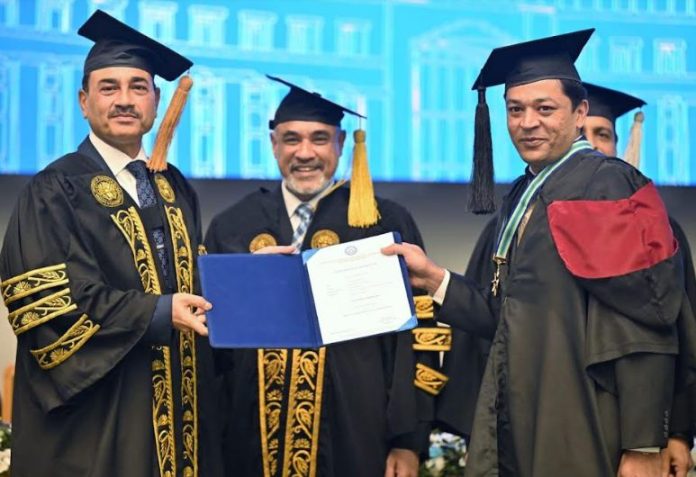
Chairman NUST Board of Governors, General Syed Asim Munir, NI (M), Chief of Army Staff (COAS) graced the occasion as Chief Guest at the inaugural “Master Convocation Ceremony” and conferred medals upon distinction holders.

Bachelor’s, Master’s and PhD students received degrees during the course of convocation week. Degrees are being awarded to over 3500 graduates from all NUST Schools at the main campus in the 7 core disciplines.

Stay Connected

64FansLike
60FollowersFollow

Latest Reviews

Exchange Rates

USD - United States Dollar
EUR
1.17
GBP
1.34
AUD
0.67
CAD
0.73