Home Blog Page 884

Iran begins voting in presidential election

Iran begins voting in presidential election

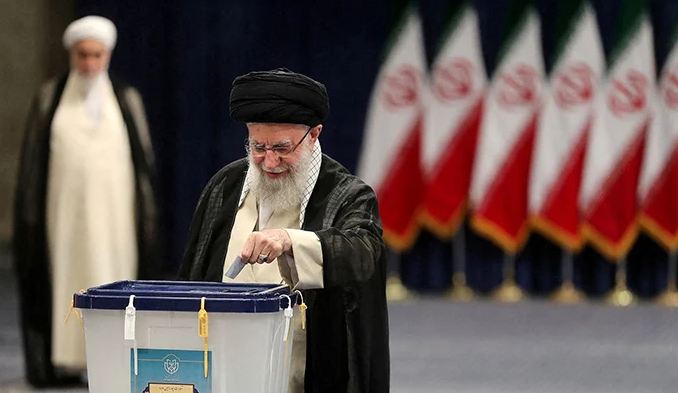
Tehran, JUN 28: Iranians started voting on Friday for a new president following the death of Ebrahim Raisi in a helicopter crash, choosing from a tightly controlled group of four candidates loyal to the supreme leader, at a time of growing public frustration.

Polls opened at 8am (0430 GMT) and close at 6pm (1430 GMT), but are usually extended as late as midnight.

The election coincides with escalating regional tension due to war between Israel and Iranian allies Hamas in Gaza and Hezbollah in Lebanon, as well as increased Western pressure on Iran over its fast-advancing nuclear programme.

While the election is unlikely to bring a major shift in the Islamic Republic’s policies, its outcome could influence the succession to Ayatollah Ali Khamenei, Iran’s 85-year-old supreme leader, in power since 1989.

Khamenei called for a high turnout to offset a legitimacy crisis fuelled by public discontent over economic hardship and curbs on political and social freedom.

“The durability, strength, dignity and reputation of the Islamic Republic depend on the presence of people,” Khamenei told state television after casting his vote. “High turnout is a definite necessity.”

Voter turnout has plunged over the past four years, as a mostly youthful population chafes at political and social curbs.

Manual counting of ballots means the final result is expected to be announced only in two days, though initial figures may come out sooner.

If no candidate wins at least 50% plus one vote from all ballots cast, including blank votes, a run-off round between the top two candidates is held on the first Friday after the election result is declared.

Three candidates are hardliners and one is a low-profile comparative moderate, backed by the reformist faction that has largely been sidelined in Iran in recent years.

Critics of Iran’s clerical rule say the low and declining turnout of recent elections shows the system’s legitimacy has eroded. Just 48% of voters participated in the 2021 election that brought Raisi to power, and turnout hit a record low of 41% in a parliamentary election three months ago.

The next president is not expected to usher in any major policy shift on Iran’s nuclear programme or support for militia groups across the Middle East, since Khamenei calls all the shots on top state matters.

However, the president runs the government day-to-day and can influence the tone of Iran’s foreign and domestic policy.

A hardline watchdog body made up of six clerics and six jurists aligned with Khamenei vets candidates. It approved just six from an initial pool of 80. Two hardline candidates subsequently dropped out.

Prominent among the remaining hardliners are Mohammad Baqer Qalibaf, parliament speaker and former commander of the powerful Revolutionary Guards, and Saeed Jalili, a former nuclear negotiator who served for four years in Khamenei’s office.

The sole comparative moderate, Massoud Pezeshkian, is faithful to Iran’s theocratic rule, but advocates detente with the West, economic reform, social liberalisation and political pluralism.

His chances hinge on reviving the enthusiasm of reform-minded voters who have largely stayed away from the polls for the last four years after previous pragmatist presidents brought little change. He could also benefit from his rivals’ failure to consolidate the hardline vote.

All four candidates have vowed to revive the flagging economy, beset by mismanagement, state corruption and sanctions re-imposed since 2018, after the United States ditched Tehran’s 2015 nuclear pact with six world powers.

In the past few weeks, Iranians have made wide use of the hashtag #ElectionCircus on X, with some activists at home and abroad calling for an election boycott, saying a high turnout would legitimise the Islamic Republic.
UNIDO Hosts High-Level Workshop to Strengthen Food Regulatory Practices in Pakistan

UNIDO Hosts High-Level Workshop to Strengthen Food Regulatory Practices in Pakistan

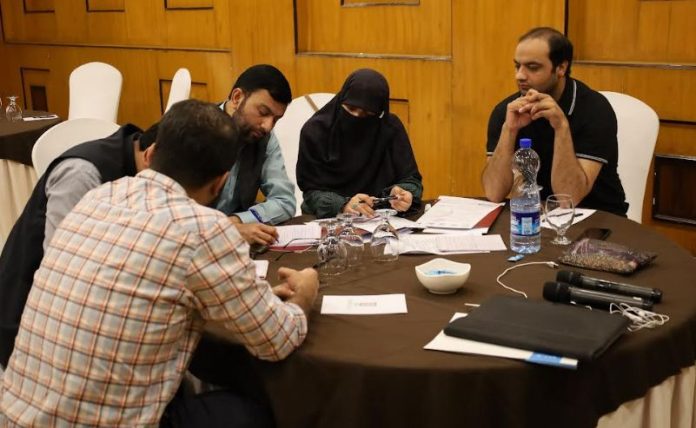
ISLAMABAD, JUN 28 /DNA/ – The United Nations Industrial Development Organization (UNIDO) brought together senior officials from Provincial Food Authorities across Pakistan in Islamabad for a high-level workshop to enhance food regulatory practices in Pakistan.

The workshop, entitled “Designing and Operating Food Regulatory Functions,” gathered Director Generals, Directors, and Technical Officials from all Provincial Authorities of Pakistan, including Azad Jammu Kashmir, Gilgit Baltistan, and the Islamabad Food Authority. Professor Samuel Godefroy, an expert in Food Risk Analysis and Regulatory Policies at Laval University and former Director General of the Food Directorate under the Federal Department of Health in Canada, delivered the sessions in this three-day workshop from 25 to 27 June 2024.

Participants reviewed core food regulatory functions, focusing on best practices in managing food business operations to protect consumers and promote optimal food handling among local producers. The workshop highlighted the collaborative nature of food safety regulations and emphasized the importance of fostering compliance among food producers in Pakistan. Through a SWOT analysis, participants assessed their performance. They drafted recommendations to enhance food safety, including increased collaboration at federal, provincial, and territorial levels, enhanced food regulatory science capacity, and improved governance of food safety decision-making.

Participants reaffirmed their commitment to maintaining a predictable, transparent, collaborative, and evidence-based food regulatory environment. They also emphasized the need for stronger collaboration with the food production sector and other stakeholders to ensure the improved standards of food safety across Pakistan.

This workshop represents a significant step forward in strengthening Pakistan’s food regulatory framework, contributing to the protection of consumers and the advancement of best practices in food handling and safety. a

PAFAID is a four-year JICA-funded project being implemented by UNIDO in close coordination with the Government of Pakistan. It aims at improving pilot applications of compliance capacities and value-addition practices in the cattle meat value chain in KP province and the apple value chain in Balochistan province. For more information, please visit the website www.pafaid.org.

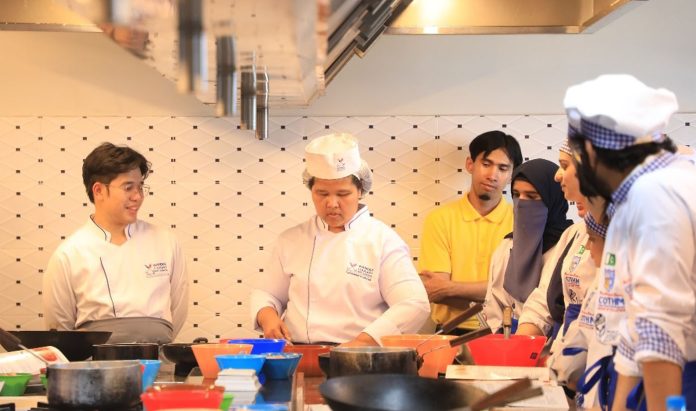
Workshop ‘An insight into Thai hospitality’ organsied

Specially for this workshop, the Royal Thai Embassy had invited lecturers and chef from Wandee Culinary Art School and Wandee Culinary Technological College, a renowned culinary school accredited by the Ministry of Education of Thailand

DNA

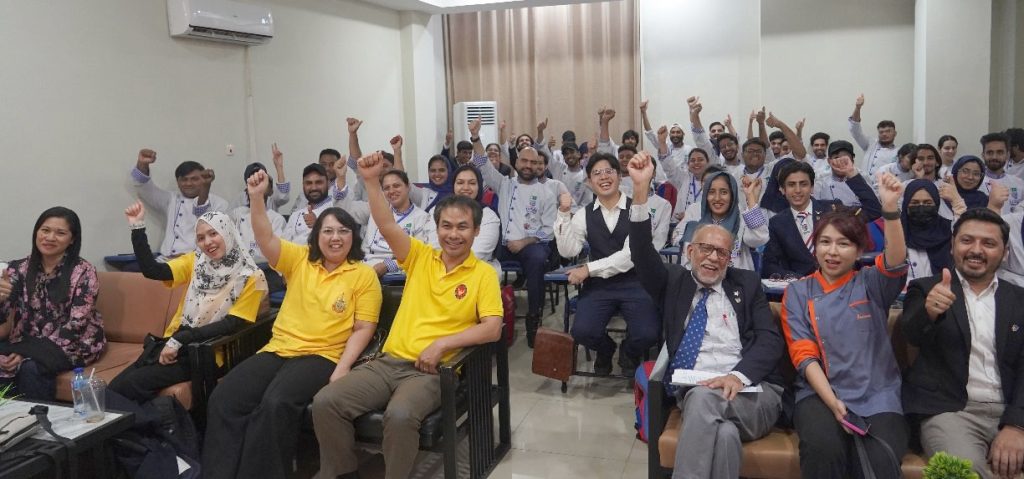
RAWALPINDI: Miss Kamolwan Sriposil, Charge d’Affaires and Mr. Pornarong Buddhavadhana, First Secretary of Cultural Affairs from the Royal Thai Embassy in Islamabad organized a training and workshop titled “An Insight into Thai Hospitality” in collaboration with College of Tourism & Hotel Management (COTHM), Rawalpindi campus.  

Specially for this workshop, the Royal Thai Embassy had invited lecturers and chef from Wandee Culinary Art School and Wandee Culinary Technological College, a renowned culinary school accredited by the Ministry of Education of Thailand.

The school has also been approved to be the “National Testing Center” in Thai cuisine chef qualification by the Ministry of Labor of Thailand. Mr. Pasit Sriyaphai, Deputy Director, Miss Chounchom Songkraopan, Chef and Miss Sukanya Saisuwan, media personnel graciously traveled from Thailand to impart their knowledge, expertise, skills and wonderful tips to more than a hundred COTHM’s students in the arts of Thai hospitality and Thai cooking.  

Mr. Pasit began with an in-depth lecture on the principles and practices of Thai hospitality. He emphasized the cultural values that underpin Thai hospitality, such as respect, humility, attention to details and a genuine desire to make guests feel at home. These values are seamlessly woven into every aspect of Thai service, from the welcoming gestures to the meticulous preparation of food. He also demonstrated the service character for food and beverage students.

One of the highlights of the day was the culinary workshops, where the students had the opportunity to prepare traditional Thai dishes under the guidance of experienced chefs. The workshops included the preparation of two iconic Thai dishes: Golden Cup and Creamy Red Curry with Chicken.

The “Golden Cup” is a Thai Appetizer found in Thai heritage since King Rama V. During his trip to Penang, there was a gathering event with a wealthy person. There were various appetizers so called “peranakan top hat”. It was made into crispy cup in European hat shape with yam, shrimp, crab, cucumber, and corn mixed with sauce. Later on, people brought this cooking back to Thailand and cooked this dish widely by adding more ingredients. The second dish, Creamy Red Curry with Chicken” has unique characteristic with condensed texture and salty sweet taste.

In addition to the culinary workshops, the Royal Thai Embassy also featured a display of delicate fruit and vegetable carvings, which is an integral part of Thai cuisine. This traditional art form involves transforming ordinary fruits and vegetables into intricate and beautiful sculptures. In addition, there was also a display of Thai products and ingredients. Many of these ingredients can be found in supermarkets all over Pakistan. From fragrant herbs and spices to specialty sauces and fresh produce, the display highlighted the quality and variety of ingredients that form the backbone of Thai cuisine. This showcase not only enriched the culinary experience, but also provided insights into the cultural and economic aspects of Thai cuisine.

In addition, the Royal Thai Embassy is pleased that COTHM and Wandee Culinary Art School are in talks for further academic collaborations. The event has also paved the way for future collaborations between the Royal Thai Embassy and COTHM. Plans are already underway for similar workshops and training programs that will continue to explore the rich cultural heritage of Thailand and its contributions to the global tourism and hospitality industry. Such initiatives are expected to further enhance the skills and knowledge of hospitality professionals in Pakistan, fostering a spirit of innovation and excellence.

The training and workshop on “An Insight into Thai Hospitality” at COTHM was a resounding success, offering a unique blend of education, cultural exchange, and culinary artistry. The event not only highlighted the timeless appeal of Thai hospitality but also underscored the importance of cross-cultural collaboration and people-to-people connection in the ever-evolving world of tourism and hospitality.

As participants departed with new skills, knowledge, and a deeper understanding of Thai culture, the event left an indelible mark on all who attended. It was a day of learning, sharing, and celebrating the universal language of hospitality-a fitting tribute to the spirit of cooperation between Thailand and Pakistan.

All eyes on Islamabad court as verdict on Imran, Bushra iddat case due today

ISLAMABAD, JUN 27: All eyes are on an Islamabad local court, which is due to announce a verdict on the pleas filed by Pakistan Tehreek-e-Insaf (PTI) founder Imran Khan and his wife Bushra Bibi seeking suspension of their sentences in the iddat case today (Thursday), which may end the former prime minister’s imprisonment.

Khan, the deposed prime minister who was ousted from power via the opposition’s no-confidence motion in April 2022, has been facing a slew of charges ranging from corruption to terrorism since his removal as the premier.

He has been behind bars since August last year after he was sentenced in the Toshakhana case and subsequently sentenced in other cases ahead of the February 8 elections.

Despite securing relief in other cases including £190 million reference and Toshakhana, and acquittal in the cipher case earlier this month, the former premier remains behind bars due to his conviction in the iddat case.

The district court had sentenced the PTI founder and Bushra each, to seven years in prison in February earlier this year after a trial court found their nikah to be fraudulent after Khawar Maneka, Bushra’s ex-husband, moved the court against the couple’s marriage.

The complainant stressed that the marriage was solemnised during Bushra’s iddat (the time a woman goes into isolation after a divorce or her husband’s death).

The couple had then filed various appeals including the ones against their conviction and those seeking suspension of their sentences.

Trial court Judge Shahrukh Arjumand had reserved the verdict on their appeals challenging their conviction on May 23.

However, in light of Maneka’s repeated expression of no-confidence, the Islamabad High Court (IHC), on Judge Arujmand’s request, had then transferred the case to the court of Additional District and Sessions Judge Muhammad Afzal Majuka.

The district and sessions court on June 25, reserved its verdict on pleas against Khan and Bushra’s conviction, after directives from the IHC to decide the matter of suspension of the sentences within 10 days.

The court had also given one month for the decision on the petition filed by the couple against their conviction.

Meanwhile, Bushra had sought a decision on her plea filed in the sessions court seeking sentence suspension.

The reserved verdict will be announced on June 27 (Thursday) at 3pm, while the hearing on the couple’s pleas seeking annulment of their conviction in the said case will be resumed on July 2.

PTI awaits a favourable decision as a major relief for its founding chairman as he has been acquitted in some cases or has acquired bail in others.

However, it is also likely that the government will try to block Khan’s release as Prime Minister’s Adviser on Political and Public Affairs Rana Sanaullah on Tuesday gave credence to the reports that the Centre was planning to lodge new cases against the jailed PTI founder.

NCRC and French Embassy launch child rights campaign

NCRC

DNA

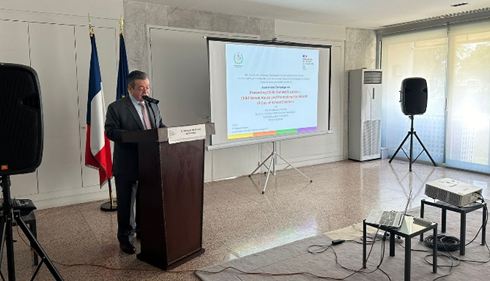
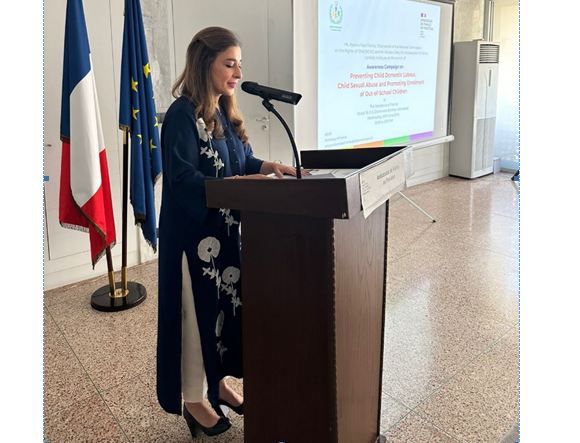
ISLAMABAD, JUN 26: The National Commission on the Rights of Child (NCRC), in collaboration with the Embassy of France, launched a comprehensive awareness campaign to address critical issues affecting children in Pakistan: child domestic labour, child sexual abuse and the enrollment of out-of-school children.

The campaign’s primary goal is to raise awareness about the pervasive issue of child domestic labour, targeting the demand side while promoting education as a key factor in eliminating child labour. According to the International Labour Organization (ILO), one in four households in Pakistan employs a child for domestic work, often in hazardous conditions. The campaign aims to shed light on these practices, advocating for the protection and rights of these vulnerable children.

Ambassador of France to Pakistan, His Excellency Nicolas Galey, emphasized the importance of this initiative: “France is committed to promoting children’s rights throughout the world, alongside all our partners. Our collaboration with the NCRC represents a significant step towards addressing the pressing challenges faced by children in Pakistan. Our shared vision is to safeguard the rights of children and ensure they grow up in environments free from exploitation and abuse”.

Ayesha Raza Farooq, Chairperson NCRC, said “With over 26.2 million out-of-school children, Pakistan confronts a severe challenge. Economic pressures and limited access to quality education drive many children into the workforce, perpetuating a cycle of poverty. This campaign is a call to action for all of us to ensure that every child has access to their fundamental right to education”.

The campaign also tackles the distressing rates of child sexual abuse in Pakistan. According to the “Cruel Numbers Report 2023” by SAHIL, 11 children are sexually abused every day in the country. The NCRC is committed to advocating for stronger legislation and societal awareness to combat this abhorrent crime.

In response to the increasing exploitation of children in domestic work, the NCRC has drafted the “Bill on the Prohibition of Child Labour in Domestic Work 2024”. This proposed legislation seeks to explicitly ban the employment of children under 18 as live-in domestic workers and introduce stricter penalties for violators. The bill will soon be presented to the Cabinet for consideration and action.

Additionally, the NCRC has conducted extensive consultations across all provinces and at the federal level, focusing on the Education Sector Plans and the plight of out-of-school children. These dialogues have provided critical insights and recommendations, which will be compiled into a forthcoming policy brief aimed at driving educational reforms.

A key element of the campaign was the creation of culturally sensitive animations designed to raise awareness and inspire action among various audiences, particularly children and parents. Addressing issues such as child labour, child sexual abuse and the lack of school enrollment requires an approach that resonates deeply with the target audiences. The campaign ensures that the content is tailored to the local context, culturally sensitive and age-appropriate. The characters, settings, and scenarios depicted in each animation are familiar and relatable to the Pakistani community, enhancing the authenticity and impact of the message.

We urge all citizens to actively participate in this campaign. Sharing these animations on social media and within personal networks can help disseminate the message and foster collective action against child labour and abuse while promoting education. If you witness or instances or any other forms of exploitation, please report them immediately ay 1099 or 1121 as your prompt action can save a life.

Uzbekistan introduces mandatory anti-corruption courses for civil servants

Uzbekistan introduces mandatory anti-corruption courses for civil servants

TASHKENT, JUN 26 /DNA/ – A system will be created in Uzbekistan to continuously improve the knowledge of citizens and civil servants in the fight against corruption.

The President of Uzbekistan has signed the Resolution “On measures to introduce a system of continuous improvement of knowledge of the population and civil servants in the fight against corruption”.

The legal and institutional framework for preventing and combating corruption has been improved in Uzbekistan in recent years. At the same time, there is a need to raise to a new level the system of developing an intolerant attitude towards corruption among the population and civil servants, immunizing them with ‘integrity vaccine’, as well as increasing knowledge and skills in the fight against corruption based on the requirements of the time.

In this regard, the President of Uzbekistan has signed the Resolution “On measures to introduce a system of continuous improvement of knowledge of the population and civil servants in the fight against corruption”.

The Resolution will introduce a system of continuous improvement of knowledge of the population and civil servants in combating corruption.

For this purpose, from January 1, 2025,the Virtual Anti-Corruption Academy electronic platform (Virtual Academy) will be launched.

The Anti-Corruption Agency and the Law Enforcement Academy are in charge in organization and conduct of educational activities at the Virtual Academy. The Agency forms a contingent of civil servants who are subject to training, in agreement with the Academy, approves the annual training schedule, and monitors the quality organization of the educational process. The Agency submits annually information on the activities of the Virtual Academy to the National Anti-Corruption Council.

The key is that any citizen will have the opportunity to voluntarily study at the Academy’s basic courses. In particular, educational programs of various formats will be developed for preschool and school children, students, entrepreneurs, and representatives of nongovernmental organizations, taking into account their age, level of development and field of activity.

Increasing knowledge and skills in combating corruption at the Academy is mandatory for all civil servants.

This, undoubtedly, is of great importance in increasing the legal consciousness and culture of the population and civil servants, creating legal immunity from corruption in society, and cultivating the integrity values in the younger generation.

Training at the Virtual Academy in basic courses is organized free of charge for all users, and advanced training in special courses is fee-based.

The Agency formulates recommended annual research topics in the field of anti-corruption for higher education institutions and research organizations. All higher education and research organizations will annually submit to the Agency the results of research they conducted in the area. The Academy will maintain an electronic database on achievements, domestic and foreign experience, scientific, methodological and practical developments and research work.

Based on the Resolution, a Road Map is approved to ensure the effective functioning and strengthening of the material and technical base of the Virtual Anti-Corruption Academy electronic platform.

According to it, the Virtual Anti-Corruption Academy electronic platform and its mobile app will be launched by January 1, 2025. Special programs and content organized in the Virtual Academy for pre-school and school children, and students will be developed by October 1, 2024.

As part of the Global Resource for Anti-Corruption Education and Youth Empowerment (GRACE) Initiative, measures will be taken to create high-quality animated films, video and audio materials intended for students.

The launch of the Virtual Academy will serve to accelerate the formation of an intolerant attitude towards corruption in society, as well as the introduction of a system of continuous improvement of the knowledge and skills of the population and civil servants in the fight against corruption.

Naqvi urges combined efforts against Drug abuse

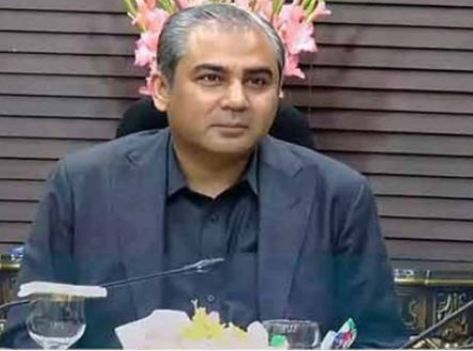
Mohsin Naqvi

ISLAMABAD, JUN 26 (DNA) — Minister for Interior and Narcotics Control Mohsin Naqvi on Wednesday stated that the fight against drug abuse and trafficking cannot be fruitful unless we all as a nation put our combined efforts behind this noble cause to make Pakistan a healthy society free of drugs.

“I must acknowledge that the fight against drug abuse and trafficking cannot be fruitful unless we all as a nation put our combined efforts behind this noble cause to make Pakistan a healthy society, free of drugs”, he said. Naqvi expressed these words in his message issued on the occasion of International Day Against Drug Abuse and Illicit Trafficking day being observed today.

Given the devastating effects of drug abuse on our society, it is imperative to make this fight against drugs a national priority, he said.

This year’s theme for the day is  “The Evidence is Clear: invest in Prevention,”  Narcotics Minister said,  “I urge all citizens to join hands with us in this critical mission. Prevention lies at the heart of our strategy, and we must prioritize preventive education, community engagement, and robust law enforcement to stem the tide of drug abuse.

Mohsin Naqvi said “Let us reaffirm our resolve to build a healthier, drug-free Pakistan. Together, we can make significant strides in safeguarding the well-being of our nation and future generations.

As we observe the International Day against Drug Abuse and Illicit Trafficking today, it is a staunch reminder of the persistent danger posed by substance abuse within our society adding he said Pakistan has long been exposed to its wide-ranging negative consequences on the overall fabric of the society and the associated array of problems including crime, violence, health deterioration, and productivity loss.

Recognizing the magnitude of this challenge, he said the Government of Pakistan was undertaking comprehensive measures against drug abuse and illicit trafficking in alignment with its National Anti-Narcotics Policy of 2019.

This policy encompasses a holistic approach, incorporating Drug Demand Reduction, Drug Supply Reduction, and International Cooperation, he added.  These strategic pillars serve as the foundation of our endeavors to counter the spread of narcotics and controlled substances within our nation’s borders, he maintained. — DNA

Kashmiri delegation meets IAHRA representative

Kashmir delegation

ISLAMABAD, JUN 26 (DNA) — Kashmir delegation to United Nations comprising of Advocate Parvez Shah and Dr Waleed Rasool met representative International Association for Human Rights Advocacy (IAHRA), Miss K Pormica  at United Nations Human Rights Council and briefed her about the prejudiced judicial system operating in Indian Illegally Occupied Jammu and Kashmir IIOJK.

The representative was apprised that the engineered Judicial System was giving unnecessary adjournments to the government by design to cause delays in the cases of detainees incriminated in concocted cases to break their will of the detainees, received a press release from Geneva.

She was also apprised that the under-trial prisoners are not presented before the courts on the date of hearing to restrict their meeting with lawyers and the families and thereby these detainees are made invisible.  The under trials are tried in special courts outside the state which makes it difficult for lawyers to represent them in the trial courts and at the same time, free legal aid is non-existent.

The representative to the International Associations for Human Rights Advocacy was also acquainted with the pathetic conditions of the prisoners lodged in different Indian jails where these detainees were denied the basic facilities guaranteed under the jail manual and international law.

The delegation also brought to her notice that the Indian government was forcing the detainees to sign a bond to the extent that if they were released would not speak or support the ongoing struggle for the right to self-determination guaranteed under United Nations resolutions.

The representative showed serious concern about the flawed legal system existing in Indian Illegally occupied Kashmir and promised to speak on the engineered legal system and plight of Kashmiri prisoners in the coming events. — DNA

Director civil defense visits RCCI

Director civil defense visits RCCI

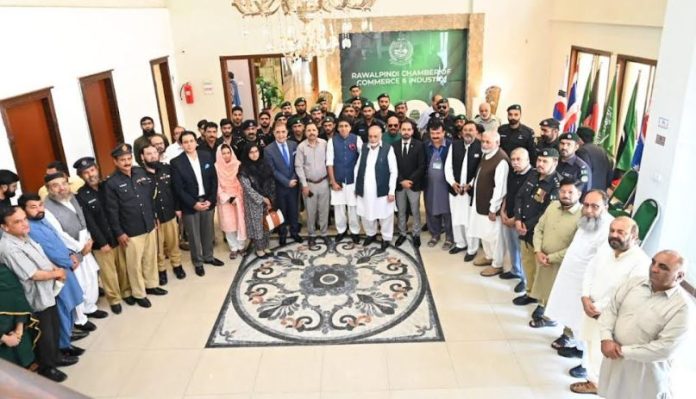
RAWALPINDI, JUN 26 /DNA/ – Barak Ullah Khan, Director of Civil Defence Punjab along with his team visited Rawalpindi Chamber of Commerce and Industry (RCCI) and called on President of the Rawalpindi Chamber of Commerce and Industry (RCCI) Saqib Rafiq, along with Group Leader Mr. Sohail Altaf.

The meeting focused on discussing safety measures, enhancing collaboration between RCCI and Civil Defence, and exploring initiatives to improve emergency response and preparedness in the region.

Director, Barak Ullah Khan, assured the participants that his department will provide all kind of support and assistance for safety measures and compliance under inspection.

Saqib Rafiq, in his address appreciated Civil Defence role and activities during national calamity like earthquakes.

The meeting saw the presence of RCCI Vice President Mr. Faisal Shahzad, Former President/ Additional Chief Warden Raja Amer Iqbal, and executive committee members. President of Anjuman Tajraan Cantt Sheikh Hafeez, Mr. Zafar Qadri and distinguished RCCI members.

Notable attendees included representing the Civil Defence were Chief Warden Mr. Ajaz Khushi, Assistant Director Ms. Sajida, Civil Defense Officer Mr. Talib Hussain, Deputy Chief Warden Dr. Ali Raza Advocate, and several divisional and group wardens, including Saeed ur Rehman, Mukhtar Shah, Mr. Nawaz, Syed Israr, and Mr. Kashif Pirzada. 

Hostel of H-8 College to be transformed into sub-campus of PFID

ISLAMABAD, JUN 26 (DNA) — Ministry of Federal Education and Professional Training has announced the revitalization of the formerly abandoned and dysfunctional hostel building of H-8 Degree College, transforming it into a vibrant sub-campus of the Pakistan Institute of Fashion Design (PIFD) in next three months.

According to the Education Ministry, this transformation marks a significant milestone in government’s commitment to providing world-class education and fostering creativity in the field of fashion design. The renovated sub-campus will offer state-of-the-art facilities, modern classrooms, and cutting-edge technology, creating an ideal environment for students to learn, grow, and thrive, it added.

The ministry official said that the PIFD sub-campus will become a hub for fashion education, innovation, and entrepreneurship, nurturing talented individuals who will shape the future of the fashion industry. “We envision a dynamic and inclusive space that fosters collaboration, creativity, and critical thinking”.

This project not only revitalizes a neglected building but also contributes to the growth and development of the surrounding community, the official said and added “we aim to create a positive impact on the local economy, culture, and environment, making a difference in the lives of students, faculty, and the wider community”.

“Let’s come together to create a vibrant and inspiring learning environment that empowers students to succeed and makes a lasting impact on the fashion industry” the ministry said. — DNA

Stay Connected

64FansLike
60FollowersFollow

Latest Reviews

Exchange Rates

USD - United States Dollar
EUR
1.17
GBP
1.35
AUD
0.72
CAD
0.73