Home Blog Page 883

Türkiye processes critical minerals on 100th anniversary

Türkiye processes critical minerals on 100th anniversary

ANKARA, OCT 28 /DNA/ – Türkiye wants to bring 1,200 tons of critical minerals to the local economy with the Beylikova Fluorite, Barite and Rare Earth Elements Pilot Plant, in the Beylikova district of central Turkish province of Eskisehir.

The plant, which started operations in April, is set to add 1,200 tons of rare elements to the Turkish economy by processing them annually, according to data compiled by the Anadolu in honor of the 100th anniversary of Republic of Türkiye.

In the first phase, the facility will focus on the production of seven rare earth elements and their oxides, which will be manufactured for the first time.

Rare elements such as fluorite, barite, lanthanum, cerium, praseodymium, samarium, gadolinium, europium, neodymium and 17 other rare earth elements will be subject to production at the facility.

The plant will also process thorium — a raw element for nuclear fuel similar to uranium.

The elements to be processed are used in green energy conversion in high-tech products, the defense industry, laser guidance systems and electronic equipment.

The data noted that the substitution of the elements is not available at this technological level.

After the pilot plant, plans are to move to the industrial facility to produce 570,000 tons annually and to generate an annual income of approximately $220 million for the country.

The Beylikova district is the second-largest rare earth element field with 694 million tons after the Bayan Obo field in China, which has approximately 800 million tons of reserves.

The site, which dates to the 1950s, was commissioned in the 100th year of the Republic with $4 million investment of as a result of studies between 2011 – 2017.

– Records in gold and coal production

Türkiye, which hosts 2% of the world’s gold reserves, produced 42 tons in 2020, breaking the record in the Republic’s history.

Looking at the data from the last five years, Türkiye has increased its average gold production to around 35 tons per year.

Türkiye, which has about 2.1% of the total world coal reserves, recorded another milestone by producing more than 105 million tons of coal last year.

It’s saleable coal production in 2021 amounted to 74.06 million tons, including 72.82 million tons of lignite and asphaltite and 1.24 million of hard coal.

In Türkiye, which has an important place in terms of lignite, 19.32 billion tons of lignite and asphaltite and 1.52 billion tons of hard coal, constitute total coal reserves, which is approximately 20.84 billion tons.

As a result of studies between 2005 and 2022, the country’s lignite reserves increased by 11.91 billion tons (approximately 143%) and reached 20.4 billion tons together with the fields belonging to the private sector.

– Türkiye holds 70 natural resource types

Türkiye has abundant natural resources in the mining sector, with 70 different types within its borders and trades 60.

It ranks among the top five nations in the world in terms of raw material reserves such as boron, marble, trona, feldspar, barite, gypsum, chrome and cement. Also, it is rich in various mineral resources such as gold, silver, nickel, aluminum, iron, copper, lead, zinc and antimony.

Throughout the history of the Republic, various governmental institutions have been established to promote the development of the mining sector.

In the past decade, Türkiye has produced an average of 742 million tons of minerals annually. Last year, it achieved a historic milestone by recording a 9.1% increase in mineral exports, which amounted to $6.5 billion, setting a record in the history of the Republic’s mining industry.

The sector’s contribution to the gross domestic product has grown from $11 billion to 93 billion Turkish liras in the last 14 years. Additionally, the mining’s share in the national income has increased gradually each year, from 0.8% to 1.4% as of last year.

The country also achieved the highest level in the history of the Republic in boron production and export in 2022.

– Türkiye established boron carbide production facility on 100th anniversary

Türkiye, the fifth-largest boron carbide producer in the world, started operation of the country’s first boron carbide facility in the Bandirma district, with a market value of approximately $60 billion.

The country has the world’s largest boron reserves, with 3.3 billion tons out of the global total of 4 billion tons. It accounts for 73% of the world’s boron reserves and has 62% of the world market share.

Boron carbide is an important material used in defense, nuclear, metallurgy, automotive and mechanical parts production industries.

State-owned mining company Eti Maden’s refined boron sales of 2.6 million tons made $1.3 million in income last year, breaking a record.

Türkiye aims to increase income from boron exports by converting boron ore into boron carbide, which has a higher added value, and to increase the added value of boron ore and play a key role in the production and sale of the world’s third-hardest material.

ISSI holds Seminar titled “October 27, 1947: A Black Day for Humanity”

ISSI holds Seminar titled “October 27, 1947: A Black Day for Humanity”

ISLAMABAD, OCT 27 /DNA/ – The India Study Centre (ISC) at the Institute of Strategic Studies Islamabad (ISSI) organized a seminar today, titled “October 27, 1947: A Black Day for Humanity.” Dr. Khurram Abbas, Director ISC in his introductory remarks highlighted the significance of this day and the importance of mobilizing the international community to advance the Kashmir cause. Other participants included: Dr. Maria Saifuddin Effendi, Assistant Professor Department of Peace and Conflict Studies, NDU; Mr. Imran Shafiq, Advocate Supreme Court of Pakistan and International Law Expert; Ambassador Syed Ishtiaq Hussain Andrabi, former Ambassador of Pakistan; Mr. Mehmood Ahmed Saghar, Convener APHC; and Mr. Ilyas Mehmood Nizami, DG South Asia and SAARC at Ministry of Foreign Affairs.

Director General ISSI Ambassador Sohail Mahmood, in his remarks, welcomed the guests and highlighted the legal, human rights, and peace and security aspects of the Jammu and Kashmir dispute. He underlined that, on 27 October 1947, the darkest chapter in Kashmir’s history commenced when Indian forces illegally landed in Srinagar on the basis of the so-called ‘instrument of accession’ that has been proven, through meticulous research, to be fraudulent. While maintaining its illegal occupation, India continues to willfully defy the UN charter and United Nations Security Council resolutions. Ambassador Sohail Mahmood stressed that torture, extrajudicial killings, and collective punishment were being carried out by the occupying forces with impunity; also a demographic change was being effected in the occupied territory in violation of international law, particularly the 4th Geneva Convention.

In terms of further steps, Ambassador Sohail Mahmood suggested proactive and sustained diplomatic outreach; efforts in the legal domain to challenge the illegal Indian measures; including demographic changes; documentation of all human rights abuses to be conveyed to the United Nations human rights machinery; and continuous engagement with the United Nations Security Council to apprise the international community of the threat to international peace and security. Last but not the least, he said, the government of Pakistan should appropriately recognize the extensive work of eminent scholar Alastair Lamb on the Kashmir dispute.

Other discussants highlighted the historical background and the current dynamics of the Kashmir dispute. Dr. Effendi stated that the human rights aspect of the issue did not start from 1947; rather the Kashmiris have been under suppression since 1846 when the Treaty of Amritsar was signed. First under the Dogra Raj and now under India’s illegal occupation, IIOJK was facing atrocities being perpetrated by the occupying forces. The Indian government aimed to ‘Hinduize’ Kashmir, which placed heavy responsibility on the international community to raise its voice against such illegal actions. She proposed highlighting the Kashmir cause within three frameworks: UN Genocide Convention, structural violence, and right of self-determination.

Advocate Imran Shafiq drew parallel between India’s illegal actions and violation of international law by Indian forces. He called upon the international community to ensure implementation of the UNSC resolutions providing for as plebiscite, and particularly Resolution 122 of 1957 that nullified any action taken by the so-called constituent assembly in Occupied Jammu and Kashmir and forbade any demographic change.

Ambassador Andrabi extensively discussed about the historical dynamics of ‘instrument of accession.’ He addressed how India had maliciously indulged in Jammu and Kashmir at the time of the partition and had contacted all the stakeholders who were experienced in forcefully controlling the princely states.

Acknowledging the historical struggle of Kashmiris, Mr. Saghar highlighted the most-neglected Jammu Massacre in 1947 in which 250,000 Muslims were killed by Dogra Raj. He stressed the importance of forceful advocacy of the Kashmir cause, with the fullest backing of the entire political spectrum.

Mr. Nizami also shed light on the human rights, international law, and peace and security aspect of the Kashmir dispute. He stated that while UN affirms self-determination of Kashmiris, there is an imperative need to implement UNSC resolutions. He noted Pakistan’s continuous efforts to advocate the rights of the Kashmiris and added that peace in the region must be the topmost priority for all. Pakistan should work along with the UN to pressure India to release all political prisoners, repeal all draconian laws, allow the safe access of International Organizations to the valley, and implement the UN Security Council resolutions.

The Chairman BoG Ambassador Khalid Mahmood made concluding remarks, affirming Pakistan’s all-out support to the Kashmiris until the dispute is justly resolved.

Pakistan’s nightmare World Cup campaign continues as South Africa inflict more misery

South Africa

Chennai, OCT 27: South Africa has nearly ended Pakistan’s hopes of finishing in the final four of the ICC Men’s ODI World Cup after bagging a one-wicket win at M. A. Chidambaram Stadium in Chennai.

Proteas now has five wins out of six games whereas Pakistan have only two with three games remaining.

Temba Bavuma and his men had a few hiccups during the chase of 271 but Aiden Markram’s impressive knock of 91 pushed them to the finish line.

Earlier, Pakistan were bowled out for 270 in 46.4 overs. Tabraiz Shamsi bagged figures of 4/60 while Marco Jansen finished with figures of 3/49. Emerging pacer Gerald Coetzee took two wickets for 2/42.

Pakistan they lost their openers – Abdullah Shafique (9) and Imamul Haq (12) – for cheap scores as Marco Jansen struck twice to bring the team under pressure.

Skipper Babar Azam (50) and Mohammad Rizwan tried to build a partnership in order to boost the total but Gerald Coetzee dismissed the latter for 31. The Pakistan captain was removed for 50 and Iftikhar Ahmed fell for 21 by Tabraiz Shamsi.

Saud Shakeel (52) and Shadab Khan (43) took the aggressive route and put scores on the board with fiery boundaries. After their removal, Mohammad Nawaz tried to keep up the momentum so a reasonable total could be built against the Proteas. However, he pulled poorly on Jansen’s delivery and was caught on the off side.

In the chase, Quinton de Kock (28) started aggressively, however, he was caught by Wasim Jr. on the bowling of Shaheen Afridi. Skipper Temba Bavuma (24) also took the charge but Wasim removed him.

Rassie Van der Dussen and Aiden Markram steered along but two quick wickets brought Pakistan back. Markram paired with Miller to post a 70-run stand for the fifth wicket until Shaheen removed Miller (29) while Wasim Jr had the better of Jansen (20) to give some hope to Pakistan.

India and Israel Accused of Similar Tactics in Kashmir and Palestine: Mahathir

India and Israel Accused of Similar Tactics in Kashmir and Palestine: Mahathir

ISLAMABAD, Oct 27 (DNA): Former Malaysian Prime Minister Dr Mahathir Muhammad on Friday, drawing parallels between Kashmir and Palestine issues, said India was resorting to the same tactics that had been employed by Israel to suppress the voice of people of occupied areas over the decades.

He said India was now attempting to radically change the demographic composition of the occupied Jammu & Kashmir by settling non-Muslim outsides on the same pattern the Israel patronized the settlers to occupy the Palestinians’ lands over the years.

“India is attempting to change the demographic composition of the State of Jammu & Kashmir by settling non-Muslim outsiders in the Muslim majority areas in the same way the Israeli settlers have forcefully evicted Palestinians from their homes in the land grab activities sanctioned by the Tel Aviv regime,” Dr Mahatir, in his video message played at an event organized by the Pakistan High Commission in Malaysia to mark the Kashmir Black Day 2023.

He said India’s revocation of Jammu & Kashmir’s autonomy unilaterally four years ago saw the deployment of hundreds of thousands of soldiers into the illegally occupied territories of Jammu and Kashmir.

“Along with that, atrocities were committed, while placing the whole population under siege.”

He said, “We have also heard reports of how India is attempting to change the demographic composition of Jammu and Kashmir.”

Dr Mahatir said the Kashmir Black Day marked the beginning of the occupation of the State of Jammu and Kashmir by India since 1947. It had indeed been a very long time since the occupation started and the recent treatments of India on the occupied territories “do not reflect that it plans to reconsider its occupation let alone end it anytime soon.

“In fact, India is forcefully bullying any opposition to its occupation while at the same time tightening its grip on these territories.”

He said,”The ruthless regimes proclaim to be advocates of democracy while they commit apartheid. They express anger and disgust when their victims retaliate and hit back at them, usually on minute scale, disproportionately compared with their vicious attacks.

“They label freedom fighters as terrorists, hiding the fact that their apartheid policies, genocide and ethnic cleansing activities for decades cannot, but spawn aggressive retaliation from those occupied.”

Using the same playbook, he said, India was justifying its invasion and occupation of Jammu and Kashmir as part of an effort to eradicate alleged militants and terrorists and to protect its border.

He also called for exposing the cruelties, the atrocities and the hypocrisy of the self-anointed guardian of global morality when they were actually the perpetrator of evil and backers of greater evil.

“It seems their hypocrisy and cruelties are bottomless as when we think we had witnessed the worst there is in mankind, they come up with atrocities we can never imagine before.”

Addressing the people of Jammu and Kashmir, Dr Mahatir said, “We remember you and we feel for you. We pray for your deliverance and may Allah liberate you from the tyranny.”

With respect to recent development in Palestine, the former Malaysian PM said right now, the world was watching in horror as Israel unleashed its military might on helpless Palestinians.

Israel also intended to choke Palestinians in Gaza out of existence by cutting off all basic and essential supplies, and at the same time suggesting that civilians in Gaza move out of the occupied territories, he added.

Tessori discusses political landscape with President Alvi, PM Kakar

Tessori discusses political landscape with President Alvi, PM Kakar

ISLAMABAD, Oct 27 (DNA): Sindh Governor Kamran Tessori held on Friday
meetings separately with President Arif Alvi and Caretaker Prime
Minister Anwaarul Haq Kakar to discuss the political landscape.

During his meeting with the president at President House, Tessori said:
“In connection with the progress of Sindh, the cooperation from the
federal government is commendable. The all-out efforts are underway to
bring prosperity to Karachi again.”

Tessori apprised the premier of the matters in line with the province’s
administrative affairs, the law and order situation, and the problems
faced by the industrialists.

Caretaker interior minister Sarfaraz Bugti and the Sindh governor
discussed the matter in line with the matter of deporting the illegal
immigrants.

Tessori said that the deportation of illegal immigrants will help
control the crime rate.

Caretaker Prime Minister Anwarul Haq Kakar on Thursday announced that
his government would challenge Supreme Court verdict concerning the
trial of civilians in military courts.

Speaking to a private television channel, he explained that the
government intends to appeal the court’s ruling, emphasizing that
Parliament has the authority to amend laws.

The interim PM said that as a concerned citizen, there is no shame in
contributing to discussions about media-related issues, and he has
raised concerns about the welfare of working journalists and the need
for defined regulations.

“I have previously addressed these issues in a press conference and
stressed that my intent was not to offend anyone,” he said, and added he
is committed to maintaining the focus on these concerns. DNA

Japan recognizes Imtiaz Ahmad’s outstanding contributions with imperial decoration

Japan recognizes Imtiaz Ahmad's outstanding contributions with imperial decoration

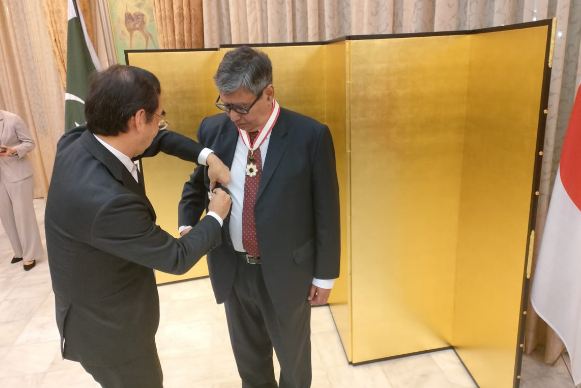
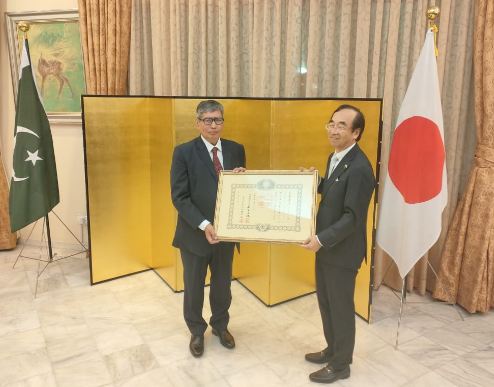
The Government of Japan Confers Imperial Decoration “The Order of the Rising Sun, Gold and Silver Star” on Imtiaz Ahmad, former Ambassador of the Islamic Republic of Pakistan to Japan


Islamabad, OCT 27 /DNA/ – The Government of Japan has conferred the 2023 Spring Imperial Decorations, “The Order of the Rising Sun, Gold and Silver Star” on Imtiaz Ahmad, former Ambassador of the Islamic Republic of Pakistan to Japan in recognition of his significant contribution towards strengthening friendship, cultural and economic relations and mutual understanding between Japan and Pakistan. The Order of the Rising Sun is awarded by His Majesty the Emperor of Japan to Japanese and foreign individuals in recognition of their long-time contributions.

On behalf of the Government of Japan, H.E. Mr. WADA Mitsuhiro, the Ambassador of Japan to the Islamic Republic of Pakistan conferred the decoration on H.E. Mr. Imtiaz Ahmad at a ceremony held at the Ambassador’s residence on October 27th in recognition of his decades of service. The ceremony was attended by the family, relatives, friends, and colleagues of H.E. Mr. Imtiaz Ahmad. H.E. Mr. Asad Majeed Khan, former Foreign Secretary, and former Ambassador of the Islamic Republic of Pakistan to Japan, also graced the occasion with his kind presence.

In addition to his regular diplomatic activities, he has made great contributions to the Japanese people. During his tenure as Deputy Chief of Mission at the Embassy of Pakistan in Tokyo, the Great East Japan Earthquake occurred on March 11, 2011. After the earthquake, he reached out to the Pakistani community in Tokyo and visited the affected areas with them every weekend to serve Pakistani food and distribute relief supplies. Many Japanese people were moved by his and the Pakistani people’s dedication, and his presence with the disaster victims was highly praised by the Pakistani and Japanese media.

In July 2019, H.E. Mr. Imtiaz Ahmed came back to Japan, as the Ambassador of Pakistan. That year has marked the beginning of a new era, Reiwa, for Japan. Ambassador Imtiaz has always played a significant role in strengthening our ties. Last year, when Japan and Pakistan celebrated the 70th anniversary of diplomatic relations, H.E. Mr. Imtiaz Ahmad played an important role in making this celebration a special one even amidst the difficult times of Covid 19 pandemic.

In his congratulatory remarks, H.E. Ambassador WADA greatly appreciated the efforts of Ambassador Imtiaz and said this prestigious Imperial decoration is the acknowledgement of his efforts and dedication towards the further strengthening of friendly relations between Japan and Pakistan. Fluent in Japanese language and well versed with Japanese culture, Ambassador Imtiaz truly played the role of a bridge between Japan and Pakistan and deserve our sincere applause and commendation, said Ambassador WADA.

On receiving the award, H.E. Mr. Imtiaz Ahmad expressed his gratitude to the Government of Japan and the Embassy of Japan in Islamabad for honoring his dedications by holding the special conferral ceremony in Ambassador’s residence.

Turkey at 100: Inspiring progress in a changing world

Turkey at 100: Inspiring progress in a changing world

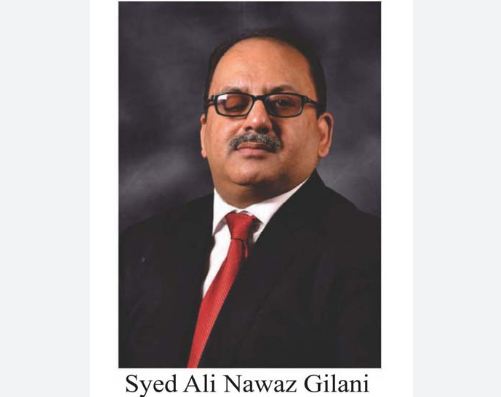
Syed Ali Nawaz Gilani

“The future belongs to those who believe in the beauty of their dreams.” – Mustafa Kemal Atatürk. Ankara, Turkey – October 29, 2023, marks a historic date in the annals of time, commemorating the centenary celebration of the Republic of Turkey since its monumental inception in 1923.

Mustafa Kemal Atatürk, the visionary architect of modern Turkey, laid the cornerstone for a nation that not only shines as a beacon of hope and prosperity for its people but also resonates as an emblem of progress across the Muslim world.

This momentous milestone underscores Turkey’s incredible journey toward socio-economic development and its vital role in nurturing profound bonds with nations worldwide, most notably its deep-rooted connection with Pakistan.

Turkey has endured the tumultuous winds of history, facing five successful military coups since the birth of the Republic in 1923. However, the events that unfolded on that fateful Friday marked a daring attempt at the sixth coup, with soldiers marching against President Recep Tayyip Erdoğan and his ruling Justice and Development Party, known as the A.K.P.

Nestled within the heart of this remarkable nation is a constitutional secular state, a unique blend of history and modernity. Turkey, with more than ninety-five percent of its population adhering to the Muslim faith, carries the legacy of once being the seat of a mighty Islamic empire.

Throughout its storied history, the Turkish military has often stood as a stalwart guardian, shielding the cherished principles of secularism and the Constitution, diligently preserving the vision of its founding father, Mustafa Kemal Atatürk.

Turkey also shares a profound connection with the Indian subcontinent, which reviews the complexities of Muslim identity. As time flowed on, the dynamics of Muslim identity in India underwent significant transformations. Following the reign of Shah Alam II, a practice emerged that held deep symbolism – the recitation of the name of the Ottoman caliph during the Khutba, the Friday sermon.

This seemingly subtle act signified a profound shift in perception, indicating that the mantle of safeguarding and defending the Muslim community in India had passed from the Mughal emperor to the Ottoman Caliph, the spiritual leader of the Ottoman Empire.

The passage of a century has borne witness to Turkey’s remarkable metamorphosis into a regional powerhouse, replete with a robust economy and a rich cultural heritage. It stands as a dynamic and influential global player.

The transformation of Turkey’s economic landscape across the past century is nothing short of extraordinary. Its commitment to diversification, innovation, and visionary leadership has catapulted it into the echelons of emerging economic giants. Straddling the continents of Europe and Asia, Turkey’s strategic geographical position has amplified its global significance.

Embarking on ambitious endeavors such as Vision 2023, Turkey is poised to continue its journey toward becoming one of the world’s leading economies by its centennial anniversary. While the path ahead is laden with challenges, it also brims with opportunities for further progress, stability, and prosperity.

Over the course of the century, Turkey has borne witness to a remarkable economic transformation. This evolution has been marked by diversification, innovation, and technological advancement across various sectors. In recent years, Turkey has been ardently working towards establishing itself as a regional hub across a spectrum of fields, encompassing finance, manufacturing, tourism, and agriculture, to name a few.

Its geographical location at the crossroads of Europe and Asia has conferred upon it a unique advantage, facilitating international trade and beckoning foreign investments. Under the sagacious leadership of President Recep Tayyip Erdoğan, Turkey has embarked on a series of comprehensive reforms aimed at fortifying economic growth and stability.

Initiatives like the Vision 2023 plan, unveiled in 2011, have set audacious targets, envisaging Turkey as one of the world’s top ten economies by its centennial anniversary. These reforms have fostered an environment conducive to foreign direct investment, nurturing both domestic and international trade.

This journey is nothing short of miraculous. Turkey’s path to progress is emblematic of relentless pursuit – of growth, modernization, and diversification. It has transitioned from a primarily agrarian economy into a dynamic and multifaceted one.

Diversification stands at the heart of Turkey’s economic prowess. The nation has been unwavering in its promotion of innovation and technological advancement across a spectrum of industries. This strategic approach has enabled Turkey to diversify its economic foundation, transcending traditional sectors and embracing novel opportunities.

In recent times, Turkey has been zealously endeavoring to establish itself as a regional hub, spanning various sectors from finance and manufacturing to tourism and agriculture. Its geographical juncture at the intersection of Europe and Asia has played a pivotal role in its regional ascent.

Turkey’s unique geographical position bestows a strategic advantage, bridging two continents and serving as an ideal conduit for international trade.

This geographic centrality has enticed businesses and investors eager to leverage Turkey’s role as a gateway to both Europe and Asia.

The visionary leadership of President Recep Tayyip Erdoğan has been instrumental in steering Turkey’s economic transformation. His administration has championed far-reaching reforms aimed at enhancing economic growth and stability. The commitment to creating an environment conducive to investment and innovation remains unwavering.

Among the most notable milestones in Turkey’s recent economic history is the inception of the Vision 2023 plan in 2011. This ambitious plan laid out a series of goals and targets for Turkey to attain by its centennial anniversary.

These targets spanned an array of economic facets, from GDP growth to foreign trade, infrastructure development to educational and healthcare reforms.

Central to Turkey’s economic transformation is its prowess in attracting foreign direct investment. The Vision 2023 plan, coupled with other reform initiatives, has nurtured an environment that is alluring to international enterprises. This has precipitated a surge in foreign investments, fueling economic growth and job creation.

Moreover, Turkey’s economic evolution is underscored by a substantial increase in both domestic and international trade. The nation’s enhanced infrastructure, streamlined trade regulations, and strategic geographical position have rendered it an attractive destination for businesses seeking to expand their markets.

While Turkey’s economic progress is indeed commendable, it has not been devoid of challenges. Economic stability and growth have, at times, been juxtaposed with the need to address issues such as inflation, fiscal deficits, and currency fluctuations. However, the nation’s leadership remains steadfast in their commitment to surmounting these challenges and pursuing opportunities for further growth.

Pakistan, a nation intertwined with Turkey through deep-rooted historical and cultural ties, has played an integral role in this journey of progress. The bilateral relationship between these two nations has burgeoned over the years, encapsulating various sectors, including trade, defense, education, and cultural exchange.

Pakistan and Turkey have joined hands in a plethora of initiatives, forging closer economic ties. The Pakistan-Turkey Free Trade Agreement, inked in 2013, has played a pivotal role in augmenting the volume of trade between the two nations, with a shared aspiration to reach $5 billion by 2023. Furthermore, collaborative projects such as the Istanbul-Tehran-Islamabad (ITI) train service and the Pakistan-Turkey Cultural Year have fortified people-to-people interactions and deepened cultural understanding between the two nations.

Turkish businesses have made substantial investments in Pakistan, significantly contributing to its economic development. Turkish companies have played a pivotal role in diverse sectors, including construction, energy, telecommunications, and textiles, imparting valuable expertise and creating employment opportunities for the Pakistani workforce.

Furthermore, educational and cultural exchanges have cemented the bond between Turkey and Pakistan. Countless scholarships, exchange programs, and cultural festivals have offered opportunities for students and citizens from both nations to immerse themselves in each other’s rich heritage, thus fostering enduring ties.

As Turkey commemorates its extraordinary centenary, we find ourselves compelled to applaud the nation’s unwavering dedication to socio-economic advancement. In this remarkable journey, Turkey’s partnership with Pakistan emerges as a shining exemplar, epitomizing the immense power latent within robust international bonds.

With an unshakable sense of purpose, Turkey boldly embarks on its next century, poised to achieve even greater feats. Turkey’s epic journey of a century is a guiding light, not just for its people but for nations worldwide. It stands as an enduring testament to the extraordinary outcomes that arise from unwavering dedication to progress, socio-economic growth, and international cooperation. The luminous torch of inspiration ignited by Turkey’s journey reaches far and wide, casting a hopeful glow on what can be achieved when vision, determination, and unity converge.

Today, Turkey stands as a vibrant tapestry of diversity and dynamism, a bridge between two continents, effortlessly weaving together a mosaic of cultures. With a thriving economy, a youthful population, and a strategically vital geopolitical position, Turkey emerges as a pivotal force on the global stage. Its role in regional politics, acting as a vital link between Europe and Asia, remains pivotal. Turkey continues to be a key influencer in international affairs, shaping the destinies of nations while cherishing its rich heritage.

The leadership of Turkey, rooted in an unshakable belief in the enchanting power of dreams, unwavering dedication to progress, and an unyielding commitment to modernity, stands as an enduring testament to the limitless potential residing within the hearts and souls of the Turkish people and the great nation they proudly call home.

[The writer is a Senior Media Consultant based in Peshawar. Can reach him at [email protected]]

Pakistan should focus on Africa for business promotion: Nigerian Envoy

Pakistan should focus on Africa for business promotion: Nigerian Envoy

Ambassador Karmoune said that the outgoing high commissioner played key role in promoting relations between Nigeria and Pakistan.

DNA

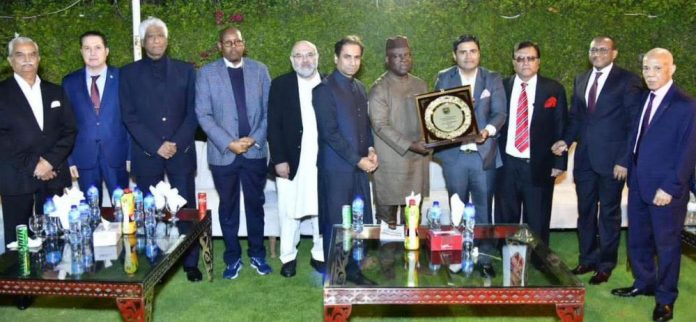
Islamabad, OCT 27: Ahsan Zafar Bakhtawari, President, Islamabad Chamber of Commerce & Industry (ICCI) hosted a farewell reception in honor of Muhammad Bello Abioye High Commissioner of Nigeria to Pakistan at his home. Ambassador of Morocco H.E. Mohamed Karmoune, Ambassador of Ethiopia H.E. Jemal Beker Abdula, Ambassador of Algeria H.E. Brahim Romani, Ambassador of Somalia Mrs. Khadija Mohamed Almakhzoumi, Ambassador of Mauritius H.E. Rashidally Soobadar, Director General Foreign Affairs Shahid Ali Bhutto, Asif Luqman Qazi of Jamaat-e-Islami, Khalid Iqbal Malik Group Leader ICCI and many other dignitaries and notables of the city.

Speaking on the occasion, H.E Muhammad Bello Abioye High Commissioner of Nigeria said that Africa is being termed as the Continent of future by the trade experts and Pakistan should focus on it to promote its trade by developing close cooperation with Nigeria. He said that direct flights between Nigeria and Pakistan have the potential to make significant increases in bilateral trade. He said that Nigeria and Pakistan can cooperate in many sectors including transportation, tourism, trade & commerce, industry. He said that during his tenure in Pakistan, he had taken several steps to facilitate the exchange of information, foster business-to-business meetings, and implement a simplified visa policy to support the entrepreneurs. Visa applications have been processed within 48 hours over the past two years, streamlining the process for business-related travel. He thanked Ahsan Zafar Bakhtawari President ICCI and Zafar Bakhtawari Secretary General UBG Pakistan for hosting a farewell reception in his honor and said that he has spent a very good time in Pakistan and would act as an Ambassador of Pakistan in future.

Speaking on the occasion, Ahsan Zafar Bakhtawari, President, Islamabad Chamber of Commerce & Industry (ICCI) said that Pakistan-Nigeria bilateral trade is just around US$ 114 million, which is quite low as compared to the actual potential of both countries. He stressed that Pakistan and Nigeria should accelerate efforts to increase bilateral trade at least up to US$ 3 billion in the next few years to achieve mutually beneficial results. He said that Pakistan can export many products to Nigeria and other African countries including textiles, rice, pharmaceuticals, surgical instruments, electrical appliances, processed food, cosmetic & beauty products, leather goods, IT products, financial services. He paid tribute to the services of H.E Muhammad Bello Abioye High Commissioner of Nigeria and hoped that he would play a role to promote business interests of Pakistan wherever he goes for his next assignment.

Dean of the African Group Ambassador of Morocco Mohammad Karmoune in his address lauded the services of the outgoing colleague and wished his best of luck. Ambassador Karmoune said that the outgoing high commissioner played key role in promoting relations between Nigeria and Pakistan.

Khalid Iqbal Malik Group Leader ICCI said that Pakistan and Nigeria are a combined market of about half a billion people and they can achieve much better results by developing close cooperation. He stressed for regular exchange of business delegations to explore all untapped areas of mutual cooperation between the two countries.

Zafar Bakhtawari, former President ICCI and Secretary General UBG Pakistan lauded the services of H.E Muhammad Bello Abioye High Commissioner of Nigeria who remained as an active Ambassador in Pakistan. He said that the direct flights between Pakistan and Nigeria can boost bilateral trade and urged that both countries should make all possible efforts to achieve this goal.

Pak vs SA: South Africa restrict struggling Pakistan to 270 in must-win game

Pak vs SA: South Africa restrict struggling Pakistan to 270 in must-win game

Pakistan had won the toss and opted to bat first against South Africa. A strong South African side on Friday restricted Pakistan to a 270-run total as the Babar Azam-led side struggled to score big in the game they must win to remain in the World Cup 2023.

Playing XI

Pakistan: Imam-ul-Haq, Abdullah Shafique, Babar Azam (c), Mohammad Rizwan (wk), Saud Shakeel, Iftikhar Ahmed, Shadab Khan, Mohammad Nawaz, Shaheen Afridi, Mohammad Wasim, Haris Rauf

South Africa: Temba Bavuma (c), Quinton de Kock (wk), Rassie van der Dussen, Aiden Markram, Heinrich Klaasen, David Miller, Marco Jansen, Gerald Coetzee, Keshav Maharaj, Tabraiz Shamsi, Lungi Ngidi

National Foundation Day of Korea celebrated in Islamabad

National Foundation Day of Korea celebrated in Islamabad

DOAM, Korean embassy commemorate 40 years of diplomatic ties with photographic exhibition

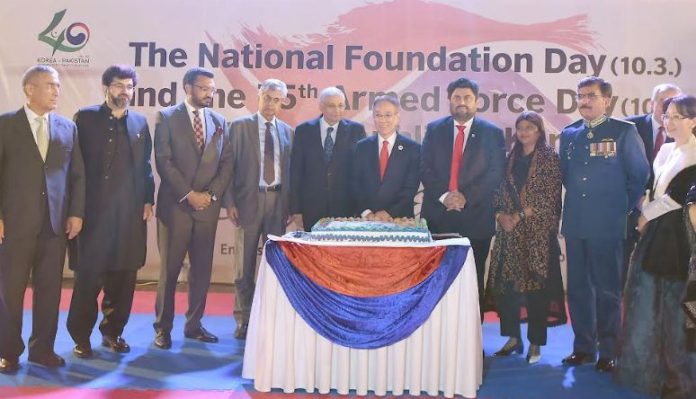
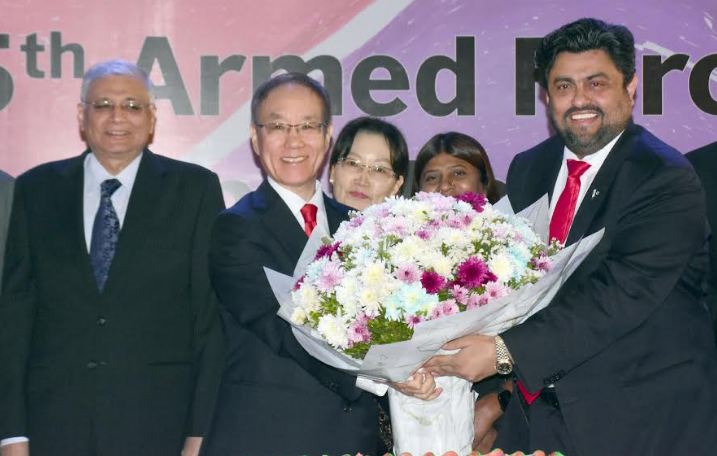
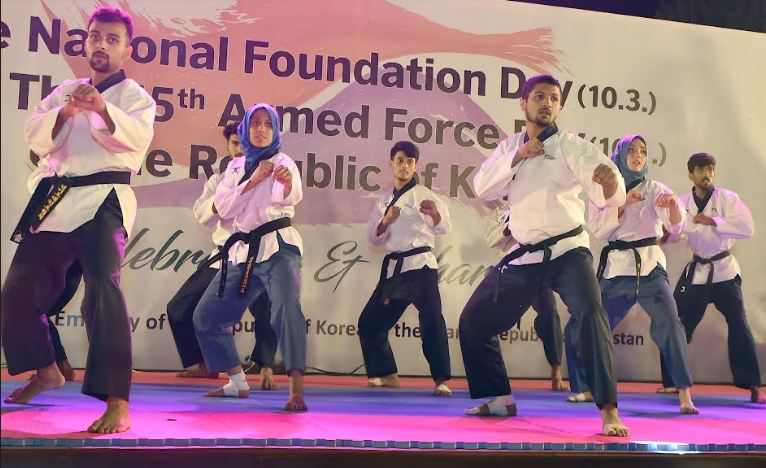
ISLAMABAD, OCT 27 /DNA/ – The Embassy of the Republic of Korea in Islamabad has celebrated the National Foundation Day and the Armed Forces Day of Korea as well as the 40th Anniversary of diplomatic relations between Korea and Pakistan.

The National Foundation Day ceremony was held at the residence of the Ambassador of the Republic of Korea and attended by the Minister for Planning, Development & Special Initiatives Muhammad Sami Saeed, as the Chief Guest while  Murtaza Solangi, the Federal Minister for Information & Broadcasting, and  Kamran Tessori, the Governor of Sindh.

Addressing the audience, the ambassador of the Republic of Korea said that Pakistan is channeling all its vigor towards national progress. Korea, with its wealth of experience and technological advancement, stands ready to support and partake in Pakistan’s endeavors. He mentioned that Korea is committed to fostering a partnership that reaps mutual benefits, ensuring our combined strengths produce greater results. The Korean embassy, too, is dedicated to this shared vision.

He mentioned that he seeks continued support and goodwill as they embark on this new 40-year chapter of collaboration between Korea and Pakistan.

The Envoy further stated that since 1983, the bond between both countries has deepened and diversified, spanning areas from politics and economy to culture and collaborative development.

He said “As we reflect upon our shared journey, it is essential to not only value our past accomplishments but also to set our sights on a future filled with bright new promises. Our aspiration should not be limited to the current status of ‘friendship and cooperation’, but should aim to elevate it further, creating a bond that stands strong through time and challenges”.

Meanwhile, An exhibition showcasing ’40 Years of Diplomatic Relations between the Republic of Korea and Pakistan’ was organized on Friday by the Department of Archeology and Museum (DOAM) in collaboration with the Embassy of the Republic of Korea.

In the opening session, notable speakers were Park Kijun, the Korean Ambassador, a representative from the National Heritage and Culture Division in Islamabad, the Executive Director of the Korea Cultural Heritage Foundation (KCHF), and Dr. Abdul Azeem, the Director General of DOAM.

The exhibition’s purpose was to commemorate the 40-year diplomatic relationship between Pakistan and the Republic of Korea.

During his address, the Joint Secretary of the National Heritage and Culture Division emphasized that the longstanding friendship and cooperation between Pakistan and South Korea, developed over four decades, had resulted in substantial advancements in their bilateral relations.

He highlighted that Pakistan and Korea both had a shared interest in ensuring a peaceful and prosperous South Asia and had worked together in various multilateral forums.

He stressed the broad spectrum of cooperation between Pakistan and Korea, encompassing areas such as cultural heritage.

Stay Connected

64FansLike
60FollowersFollow

Latest Reviews

Exchange Rates

USD - United States Dollar
EUR
1.17
GBP
1.34
AUD
0.67
CAD
0.73