Home Blog Page 883

The Red Sea Geopolitical Battleground

The Red Sea Geopolitical Battleground

Dr. Muhammad Akram Zaheer

Recent reports say that the Sudanese Armed Forces and the Russian government might sign a military and economic agreement soon. This deal shows that Russia wants to gain access to ports on the Red Sea, which would help its navy and increase its influence in the region. Russia also wants to build stronger political and military relationships across Africa. By working with countries like Sudan, Russia hopes to increase its power, challenge Western influence and find new economic opportunities. This situation shows how global power is changing in Africa. Lt. Gen. Yasir al-Atta confirmed in late May that the Sudanese Armed Forces and Russia are close to signing this important agreement.

The deal would let Russia set up a naval support facility on the Red Sea. In return, Russia would give weapons and ammunition to Sudan. This agreement is a strategic move by the Sudanese Armed Forces, showing they are unhappy with the West for not stopping outside support to their enemy, the Rapid Support Forces, in Sudan’s civil war.The deal, which has been in the works since February 2023, has been delayed because of Sudan’s civil war. Russia wants to strengthen ties with African nations facing sanctions from the EU and the US. However, tensions in the region, especially between the UAE, Saudi Arabia, and Qatar regarding Sudan’s conflict, and the ongoing Red Sea crisis, have made things more complicated.

These tensions have made it hard for these nations to effectively respond to attacks by the Houthis, showing the geopolitical challenges affecting the deal and regional stability.

          Russia and China are working to strengthen their positions in the Red Sea area. Russia is teaming up with Eritrea to build a naval facility at Massawa port, confirmed by Russian Foreign Minister Sergey Lavrov during his visit to Eritrea in January 2023. A Russian naval ship also visited Massawa in March 2024, suggesting Russia wants another port in the Red Sea besides Sudan. China is increasing its activities near the Bab el-Mandeb Strait, a key route between the Gulf of Aden and the Red Sea. With its military base in Djibouti, China has expanded its naval presence, allowing an Iranian spy ship to dock nearby.

This shows China’s deeper military involvement in the area.These actions by Russia and China show their growing influence, challenging the Biden administration’s policy in Africa. Critics, like Senator James Risch, say the current U.S. approach isn’t working. He suggests stronger ties with Somaliland to counter China and Iran’s influence.Russia and China’s moves highlight the Red Sea’s importance for military and economic control. Russia is using attacks by Houthis on commercial ships to increase its influence, offering safe passage to ships under the Russian flag. Russia might also support Houthis in placing sea mines, disrupting shipping and potentially forcing vessels to fly the Russian flag for safety.Russia might collaborate with various groups in the Horn of Africa to bypass sanctions and boost illegal oil and grain sales, which could help with energy and food challenges due to U.S. sanctions over Ukraine. Russia has used grain diplomacy, providing grain to African nations, including 25,000 tons to Somalia and forgiving $684 million in debt.

Somalia, struggling with finances due to fighting al-Shabaab, might seek Russian military help. With rising tensions between Somalia and Somaliland, especially before Somaliland’s November election, Somalia could turn to Russia and China for support. AbdirahmanIrro, an opposition leader and former ambassador to Russia, supports China and could play a role in this. Russia might interfere in Somaliland’s elections or disrupt its port agreement with Ethiopia to gain access to Berbera port.

Africa is likely to see more of Russia because of the United States’ weak policies in the region. This is especially concerning because the Horn of Africa, which includes the Red Sea and the Gulf of Aden, is very important for global shipping and trade. Whoever controls this area gains a big geopolitical advantage, making it a target for military and economic power.Russia is getting more involved in Africa, taking advantage of the gaps left by the US. This includes military cooperation, selling weapons, and economic investments. The possibility of Russia militarizing the Red Sea and the Gulf of Aden is worrying.

It could increase regional tensions and disrupt the stability of a key maritime corridor. Russia’s military presence could affect security far beyond Africa, including the Middle East and globally. This could lead to an arms race and more conflicts in an already unstable region. The US needs to respond strongly to maintain balance and prevent any one power from dominating this area.To reduce this risk, the Biden administration should look at the Somaliland Partnership Act again. This proposal suggests officially recognizing and supporting Somaliland, which has stable governance and a strategic location. Partnering with Somaliland could counter Russian and Chinese influence. The US can secure an important ally in the Horn of Africa, ensuring a cooperative presence in the region. Additionally, working more closely with the Department of Defense is essential. A better military strategy, including joint exercises, security assistance, and infrastructure development, would improve regional security and deter adversaries.

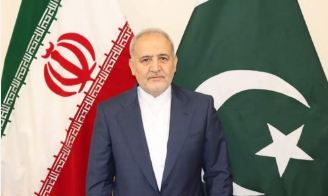
Iranian envoy criticizes US Congress for meddling in Pakistan’s electoral process

Reza Amiri Moghadam

ISLAMABAD, JUN 29 /DNA/ – Reza Amiri Moghadam, Ambassador of the Islamic Republic of Iran to Pakistan condemned the US Congress Resolution on Pakistan Election.

The ambassador said that among the wonders of the modern ignorance is that a country prevents cease-fire resolution by veto and supports the genocide of the people of Gaza by providing all kinds of lethal weapons to the Zionist regime, but the Congress of which passes a resolution questioning the nationwide election in an independent member of the United Nations.

Aside being an interference into domestic affairs of an independent member of the UN, It is a Sort of Extortion under the guise of supporting Democracy.

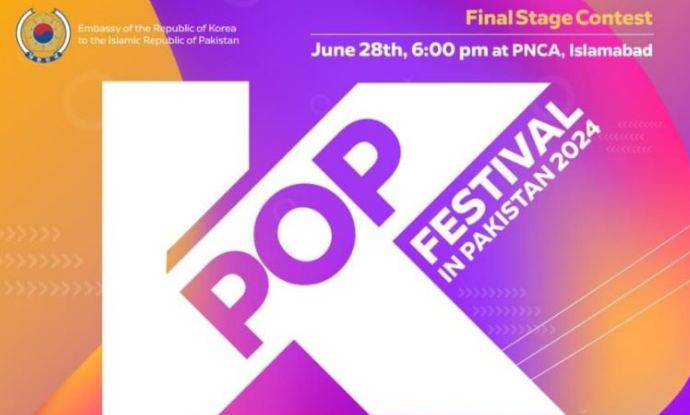
Embassy of Korea hosts 2024 K-Pop Festival in Islamabad

Embassy of the Republic of Korea

ISLAMABAD, JUN 29 /DNA/ – The Embassy of the Republic of Korea in Islamabad hosted the 2024 K-Pop Festival at Pakistan National Council of the Arts. This event was hosted by the Embassy of the Republic of Korea for the talented Pakistani youth to give them a chance to show-case their talent in music and dance. The winners will get the chance to perform at the 2024 Changwon KWF Festival.

Mr. Hassan Nasir Jamy, the secretary of the National Heritage and Culture Department attended the event as the Chief Guest.

The Ambassador of the Republic of Korea, H.E. Mr. Park Kijun, mentioned in his opening remarks that the k pop festival marks a celebration of music, culture and the vibrant bond between two nations. K pop is a phenomenon that transcends borders and bring people together.
He mentioned that the significance of this festival cannot be overstated. K pop has not only captured the hearts of millions globally but has also found a special place in Pakistan’s talented and enthusiastic youth. The passion and dedication of Pakistani k pop fans is truly inspiring.
The Ambassador further mentioned that the Embassy of the Republic of Korea will be hosting the 2024 Korea-Pakistan Cultural Gala in October at the Liaquat Gymnasium, and it will be the biggest event of the year.
Mr. Hassan Nasir Jamy, the secretary of tthe National Heritage Culture Department mentioned in his remarks that he appreciates the efforts the Embassy of the Republic of Korea in bringing events like the K-pop festival in Pakistan. The Secretary mentioned that Pakistan and Korea share friendly relations and the efforts made by the Embassy will further strengthen these relations.

The winers of the K-pop Festival received exciting gift prizes from the Embassy of the Republic of Korea. The grand prize winner received the Samsung Galaxy A15,

the Second Prize Winners received the Galaxy Smart Watch, nd the third prize winner won the Samsung Galaxy Wireless Earbuds 2.

The 2024 K-Pop festival hosted by the Embassy of the Republic of Korea provided a great opportunity to the Pakistani youth to showcase their talents and get a chance to perform at the 2024 Changwon KWF that will be held in Korea. The youth showed great enthusiasm towards the event and the house was full.

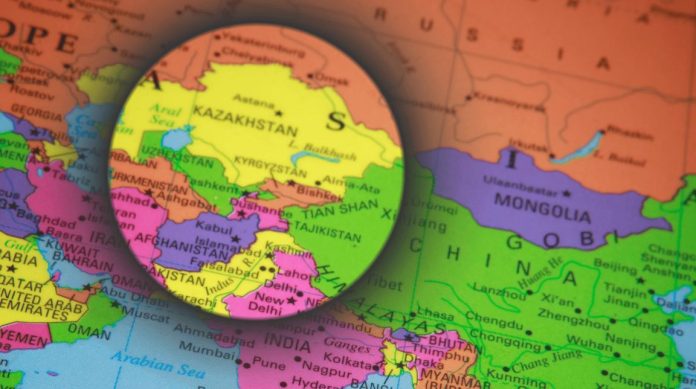
How the phrase “Spirit of Central Asia” appeared in world political science

How the phrase “Spirit of Central Asia” appeared in world political science

New trends in Central Asian politics of Uzbekistan

Mirzayev Gulom

Uzbekistan’s policy in Central Asia has reached a qualitatively higher level. The trend of developing mutually beneficial cooperation between the countries of the region is intensifying with its own characteristics. According to President Shavkat Mirziyoyev, Uzbekistan has given priority to strengthening relations of close friendship and cooperation with neighboring countries, and over the past historically short period – the political position and influence of our country in the Central Asian region and the Middle East. The world has grown dramatically. The spirit of trust in New Uzbekistan and the principles of striving for cooperation with our country have increased in the world.

Central Asia is a region with important and unique resources, economic and communication potential. In the 90s of the 20th century, the countries of the region embarked on their own independent path of development and joined the ranks of developing countries, promoting humanism, social justice, and security. in the region there is international harmony, peace and well-established foreign policy activities and international cooperation, based on the principles of international law, such as the creation of an atmosphere of peace, and consistently developing them.

In the direction of the foreign policy of New Uzbekistan, in establishing practical cooperation in the countries of Central Asia, the fifth priority direction of the “Uzbekistan-2030” strategy has been identified – the consistent continuation of a policy based on the principle of “A Safe and Peaceful State”. the region to a new level of quality, good neighborliness and strategic partnership with all neighboring countries, pays special attention to the rapid development of relations, regular and effective conduct of bilateral and multilateral negotiations in political, economic, cultural and humanitarian areas.

The measures taken by the government of the Republic of Uzbekistan to expand mutual cooperation between the countries of the region also play an important role. It should be noted that as a result of President Shavkat Mirziyoyev’s reforms in the field of foreign policy, diplomatic relations of Uzbekistan with the countries of the Central region literally rose to a new level.

The fact that Shavkat Mirziyoyev began his first visit to foreign countries as President of Uzbekistan with a visit to the countries of Central Asia, literally indicating that he has raised the development of regional cooperation to a new level.

On March 6-7, 2017, Shavkat Mirziyoyev made a state visit to Turkmenistan. It should be noted that this was Sh. Mirziyoyev’s first visit to a foreign country as the President of the Republic of Uzbekistan. This state visit of the President clearly confirmed that Uzbekistan attaches great importance to good neighborly relations in foreign policy, and was supported by the signing of the Strategic Partnership Agreement between Uzbekistan and Turkmenistan.

The visit of President Shavkat Mirziyoyev to Kazakhstan on March 23, 2017 and the signing of a Joint declaration on deepening the strategic partnership and strengthening the friendly neighborhood between the two countries opened a new era in interstate cooperation. Thanks to the joint efforts of Uzbekistan and Kazakhstan, in 2017 the volume of bilateral trade reached 2 billion US dollars, and such direct contacts serve as the basis for the effective implementation of bilateral and multilateral cooperation.

Following the state visit of President Shavkat Mirziyoyev to the Kyrgyz Republic, a declaration was signed on strengthening strategic partnership, friendship, good neighborliness and trust.

In 2018, the implementation of the new policy of the President of Uzbekistan to strengthen political trust and mutual solidarity in Central Asia continued consistently. In particular, President Sh. Mirziyoyev visited this country on March 9-10, 2018 at the invitation of the President of the Republic of Tajikistan E. Rahmon. During the visit, the leaders of the two countries signed a Joint Statement on Strengthening Friendship and Good Neighborhood and an Agreement on Certain Sections of the Uzbek-Tajik State Border.

In addition, as a result of the continuation of negotiations of the Republic of Uzbekistan on the delimitation and demarcation of the state border with neighboring countries, the delimitation of the state border lines with Kazakhstan has been completed, 85 percent of the border with Kyrgyzstan has been passed. agreed upon, and 99.9 percent of the border with Tajikistan has been agreed upon.

At the end of 2021, trade turnover between Uzbekistan and Tajikistan amounted to almost 600 million US dollars. The number of joint ventures has increased 10 times. If in 2017 there were 24 enterprises operating in Uzbekistan, then by the end of 2021 240 enterprises with the participation of Tajik capital began operating. There are 61 enterprises operating in Tajikistan based on investments from Uzbekistan.

On June 2-3, 2022, the presidents of Tajikistan and Uzbekistan Shavkat Mirziyoyev and the presidents of Tajikistan signed a historic declaration “On strengthening eternal friendship and alliance.” In addition, documents signed at the level of government, ministries and departments are designed to raise multifaceted Uzbek-Tajikistan cooperation to a new level.

Analyzing the platforms and formats of interstate dialogue organized on the initiative of Uzbekistan on regional cooperation, it should be noted that, on the initiative of the head of Uzbekistan, consultative meetings of the leaders of Central Asian countries are regularly held.

Consultative meetings are systematically organized as part of this initiative (March 2018, Kazakhstan; November 2019, Uzbekistan; August 2021, Turkmenistan; July 2022, Kyrgyzstan; 2023, Tajikistan). As positive trends in Uzbekistan’s policy in Central Asia, practical proposals made at these meetings can be noted. In particular, at the fourth consultation meeting held in Kyrgyzstan, he put forward a number of proposals that meet the interests of the region. In particular, the interests of the region today are served by such proposals as the creation of a system of border trade zones with unified and simplified procedures for the delivery of goods to Central Asia and the holding of a Central Asian festival of culture, art and cinema in each country.

Indeed, here it is permissible to note the high assessments expressed by many foreign experts to the initiatives of Uzbekistan. For example, Li Yunxuan, director of the Institute of European and Asian Social Development under the State Council of China, says: “Uzbekistan is an active participant in the processes of strengthening regional and interregional cooperation, in the mechanism of consultative meetings of leaders of Central Asian countries, in ensuring the effectiveness of cooperation on topical issues of ensuring regional stability and development plays an important role.

Indeed, as a result of the growing role of Central Asia in modern international relations, “the spirit of trust in New Uzbekistan and the principles of cooperation with our country have increased in the world.” … Our countries, which have been common brothers and sisters from time immemorial, began to act in close cooperation on many regional and global issues and socio-economic development.

The phrase “Spirit of Central Asia” has appeared in world political science.

On September 14, 2023, President of Uzbekistan Shavkat Mirziyoyev spoke at the fourth consultative meeting of leaders of Central Asian countries held in Tajikistan and put forward a number of proposals to strengthen new trends in the Central Asian region. politics of Uzbekistan. Including the development of trade and economic cooperation in the region; development of industrial cooperation; increasing interdependence in transport; ensuring security in the energy sector; ensuring food safety; Combating the threats posed by climate change.

The issue of creating an interstate economic council to expand practical cooperation on the entire range of trade and economic issues in the region also deserves attention. Another platform implemented at the initiative of Uzbekistan is the Central Asian Economic Forum. On March 15, 2019, the first Central Asian Economic Forum was held in Tashkent with the participation of deputy prime ministers of Uzbekistan, Kazakhstan, Kyrgyzstan, Tajikistan and Turkmenistan. Positive results were achieved through discussion at the forum of issues of further development of regional cooperation, studying the possibilities of the transport and communications complex, increasing the volume of mutual trade and the attractiveness of tourism.

At the initiative of Uzbekistan, in order to ensure good neighborliness and interethnic harmony between the peoples of the countries of Central Asia, on November 15, 2019, an international conference was held in Tashkent with the participation of experts and scientists from foreign countries on the topic “Central Asia is our common home,” which serves to bring the countries of the region closer together in cultural and humanitarian sphere.

Uzbekistan’s policy in Central Asia is consistent in identifying new trends, ensuring stability and security.

On March 9-10, 2018, the President of the Republic of Uzbekistan Shavkat Mirziyoyev made a state visit to the Republic of Tajikistan. At the high-level meeting, special attention was paid to strengthening interstate cooperation in the areas of ensuring regional security and stability, promoting the solution of international problems, combating terrorism and extremism and other types of organized transnational crime, which is an important achievement of Uzbekistan. diplomacy in ensuring regional security and stability. According to Tajik expert Kasimsho Iskandarov, relations between Tajikistan and Uzbekistan depend on the political will of state leaders. After Shavkat Mirziyoyev came to power, relations between the two countries changed dramatically. The rapid development of Tajik-Uzbek relations has solved many problems not only between the two countries, but also between all countries in the region. The political environment for developing regional cooperation has improved. 

Also, on the initiative of President Shavkat Mirziyoyev, on June 22, 2018, the UN General Assembly for the first time adopted a resolution “Strengthening regional and international cooperation to ensure peace, stability and consistent development in the Central Asian region”.  Our opinion is confirmed by the fact that Uzbekistan has put forward proposals for the formation of a regional system for forecasting emergency situations in the region, their prevention, early warning and joint counteraction.

It is worth noting that there are several factors that contribute to the development of good neighborly relations, such as mutual trade, investments and joint projects.

If we look at the numbers, we can witness that Uzbekistan’s trade turnover with the countries of Central Asia has grown to an unprecedented level. Trade turnover in 2017 amounted to $2.4 billion, and by the end of 2019 it reached $5.2 billion. In two short years the growth was 150 percent. Despite the restrictions caused by the pandemic, the growth in freight volumes observed in Central Asia in 2020 demonstrates the enormous potential for further expansion of international roads and railways and strengthening of transport and logistics infrastructure. In this regard, on August 6, 2021, within the framework of the third consultative meeting of leaders of Central Asian countries, at the Economic Forum of Central Asian Countries, held in the Avaza National Tourist Zone (Turkmenistan), the Uzbek side discussed the development of transport corridors connecting the countries of Central Asia, increasing efficiency use of the transit potential of the countries of the region, and also, it is worth noting that he made a proposal to strengthen cooperation on the harmonization and digitalization of customs clearance procedures. It is worth noting that “in recent years, radical reforms in our country, a consistent and active foreign policy, especially strengthening the environment of close neighbors in the Central Asian region, have increased the international prestige of our country”.

If we evaluate the new trends in the Central Asian policy of Uzbekistan, we can see that their impact on regional interaction and international relations is acquiring positive significance.

It should be noted that on December 19, 2019, at the plenary meeting of the UN General Assembly, a special resolution “Sustainable tourism and sustainable development in Central Asia” was adopted, proposed by President Shavkat Mirziyoyev.

In short, the special significance of the approaches in the regional policy of Uzbekistan lies in the fact that they serve to strengthen the belt of security, stability and cooperation throughout the region. In the context of increasing threats to regional and global security, the socio-economic well-being of countries, Uzbekistan is of great importance in determining new trends in the politics of Central Asia and the prospects for jointly combating modern dangers and threats.

Mirzayev Gulom,

Doctor of philosophy in historical sciences (PhD), associate professor at the University of Public Safety of the Republic of Uzbekistan

PTI blasts Kh Asif for provocative statement on cross-border strikes inside Afghanistan

ISLAMABAD: Pakistan Tehreek-e-Insaf (PTI) Core Committee hammered out a multi-pronged strategy to deal with the judges’ letter issue

Mandate thieves won’t be allowed to open door of armed conflict, operation: PTI Spokesperson

ISLAMABAD: /DNA/ – Pakistan Tehreek-e-Insaf (PTI) spokesperson strongly criticised the mandate thief Defense Minister Khawaja Asif for his irresponsible and provocative statement regarding cross-border strikes in Afghanistan, saying that the group of criminals were hell-bent to push Pakistan towards a conflict with its brotherly neighbouring country.

PTI Spokesperson demanded that the mandate thief and the puppet prime minister should take the nation into confidence forthwith regarding the very serious issue, as the mandate thieves would never be allowed to dent the identity and interests of Pakistan. 

He said that the gang of the rejected national criminals were plunging the country into the fire of lawlessness and instability through their foolish statements and policies.

PTI Spokesperson went on to say that the criminal rulers, who were in love with Narendra Modi, were using the same aggressive language about Afghanistan that India was using against Pakistan, adding that PTI government saved Pakistan from the potentially fatal fallouts of the US troop withdrawal from Afghanistan and laid a solid foundation for productive relations with the new Afghan administration.

He stated that during the PTI tenure, there was complete peace within the country and relations with neighbouring countries were improved considerably.

However, PTI Spokesperson lamented that as a result of the regime change conspiracy, those who were imposed on the nation had reversed all the hard work gains PTI government and had inflicted irreparable damage to the national interests for vested political mileages.

He contended that the plotters and planners of the regime change and their puppets destabilised Pakistan  and gave the terrorists an opportunity to flourish, adding that the national criminals, who lacked public support, were taking measures to hurt Pakistan’s defense, internal security and overall national interests.

PTI Steersperson said that opening the door to some kind of armed conflict with the country would be tantamount to the highest level of stupidity and open animosity to the country and the nation, when Pakistan itself was beset with untold problems.

He made it clear that PTI would never allow the country to engage in any military operation with vague goals internally or armed involvement with any of its neighbors including Iran and Afghanistan, adding that mandate thief and puppet prime minister should take note of the stupid statement of his clown minister and inform the nation about the real intentions of his puppet government.

PTI Spokesman stated that PTI was advocating establishing peaceful and respect based mutual relations with neighbouring countries.

IND vs SA: ICC confirms match officials for T20 World Cup final

IND vs SA: ICC confirms match officials for T20 World Cup final

Barbados, JUN 28: The International Cricket Council (ICC) on Friday announced the match officials for the T20 World Cup 2024 final which is set to be played between India and South Africa at the Kensington Oval, Barbados, on Saturday.

Both South Africa and India are unbeaten in T20 World Cup so far. The Proteas defeated Afghanistan in a one-sided encounter in the first semi-final while Rohit Sharma’s side dominated England in the second semi-final.

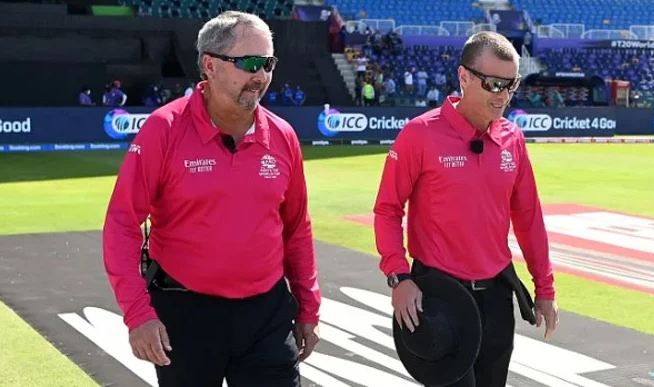
For the final, the experienced Richard Illingworth and Chris Gaffaney will be the on-field umpires. Richard Kettleborough will take the responsibility of the third umpire while Rodney Tucker will be the fourth umpire for the high-voltage clash.

Kettleborough not serving as an on-field umpire would be nothing less than a moment of relief for the Indian fans as he has, so far, officiated six of India’s knockout matches in ICC events, including the ODI World Cup 2023 final, and the Blues lost all of them.

In the second semi-final, chasing the 172-run target, England had a good start as in the first three overs, they had scored 26 runs without losing a single wicket. Jos Buttler looked in good touch but he was dismissed by Axar Patel on the first ball of the fourth over.

India’s spin department continued to dominate the defending champions as Jonny Bairstow (0 off 3), Moeen Ali (8 off 10), Sam Curran (2 off 4) and Liam Livingstone (11 of 16), all failed to score big for the team.

For India, Patel and Kuldeep bagged three wickets each while Bumrah got two as the entire English team was out for 103 runs in 16.4 overs.

India scored 171 runs while batting first with Rohit Sharma (57) and Suryakumar Yadav (47) top-scoring for them.

Meanwhile, in the first semi-final, South Africa bundled the entire Afghanistan team for just 56 runs and they had no trouble chasing the target as they reached home in just 8.5 overs.

Police arrest three drug peddlers with 3 kg charras

Police arrest three drug peddlers with 3 kg charras

RAWALPINDI, JUN 28 (DNA) — The district police in a crackdown on drug peddlers managed to recover 3 kg charras and arrested 3 accused, said a police spokesman here on Friday.  He informed that Gungmandi police recovered 1450 grams hashish from an accused namely Zarnosh.

Rawat police conducted a raid and recovered 1180 grams hashish from an accused Zulqarnain and Kalar Syedan police netted Zakria with 550 grams charras.

The accused would be challaned with concrete evidence, he said adding, actions against drug peddlers would continue to eradicate the menace. — DNA

Embassy of Brunei hosts ASEAN Movie Festival Screening

Brunei High Commissioner

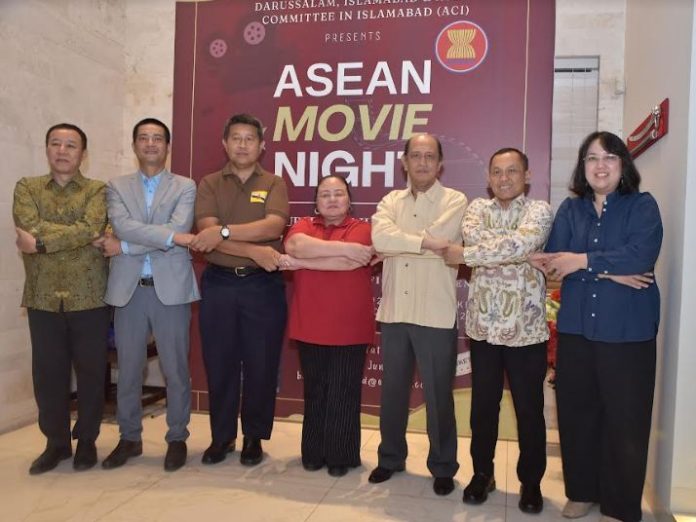
ISLAMABAD, JUN 28 /DNA/ – The Brunei High Commissioner, Kamal Ahmad, hosted a screening as part of the ASEAN Movie Festival at his residence in Islamabad.

The event was attended by Ambassadors and High Commissioners from ASEAN countries, underscoring the spirit of regional unity and cultural exchange.=DNA

Experts discuss Next-Generation Air Warfare Strategies at CASS Lahore

Experts discuss Next-Generation Air Warfare Strategies at CASS Lahore

ISLAMABAD, JUN 28 /DNA/ – The Centre for Aerospace & Security Studies (CASS), Lahore, hosted a seminar titled “Next-Generation Air Warfare: Transforming South Asian Air Forces” on 27 June 2024.

The event focused on the evolving landscape of air warfare, amid emerging  technologies. Ms Nidaa Shahid, Senior Researcher, CASS, delivered the introductory  remarks.

Air Commodore Khalid Banuri (Retd), a senior strategy analyst, delivered a compelling  keynote address wherein he discussed the evolution of air warfare through emerging  technologies such as AI and called for active partnership between the defence sector, government entities and the private sector to leverage emerging technologies and to  ensure the modernisation of the Pakistan Air Force (PAF).

Dr Ghulam Mujaddid, Assistant Professor, National Defence University, provided  insights from the Russia-Ukraine conflict, illustrating the effectiveness of advanced  weapon systems in air warfare. Noting that Russian nuclear forces are on high alert, he highlighted the delicate balance between conventional and nuclear escalation. He also emphasised the strategic use of cyber warfare in modern military operations to bolster the resilience of smaller air forces against larger adversaries.

Dr Adil Sultan, Dean FASS, Air University, illustrated the critical importance of continuous adaptation, stating that next-generation air dominance will feature advanced aircraft, drones, AI and integrated systems. He further called on the military-industrial complex to invest in dual-use technology to reduce costs. He also alluded to the role of think tanks in carrying out focused studies with the aim to provide policy relevant input to the policymakers.

In his concluding remarks, Air Marshal Asim Suleiman (Retd), President, CASS, Lahore, said that the PAF stands at a critical juncture in evolving geopolitical and military scenarios. He highlighted the pivotal role of emerging technologies such as AI, big data analytics, autonomous systems, cyber warfare, unmanned aerial vehicles, and hypersonic weapons in national defence. Noting that the IAF is incorporating these advancements, he stressed the need for the PAF to remain proactive and innovative.

He also praised Chief of Air Staff Zaheer Ahmad Babar Sidhu’s flagship project, NASTP, for its vital role in integrating these technologies and maintaining the PAF’s strategic edge.

The speakers stressed the necessity of equipping the PAF with the necessary tools to navigate tomorrow’s battlefields and safeguard the nation’s security interests.

Over 5000 students appear in HEC’s first-ever learning skills assessment test

HEC

Islamabad, JUN 28 /DNA/ – The Higher Education Commission (HEC) via its Higher Education Development Programme in Pakistan (HEDP) conducted the first-ever Learning Skills Assessment Test (LSAT) in affiliated colleges/universities across Pakistan. More than 5,000 students, showing a uniform regional, urban and rural, and gender representation, participated in this baseline study.

Featuring contemporary cognitive skills, LSAT is a general ability test formulated in collaboration with Dr. Salvador Malo, the World Bank International Consultant. It focuses on testing the students’ “General Ability” in three areas: Information Management, Communication, and Problem Solving.

Since the formal rollout of the revised Undergraduate Education Policy (UEP) in September 2023 across the country, it is important to gauge its impact on learning outcomes via an assessment study, especially in the public sector. Focusing on Pakistan’s comparatively neglected and resource-scarce tertiary education system — composed of affiliating universities and affiliated colleges — HEC conducted this assessment at 16 affiliated colleges and allied affiliated colleges.

There are 77 affiliating universities in Pakistan. Each of the selected 16 affiliating universities has around 10 affiliated colleges and represents major institutes having adequate infrastructure and human resources to execute the assessment of affiliated colleges students and a proven record of conducting tests/examinations for thousands of students.

Unlike most of the assessments conducted in Pakistan’s higher education sector, which focus on evaluating students’ competence in a specific subject, LSAT assesses the general abilities of students.

This is for the very first time in Pakistan’s higher education public sector history. Globally such tests are commonly used in educational settings to evaluate an individual’s overall cognitive aptitude and problem-solving skills. This general ability test is a standardised assessment that measures various cognitive abilities, including verbal reasoning, numerical reasoning, and abstract reasoning. It also randomly includes assessing spatial reasoning and mechanical reasoning.

Last year, HEC along with Dr. Salvador finalized the assessment tool and conducted a consultative workshop with select 15 faculty members from different HEIs from diverse educational and disciplinary backgrounds such as Science, Arts, Humanities, Social Sciences, Mathematics, and Psychology to fine-tune the methodology of the study.

The baseline LSAT data will establish a national baseline of students’ skills in Information Management, Communication, and Problem-Solving Skills. The next assessments will be conducted in December 2024 and May 2025 to assess the improvement in the acquisition of the general abilities among students enrolled in affiliated colleges of Pakistan.

HEDP is a flagship project of HEC, which supports HEC in its strategic areas of research, governance, capacity-building policymaking, and a wide variety of IT initiatives for the higher education sector.

Stay Connected

64FansLike
60FollowersFollow

Latest Reviews

Exchange Rates

USD - United States Dollar
EUR
1.17
GBP
1.35
AUD
0.72
CAD
0.73