Home Blog Page 882

Extensive awareness campaigns against drug abuse stressed for protection of young generation

Extensive awareness campaigns against drug abuse stressed for protection of young generation

PESHAWAR, JUN 30 /DNA/ – Participants of a seminar held in regard with creating awareness against drug abuse and illicit trafficking have laid stress on holding of such sessions round the year for protection of people especially young generation from this menace.

The `Drug Awareness Seminar’ was jointly organized by Anti-Narcotics Force (ANF) and Anti-Tobacco and Drug Control Committee of Khyber Medical University (KMU).

The event was attended by Brigadier Mazhar Hussain, Regional Director Commandant (RDC) KP, DPO Khyber, Saleem Abbas Kulachi, Member Anti-Tobacco and Drug Control Committee KMU, Zia-ul-Haq Sarhadi, Chairman Anti-Drug Control Committee KMU, Dr. Haji Bahadar, Deputy Director ANF KP, Wajid Yousaf, students of different schools and people from different walks of life.

The participants were also holding play cards inscribed with slogans against drug abuse and demand for measures for curbing of this menace.

Speaking on the occasion, Member Anti-Tobacco Drug Control Committee KMU, Zia-ul-Haq Sarhadi said such activities regarding awareness creation among masses should be held on regular basis throughout the year.

He said the hazard of drug use is increasing at an alarming level, affecting our young generation and there is dire need of taking strict measures for prevention.

Zia Sarhadi also appreciated constitution of Task Force by Khyber Pakhtunkhwa government against drug trafficking besides declaring a state of emergency.

“This is a right step in right direction and was need of the hour which KP government took,” Zia Sarhadi commented.

Director ANF, Brg. Mazhar Hussan highlighted that youth are the most affected segment of society when it comes to drug abuse.

He pointed out that these drugs are primarily smuggled from neighboring countries, often using minors for transportation.

Emphasizing the importance of the domestic environment in combating this issue, he noted that the Anti-Narcotics Force (ANF) is conducting intelligence-based operations and maintaining a strict watch on drug peddlers. To date, 96% of smuggling attempts have been thwarted, and assets worth at least 7,000 narcotics smugglers have been seized.

Chairman Anti-Drug Control Committee KMU, Dr. Haji Bahadar apprised participants that as part of its commitment to combat drug abuse, KMU has adopted the Higher Education Commission (HEC) Policy on Drug and Tobacco Abuse in Higher Education Institutions.

This policy mandates continuous awareness campaigns throughout the academic year, including seminars, workshops, and lectures, in collaboration with the Anti-Narcotics Force (ANF), non-governmental organizations (NGOs), and professionals from reputable rehabilitation centers.

Authorities directed to finalize all arrangements for Monsoon

Authorities directed to finalize all arrangements for Monsoon

RAWALPINDI, JUN 30 (DNA) — The Commissioner of Rawalpindi Division, Engineer Aamir Khattak, has directed the relevant authorities to finalize all the arrangements for Monsoon. According to the Commissioner, “About 30 percent more rainfall is predicted this year in the monsoon.” 

The relevant authorities had been directed to complete the dredging and de-silting project for Nullahs, particularly Nullah Lai, as soon as possible. Section-144 would be fully implemented to prevent the dumping of garbage and solid waste in nullahs, he said, adding that the damages from natural calamities could be reduced by early measures. 

Solid steps were being taken regarding pre-monsoon rains, he ordered. All the arrangements would be finalized as soon as possible to prevent possible flooding, Engineer Aamir Khattak said. 

He further directed that the Water and Sanitation Agency (WASA) in Rawalpindi had also been directed to timely clean the 11 main nullahs of Rawalpindi, which fall into Nullah Lai. The relevant officers were instructed to clean the drains to improve the sewerage system across the city. 

The sewage system would be activated before the start of monsoon rains, he said, adding that a proper water drainage system would be maintained. There should be no complaints of blocked drains anywhere in the city; he directed that the Municipal Corporation keep the banks of the drains free from encroachment. 

The Provincial Disaster Management Authority should keep its alert system updated and keep the citizens informed about the weather situation in time, he directed. Engineer Aamir Khattak ordered the WASA authorities to keep the roads and streets clear during rains, and the stagnant rain water should be removed within the shortest possible time frame. 

Special attention should be given to all vulnerable areas, particularly low-lying localities including Rattaamral, Katarian, Tippu Road, Dhoke Naju, Gawalmandi, and Zia ul Haq Colony, where the risks of being affected by flood water during monsoons are high. 

“Gawalmandi, which is the most vulnerable area near Nullah Lai, should be given special attention,” he directed. The Commissioner ordered the relevant authorities of all the government departments to fully cooperate with the Rescue-1122 personnel and WASA in the pre-monsoon measures. 

The health department should finalize all the arrangements to ensure the provision of adequate medical facilities to the citizens in case of any untoward situation, he instructed. — DNA

Balochistan business delegation calls on Indonesian envoy

Balochistan business delegation calls on Indonesian envoy

ISLAMABAD, Jun 30 (DNA): Charge’D Affaires of the embassy of the Republic of Indonesia to Pakistan, Rahmat Hindiarta Kusuma on Monday said that Balochistan has a vital role in the bilateral economic and trade relations between Indonesia and Pakistan.

The Charge’D Affaires of the embassy of the Republic of Indonesia to Pakistan, Rahmat Hindiarta Kusuma said this while talking to the delegation of a business community from Baluchistan led by former President Federation Pakistan Chamber of Commerce and Industry along with others.

Meanwhile Minister Councilor, economic and trade affairs of the Indonesian Embassy, Ingan Malem and Axelsyah R. Miraza from the economic section of embassy and President Chaman Chamber of Commerce and Industry were also part of the bilateral dialogue.

The Charge’D Affaires of the embassy of Indonesia said the volume of bilateral trade between Indonesia and Pakistan is less than its potential, which needs to be further increased and in this regard, businessmen from Baluchistan can play an important role in the economic and trade integration of Indonesia with the Central Asian states.

The senior diplomat said that Pakistan can become a trade hub of Central Asian states for Indonesia in the future, in which both countries can get economic and trade benefits by following comprehensive planning. He said that Pakistan is a very important trade partner of Indonesia in South Asia, whose importance has always been maintained.

Rahmat Hindiarta said that Pakistan is a geo-strategically important country, a natural geo-economic partner of Indonesia and in the future, mutual economic and trade relations between the two countries will increase.

He said that for the promotion of bilateral trade between the two countries, not only the market but also sector diversification is needed, which will increase mutual trade. The Senior diplomat said that the role of the business community of Baluchistan is very important for the promotion of mutual economic relations with Pakistan.

He said that the role of the local private sector, especially the Chamber of Commerce of Baluchistan, is important in the bilateral economic integration of the two countries. Rahmat said that the business community and chambers in Pakistan should go ahead and promote trade between Indonesia and Pakistan.

He said that there is a need for further promotion of people-to-people relations between the two countries so that the people of the two countries come closer to each other.

On this occasion, former president of Federation of Pakistan Chamber of Commerce and Industry, Engineer Duro Khan said that the role of Central Asian markets is very important to further increase the bilateral trade relations between Pakistan and Indonesia.

Rising Stars Hockey player Jawairia gets rousing welcome

Rising Stars Hockey player Jawairia gets rousing welcome

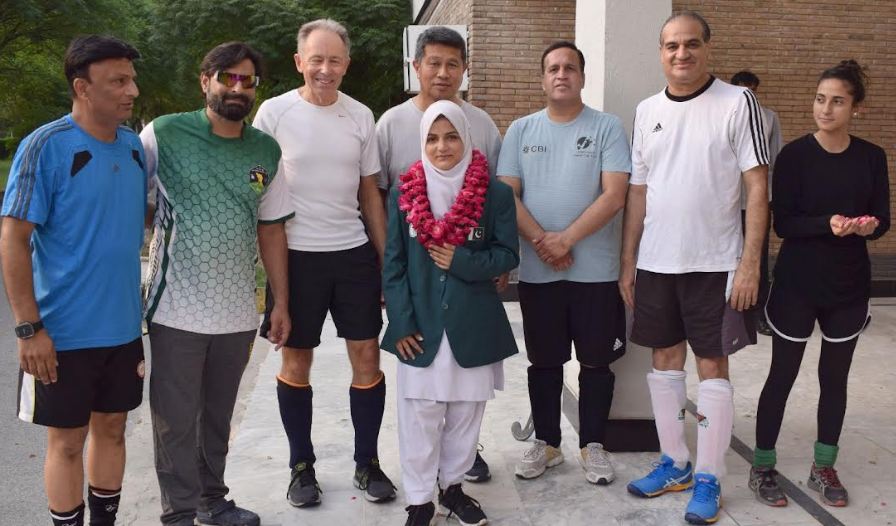
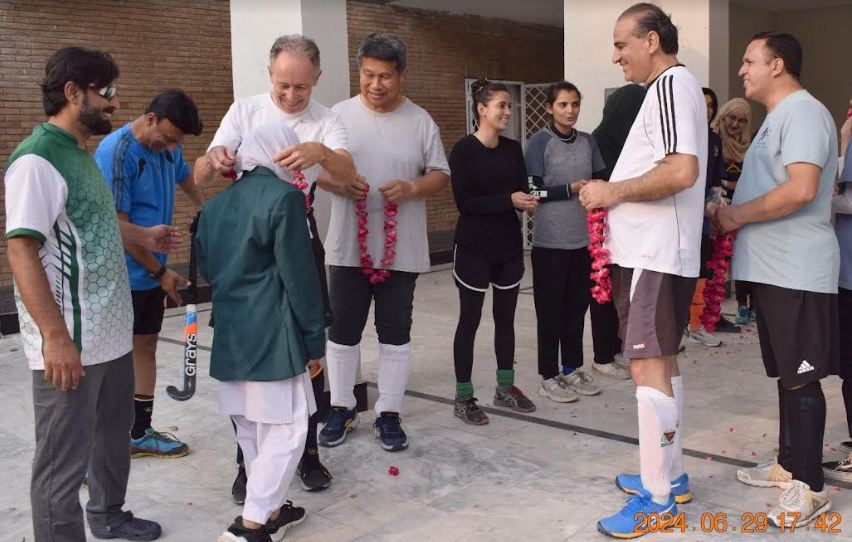
ISLAMABAD, JUN 30 /DNA/ – Jawairia Azeez, a member of the Rising Star Girls Hockey Academy in Islamabad, has been selected for the Pakistan Education Board Hockey Team’s tour of Turkey. Upon her arrival at the ground, she received a rousing welcome.

Australian High Commissioner Neil Hawkins, High Commissioner of Brunei Kamal Ahmad, and other team officials greeted her enthusiastically. The diplomats commended Jawairia’s efforts and encouraged her to maintain her excellent performance.

PM expresses condolence to King Mohammed VI over death of his mother

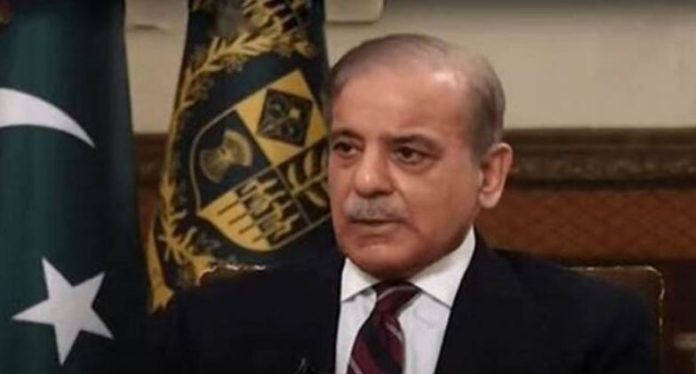
Shehbaz Sharif

ISLAMABAD, Jun 30 (DNA): Prime Minister Muhammad Shehbaz Sharif on Sunday expressed condolence to King Mohammed VI of Morocco over the death of his mother Princess Lalla Latifa.

“My heart goes out to the Royal Family and the people of Morocco in this moment of grief. May her soul rest in peace. Ameen!”, the prime minister further posted on X account.

India beat South Africa to become T20 World Cup champions after flawless winning streak

India beat South Africa to become T20 World Cup champions after flawless winning streak

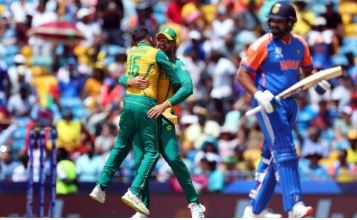
Kensington Oval, JUN 29: India were crowned the T20 World Cup champions on Saturday after maintaining their flawless winning streak after beating South Africa in the final at Kensington Oval on Saturday.

The Proteas lost wickets early with Reeza Hendricks in the second over and Aiden Markram in the third over.

Tristan Stubbs was knocked out by Axar Patel in the ninth over.

Quinton de Kock was out in the 13th over after scoring 39 runs.

Hardik Pandya got Heinrich Klaasen in the 17th over while Jasprit Bumrah got Marco Jansen in the 18th over.

India captain Rohit Sharma had won the toss and opted to bat and if the aim was to put South Africa under pressure it certainly worked with Kohli, who has struggled for form in the tournament, delivering a measured and controlled knock. Kohli delivered when India needed him the most, making 76.

Kohli and Axar Patel put on a partnership of 74 which was the foundation of a total of 176-7 that will prove challenging for South Africa before Shivam Dube helped step the tempo up at the end with 27 off 16 balls.

Kohli, who had come into the final averaging just 10.71, made the perfect start by hitting three fours off the opening over from Marco Jansen, with the 15 runs coming from the first six balls a record high for a T20 World Cup final.

Skipper Rohit, looking to maintain that momentum, then struck boundaries off the first two balls from left-arm spinner Keshav Maharaj but then misjudged a sweep shot, finding Heinrich Klaasen at mid-wicket who made a fine, low, diving catch.

Maharaj then claimed a second victim in his first over when Rishabh Pant also attempted a sweep but mis-timed his shot badly, top edging a full delivery straight up in the air and into the gloves of wicket-keeper Quinton de Kock.

Kohli was looking confident but was in need of someone to build a partnership, after Suryakumar Yadav lasted just four balls before he holed out to Klaasen at deep square-leg off Kagiso Rabada.

India were 45-3 at the end of the six-over powerplay and added 30 more, with no loss, at the halfway point in their innings.

Kohli and Axar were then motoring along nicely and the 100 came up off 82 balls with Axar smashing Rabada over long-on for six.

South Africa badly needed to break up the partnership and they got the breakthrough with some help from India — non-striker Axar (47) hesitated after looking for a quick single and De Kock did well to hit the stumps at the other end.

Kohli reached his half-century from 48 balls and celebrated by launching the next ball he faced, from Rabada, over long-on for six.

Kohli finally went in the 19th over caught by Rabada at long-on off Jansen after hitting six fours and two sixes in his 59-ball innings.

It was a very minor consolation for Jansen who ended with figures of 1-49 off his four overs.

Despite fears of rain, the game took place in bright sunshine and with a gusty wind blowing across the 28,000-capacity venue which was close to full.

Rohit and his South African counterpart Aiden Markram both named unchanged line-ups from the teams which won their respective semi-finals.

Squads
India: Rohit Sharma (captain), Virat Kohli, Rishabh Pant (wicketkeeper), Suryakumar Yadav, Shivam Dube, Hardik Pandya, Axar Patel, Ravindra Jadeja, Arshdeep Singh, Kuldeep Yadav, Jasprit Bumrah.

South Africa: Quinton de Kock (wicketkeeper), Reeza Hendricks, Aiden Markram (captain), Heinrich Klaasen, David Miller, Tristan Stubbs, Marco Jansen, Keshav Maharaj, Kagiso Rabada, Anrich Nortje, Tabraiz Shams.

SC Acquits Sender, Helds Messenger

Qamar Bashir

By: Qamar Bashir

The Supreme Court expressed visible displeasure when lawyer Faisal Siddique refused to offer an unconditional apology on behalf of 36 news channels that aired contemptuous press conferences by Senator Faisal Vawda and National Assembly member Mustafa Kamal. During these press conferences, the senator and MNA criticized the judiciary, demanding ethical standards for judges’ dual citizenship and transparency regarding their green cards. They also called for greater judicial accountability and scrutiny, purportedly in response to alleged interference by intelligence agencies in judicial proceedings at various court levels.

Certainly! Here’s a refined version:

Interestingly, the 36 news channels, acting as messengers, faced rigorous scrutiny throughout the three-hour proceedings for disseminating contemptuous messages from the offenders to the public. The proceedings appeared one-sided, with Chief Justice largely dominating the dialogue, limiting the advocates’ opportunity to present their case comprehensively. However, the Chief Justice attentively listened when another lawyer, purportedly aligned with the court, extensively discussed Quranic and Hadith teachings on handling heresy and backbiting in Islam, echoing the Chief Justice’s stance on the case in question.

It’s worth noting that in my current role, I am teaching media laws to probationers of the Information Group at the Information Services Academy. Our curriculum includes a historical perspective on the development of media laws, especially those pertaining to free speech, freedom of the press, and freedom of expression. Our research underscores that countries like the US, UK, and Sweden empower courts to issue contempt notices or take action against the media, particularly when it impacts the dignity and honor of the court, especially in ongoing cases.

In the United Kingdom, contempt is governed by common law principles and the Contempt of Court Act 1981, particularly Section 3, which outlines acts such as publishing material that could prejudice active legal proceedings. In the United States, Title 18, Section 401 of the US Code grants courts the authority to punish acts of contempt that obstruct justice or disrespect the court, with distinctions between civil and criminal contempt. In Sweden, contempt laws are found in the Swedish Penal Code, Chapter 7, addressing offenses against the administration of justice.

In Pakistan, the Supreme Court derives its power from Article 204 of the Constitution which empowers the Courts to punish any person who abuses or interferes with or obstructs the process of the court in way of disobey, scandalize the court, does anything which tends to prejudice the determination of a matter pending before the court and does anything which by law constitutes contempt of the court.

The Section 3 of Contempt of Court Ordinance 2003 says that whoever …. does anything which is intended to or tends to bring the authority of a Court or the administration of law into disrespect of disrepute, or to interfere with or obstruct or interrupt or prejudice the process of law or the due course of any judicial proceedings, or to lower the authority of a Court or scandalize a Judge in relation to his office, or to disturb the order or decorum of a Court, is said to commit “contempt of Court”. Whereas, Section 5 of the Ordinance determines the punishment of which may extend to six months’, or with fine which may extend to one hundred thousand rupees, or with both.

The clause 3(1)(e) of the PEMRA Code of Conduct, 2015, prohibits the media to not air any program which is against the integrity of the judiciary and armed forces of Pakistan.” PEMRA has the authority to impose penalties and regulatory actions including fines, warnings, and notices, as well as potential suspension or revocation of broadcasting licenses for serious or repeat offenses.

Unlike in Pakistan, the media outlets in the UK, US, and Sweden adhere to stringent guidelines to avoid contempt of court issues when covering press conferences or content related to ongoing legal proceedings. In the UK, media must refrain from publishing material that could substantially risk prejudicing active legal cases, especially criminal trials, and avoid speculative or detailed reporting that could impact trial fairness. In the US, the media follow federal and state laws to prevent contempt, ensuring accuracy, fairness, and avoiding sensationalism or inflammatory content that could undermine judicial authority. In Sweden, the media focuses on maintaining respect for the judiciary and refraining from statements that could disrupt legal processes, thus upholding the integrity of the legal system while safeguarding freedom of the press.

Like in Pakistan, in the US, UK, and Sweden as well, the media are considered messengers of information, at the sametimes, they are legally responsible for what they broadcast or publish, especially when airing contemptuous statements made by others.

In these countries even though primary responsibility may lie with the original sender of the statement, the media is  held accountable, if they knowingly disseminate material that could interfere with justice or undermine the authority of the courts. This requires the media to uphold standards of responsible journalism, including verification of information and avoidance of content that could harm the integrity of legal processes.

In various countries, media outlets have faced penalties for airing contemptuous statements against the judiciary. In the UK, The Daily Mirror and The Sun were fined under the Contempt of Court Act 1981 for publishing prejudicial articles during a murder trial. Similarly, in the US, the New York Post was fined for potentially biasing a jury with its coverage of a murder trial. Sweden’s Expressen also encountered penalties for publishing information that could sway a criminal trial. In India, Prashant Bhushan’s tweets critical of the judiciary led to a contempt ruling by the Supreme Court. In Pakistan, Geo News was temporarily banned and prosecuted for content seen as undermining judicial authority.

Given the circumstances, regardless of the arguments put forth by the lawyer representing the 36 channels, it is unlikely to save them from facing punishment for their deliberate negligence and failure to adhere to the explicit provisions of the Constitution, the Contempt of Court Ordinance 2003, and the PEMRA Code of Conduct. Therefore, instead of attempting to assert his professional prowess, which is likely to be unsuccessful, Mr. Faisal Siddiqui should file an unconditional apology and leave the fate of the defiant channels in the hands of the court. Failure to do so may result in penal actions under both the Contempt of Court Ordinance 2002 and the PEMRA Act 2007.

By: Qamar Bashir

Former Press Secretary to the President

Former Press Minister to the Embassy of Pakistan to France

Former MD, SRBC

T20 World Cup: India lose 3 wickets early on in South Africa final clash

T20 World Cup: India lose 3 wickets early on in South Africa final clash

India are 82-3 after 11 overs in their T20 World Cup final clash against South Africa at the Kensington Oval on Saturday.

India lost major wickets early on as captain Rohit Sharma and Rishabh Pant were knocked out in the second over courtesy of Keshav Maharaj.

India’s Suryakumar Yadav was caught out courtesy of Kagiso Rabada in the fifth over.

Earlier, Sharma won the toss and opted to bat in the final. The toss was held in bright sunshine and with a gusty wind blowing across the 28,000 capacity venue.

Rohit and his South African counterpart Aiden Markram both named unchanged line-ups from the teams which won their respective semi-finals.

The possibility of stormy weather over the weekend, with some rain forecast for Saturday, had raised concerns among organisers but as early arrivals began taking their seats there was no sign of rain.

The final concludes a nearly month-long tournament and features two teams who have been unbeaten throughout the competition.

The 28,000-capacity venue, regarded by many as the spiritual home of West Indies cricket, is expected to be sold out with many Indian fans travelling from afar for the match.

Even if some showers pass through, the expectation is that the reserve date of Sunday will not be necessary.

A tournament which has been a mixed bag in terms of quality, entertainment and attendance has certainly succeeded in setting up a final between the two best teams in the shortest format.

India crushed defending champions England by 68 runs in Guyana on Thursday, the day after South Africa thrashed Afghanistan by nine wickets in Trinidad to end a long and agonising wait for a title game.

Since entering World Cups in 1991, following the end of apartheid, South Africa had lost seven semi-finals in the two short formats.

This will be South Africa’s first senior men’s final since the inaugural Champions Trophy in Bangladesh in 1998 when the Proteas beat the West Indies in the title match.

India experienced double disappointment last year of defeat in the World Test Championship final and the 50-over World Cup — losing both to Australia.

The country, which more than any other popularised the shortest form with the hugely successful Indian Premier League, now stands on the brink of its second T20 World Cup title and first since the inaugural edition in 2007.

Squads
India: Rohit Sharma (captain), Virat Kohli, Rishabh Pant (wicketkeeper), Suryakumar Yadav, Shivam Dube, Hardik Pandya, Axar Patel, Ravindra Jadeja, Arshdeep Singh, Kuldeep Yadav, Jasprit Bumrah.

South Africa: Quinton de Kock (wicketkeeper), Reeza Hendricks, Aiden Markram (captain), Heinrich Klaasen, David Miller, Tristan Stubbs, Marco Jansen, Keshav Maharaj, Kagiso Rabada, Anrich Nortje, Tabraiz Shams.

IND vs SA: India elect to bat first in T20 World Cup final against South Africa

India elect to bat first

Barbados, JUN 29: In a high-stakes encounter at the Kensington Oval, Barbados, India’s captain Rohit Sharma won the toss and elected to bat first in the T20 World Cup 2024 final against South Africa.

Sharma, speaking after the toss, acknowledged South Africa’s strong performance throughout the tournament and emphasized the importance of maintaining composure against a formidable opponent.

“It’s about understanding each player’s role, staying calm, and treating this like any international match against a top-tier team,” Sharma remarked, as quoted by ESPN Cricinfo.

Meanwhile, South Africa’s skipper Aiden Markram expressed his confidence in batting first had his team won the toss, noting the dry pitch conditions.

“The pitch looks pretty dry. We’re aiming for that perfect game today, despite the pressure. It’s a fantastic opportunity for us, being in our first final,” Markram commented.

Both teams have opted for unchanged playing XIs from their respective semi-final victories, highlighting their confidence in the current lineup.

India’s last appearance in a T20 World Cup final dates back to 2014, where they were defeated by Sri Lanka in Dhaka, while their last ICC trophy victory was in 2013. The team under Sharma faces significant pressure to end this title drought.

In contrast, South Africa, notorious for faltering in crucial matches (“chokers” in cricketing terms), are making their maiden appearance in a T20 World Cup final. Despite reaching the semi-finals in 2009 and 2014, they fell short against Pakistan and India, respectively.

Playing XIs
India: 1 Rohit Sharma (capt), 2 Virat Kohli, 3 Rishabh Pant (wk), 4 Suryakumar Yadav, 5 Shivam Dube, 6 Hardik Pandya, 7 Axar Patel, 8 Ravindra Jadeja, 9 Arshdeep Singh, 10 Kuldeep Yadav, 11 Jasprit Bumrah.

South Africa: 1 Quinton de Kock (wk), 2 Reeza Hendricks, 3 Aiden Markram (capt), 4 Heinrich Klaasen, 5 David Miller, 6 Tristan Stubbs, 7 Marco Jansen, 8 Keshav Maharaj, 9 Kagiso Rabada, 10 Anrich Nortje, 11 Tabraiz Shamsi.

FRIA pleads for reviving growth in manufacturing sector

FRIA

LAHORE, JUN 29 /DNA/ – The Ferozepur Road Industrial Association (FRIA) has pleaded for formulating economic plan aimed at reviving growth in large-scale manufacturing, small and medium-sized segments, the service sector, and exports.

The FRIA senior vice chairman Shahbaz Aslam said the government should prioritize resolving the energy crisis by providing sufficient and affordable electricity and gas to industries. The import bill should be reduced by imposing bans on luxury products. He highlighted controlling inflation to ensure affordable living costs for the masses and containing the cost of production for businesses at a local level.

He stressed the need for a revisit of the economic policies, as the economic indicators throughout the 2024 remained very depressed amidst high inflation, low exports, depleting foreign reserves and continued uncertain position of the local currency.

Shahbaz Aslam said that almost all indicators of the economy continued to show poor performance during 2024, including volatile exchange rate, unprecedented hike in markup rate, repeated increases in electricity rates, gas shortage, price spiral, mismanagement and bad governance, becoming the hallmarks of the government. He observed the negative economic indicators and uncertainty over resumption of the International Monetary Fund program continued to push the rupee towards a new historic low against the US dollar especially in first half of the calendar year of 2023.

He said that massive fall of rupee value continued to damage the economy, as the rupee witnessed a huge depreciation; one of the highest devaluations of local currency in Pakistan’s history in this period. Mian Anjum urged the policy makers to concentrate on increasing tax-to-GDP ratio which was the lowest in Pakistan in the region in 2023. The FRIA leader warned if the govt failed to take appropriate measures for economic revival, the trade and industry will face a complete shutdown, asking the government to convene a conference, taking the business community onboard.

He called for solid economic plan from all the stakeholders, in view of deteriorating energy crises following the tough conditionalities of the International Monetary Fund (IMF), making this fiscal year more complicated and unstable for the economy. The FRIA leader said that the government should provide its economic stability plan to avert further losses, warning that numerous global issues are impacting world economies.

The PIAF senior leader observed that besides increasing exports and controlling imports the government will have to take administrative measures, as a large demand of cash dollars are seen in the market. He said that the monetary tightening and exchange rate depreciation resulted in higher inflation, public debt and debt servicing. The empirical evidence showed that the one percent monetary tightening hiked the inflationary pressure by 1.3 percent in the case of Pakistan, he added.

Stay Connected

64FansLike
60FollowersFollow

Latest Reviews

Exchange Rates

USD - United States Dollar
EUR
1.17
GBP
1.35
AUD
0.72
CAD
0.73