Home Blog Page 881

After UN body’s report on Imran Khan, US asks Pakistan to respect people’s basic rights

After UN body's report on Imran Khan

WASHINGTON, JUL 2: After a United Nations body decried Pakistan Tehreek-e-Insaf (PTI) founder Imran Khan’s detention in “politically motivated” cases, the US State Department has asked Pakistan to respect people’s fundamental human rights.

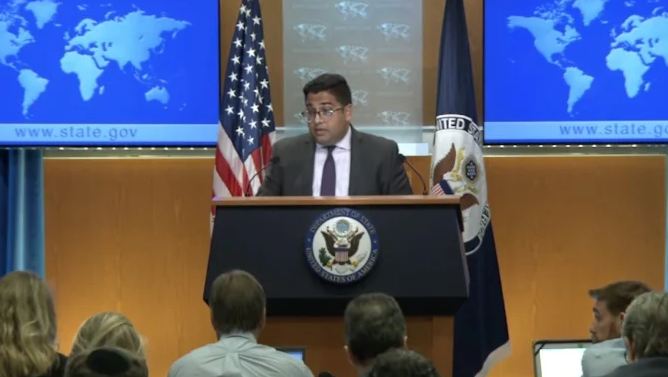
Addressing a press briefing on Monday, Principal Deputy Spokesperson Vedant Patel said the US officials, whether that be Department of State Secretary Antony Blinken, Assistant Secretary Donald Lu or Ambassador Donald Blome, have consistently and privately and publicly urged Pakistan to respect the rights of its people in line with its constitution and international commitments.

He said this in response to a question about the resolution passed by the US House of Representatives seeking an investigation into the Feb 8 elections. The official refused to speak on the pending congressional legislation, however, he stressed upon respecting human rights.

“We urge the Government of Pakistan to respect human rights and fundamental freedoms, including the freedom of expression, freedom of association, peaceful assembly, and the freedom of religion as well,” he said.

The comments from the State Department came after the Geneva-based UN Working Group on Arbitrary Detention declared the PTI founder’s detention arbitrary and in violation of international law.

“…appropriate remedy would be to release Mr. Khan immediately and accord him an enforceable right to compensation and other reparations, in accordance with international law,” the group said.

The UN body said Khan’s legal woes were part of a “much larger campaign of repression” against him and his political party. It remarked that during the 2024 elections, members of PTI were arrested, tortured and their rallies were disrupted.

It also alleged “widespread fraud on election day, stealing dozens of parliamentary seats.”

Imran Khan’s detention ‘internal matter’
On the other hand, the State Department reiterated that Imran Khan’s detention was an internal matter of the country.

“…in the case of Khan, you’ve heard us say this before: This is an internal matter for Pakistan,” said the spokesperson.

To a question about the credibility of Pakistani elections and allegations of massive rigging, Patel said Pakistani elections continued to be an area of focus for the US.

“This is something that we have continued to raise with our partners in Pakistan, yes. That continues to be an area of focus of ours.”

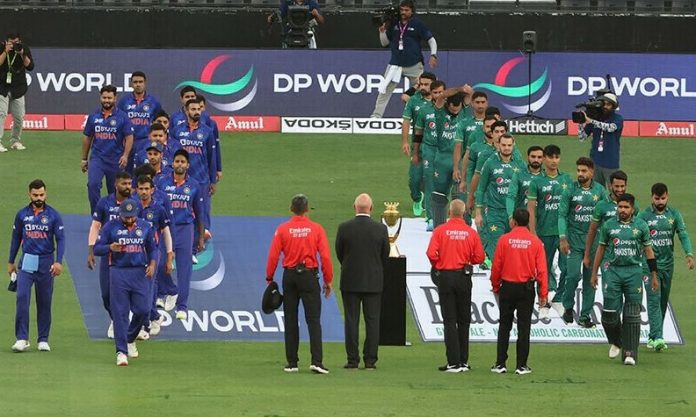
PAKISTAN vs. INDIA: Is the cricketing comparison still justifiable?

PAKISTAN vs. INDIA: Is the cricketing comparison still justifiable?


By Fahad Parvez

Cricket is more than just a sport in Pakistan and India; it’s a passion that unites millions. A common trend among fans in both countries is to compare their players to those from across the border. While rivalry can fuel excitement, it’s important to acknowledge the differences in achievements and capabilities objectively. Over the past decade and a half, Indian cricket has seen a marked improvement, while Pakistan cricket has undergone a perpetual decline. This suggests that maybe it is time for Pakistani fans to stop comparing their players to those in India. Here are a dozen compelling reasons to support this argument:

1. World Cup Record:

India has a more impressive record of winning World Cups compared to Pakistan. India has won the ICC Cricket World Cup twice (1983 and 2011) and the ICC World T20 also twice (2007 and 2024). In contrast, Pakistan has won the ICC Cricket World Cup in 1992 and the ICC World T20 in 2009. The Indian team approaches the World Cup with meticulous planning, often starting preparations months in advance. In contrast, Pakistan is known for its last-minute, knee-jerk team selections, as evidenced in the lead-up to the recent T20 World Cup. For India, an early exit from the World Cup prompts immediate corrective measures. For Pakistan, it typically results in the formation of a fact-finding committee that seldom produces effective outcomes. Any “surgeries” implemented are often temporary, with a tendency to wait for public memory to fade before reverting to the status quo until the next crisis occurs.

2. Recent Head-to-Head Record:

In recent encounters, India has consistently had the upper hand against Pakistan. This trend is particularly evident in major tournaments, where India’s superior planning and execution have outshone Pakistan, apart from a couple of matches. India has secured miraculous wins through sheer grit and self-belief, while Pakistan has frequently fallen short. Pakistan’s defensive mindset against India’s formidable team is often apparent, and they seem more prone to cracking under pressure.

3. Batting Averages and Strike Rates in Big Games:

Indian batsmen currently boast better averages and strike rates in crucial limited-over matches compared to their Pakistani counterparts. For example, Virat Kohli and Rohit Sharma (who retired from T20 Internationals after India winning the 2024 ICC World T20) have consistently maintained high averages and impressive strike rates in games that matter. In contrast, Pakistan’s top batsmen, like Babar Azam and Mohammad Rizwan, despite their talent, have struggled to achieve similar figures consistently against tough oppositions, often scoring big in losing causes and facing accusations of stat-padding. Pakistan’s middle order is nearly non-existent, with hardly any name making a significant impact. In contrast, India has established batsmen like Suryakumar Yadav, Rishabh Pant, and Hardik Pandya, who have the potential to decimate any bowling attack in a matter of a few overs.

4. Bowling Attacks that are Poles Apart:

India’s current pace battery is significantly more reliable than Pakistan’s. Jasprit Bumrah alone seems more precise and lethal than Pakistan’s Shaheen, Haris, and Naseem combined. Pakistan’s pace attack often suffers from inconsistency and frequent injuries. Players returning from injuries often appear to have lost their venom. In contrast, India has fitter, more promising, focused, and eager-to-perform talent like emerging through the ranks like Arshdeep Singh and Mohammad Siraj. India’s quality in the spin department is also unmatched. Kuldeep Yadav, Yuzvendra Chahal, Ravindra Jadeja and Axar Patel are head and shoulders above Pakistan’s lackluster options, such as Shadab Khan and Imad Wasim. As ironic as it may seem, Pakistan’s only notable spinner, Abrar Ahmed, has been a mere bench-warmer on almost all major tours recently.

5. The IPL Factor:

The Indian Premier League (IPL) is the most powerful and competitive cricket league in the world. It attracts top talent globally and provides Indian players with unparalleled exposure and experience. In contrast, the Pakistan Super League (PSL) is still growing and does not yet match the IPL’s global reach and financial clout. Players entering the national team based on PSL performances are often exposed by the rigors of international cricket, casting doubt on the quality of the talent pool produced by the PSL.

6. Player Participation in Foreign Leagues:

Indian players do not participate in other global T20 leagues, focusing solely on the IPL and their national duties. In contrast, Pakistani players frequently chase opportunities to play in leagues in all nooks and corners of the world. This pursuit leads to fatigue, inconsistent performances, and a decline in the enthusiasm of Pakistani players to excel in national colors.

7. Board Investment on Talent Development:

The Board of Control for Cricket in India (BCCI) invests heavily in player development through grassroot programs, state-of-the-art facilities, and domestic tournaments like the Ranji and Syed Mushtaq Ali Trophies. This systematic approach ensures a steady supply of talented players ready for international cricket from both urban and rural areas of the country. As a result, India has been consistently producing new cricketing talent, such as Shubman Gill, Rinku Singh, and Sarfaraz Khan, who quickly made their mark on the international stage. In contrast, Pakistan’s domestic tournaments lack the quality needed to consistently produce talent that can compete at the international level. The talent that does emerge domestically often struggles when tested against reputable international teams, often appearing overwhelmed and unprepared.

8. Contrasting Player IQ levels and On-tour Focus:

Indian players demonstrate superior game awareness, clarity of thought, and an indomitable spirit that allows them to recover from the direst situations. When on tours, their focus is solely on cricket. Conversely, Pakistani players, often hampered by limited education, exhibit lower IQ levels, reflected in their lack of situational awareness, poor decision-making, and mental toughness. Their inability to logically approach situations has cost them crucial games. The way they respond to questions asked by the media is a testament to their limited intellect. Their focus during tours seems to shift towards sightseeing, shopping, entertaining a large personal entourage often comprised of parents, sibings and spouses, and taking on the role of a preacher. Consequently, playing cricket—the primary responsibility of Pakistani players while on tour—seems to take a back seat. What’s even worse is that, even after losing, there is hardly any reduction in these distracting activities.

9. Nepotism:

Nepotism is rarely an issue in Indian cricket, where selection is largely merit-based. In contrast, Pakistan cricket has faced several instances where players are believed to have been selected due to connections rather than performance. Notable examples include Imam Ul Haq, Shadab Khan, Hassan Ali and Azam Khan who have been criticized for being favored despite inconsistent performances, either because they’ve been friends with captain “king”, related to a prominent cricketing personality or possess a strong political backing.

10. Stability in the Cricket Board:

The BCCI is one of the most stable and financially powerful cricket boards globally. This stability allows for long-term planning and strategic growth. In comparison, the Pakistan Cricket Board (PCB) has often been plagued by administrative changes and controversies, which can disrupt the team’s performance and development.

11. Match/Spot Fixing History:

While India has faced its share of cricket corruption controversies, such as the Prabhakar, Jadeja, and Azharuddin scandals and the IPL spot-fixing episode involving Sreesanth, Pakistan has dealt with more severe and high-profile incidents. These include the Saleem Malik and Ata Ur Rehman scandals in 2000, the infamous 2010 spot-fixing scandal involving Salman Butt, Mohammad Asif, and Mohammad Amir, Danish Kaneria’s ban imposed by the ECB in 2012, Nasir Jamshed’s ban in 2018, and the bans of several years handed to Sharjeel Khan, Khalid Latif, and Shahzaib Hasan for corruption. These incidents have significantly tarnished Pakistan’s cricketing image, leading to Pakistani fans often questioning their team’s integrity whenever they lose a match they should have won. The BCCI’s timely and effective handling of cases allegedly involving Indian players has contributed to India’s relatively cleaner image in the public eye compared to Pakistan.

12. Rehabilitation of Injured Players:

India has a superior rehabilitation plan for injured players. Notable and recent examples include Rishabh Pant and Jasprit Bumrah, who were effectively managed and supported during their recovery periods against career-threatening injuries. In contrast, Pakistan has struggled with player rehabilitation, as seen in the case of emerging fast bowler Ehsanullah, whose career is in jeopardy due to inadequate injury management and negligent attitude of the people that matter.

Considering the current attitudes and direction of Pakistani cricketers and cricket administrators, it’s time for Pakistani fans to confront the harsh reality: comparisons with Indian cricket are no longer practical. The decline in Pakistan cricket, marred by inconsistent performances, lack of player focus, administrative instability, and a lack of strategic planning, contrasts starkly with India’s systematic approach, player commitment and consistent success. While it’s painful to accept, the perpetual issues within Pakistan’s cricketing framework—ranging from poor player management to rampant nepotism and inadequate development programs—mean that expecting parity with India is unrealistic. Instead, Pakistani fans should learn to manage their expectations, understanding that meaningful change requires a fundamental overhaul of behaviors and practices within the country’s overall cricketing framework – something that’s long overdue.

Mass Surveillance a Comparative Study…

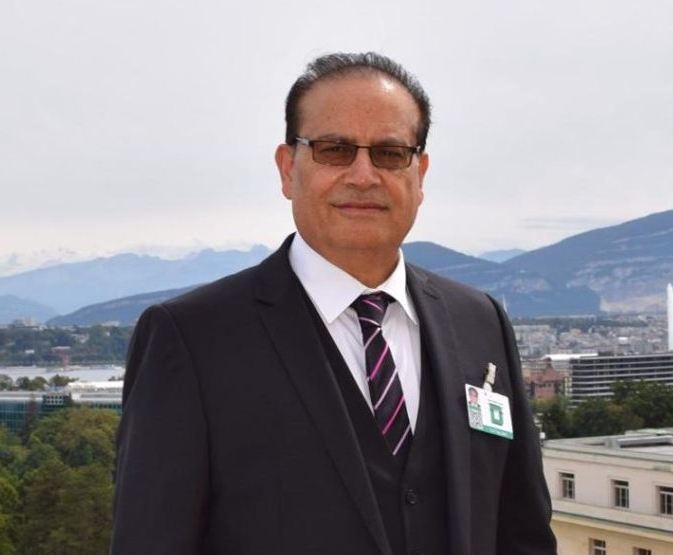
Qamar Bashir

By: Qamar Bashir

Civilized countries uphold the basic rights of their citizens above all other considerations. The constitutions and laws of these countries ensure that all public services and government institutions operate strictly within legal boundaries, serving the people who are the ultimate paymasters for all state institutions and their functionaries, from the President down to the peon.

Even countries that profess socialism have realized that their source of power lies in their citizens’ ability to generate wealth. This wealth creation is only possible when the entire government machinery is holistically, ideologically, and administratively focused on creating enabling conditions for their people to realize their full potential. By creating wealth and paying taxes, citizens make the government wealthy, which in turn uses this wealth to further empower the people and leverage resources from other countries to fuel their growing and prospering economies.

In contrast, countries like ours often operate oppositely. Government officials, who enjoy powers, perks, and privileges because of the hard-earned wealth of individuals from peons to chief executives of multinational companies, often fail to honor and uphold the dignity, privacy, and private lives of these citizens. Instead, they treat them disrespectfully and violate their basic human rights, guaranteed by the constitution, with total impunity. This disregard for citizens’ rights undermines the fundamental principles of governance and erodes public trust in state institutions.

In civilized countries, the right to privacy and protection from unlawful surveillance is a cornerstone of democratic values and human rights. Governments in these nations are bound by stringent legal frameworks and oversight mechanisms to ensure that any surveillance activities are conducted lawfully, transparently, and with respect for individual freedoms. Judicial oversight, data protection laws, and independent regulatory bodies work in tandem to safeguard citizens’ communication data from unauthorized access and misuse. Upholding these principles is essential for maintaining public trust, protecting civil liberties, and preventing abuse of power, ensuring that citizens can communicate freely without fear of unwarranted intrusion by the state.

However in extreme exigencies the intelligence agencies need surveillance of their own or citizens of the foreign countries, they do so after following stringent legal procedures to obtain permission. In the United States, the Foreign Intelligence Surveillance Act (FISA) and the USA PATRIOT Act require agencies to seek warrants from the Foreign Intelligence Surveillance Court (FISC) or a federal judge, with oversight from congressional committees and the Department of Justice.

In the United Kingdom, the Investigatory Powers Act mandates that surveillance warrants be authorized by a Judicial Commissioner and a Secretary of State, overseen by the Investigatory Powers Commissioner’s Office (IPCO).

European Union member states adhere to the General Data Protection Regulation (GDPR) and the European Convention on Human Rights (ECHR), requiring national court approvals and oversight from bodies like the European Court of Human Rights (ECtHR) and the European Data Protection Supervisor (EDPS).

For example, Germany’s Bundesnachrichtendienst (BND) requires G10 Commission approval, and France’s intelligence activities are overseen by the Commission Nationale de Contrôle des Techniques de Renseignement (CNCTR). In contrast, China’s National Intelligence Law and Cybersecurity Law allow the Ministry of State Security (MSS) to conduct surveillance with administrative approval and limited transparency, emphasizing state security. Each approach reflects the country’s balance between security and privacy and the extent of judicial and public oversight to prevent abuse.

In Pakistan, the legal framework governing the surveillance of citizens by intelligence agencies includes several key laws and regulations. Article 14 of the Constitution of Pakistan guarantees the inviolability of the dignity of man and, subject to law, the privacy of home. It provides a constitutional safeguard against unlawful interference in an individual’s private life. Section 54 of Pakistan Telecommunication (Re-organization) Act, 1996 allows interception of communications only if authorized by the federal government for national security or emergency purposes, following prescribed procedures. Investigation for Fair Trial Act, 2013 requires a warrant issued by a High Court judge, based on reasonable grounds related to terrorism, espionage, or serious crime. It also emphasizes the need for judicial oversight to ensure surveillance activities are lawful and not arbitrary. Section 39 of the Pakistan Electronic Crimes Act (PECA), 2016 permits the retention, acquisition, and disclosure of traffic data by service providers for up to one year under specific conditions read with Section 29 permitting the retention, acquisition, and disclosure of traffic data by service providers for up to one year, subject to production of a warrant issued by the court.

Article 17 of the International Covenant on Civil and Political Rights (ICCPR) Protects individuals from arbitrary or unlawful interference with their privacy, family, home, or correspondence and ensures the right to legal protection against such interference.

But in total disregard to the laws of the country, international law and best practices, the high court declared that the intelligence agencies of the country in collaboration with the Pakistan Telecommunication Authority (PTA) and telecom companies, were reportedly engaged in unauthorized mass surveillance of over 400,000 citizens without proper legal authorization or judicial oversight.

The most serious aspect of the judgment is the word “mass surveillance” which is a far more serious crime than individual surveillance if done without following a lawful procedure.It involves monitoring large segments of society indiscriminately, infringing on the privacy rights of many innocent individuals and creating a pervasive sense of being constantly watched. This can lead to self-censorship, stifling free expression and personal freedoms. Additionally, mass surveillance provides extensive data that can be misused for political, social, or economic control, increasing the risk of data breaches and unauthorized use of personal information. It undermines democratic value, violates constitutional and human rights on a large scale, posing significant ethical dilemmas by treating all citizens as potential suspects without due cause.

The impugned judgment has significant implications for upholding the privacy rights of citizens and the democratic and constitutional process in Pakistan. It mandates enhanced accountability and transparency by requiring the federal government, specifically Prime Minister Shehbaz Sharif and cabinet members, to report on the legal framework and implementation of the surveillance system, ensuring compliance with legal boundaries and constitutional provisions.

By demanding detailed reports from the PTA and telecom companies, the judgment emphasizes judicial oversight to prevent unauthorized surveillance and protect citizens’ privacy under Article 14 of the Constitution.

Holding top officials responsible for mass surveillance promotes accountability, strengthens the rule of law, and prevents abuse of power, thereby safeguarding the integrity of the democratic process.

This proactive judicial stance enhances public confidence in the judiciary and may prompt legislative and policy reforms to create clearer, more robust laws balancing national security needs with individual privacy rights, reinforcing the democratic fabric of the country.

By: Qamar Bashir

Former Press Secretary to the President

Former Press Minister to the Embassy of Pakistan to France

Former MD, SRBC

UN highlights Afghan women’s concerns at Doha meeting

UN highlights Afghan women's concerns at Doha meeting

UNITED NATIONS, Jul 02 (DNA): International envoys raised concerns about restrictions on women and girls in Afghanistan during meetings with the country’s Taliban leaders in Qatar, United Nations’ political affairs chief Rosemary DiCarlo said on Monday.

Speaking in Doha after the Third Meeting of Special Envoys on Afghanistan, including Pakistan, Ms. DiCarlo expressed deep concern over the situation of women and girls in the country, according to a UN press release issued in New York.

“Running through all the discussions was the deep international concern – from special envoys and from me – about the ongoing and serious restrictions on women and girls,” she stated.

“Afghanistan cannot return to the international fold, or fully develop economically and socially, if it is deprived of the contributions and potential of half its population,” asserted Ms. DiCarlo, the UN Under-Secretary-General for Political and Peacebuilding Affairs.

The consultations follow talks in May 2023 and February 2024. They build upon the proposals outlined in an independent review on an integrated and coherent approach conducted by Feridun Sinirlioglu, in line with Security Council resolution 2679.

Focused discussions with Afghan women and civil society are scheduled to take place on Tuesday.

Ms. DiCarlo further stressed that the concerns and views of Afghan women and civil society remain “front and center”.  

“For the United Nations, the meaningful inclusion of women in political and peace processes is a guiding principle,” she said.

“And while women and civil society were not sitting across the table from the de facto authorities the last two days, they made their voices heard. Civil society has a rightful role to play in shaping Afghanistan’s future,” she asserted.

Since the Taliban seized power in Afghanistan in August 2021, women and girls have faced systemic discrimination, including a ban on girls’ education.

That ban is “heartbreaking”, Ms. DiCarlo maintained.

“If you prevent half the population from education, from being involved in the economy and various professions, it just means that it delays the develop of Afghanistan,” Ms. DiCarlo replied to one woman reporter.  

“Just imagine if you were only allowed to go through sixth grade, you would not be sitting here being a journalist, I would not be here being a UN official. [It is] heartbreaking frankly but let us see and let us keep at it, that is all I can say.We have to make clear how important is and how it is going to be better for Afghanistan.”

She explained that in organizing the meeting, the UN “faced a very tough, maybe impossible, choice”, aiming to bring the Taliban and the special envoys together for direct talks.

“Regrettably, the de facto authorities will not sit across the table with Afghan civil society in this format. But they heard very clearly the need to include women and civil society in all aspects of public life,” she said.

She further emphasized that the meeting and process of engagement “does not mean normalization or recognition” of the Taliban de facto authorities.

Ms. DiCarlo expressed hope that the exchanges on the various issues during the meeting “moved us a little closer” to resolving some of the problems devastating the Afghan people.

“To conclude, I would like to reiterate the United Nations commitment to continue to support this process of principled engagement for the benefit of all Afghans,” she said.

Afghan female journalist seeks immediate asylum 

Afghan female journalist seeks immediate asylum 

From Our Correspondent 

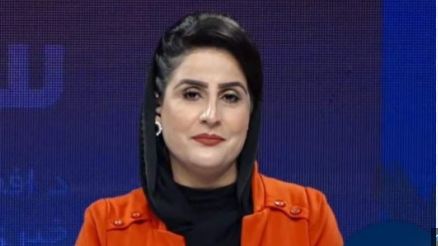
PESHAWAR: A female Afghan journalist Fershita Azizi requested United Nation High Commissioner for Refugees (UNHCR) for provision of asylum in western world as pending since Taliban takeover on 15 August 2021, on Monday.

She requested while talking to media personnel and claimed that she fled Afghanistan after the Taliban takeover on August 15, 2021, and is now facing numerous challenges in Pakistan. Despite her efforts to seek asylum in a Western country through the United Nations High Commissioner for Refugees.

The female journalist worked with various organizations in Afghanistan, promoting women’s rights and freedom of expression. However, after the Taliban takeover, she was forced to flee to Pakistan with her elderly mother, leaving behind her home, livelihood, and colleagues. 

In Pakistan, she is struggling to survive, facing numerous obstacles, including difficulty obtaining a visa, limited access to healthcare, and inadequate living condition, she claimed.

Fershita has applied for asylum in a Western country through the UNHCR, but her application has been delayed due to bureaucratic hurdles. She has appealed to the UNHCR and other Western embassies and organizations to grant her political asylum on an emergency basis, citing her deteriorating health condition and the risks she faces as a female journalist and activist.

Fershita is living in a rented house in Peshawar with her mother. She has limited financial resources and is struggling to access basic necessities like healthcare and food.

 She has urged the Pakistani government to simplify the visa process for Afghan refugees like her, who are waiting to be resettled in other countries.

Imran Khan’s Biggest Dilemma

Qamar Bashir

By: Qamar Bashir

At this critical juncture, the entire PTI leadership must unite and focus their undivided attention and collective energies of politicians, lawyers, and technocrats to navigate the party out of its current challenges. The visible discord among party leaders stands as perhaps the greatest threat, capable of causing irreparable harm.

If the current leadership fails to acknowledge the fundamental flaws in the party’s current composition, strategy, and plans—marked by a narrow representation largely dominated by lawyers, technocrats, and KP-based political activists—lack of plan to secure the release of their leaders, and neglects to open the party’s doors for broader and more diverse representation, they would undermine the party’s integrity.

Such actions would not only betray the PTI’s founding principles and the national cause it champions but also disregard the enduring hardships and sacrifices, including imprisonment, endured by its leader Imran Khan over nearly a year.

This internal division came at a crucial time when unity, solidarity, and comradeship were most dearly needed to address critical and game changing challenges faced by the party. These challenges include the need for an urgent, doable  and well thought out actionable plan to secure the release of Imran Khan and other incarcerated leaders, activists, and workers and reclaim their stolen mandate.

Additionally, PTI needs a coherent and highly effective strategy to defend numerous legal cases across various courts, including the Supreme Court. They must realize that the fate of the party hangs in the balance with the pending verdicts of the Supreme Court on several critical cases that hold existential value for both the party and its leadership.

The party needs to understand that the Supreme Court’s decisions in sensitive cases concerning electoral irregularities, PTI’s political status, the return of election symbols, and the restoration of special seats for women and minorities will shape PTI’s future trajectory. Ironically, in the sub-judice case of allocation of special seats for women and minorities to SIC, PTI reason best known to it, neglected to participate, a flaw that Supreme Court judges themselves lamented with concern.

PTI must realize that these cases demand the undivided attention of the party and require their collective ability to mobilize the public on a large scale in support of their demands. This is crucial to demonstrate PTI’s resilience and capability to achieve its goals even in challenging circumstances.

In this background, PTI urgently needs a well-thought-out and fully articulated political and  legal vision, strategy, and action plan to present a robust defense that convinces the full bench of the Supreme Court and aids the supreme court in reaching decisions aligned precisely with the constitution and the greater good of the people and the country.

It is also crucial for the party to promptly determine whether the party’s cause or positions in government, party, or parliament hold greater importance. Equally critical is resolving whether political sacrifices rendered by the political leadership, lawyers or technocrates should be the sole criterion for their elevation to positions of power, or if competency and suitability for the role should be paramount considerations. They must also decide whether to air their internal disagreements in public, or resolve their egotistical, self-aggrandizing differences in private or on the party platform.

Indeed, the lawyers who stood by Imran Khan through thick and thin, keeping the party afloat while political leaders were incarcerated, in hiding, or abroad, or deserted the party, deserve commendation for their remarkable job.

However, they should also recognize that their talents lie in law rather than politics. They should focus on research, seek guidance from political leadership, and develop a strong, lawful defense for cases across various judicial levels from civil court to the Supreme Court. They should willingly step aside to allow political leaders to lead the party politically and provide them with political insight while crafting defenses.

Similarly, technocrats like Raoof Hassan and Hamid Khan, who may not have public  followings, should continue to offer ideological guidance to the PTI founder and political leaders. They should refrain from meddling in or leading the political and legal decision-making processes where they lack competency or qualifications.

These three distinct departments—legal, ideological and political—working in harmony within their respective domains will significantly enhance the quality of the party and its decision-making processes. However, if individuals continue to dominate departments where they lack qualifications or competency, they would do a disservice to the party leader and the party itself.

At this critical juncture, with their leader facing immense hardship and nearing a year in prison for the greater cause of creating an egalitarian society and upholding the rule of law equally for all, every institution adhering to the constitution, and unlocking Pakistan’s full potential, it is disheartening that he must also contend with petty and ego-driven disputes among party leaders vying for positions based solely on their endurance of jail terms and hardships, rather than their skills, education, or public service record.

The party requires political leadership deeply rooted in the public, capable of mobilizing people to exercise their democratic and constitutional rights to protest to exert pressure on the government to meet their legitimate and legal demands, including the release of Imran Khan, his wife, and other political leaders, a re-evaluation of election results based upon form 45, the return of their allegedly stolen mandate, and the restoration of PTI as a recognized party with its election symbol.

This monumental task demands peace, unity, and consensus within the party at all levels, with responsibilities assigned based on suitability, capacity and ability. The political wing could be led by former President Mr. Arif Alvi, Omer Ayub, Fawad Chaudhary, Shibli Faraz, Asad Qaiser, Mohammad Ali Khan, and Shehryar Afridi and others who have sizable and organic public followings.

The legal wing should be headed by Sardar Latif Khosa, Salman Akram Raja, Gohar Ayub Khan, Sher Afzal Marwat, and others who have proven legal qualifications, expertise, experience and ability to navigate complex, intricate and sensitive legal complexities and present a credible and strong defense in favor of their plea.

The ideological wing may be led by Hamid Khan and Raoof Hassan and such other highly competent, articulate and committed intellectuals.

All wings must work in harmony, enjoying equal status, importance, and value,  equal excess to Imran Khan and should unanimously and collectively focus on achieving overarching objectives rather than getting bogged down in trivial issues that could distract the party from its goals.

By: Qamar Bashir

Former Press Secretary to the President

Former Press Minister to the Embassy of Pakistan to France

Former MD, SRBC

Election to be held in 2029 upon completion of govt’s tenure: Tarar

Election to be held in 2029 upon completion of govt’s tenure: Tarar

ISLAMABAD, JUN 30 (DNA): Minister for Information, Broadcasting, Culture and National Heritage Attaullah Tarar on Sunday said that the general election would only be held in 2029 upon completion of the constitutional tenure of the incumbent government.

While reacting to Jamiat Ulema-e-Islam (F) chief Maulana Fazl-ur-Rehman’s presser, he said the Parliament was an appropriate forum to do politics in the current circumstances. “Solution to all the problems in politics lies in negotiations and dialogue,” the minister added.

Tarar termed Maulana a “seasoned” and “respected” politician, urging him to appreciate the government’s economic policies that drove an increase in the foreign exchange reserves, and took the stock exchange to historic highest level.

He lauded the government for strengthening the rupee and reducing trade deficit significantly.

Iran envoy condemns US resolution on Pakistan polls

Iran envoy condemns US resolution on Pakistan polls

US resolution is “open interference in domestic affairs of independent member of UN”, says envoy

Khayam Abbasi

ISLAMABAD: Iran on Sunday criticised the resolution passed by the United States Congress, seeking an investigation of claims of “interference or irregularities” in February 8 elections.

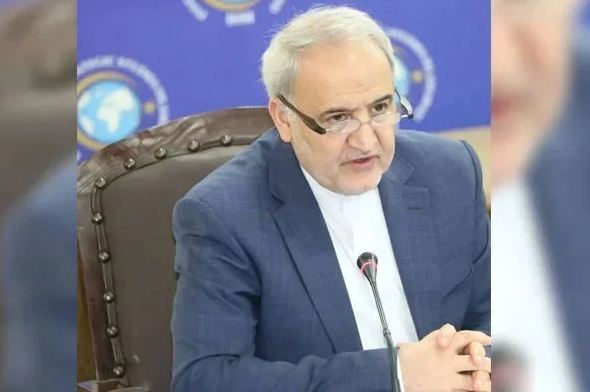
“We condemn controversial US resolution on Pakistan elections,” said Iran’s Ambassador to Pakistan Dr Reza Amiri Moghadam.

The US House of Representatives, earlier this week, in an overwhelming majority, voted to demand a “full and independent investigation of claims of interference or irregularities” in the polls.

The resolution HR 901 was passed by a massive 368 against seven votes on Tuesday, which makes 85% of the total American lawmakers in the legislature.

Through the resolution, the US lawmakers had emphasised the need for the Pakistani public’s participation in the country’s democratic process months after its general polls were contested as “rigged” and its outcome termed “delayed” by political parties now seated on the opposition benches in the legislature.

Following this, the National Assembly on Friday passed a resolution to condemn the US Congress resolution and termed it “contrary to facts” and “interference” in its internal affairs.

The resolution was tabled by Pakistan Muslim League-Nawaz (PML-N) lawmaker Shaista Pervaiz Malik, and passed by a majority in the National Assembly amid a noisy protest of the opposition benchers.

Expressing his discontent, Moghadam said that the US resolution is an “open interference in the domestic affairs of an independent member of the United Nations”.

The ambassador called it a form of extortion under the guise of supporting democracy.

Speaking about the deadly situation in Gaza, the envoy also said that Washington stops a ceasefire resolution through its power to veto.

“The US supports the genocide of the people of Gaza by providing lethal weapons to the Zionist regime,” said the ambassador.

Fazl demands fresh polls sans involvement of the establishment

Says PTI lacks unity in leadership, Sunni Ittehad Council chief does not want alliance with JUI-F | JUI-F chief urged all departments to focus on their own work and not to violate oath

Shamim Shahid

PESHAWAR: Maulana Fazlur Rehman, leader of Jamiat Ulema-e-Islam (JUI), has called for new elections and urged the establishment to stay away from the electoral process.

Addressing a press conference after the central executive committee meeting, Fazl said the incumbent government was not in a position to resolve their grievances.

He said the JUI executive committee has also reviewed the contact with political parties. He said JUI will talk to anyone with the guarantee of elections. He emphasized that the current government lacks the flexibility to address their grievances effectively.

Maulana Fazl stated that words of persuasion have no value without the guarantee of fair elections.

He welcomed negotiations with PTI but criticized the party’s lack of unity and failure to announce a negotiating team.

Maulana Fazl also noted that the Sunni Ittehad Council’s chief has expressed no interest in forming an alliance with JUI.

He stressed that all institutions should remain within their defined roles and avoid interfering in political matters.

He said if the country faced any defence issue, the entire nation would stand behind the security forces.

Regarding Pakistan’s foreign policy, he expressed concerns over the country’s inability to restore China’s confidence in investing.

He also criticized the American House of Representatives for calling the February 8 election suspicious and urged the US to refrain from interfering in Pakistan’s affairs.

Maulana Fazl reiterated JUI’s stance on supporting Kashmir Solidarity Day on August 5 and standing with the Palestinians. He called on all Muslim governments to fulfill their duties towards these causes.

Highlighting national issues, Maulana Fazl questioned the effectiveness of the current government in handling terrorism and developmental funds in KPK.

He said the government was confused about the operation and the operation across the border would not be the new and we already have targeted the terrorists.

He said JUI-F knew Afghanistan better than the government. He asked the US to stay away from the matters of Pakistan.

Pak to seek Qatar’s permission to resell excess LNG

LNG

Islamabad preparing to secure Gulf state’s consent to either cancel shipments or sell them on spot market

DNA

ISLAMABAD: The government will approach Qatar seeking the Gulf state’s permission to resell the liquefied natural gas (LNG) imported from Doha in the spot market in case there’s low domestic demand, quoting a senior senior official from the Ministry of Energy a Pakistani newspaper reported.

The revelation comes in light of the long-term LNG supply contract signed between Islamabad and Doha back in 2016. The price revision under the contract is due in February 2026.

Under the agreement, Pakistan State Oil (PSO) is obligated to take supplies regardless of domestic demand, causing pipeline issues for Sui Northern Gas Pipeline Limited (SNGPL) when the utility fails to consume the gas.

Officials have said that Pakistan is preparing to approach Qatar through diplomatic channels, seeking either to cancel shipments or sell them on the spot market if domestic demand for LNG falls short.

The disclosure was made during a public hearing held on Friday by the National Electric Power Regulatory Authority (Nepra) regarding a petition by power distribution companies seeking permission to collect an additional Rs3.41 per unit from consumers due to fuel adjustments for May 2024.

During the hearing, power distribution companies noted that the actual fuel rate was Rs9.12 per unit, compared to a reference price of Rs5.7 per unit, resulting in an increase of Rs3.41 per unit.

They also reported a 5% drop in electricity consumption due to weather conditions, with total demand in May 2024 being only 17,000 megawatts. More electricity was produced using LNG rather than coal, with the cost of LNG-based electricity standing at Rs24.7 per unit.

Elaborating on the need to forecast LNG demand months in advance, the officials highlighted that unexpected drops in power-sector consumption can lead to increased line pack for gas utilities.

Their worry can be referred to the increased line pack pressure back in May which had put the country’s gas transmission at risk as it soared to critical levels owing to the reduction in the use of Re-Gasified Liquefied Natural Gas (RLNG) by the power sector.

Furthermore, hearing also revealed that the share of net metering in the total energy mix was less than 1%.

Accusing the Power Division of propaganda to discourage net metering by emphasising its minimal share, the intervenors claimed that net metering users were consuming more electricity from the national grid at night, suggesting that criticism against net metering was baseless.

They also further questioned the National Electric Power Regulatory Authority’s (Nepra) role in providing relief over the last five years and criticised it for depriving power consumers of the option to pay bills in instalments.

Additionally, questions were also raised about a coal scam at the Sahiwal coal power plant, cases lost by the Central Power Purchasing Agency (CPPA) in international courts; and the rising circular debt in the power sector.

Meanwhile, arguing on behalf of the power distribution companies, the CPPA refused to address the aforesaid queries stressing that they were not relevant to the public hearing and requested the intervenors to submit their queries in writing.

Stay Connected

64FansLike
60FollowersFollow

Latest Reviews

Exchange Rates

USD - United States Dollar
EUR
1.17
GBP
1.35
AUD
0.72
CAD
0.73