Home Blog Page 880

Less than 20% of Pak issues find a spot in party manifestoes

Less than 20% of Pak issues find a spot in party manifestoes

PPP scored zero in 17 indicators, PTI in 13 and PML-N in 12

Mahnoor Ansar

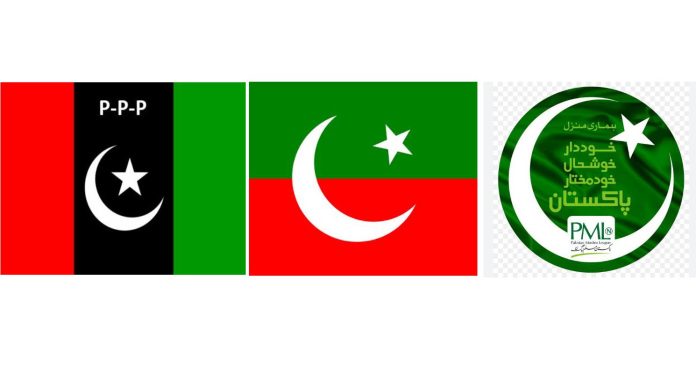
Islamabad, NOV 6 /DNA/ – In the wake of upcoming general elections, the Pakistan Institute of Development Economics (PIDE) has drawn a comparison of manifestos amongst three mainstream political parties – Pakistan Muslim League Nawaz (PML-N), Pakistan Peoples Party (PPP) and Pakistan Tekreek-e-Insaaf (PTI) – that have been front-runners in formulating governments during the last three tenures. The aim was to evaluate if the manifestoes have any substance and concrete plan or are these just comprise hollow promises and sweeping statements, without any homework for the future.

In this regard, PIDE has been proposing reforms in various dimensions for quite a long time. These targeted reform proposals are based on years of research and evidence and are in line with the global best practices. So, PIDE has picked 18 key issues/sectors that it thinks are fundamental. These include: local government, parliament, elections, cabinet, police, bureaucracy, budget making, debt management, PSDP, real estate, agriculture, energy, taxation, tariff, trade, state-owned enterprises (SOEs) and internet. Each indicator has a maximum of 100 score.

·        PPP scored zero in 17 indicators, PTI in 13 and PML-N in 12.

·        Overall, the three major political parties scored less than 20%, which means that they talk about or have some solid ideas about only 20% of the key economic and policy issues of Pakistan.

·        Further dissecting the figure 20% tells us out of the country’s key issues, only 12% of these find space in the PML-N manifesto, 7% in the PPP manifesto and 1.5% in PTI.

·        This demonstrates that manifestoes don’t have any substance at large on key issues of the nation.

·        This means that political parties don’t have any concrete blueprint to work on if they come into power.

·        The lack of substance in manifestoes leads to a myopic approach to governance, ad-hocism and serving vested interests only, without any regard for doing something for the long-term development of the country.

·        For instance, strengthening local government is merely a promise and scored as zero. In contrast, allowing the property tax regime to serve as the primary revenue generator for local government is a concrete point. Thus, this point had been given a 25 score.

How did PIDE arrive at such a score? PIDE summarized its proposals in four points for each theme, having equal weightage for each point i.e. 25%, making it 100% for all four points. It then compared it with what each political party proposes against the same theme. If the manifestoes propose one of the points that PIDE proposes then the score will be 25/100 and if their proposals include all that PIDE proposes, then that manifesto will get full marks i.e. 100/100. It is pertinent to note that, manifestoes are being evaluated on actual reform intervention, not mere promises, slogans and sweeping statements.

Besides, the Institute, in another research product, has also compared if there is any convergence between what is mentioned in manifestoes and the digital narratives by the party leaders. The stark disparity between pre-election promises and the reality of online discourse in the post-election landscape, as unveiled by the Pakistan Institute of Development Economics (PIDE), reveals a critical disconnect. PIDE’s analysis reveals a concerning neglect of fundamental issues like economic disparities, infrastructure, unemployment, education, healthcare, governance, corruption, security, environment, and human rights on digital narratives by party leaders, which are pivotal for the country’s progress.

Twitter, identified as a significant influencer in shaping political conversations, remains largely underutilized in addressing Pakistan’s socio-economic challenges. Leveraging Latent Dirichlet Allocation (LDA) to analyze afore mentioned party leaders’ tweets from 2018-2022, PIDE found no convergence between the vision chalked out in manifestoes and the propagation or discourse on Twitter.

The comprehensive analysis shed light on a worrying trend in the online discourse of opposition leaders:

·        PPP and PML-N leadership focused mostly on family legacies and political conflicts

·        PTI’s leader’s discussions primarily revolved around Indian-occupied Jammu and Kashmir overshadowing other essential national concerns

·        This underlines the lack of focus as well as commitment from the country’s top political leadership.

PIDE’s call for realigning political discourse with manifesto commitments echoes the urgency for leaders to prioritize substantive policy matters for Pakistan’s development and prosperity. Manifestoes shouldn’t remain as mere paper promises; they should guide the nation’s trajectory, providing a clear roadmap for governing parties and feasible policy alternatives for the opposition.

The institute stresses the need to shift conversations from personal grievances, familial legacies and political mudslinging to tangible policy matters, urging leaders to re-center discussions and leverage social media tools like Twitter for more focused, relevant, and policy-based communication, to address the perpetual challenges faced by Pakistan.

Impersonator arrested on NAB’s complaint at Chakwal

Impersonator arrested on NAB's complaint at Chakwal

Chakwal, NOV 6 /DNA/ – A resident of Chakwal namely Hamid Iqbal who was impersonating as NAB officer was arrested by local police.

Hamid Iqbal was found to be impersonating as NAB officer and was trying to influence WAPDA office Chakwal for undue favours. Upon suspicion, WAPDA authorities informed NAB and it was found that Hamid Iqbal was not an employee of NAB and was impersonating.

NAB lodged a formal complaint with local police and as a result impersonator Hamid Iqbal was arrested.

NAB advises the general public to report suspicious persons acting as impersonators to law enforcing authorities or to the NAB directly.

Pak hockey team to feature in FIH Olympic qualifying rounds

Pak hockey team to feature in FIH Olympic qualifying rounds

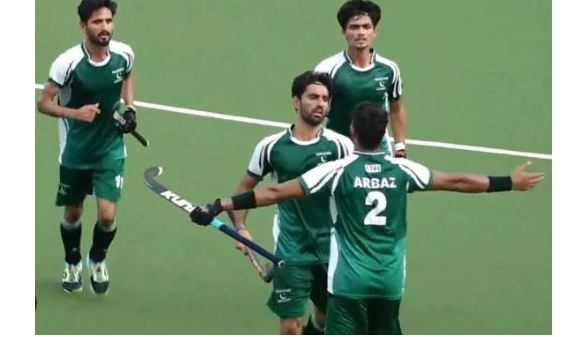
ISLAMABAD, Nov 06 (APP/DNA): Pakistan hockey team would feature in the FIH Olympic qualifying rounds to be held from January 15 in Oman.

According to the schedule released by the International Hockey Federation (FIH), the Olympic qualifying rounds will be played from January 15 to 21 in Oman, said a press release.

Apart from Pakistan, teams from England, Germany, New Zealand, Malaysia, Canada, Chile and China would participate in the said event.

FIH organized Olympic qualifying round events by organizing pools in different countries.

Pakistan has been placed in Pool B. The top three teams from each pool would be eligible to qualify for the Olympics.

ICCI calls for immediate halt to genocide of Palestinians by Israeli forces

ICCI calls for immediate halt to genocide of Palestinians by Israeli forces

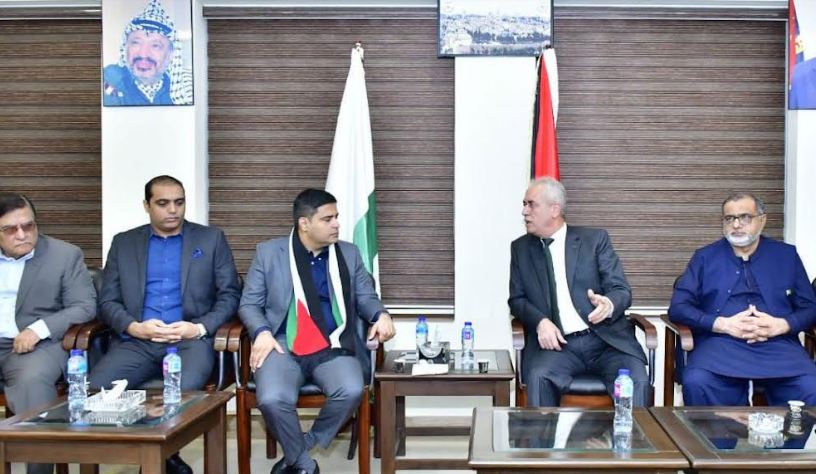
Islamabad, NOV 6 /DNA/ – Ahsan Zafar Bakhtawari, President, Islamabad Chamber of Commerce and Industry (ICCI) leading a delegation met with Ahmed Jawad A.A. Rabaei during a visit to Palestine Embassy and showed solidarity with the Palestinian people. Ahsan Zafar Bakhtawari presented a cheque of Rs.2.0 million on behalf of ICCI as a token of support for the people of Gaza who have been destroyed by the Israeli bombardment.

Speaking on the occasion, Ahsan Zafar Bakhtawari, President, Islamabad Chamber of Commerce and Industry said that the business community and the Pakistani nation is very concerned over the cruelties being committed by the Israeli forces against the innocent Palestinian. He said the whole Muslim Ummah is standing along with the people of Palestine and urged that the Muslim rulers and the international community should make collective efforts to protect the Palestinians from the brutalities of Israel. 

He said that the genocide of the innocent Palestinians is not acceptable at all and stressed that the world powers should come forward to stop Israel from such brutalities. He said that Pakistan supports the right of self-determination and establishment of a secure & sovereign Palestinian state to end this conflict. He assured that the business community of Pakistan is always ready to extend all possible support to the Palestinian brothers and sisters to mitigate their sufferings.

H.E. Ahmed Jawad A.A. Rabaei briefed the ICCI delegation about the details of casualties and destruction committed by Israel against the Palestinians. He said that about 10,000 Palestinians have been martyred so far by the Israeli forces in Gaza and other places out of which 80 percent are children and women. He said that out of a total 35 hospitals, 11 hospitals have been destroyed and Israeli forces are threatening Palestinians to evacuate the rest of the hospitals otherwise, they would also be killed. He termed it a brutal genocide of innocent Palestinians, which needs to be stopped by the world powers. He thanked the ICCI delegation for showing solidarity with the Palestinians in this difficult time.

Faad Waheed, Senior Vice President ICCI said that Israel’s actions violate international humanitarian & human rights law and constitute war crimes as well as crimes against humanity. He stressed that the world community should play a role to stop Israel from these war crimes.

Engr. Azhar ul Islam Zafar, Vice President ICCI called for an immediate ceasefire; an end to the siege of Gaza; and the facilitation of humanitarian corridors for unrestricted relief supplies to the affected Palestinians.

Zafar Bakhtawari, former President ICCI and Secretary General UBG said that the core issue behind the current war is the failure to implement the two-state solution. He stressed that the UN and other stakeholders should ensure an independent and sovereign state of Palestine to end this conflict once for all. 

ICCI Executive Members including Maqsood Tabish, Hamayun Kabir, Aamir Hussain, Muhammad Rizwan Chheena, Sheikh Muhammad Ejaz, Malik Jalil Ahmed Awan, Dr. Muhammad Usman, Khalid Mehmood and others were in the ICCI delegation.  

The 9th Islamabad Literature Festival Ends on a High Note

Islamabad

Three-Day Islamabad Literature Festival Concludes with an Aplomb

A Memorable Closing to the Literary Festival-ILF 2023

DNA

Islamabad, NOV 5: The Islamabad Literature Festival (ILF), a celebration of literature and the arts, came to a close, marking the end of a successful and inspirational event. The festival, which began on November 3, 2023, brought together authors, readers, and literary enthusiasts for a memorable event of academic exploration and discussion.

It provided enriching experiences, engaging conversations, and deep appreciation for the impact of literature on society, and covered book launches, author signings, film screenings, panel discussions, and art exhibitions; ILF 2023 has served as a platform for celebrating the world of literature in all its forms.

The closing ceremony comprised keynote speeches by Senator Sherry Rehman and Anwar Masood. Senator Rehman expressed her appreciation for the revival of the Gandhara Citizens Club and was impressed by the theme because it is crucial to the times, we live in. Reiterating the importance of a sustainable planet she shared: “The planet is under stress, and we need to look at possibilities. We are not responsible for the melting glaciers, heatwaves, or monsoons but this does not translate to a total abjection of responsibility at our homes. No army of consultants will be able to formulate policies or develop projects for us and governments alone can also not do this. Climate successes are collaborations, and we all need to play our part in doing so.”

Poet and critic, Anwar Masood expressed gratitude to the organizers and highlighted the importance of in literature for a civilized society and a brighter future. He praised poets like Iqbal and said, “In times of unpredictability, poetry has long been a source of solace for individuals. With arts and literature, we can discover a glimmer of hope and unearth significance in the ordinary moments of everyday life.”

In his vote of thanks, Arshad Saeed Hussain, Managing Director, Oxford University Press (OUP) Pakistan was grateful for the phenomenal response, “Immersed in the compelling narratives and profound discussions of this literary festival, we’ve unravelled the deep ties binding humanity, the planet, and the realms of potential. In these trying times let us offer hope, fostering a united awareness for a world that thrives on sustainability and empathy.”

Muhammad Mikal Soomro, Manager Corporate Communications, Getz Pharma, Pvt. Ltd., lauded the efforts for putting together such an impeccable literary event.

The Interim Minister of Information, Murtaza Solangi also attended all three days of the event.

ILF 2023 has highlighted the importance of literature as a means of artistic expression and societal connection. The first half of the day featured comprised various discussions like Curriculum, Textbook, High Stakes Assessments- A Way Forward, and Hamari Mitti hui Zabanain. A presentation on Aag ka Darya was followed by a dialogue alongside more panel discussions; Resilient Pakistan- The Sociocultural Impact and Harmony Across Borders, Capital Talk: In conversation with Hamid Mir and Quest for Peace and Security Among Neighbours.

Various informative conversations like Securing Pakistan’s Interest: Navigating Foreign Affairs and Security Policy, The Idle Stance of the Tipple Pigeon, Duktar-e-Rumi, Siyaah Heeray, 1980 ki Dehai Ka Ashob and Rawal Raj also captivated the audience.

Moderated by Raheela Baqai, the session on Haya Fatima Sehgal’s book, Resilient Pakistan- The Sociocultural Impact, touched upon various inspirational aspects from the life of Jinnah and Fatima Jinnah. Mushahid Hussain Syed appreciated Haya’s work that it addressed the status quo and focused on the possibilities and resilience of the nation. Raheela commented that the book proves to be a light at the end of the tunnel.

The crowd was in awe of Swaang Theatre Group, which presented a play, Aao Drama Karain, by Saadat Hasan Manto while Aisha Sarwari. Moneeza Hashmi took a trip down memory lane in the session, Conversations with my Father: Forty Years on- a Daughter Responds, which was moderated by Aisah Sarwari.

Hamid Mir in conversation with Tauseeq Haider spoke about the current political scenario by referring to numerous writers who have fictionalised their accounts to reach a wider audience at the cost of compromising the integrity of the state. He hoped that future generations will instead, do our country the justice it deserves.

Victoria Schofield in her discussion Harmony across Borders: The Quest for Peace and Security among Neighbours spoke about the geopolitical importance of Pakistan and pointed out that to achieve peace in the region countries would need to change perspectives on the definition of the ‘enemy’. Zahid Hussain also said that given this region has 1/3 of the world’s population and is home to three nuclear powers, expecting volatility and conflict should not be unusual in the region.

The session Curriculum, Textbook, High Stakes Assessments- A Way Forward moderated by Faisal Bari led to an insightful discussion on different aspects that impact the education sector of Pakistan and touched upon the merits and demerits of Single National Curriculum. Arshad Saeed Hussain spoke about the various issues within the realm of curriculum and textbooks, especially how textbooks are not allowed in schools just because the government authorities may not agree with the content, “Instead of removing a chapter or a part, entire text is not permitted to be the part of the syllabus.” Saeed stressed that the boards ensure that the textbooks taught do not have any degree of institutional contempt, and there should be a dialogue between all stakeholders. Mian Imran Masood stated that there is an urgent need to depoliticise education if the country wishes to achieve true progress.

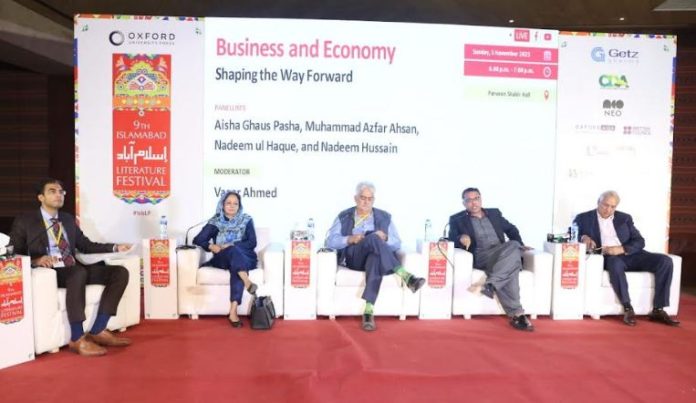
The latter half of the day saw an impressive line-up of specially designed panel discussions; Pakistan’s Foreign Policy and Economic Challenges, Ishq Nama Shah Hussain, A Columnist’s Voice: A Conversation about a Life Lived with Passion, Human Rights: Is There a meaning left?, Tarjuma Nigari ki Ahmiyat, Music in COVID Times: Album Launch, Aye Aasman Neechay Utar, Voices from the Foothills; Pakistani English Verse; Business and Economy, Shaping the Way Forward;  and Film: The Power of Storytelling.

A full-packed auditorium which hosted the dialogue between Maleeha Lodhi and Aizaz Ahad Chaudhry Pakistan’s Foreign Policy and Economic Challenges delved into the history of Pakistan’s relationship with its neighbours in the context of economics especially the decision to halt trade with India.

In the session titled, Business and Economy, Shaping the Way Forward, Muhammad Azfar Ahsan, Founder & CEO, Nutshell Group elaborated on the evolving economic landscape in Pakistan: “If we wish to improve the investment climate of the country, we need to have a long-term plan that is sustainable for at least 20 to 30 years, without any compromise, and with guarantee of continuation of policies. Azfar added that there should be a focus on facilitating existing investors so that we are able to attract FDI. We will need competent teams at the forefront and strong collaboration between government, private and public sectors, and the military establishment.

The grand finale of ILF 2023 was a memorable ghazal night by Ustad Hamid Ali Khan, where he rendered classical pieces by renowned poets of Pakistan.

Throughout the 3-day festival, attendees had the opportunity to meet and interact with prolific authors, discover new voices in the literary world, and engage in thought-provoking discussions on a wide range of topics. The festival’s diverse planning ensured that there was something for everyone.

ICC World Cup 2023: Dominant India claim one-sided victory over South Africa

ICC World Cup 2023: Dominant India claim one-sided victory over South Africa

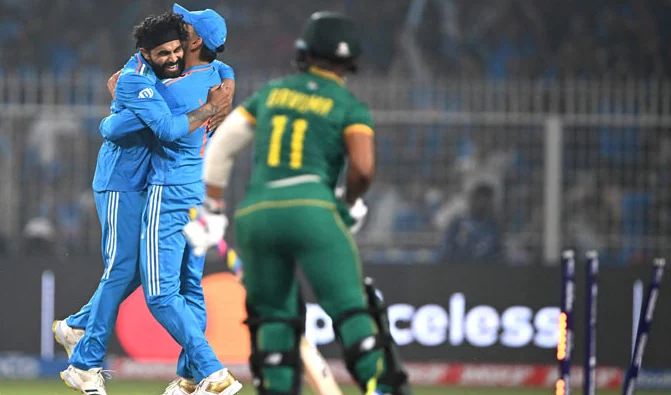
Kolkata: India demolished South Africa by 243 runs in the 37th match of the ICC World Cup 2023 at the Eden Gardens, Kolkata, on Sunday and continued their fantastic winning streak.

The Proteas’ batters found themselves helpless, failing to face the deadly Indian bowling attack as they lost five wickets for just 40 runs in 13.1 overs.

South Africa, who have made their recognition of playing fearless cricket, couldn’t play the way they always do and kept on losing wickets at intervals.

The Proteas were all out for 83 runs, suffering their biggest defeat of this World Cup.

Ravindra Jadeja was the undisputed pick of the bowlers as the left-arm off-spinner bagged five wickets for 33 runs.

Batting first, Rohit Sharma went berserk and took the Proteas bowlers to the cleaners, and scored 40 off just 24 balls, including eight boundaries as the Blues had scored more than 90 runs within the 10 overs.

However, both the openers, Sharma and Shubman Gill, walked back to the pavilion soon, leaving their side 93-2 in 10.3 overs.

That is when Virat Kohli and Shreyas Iyer built a crucial 134-run partnership and helped the Blues score runs on a tricky Kolkata pitch which made it difficult for batters to tackle bowlers, spinners especially, between the innings.

Despite the wicket getting difficult during the innings, Iyer and Kohli got the much-needed time to settle down without disturbing the run rate, thanks to the rapid start provided by their skipper Sharma.

Iyer scored 77 off 87 balls with nine boundaries, including seven fours and two sixes, and accelerated the innings at the right time.

However, it was Kohli who was the centre of attention for various reasons. The 35-year-old was playing on his birthday and also scored a magnificent century, scoring 101 off 121 runs.

Kohli notched up his 49th ODI ton, equaling the record of the legendary Sachin Tendulkar.

Kohli stayed till the last bowl but during the last overs, he was supported by quick knocks of Suryakumar Yadav (22 off 14) and Ravindra Jadeja (29 off 15), taking India’s total to 326 runs in the allocated overs.

Palestine bleeds: requiem for Ummah’s conscience

COMMENT

Ansar M Bhatti

While the tragic accounts of large-scale violence against innocent Palestinians persist at the hands of Israeli forces, there is a noticeable disparity in the responses from the Muslim ummah and the global community at large. It is disheartening to observe that non-Muslim countries have reacted swiftly and resolutely to Israeli actions, while the Muslim states have, for the most part, remained passive and indecisive. Notably, some Latin American countries, such as Bolivia, have taken the bold step of severing ties with Israel, whereas the OIC and Arab League are still deliberating their course of action. Among the Arab states, Bahrain has sown some guts by expelling the Israeli ambassador.

The situation in Gaza can be analyzed from multiple perspectives. Firstly, the conflict escalated when there were indications of Saudi Arabia deepening its relationship with Tel Aviv, potentially formalizing diplomatic ties with the intention of recognizing Israel in the future. As reports suggest, Saudi Arabia’s plan was to extend recognition to Israel once Palestine achieved full independence and sovereignty, with Al-Quds as its capital. Nevertheless, after Gaza tragedy Saudis of course will have to put their plans on hold, albeit, for a while.

The U.S. stance on the issue is perplexing, to say the least. It’s challenging to comprehend how a superpower could seemingly support an aggressor, especially when the tragic loss of innocent lives is so evident. Some observers speculate that President Joe Biden’s unwavering support for Israel may be influenced by his desire to secure backing from the Jewish community for upcoming elections.

Questions have also been raised the way Hamas conducted its operations. Its critics believe if it did not have the Plan B and C then why it ventured on this mission due to which thousands of innocent people have lost their lives. It is also believed that Israel’s prime objective is not to eliminate Hamas rather to get the entire Gaza strip vacated from Palestinians. To eliminate Hamas may not be an issue for Israel as it knows it’s all ins and outs given the fact that Hamas came into being with the very support and backing of Israel in order to contain Yasser Arafat’s PLO at that time.

It may be recalled that the bombing of the media tower in the Gaza Strip in May 2021 highlighted the unwavering resolve of Israel in its pursuit of eliminating not only the messengers but also the innocent Palestinian people who have endured decades of Israeli brutality. This tragic event had claimed the lives of over 180 Palestinians, including children, and left hundreds of thousands homeless.

Israel’s relentless campaign of terror reached a horrifying climax when they targeted Palestinians gathered for prayers in the Al-Aqsa mosque on the night of the 27th of Ramadan. Even in the face of this brutality, the so-called Muslim Ummah responded with an outpouring of grandiose statements and promises to protect Al-Aqsa mosque and come to the aid of the innocent people. Regrettably, these vows remained unfulfilled, and their pledges never materialized into concrete actions.

The OIC foreign ministers’ conference, held recently in Saudi Arabia, appeared to present an opportunity for addressing concerns related to Israel. However, it fell disappointingly short of expectations as foreign ministers largely delivered routine speeches and failed to take substantial actions. There are three prominent international platforms that the Palestinian people and the broader Muslim community, often referred to as the Ummah, could look to for support: the United Nations, the Arab League, and the OIC.

Placing excessive hope in the United Nations may be unwise, as it often seems influenced by anti-Muslim sentiments and constrained by its relationships with certain powerful nations. Given that Israel has strong backing from the United States, the UN’s criticism of Israeli actions may be limited. The Secretary General’s earnest appeals for a ceasefire have unfortunately fallen on deaf ears. It appears that his pleas have not gained the traction they deserve. In light of this, it becomes imperative for the Secretary General to reflect on his relevance and the justification for his continued leadership at the United Nations.

The OIC, on the other hand, has unfortunately been criticized for its ineffectiveness and resource-draining tendencies since its establishment. This 57-member organization has consistently fallen short of meeting expectations. Despite several challenges faced by the Muslim community, the OIC has not been successful in taking meaningful action. It has, at times, appeared as a platform for rhetorical condemnations, particularly in addressing issues like Islamophobia and blasphemous depictions.

The OIC was founded in response to the 1969 arson incidents at Al Aqsa mosque, yet it has been unable to prevent subsequent attacks on the mosque by Israel due to the lack of a substantial response from the Ummah and the OIC itself. In the recent episode, most of the OIC member countries believe, though they do not admit it openly, that Hamas acts do not represent the will of the entire Palestine state hence at times they are loathe to back Hamas actions whole-heartedly.

Arab League is yet another stakeholder that can play a role, if it wishes to. But keeping in view the past practices, nothing tangible is expected from the Arab League as the block appears to be divided into two distinct camps – one openly supporting the US and Israel and another desiring a solution as per the wishes of the people of Palestine. But now when a tragedy has taken place it time for everyone to shun differences and try to save innocent Palestine people form the Israeli barbarities.

Israel will never listen to anybody until and unless it is given a matching response. The Iranian foreign minister proposed to declare Israeli acts as war crimes and genocide of Palestine people. The Iranian spiritual leader Ali Khamenei has asked the Muslim ummah to boycott Israel but of no use only because of severe internal fissures among the Muslim countries. As long as they remain divided the innocent Muslims would continue to reel under tyranny and subjugation.

It’s important to remember that complex geopolitical issues like the Israeli-Palestinian conflict require a multifaceted and long-term approach. While a matching response may seem tempting, dialogue, diplomacy, and international cooperation are more likely to lead to lasting solutions and a more stable and secure future for the region.

Whether it’s Hamas or other Palestinian factions, it’s important for them to recognize the significance of unity within their ranks and resist succumbing to external provocations. They should also heed the voices of those who genuinely support their cause and seek an amicable resolution in accordance with their aspirations.

US Secretary of State meets Palestinian President amid Israeli aggression in Gaza

US Secretary of State meets Palestinian President amid Israeli aggression in Gaza

RAMALLAH, NOV 5 /DNA/ – US Secretary of State Antony Blinken met with Palestinian President Mahmoud Abbas on Sunday amidst escalating Israeli violence in the Gaza Strip and mounting international concerns over the humanitarian crisis caused by Israeli military operations against innocent Palestinians.

The meeting, held in the occupied West Bank, occurred following an unannounced visit by Blinken, conducted under tight security measures and met with protests against US support for Israel.

Blinken’s visit came just hours after Israeli warplanes struck a refugee camp in the Gaza Strip, resulting in the tragic loss of at least 40 innocent Palestinian lives and injuring dozens, as confirmed by health officials. Despite efforts to keep the visit confidential, news of Blinken’s presence sparked demonstrations against the United States’ stance on the ongoing conflict.

During the meeting, President Abbas urged Blinken for an immediate ceasefire in Gaza, aligning himself with other Arab leaders who have also called for an end to the violence. However, no official statements were made after the brief meeting.

On Friday, Blinken had visited Israel and met with Israeli Prime Minister Benjamin Netanyahu before leaving for Amman, Jordan’s capital, for meetings with Arab foreign ministers on Saturday. At each stop, Blinken has offered firm US support for Israel’s right to defend itself.

The situation in Gaza has raised concerns among US allies in the Arab world, who have expressed growing frustration with the deteriorating humanitarian conditions in the besieged Palestinian territory. The mounting casualties have intensified the scrutiny on the United States’ diplomatic initiatives, with Arab leaders emphasizing the urgent need for a truce as the death toll in Gaza nears a devastating 10,000.

‘Muslim ummah must unite against Israel’s atrocities’, Hamas chief tells Fazl

Fazl meets Hamas leadership in Qatar, provide aid to Gaza

DOHA: With Israel continuing its relentless bombing of the Gaza Strip, Jamiat Ulema-e-Islam-Fazl (JUI-F) chief Maulana Fazlur Rehman met Palestinian resistance group Hamas’s leader Ismail Haniyeh and former chief Khaled Mashal in Qatar on Sunday.

The JUI-F chief is in Qatar where he is expected to reach out to the Arab world leadership to find a way to provide aid to Gaza which has been facing a dire humanitarian crisis due to the ongoing Israeli bombing of the strip following the October 7 attack by Hamas, sources told Geo News.

“The two sides held detailed discussions over the Palestine issue”, JUI-F spokesperson Aslam Ghauri said while shedding light on the meeting between the veteran politician and Hamas leadership.

“[The JUI-F chief] conveyed condolences and expressed solidarity with the people of Palestine in wake of Israeli atrocities in Gaza,” the statement on Fazl’s X account read.

During the meeting, Haniyeh called for Muslims to unite in the face of Israeli aggression — which has killed nearly 10,000 Palestinians since October 7.

“It is the Muslim ummah’s responsibility to unite against Israeli atrocities,” Haniyeh said.

Meanwhile, Mashal highlighted that the prevalent atrocities in Kashmir and Palestine are a slap in the face of so-called human rights advocates.

The JUI-F chief, while echoing Hamas leadership’s views, said that the developed nations have the blood of innocent children and women on their hands.

Mashal appreciated Fazl’s efforts for the Palestine cause saying that the JUI-F chief is playing the role of Palestine’s ambassador in Pakistan.

The sources said Fazl was the first religio-political leader from any Muslim country who has embarked upon the war zone.

The party said that “the movement of Maulana Fazl has been kept secret since he wanted to reach the devastated people quietly and offer them assistance”. He is carrying food and medicines with him, the sources had told The News.

The publication said that after addressing a mammoth rally “Toofan Al-Aqsa March” in Karachi and “Sindh Aman Conference”, Fazl left for “some destination” from where he would reach the oppressed people of Gaza.

Israel’s offensive continues
Israel’s war on Palestinians and an ongoing bombardment of the Gaza Strip continues to escalate the humanitarian crisis.

The Benjamin Netanyahu-led occupation forces have intensified their ground operation and bombardment in Gaza for almost the last four weeks killing thousands of Palestinians including children.

For its relentless attacks, Israel accuses Hamas of hiding among civilians and has been using this explanation as an excuse when it faces criticism for targeting besieged civilians.

With Turkey being the latest to recall its envoy from Israel, many countries have also cut their diplomatic ties with Tel Aviv, whose forces have besieged Gaza for 17 years.

Global powers, including the United States and the UN, have called on Israel to ensure that civilian casualties are avoided in its continuing pursuit to eliminate Hamas, but to no avail.

The UN is also calling for an immediate ceasefire to at least allow aid to flow smoothly to the war-torn strip and permit the exchange of hostages.

Israeli PM Netanyahu, however, has ruled out halting his forces’ assault on Gaza and stressed that they would continue to pound the Hamas-run enclave.

OIC urged to take bold decisions on the Palestine situation

OIC urged to take bold decisions on the Palestine situation

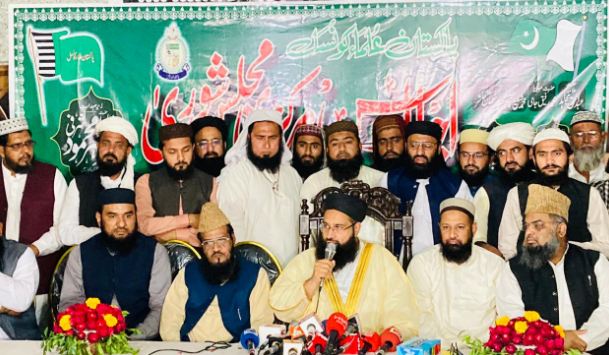
Lahore, NOV 5: /DNA/ – The Central Executive and Consultative Body of Pakistan Ulema Council has issued a declaration on the current situation of the country, Palestine and the Islamic world. More than two hundred members of Pakistan Ulema Council’s Executive and Consultative Body participated in the meeting. The meeting was presided over by Central Chairman Pakistan Ulema Council Hafiz Muhammad Tahir Mahmood Ashrafi. The meeting stated that in the declaration that the forces hostile to Pakistan, including India and its allies are involved in the incidents of terrorism inside Pakistan.

The international community must take immediate steps against India’s continued terrorism. The response of the Pakistani nation, army and security agencies to the terrorist incidents during the last two days and before is commendable. Ulemas-Mashaykh and the religious scholars from all over the country stand united by Pakistan’s Army and security agencies to contain the menace of extremism and terrorism. The way the soldiers of the Pakistan Army and security agencies foiled the terrorist attack on the Mianwali PAF Airbase is a matter of pride. The declaration issued by Pakistan Ulema Council also sid that Pakistan Ulema Council also supports and endorse Paigham-e-Pakistan narrative and the decree in this regard.

In this aegis of Pakistan Ulema Council, Paigham-e-Pakistan Conventions will be held across the country. The declaration also noted that attacks on Pakistan’s armed forces, security institutions, government and non-government installations and people are not permissible under any circumstances. Armed struggle by any individual, party or group is not legally permissible in Pakistan, and the government of Pakistan has the right to take legal action against those who do this. The declaration expressing concern over the situation in Palestine stated that for the last one month, the Zionist state of Israel has done complete siege of Gaza, the supply of water, food and fuel to 2.3 million people of Gaza has been suspended while the communication system has also been cut off. As a result of the ongoing bombing by Israel, more than 10,000 Palestinians have been martyred, including more than 3,000 children, while more than 20,000 people have been injured and hundred are burrier under the debris of demolished buildings.

The United States and its Western allies have not only supported Israel’s inhuman attacks, but are also complicit in Israel’s war crimes. The United Nations Human Rights Organization has definitely condemned the Israeli aggression, but this problem is not going to be solved by condemnations. The United Nations (UNO), OIC and Human Rights Organizations have to take immediate steps to ensure ceasefire in Gaza, otherwise, the sparks of this war can engulf the entire world.

The declaration said that the situation in Palestine is a test for the entire Ummah, as infants and children are being martyred in Gaza by barbaric bombardment, on which every Muslim living on earth is heartbroken and looking towards their rulers. Amidst all this situation, Kingdom of Saudi Arabia should play a leadership role, as currently the OIC is headed by Saudi Arabia. From the forum of OIC of the Muslim Ummah, lively and a bold decisions should be made on the situation in Palestine. Turkey, Bahrain and Jordan have cut off diplomatic relations with Israel and the rest of the Islamic countries that have diplomatic relations with Israel should also show courage in this regard.

A boycott of all Jewish products should be announced from the platform of the OIC. The Pakistan Ulema Council thanks Russia and China for their support to the Palestinian people. In the declaration, it was said that the state of Pakistan stands firmly on its principled stand on the Palestinian issue, and the stance expressed by Army Chief General Hafiz Syed Asim Munir in the meeting with the Palestinian ambassador is the voice of the heart of the entire nation. The State of Pakistan, the Pakistan Army and the people stand with their oppressed Palestinian brothers in this hour of difficulty and will provide them with all possible help. In the declaration, it was said that Afghans are our brothers, Pakistan has served Afghans for more than forty years and will continue to do so in the future, but we can’t support the illegal residents in the country.

It is the right of the State of Pakistan and the people of Pakistan to evict illegal residents from its territory. Legal foreigners are still living in Pakistan, it is the responsibility of the state to take action against them and expel them, and the entire nation stands by the state in this regard, said declaration of Pakistan Ulema Council. This operation is not against the residents of any particular country, but against all illegal people residing in Pakistan without legal documents. Unfortunately, the forces hostile to Pakistan, India and its allies elements are trying to spread propaganda on this legal right of Pakistan.

We also appeal to Afghan leaders to negotiate with Pakistan and address all these issues. Irresponsible statements on part of some Afghan leaders are very sorrowful an the leadership of the Afghan Interim Government should take notice of this. Baseless accusations and threatening behavior against Pakistan should end, said declaration. In the meeting, Chairman Pakistan Ulema Council Hafiz Muhammad Tahir Mahmood Ashrafi, Allama Abdul Haq Mujahid, Maulana Muhammad Rafiq Jami, Maulana Nauman Hasher, Maulana Asad Zakaria Qasmi, Maulana Muhammad Shafi Qasmi, Maulana Asadullah Farooq, Allama Zubair Abid, Maulana Muhammad Ashfaq Patafi, Maulana Abu Bakr Hameed Sabri, Maulana Tahir Aqeel Awan, Maulana Aziz Akbar Qasmi, Maulana Haq Nawaz Khalid, Maulana Ubaidullah Gormani, Allama Tahirul Hasan Maulana Hanif Usmani, Maulana Muhammad Asghar Khosa, Maulana Anwarul Haq Mujahid, Maulana Abdul Malik Asif, Maulana Aslam Siddiqui, Maulana Abdul Hakeem Athar, Qari Muhammad Aslam Qadri, Maulana Abdullah Haqqani, Maulana Abdul Waheed Farooqui, Maulana Abu Bakar Hamza, Maulana Habib Rehman Abid, Maulana Aminul Haq Ashrafi, Maulana Izharul Haq Khalid, Sahibzada Hamza Tahirul Hasan, Maulana Saadullah Ludhianwi, Maulana Anisur Rehman Baloch, Maulana Abdul Rasheed, Mufti Muhammad Umar Farooq, Maulana Abdul Ghaffar Shah Hijazi, Maulana Muhammad Ahmad Makki, Maulana Azizur Rahman Muawiya, Mufti Imran Muawiya, Maulana Saadullah Shafiq, Maulana Yasir Alvi, Qari Abdul Rauf, Maulana Mustaal Mahar, Maulana Zubair Khatana, Maulana Aqeel Zubairi, Qari Azizur Rahman, Maulana Shabbir Khatana, Maulana Zubair Khatana, Qari Abdul Majid Lahori, Maulana Khanpuri, Maulana Qasim Farooq Sangi, Maulana Ashraf Malik, Maulana Ijaz Malik, Qari Abdul Wahab Muawiya, Maulana Muhammad Bilal Saqib, Qari Ibrahim, Qari Riaz, Maulana Amir Muawiya, Maher Abdul Khaliq Murali, Maulana Muneebur Rahman Haidari, Qari Mohabbate Ali Qasmi, Qari Zul Qarnain, Maulana Tayyab Qureshi, Qari Mahmood Al Hasan, Qari Abdul Majid Malik, Maulana Waqas Iqbal and others participated.

Stay Connected

64FansLike
60FollowersFollow

Latest Reviews

Exchange Rates

USD - United States Dollar
EUR
1.17
GBP
1.34
AUD
0.67
CAD
0.73