Home Blog Page 875

Diplomats emphasize importance of global representation to rising stars players

Diplomats emphasize importance of global representation to rising stars players

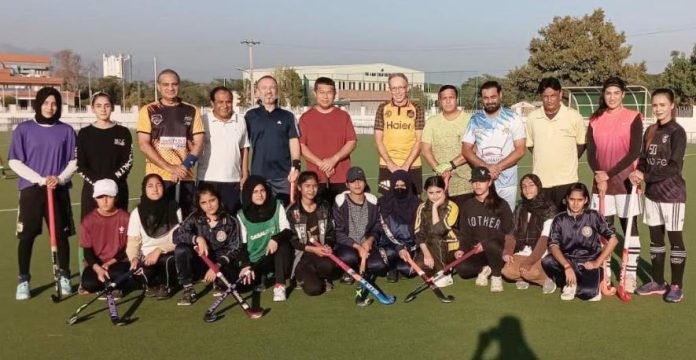
DNAISLAMABAD, NOV 12 – The Rising Stars Girls Hockey Academy was honored to host distinguished guests as the Ambassadors/High Commissioners of Australia, Brunei, and Romania joined the players for a memorable practice session.The diplomats took time to engage with the budding talents, offering words of encouragement and emphasizing the importance of showcasing their hockey prowess on the international stage.During the visit, the ambassadors motivated the young players, urging them to persevere in honing their skills and expressing hope for their future representation of the country at higher levels of competition.

American diplomats faced embarrassment

American diplomats faced embarrassment

DNAKARACHI, NOV 12: Ronald Rhinehart, Deputy Consul General, and Political Unit Chief U.S. Consulate Karachi caught in a embarrasing situation during the fashion show in DHA Area 51 hall, a male model entered on the ramp holding a play-card mentioning ” One Minute silence for Palestine” with another side mentioning ”Free Palestine”, model walked on the ramp at the beginning and the end of the show, model stopped in front of the U.S diplomat and his wife who were sitting at the front row.The U.S diplomat changed his position a few times trying desperately to ignore the protestor. Later, Mr. Ronald Rhinehart, with his wife, went to the backstage after the event to avoid the filming audience and left immediately from the hall, avoiding to talk to anyone.

Pakistan’s Changing Foreign Policy

Pakistan’s Changing Foreign Policy

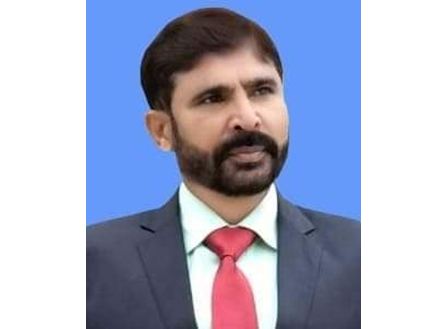
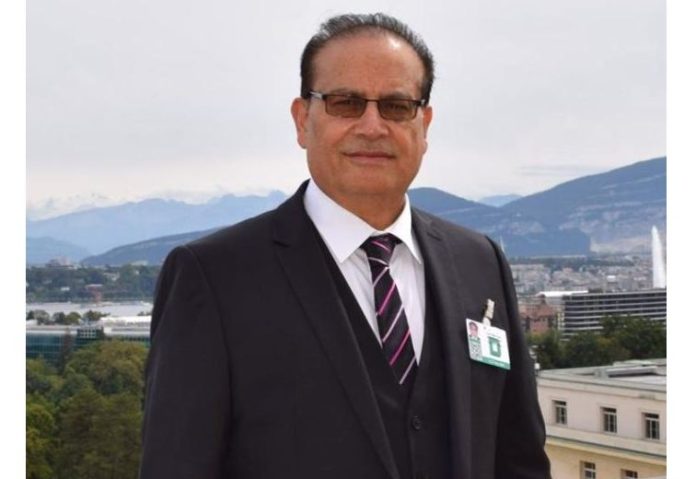
Dr. Muhammad AkramZaheer

No country can live independently in the age of globalization.Therefore, every country wants to establish its multi-dimensional relations with other countries for its survival and security, which not only makes it possible to achieve its national interests but also ensures its survival.

Foreign policy co-ordinates strategies determined and then systematically implemented to manage relations with other countries and nations. Foreign policy also seeks to deal with other countries and nations to achieve political, economic, and military goals, and to maintain and maintain relationships with non-state actors in the national interest. However, it can be said that foreign policy is a set of strategies and actions to deal with non-state actors to maintain strong relations with other states and nations and to protect and promote state and national interest.

Pakistan’s foreign policy is guided by the vision and principles of Quaid-e-Azam Muhammad Ali Jinnah.According to him, “Our foreign policy is the desire of friendship with all the nations of the world. We do not like aggression against any country or nation. We believe in the principle of honesty and fair play in national and international affairs andWe are ready to cooperate fully with all the nations of the world in the promotion of peace and prosperity.

There will be no backing down. Pakistan’s foreign policy is designed to achieve the country’s national and international goals: restoration of territorial integrity, political freedom, accelerating social and economic development, its place in the world as a strong nation.To build and maintain cordial and friendly relations with all countries and to protect its independence and sovereignty are the main objectives of Pakistan’s foreign policy. Pakistan came into existence due to the tireless struggle and unprecedented sacrifices of millions of Muslims.Therefore, protecting our independence like other nations and not allowing any country to challenge our independence and sovereignty is the main and integral element of Pakistan’s foreign policy.And this factor is also the cornerstone of Pakistan’s foreign policy.Pakistan does not interfere in the affairs of other countries and always tries to establish cordial relations with its neighboring countries and other countries of the world.

Pakistan has always expressed its concerns about India and Israel-administered Kashmir and Palestinian territories, Afghanistan and the critical situation in the Middle East.Pakistan has always offered its shoulders for the protection of the rights of the Muslim world and also raised its voice for the solution of their problems.Pakistan has always followed the principle of national sovereignty, non-use of force against any state and non-interference in the affairs of other states.Pakistan has always fully adhered to the UN Charter and supports all the steps taken by the UN to implement it. Pakistan has always been on the front line for the eradication of apartheid and colonialism.He has also been supporting the Kashmiri people for their right to self-determination.

Although Pakistan is a nuclear power, its intention is to maintain the balance of power in South Asia.Pakistan has always fulfilled its international nuclear non-proliferation commitments and has supported collective efforts for peace and security through non-use of weapons.Non-proliferation is considered a prerequisite for sustainable peace and stability at the global level.This is the reason why non-proliferation is also included in the principles of Pakistan’s foreign policy.Pakistan is also a member of United Nations, OIC, ECO, SCO, SAARC and ASEAN.Being a member of these international organizations, Pakistan continues to strive for regional and global peace and also strives to unite Muslim countries to promote mutual cooperation in political and economic activities.In the past, satisfaction and dissatisfaction have always existed in Pakistan’s policies, but today Pakistan is moving towards a better direction in world affairs. Pakistan has always followed the policy of non-alignment and has been reluctant to become the ally of any major power, but unfortunately during the Cold War, Pakistan had to side with America.

During the Afghanistan-Soviet war, Pakistan was a front-line ally of America and it also played an important role in dismembering the Soviet Union.Pakistan, the alliance of US and NATO forces was formed to ensure its security as the Soviet Union was increasing threats to the security of the Pak-Afghan border.After the end of the Cold War, Pakistan once again helped Washington to establish peace in Afghanistan and fight against terrorism.

Today, as the US forces are withdrawing from Afghanistan, Pakistan is again refraining from adhering to its core principle of non-alignment policy and becoming part of any military bloc and major conflict.

Therefore, Islamabad is making great efforts to help the withdrawal of American forces from Afghanistan and to establish lasting peace in Afghanistan. At the end of the cold war, the bipolar system was also eliminated from the world and the sun of the unipolar system rose in the world.The US and its allies have been more inclined to act independently since the end of bipolarity.And now the multilateral system has also emerged in the world.Now Pakistan is considered as a power in the regional and international system which worked with the western countries to transform the international bipolar system into a unipolar world.After fighting several wars one after the other, the United States faced an economic crisis and was forced to withdraw from Afghanistan.And Pakistan is fully supporting America to withdraw from Afghanistan.

Therefore, the world and the United States recognize the role of Pakistan.With the United States withdrawing from international engagements, a new vacuum is being created for regional rivals to be filled again by regional powers such as China, Russia or Pakistan. Now Pakistan is also struggling to get out of the influence of America and seems to be inclined to form a new regional block along with China and Russia.In the coming days, important changes are coming in the region and the roles of world politics are also changing, which will make the coming decade very important for the world.Countries around the world are making new alignments, so the foreign policy is being revisited in Pakistan as well.After many decades, diplomatic and economic relations between Pakistan and Russia are increasing.Experts agree that in recent years, the ice is seen melting on both sides and now the relationship between Pakistan and Russia is feeling softer and warmer.

The recent contacts between Pakistan and Russia show that both countries want to be closer to each other.Moreover, there is a possibility of Russia joining the CPEC after China’s consent.A major challenge in Pakistan-Iran relations is sectarianism.Iran’s Shia revolution laid the foundation for sectarianism in Pakistan.Pakistan’s proximity to Gulf Arab states such as Saudi Arabia and the United Arab Emirates has fueled sectarianism and Iran-Pakistan relations have been strained.Now, Pakistan and Iran also have the same position on many issues and are willing to do mutual trade, even Iran has also expressed its participation in CPEC.India’s move of August 5 has also opened the eyes of South Asian countries and SAARC countries are also not happy with India anymore.China is currently in an aggressive mode and is offering an economic development package to Iran, Bangladesh, Nepal and Bhutan and also offering to join the CPEC.

CPEC is a game changer for Pakistan and China and is a thought of development.This is the reason why the world now wants closeness to Pakistan, while on the other hand India and America have expansionist ambitions and arrogance.In recent days, the talks between the Prime Ministers of Pakistan and Bangladesh are also a positive development. After expressing India’s displeasure on Pakistan-Bangladesh relations, Bangladesh made it clear to Delhi that it is independent in its foreign policy.And now Bangladesh and Pakistan trade has also started.Moreover, Prime Minister HaseenaWajid may plan to visit Pakistan.

In the coming days, as the world scenario becomes clearer, there will be a clear shift in Pakistan’s foreign policy as Pakistan is also trying to get rid of American influence. China and America are opposite each other in many issues and interests. Pakistan’s relations with China are very good, which is an emerging economy of the present time. Moreover, due to the strategic cooperation and CPEC between Pakistan and China, the interdependence has increased manifold, which is mainly due to the strategic position of Pakistan in the region.And this cooperation will increase in the coming years.Pakistan and China are going to play an important role in the politics and economy of the region.

Thousands of Miles with CPEC: The Symbol of Pakistan-China Economic Relations

Thousands of Miles with CPEC: The Symbol of Pakistan-China Economic Relations

The shared vision of China and Pakistan, under the guidance of the BRI, promises a future even more prosperous and vibrant for this enduring partnership.

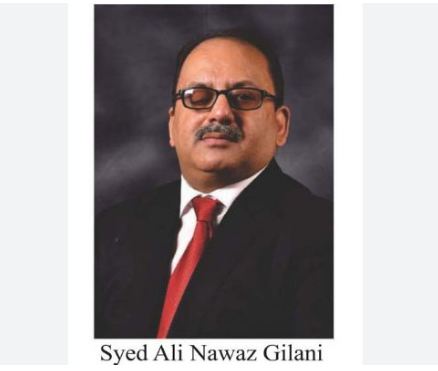
Syed Ali Nawaz GilaniIn a celebration of an enduring partnership that has withstood the test of time, the All-Pakistan Chinese Enterprises’ Association (APCEA) and the Pakistan-China Institute (PCI) came together to launch a groundbreaking promotional endeavor titled “Thousands of Miles with CPEC: The Symbol of Pakistan-China Relations.” The event, held on 6th Novermber 2023, at the Pakistan Institute of Parliamentary Services (PIPS) Islamabad, not only commemorated the ten-year milestone of the China-Pakistan Economic Corridor (CPEC) but also underscored the strength and significance of the diplomatic ties between Pakistan and China.CPEC, a monumental initiative that was set in motion in 2013, has evolved into a symbol of the unwavering brotherhood between Pakistan and China. Its influence is felt far and wide, touching every facet of life in both countries. Beyond its macroeconomic contributions in sectors such as Power, Infrastructure, IT, and Agriculture, CPEC has played a pivotal role in fostering cultural ties and forging a Pak-China community of shared interests.The “Thousands of Miles with CPEC” project look deep into the social aspects of this transformative endeavor. It captures the personal experiences of individuals who have witnessed the profound changes brought about by a decade of CPEC. From common citizens to government officials, from local employees to diplomats, this project paints a vivid picture of how CPEC has left an indelible mark on the lives of people from diverse walks of life.The event featured a powerful screening of an exclusive video documentary, which showcased the exceptional significance of CPEC as the flagship project of the “Belt and Road” Initiative. The documentary emphasized the strategic importance of Gwadar Port, the zenith and focal point of CPEC, serving as a bridge between the One Belt, One Road and the Maritime Silk Road. With breathtaking scenic shots, the documentary provided a bird’s-eye view of the major contributions made by CPEC projects, substantiated by compelling facts and figures.To pay homage to the ten years of unfaltering support and cooperation offered by China, a special feature report titled “Thousands of Miles with CPEC: The Symbol of Pakistan-China Relations” was unveiled. This report not only outlines the narrative of CPEC but also extols its accomplishments as a landmark in the enduring Pak-China relationship. It narrates stories of Chinese companies fulfilling their Corporate Social Responsibility (CSR) and shines a light on the depth of the friendship shared by Pakistan and China.As a testament to the spirit of collaboration and solidarity, Chinese enterprises operating across Pakistan, spanning various sectors, contributed mini documentaries. These films feature testimonials, personal accounts, and inspiring experiences of project employees and local individuals. They will be released as part of a docuseries under the “Thousands of Miles with CPEC” umbrella, exemplifying the shared journey towards a prosperous and promising future for both Pakistan and China. It has been elaborated that, CPEC stands as a testament to the enduring brotherhood between Pakistan and China. It is not just an economic initiative; it’s a bridge of friendship, a symbol of collaboration, and a beacon of hope. As President Xi Jinping once said, “Our friendship with Pakistan is unbreakable, and our cooperation is unique.” In the spirit of CPEC and the Belt and Road Initiative (BRI), Pakistan and China are bound by a shared vision, one that promises a future even more prosperous and vibrant. As we celebrate a decade of CPEC, let it serve as a reminder that, together, there are thousands of more miles to cover on the road toward a brighter tomorrow.CPEC has many impressions on Pakistan economy and its society. One of the most significant impact of CPEC has been on Pakistan’s energy industry. Notably, it brought forth the introduction of supercritical coal-fired power plants and pioneering hydropower projects. These initiatives have not only illuminated the lives of Pakistan’s citizens but have also provided a significant boost to the nation’s economic prospects.CPEC’s contributions extend far beyond the energy sector. It has catalyzed the development of critical infrastructure projects. The Lahore Orange Line project, cross-border optical fiber cable, and the Sukkur-Multan Motorway have revolutionized transportation and connectivity within Pakistan.Chinese enterprises involved in CPEC have demonstrated their commitment to corporate social responsibility. During times of disaster, they generously donated funds and essential supplies. Moreover, these enterprises have invested in technical schools, offered scholarships to Pakistani students, and provided crucial technical training to local farmers and women. The results of these initiatives have been empowering, enriching the Pakistani workforce.Beyond the confines of Pakistan, CPEC has also created opportunities for local engineers and technicians. Many of those trained during the corridor’s development have found opportunities to work abroad, contributing their expertise in countries across the Middle East, South Asia, Africa, and Europe.While international uncertainties persist, Pakistan’s inherent strengths in terms of human resources and geographical advantages continue to instill confidence in CPEC’s potential. It is firmly believed that the Pakistani government and its people will successfully navigate the challenges that may arise, bolstering the corridor’s long-term success.CPEC has been a game-changer for Pakistan’s economy. The project has helped Pakistan overcome its energy crisis by adding thousands of megawatts of electricity to the national grid. It has also improved Pakistan’s transportation infrastructure through the construction of new highways, railways, and airports. Additionally, CPEC has created thousands of jobs in Pakistan, reducing poverty in the country. As Pakistan marks a decade of CPEC, it reflects on a remarkable journey that has had a transformative impact on its present and future. The shared vision of China and Pakistan, under the guidance of the BRI, promises an even more prosperous and vibrant future for this enduring partnership.(ABOUT THE AUTHOR: In the realm of fostering Pakistan-China relations, there exists a visionary, a guardian of friendship. Syed Ali Nawaz Gilani is the Secretary General of the Pakistan China Friendship Association’s Khyber Pakhtunkhwa chapter, a luminary who orchestrates bonds between nations. Nestled in the vibrant city of Peshawar, he is not only a Senior Media Consultant but also a bridge-builder between cultures. To connect, reach out to him at [email protected].)

At Arab-Islamic summit, PM demands int’l community hold Israel accountable for war crimes

PM

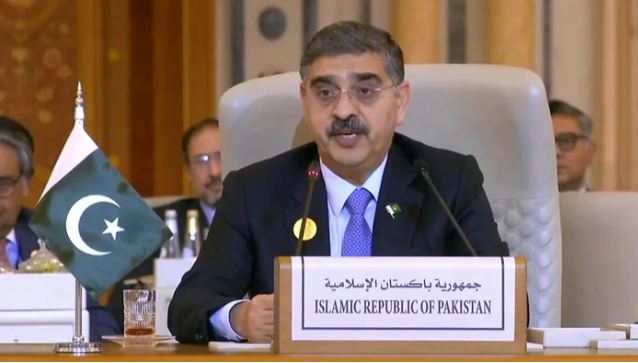
Caretaker Prime Minister Anwaar-ul-Haq Kakar Saturday demanded the international community hold Israel accountable for its war and humanitarian crimes as the occupation forces pound Gaza indiscriminately.

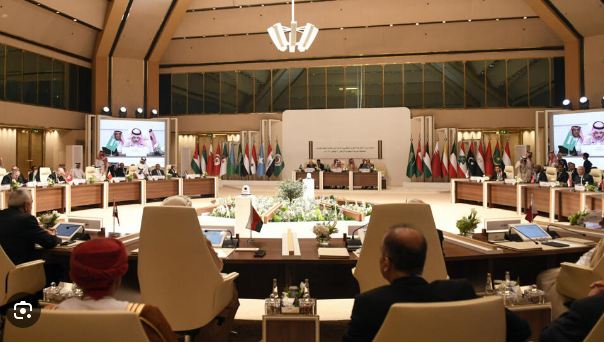
The prime minister made the statement during a Joint Arab-Islamic Extraordinary Summit, which brought together leaders from the Arab and Islamic world to discuss the current worsening situation in Gaza and the future strategy.

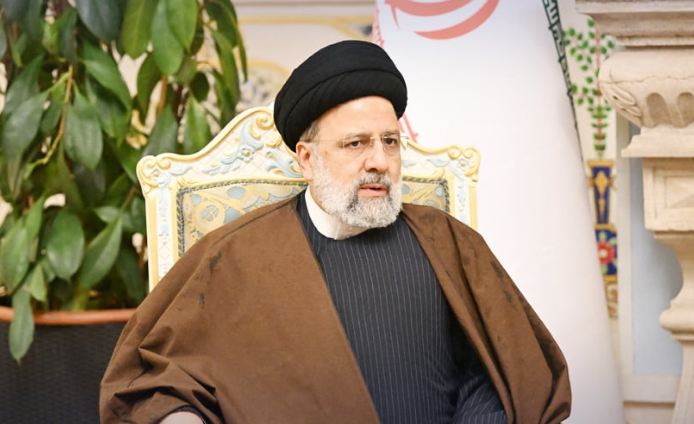
Dozens of leaders including Iranian President Ebrahim Raisi, Turkish President Tayyip Erdogan, Qatar’s Emir Sheikh Tamim bin Hamad Al Thani, and Syrian President Bashar al-Assad, who was welcomed back into the Arab League earlier this year, attended the meeting.

Kakar suggested that the Arab and Islamic countries should explore the possibility of initiating proceedings at the International Court of Justice (ICJ) against Israel for its war crimes and crimes against humanity under the Genocide Convention and under the interim measures request.

“The UN secretary-general could be requested to establish a special commission of inquiry to investigate Israel’s war crimes and crimes against humanity since October 7,” the prime minister said.

Israel — by targeting schools, hospitals, mosques, churches, and even refugee camps where terrified civilians have taken shelter — has so far killed more than 11,000 people, including over 5,000 children.

The prime minister further said that the Muslim nations should also demand the establishment of an international mechanism and call for a halt to illegal settlements by Israel.

“We call for a political solution for which it is imperative that conditions are created for a dialogue between the Palestinians and Israel to evolve a way forward through the two-state solution,” he reiterated.

The prime minister said a permanent solution to the conflict was in the establishment of a secure, viable, contiguous, and sovereign state of Palestine on the basis of pre-June 1967 borders with Al-Quds Al-Sharif as its capital and urged upon the Muslim countries to work towards that end.

Gaza urgently needs reprieve and an immediate and complete ceasefire, he said.

Kakar said Israel must be forced to halt its indiscriminate aerial bombardments and ground invasions in compliance with international humanitarian and human rights laws, and should ensure immediate lifting of the blockage and ensure rapid and unhindered humanitarian aid supply.

Kakar meets MBS

On the sidelines of the ongoing Joint Arab- Islamic Extraordinary Summit, the prime minister also met Crown Prince and Prime Minister of Saudi Arabia Prince Mohammed bin Salman.

They discussed the latest situation caused by the aggression of the Israeli occupation forces against the Palestinians in Gaza and the West Bank.

Kakar appreciated the role and efforts of Saudi Arabia, for promoting the Palestinian cause.

He thanked the Saudi leadership for timely convening the summit to evolve Joint Arab-Islamic Action on the deteriorating situation in the Occupied Palestinian Territories.

The two leaders underlined the need for urgent international collaboration geared towards stopping Israel from brutal and indiscriminate aggression against the besieged and innocent Palestinians.

They further emphasized the urgency of lifting the blockade of Occupied Gaza to facilitate the delivery of vital humanitarian aid and medical assistance to the affected population.

The prime minister denounced the Israeli action of bombing hospitals, refugee camps, schools, and residential buildings, resulting in the death of over ten thousand people.

During the meeting, the two leaders also exchanged views on bilateral matters and reaffirmed the resolve to further strengthen the longstanding Pakistan-Saudi relations for a mutually rewarding economic partnership.

Israeli army should be designated terrorist organisation: Iranian president

Israeli army should be designated terrorist organisation: Iranian president

In an extraordinary joint Islamic-Arab summit on Saturday, Saudi Crown Prince Mohammed bin Salman expressed strong disapproval of Israel’s war on Gaza.

He denounced the ongoing conflict, stating, “We condemn the grisly attack on Gaza and demand an immediate end to the carnage in the region.”

The Saudi crown prince emphasised, “The region can attain security, peace, and stability only through the cessation of occupation, the lifting of the siege, and the discontinuation of settlements. It is crucial to ensure the legitimate rights of the Palestinian people and establish their independent state, with East Jerusalem as its capital.” 

– Iranian president says US part of Israel’s war crimes –

Iranian President Ebrahim Raisi issued a full condemnation of Israel’s assault on Palestine, highlighting the tragic bloodshed faced by innocent civilians in the region. Underlining the imperative for unity in the Muslim world, he stressed the collective responsibility to protect the people of Palestine. Additionally, he underscored the significance of Palestine as a symbol of pride for the entire Muslim community. 

He further said Israel was proving to be the modern-day Pharaoh and was a threat to not just this region but the entire world.

“Israel is carrying out the worst genocide of Palestinians; hence, the entire Muslim world should unitedly stand with Palestine,” he suggested.

Raisi called the world’s silence over Israel’s atrocities shameful. There was no option, but to denounce Israel. “We applaud Hamas for standing up against Israel,” he insisted. 

Raisi also demanded that Muslim nations impose oil and other goods’ sanctions on Israel. There was a need for urgent aid for Gaza, he said, calling for ending diplomatic relations with Zionist forces and boycotting them. The Israeli army should be designated a terrorist organisation by all Muslim countries, he demanded.

There has been a steady increase in the violence perpetrated by the Zionists over the past few years, the Iranian president remarked. 

Iran accepts Hamas’s resistance against Israel. “This organisation has to play its role. Israel is committing all kinds of human rights violations. Bombings are being carried out everywhere, and the number of victims is increasing,” he commented.

“America is supporting such people with its Marines and aircraft. American shipments were being transported to Israel on a daily basis. It is also giving billions of dollars to Israel.”

Palestinians were being oppressed in every way, Raisi asserted, adding that the world could see what the Zionist state was doing to Muslims.

“The people of Gaza did not need resolutions at this time. The heads of Muslim countries must come together to do something for the people of Gaza,” he demanded. 

“What is the fault of the children in this war? Israel is targeting the new generation. And America is a part of these war crimes. The Zionists are violating international laws,” Raisi thundered. He added that the US facilitated Israeli airstrikes on Gaza and was also aiding Israel in waging the war. 

– Erdoğan condemns Israel’s attack on Gaza –

Turkish President Recep Tayyip Erdoğan unequivocally condemned Israel’s brutal assault on Gaza, expressing full solidarity with the people of Palestine.

Emphasising a desire for peace in the region, Erdoğan called for the restoration of the borders to the 1967 lines. He went on to assert that those who remain silent in the face of Israel’s war on Gaza are complicit in the criminal actions, describing it as an ongoing assault against humanity.

– Palestinians are confronting an unparalleled genocidal conflict: Palestinian president –

During an extraordinary joint Islamic-Arab summit held in Riyadh, Palestinian Authority President Mahmoud Abbas declared that Palestinians are confronting an unparalleled genocidal conflict.

He urged the United States to exert pressure on Israel to cease its offensive in Gaza. Additionally, Abbas emphasised the imperative for international intervention to safeguard Palestinians from the ongoing onslaught by Israel.

– PM Kakar reaches Saudi Arabia to attend OIC –

Caretaker Prime Minister Anwaarul Haq Kakar on Friday reached Saudi Arabia on a three-day official visit to attend the emergency meeting of the Organisation of the Islamic Conference (OIC) on the situation in Gaza.

Deputy Governor Riyadh Prince Mohammed bin Abdulrahman bin Abdulaziz had extended a welcoming reception to PM Kakar.

The presence at Riyadh’s King Khalid International Airport for this reception also included Pakistani Ambassador Ahmed Farooq, along with diplomatic representatives from both Saudi Arabia and Pakistan.

Saudi Crown Prince Mohammed bin Salman condemns Israel’s actions in Gaza

ICC World Cup 2023: England beat Pakistan to qualify for 2025 Champions Trophy

ICC World Cup 2023: England beat Pakistan to qualify for 2025 Champions Trophy

England defeated Pakistan by 93 runs in the 44th match of the ICC World Cup 2023 at Eden Gardens, Kolkata, India, on Saturday and have qualified for the 2025 ICC Champions Trophy. Pakistan suffered two early blows during their 338-run target chase as both their openers, Abdullah Shafique and Fakhar Zaman, were removed by David Willey in the first three overs, leaving their side 10-2 in 2.4 overs.

The Green Shirts got a bit of a breakthrough as skipper Babar Azam and Mohammad Rizwan provided some stability to the team but both were after 22.3 overs as Pakistan were four down for 100 runs. Salman Ali Agha top-scored for the struggling Pakistani side by scoring 51 runs. Shaheen Shah Afridi contributed to 26 runs down the batting line. Haris Rauf and Mohammad Wasim Jr. smashed sixes at the end as the two combined for 53 runs but their heroics were not enough in front of the massive target set up by the English batters. The Green Shirts were all out for 244 runs in 43.3 overs and ended their World Cup journey with a defeat. Batting first, England managed to post 337 runs on the scoreboard courtesy of a solid batting display by their top order. Dawid Malan and Jonny Bairstow provided their side with a dominant start as they scored 80 runs within 13 overs without a loss.

The former was the first batter to depart for the pavilion after becoming the victim of Iftikhar Ahmed for 31 runs. Malan was soon followed by Bairstow as the right-handed aggressive batter ended up losing his wicket for 59 runs. However, after losing two wickets, Joe Root and Ben Stokes built a crucial 132-run partnership that helped Jos Buttler’s men get in a comfortable position. Stokes top-scored for his side with 84 runs courtesy of 11 fours and two sixes. The left-handed batter was on his way to score his consecutive World Cup century but was bowled by Shaheen Afridi. Root scored 60 runs before becoming the victim of Afridi. However, Buttler (27 off 18) and Harry Brook (30 off 17) provided their side with important runs late in the game that helped them set a 338-run target. For Pakistan, Haris Rauf — who became the bowler to concede the most runs in a single World Cup edition — took three wickets, while Afridi and Wasim Jr. bagged two and Iftikhar could only pick one. Pakistan ended their World Cup campaign with four wins out of nine matches and finished at the fifth position in the points table with eight points.

Muted OIC-Arab league and dying Palestinians…

Trumpet of Elections sans PTI..

Qamar Bashir

In a pivotal diplomatic move, the Organization of Islamic Cooperation (OIC) and the Arab League initially were scheduled to hold separate sessions, but the gravity of the situation prompted a joint gathering hosted by Crown Prince Mohammad Bin Salman of Saudi Arabia. This unified front aimed to showcase solidarity on a pressing issue: punitive actions against Israel.

The collective anticipation of the entire Muslim Ummah rested on the hope for a unified stance against Israel’s egregious actions. The expectation was for a resolute declaration labeling Israel as a terrorist state, holding it accountable for the ruthless and cold-blooded killing of over 11,000 civilians, perpetrated with total impunity. The desire extended to leveraging oil as a powerful weapon, intended to compel the United States and its ally Israel to yield, humbled at the feet of justice.

The fervent aspiration included a call to deny airspace to Israel and its allies across Muslim nations and among those who champion humanitarian values. It sought to cut off all air, land, and sea routes to Israel, implementing a comprehensive boycott of Israeli products and those supporting its cause. The call further resonated with the imperative of severing diplomatic ties with Israel and its supporters, deploying all available tools and pressures to enforce a two-state solution. This envisioned solution aimed to grant Palestinians the freedom to live in accordance with their religious beliefs, customs, and social values, free from any form of intimidation, coercion, or humiliation.

However, the conference’s impact was diminished by evident divisions among member countries, stemming from concerns about potential repercussions from the United States. The fear of facing the wrath of the USA led to a visible hesitancy among nations, tempering their collective stance against Israel.

Within this divide, opinions diverged on the status of Hamas. While some countries voiced support, viewing it as a legitimate entity spearheading the Palestinian struggle, others, considering it an extension of Iran’s influence, hesitated to endorse its legitimacy. This internal discord weakened the OIC and Arab League’s joint message, hindering the efficacy of their collective diplomatic efforts.

Regrettably, the joint meeting faced dismissive reactions from both Israel and the United States. Instead of heeding its call for restraint, the relentless attacks on innocent civilians escalated. Hospitals, ambulances, and mosques bore the brunt of the aggression, emphasizing the dire humanitarian consequences of the conflict.

Regrettably, the desired unity and resolute action faced stark challenges on the international stage. While the aspirations were noble and the expectations high, the reality reflected the intricate geopolitical complexities and the formidable obstacles posed by global power dynamics. The gap between hope and reality serves as a poignant reminder of the profound challenges in achieving a unified response against the injustices faced by the Palestinian people.

As anticipated, the joint statement fell short of endorsing the comprehensive measures sought by many, culminating instead in a declaration of relatively toothless actions. These included an appeal for immediate ceasefire, a halt to the forced exodus of Palestinians to Egypt or other locations, the establishment of open corridors for the delivery of essential humanitarian aid, and an appeal to the United Nations Security Council for the passage of a binding resolution on Israel knowing that this would once again will be vetoed by USA.

The primary objective of this resolution was to call upon Israel to cease its ongoing killing spree and the alarming acts of genocide against innocent women, children, and civilians—actions that have brazenly surpassed all recognized redlines.

In the process of normalizing relations with Arab states, Iran’s presence in the meeting signaled a noteworthy rapprochement towards the Arab world. Acknowledging its delicate position within the predominantly Arab conference, the Iranian President strategically praised Hamas, the leading resistance movement against Zionist forces in the ongoing 35-day war.

Emphasizing that the Palestinian issue transcends simple human rights concerns, the Iranian President framed it as a matter of human dignity. He condemned the Zionist regime of Israel, alleging that it, with the support of the USA and the West, has consistently denied the Palestinian people their fundamental dignity.

The Iranian President underscores the urgency of meaningful, result-oriented, and time-bound dialogues among Muslim countries to enforce a two-state solution for the Palestine issue. While echoing the call for a ceasefire and the restoration of humanitarian aid corridors, he vehemently opposes allowing the Zionist regime to continue its killing spree with impunity. In contrast to other nations, Iran openly supports and admires the Palestinian resistance movement led by Hamas.

The President warns that if Israel, backed by the USA, persists in killing innocent civilians, the conflict could escalate to engulf other regions like Lebanon, Yemen, Iraq and Syria.

He calls for a unified Muslim voice to compel Israel to leave Gaza and restore the dignity and honor of Palestinians. Advocating for impactful measures, he urges the use of oil as a tool to humble Israel, the USA, and their supporters.

The President calls for the severance of diplomatic relations with Israel, declaring it a terrorist country with a terrorist regime. Additionally, he advocates for a global boycott of Israeli products as a means to exert collective pressure on the nation.

In his impassioned address, the Iranian President stressed that the lasting solution to the Palestinian issue lies in restoring the rightful ownership of the land to the Palestinians, which has been denied for 70 long years through the construction of Zionist settlements.

The Turkish President, Erdogan Tayyip, delivered a carefully crafted speech, urging the holding of an international conference for a lasting solution based on a two-state framework.

 He proposed the establishment of an international fund for the reconstruction of Gaza and the rehabilitation of those physically and psychologically affected by the conflict. Erdogan also advocated taking Israel to the International Court of Justice for alleged war crimes.

In a brief yet carefully worded address, the Qatari representative called for the release of captives by both Hamas and Israel. He condemned the displacement of Palestinians from North to South and towards Egypt.

The leaders, in their respective addresses, largely focused on condemning the indiscriminate killing of civilians and urging the restoration of humanitarian aid.

They characterized Israel’s retaliation for the events of 9 October as inhumane and unacceptable, expressing dismay at the international community’s silence in the face of Israel’s brutality.

The leaders criticized the paradox of the West claiming to champion human rights while simultaneously vetoing a UNSC resolution calling for the cessation of Israeli bombardment.

They underscored the necessity of forcing Israel to compensate for the lives lost and the destruction inflicted upon Gaza and urging Muslim countries to utilize every available tool to achieve a lasting solution to the Palestine conflict.

As anticipated, Mr. Osama Hamdan, a spokesperson of Hamas in an interview  while reflecting on the outcome of the OIC-Arab League joint sitting, deemed the results as falling short and arriving too late.

He emphasized that the ongoing Israeli assault on Gaza, now in its 35th day of relentless and unceasing bombing equivalent to seven nuclear bombs, blatantly violates international laws and human rights.

Hamdan called for an immediate halt to the attacks and the swift restoration of supplies for fuel, electricity, water, and food to address the dire humanitarian situation.

Mr. Hamdan urged Muslim countries to isolate Israel and stressed the need for concrete actions to pave the way for the establishment of an independent and sovereign state of Palestine. The urgency of these measures, he emphasized, is paramount in light of the ongoing crisis and the escalating human toll in Gaza.

The Arab and Muslim countries are confronted with a looming dilemma, caught in a complex web of dependence on the USA and the West for their security needs. Many have granted bases to the USA, facilitating the maintenance of its formidable war machine within their borders. However, the stark reality is that none of these nations possess the economic, financial, or military strength to pose a credible threat to the USA, the West, or Israel.

The strategic use of oil as a weapon in the 1970s, which once had a significant impact, has now become toothless. Lessons learned from the past have led Western countries to minimize their reliance on oil imports, either through developing alternative energy sources or innovative means of energy generation.

Even when combined, all Muslim countries collectively lack the capacity to rival Israel’s economic, financial, technological, and innovative prowess. Attempting to sever diplomatic ties or downgrade economic relations poses a considerable risk, as it could adversely impact the economic and financial well-being of these countries both collectively and individually.

The harsh reality is that none of these nations is prepared to face a potential counter offensive launched by the USA and the West. Their dependencies on satellite systems, global internet infrastructure, reliance on exports to developed nations, and their ties to international financial institutions largely funded by the USA, the West, and Israel leave them vulnerable and comparatively powerless.

In this precarious scenario, the toothless declaration of the OIC-Arab League is somewhat encouraging, signifying a collective understanding of the limitations and potential repercussions of more assertive measures. It reflects a pragmatic acknowledgment of the existing power dynamics and the challenges faced by these nations in navigating a delicate geopolitical landscape.

Qamar Bashir

Press Secretary to the President(Rtd)

Former Press Minister at Embassy of Pakistan to France

Former MD, SRBC

PTI spokesperson strongly condemns abduction of Akbar Tanoli

PTI spokesperson strongly condemns abduction of Akbar Tanoli

Urges SC to order immediate recovery of missing PTI leaders, workers

ISLAMABAD: /DNA/ – Pakistan Tehreek-e-Insaf (PTI) strongly condemned the enforced disappearance of PTI’s tick holder for PP-2 Attock Akbar Khan Tanoli from the federal capital and urged the Supreme Court (SC) to take notice of the unabated incidents of kidnapping of PTI’s leaders and workers and bring those responsible to justice.PTI spokesperson termed the detention of the party’s candidate without any crime was highly condemnable and a part of pre-election rigging.He made it clear that a fresh wave of state terrorism ahead of the general elections was a failed attempt to fortify and terrify the PTI leaders and ticket holders but all such brutal tactics would not serve their deserved goals and objectives.PTI spokesperson noted that the so-called democratic elements were afraid of facing crushing defeat at the hand of the PTI even in presence of their own umpires; hence resorting to such fascist tactics and unleashing a reign of terror.He demanded that the ongoing series of unconstitutional and unethical enforced disappearances and abductions of PTI workers and ticket holders on a daily basis should be stopped now, adding that the Election Commission of Pakistan (ECP) and the caretaker government should play its due role in ensuring the provision of a level playing field.PTI spokesperson urged that they should abandon the chain of criminal facilitation in the pre-poll rigging at the behest of a political party. He demanded that the top court should order the immediate recovery of all the missing leaders and workers of PTI and bring those responsible to justice.

Extraordinary joint Arab-Islamic Summit on Gaza castigates Israeli brutality

Extraordinary joint Arab-Islamic Summit on Gaza castigates Israeli brutality

RIYADH, Nov 11 (DNA): The leaders of the Arab and Islamic countries in
unanimous show of solidarity with the Palestinian people bracing the
brutal onslaught of Israel’s aggression for the last five weeks in Gaza,
on Saturday strongly condemned the ongoing killing of about 11,000
civilians, besides, called for an immediate solution to the issue and
end to the humanitarian crises.

Caretaker Prime Minister of Pakistan Anwaar-ul-Haq Kakar is among the
other Muslim world leaders attending the summit. He is representing
Pakistan at the summit.

Kingdom of Saudi Arabia is hosting a Joint Arab Islamic Extraordinary
Summit, which brings together leaders from the Arab and Islamic world to
discuss the current worsening situation in Gaza and the future strategy.

Addressing the summit, Palestinian President Mahmoud Abbas said the
Palestinian people have been facing the most heinous and ferocious
Israeli aggression. He said we need international protection for our
unarmed Palestinian people.

The Palestinian President said Israel has been violating international
laws and breached all red lines. He said we are the rightful owners of
Jerusalem and holy sites.

Mahmoud Abbas reiterated that Gaza strip is part and parcel of the State
of Palestine and diplomatic solution must be inclusive of all
Palestinian territories including Gaza, Jerusalem and the West Bank.

Mahmoud Abbass thanked the Saudi leadership and that of other Muslim
countries for their support and solidarity with the Palestinian people
at this hour.

In his opening remarks, Saudi Crown Prince Mohammed bin Salman said the
Kingdom holds the Israeli occupation responsible for the crimes
committed against the Palestinians, reiterating calls for an immediate
ceasefire in Gaza.

The Saudi Crown Prince stressed the Kingdom’s unequivocal rejection of
the continued Israeli aggression in Gaza and the forced displacement of
residents.

He pointed to the double standards in applying the international
humanitarian law, condemning the international community’s silence
towards the violations against the Palestinian civilians.

The Crown Prince called for a coordinated and collective effort among
Arab and Islamic states to take effective action to lift the siege and
deliver humanitarian and relief aid into Gaza.

Mohammad Bin Salman said a Palestinian state must be established on the
1967 borders with East Jerusalem as its capital.

President of Iran Ebrahim Raisi, in his address, said that today,
Palestine was the key to the dignity of the humanity as the worst crimes
were being witnessed by the people in the history of the world.

He stressed that entire Islamic world should be united to sort out the
problem, adding that the OIC should play an important role in forging
unity among the Muslim countries.

The Iranian president said the Zionist regime was on carnage and
destruction drive in Gaza which was nothing but “brutality’ and mockery
of the international laws. The Gaza had been the biggest prison in the
world.

All kind of banned arsenal and weapons were being used against Gazans
which resulted in deaths of 11,000 defenceless civilians in the five
weeks of Israeli barbaric aggression, he added.

President Raisi called for an end to the killing of civilians and
opening of humanitarian corridor.

President of Egypt Abdel Fattah el-Sisi denounced the perception of the
collective punishment by killings, laying siege and forcible
displacement of the Palestinians were unacceptable.

“This cannot be interpreted as self-defence and must be stopped
immediately,” he added.

President of Turkiye Recep Tayyip Erdogan and Emir of Qatar Sheikh Tamim
bin Hamad Al Thani, in their remarks, urged the international community
to immediately act to end the Palestinian crises and stop Israel from
continuing with its aggression.

Israel launched relentless and indiscriminate air and ground assaults on
the Gaza Strip including hospitals, residences, and houses of worship
after October 7.

According to official figures, so far at least 11,078 Palestinians had
been killed, including 4,506 children and 3,027 women.

Stay Connected

64FansLike
60FollowersFollow

Latest Reviews

Exchange Rates

USD - United States Dollar
EUR
1.17
GBP
1.34
AUD
0.67
CAD
0.73