Home Blog Page 874

What if the British had divided Cyprus, like India?

What if the British had divided Cyprus, like India?

he issue of Cyprus remains unsettled because the UN Security Council in its resolution of March 4, 1964, unfairly gave only Greek Cypriots the right to represent the whole of the island as the ‘Government of Cyprus.’

Ishtiaq Ahmad

After a long struggle against the British Empire, which had many twists and turns along the way, the Indian Subcontinent was partitioned in 1947. This led to the emergence of India and Pakistan as two separate states. In the eastern Mediterranean island of Cyprus, however, the British colonial administration opted for a different course: the establishment in 1960 of a Partnership Republic between its majority Greek and minority Turkish communities. But it collapsed within three years, as the Greek side refused to comply with its founding principle of political equality.

These contrasting solutions of Partition in British India and Partnership in Cyprus offer interesting parallels, in both pre-and post-colonial periods. India and Pakistan have evolved as independent states, though in different trajectories, in the past 76 years. The Greek and Turkish Cypriot communities, on the other hand, have lived separately since the breakup of the Partnership Republic in 1963. This division has reinforced since the 1974 intervention by Turkiye in the island and the subsequent establishment of the Turkish Republic of Northern Cyprus in 1983.

In the past half century, consistent international efforts to amicably resolve the Cyprus conflict, which has reinforced the island’s division. The only aberration during the period is that the Greek side has monopolized the status of the Republic of Cyprus and solely enjoyed the fruits of EU membership since 2004. Despite this injustice, however, the TRNC continues to survive, with a functioning democratic but under dire economic conditions.

The current division in Cyprus, with little prospect for a unified solution, begs the question as to why the British did not divide the island into two separate states along the lines of the preceding partition of India. To answer this question, let us review the run-up to the Partition of British India and its co-relation the events that led to the establishment of the Partnership Republic in Cyprus.

To start with, British colonialism in both India and Cyprus was preceded by centuries of Muslim rule, including the Sultans/Mughals (1206-1858) and the Ottomans (1571-1878), respectively. The majority communities in both cases, the Hindus in India and the Greeks in Cyprus, were the subjects of the minority rule. governance. The Orthodox Christian Greeks were the subjects before as well under the Catholic Venetians. The Ottomans, in fact, liberated them from centuries of religious persecution.

Like elsewhere, British colonialism thrived on divide and rule. In order to sustain its control over India and Cyprus, the colonial administration victimized the former minority rulers, the Turks, and favored the former majority subjects, the Greeks. This paved the way for Hindu revivalism in India and Greek Hellenism in Cyprus, which, in turn, contributed to the demise of colonial rule.

The majority Greeks and Hindus turned against their benefactor, including in violent ways, even while the minority Indian Muslims and Turkish Cypriots sought a peaceful transition from colonial rule. Having ruled for centuries, their respective demand for separate electorates and political equality in the post-colonial constitutional structures in India and Cyprus made perfect sense.

The Indian National Congress, instead, sought Hindu domination of Indian politics after the end of colonial rule, rejecting successive British offers to accommodate the Muslim demand for separate electorates. It even refused to accept the 1946 Cabinet Mission Plan, which proposed a loose federation between the Hindu- and Muslim-majority states sharing foreign, defense and communication affairs. Consequently, the Indian Muslim League under the leadership of Muhammad Ali Jinnah was left with no option but to translate the Pakistan Resolution of 1940 into action.

In Cyprus, the colonial administration was able to address the Turkish Cypriot demand for equal political and constitutional rights. The Zurich and London accords, which established the Republic of Cyprus, were deliberately structured to establish and maintain “a delicate but immutable equilibrium between the rights and interests” of the two Greek and Turkish communities. The international agreements of Alliance and Guarantee helped accommodate another unique aspect of the Cyprus situation, which was absent in India’s case: that of the existence of two motherlands for the two Cypriot nations, Turkey and Greece, and their influence in Cyprus.

In addition to Great Britain, which was allowed to retain two sovereign military bases on the island under the Treaty of Establishment, Turkey and Greece became the security guarantors of Cyprus. However, despite such extensive political and security arrangements, the Republic collapsed within three years due to Greek Cypriot unwillingness to share power. The 13 amendments to the Constitution proposed by then-Greek Cypriot President Archbishop Makarios 1963 sought to create a unitary state in Cyprus, a forerunner to Enosis. In fact, the Greek Cypriot paramilitary, EOKA, had already waged a decade-long Hellenic campaign for uniting Cyprus with Greece against the colonial administration. Its successor, EOKA-B, continued this deadly mission against the Turkish Cypriot people until the 1974 Turkish intervention.

On the basis of above discussion, we can argue that it was the fear of Hindu domination that forced the Indian Muslim League to demand Pakistan as a separate homeland for Indian Muslims. On the other hand, the Partnership Republic collapsed due to the Hellenic ambition of Greek Cypriots for Enosis, the island’s union with motherland Greece.

It is clear that the establishment of two separate republics for its Greek and Turkish communities right at the start could have prevented communal hostilities after the breakup of the Partnership Republic in 1963 and the perpetuation of the conflict over the last several decades. These two republics have progressed smoothly with security guarantees provided by their respective motherlands, Greece and Turkey.

While the blame for the collapse of the Partnership Republic falls squarely on the shoulders of the Greek Cypriot leadership, the UK is also at least partly responsible for not doing enough afterwards. After all, as a former colonial power and guarantor state, it was legally and morally bound to intervene on behalf of the Turkish Cypriot minority to prevent inter-communal violence till 1974 and conflict resolution thereafter.

Why did the colonial administration not realize before withdrawing from Cyprus and establishing a federation there that the Greek side, with the paramilitary EOKA in its midst, would not allow the Turkish Cypriots to exercise their right of political equality in a federal republic? It was but natural for this precarious constitutional arrangement to collapse instantly, which it did in 1963.

However, since then, it seems the UK has been more interested in the survival of its two sovereign military bases in Cyprus than any political settlement of the issue. Perhaps, given the strategic location of the island and British interests in the Middle East, the political stalemate in Cyprus suits the British, notwithstanding the gravity of its political and economic cost for the Turkish Cypriots. Meanwhile, the Greek side continues to draw political and economic benefits on behalf of the entire island internationally, especially as EU member.

Last but not least, that the British empire sowed the seeds of conflict in post-colonial states across Asia and Africa is a common belief. Kashmir and Cyprus remain its two bitter legacies. The UN is also to blame here. In the case of Kashmir, it has failed to implement Security Council resolution for holding a plebiscite to determine the right to self-determination of the Kashmiri people. The issue of Cyprus remains unsettled because the UN Security Council in its resolution of March 4, 1964, unfairly gave only Greek Cypriots the right to represent the whole of the island as the ‘Government of Cyprus.’

To be continued.

The writer is an international relations expert.
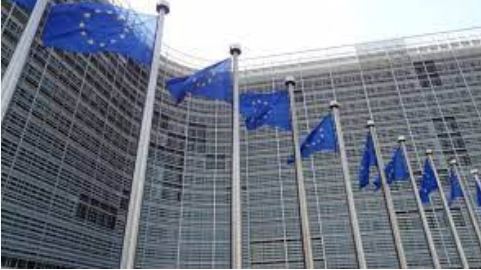
EU ‘appalled’ by reports of 1,000 killed in Darfur

EU

These latest atrocities are seemingly part of a wider ethnic cleansing campaign

News DeskBRUSSELS: The European Union (EU) said on Sunday it was “appalled” by reports of more than 1,000 people killed this month in Sudan’s West Darfur in an apparent “ethnic cleansing campaign” by the paramilitary Rapid Support Forces (RSF).“These latest atrocities are seemingly part of a wider ethnic cleansing campaign conducted by the RSF with the aim to eradicate the non-Arab Masalit community from West Darfur, and comes on top of the first wave of large violence in June,” EU foreign policy chief Josep Borrell said in a statement.Since April, forces loyal to army chief Abdel Fattah al-Burhan — Sudan’s de facto head of state — have been at war with the RSF commanded by his former deputy, Mohamed Hamdan Daglo.The EU statement said there were “credible eyewitness reports [that] more than a thousand members of the Masalit community were killed in Ardamta, West Darfur, in just over two days, during major attacks carried out by the RSF and its affiliated militias”.The toll was higher than a previous one of 800 given by the UN refugee agency UNHCR, which said 100 shelters in a displaced persons’ camp in Ardamta were razed.

“What is happening is verging on pure evil,” the UN humanitarian coordinator for Sudan, Clementine Nkweta-Salami, said on Friday, citing reports of young girls being raped in front of their mothers.

She voiced fears of a repeat of the genocide campaign that gripped Darfur in the early 2000s.The EU stressed that Sudan’s warring sides “have a duty to protect citizens”.It said it was working with the International Criminal Court to document violations “to ensure accountability”.“The international community cannot turn a blind eye on what is happening in Darfur and allow another genocide to happen in this region,” it said.More than 10,000 people have been killed in the Sudan conflict so far, according to a conservative estimate by the Armed Conflict Location and Event Data project.

The war has displaced more than 4.8 million people within Sudan and has forced a further 1.2m to flee into neighbouring countries, according to UN figures.

Deepawali celebrations at the Nepalese residence

Deepawali celebrations at the Nepalese residence

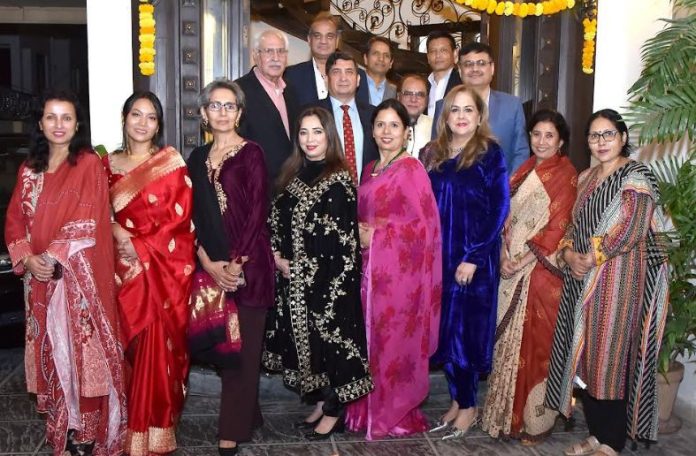
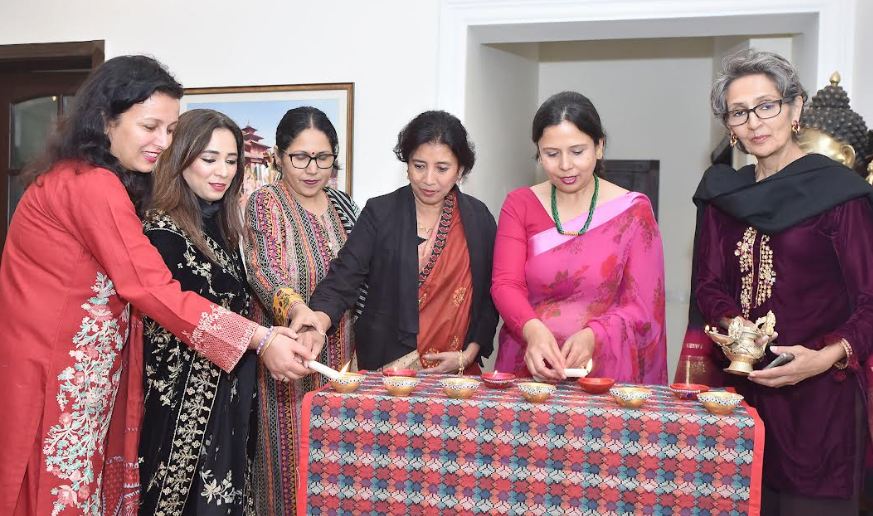
DNAISLAMABAD: The Ambassador of Nepal to Pakistan Tapas Adhikari hosted Deepawali celebrations at his residence. The guests participated in the Diya lighting ritual.

Ambassador of Pakistan to Nepal Abrar H Hashmi along with his spouse also attended the event. Deepawali is also known as Diwali however in Nepal it is called Deepawali. DNA

Whither PTI as parties kick start election campaign

Post-election scenario: PDM Part-II on the anvil

Comment

Ansar M Bhatti

Political parties are intensifying their election campaigns in anticipation of the forthcoming announcement of the election schedule by the Election Commission. Notably, the PML-N appears particularly optimistic about its prospects in the upcoming elections, in stark contrast to the PPP, which faces challenges in conducting its campaign. The PPP expresses reservations about its ability to secure favor from the Establishment, believing that it has not successfully garnered their support.

Hence we often hear from them about the ‘foul play’ on the part of the powers-that-be, which, according to PPP, want to keep it out of the parliament. Even if it is so, the PPP should not worry about it at all as it claims to be a party of the underprivileged having deep roots among masses. It also claims to have done a lot for the have-nots, therefore in this case it should not be a matter of great concern for them even if the Establishment has chosen to be on the side of the PML-N!!

The PML-N is poised to encounter significant hurdles in the days ahead within the complex landscape of Pakistani politics. Traditionally, political alliances among key political parties in Pakistan materialize post-elections, with the party securing a simple or absolute majority determining partnerships based on preferences. However, in a departure from this norm, the PML-N appears to have entered into a pre-election alliance with the MQM. Speculation abounds regarding whether this collaboration was a strategic decision or if external factors compelled the party into this alliance. Regardless of the impetus behind this unconventional move, it is evident that the alliance carries potential risks for the PML-N both leading up to and following the elections. Moreover, it appears to be a marriage of convenience rather than an alliance, underscoring its inherent fragility.

There are strong indications that the PML-N is poised to lead the next government in collaboration with the MQM and a few other political parties. Efforts are underway to orchestrate a political alliance between the PML-N and the recently established IPP. However, if this alliance materializes, concerns arise that the PML-N might face challenges in completing its term.

Recognizing the potential risks, sensible voices within the party are actively working to counter this move. Some leaders advocate for exploring a strategic seat adjustment with the IPP instead of forming a comprehensive alliance. Nevertheless, a significant majority within the party opposes even the seat adjustment option.

The likelihood of Nawaz Sharif assuming the office of the prime minister for the fourth time remains a formidable challenge. The intricacies of this process become particularly apparent when considering the timeline associated with the election schedule. Upon the announcement of the election schedule, candidates are required to submit their nomination papers. This crucial step is anticipated to conclude in December or early January.

However, Nawaz Sharif’s ability to file his nomination papers hinges on the timely resolution of his appeals seeking acquittal. If the decision on his appeals is delayed, it could potentially impede his ability to file nomination papers within the stipulated timeframe. In such a scenario, it becomes increasingly likely that Nawaz Sharif may opt to participate in by-elections. Nevertheless, this decision would be contingent on the court’s verdict.

The timing of the court decision holds significant weight, as a delayed outcome could necessitate the appointment of an interim prime minister as a stopgap arrangement. As reports suggest, there is still a kind of disagreement between the PML N and the Establishment. PML N wants at least a simple majority in order to steer clear the country out of existing political and economic mess. It is however yet to get a positive nod in this regard.

The PTI, contrastingly, remains entangled in the repercussions of strained relations with influential forces. During Imran Khan’s tenure in power, he seemingly overlooked the crucial role played by the Establishment in propelling him to office and sustaining his position. Over time, an illusionary sense of genuine popularity seemed to engulf him, leading him to believe that his three years in office had significantly improved the lives of the less privileged in the country. Unfortunately, this misconception exacted a substantial toll, as he found himself facing the consequences of a misjudged assumption.

However, the undeniable truth persists that the abrupt removal of his government and the subsequent rise of PDM figures triggered a significant change in public sentiment, ultimately swaying support towards the PTI leader. The subsequent lackluster performance of the PDM not only reversed Imran Khan’s status from a political underdog to a hero but also cemented a narrative that the PDM leadership continues to grapple with, a mistake that will haunt them indefinitely.

The pivotal question at hand revolves around the prospective trajectory of the Pakistan Tehreek-e-Insaf (PTI) and its charismatic leader, Imran Khan. Analyzing Imran Khan’s political future reveals a stark reality: his chances of clinching victory in upcoming elections seem remote, contingent upon a significant discord between the Pakistan Muslim League-Nawaz (PML-N) and the Establishment. The PTI’s ascendancy to the forefront becomes plausible only when such differences reach a threshold, positioning the party as the sole viable alternative.

Despite this, the PTI might secure participation in elections, albeit without prominent figures. Allowing the PTI to be part of the electoral landscape is pragmatic, as their absence could render the entire electoral process futile. Intriguingly, there are internal voices advocating for a PTI boycott of the elections. However, irrespective of internal debates, the PTI should not relinquish its position and must field candidates across all constituencies.

Learning from past missteps, the PTI should refrain from repeating the error of resigning from assemblies, a move that inadvertently cedes ground to its adversaries. Instead, adopting a strategy of active participation ensures that the PTI remains a formidable force, resilient in the face of challenges. In essence, the party must navigate the complex political terrain with strategic nominations, avoiding self-imposed sidelines and contributing to shaping the political landscape, even in the absence of high-profile figures.

Ashrafi urges swift action on ‘Joint Declarations on Palestine’ at Riyadh Summit

Ashrafi urges swift action on 'Joint Declarations on Palestine' at Riyadh Summit

DNA

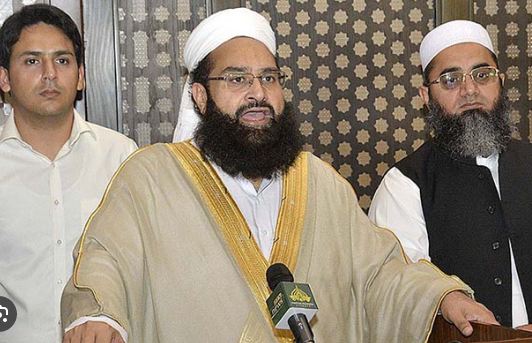
Special Representative to the Prime Minister on Religious Harmony and the Pakistani Diaspora in Middle East and Islamic Countries, Hafiz Muhammad Tahir Mehmood Ashrafi on Sunday said Saudi Arabia, a key regional player in the Middle East, continued to play a crucial role in addressing the ongoing conflict between Palestine and Israel.

Addressing the media at the conclusion of the Joint Arab-Islamic Extraordinary Summit in Riyadh, he underscored the imperative of executing the declarations articulated during this significant gathering of Muslim world leaders regarding the Palestine issue.

Ashrafi who is also the Chairman of Pakistan Ulema Council, necessitated mutual understanding and collaborative endeavors to realize shared objectives. He said as the situation in the region remains tense, the Kingdom’s diplomatic efforts, humanitarian support, and commitment to a just resolution had garnered global attention.

He noted that the participation of Iranian President Ebrahim Raisi, Turkish President Recep Tayyip Erdogan, Palestinian President Mahmoud Abbas, Egyptian President Abdel-Fattah El-Sisi, Jordanian King Abdullah, Amir of Qatar Tamim bin Hamad Al Thani, Pakistani Caretaker Prime Minister Anwaar-ul-Haq Kakar, and other dignitaries at the summit was a testament to their collective determination to pursue both temporary and permanent resolutions to the Palestine issue in the current circumstances.

Ashrafi said Saudi Arabia had been actively engaged in diplomatic efforts for an immediate ceasefire and to seek a peaceful resolution to the conflict mentioning that the Kingdom’s leadership had conducted high-level discussions with various international counterparts, emphasizing the importance of ending the hostilities and achieving a comprehensive peace agreement.

He said Saudi Arabia and other Islamic countries were consistently advocating for a two-state solution as the basis for a lasting peace. “This solution envisions an independent Palestinian state coexisting alongside Israel, with mutually agreed-upon borders and East Jerusalem as the capital of Palestine,” he maintained.

Ashrafi said the Kingdom had provided financial assistance to the Palestinian authority, helping it maintain essential public services and meet the needs of its population. He said Saudi Arabia’s support would contribute to the stability of Palestinian governance.

During this time of conflict and crisis, he said Saudi Arabia had extended humanitarian assistance to the Palestinian people. He said the King Salman Humanitarian Aid and Relief Centre (KSrelief) was playing a critical role in delivering humanitarian aid, including medical supplies, food, and financial support, to address the urgent needs of Palestinians.

He said Saudi Arabia along with other Muslin nations had consistently criticized Israeli actions that had resulted in civilian casualties and damage to civilian infrastructure. He further said the Kingdom had strongly condemned attacks on Palestinian civilians and called for an immediate end to violence.

As the Custodian of the Two Holy Mosques, King Salman bin Abdulaziz Al Saud holds a special place in the hearts of Muslims worldwide, Ashrafi said his leadership and moral authority enabled Saudi Arabia to advocate for the rights of Palestinians, particularly concerning the status of Jerusalem and its holy sites.

He said Saudi Arabia had sought to leverage its diplomatic relations with both regional and global powers to broker ceasefire and de-escalation during this heightened tension in the Palestine-Israel conflict.

He said the Kingdom had actively participated in multilateral efforts aimed at addressing the situation, including discussions with the Arab League, the Organization of Islamic Cooperation (OIC), and the United Nations, with the goal of reaching a just and lasting solution.

He said Saudi Arabia recognized that a peaceful resolution to the Palestine-Israel conflict was essential for regional stability. By advocating for peace and supporting the Palestinian cause, he said the Kingdom contributed to a more secure and prosperous Middle East.

In conclusion, Ashrafi said Saudi Arabia’s role in the current Palestine-Israel situation was marked by its unwavering commitment to the rights of the Palestinian people and its determination to contribute to peace in the region.

He said the Kingdom’s multifaceted approach including diplomatic initiatives, humanitarian aid, and advocacy on the global stage, all aimed at achieving a comprehensive and just solution to the ongoing conflict.

He said Saudi Arabia’s commitment to peace remained a central element of international efforts to address this enduring and complex issue.

‘No safe space in Gaza’ as IDF cripples Al-Shifa, other hospitals

'No safe space in Gaza' as IDF cripples Al-Shifa, other hospitals

There is no safe space in Gaza due to the ongoing Israeli aggression, said the Palestinian Ministry of Foreign Affairs on Sunday as the war raged on for the 37th day in the narrow enclave.

Thousands of Palestinians were forcefully evicted South while Israel continued to target hospitals and refugee camps amid protestors across the world calling for a ceasefire.

According to Palestinian officials, at least 11,078 Gazans have been killed in air and artillery strikes since October 7, majority of them children, women and the elderly, as of Friday.

At least 18 of Gaza’s 35 hospitals were forced to shut down due to Israeli air strikes, reported Al Jazeera.

Violent clashes raged on between IDF and Hamas fighters in Al Nasr neighbourhood, home to several major hospitals, and Al Shati camp in Gaza.

As the humanitarian situation worsened, Gaza’s border authority said the Rafah crossing into Egypt would reopen on Sunday for foreign passport holders. Jordan also air-dropped more aid into a field hospital in the enclave.

At a news conference late on Saturday, Israeli Prime Minister Benjamin Netanyahu announced the deaths of five more Israeli soldiers in Gaza. The Israeli military said 46 had been killed since its ground operations there began.

Hamas said it had completely or partially destroyed more than 160 Israeli military targets in Gaza, including more than 27 tanks and vehicles in the past 48 hours. An Israeli military spokesperson said Hamas had lost control of northern Gaza.

A temporary halt in fighting was announced by the Israeli army on Sunday to allow citizens to leave northern Gaza along Salah al-Din Street from 9am to 4pm [7am to 2am GMT].

The Israeli army said there would be a four-hour “temporary tactical cessation of military activities” in Jabalia starting from 10am [8am GMT].

“We call on residents to take advantage of this temporary suspension of fires and move south,” the military wrote on its Arabic channel on X, adding that there would also be a humanitarian corridor for people to leave Al-Shifa Hospital through Al-Wahda street to reach the Salah al-Din route.

However, Al-Jazeera reported testimonies from inside the hospital stating that leaving the medical facility is not safe.

In separate messages, Ahmad Mokhallalati, a surgeon inside al-Shifa, and Mustafa Sarsour, the only remaining journalist inside the hospital, told Al Jazeera that they witnessed civilians trying to exit the building being shot at.

Meanwhile, Muhammad R Mhawish, a Palestinian journalist in Gaza City told Al Jazeera that the humanitarian pauses announced by IDF were only on Salah al-Din Street, not on the streets leading to it.

“Within the city, the fighting is ongoing, and all the roads in the city are destroyed,” he said, adding that there’s no way to get to Salah al-Din from downtown Gaza City.

Palestinians have mainly been using Salah al-Din Street to flee towards southern Gaza.

Mhawish is staying with 30 other members of his family, most of whom are elderly and unwell or small children, making planning a long trek nearly impossible.

They cannot leave, food is running out, and they are unsure what tomorrow will bring, he said.

Israeli Agriculture Minister Avi Dichter called the evacuations “Gaza’s Nakba” – a reference to mass dispossessions of Palestinians after Israel was founded in 1948.

“Operationally there’s no way to conduct a war the way the IDF (Israel Defense Forces) wants to conduct it inside Gaza territories,” Dichter said. “I don’t know how it will end.”

IDF targets hospitals

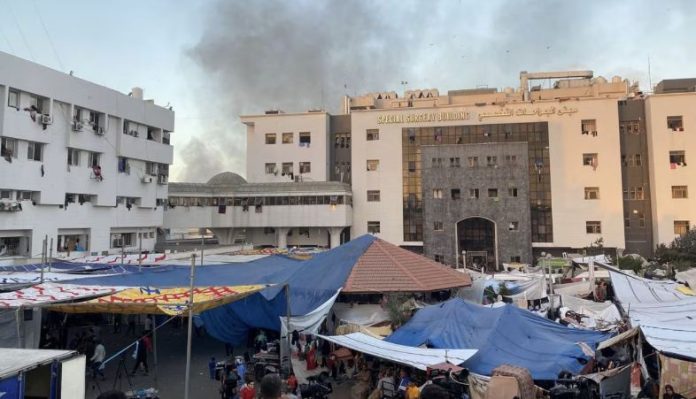
The Israeli military further strengthened its siege of Al-Shifa, the largest hospital in the enclave, on Sunday with tanks and armoured vehicles closing in on the health facility from all sides – from the north, east and southern parts, just a couple of hundreds metres away.

Israeli Defence Forces (IDF) are targeting the hospital repeatedly and attack drones are hovering at a low altitude over the area, reported Al-Jazeera.

The hospital’s director, Muhammad Abu Salmiya, said premature babies are in a “precarious situation” and any person moving within the hospital compound is being attacked by Israeli snipers. At least two newborns have died at the hospital while dozens more remain at risk at the facility which has run out of fuel.

Ashraf Al-Qidra, of the Palestinian health ministry, said the hospital had ceased functioning since Saturday, after it ran out of fuel. He said two babies had died in an incubator as a result.

“We are using all and primitive means to try not to lose more lives,” Al-Qidra told Reuters. “But unless a solution is found to provide us with fuel or electricity the patients and injured are at risk of death.”

Despite reports of possible evacuation of infants and other patients, moving them anywhere remained improbable on Sunday with most hospitals in northern Gaza under attack by Israeli forces, without electricity and low on supplies to treat the patients properly or keep incubators running.

Israel has said doctors, patients and thousands of evacuees who have taken refuge at hospitals in northern Gaza must leave so it can tackle Hamas gunmen who it says have placed command centres under and around them.

Hamas denies using hospitals this way. Medical staff say patients could die if they are moved and Palestinian officials say Israeli fire makes it dangerous for others to leave.

Amid the ongoing fighting, the Israeli military claimed it was ready to evacuate babies from Al-Shifa but safe passage could not be secured.

Meanwhile, reiteriating its call for a humanitarian ceasefire in Gaza, the World Health Organization (WHO) said on Sunday that it has lost communication with its contacts inside Al-Shifa Hospital.

“WHO again calls for an immediate humanitarian ceasefire in Gaza as the only way to save lives and reduce the horrific levels of suffering,” WHO chief Tedros Adhanom Ghebreyesus wrote on X, terming the situation as “deeply worrisome and frightening”.

A doctor at the Al-Shifa Hospital in Gaza City said on Saturday that the Israeli army opens fire on those who want to flee the hospital, reported Anadolu Agency.

The Israeli army has surrounded the hospital area and they are “not even a meter away, they are at the door,” Fadia Malhis, a gynecologist at the hospital, told an Anadolu correspondent in frequently interrupted phone conversations.

“They shoot anyone who wants to go out of the hospital. If anyone moves between units, they shoot them. There are many martyrs in the yard in front of the emergency room, the situation is very bad and dangerous, it is indescribable,” she said.

“It is like a prison without water, electricity, or food. There were more than 100 martyrs in the garden. They opened fire at those who tried to bury the martyrs in the hospital yard. The hospital garden is full of martyrs. Some tried to escape from the hospital, and they also killed them. They fired at me too,” she added.

Citing a power outage in the hospital and underlining the deteriorating condition of infants in the incubators in the intensive care unit, she said: “There are 60 babies in the intensive care unit, 39 of them are intubated, one baby died in the afternoon. These (infants) will die one after the other.”


She called for immediate action to cease hostilities around the hospital, saying: “Please, save us, stop this war, otherwise we will die. There are dead people everywhere. Save us, the situation is very bad.”

Later on Sunday reports surfaced of an Israeli air strike destroying the cardiac ward of Al-Shifa hospital as fighting around the medical facility intensified.

“The occupier (Israel) completely destroyed the cardiac department of Al-Shifa hospital… The two-storey building has been completely destroyed in an air strike,” Youssef Abu Rish, deputy health minister in the Gaza Strip told AFP.

Witnesses confirmed a strike on the hospital, which AFP was unable to independently verify.

The Israeli military did not immediately respond to a request for comment.

Meanwhile, the Palestinian Red Crescent Society said that babies in Al-Quds Hospital are suffering from dehydration amid Israel’s ongoing attacks on the hospital.

“Babies in Al-Quds Hospital are suffering from dehydration because of lack of milk,” the humanitarian rights organization wrote on X.

The medical staff is working around the clock despite power outage and heavy Israeli airstrikes close by, it added.

Meanwhile, Al Ahli Hospital in Gaza reportedly ran out of blood.

“Our wounded are dying after surgery because we can’t transfuse them,” wrote Dr Ghassan Abu Sitta said in a post on X.

In the Indonesian Hospital in Beit Lahiya in the northern Gaza Strip, Mosab Subeih, a baby boy, Mosab Subeih, had been rushed in from a house that was struck by an Israeli missile.

“He has a direct injury to the head and bleeding, and we have no surgeries,” said one of the medics, who were treating him with a manual resuscitator as power had been cut.

Video footage shared by Anadolu Agency on X showed consecutive attacks by the Israeli army in the hospital’s vicinity.

The Palestinian Red Crescent Society later took to X to apprise that the Al-Quds Hospital was no longer operational due to unavailability of fuel and power outage.

“PRCS holds the international community and signatories of the Fourth Geneva Convention accountable for the complete breakdown of the health system and the resulting dire humanitarian conditions,” it wrote on X.

Reports of possible captives deal

Israel’s three major TV news channels, without citing named sources, said there was some progress toward a deal to free captives held by Hamas in Gaza.

However, Netanyahu said he would not discuss details of any possible deal, which according to N12 News would involve 50 to 100 women, children and elderly being released in stages during a three to five day pause in fighting.

According to the reports, Israel would release women and minor Palestinian prisoners and consider letting fuel in to Gaza, while reserving the right to resume fighting.

In Tel Aviv, thousands joined a rally to support families of the captives.

Growing calls for ceasefire

Meanwhile, thousands of people rallied across the world calling for an immediate ceasefire.

In London, at least 300,000 pro-Palestinian demonstrators marched and police arrested over 120 people as they sought to stop far-right counter-protesters ambushing the rally.

Over 20,000 people joined a pro-Palestinian rally in Brussels.

Meeting in Saudi Arabia, Muslim and Arab countries called for an immediate end to military operations in Gaza, rejecting Israel’s justification of self-defence. A communique issued at the summit urged the International Criminal Court to investigate “war crimes and crimes against humanity that Israel is committing.”

Joint efforts will be put to make Rakh Damyal a model graveyard: RCCI

RCCI

DNA

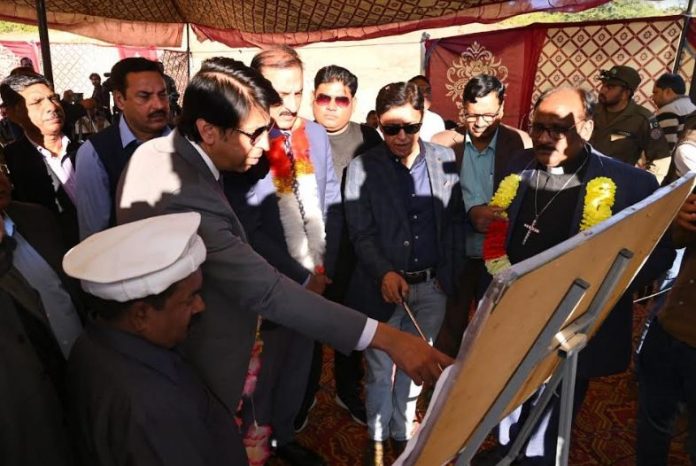
RAWALPINDI, NOV 12: The Rawalpindi Chamber of Commerce and Industry (RCCI) President and Chairman RWMC Saqib Rafiq has said that all efforts will be put to make Rakh Dhamial a model graveyard. The Rawalpindi Waste Management Company (RWMC) will maintain cleanliness in the graveyard,” he said. The boundary wall of the graveyard for Muslims has been completed and the ground leveling work is in progress. He made these remarks at the inaugural of a graveyard developed on 100 Kanals for minorities at Rakh Dhamial area of Rawalpindi.Commissioner Rawalpindi Liaqat Ali Chatha, Pastor Adil Gill, MCR representatives and graveyard committee members were also present on the occasion.

Saqib Rafiq in his address said that Rakh Dhamiyal Graveyard was a long-standing problem of the residents of Rawalpindi, for which the joint efforts of the administration and the Rawalpindi Chamber of Commerce and Industry have yielded results. We are also thankful to CM Punjab for resolving this important issue.

Apart from the land set aside for the non-Muslims, 500 kanals was allocated for the city residents and 400 kanals for the residents of Rawalpindi and Chaklala residents in the area.

Irtaza Hussain clinches the title of 16th Chief of Naval Staff Amatueur Golf Cup 2023

Irtaza Hussain clinches the title of 16th Chief of Naval Staff Amatueur Golf Cup 2023

DNAISLAMABAD, 12 Nov: Irtaza Hussain won the title of 16th Chief of the Naval Staff Amateur Golf Cup 2023. The Closing and prize distribution ceremony of 16th CNS Amateur Golf Cup 2023 was held at the scenic Margallah Green Golf Club (MGGC) Islamabad. Chief of the Naval Staff Admiral Naveed Ashraf graced the occasion as Chief Guest.While addressing the ceremony, Chief of the Naval Staff Admiral Naveed Ashraf congratulated the winners for their remarkable success and appreciated their skills. Naval Chief lauded the high standards of the game that provided exciting and quality entertainment to the participants. Naval Chief commended the untiring efforts of MGGC staff and organizers for seamless conduct of the championship. He also appreciated the consistent and generous support from sponsors, management of MGGC Islamabad and media fraternity, without which the event would not have been such a resounding success.The four day long Golf Cup held from 9 – 12 November has become a major event in golfing circles. Around 300 golfers across Pakistan participated in various categories included Men Amateurs, Lady Amateurs, Seniors and Juniors.The closing and prize distributing ceremony was attended by various civil and military dignitaries including officers, organizers, sponsors, golfers and media fraternity.

SC fixes plea against census results for hearing

SC fixes plea against census results for hearing

ISLAMABAD, NOV 12 (DNA) — The Supreme Court of Pakistan has fixed the hearing of an application challenging the results of the census 2023. A three-member bench, led by Justice Ijazul Ahsan, will conduct the hearing on November 13.

The petitioner, Hasan Kamran, initially contested the census results in Balochistan in the Balochistan High Court (BHC) and moved to the Supreme Court after the BHC rejected the petition.

The petitioner pleaded to the apex court to declare the Balochistan High Court’s August 29 decision as void. According to the petition, the population of Balochistan was reported to be around 21.7 million till the final phase of the census process.

 However, in the final report Pakistan Bureau of Statistic (PBS) approved by the Council of Common Interests (CCI) in its meeting, the population of Balochistan was reduced to 14.89 million.

Petitioner said that the bureau of statistics from its official accounts regularly issued contradictory statements. BHC had given the decision, which was contradictory to facts, petitioner argued.

A petition of the Supreme Court Bar has been pending against the Council of Common Interests. The Balochistan High Court dismissed our petition on the basis of the pending plea of the SC Bar, according to the petition.

“The Supreme Court Bar Association’s plea has been entirely different from our petition”. The petition in the apex court has made the federation, Pakistan Bureau of Statistics, NADRA, the CCI and others as respondents. — DNA

JI Emir Siraj meets Hamas chief Ismail Haniyeh in Qatar

JI Emir Siraj meets Hamas chief Ismail Haniyeh in Qatar

DOHA, NOV 12 (DNA) — Emir Jamaat-e-Islami Sirajul Haq met with Palestinian group Hamas chief Ismail Haniyeh in Qatar on Sunday. The central leadership of Hamas was also present in the meeting with Sirajul Haq.Director of Foreign Affairs of Jamaat-e-Islami Asif Luqman Qazi was also there. JI director information Qaiser Sharif said that during the meeting Ismail Haniyeh gave a detailed briefing to the JI chief on the current situation in Gaza.On the occasion Ismail Haniya offered thanks to Jamaat-e-Islami and Pakistani nation. Sirajul Haq said the entire Pakistan nation and the Muslim Ummah stand with you. Siraj-ul-Haq invited him to address the historic Gaza March in Lahore on November 19.Qaiser Sharif said Emir Jamaat-e-Islami Siraj-ul-Haq returned to Pakistan after a six-day visit and in the last six days, he visited Iran, Turkey and Qatar. He said Sirajul Haque will address the Palestine Convention in Sialkot today.The purpose of the visit is the joint action plan of the Muslim Ummah on the situation in Palestine. The struggle of Jamaat-e-Islami for the unity of the Ummah on the basis of common values and common feelings.Leader of Jamaat-e-Islami met with Ayatollah Agha Qomi, adviser on foreign affairs and other leaders in Tehran. Emir Jamaat-e-Islami Siraj-ul-Haq also met with the Speaker of the Turkish Parliament Noman Kurtulmosh and discussed situation in Gaza.Siraj-ul-Haq emphasized the joint role of the governments of Muslim countries, including Turkey, to save Gaza. Siraj-ul-Haq also addressed the Palestine March in Istanbul. The Jamaat-e-Islami leader Siraj-ul-Haq met with leaders of global Islamic movements and met with the heads of political parties in Turkey. — DNA

Stay Connected

64FansLike
60FollowersFollow

Latest Reviews

Exchange Rates

USD - United States Dollar
EUR
1.18
GBP
1.35
AUD
0.67
CAD
0.73