Home Blog Page 874

Law Minister inaugurates projects costing Rs.55.5mn

Law Minister inaugurates projects costing Rs.55.5mn

PESHAWAR, Jul 21 (APP): Khyber Pakhtunkhwa Law and Parliamentary Affairs Minister Aftab Alam Afridi Advocate along with senior party stalwart Abid ur Rahman Afridi on Sunday laid the foundation stone of reconstruction of the building of Government Girls Primary School Sunni Khel in Tehsil Dara Adam Khel of Kohat District which will be completed at a cost of Rs.25.5 Million.
Similarly, the Minister along with the local party leadership and elders also inaugurated the Shadikhel-Mandakhel-Kamalkhel Road which has been completed at a cost of Rs.30 Million.

The Law Minister on this occasion said that developmental works are not a favor to anyone but it is the right of the people. He said that we are the custodians of the people’s rights and we will leave no stone unturned to achieve this goal for which the people have voted him to power.
The minister regretted that some rejected elements by are trying to shine their politics on our projects, but the people know very well that who completed this road which was remained damaged for the last many years.
He assured, in the present tenure, not only incomplete projects will be completed but also new projects of public interest will be started with the mutual consultation of the local leadership.
Referring to the education sector, Aftab Alam said that the government of Khyber Pakhtunkhwa is paying special attention to education, especially the women’s education, because development and prosperity cannot be imagined without bringing 52 percent of the country’s women into the national mainstream through education.

He said that we are trying hard to bring hundreds of out-of-school children to schools and equip them with good education. That is why the government runs a special admission campaign every year so that no child weather boy or girl deprived of the basic right of education.
Earlier, the Law Minister Aftab Alam made opening of both the projects from the party workers.

Flawed policies holding back economy: Iftikhar Khan

Flawed policies holding back economy: Iftikhar Khan

ISLAMABAD, JUL 21: Iftikhar Khan, the advisor to the President of FPCCI, said on Sunday that the highest population growth and the lowest GDP growth are the perfect recipe for disaster.

He said that uncontrolled population growth amid low GDP growth is a serious challenge.

Speaking to the business community, he stated that Pakistan’s population is growing at the fastest rate in the region and will double by 2050.

Iftikhar Khan said that with 241.49 million inhabitants, Pakistan is currently the sixth most populated nation in the world, according to the census statistics. Among them, 48.51 percent are women, and 51.48 percent are men.

He warned that if the country’s population continues at its current rate of 2.55 percent, the highest in the region, it will double by 2050, which will be very difficult to manage.

Iftikhar Khan said that in Pakistan, 36.47 million individuals are under five years old, 97.53 million are under fifteen, 62.58 million are between the ages of fifteen and twenty-nine, and 190.27 million are under forty.

According to literacy indices, 61% of Pakistanis who are ten years of age or older are literate, but Bangladesh and India have achieved better than Pakistan in a number of areas, including education.

According to the business leader, Pakistanis are on par with everyone in terms of intelligence and ability, but if we do not broaden our horizons, we will not even be considered in the global competition.

He underlined the necessity of maintaining political stability and peace, as well as the significance of maintaining policy consistency for a minimum of ten years.

Without keeping up with the world, we’ll become irrelevant, he warned. Commenting on the budget, he stated that the recent budget’s controversy stems from its failure to provide any relief to the middle class. Instead, it increased the effective income tax rate for salaried individuals to 39 percent, for associations to 44 percent, and for non-salaried individuals to 50 percent from last year.

At a time when this particular section of society has lost nearly half of its purchasing power in the last five years, the already stressed salaried class is facing an increase in taxes, which is difficult for the masses to accept.

The budget, instead of bringing some respite for the have-nots from the undue inflation for which they are the least responsible, has once again added to their agony by imposing additional levies on electricity, petrol, diesel, grocery items, property, etc.

The major reason behind the surge in taxes is to secure a new deal with the International Monetary Fund to somehow keep the national economy afloat.

The disastrous budget reveals the fault lines in the current power system, as the government consistently refuses to end the exemptions it grants to the bureaucracy.

Similarly, the government excludes the retail and agriculture sectors, which wield significant political sway, from tax imposition.

The IMF’s insistence led to the removal of some exemptions, but the list of protections remains endless. Flawed policies are holding back the economy. We need a change that benefits the people at large, not just the privileged, he said.

Iftikhar Khan said that it is outright irrational to grind impoverished families under the weight of new taxes to secure an IMF package. In order to alleviate the burden on the poor, the government should also bring the rich and powerful into the tax net.

Moreover, the government should reflect on past events and draw lessons from them to understand why it is necessary for every government to seek assistance from the IMF each year to stabilise the struggling economy.

Despite claims that the budget is public-friendly and an attempt to minimise hardships, it has severely impacted the poor and businesses.

The consequences of this skewed system are far-reaching. These unjust taxes further strain the already tight budgets of middle-class families. The government diverts funds intended for groceries, rent, or education, thereby pushing many middle-class families closer to financial ruin. This stifles economic growth as these families have less disposable income to spend, he said.

China’s CPC Meeting and Lessons for Pakistan

Qamar Bashir

By: Qamar Bashir

The greatness of China is primarily due to the farsighted visions of the Chinese leadership which are conceived, evolved and implemented and overseen by the Central Committee Party, the most important policy making machine of the Chinese state. The CPC Central Committee meeting is held at strategic intervals and plays a crucial role in setting China’s policy direction, addressing current challenges, and planning for the future.  These meetings are timed to align with economic conditions, significant political milestones, and strategic planning needs, reinforcing party unity and the central leadership’s authority while shaping China’s development trajectory in various sectors.

The recently held Third Plenary Session of the 20th CPC Central Committee in Beijing from July 15 to 18, 2024, was a significant event marked by several important decisions aimed at further deepening reform and advancing Chinese modernization. The timing of the Third Plenary Session was important because it allowed for a thorough mid-term review, addressed pressing economic and social challenges, reinforced political unity, positioned China strategically in the global context, and set clear milestones aligned with significant future adversaries.

China faces a variety of challenges across multiple sectors that impact its continued rise and multidimensional power. Economically, China is grappling with a slowdown in growth, high levels of corporate and local government debt, and a potentially overvalued real estate market. Trade tensions, particularly with the United States, add to the uncertainty surrounding China’s export-driven economy. Socially, an aging population strains healthcare and pension systems, while growing income inequality and rapid urbanization exacerbate social tensions and infrastructure deficits in both urban and rural areas.

Technologically, China has made significant progress but still faces an innovation gap in high-tech sectors and challenges related to intellectual property protection. Cybersecurity threats are increasing as the country digitizes more aspects of its economy and governance. Environmentally, pollution remains a critical issue, affecting public health and quality of life. Climate change poses a significant challenge as China, one of the largest carbon emitters, seeks to balance economic growth with reducing greenhouse gas emissions and transitioning to renewable energy. Efficient resource management, particularly of water and arable land, is essential for sustainable development.

Geopolitically, China must navigate complex trade relationships and regional tensions, such as territorial disputes in the South China Sea and relations with Taiwan, while promoting its Belt and Road Initiative. Governance challenges include continuing anti-corruption efforts, strengthening the rule of law, ensuring political stability, and improving access to quality healthcare and education. Addressing these multifaceted challenges is crucial for China to maintain its growth trajectory and consolidate its position as a leading global power.

The CPC Central Committee meeting held from July 15 to 18, 2024, comprehensively addressed these multifaceted challenges and proposed several solutions to ensure its continued rise and modernization.

The meeting took stock of the economic slowdown, high debt levels, and real estate market issues and emphasized the need to build a high-standard socialist market economy by leveraging market mechanisms more effectively while maintaining robust regulations to ensure fairness and efficiency.

It proposed reforms in fiscal, tax, and financial sectors aimed at enhancing macroeconomic governance, promoting high-quality development, and fostering new growth drivers besides highlighting the importance of supply-side structural reforms and improving the mechanisms that incentivize and constrain development and continue improving and developing the system of socialism with Chinese characteristics and modernizing China’s system and capacity for governance.

The meeting addressed the social challenges such as an aging population and income inequality and proposed comprehensive reforms in education, healthcare, and social security systems. It laid prime focus on improving income distribution, employment policies, and enhancing population-related services to promote social cohesion and development. It also emphasized  the importance of Urban-rural integration and proposed plans to promote equal exchanges of production factors and narrow disparities between cities and the countryside.

On the environmental front, the meeting underscored the need for coordinated efforts in pollution reduction, green development, and climate change response, with a commitment to improving ecological conservation systems and managing natural resources sustainably.

The committee took stock of the technological, geopolitical, and governance challenges and proposed bridging the innovation gap, counter cyber security threats and bring  deeper reforms in education and talent development by fostering integration between the real economy and the digital economy.  The meeting also stressed the importance of advancing whole-process people’s democracy, strengthening the rule of law, and ensuring full implementation of the Constitution.

Geopolitically, the CPC aims to expand institutional opening-up, deepen foreign trade structural reform, and enhance cooperation under the Belt and Road Initiative and expediting efforts to maintain political stability and continue anti-corruption measures to ensure that governance reforms support China’s long-term strategic goals.

The CPC Central Committee setup timeline for short term, medium term and long term reform. In the short term (2024-2025), the focus will be on economic social reforms,  leveraging market mechanisms, stabilizing the real estate market and improving income distribution, and urban-rural integration coupled with mitigating environmental challenges. By the mid-term (2026-2029), China aims to foster innovation and establish new institutions for education and technology.  Long-term goals (2030-2035) include finalizing the high-standard socialist market economy, maintaining high standards of living through advanced healthcare and social security systems and fully modernizing its governance systems.

Pakistan can benefit from adopting a similar approach by setting defined milestones to guide national development. Like China, Pakistan should focus on leveraging market mechanisms while maintaining effective regulation to balance free-market principles with government oversight, ensuring efficiency and fairness. Emphasizing high-quality development and innovation is crucial, which can be achieved by prioritizing structural reforms in education, technology, and talent development to foster sustainable growth. Additionally, integrating urban and rural development is essential to narrow disparities and promote common prosperity. Lastly, Pakistan must commit to ensuring the supremacy of the Rule of Law, upholding the constitution, and fostering national unity through legal reforms to strengthen its governance systems.

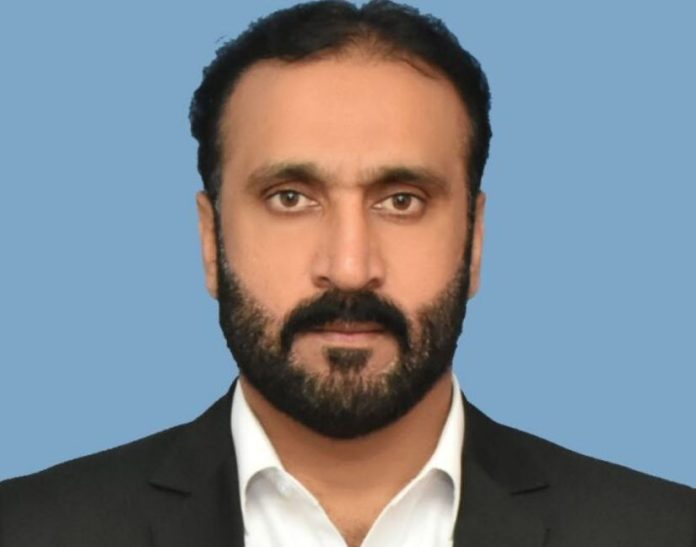
Pakistan has established a multi-sector partnership program: Mashood

Government of Pakistan has established a multi-sector partnership program “Generation Unlimited” and a National Youth Council to empower youth leadership; Chairman PM’s Youth Program, Rana Mashood

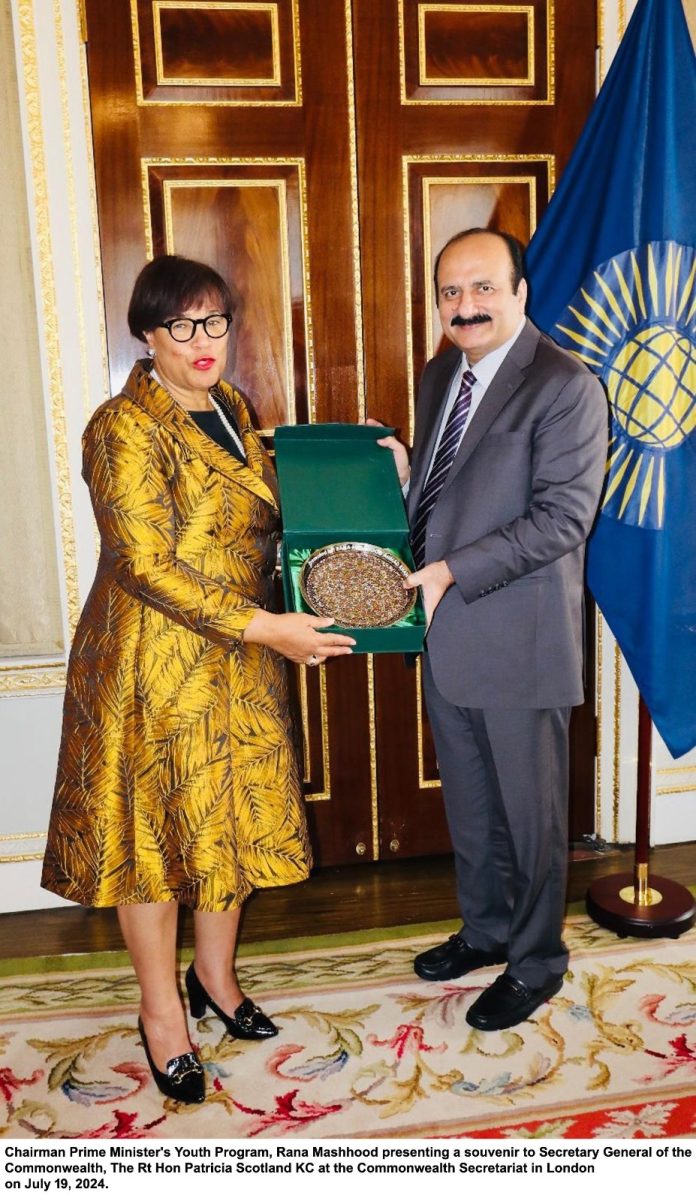
Chairman of Prime Minister’s Youth Programme, Rana Mashood Ahmad Khan held a meeting with the Secretary General of the Commonwealth, The Rt Hon Patricia Scotland KC at the Commonwealth Secretariat in London. High Commissioner of Pakistan to UK, Dr. Mohammad Faisal and officials of Pakistan High Commission were also present during the meeting.
Rana Mashood stated that, as a founding member of the Commonwealth, Pakistan attaches huge importance to the Commonwealth and regards it as a key platform to test ideas and forge consensus. Pakistan is committed to the Commonwealth Sustainable Development Agenda. He added that there is a wide scope for Pakistan to engage with the Commonwealth towards realization of its sustainable Development Agenda, particularly in education, skills development for youth, women empowerment, health, and climate change mitigation.
Rana Mashood briefed the Secretary General of the Commonwealth about Prime Minister Shehbaz Sharif’s initiative of establishing a multi-sector partnership program “Generation Unlimited” and a National Youth Council. He stated that the youth Council will act as an advisory body, comprised of talented youth, to provide policy advice to the government about youth empowerment.
Secretary General of the Commonwealth stated that she looked forward to her visit to Pakistan later this month and expressed the hope to have very productive meetings. She said that Pakistan ranks 3rd on the global youth employability index and it is a great strength for Pakistan that needs to be harnessed.
The Rt Hon Patricia Scotland KC emphasized on the need to establish joint mechanisms between Commonwealth countries for disaster management and relief efforts. She said that Pakistan has negligible contribution in the green house gas emissions, yet it is prone to climate induced disasters.

The Secretary General of Commonwealth stressed upon collaborative efforts for youth education in technology particularly Artificial Intelligence (AI). She invited Pakistan to join the Commonwealth’s AI Consortium that would help in training Pakistani youth in AI.

Pakistan serves strong demarche to Afghanistan over the terror attack on Bannu Cantonment

Pakistan serves strong demarche to Afghanistan over the terror attack on Bannu Cantonment

The Deputy Head of Mission of the Embassy of Afghanistan in Islamabad was summoned to the Ministry of Foreign Affairs today to deliver Pakistan’s strong demarche over the deadly terrorist attack on Bannu Cantonment on 15 July 2024, which resulted in the martyrdom of eight security personnel and injured several others.

The terrorist attack was carried out by the Hafiz Gul Bahadur Group based in Afghanistan. Hafiz Gul Bahadur Group, along with Tehrik-i-Taliban Pakistan (TTP), is responsible for the deaths of hundreds of civilians and law enforcement officials in multiple terrorist attacks inside Pakistan.

The Interim Afghan Government was urged to fully investigate and take immediate, robust and effective action against the perpetrators of the Bannu attack and to prevent the recurrence of such attacks against Pakistan using the territory of Afghanistan. Pakistan reiterated its serious concerns over the presence of terror outfits inside Afghanistan that continue to threaten Pakistan’s security. Such incidents also go against the spirit of bilateral relations between the two brotherly countries.

The Bannu Cantonment attack is yet another reminder of the serious threat posed by terrorism to regional peace and security. Pakistan reiterates the call for decisive action against terrorism and remains steadfast in its commitment to combat this menace and to uphold its security against all threats.

Islamabad police ensure tight security for Ashura processions, deploy 3400 cops

ISLAMABAD, Jul 17 (dna):Inspector General of Police (IGP) Islamabad, Syed Ali Nasir Rizvi, accompanied by Chief Commissioner Islamabad Mohammad Ali Randhawa, conducted a thorough inspection of the main procession route of Muharram ul Haram after the sunset on Tuesday and deployed 3400 security personnel of various law enforcement agencies.

The primary focus was on reviewing and reinforcing security measures ahead of the significant event, said a police spokesman on Sunday.

During the inspection, the IG Islamabad directed all the security personnel to maintain a high level vigilance throughout the procession route. He emphasized the importance of adequate lighting along the route to ensure visibility and security for the attendees. Furthermore, he issued strict orders that no police officer should abandon their duty post until the conclusion of the procession.

The security deployment for the procession was extensive, involving more than 3400 officers/officials from Islamabad Police and various other law enforcement agencies. The surveillance was enhanced through the use of drones and Safe City’s network of surveillance cameras, ensuring comprehensive monitoring of the event.

The central processions of the 9th and 10th of Muharram are of significant importance for Islamabad and Rawalpindi, requiring a robust security arrangement to safeguard the participants and maintain public order. The IG Islamabad underscored the responsibility entrusted upon law enforcement to ensure a safe environment for all attendees.

In adherence to these directives, the security personnel stationed on rooftops were instructed to remain on high alert throughout the event. The comprehensive security plan aimed to preempt any potential threats and maintain peace during the solemn observance.

As the procession commenced under the watchful eyes of law enforcement agencies, the efforts of Islamabad Police and collaborating agencies were pivotal in ensuring a secure environment. The commitment of officers to their duty underscored their readiness to fulfill their responsibilities diligently.

The successful implementation of the security plan exemplified the effective coordination among law enforcement agencies and their dedication to public safety during sensitive events. As the procession concluded peacefully, the meticulous planning and execution of security measures were instrumental in maintaining order and protecting the sanctity of the occasion.

The proactive measures taken by Islamabad Police and their vigilant presence throughout the procession route exemplified their commitment to safeguarding public gatherings and upholding law and order in the capital city.

New INTERPOL IBMS system helps recover missing children at Islamabad airport

Pakistan: A Pivotal Bridge Aligning Economic Interests Between China and the Middle East

ISLAMABAD, Jul 17:In a major operation at Islamabad Airport, the FIA safely recovered two missing children upon their arrival from Bishkek, and the the placement of newly introduced INTERPOL’s Integrated Border Management System (IBMS) was appreciated by the aggrieved family.

This significant achievement marks a pivotal moment in enhancing airport security and combating international child abduction cases, the FIA spokesman said while talking to APP on Wednesday.

The FIA spokesman said, under the newly established INTERPOL system IBMS, Islamabad Airport witnessed a crucial rescue operation initiated by the FIA (Federal Investigation Agency). The children, Mohammed Haseefa and Ahmed Amees Abid, who had been reported missing by Punjab Police and registered under a case at Burki police station in Lahore, were successfully located upon their arrival.

This operation highlighted the seamless coordination between INTERPOL Islamabad and FIA Immigration Islamabad, facilitated by the system’s advanced capabilities. The system, which linked the emigration database with INTERPOL’s global database, proved instrumental in identifying missing children, as well as tracking stolen passports and apprehending suspects wanted for serious crimes worldwide.

The implementation of the INTERPOL Find System earlier this year marked a significant milestone in Pakistan’s efforts to bolster airport security and combat transnational crime. Director General FIA, Ahmed Ishaq Jahangir, commended the team for their swift action and effective collaboration, emphasizing the system’s role in ensuring prompt responses to international alerts.

“This successful operation underscores the critical importance of our enhanced border security measures,” stated a spokesperson from FIA. “By leveraging INTERPOL’s advanced tools, we can now swiftly identify and intercept individuals linked to global criminal activities upon their entry into Pakistan.”

The children, upon being taken into custody, were promptly handed over to the local authorities, reflecting the coordinated efforts between law enforcement agencies to ensure the safety and well-being of minors involved in such sensitive cases. The seamless integration of technology and operational expertise played a pivotal role in the operation’s success, setting a precedent for future collaborations in combating cross-border crimes.

The FIA remained committed to further strengthening its partnership with INTERPOL and other international agencies to expand the reach and efficacy of the newly implemented system.

The recent recovery of missing children at Islamabad Airport showed commitment to leveraging advanced technology in enhancing national security and responding effectively to international law enforcement challenges. As efforts continue to evolve, the integration of INTERPOL systems promised to play a pivotal role in safeguarding communities and ensuring justice for victims of transnational crimes worldwide, he added.

PML-N files review petition against SC’s reserved seats ruling

Pakistan: A Pivotal Bridge Aligning Economic Interests Between China and the Middle East

Review petition asks number of questions including whether SIC should be granted the reserved seats

ISLAMABAD: The Pakistan Muslim League-Nawaz (PML-N) on Monday filed a review petition in the Supreme Court against reserved seats verdict that declared the Pakistan Tehreek-e-Insaf (PTI) eligible for the reserved seats for minorities and women.

The ruling party has nominated 11 respondents in the plea including the Sunni Ittehad Council (SIC) and its chairman Hamid Raza, praying the court to suspend its ruling dated July 12, 2024, on the reserved seats.

The petitioner claimed the apex court’s verdict was silent on some points.

The review petition asked a number of questions including whether the SIC should be granted the reserved seats.

It questioned if reserved seats could be granted to a political party who had not submitted a party list within the prescribed time, whether a political party can be given reserved seats whose candidates have not even filed nomination papers within the time provided by the Election Commission of Pakistan and if independents could even join a political party which did not win a single general seat in parliament.

The plea also raised question if the seats could be left vacant or have to be distributed amongst the political parties contesting for the said seats.

The petition has been filed in response the apex court ruling last week, that declared the PTI eligible for the allocation of reserved seats.

The decision not only paved the way for the PTI’s return to the parliament, which was kicked out of the February 8 polls owing to the ECP’s December 2023 ruling, but has also increased the pressure on the coalition alliance by changing the composition of the National Assembly.

The 8-5 majority verdict declared that the lack or denial of an election symbol does not in any manner affect the constitutional or legal rights of a political party to participate in an election, whether general or by, and to field candidates and that the commission is under a constitutional duty to apply all statutory provisions accordingly.

A timeline of reserved seats saga

The reserved seats issue first emerged after over 80 PTI-backed independent candidates emerged victorious in the February 8 elections and subsequently joined the SIC in a bid to claim seats reserved for minorities and women.

The SIC then approached the ECP on February 21 seeking allocation of reserved seats. However, the PTI suffered a setback after the electoral body, citing the party’s failure to submit its list of candidates, denied allocating the reserved seats to the SIC via its 4-1 majority verdict on March 4.

Govt to ‘ban’ PTI, file treason reference against Imran Khan, Arif Alvi: information minister

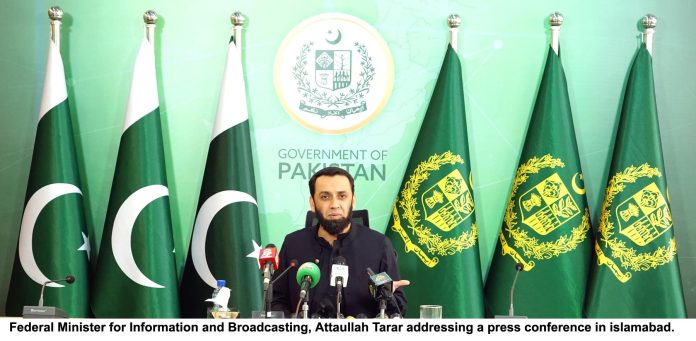
ISLAMABAD: Upping the ante against the Pakistan Tehreek-e-Insaf (PTI), the federal government has decided to ban the former ruling party as well as file references against PTI founder Imran Khan and former president Arif Alvi for treason under Article 6.

“The PTI and Pakistan cannot co-exist,” Federal Information Minister Attaullah Tarar told a press conference in Islamabad, saying that the matter would go to the federal cabinet and the Supreme Court.

The decisions, as per Tarar, were taken in light of the former ruling party’s involvement in the May 9 events and the PTI’s former or current leaders’ attempts to sabotage Pakistan’s deal with the International Monetary Fund (IMF).

The development comes following PTI Vice Chairman Shah Mahmood Qureshi’s indictment in cases related to the May 9 riots and Khan’s arrest in cases pertaining to the incidents taking place on the day.

Touching upon the foreign funding issue, the information minister said that the PTI failed to defend itself in the foreign funding case wherein, he claimed, the ex-ruling party received funds from Indian-born United States citizens.

“Why did you [PTI] seek a stay order [in said case] for six years?” he questioned, adding that the Khan-founded party had nothing to say in its defence.

Stressing that whoever provides financial support to a political party, does so with the hopes that the party would serve its interests if it comes to power, Tarar said that the PTI failed to explain and defend itself regarding the funds received by certain lobbies abroad, including Israeli ones.

Reflecting on the May 9 riots, triggered after Khan’s arrest in a graft case wherein party workers and supporters vandalised several military installations, the minister said that the PTI founder targeted national interests for his own personal ones.

“Your whole family was involved in those attacks. Your three sisters were present outside the [Lahore] core commander’s house,” he said.

He also censured the PTI’s government for allegedly providing safe havens to terrorists and resettle them.

“Who gave you the right to re-settle the Taliban […] and attack the institution that is responsible for guaranteeing the country’s sovereignty,” he noted.

FETO a terrorist, espionage organization, says Ambassador

FETO a terrorist, espionage organization, says Ambassador

Pakistan is remembered with appreciation for being among the first countries that took swift action against the organization’s affiliates in the aftermath of the treacherous coup attempt in our country

DNA

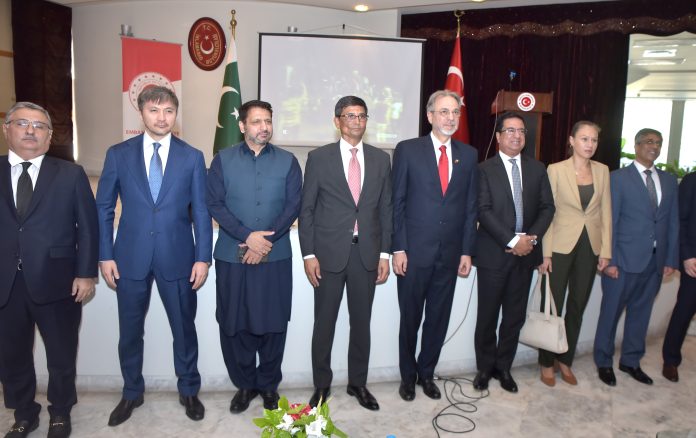
ISLAMABAD” Ambassador of Türkiye Mehmet Pacaci has said “Victory of the Nation” is the main theme of this year’s commemoration ceremony of the “Democracy and National Unity Day”.

It has been eight years since the July 15 coup attempt orchestrated by members of the Fethullah Gulen Terrorist Organization (FETO) who had infiltrated our army, resulting the martyrdom of 251 of our citizens and the injury of over two thousand others.

He expressed these views while speaking on the occasion of a ceremony held to

Commemorates martyrs of July 15, 2016.

The Ambassador further said FETO is not only a terrorist organization, but also an espionage organization with a “cult” character. FETO was established as a so-called “religious movement”. In the guise of promoting education and inter-religious dialogue, it managed to cover its malign intentions.

‘The well-planned and widespread infiltration by FETO members and converts into the army, law enforcement, judiciary and numerous government institutions was carried out for decades latently for a full-scale plot, of which the final phase was unleashed on July 15, 2016’.

Ambassador Pacaci said the greatest credit for neutralizing the threat posed by FETO on the night of July 15 goes to the Turkish people, who demonstrated that they recognize no power over their own will and are ready to give their lives to protect their state and its democratic achievements.

It was the night when the territorial integrity, demographical integrity and cultural integrity of Türkiye, in other words, in every sense, Türkiye itself was protected by its own citizens under the leadership of President Recep Tayyip Erdoğan. Thousands of civilians took to the streets to stop this heinous coup attempt.

In this context, we emphasize with concrete examples that FETO poses a security threat to other countries where it operates, aims to create political and economic spheres of influence, does not hesitate to violate the laws of the countries it is present in, and operates like a criminal and intelligence organization.

It is now becoming internationally understood that FETO is not a social movement involved in education and charity as it tries to portray itself, but a dark and insidious terrorist organization with political and economic ambitions.

While talking about Pakistan role, he said Pakistan is remembered with appreciation for being among the first countries that took swift action against the organization’s affiliates in the aftermath of the treacherous coup attempt in our country. The Supreme Court of Pakistan declared FETO a proscribed organization with the verdict rendered on 28 December 2018. Türkiye and the Turkish people are grateful to brother Pakistan.

‘FETO was declared as a terrorist organization by the Council of Foreign Ministers of the OIC held on 19 October 2016; and by on the 12th Conference of the Parliamentary Union of the OIC on 27 January 2017’.

‘The night of July 15 showed us that the spirit of national unity from the Turkish War of Independence remains steadfast. Democracy and the Republic can only be achieved through a spirit of national unity’.

Stay Connected

64FansLike
60FollowersFollow

Latest Reviews

Exchange Rates

USD - United States Dollar
EUR
1.17
GBP
1.35
AUD
0.72
CAD
0.73