Home Blog Page 872

Gaza gets limited fuel supply, but Israel bans use for hospitals and water purification

Gaza gets limited fuel supply, but Israel bans use for hospitals and water purification

WHO loses contact with staff in Al-Shifa hospital amid Israeli raid; Erdogan calls Israel a “terror state”.

Bombarded twice in Gaza, 4-year-old Ahmed loses parents, then legs

The boy keeps asking for his parents, and he wants to get up and walk, but his parents are dead and his legs have been amputated.

That is the plight of Ahmed Shabat, a four-year-old boy whose parents were killed when their home in the town of Beit Hanoun in the northeastern corner of the Gaza Strip was hit by an Israeli air strike.

“The child asks every day. ‘Where is my father? Where is my mother?’ Every single day. But we try very hard to make him forget, and adjust to the situation he is currently in,” said Ahmed’s uncle, Ibrahim Abu Amsha, who has become his guardian.

Abu Amsha said the force of the blast threw the boy into a neighbouring house and killed 17 family members in total. The only other survivor was Ahmed’s two-year-old brother.

Gaza gets half a tanker of fuel, says UNRWA

The United Nations agency for Palestinian refugees has said Gaza has received 23,027 litres of fuel, equivalent to half a tanker, from Egypt. However, it can only be used for transferring of aid from Rafah crossing.

“No fuel for water or hospitals. This is only 9 per cent of what we need daily to sustain lifesaving activities,” UNRWA director Thomas White said.

UN Security Council silence led to ‘barbarism’ at Al-Shifa hospital: Jordan FM

Jordan accused the UN Security Council today of enabling the “barbarism” of Israel’s raid on Gaza’s main hospital through its silence.

“The catastrophe in Al-Shifa hospital shows the barbarism UNSC’s silence is allowing,” Foreign Minister Ayman Safadi wrote on X, formerly Twitter, commenting on the overnight operation by Israeli troops.

“We condemn the silence on this brutality. It is providing cover for war crimes. It is unacceptable, and unjustifiable. The Council must act.”

Diabetes hack: How many figs a day can you eat to keep high blood sugar at bay?

Diabetes hack: How many figs a day can you eat to keep high blood sugar at bay?

Indulging in the sweet pleasures of life while managing diabetes might seem challenging, but incorporating Anjeer, also known as figs, into your daily diet could be a natural and nutritious solution. 

Figs offer a sweet taste coupled with a host of health benefits, making them a suitable option for those seeking better blood sugar regulation.

Why include this dry fruit?

Dry fruits have a high concentration of nutrients like vitamins, minerals, antioxidants, fibre and natural sugars like sucrose or fructose, which makes them sweet. 

However, not all dry fruits are good for people suffering from diabetes as they may have a high glycemic index and may contain a high amount of sugar, which may lead to sudden spikes, but Anjeer or figs make for a healthy alternative to sugar.

Moreover, anjeer is loaded with essential nutrients like protein, magnesium, iron, folate, and vitamins C, K, and A to name a few.

Here are a few ways in which anjeer may potentially contribute to regulating sugar levels:

High fibre

Anjeer is rich in dietary fibre, including soluble fibre. Soluble fibre can slow down the digestion and absorption of sugars, which may help in managing blood sugar levels. It can also improve insulin sensitivity. Moreover, it helps in keeping you satiated for a long time.

Low glycemic index

Foods with a low glycemic index (GI) are believed to have a smaller impact on blood sugar levels. Anjeer has a relatively low glycemic index, which means it releases glucose into the bloodstream at a slower rate compared to high-GI foods. Anjeer has a GI of 51, which makes it good for diabetes management when consumed in moderation.

Natural sugars

Anjeer contains natural sugars, which are accompanied by fibre, vitamins, and minerals. The combination of fibre and other nutrients may help in moderating the impact of sugar on blood glucose levels. Apart from that, a blend or syrup of this dry fruit can be used as a natural sweetener in making desserts and sweets.

Reduces inflammation

Anjeer is a good source of antioxidants, which can have protective effects on cells, including beta cells in the pancreas that produce insulin. Antioxidants may also help reduce inflammation, which is linked to insulin resistance.

India vs New Zealand, First Semi-Final: Men in Blue opt to bat

India vs New Zealand, First Semi-Final: Men in Blue opt to bat

MUMBAI: India captain Rohit Sharma won the toss and elected to bat against New Zealand in the first World Cup semi-final at his Wankhede Stadium home ground in Mumbai on Wednesday.

Three of the four previous tournament games at the Wankhede have been won by the team batting first, with the exception of Australia’s stunning defeat of Afghanistan, where Glenn Maxwell’s remarkable 201 not out secured a three-wicket victory.

Both unbeaten tournament hosts India and New Zealand were unchanged.

India’s Virat Kohli needs one more century to set an outright new one-day international record of 50 hundreds after he drew level with retired former team-mate Sachin Tendulkar’s mark of 49 against South Africa.

India won all nine of their pool matches but were pushed hard by New Zealand during a four-wicket success in Dharamsala last month.

New Zealand, by contrast, lost four games before qualifying for the knockout stages.

Four years ago, the Black Caps defeated India in a World Cup semi-final in Manchester that spanned two days because of rain.

India are bidding for a third one-day international World Cup title to add to their 1983 triumph in England and 2011 victory over Sri Lanka in a Wankhede final.

New Zealand, the finalists at the last two World Cups, have yet to lift the trophy.

Wednesday’s winners will face either five-time champions Australia or South Africa, who meet in Thursday’s second semi-final in Kolkata, in an Ahmedabad final on Sunday.

Teams

India: Rohit Sharma (capt), Shubman Gill, Virat Kohli, Shreyas Iyer, KL Rahul (wkt), Suryakumar Yadav, Ravindra Jadeja, Jasprit Bumrah, Kuldeep Yadav, Mohammed Shami, Mohammed Siraj

New Zealand: Devon Conway, Rachin Ravindra, Kane Williamson (capt), Daryl Mitchell, Tom Latham (wkt), Glenn Phillips, Mark Chapman, Mitchell Santner, Tim Southee, Lockie Ferguson, Trent Boult

Swiss investors keen to tie up with Pakistan in herbal medicines

Swiss investors keen to tie up with Pakistan

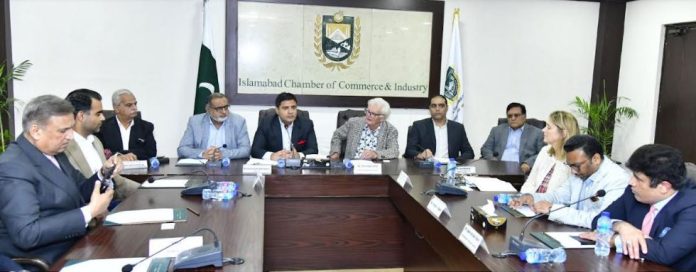
Islamabad, NOV 15: /DNA/ – A delegation of Switzerland’s herbal medicines company Herbamed AG led by its Managing Director Christoph Züllig visited Islamabad Chamber of Commerce & Industry and showed keen interest to tap the Pakistani market for business collaboration in herbal medicines.

Addressing the delegation, Ahsan Zafar Bakhtawari, President, Islamabad Chamber of Commerce & Industry said that the herbal medicines is a booming industry around the world while its global market is set to reach US$ 107 billion by the year 2024, therefore, he stressed that Pakistan and Switzerland should develop strong collaboration to share expertise and technology for the manufacturing of herbal medicines to export them around the world. He said that Pakistan has established SIFC to facilitate the foreign investors in Pakistan and stressed that this is the right time for Swiss investors to explore Pakistan for JVs and investment. He assured that ICCI would cooperate in connecting the Swiss investors with right partners in Pakistan.

Speaking on the occasion, Managing Director Christoph Züllig, Herbamed AG of Switzerland said that his company is manufacturing herbal medicines for the treatment of various diseases including hypertension, diabetes, liver problems, stomach problems, fever & common cold, prostrate and many others with no side effects and they want to penetrate the Pakistani market to address the health issues of patients with quality products with no side effects. He also gave a detailed presentation on his company and products and hoped that ICCI would help them in exploring business partnerships in the Pakistani market.

Faad Waheed, Senior Vice President ICCI stressed for close cooperation between Islamabad and Swiss Chambers of Commerce to bring private sectors of Pakistan and Switzerland closer in order to explore new areas of mutual cooperation.

Engr. Azhar ul Islam Zafar, Vice President ICCI emphasized that both countries should encourage regular exchange of trade delegations to explore new business opportunities available in each country.

Khalid Iqbal Malik, Group Leader ICCI said that Pakistan has great potential for tourism and Switzerland should cooperate with its expertise and technology to improve tourism infrastructure in Pakistan.

Zafar Bakhtawari, former President and Secretary General UBG said that Pakistan and Switzerland should organize single country exhibitions in each other country to introduce their products and promote business collaborations.

Nasir Qureshi Senior Member ICCI also highlighted the potential of mutual cooperation in the pharmaceutical sector between the two countries.

Powering possibilities: Ke releases sustainability report 2023

Call to improve value-added textile exports by adopting diversified marketing

DNA

ISLAMABAD, NOV 14: Committed to transparency, responsible practices, and building a sustainable energy future, K-Electric unveils its Sustainability Report 2023. Themed “Powering Possibilities”, the report illustrates the on-going efforts of the organization in setting targets and executing interventions that ensure progress towards the company’s sustainable future.

At this occasion, Moonis Alvi, Chief Executive Officer, KE said, “The energy sector faces its own trilemma – Sustainability, particularly Climate Change, Affordability, and Energy Security – to achieve sustainable goals and striking the right balance between these elements is imperative for the effective functioning of the energy ecosystem. As we navigate through these difficult times, the responsibility we have towards our customers, shareholders, the environment, and the communities we serve drives our actions. This report highlights our progress, challenges, and our ambitious vision for a sustainable future.”

The report contains information about KE’s operations from the Company’s Fiscal Year 2023, from July 01, 2022 to June 30, 2023 and includes both quantitative data and qualitative insights. With reference to the Global Reporting Initiative (GRI) Standards, KE’s commitment and efforts have been showcased under 11 of the 17 UN Sustainable Development Goals (SDGs) in the report. The SDGs broadly include ‘Good Health and Well-Being’, ‘Quality Education’, ‘Gender Equality’, ‘Clean Water and Sanitation’, ‘Clean Energy’, ‘Economic Growth’, ‘Industry, Innovation, Infrastructure’, ‘Reduced Inequalities’, ‘Sustainable Cities & Communities’, ‘Responsible Consumption’, and ‘Climate Action’.

During FY 23, KE has achieved an impressive 23% reduction in Greenhouse Gas Emissions compared to FY 22, a success attributed to the integration of highly efficient energy generation. Towards sustainable cities and communities, KE has invested around PKR 150 million in rehabilitation works. By introducing several key environment-friendly initiatives such as Hara Qadam and conversion of customers towards paperless billing, KE has saved over 4,000 trees, 94,000 kg of waste, and 200 million liters of water.

This year, KE has also reached 57,000 children through its School Safety Campaign in 17 hazard prone areas of Karachi. Furthermore, KE continued to spread awareness about safety through its flagship Roshni Baji program as 50 Roshni Bajis reached out to 200,000 households in FY23, taking a cumulative total to over 660,000 households over 3 years from FY21 to FY23. KE also celebrated closing the pay gap for 90% its female workforce with a commitment to make it 100% in FY 24.

In essence, KE’s Sustainability Report serves as a beacon of organizational commitment to sustainability, setting a high standard for the power sector. The company illustrates that focusing on sustainability is not merely an environmental imperative but also a strategic business decision, showcasing how aligning operations with sustainable practices can enhance overall performance and elevate stakeholders’ trust.

PM for visa ease with Uzbekistan

PM for visa ease with Uzbekistan

Kakar also appreciated the holding of the First Trilateral Meeting of the Commerce Ministers of Pakistan, Uzbekistan and Afghanistan in Islamabad

Ansar M Bhatti

Islamabad: Caretaker Prime Minister Anwaar-ul-Haq Kakar emphasized on Tuesday the pivotal role of streamlined visa processes, enhanced banking mechanisms, and reciprocal warehousing capabilities to catalyze the surge in trade between Pakistan and Uzbekistan.

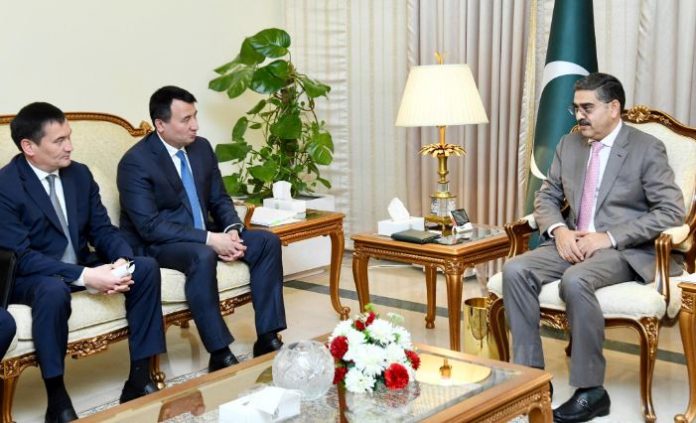
During a meeting with the Deputy Prime Minister of Uzbekistan, Dr. Jamshid Khodjaev Abdukhakomovich, and a accompanying delegation, the prime minister conveyed optimism about the potential for the business communities of both nations to swiftly attain the ambitious bilateral trade target of US$ 1 billion.

Recognizing the significance of fostering a conducive environment for cross-border trade, the leaders deliberated on the necessity of simplifying visa acquisition for entrepreneurs, facilitating smoother financial transactions through improved banking channels, and establishing reciprocal warehousing facilities to streamline logistics. The deputy prime minister of Uzbekistan, along with a seven-member delegation, is on an official visit to Pakistan.

Prime Minister Kakar welcomed the Uzbek deputy prime minister and his delegation to Pakistan and recalled his recent meeting with President of Uzbekistan, Shavkat Mirziyovev, on the sidelines of the 16th ECO Summit held in Tashkent from November 8-9, 2023.

He expressed satisfaction at the pace of bilateral engagements between the two countries especially in the areas of trade, defence and connectivity.

He also appreciated the holding of the First Trilateral Meeting of the Commerce Ministers of Pakistan, Uzbekistan and Afghanistan in Islamabad.

The three sides also established a trilateral working group to discuss customs, logistics, trade promotion, tariffs, TIR procedures, etc.

Showing satisfaction at the outcome of the trilateral meeting, the prime minister hoped that the trilateral mechanism would boost trade relations between the three countries.

Prime Minister Kakar underlined the need to continue momentum of people-to-people exchanges.

Deputy Prime Minister Khodjaev thanked the prime minister for the warm hospitality extended to him and his delegation.

He briefed the prime minister about fruitful meetings with the business community of Pakistan including the banking and logistics sectors.

He expressed the hope that both sides would continue active engagement for the timely completion of the Uzbekistan-Afghanistan-Pakistan Railway Project.

The Uzbekistan delegation included Minister of Transport, Ilkhom Makhkamov Rustamovich, Deputy Minister of Investment, Industry and Trade, Badriddin Abidov, Deputy Foreign Minister, Bobur Usmanov, Deputy Chairman of State Security Service, Maj. General Farukh Mukhtarov and Ambassador of Uzbekistan in Islamabad Oybek Arif Usmanov.

The Pakistan delegation included Minister of Commerce Gohar Ijaz as well as secretaries of commerce, Board of Investment and other senior officials.

PM Kakar urges overseas Pakistanis to invest in Pakistan

Situation at borders won’t impact elections: PM Kakar

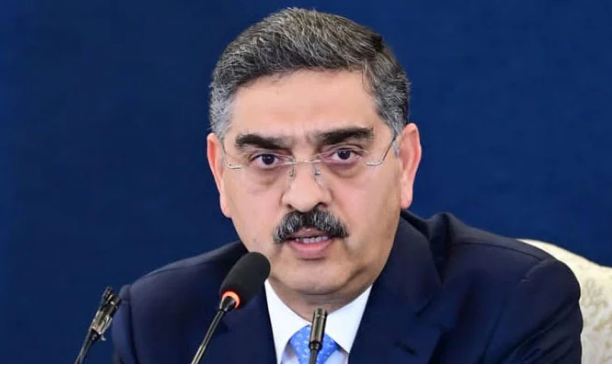
ISLAMABAD, NOV 14 (DNA) — Caretaker Prime Minister Anwaarul Haq Kakar on Tuesday urged overseas Pakistanis to invest in Pakistan, assuring that the government would provide all possible support and facilities. 

The prime minister expressed these views during a meeting with a delegation of the overseas Pakistanis, who called on him, according to a statement. Speaking during the meeting, PM Kakar said that protecting the rights of overseas Pakistanis were among the top priorities of the government.

The prime minister observed that transfer of remittances of the Pakistanis residing aboard legally and safely was significant for the country’s progress and urged them to send their amounts through Roshan Digital Pakistan Account.

He further said that Roshan Digital Pakistan Account was the safest means for transfer of remittances and its utilization could help improve the national economy. Protection of their investments and properties were the responsibility of the government and no leniency would be tolerated in this regard, he added. — DNA

Book Talk on Collected Works on Foreign Affairs and Security Policy

Book Talk on Collected Works on Foreign Affairs and Security Policy

By Dr. Huma Baqai

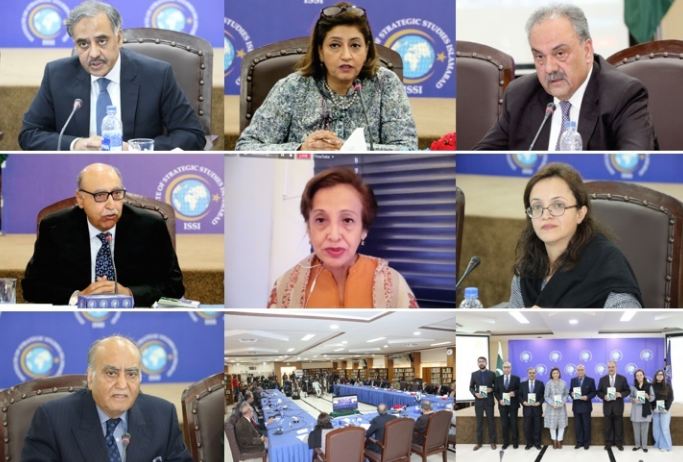
ISLAMABAD, NOV 14: The Centre for Strategic Perspectives (CSP) at the Institute of Strategic Studies Islamabad (ISSI), organized a book talk on Dr. Huma Baqai’s book titled “Collected Works on Foreign Affairs and Security Policy.” The discussants at the Book Talk included: Ambassador Tehmna Janjua, Former Foreign Secretary of Pakistan; Ambassador Asif Durrani, Pakistan’s Special Representative on Afghanistan; and Ambassador Abdul Basit, Pakistan’s Former High Commissioner to India. The discussion was also attended by academics, practitioners, former and current Pakistani diplomats and officials, experts from think tanks, students, and members of the diplomatic corps based in Islamabad.

In her introductory remarks, Dr. Neelum Nigar, Director, CSP said that Dr. Baqai’s extensive body of work stands as a testament to her dedication to unraveling the complexities of foreign affairs and security policy. Through meticulous research, thoughtful commentary, and a deep understanding of the geopolitical landscape, Dr. Baqai has provided us with invaluable insights that resonate with the pulse of our times.

In his welcoming remarks, DG ISSI Ambassador Sohail Mahmood said that Dr. Huma Baqai represent an authentic, home-grown Pakistani voice on global and regional developments. The analysis in her book meticulously considers both domestic and external factors, focusing exclusively on Pakistan’s ‘interests’. Ambassador Sohail Mahmood highlighted five pivotal points from the book, including the urgent need for Pakistan to acknowledge and respond to the profound transformation of the world; the serious implications of major-power competition in South Asia and the growing Indian role in the U.S. grand strategy as well as its assigned role in the ‘Indo-Pacific’ construct – having implications for Pakistan. He also underscored the significance of the China-Pakistan partnership, exemplified by the China-Pakistan Economic Corridor (CPEC) and close collaboration on regional issues. He further highlighted the Book’s focus on the rise of China, the emerging dynamics of a ‘new cold war’, and its advice to avoid major power confrontation. Lastly, he noted the author’s emphasis on Pakistan’s transition from a ‘geostrategic’ to a ‘developmental’ state and suggested that in her future writings Dr. Huma Baqai may also share her thoughts on operationalizing the pivot to geo-economics while managing the complex geo-politics.

Ambassador Janjua, in her insightful remarks on the book, emphasized its role in fostering discussions on various issues concerning both Pakistan and the global landscape. The book particularly underscores the overarching issues in the current global environment, dominated by the escalating rivalry between the U.S. and China. It delves into the nature of this rivalry, its impact on the region, and potential responses by Pakistan. Ambassador Janjua noted the book’s suggestion that, amid great-power politics, Pakistan should steer clear of aligning with any specific camp. However, she stressed the increasing importance of addressing the challenges associated with maintaining such a balance and the importance of close coordination among all relevant institutions and stakeholders.

Ambassador Durrani, in his commentary on the book, highlighted its role as a comprehensive compilation addressing the diverse challenges Pakistan is currently encountering. These challenges span bilateral, regional, and global dimensions, covering crucial topics such as CPEC and Pakistan’s security paradigm. The book serves as a valuable resource, offering insights into the emerging issues faced by Pakistan and providing a guide to understanding international developments over the past five years. Encompassing a broad spectrum, it delves into topics ranging from Pakistan-U.S. relations, Pakistan-India relations, Afghanistan, South Asia, and the Middle East, to the dynamics with Euro-Pacific allies.

Ambassador Basit, in his commentary, expressed appreciation for the book as a valuable addition to the existing literature addressing Pakistan’s intricate foreign policy and security challenges. Shedding light on the hurdles surrounding Pakistan’s foreign policy, he noted that although the country has clear foreign policy objectives, there’s room for improvement in effectively utilizing its foreign policy options. Drawing attention to specific articles in the book, Ambassador Basit emphasized that geo-economics must be considered within a broader context and not in isolation. Regarding global politics and alliance structures, he acknowledged that the world operates in camps, and Pakistan, like other nations, cannot overlook the strategic partnership it holds with China.

Dr. Huma Baqai, in her exposition of the book, illuminated its focus on Pakistan’s foreign, domestic, and security policies within the context of various constraints and compulsions. Despite facing numerous challenges, Pakistan has effectively safeguarded its core interests. Dr. Baqai emphasized that these challenges have significantly influenced all facets of Pakistan’s foreign policy, shaping its relationships with key nations such as Afghanistan, the United States, and India, and its engagement with global alliance structures. She underscored the intricate interplay of geopolitics and geo-economics in the contemporary world. Dr. Baqai underscored the need for Pakistan to navigate this complex terrain, balancing its strategic objectives with the constraints posed by the global geopolitical landscape. By delving into the multifaceted dimensions of Pakistan’s policies, Dr Baqai’s book offers valuable insights into the nation’s diplomatic, security, and economic challenges and successes within the dynamic international context.

The interactive discussion was moderated by Ambassador Sohail Mahmood. During the discussion, various issues of significance were explored. The topics ranged from the China-Pakistan Economic Corridor, Pakistan’s political landscape, and dynamics in Afghanistan, to the unresolved Jammu and Kashmir dispute. The discourse also delved into the intricate web of Pakistan-India relations, events in the Middle East, the war in Gaza, and the emergence of knowledge economies. The breadth of the discussion highlighted the diverse and complex challenges that resonate both regionally and globally.

A vote of thanks was made by Ambassador Khalid Mahmood, Chairman Board of Governors ISSI.

German ambassador, FM Jilani discuss bilateral relations

German ambassador, FM Jilani discuss bilateral relations

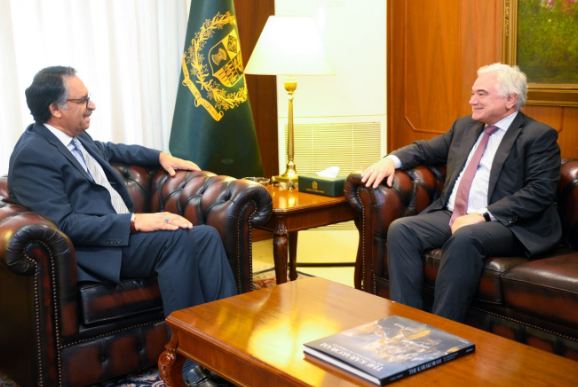
ISLAMABAD, NOV 14 /DNA/ – Ambassador of Germany, Alfred Grannas, met with Foreign Minister Jalil Jilani in Islamabad, on Tuesday.

The discussions centered on enhancing bilateral relations, emphasizing the commitment to deepen mutually beneficial cooperation.

Both parties also deliberated on regional and global developments during the productive meeting.

How UN failure led to demand for two states in Cyprus

How UN failure led to demand for two states in Cyprus

Ishtiaq Ahmad

As the Turkish Republic of Northern Cyprus celebrates the 40th anniversary of its independence today, the conflict in the eastern Mediterranean island remains stuck in history. Since the breakup of the bicameral and bizonal partnership Republic of Cyprus in 1963, the majority Greek and minority Turkish communities have lived separately.

In 1964, the UN gave only the Greek Cypriot administration the right to solely represent the Government of Cyprus. This was a violation of the founding principle of the 1960 partnership Republic, which provided political equality to the Turkish people.  Consequently, with little incentive to share power with their Turkish counterparts, the Greek Cypriots have consistently sabotaged successive UN efforts to resolve the conflict by reuniting the island.

Frustrated with the prolonged stalemate in UN-sponsored talks, the Turkish Cypriot leadership has finally said ‘enough is enough,’by proposing a two-state solution at the 5+UN informal meeting on Cyprus in Genevain April 2021. This marks a turning point in the conflict resolution process that started amid the communal hostilities in 1968.Since then, the UN has taken several initiatives for the establishment of a “bi-zonal and bi-communal federation” based on political equality of the two sides

These include the 1985-86 Draft Framework Agreement; the UN-sponsored Set of Ideas of 1992, the Package of Confidence Building Measures of 1994, the UN Comprehensive Settlement Plan proposed by former UN Secretary General Kofi Annan in April 2004,the 5+UN formal negotiations till the Cyprus Conference held in Crans-Montana, Switzerland during 2008-17 and the 5+UN informal meeting on Cyprus in Geneva in April 2021.

Unfortunately, all of these UN initiatives have collapsed due to intransigence of the Greek Cypriot side. The Annan Plan was rejected by the Greek Cypriots and approved by the Turkish Cypriots in separate but simultaneous referendums held in May 2004. Despite this, the EU awarded membership to the Republic of Cyprus, which represents only the Greek Cypriot side. On the other hand, the Turkish Cypriot people, who voted in favour of the Annan Plan, continue to be subjected to illegal restrictions and embargoes.

The UN -led process to find a peaceful end to the conflict suffered a standstill for the next four years as EU membership fuelled the intransigence of the Greek Cypriot. In 2008, negotiations for a bi-zonal, bi-communal federation, based on the same UN parameters, resumed. This process took place intermittently until the Cyprus Conference in 2017, attended by the 5+UN, which met the same fate at the hands of the Greek Cypriot side.

Following the collapse of the Cyprus Conference, UN Secretary-General Antonio Guterres called for a period of reflection for the sides to decide the way forward.Thereafter, the Turkish Cypriot leadership declared that it would no longer be negotiating on the basis of the defunct UN parameters.

In November 2019, the UN Secretary General met informally with the Turkish Cypriot and the Greek Cypriot leaders. After the meeting, he pledged to explore the possibility to convene an informal 5+UN meeting to “determine whether common ground exists for the parties to negotiate a sustainable, lasting solution to the Cyprus problem within a foreseeable horizon”.

At this meeting, held in Geneva on 27-29 April 2021, the Greek Cypriot side and Greece did not present any new idea for the establishment of a “bi-zonal, bi-communal federation,”reflecting its usual intent of sabotaging the negotiating process. The Turkish Cypriot side, on the other hand, responded to Secretary General’s call on the two sides to “think outside the box” by proposing a two-state solution to break the deadlock in the decades-long negotiations conducted on the same basis and modalities.

The essence of the Turkish Cypriot proposal is to secure the inherent sovereign equality and equal international status of the TRNC, through which a new basis will be brought about for the parties to embark on formal negotiations to set up a freely negotiated and mutually acceptable cooperative relationship.It is an outcome of a historic injustice against the Turkish Cypriot people.

It is an undeniable fact that the usurpation of the partnership Republic of Cyprus and the expulsion of Turkish Cypriot people from all organs of the partnership state by the Greek Cypriots, resulted in, out of necessity, the culmination of the legislative, executive and judiciary of the Turkish Cypriot side into the TRNC and the presence of two states on the island that are each governed by its own people.

At the end of the informal 5+UN meeting in April 2021, the Secretary-General stated that “we have not yet found enough common grounds to allow for the resumption of formal negotiations in relation to the settlement of the Cyprus problem” and also said that he will convene another informal 5+UN meeting probably in two to three months, “with the objective to move in the direction of reaching common ground to allow for formal negotiations to start”.

However, as the experience in the past negotiations suggests that establishing equilibrium between the two sides, prior to possible formal negotiations, not only at the negotiation table, but also outside is a prerequisite.If the inherent sovereign equality and equal international status of the TRNC is acknowledged, only then a new basis will be brought about for the parties to embark on a formal negotiation process to set up a freely negotiated and mutually acceptable cooperative relationship.

As for maintaining the dialogue between the two sides on the island, the Turkish Cypriot side has stated that it is ready to work together with the Greek Cypriot side. Two sets of proposals towards were communicated by TRNC President Ersin Tatar to Secretary General Guterres in July 2022. These proposals foresee the establishment of a Cooperation Mechanism on the foregoing issues of mutual concern such as hydrocarbons, electricity, renewable energy and water, as well as cooperation on the issues of demining of the island and irregular migration.

To be concluded.

The writer is an international relations expert.

Stay Connected

64FansLike
60FollowersFollow

Latest Reviews

Exchange Rates

USD - United States Dollar
EUR
1.17
GBP
1.35
AUD
0.67
CAD
0.73