Home Blog Page 869

PTI, JI protest: Several workers, leaders arrested in police’s midnight raids

PTI, JI protest: Several workers, leaders arrested in police's midnight raids

Lahore, JUL 26: In a series of coordinated raids since late Wednesday night, police conducted extensive operations targeting members of the Pakistan Tehreek-e-Insaf (PTI) and Jamaat-e-Islami (JI) across various cities in Pakistan after they announced a protest sit-in at Islamabad’s D-Chowk after Friday prayers.

The PTI is holding demonstrations in various cities across the country, including several spots in Lahore, outside the Islamabad Press Club, many locations in Karachi including Clifton and Haideri as well as Quetta’s Metropolitan Corporation Office.

In Lahore, police executed raids at more than 60 locations, detaining 110 individuals affiliated with PTI and Jamaat-e-Islami. Notable among the raids was the house of JI Deputy Emir Liaquat Baloch. Police detained two people, including Baloch’s employee. Baloch’s son, Ahmad Salman, left to join the protest procession.

Also on Friday, the JI’s procession from PP-169 of Lahore was stopped on the motorway after it left for the Islamabad sit-in. The workers were taken into custody and shifted to a police van, from where they shouted slogans.

Also Read: Why PTI and JI are protesting in Islamabad? Read demands

The houses of PTI’s Hafiz Zeeshan and Yasir Gilani were raided late at night, according to police sources. Police said they conducted raids on food centres, catering service and sound system in Sandah, Gulshan-e-Ravi and arrested 11 PTI workers.

Several workers of the JI were also detained from various places, the police added.

On Thursday, raids were also conducted on the residence of PTI Lahore President Chaudhry Asghar Gujjar in the Karim Park area of Lahore. On finding him absent, the police locked his outhouse.

Gujjar said the police raided and locked the outhouse without a warrant or any legal justification. “My 30-year-old house has been locked,” he added.

Rest of Punjab

In Hasanabdal, police raided the residences of Jamaat-e-Islami leaders, including Tehsil Emir Altaf Hussain and city Emir Noorul Amin. Amin’s son and three workers were arrested during these operations.

Sargodha witnessed a raid at the JI head office, with one worker detained. Police also targeted tehsil offices and the district emir’s residence.

Sahiwal’s raids targeted local Jamaat-e-Islami leaders’ homes, but no arrests were made as the individuals were reportedly not present. Raids were also conducted at the houses of activists across the district.

Also Read: Islamabad-Rawalpindi roads blocked with containers amid PTI, JI protest call

In Gujranwala, police surrounded the house of Jamaat-e-Islami leader Furqan Aziz Butt with a heavy contingent. Butt was not at home during the raid.

These raids come in the wake of PTI’s call for a protest on July 26. The extensive operations reflect increasing tensions between law enforcement and opposition parties, with authorities taking a firm stance against political activists in the lead-up to the planned demonstrations.

Why PTI and JI are protesting in Islamabad?
The PTI) and JI are protesting separately on Friday for various reasons, including the release of the PTI founder and record-high inflation, respectively.

To prevent the protesters, the entrance and exit routes of Islamabad were closed with containers. The Red Zone was sealed. D-Chowk, Serena Chowk, Nadra Chowk, Faizabad to Murree Expressway were also closed with containers.

The authorities have also imposed Section 144 in Islamabad.

On the other hand, Jamaat-e-Islami (JI) is protesting against electricity bills and taxes imposed in the budget 2024-25. ICT Police and law informant agencies placed containers at Red Zone Cell, D Chowk, Serena Chowk, and Expressway. Due to the closure of the roads, the citizens are facing severe problems.
Ambassador lauds HEC’s support to Palestinian students

Ambassador lauds HEC’s support to Palestinian students

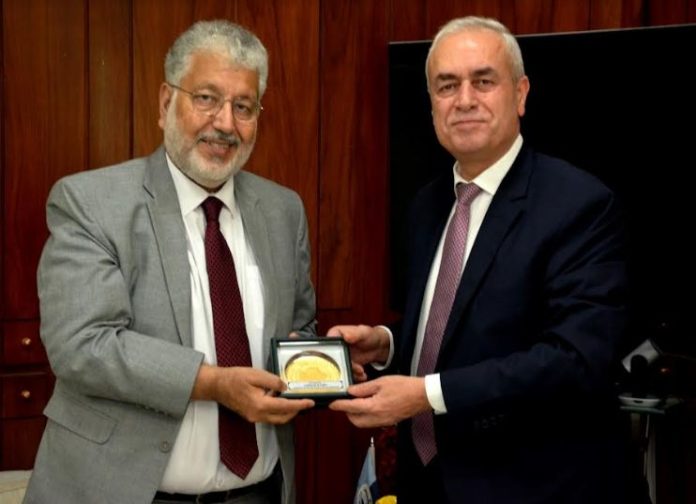
ISLAMABAD, JUL 26 /DNA/ – Ambassador of the State of Palestine Ahmed Jawad A. A. Rabei called on Chairman Higher Education Commission (HEC) Mukhtar Ahmed on Friday to discuss issues of academic interest.          

Welcoming the Ambassador, Mukhtar Ahmed reiterated HEC’s commitment to extending all-possible support to students from Muslim countries. He asserted that HEC will dedicatedly continue putting its due efforts to educate people, enabling them to make a difference in the quality of their lives and the national development. He hoped that the Palestinian students will play a very important role in the development of Palestine, adding that the Palestinians will emerge as a stronger nation out of the hardships they are facing.

Ambassador Ahmed Jawad A. A. Rabei appreciated HEC’s continuous support to the students of Palestine by providing them with quality higher education opportunities. He acknowledged that the Pakistani universities are extending facilitation to the Palestinian students and are imparting education to them at par with the Pakistani students.

Ambassador of Tajikistan calls on the Prime Minister

Ambassador of Tajikistan calls on the Prime Minister

Ansar Bhatti

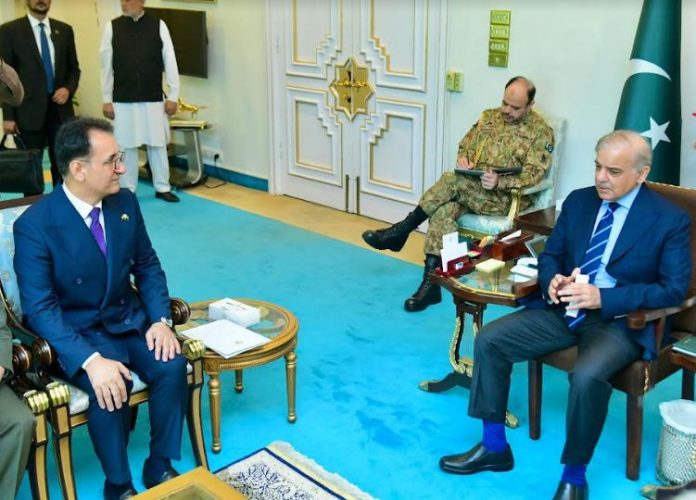
Ambassador of Tajikistan, Amb. Sharifzoda Yusuf Toir, paid a courtesy call on Prime Minister Muhammad Shehbaz Sharif at the Prime Minister House today.

The Prime Minister welcomed the Ambassador and wished him a successful tenure in Pakistan. While fondly recalling his recent visit to Dushanbe earlier this month, the Prime Minister said he was touched by the warm welcome extended to him and hailed the friendly and productive discussions with H.E. President Emomali Rahmon during the visit.

Expressing satisfaction at the MoUs/agreements signed between the two sides during his visit, the Prime Minister urged that timely implementation and follow up would help to strengthen bilateral ties even further.

The Prime Minister renewed his invitation to President Rahmon to undertake an official visit to Pakistan at his earliest convenience, while adding that Pakistan was looking forward to Tajikistan’s participation in the SCO Council of Heads of Government meeting in Islamabad in October this year.

The Tajik Ambassador briefed the Prime Minister on a number of proposals aimed at enhancing bilateral cooperation in various fields including education, agriculture and defence as well as connectivity through land and air routes. While noting the proposals, the Prime Minister tasked relevant Ministries to get in touch with the Tajik Ambassador for further discussions. Regional connectivity projects including CASA-1000, also came under discussion.

The Tajik Ambassador thanked the Prime Minister for receiving him, conveyed greetings of his President to the Prime Minister and expressed his country’s desire to further enhance its relations with Pakistan.

Ayaz Italian envoy discuss bilateral ties

Ayaz Italian envoy discuss bilateral ties

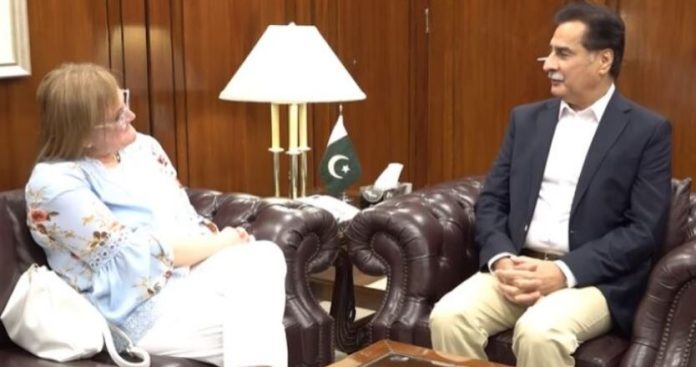
ISLAMABAD, Jul 26 (DNA): Speaker of the National Assembly Sardar Ayaz Sadiq Friday said that Pakistan and Italy enjoy a long-standing cordial relations based on a shared commitment to global peace and sustainable development.

“It is high time to enhance political, cultural, economic, and people-to-people connections between the two countries for the mutual benefit of the people on both sides, the speaker said during a meeting with the Italian Ambassador to Pakistan, Mrs. Marilina Armellin, who called on him.

According to news release, during the meeting, the two sides discussed a wide range of regional and global developments.

They underscored the significance of continuous collaboration to maintain a positive trajectory in bilateral relations and explore new areas of engagement.

While discussing parliamentary cooperation, the speaker called for regular interaction between parliaments, mainly through parliamentary friendship groups and the exchange of parliamentary delegations, in order to share and learn from each other’s experiences.

The Ambassador expressed gratitude to the speaker for his kind remarks and reiterated that Italy considered Pakistan as an important regional stakeholder.

She expressed a desire to further strengthen linkages in all areas of mutual interest, in addition to fostering parliamentary and cultural exchanges.

Pakistan, Turkmenistan agree to expedite TAPI pipeline project

Pakistan

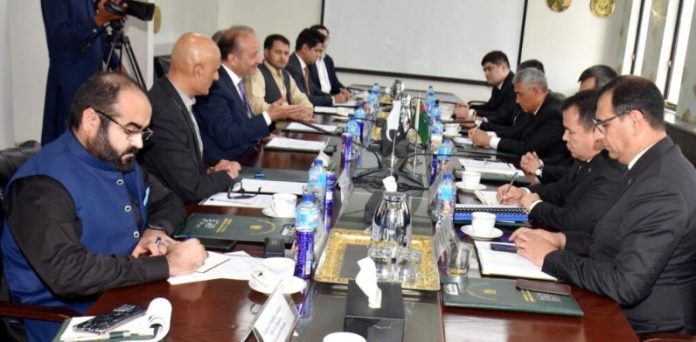
ISLAMABAD, Jul 24 (APP/DNA): Pakistan and Turkmenistan have agreed to expedite the Turkmenistan-Afghanistan-Pakistan-India (TAPI) gas pipeline project, affirming their resolve for continuous engagement.

This agreement was reached during a meeting on Wednesday between Pakistan’s Federal Minister for Petroleum, Dr Musadik Malik, and Turkmenistan’s Deputy Chairman of the Cabinet of Ministers and Minister of Foreign Affairs, Rashid Meredov, who is on a two-day visit to Pakistan.

– Advertisement –

The Turkmen delegation accompanying Rashid Meredov included Ata Haljanov, head of the International Economic Cooperation Division at Turkmenistan’s Ministry of Foreign Affairs; Eziz Nazarov, head of the Legal Department at the Ministry of Foreign Affairs; Muhammetmyrat Amanov, Chairman of the Board and CEO of TAPI Pipeline Company Ltd; Atadjan Movlamov, Ambassador of Turkmenistan to Pakistan; and Eldar Permanov, Third Secretary of the Embassy of Turkmenistan. Pakistani officials present at the meeting included Additional Secretary Hasan Yousafzai, Joint Secretary Shahbaz Tahir, and MD of Interstate Gas Systems Limited, Nadeem Bajwa.

Dr Musadik Malik welcomed the Turkmen delegation and expressed his gratitude for the hospitality offered by the Turkmen side during his last visit to Turkmenistan.

He said the visit of the Foreign Minister of Turkmenistan marks a significant milestone in the strengthening of diplomatic and economic ties between the two nations.

TAPI pipeline project, the minister said, will lower energy costs, which can boost industrial growth, create jobs, and foster economic development. Reliable and affordable energy supplies are vital for industrial sectors and overall economic stability, he added.

This project, he said, aimed at fostering economic integration and energy security, has witnessed substantial progress through collaborative efforts and resolved continuous engagement among both countries.
He further added that Pakistan is fully committed to this project which is significant for regional energy cooperation and infrastructure development.

Rashid Meredov expressed his profound appreciation for the warm welcome extended by the Pakistani side. “Together we will chalk out a roadmap for cooperation between both countries” he added.

Muhammetmyrat Amanov, CEO of Tapi Pipeline Company Limited mentioned that with the special interest of Petroleum Minister and Special Investment Facilitation Council (SIFC) TAPI has seen significant progress and is on the right track.
Speaking on the developments, officials from both Pakistan and Turkmenistan emphasized the project’s strategic importance in enhancing regional connectivity, promoting economic growth, and meeting the energy demands of participating nations. They underscored their commitment to continued cooperation and mutual support to overcome any remaining challenges. Continuous diplomatic efforts and political commitments are beneficial for ensuring a conducive environment for project advancement.

The TAPI project remains a testament to the enduring partnership between Pakistan and Turkmenistan, reflecting shared goals of regional stability and prosperity through sustainable energy solutions.

Pakistan, EU co-organize conference on strategic trade controls

Pakistan, EU co-organize conference on strategic trade controls

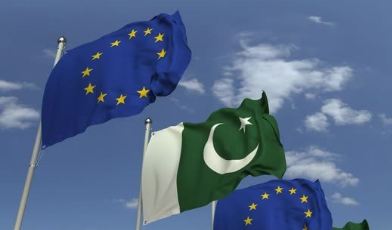
ISLAMABAD, JUL 24 /DNA/ – Foreign Secretary Muhammad Syrus Sajjad Qazi today inaugurated the two-day Regional Conference on Export Control Programme for Dual-Use Goods in Central Asia, being held in Islamabad. 

Co-organized by Ministry of Foreign Affairs, Islamabad and the European Union, the Regional Conference brings together Senior officials and Experts from Kyrgyzstan, Mongolia, Pakistan, Turkmenistan, Uzbekistan, Kazakhstan, the US, the EU, the UN and representatives of multilateral export control regimes and other international organizations The participants will discuss national approaches on strategic trade controls with a view to promoting international cooperation on trade of goods and technologies, in line with the relevant United Nations Resolutions, particularly UN Security Council (UNSC) Resolution 1540.

At the inaugural session, Foreign Secretary Muhammad Syrus Sajjad Qazi underlined the right of developing countries to access dual-use goods & technologies for socio-economic development and urged striking a balance between protecting national security interests and facilitating legitimate trade. He stated that Pakistan is diligently fulfilling all its obligations pertaining to nonproliferation and disarmament. As a responsible state of a thriving technology landscape with advanced nuclear technology, Pakistan remains fully cognizant of its nonproliferation obligations, he stated.

In his welcome address, Director General SECDIV, Haroon Rashid, briefed the participants on Pakistan’s extensive legislative, regulatory and administrative framework for exercising controls over the transfer of sensitive goods and technologies to prevent their diversion to non-peaceful uses. Pakistan’s national control lists are fully harmonized with those of the Nuclear Suppliers Group (NSG), Missile Technology Control Regime (MTCR) and Australia Group (AG) and its export control regime is at par with the highest international standards.

The Regional Conference showcases Pakistan’s robust cooperation with regional and global stakeholders in non-proliferation efforts. The Conference also demonstrates Pakistan’s role as an important partner of the international community in the implementation of strategic trade controls in line with the objectives of UNSC Resolution – 1540.

Commonwealth Secretary-General to Visit Pakistan on July 28

Pakistan: A Pivotal Bridge Aligning Economic Interests Between China and the Middle East

ISLAMABAD, JUL 24 /DNA/ – The Rt Hon Patricia Scotland KC, the Commonwealth Secretary-General, will pay her first official visit to Pakistan from 28 July to 2 August 2024 on the invitation of the Government of Pakistan.

During her five-day visit, Secretary-General Scotland will meet with Pakistan’s leadership, members of the Cabinet, youth leaders, civil society representatives and other stakeholders.

The Commonwealth Secretary-General, who has been a staunch advocate for supporting Pakistan in meeting the adverse impacts of climate change, will reaffirm her solidarity with Pakistan, as it marks the second anniversary of the catastrophic 2022 floods that submerged a third of the country and caused more than $30 billion in damage. She is also likely to tour some of the areas that were affected by the floods.

During the Secretary-General’s visit, the two sides would also discuss avenues to enhance cooperation between Pakistan and the Commonwealth in other areas of shared interest, including supporting Pakistan’s national development plan, empowering youth, and boosting trade and investment.

With 2023/24 designated the “Year of Youth” by the Commonwealth and Pakistan chairing the Commonwealth Youth Ministers Meeting, the Secretary-General will receive extensive briefings on the Prime Minister’s Youth Programme and highlight the opportunities Commonwealth membership brings to young people.

As one of the organisation’s founding members, Pakistan values the Commonwealth as an important forum for forging consensus on global issues and challenges. The visit of the Commonwealth Secretary-General would provide an important opportunity to further strengthen the longstanding partnership between Pakistan and the Commonwealth.

RCCI, Ministry of Climate Change join hands for climate action, environmental protection

RCCI, Ministry of Climate Change join hands for climate action, environmental protection

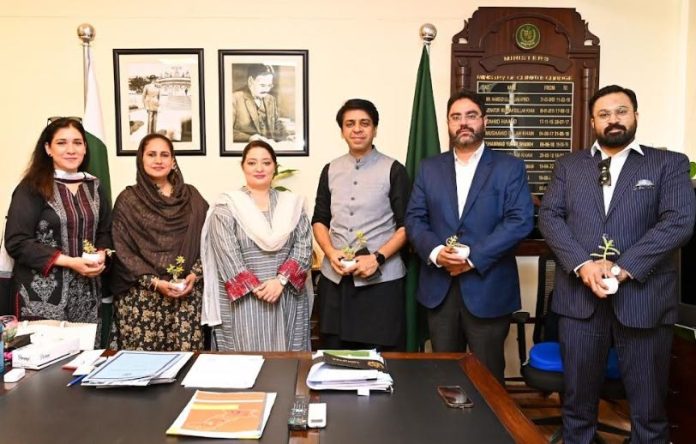
ISLAMABAD, JUL 24 /DNA/ – The Rawalpindi Chamber of Commerce and Industry (RCCI), and Ministry of Climate Change will join hands to address challenges faced by Pakistan due to Climate Change and both reiterated their resolve to put joint efforts to cope with the impact of climate change. These commitments were expressed at a meeting of RCCI delegation headed by President Saqib Rafiq, with Ms. Romina Khurshid Alam, Coordinator to the Prime Minister on Climate Change and Secretary, Ministry of Climate Change and Environmental Coordination (MoCC) in Islamabad.

The primary focus of the discussion revolved around collaborative efforts on climate change initiatives, with particular emphasis on carbon/plastic credit mechanisms and cooperation in climate programs. Ms.  Romina Khurshid expressed her commitment and cooperation from her office to work closely with RCCI towards sustainable environmental practices and enhancing climate resilience in Pakistan. “Pakistan is among the countries most adversely impacted by climate change, but it is now leading the way with its climate diplomacy, she added.”

President Saqib Rafiq highlighted the RCCI’s ongoing efforts and initiatives in promoting environmental sustainability within the business community. He extended an invitation to Ms. Romina Khurshid Alam to participate in an upcoming event on Environmental, Social, and Governance (ESG) organized by the RCCI. Ms. Romina Khurshid Alam appreciated RCCI’s proactive approach and assured the Ministry’s full support in advancing joint climate action programs.

Senior Vice President Muhammad Hamza Sarosh and executive committee member Mr. Asad Aftab, and Women Executive Members Ms. Gul Zeba and Ms. Sadia Zia were also present on the occasion.

CAP asks govt to cut commercial electricity tariff for documented retail sector

CAP asks govt to cut commercial electricity tariff for documented retail sector

DNA

LAHORE: The Chairman of the Chainstore Association of Pakistan (CAP), Mr. Tariq Mehboob, has called upon the government to take serious action to resolve issue of ever rising power tariff for commercial consumers, surging to extreme level of Rs77.15 per unit, the highest tariff of all electricity consumers in the country.

In a press release, issued here, Tariq Mehboob said that soaring electricity costs pose a major threat for retailers, traders, and exporters, severely impacting their competitiveness and affordability. This situation has also adversely affected household budgets, reducing purchasing power and making it increasingly difficult for businesses to sell products and consumers to buy them. Consequently, this has led to domestic business closures and exacerbated poverty levels. Over the past two years, Pakistan has seen a historic increase in the base electricity tariff. As a result, the base tariff for residential customers has reached Rs48.84 per unit, while the tariff for commercial customers has surged to Rs77.15 per unit, the highest tariff of all consumers. Including various taxes, these prices reach alarming levels, with electricity bills for retailers often exceeding their rent costs.

“How can a business survive in this situation?” asked Mr. Mehboob. “Commercial consumers, especially organized retailers who pay their bills on time, are burdened with the highest tariffs in the country because they are paying even higher cross-subsidies than industrial consumers, to keep tariffs artificially low for life-line consumers. Providing relief to low-income households is essential but the government must finance the subsidy for needy residential consumers from its own sources, e.g. BISP, rather than making other sectors completely unviable. One of the primary reasons for the sky-high electricity prices is substantial capacity payments to Independent Power Producers (IPPs), generating considerable concern and uncertainty. Recent report suggest that electricity consumers are set to pay capacity payments amounting to Rs 2.8 trillion during the upcoming financial year 2024-25 in total. These payments account for 70% of the electricity tariff for consumers, with the remaining 30% attributed to energy costs.”

CAP urges the government to transparently communicate the details regarding IPPs, including their role, capacity payments, and justifications, to alleviate public anxiety. Transparency in these matters is essential to build trust. All segments of Pakistani society are raising concerns about these agreements with IPPs and urging a revisit of unsustainable terms and conditions.

In another development, the Federal Board of Revenue (FBR) has recently introduced fixed monthly tax payments ranging from Rs 100 to over Rs 60,000, depending on the locality, targeting small shopkeepers and retailers across 42 major and minor cities, encompassing 25,989 identified areas. While CAP acknowledges the government’s initiative to broaden the tax base—a step crucial for national development and particularly highlighting the essential role of the retail sector—the association emphasizes the urgent need to simplify the tax system. Creating an enabling environment for the business community is vital for economic growth, leading to increased tax compliance and ensuring sustainable economic stability.

These steps will also support Prime Minister Shehbaz Sharif’s aim to boost exports to $60 billion within three years, reflecting aspirations for national self-sufficiency. However, achieving such ambitious goals requires favorable business conditions, currently hindered by increasing challenges. Until these conditions improve, reaching these targets remains a daunting prospect. CAP stresses that a supportive policy for domestic businesses and exporters, coupled with reforms in the tax system and energy sector, is essential for realizing these national objectives.

Reluctance to digital transformation and the role of positive change management

Reluctance to digital transformation and the role of positive change management

By Iqbal Hassan, Deputy Executive Director (OGRA)

In the age of globalization and technology, many organizations realize that digital transformation is compulsory, however, it is a common fact that employees repudiate to accept change and to adapt to innovations and new methods of doing official business. It is a common cliche that people do not like change or to come out of their comfort zones easily. Unlike children they are reluctant to learn new things. Mostly children perceive things through all their impulses and learn it quickly, whereas, adults have to first unlearn the previous knowledge to relearn new knowledge or the fear of being lost in between learning and unlearning process creates hindrances and they lose their confidence. The first reaction to change is usually defensive and employees chose the path of silent ignorance and wait till the change efforts are ended or digital adoption fails.

Now a question arises here, how to bring a positive change among employees’mindset? Leon Festinger, a psychologist at Stanford University says that people tend to act in compliance to their attitude and this is an involuntary reaction called cognitive dissonance which bring behavioral changes which affect rationalization and adoption of new attitudes. For example, behaving with things that are aligned with your personal values may result in intense feeling of discomfort.

In order to bring positive change in the organization, the leader/Head of Organization should first communicate the reasons for change in a clear and consistent manner and highlight the purpose and values of the goal like digitalization at workplace enables organization to collaborate effectively, transparently manage projects and tasks, resolves service requests and defects, automates mundane business tasks, integrate third party applications and generate data driven reports with paperless environment and helps in ease of doing business.

There are two types of organizational changes; first are adoptive changes and second are transformational changes. Adoptive changes are small, gradual and evolve with time, whereas, the transformational changes are larger in scale and require immediate action to withstand with contemporary world.

Therefore, employees should be informed that digitizing the workplace takes a step ahead in adopting the ever-evolving business dynamics and will enhance country’s world ranking in ease of doing business and will help in sustain with current world. Digitalization will unite the workspace, minimize operational costs, enhance productivity and efficiency, create revenues, helps to act safety issues promptly and all that is possible with positive change.

Secondly, for positive change and to bring digital transformation in the organization, it is equally important that the office atmosphere needs to be friendly and incentive based encouraging employees to go for change with fun and ease. They should learn together and celebrate every milestone to foster culture of adaptability and unlock innovation and succeed in transformation collectively.

Finally, positive change requires inducements and that reinforcement can be in the form of training, bonus, increment or any financial/societal status quo like promotion compelling employees to change their behaviors towards adoption of new knowledge or learning. The employees will go for incentives and will ultimately learn new things and bring change in their attitude. The change in outer behavior often results in change in inner approach and positive change in employees’ attitude will follow the creation of a suitable training and support tools to strengthen the new way of behavior and learning. Ultimately, the behaviors of learning and transformation will be achieved amicably.

Stay Connected

64FansLike
60FollowersFollow

Latest Reviews

Exchange Rates

USD - United States Dollar
EUR
1.17
GBP
1.35
AUD
0.72
CAD
0.73