Home Blog Page 868

UAE Ambassador calls on PM Kakar

UAE Ambassador calls on PM Kakar

DNA

ISLAMABAD, NOV 20: Ambassador of U.A.E. to Pakistan, Hamad Obaid Ibrahim Salem Al-Zaabi called on Prime Minister Anwaar-ul-Haq Kakar at the Prime Minister’s House in Islamabad today.

The Emirati Ambassador presented a formal invitation to the Prime Minister for attending the forthcoming COP-28 meeting in Abu Dhabi. He said that Pakistan was one of the leading countries in climate change negotiations and the U.A.E. was hopeful that Pakistan would play its part in ensuring the success of COP-28.

The Prime Minister congratulated the U.A.E. for hosting this important global climate change conference and assured of Pakistan’s active participation in the event.

Progress on bilateral cooperation was also discussed. The Prime Minister expressed satisfaction at the robust and wide-ranging engagement between the two countries and stressed the need to focus on strengthening cooperation in energy, trade and investment.

During discussion on the situation in Gaza, the Prime Minister urged Muslim countries to speak with a united voice to urge the international community to end the violence and brutal murder of innocent civilians in Gaza at the hands of Israeli Occupation forces.

APNS calls for early payment of dues

APNS

Welcomes appointment of Shahera Shahid as the new Information Secretary

KARACHI, NOV 20 /DNA/ – “The APNS expresses its grave concern over the non-payment of advertisement dues by the Federal and provincial governments despite various assurances by the respective governments.

Mr. Sarmad Ali, Secretary General, APNS has stated that the meeting of the Executive Committee held on November 20, 2023 chaired by the President, APNS, Mrs. Nazafreen Saigol Lakhani has noted that the Federal and provincial governments have not paid the dues related to display, SPL and non-budgeted advertisements which has caused serious liquidity crisis for newspapers to meet their expenses. The members of the Executive Committee strongly urged upon the Prime Minister of Pakistan and Chief Ministers of the provinces to advise the concerned departments to release the payment at the earliest.

The APNS in a resolution, welcomed and congratulated Ms. Shahera Shahid on her appointment as Secretary Information for the second time and hoped that during her tenure, the problems faced by the print media, would be addressed and the relations between the APNS and the Ministry would be further strengthened.

In another resolution, the APNS strongly condemn the brutal murder of Mr. Jan Muhammad Mehr, senior journalist, Sukkur Bureau Chief of Kawish Group and urged upon the IG Police, Sindh to expedite the arrest of the culprits who are at large for three months.

The members expressed their profound grief over the killing of innocent peoples including journalists, children and women in Gaza by the Israeli forces and offered fateha for the martyrs.

The following attended the meeting :

Nazafreen Saigol Lakhani, President, Sarmad Ali, Secretary General, Shahab Zuberi, Finance Secretary,  Bilal Farooqui (Daily Aghaz), Mohsin Bilal (Daily Ausaf), Khalid Mahmood (Weekly Family), Muhammad Younus Mehar (Daily Halchal), Kazi Asad Abid (Daily Ibrat), Syed Akbar Tahir (Daily Jasarat), Mushtaq Ahmed Qureshi (Monthly Naey Ufaq), Zahida Abbasi (Daily Nau Sijj), Salman Qureshi (Monthly Naya Rukh) and Faisal Zahid Malik (Daily Pakistan Observer).

Shahid Saati  of Daily Vatan Gujrati ) attended as special observer.

Following attended on ZOOM.

Mohsin Seyal (Daily Aftab), Waseem Ahmed (Daily Awam, Quetta), Ansar Mahmood Bhatti (Monthly Centre Line),  Fauzia Shaheen (Monthly Dastak), Rukhsana Saulat Saleemi (Weekly Nikhar), Jamil Ather (Daily Tijarat) and Nasir Daad Baloch ( Daily Sindh Sujaag)

ISSI launches Ishrat Husain’s Book, “Development Pathways: India -Pakistan-Bangladesh (1947-2022)”

ISSI launches Ishrat Husain’s Book, “Development Pathways: India -Pakistan-Bangladesh (1947-2022)”

ISLAMABAD, NOV 20 /DNA/ – The Centre for Strategic Perspectives and India Study Centre at the Institute of Strategic Studies Islamabad (ISSI) organized an event to launch a Book, titled “Development Pathways: India-Pakistan-Bangladesh (1947-2022)” authored by Dr. Ishrat Husain. The event was attended by eminent members of foreign and civil services, academia, civil society, media, and the diplomatic corps in Islamabad. Adviser to the Prime Minister on Finance, Dr. Waqar Masood Khan, was chief guest on the occasion.

DG ISSI Ambassador Sohail Mahmood, in his welcome remarks, introduced both the author and the Book. He highlighted Dr. Ishrat’s six decades of distinguished public service and contributions for economic and institutional reforms – including a consistent emphasis on political stability and policy continuity for sustainable long-term development. Ambassador Sohail Mahmood also lauded the author’s direct and accessible writing style, making complex economic issues and policy debates more understandable to readers across a broad spectrum. He noted that given the rich data sets of the three countries were contained in the Book, it could serve as a solid foundation for further studies on the economic trajectories of India, Pakistan and Bangladesh. The most valuable aspect of the Book, according to him, was the chapter dealing with risk factors and “pain points” for the future. He also pointed out that the Book made it clear that sound economic management alone did not produce the desired effect and that investing in social and human development was an imperative, which would also enhance the dividends manifolds. In conclusion, he described the Book as a valuable contribution to the existing literature and a source of thought-provoking ideas on a range of subjects.

Ambassador Nadeem Riyaz, President of the Institute of Regional Studies (IRS), shared his thoughts on Dr. Ishrat Husain’s Book. He praised the author for his sound academic work and gave a detailed account of the major subjects covered in the Book. These included macroeconomics, balance of payments, remittances, human development, social protection, service deliveries, poverty reduction, digitalisation, labour market, and applications of emerging technologies. Ambassador Riyaz particularly focused on the Book’s extensive conclusions. He recommended that Pakistan should concentrate on addressing the instability and unpredictability in the economic realm. He highlighted that all three countries had heavy regulations and administrations, problems with start-ups, and issues of taxation that continue to restrict small and medium enterprises. Lastly, Ambassador Nadeem Riyaz commended the author for the valuable effort to sum up the long period of 75 years.

Dr. Idrees Khawaja appreciated the author’s efforts in writing this timely Book. Dr. Khawaja also praised the author for including young co-authors. He gave a summary of the Book, explaining that it compared the economic performances of three countries with similar histories and backgrounds. He lauded the author for analyzing the factors behind the divergent economic growth trajectories of these countries. Dr. Khawaja also shared his own analysis of the Book and asked thought-provoking questions about the various themes taken up in the comparative analysis. He also recommended studying the different patterns of foreign assistance for Pakistan that appeared in the 1960s, 1980s and 2000s. In his opinion, the primary reason for the slowed development of Pakistan was due to the practice of ‘rent-seeking’ and corruption.

Dr. Ishrat Husain shared how the Book evolved, as the subject was considered essential for understanding the present and projecting the future. The Book talked about the changing times for Pakistan, India, and Bangladesh. He noted that Pakistan was once considered a role model for developing countries, while Bangladesh was referred to as a ‘basket case’ and India was struggling with poverty, illiteracy, and other social issues. However, the situation had now significantly changed and India and Bangladesh fared relatively better, while Pakistan was facing challenges. Dr. Ishrat also dilated on the challenges he faced in finding comparable data from all three countries spanning from 1947 to 2022. He highlighted the “five shocks” that affected Pakistan’s economy — from refugee influx in 1947 to war in Afghanistan; and identified “8 critical success factors”, including the forms of government, the role of women, and urbanization, among others. He also discussed the “Risks and Pain Points” for the next 25 years for the three countries – including addressing climate change; enhancing intra-regional trade; ensuring inclusive growth and reducing inequality; managing urbanization; and tackling institutional decline. Dr. Ishrat concluded by emphasizing the need for improving governance structures to ensure sustained and inclusive economic growth and development.

Dr. Waqar Masood Khan, Adviser to PM on Finance, lauded the author and co-authors for their contribution to addressing the knowledge gap in this field. In particular, he applauded Dr. Ishrat’s devotion and motivation for the subject. The Book’s choice of subjects and focus was also underscored by Dr. Khan, who believed that it would substantially assist experts and practitioners. Dr. Waqar Masood added that the Book rightly addressed the convergences and divergences between the three economies, as he termed the 1990s as the turning point for the three economies. He explained that this shift was due to globalization, liberalization, and the end of the Cold War. He highlighted some of the challenges faced by Pakistan and India, such as administrative matters, infrastructure, small industry, and investment. Dr. Khan addressed the regulatory bodies in all three countries and positively evaluated their functioning. He believed that South Asia had moved past the traditional approach towards economic development and become somewhat predictable. Dr. Khan recommended building up reserves, which he felt served as the critical component of any economy.

The engaging session was followed by a lively Q&A session. In the end, Ambassador Khalid Mahmood, Chairman of BoG ISSI, presented a vote of thanks expressing gratitude to the speakers for their insightful inputs on the Book.

‘Light at the End of the Tunnel: Hope in Times of Despair’

‘Light at the End of the Tunnel: Hope in Times of Despair’

DNA

ISLAMABAD, NOV 20: The 26th Sustainable Development Conference (SDC), the annual flagship event of the Sustainable Development Policy Institute (SDPI), kicks off from Tuesday (November 21st) to Thursday (23rd) at local hotel in Islamabad. With an overarching theme “Light at the End of the Tunnel: Hope in Times of Despair”, the Conference aims to raise hope and optimism for the future of the region and to contribute toward a more sustainable and resilient South Asia and beyond.

The conference, being a prime event in South Asia and beyond, provides a forum to SDPI’s researchers and other researchers, policy practitioners, policy makers, and academia from across the world to share their research work and engage in a dialogue with fellow panelists and audiences. Through the SDC, SDPI upholds a beacon of light, and is regarded as a source of inspiration. Carrying on with the tradition, this year’s SDC will be presenting the way forward amidst the global times of trial.

The conference would mainly highlight the unprecedented times of political and economic turmoil marked by uncertainty and despair due to multiple crises, conflicts, climate change, and the post-pandemic transformations the world is faced with. These challenges have severely impacted the development agenda, particularly in South Asia, where the effects of these crises have been the most acute. Despite these challenges and trials, our hopes are still high for a sustainable future development. The conference invites scholars, researchers, practitioners, legislators, bureaucrats, and other professionals to place their solutions on the table and share messages of hope, inspiration, and optimism in times of despair.

Over the years, SDPI has taken the initiatives in providing policy guidance to the incumbent governments in Pakistan. The Institute’s mission has been to catalyze the transition towards sustainable development with a view of being a centre of excellence on sustainable development policy research, capacity development and advocacy in Pakistan. In this context, this SDC would assist the government and legislators in its agenda-setting for a better tomorrow and a better Pakistan.

Under the overarching theme of “Light at the End of the Tunnel: Hope in Times of Despair”, the SDC will be holding sessions on related sub-themes. SDPI invites research papers on sub-themes, including but not limited to poverty graduation, debt sustainability, political coherence and development, Key policies for the new government, way ahead for climatic and environmental challenges, renewable energy, building resilience in times of crisis and conflict, climate action and sustainable development, private sector engagement for sustainable development, promoting inclusive and equitable development, innovation and technology for sustainable development, circular economy and universal health care.

<<<<<<<<<<<<<>>>>>>>>>>>>>>>

Note for editors/assignment editors:

SDC’s Keynote Plenary Sessions and parallel panels will be broadcast live on SDPI’s web channel (www.sdpi.tv) and Facebook for wider dissemination.

Press Releases of all panels separately will be posted in real time at the end of each panel on SDPI’s website www.sdpi.org A consolidated Press release will be shared with media outlets and will also be posted on the website. Pictures of panels will also be posted on the website with panels and plenaries.

Kindly assign your team to cover this mega conference which have invited some key experts on various themes.

Every year the SDC outcomes comprises a peer reviewed anthology based on papers presented which is launched at the succeeding Conference. Keeping with this tradition, the 26th SDC will launch the SDC 2022 peer reviewed volume titled ‘Sustainable Development in Unusual Times: Building Forward Better’ along with other publications.

A Belgian Musician Stan Pollet to Perform Recitals of French songs in Islamabad and Lahore

Islamabad

DNA

Islamabad, NOV 20: The Embassy of Belgium is thrilled to announce two enchanting musical evenings featuring the acclaimed Belgian artist, Stan Pollet, as part of the Belgian Week 2023 celebrations in Pakistan.

Stan Pollet is a talented Belgian musician and singer known for his skillful renditions of French variety classics. His live performances offer an invitation to escape, reminisce, and celebrate through each note. Stan Pollet doesn’t just sing, he connects with his audience, creating a unique sense of camaraderie that makes every small concert a memorable experience. Get to know the artist who brings warmth to your heart and leaves a lasting impact on the music scene through his passion, captivating voice, and charming stage presence.

Stan Pollet’s concerts will captivate audiences in Islamabad and Lahore, offering unique opportunities to experience the beauty of Belgian music and culture with a Pakistani touch. Indeed, Stan Pollet will be accompanied by two renowned local musicians, Wajih Nizami (sitar) and Irfan Khan (tabla) creating magical fusion of western and eastern music.

Event Details:

Lahore Concert:

Date: 22 November 2023

Time: 18h00

Venue: Alhamra Concert Hall, Lahore (in partnership with the Alliance Française de Lahore)

The Embassy of Belgium welcomes all music lovers, Belgians residing in Pakistan as well as Pakistani friends to join it for these memorable evenings. Stan Pollet’s performances will not only showcase the talent of a Belgian artist but also deepen the cultural connections between Belgium and Pakistan.

The Belgian Week 2023 in Pakistan is a celebration of 75 years old friendly relations between the two countries, and these concerts are just one of the many ways to foster cultural exchange and mutual understanding.

US Ambassador announces new initiatives to strengthen counter terrorism cooperation

United States supports South Punjab and honors Multan Heritage: Ambassador Blome

Quetta, NOV 20 /DNA/ – Today in Quetta, U.S. Ambassador to Pakistan Donald A. Blome unveiled four important initiatives to bolster the capabilities of Pakistani law enforcement in their efforts to safeguard local communities.  

  • Anti-Terrorist Force Training Facility Expansion:  A $4 million assistance package will facilitate the expansion of Balochistan Police’s Anti-Terrorist Force training facility, doubling its current capacity, and allowing simultaneous instruction for an additional 800 trainees. 
     
  • Upgraded Police Stations:  The United States allocated $2 million to repair and upgrade 10 flood-damaged police stations.  These facilities will include modern infrastructure, such as digital record management and support for alternative dispute resolution mechanisms, thereby supporting more responsive service to local communities.  The facilities will also feature dedicated gender desks that will provide a private space for vulnerable populations to report crimes and receive special care for problems or injuries resulting from those crimes.
     
  • Construction of New Police Stations:  An additional $2 million will be dedicated to constructing 10 new police stations to improve service to women, girls, and all Pakistanis. 
     
  • Equipment Support:  Recognizing the risks faced by law enforcement officers, the United States announced a $250,000 equipment grant to better protect enforcement officers as they undertake their duties. 

These projects are funded and will be implemented in collaboration with the Department of State’s Bureau of International Narcotics and Law Enforcement (INL).  INL currently provides approximately $20 million in assistance nationwide.   

In addition to announcing the new initiatives, Ambassador Blome, along with Inspector General of Police Shaikh and representatives from the United Nations Office on Drugs and Crime (UNODC), inaugurated Balochistan’s first Women and Juvenile Facilitation Center.  This Center was constructed in collaboration with UNODC and enhances the ability of law enforcement to protect and serve women and girls. 

During the trip, Ambassador Blome also met with Chief Minister of Balochistan Ali Mardan Khan Domki.  Discussions covered a range of topics including U.S. assistance programs, and the Ambassador reaffirmed strong U.S. support for the economic development of all parts of Pakistan, including Balochistan.

The United States and Pakistan have cooperated on civilian security and rule of law for more than 40 years.  Our partnership improves justice institutions and providing law enforcement agencies with the tools they need to secure Pakistan’s border, fight narcotics trafficking, and combat terrorism.  Taken together, these efforts protect Pakistan’s citizens and make Pakistan safer, stronger, and more secure. 

UK National Day climate themed celebrations conclude in Lahore and Karachi

UK National Day

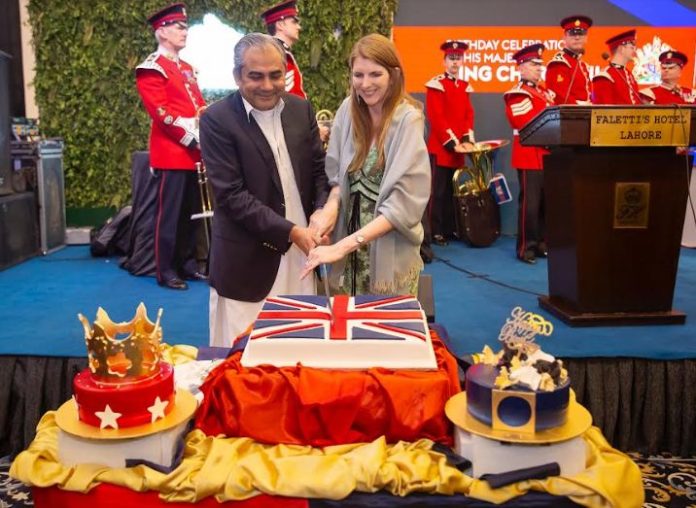
ISLAMABAD, NOV 20 /DNA/ – On Friday the UK concluded its celebrations marking his Majesty King Charles III’s 75th Birthday, with a final event in Karachi, following those in Lahore on Thursday and Islamabad on Tuesday. The King’s Birthday Party events, which double as a National Day for the UK, had an environment and climate theme, to reflect both the King’s interest in this area and the high priority given to this work by the UK.

Hosted in the garden of ‘Acton House’ at the Deputy High Commission Karachi, Friday’s ‘village’ styled event was attended by British High Commissioner, Jane Marriott OBE CMG, and the visiting British Army’s Chief of the General Staff, General Patrick Sanders KCB, CBE, DSO, ADC Gen. In attendance as Chief Guest was the Caretaker Minister for Law, Religious Affairs and Human Rights, Omer Soomro. Also present were representatives from the Karachi Relief Trust with whom the Deputy British High Commission Karachi collaborate to support the rehabilitation of flood-affected communities in Sindh.

With COP28 set to take place on the 30th November in the UAE, these national celebrations were used to open environment and climate related conversations ranging from how to build on Pakistan’s negotiating success on a Loss and Damage Fund at COP27. To how Pakistan can safeguard its marine economy via the Commonwealth’s Blue Charter.

ICCI delegation leaves for Thailand to explore business opportunities

ICCI delegation leaves for Thailand

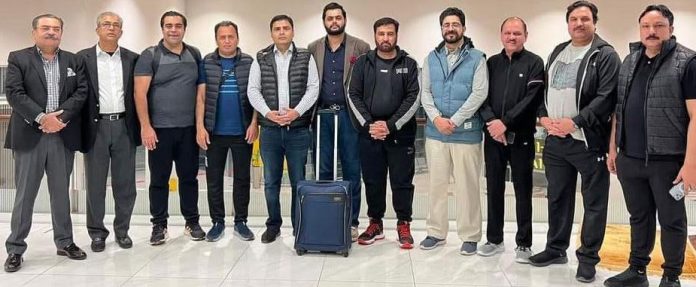
ISLAMABAD, NOV 20 /DNA/ – A delegation of Islamabad Chamber of Commerce and Industry (ICCI) led by Ahsan Zafar Bakhtawari, President has left for Thailand to explore the business opportunities in the Thai market. The delegation is representing various sectors including pharmaceuticals, textiles, construction, edible oil, marble, light engineering, hospitality, retail sector, importers and exporters.

The delegation will visit Thailand Chamber of Commerce & Industry to hold B2B meetings with Thai counterparts and explore business collaborations with them.

In his statement before departure, Ahsan Zafar Bakhtawari, President, Islamabad Chamber of Commerce and Industry said that Pakistan and Thailand have great potential to enhance business relations and the purpose of the visit of ICCI delegation to Thailand is to explore all untapped areas of mutual cooperation between the two countries. He said that Thailand’s annual exports in 2022 were over US$ 285 billion and imports were around US$300 billion, but its bilateral trade with Pakistan in 2022-23 was less than US$ 1 billion. He said that both countries are doing trade in limited items and there is a need to explore new areas for trade promotion between the two countries. He said that Pakistan can export many other products to Thailand including value-added textiles, leather goods, sports items, pharmaceuticals, surgical instruments and food products. Similarly, Pakistan can import more products from Thailand. He hoped that the visit of ICCI delegation would lead to some business partnerships between the two countries.

Ameer Hamza, Ch. Javed Iqbal, Ch. Muhammad Ali, Shahbaz Majeed Sheikh, Raja Muhammad Imtiaz, Faizan Shehzad, Akhtar Hussain, Saif ur Rehman Khan, Nasir Mehmood Chaudhry and Malik Mohsin Khalid are in the ICCI delegation. 

Chairman JKSM Altaf Ahmed Bhat highlights plight of Kashmiri children

Chairman JKSM Altaf Ahmed Bhat highlights plight of Kashmiri children

Islamabad, Nov 20, /DNA/ – In observance of World Children’s Day, Chairman of Jammu Kashmir Salvation Movement Altaf Ahmed Bhat brings attention to the distressing conditions faced by Kashmiri children as a consequence of the Indian occupation in the region.

Chairman Bhat underscores the urgent need for the international community to recognize and address the profound challenges endured by the youngest residents of Indian Illegally Occupied Jammu and Kashmir (IIOJK).

Alarming statistics reveal the toll on Kashmiri children, with over 900 children among the 96,263 people martyred during the last 34 years in IIOJK. Shockingly, more than 1,07,924 children have been orphaned by Indian troops since 1989. Additionally, hundreds of Kashmiri children have lost their eyesight due to the firing of pellets by Indian troops, amplifying the humanitarian crisis in the region.

Chairman Bhat condemns the practice of Indian troops arresting and torturing children during so-called Cordon and Search Operations (CASOs), emphasizing that such actions constitute a gross violation of human rights. He points out that children in IIOJK are enduring lasting trauma from witnessing the killing of their loved ones in front of their eyes, a devastating consequence of the Indian military occupation.

The prolonged military presence has also significantly impacted the physical and psychological health of Kashmiri children, casting a dark shadow over their formative years. Chairman Altaf Ahmed Bhat urges the global community to remember the plight of IIOJK children on World Children’s Day and stresses the importance of holding India accountable for its non-compliance with international conventions on children’s rights in the region.

In a call to action, Chairman Bhat urges the Modi regime to uphold international obligations for the promotion and protection of the rights of children in IIOJK. He implores the international community to exert pressure on India to address the grave concerns surrounding the well-being of Kashmiri children.

Chairman Bhat further said that, Israel’s actions continue to raise serious concerns, as it appears to engage in egregious crimes against humanity without facing consequences. The stark evidence of these transgressions is evident in the deliberate killing of over 5000 Palestinian children, marking a disturbing record in comparison to recent conflicts. On this World Children’s Day, it prompts reflection within the international community. The sorrowful silence surrounding Israel’s claimed “right to self-defense” juxtaposed with the ongoing daily massacres of innocent Palestinian children is both troubling and heart-wrenching.

On this World Children’s Day, Chairman JKSM Altaf Ahmed Bhat calls on the world, UN, P5 and EU to stand in solidarity with the innocent lives affected in Indian occupied Jammu and Kashmir and Palestine, emphasizing the imperative of securing a better and safer future for children all around the world.

PCB unveils talent hunt for young cricket stars

QAZI SHOAB KHAN

DNA

ATTOCK (NOV-20) Talent hunt programme has been launched by the Pakistan Cricket Board (PCB)  from Monday including Attock and other parts of the country to search street cricket potential. Sources in the PCB told media on Monday that the programme would start from Nov 20, selected players in U-13 and U-16 categories would be eligible to play in regional tournaments.

They said the selected players in U-19 would participate in inter-district tournament, adding players born after September 1, 2010 and before September 1, 2014 would be eligible in U-13. Cricketers born after September 1, 2007 and before September 1, 2011 will be eligible for Under-16. The players of all age groups are required to carry their B-forms at the trials. At the time of wrist tests, the selected players are required to present their smart cards for age verification, the PCB said.

A total of 16 regions will participate in the three age-group tournaments including Abbottabad Region (Abbottabad, Buneer, Dir Upper, Haripur, Mansehra, Mardan and Swabi), while in AJK Region (Bagh, Kotli, Mirpur, Muzaffarabad and Poonch) are included. Likewise, in Bahawalpur Region Bahawalnagar, Bahawalpur, Layyah, Muzaffargarh, Pakpattan, Rahim Yar Khan and Rajanpur) and in Faisalabad region Bhakkar, Faisalabad, Jhang, Kasur, Mianwali and Sargodha are included. In FATA Region, Bajour, Bannu, DI Khan, Khyber, Kohat, Kurram, Mohmand, North Waziristan, South Waziristan and Tank are included, while in Hyderabad Region, Badin, Benazirabad, Hyderabad, Jamshoro, Mirpurkhas, Sanghar and Thatta are included.

The federal capital is included with Islamabad Region (Central Zone, East Zone, Gilgit Baltistan, North Zone and West Zone, while Karachi Region (Zones I – VII), Lahore Region (East, North and West Zones), and Larkana region include Dadu, Jacobabad, Khairpur, Larkana, Shikarpur and Sukkur. In South Punjab region, included Multan Region (DG Khan, Khanewal, Lodharan, Multan, Okara, Sahiwal and Vehari), while in D.M. Jamali Region included Jaffarabad, Lasbela, Loralai, Naseerabad and Sibi. In Peshawar Region districts included Charsadda, Dir Lower, Nowshera, Peshawar and Swat, while in Quetta Region it included Chaghi, Gwadar, Kalat, Khuzdar, Killa Abdullah, Noshki, Panjgur, Pishin, Quetta and Turbat.Likewise, in Rawalpindi region the districts included Attock, Chakwal, Jhelum and Rawalpindi and in Sialkot Region districts include Gujranwala, Gujrat, Hafizabad, Mandi Bahauddin, Narowal, Sheikhupura and Sialkot.  Earlier, Pakistan cricket board also  announced details of U13, U16 and U19 trials for the selection of regional and Inter-District teams. The players selected in the U13 and U16 categories will be eligible to take part in regional tournaments for the 2023-24 season, while those selected for the U19 category will feature in inter-district tournament for season 2024-25.

Players born on or after 1 September 2010 and before 1 September 2014 will be eligible for selection in the U13 squads, while players born on or after 1 September 2007 and before 1 September 2011 will be eligible for selection in the U16 sides. For the U19 category, players born on or after 1 September 2005 and before 1 September 2009 will be eligible for selection. The players of all age-group are required to carry their B-forms at the trials. At the time of wrist tests, the selected players are required to present their smart cards for age verification. The following 16 regions (districts in brackets) will participate in the three age-group tournaments. Abbottabad Region (Abbottabad, Buneer, Dir Upper, Haripur, Mansehra, Mardan and Swabi) AJK Region (Bagh, Kotli, Mirpur, Muzaffarabad and Poonch) Bahawalpur Region (Bahawalnagar, Bahawalpur, Layyah, Muzaffargarh, Pakpattan, Rahim Yar Khan and Rajanpur) Faisalabad Region (Bhakkar, Faisalabad, Jhang, Kasur, Mianwali and Sargodha) FATA Region (Bajour, Bannu, DI Khan, Khyber, Kohat, Kurram, Mohmand, North Waziristan, South Waziristan and Tank) Hyderabad Region (Badin, Benazirabad, Hyderabad, Jamshoro, Mirpurkhas, Sanghar and Thatta) Islamabad Region (Central Zone, East Zone, Gilgit Baltistan, North Zone and West Zone) Karachi Region (Zones I – VII) Lahore Region (East, North and West Zones) Larkana Region (Dadu, Jacobabad, Khairpur, Larkana, Shikarpur and Sukkur) Multan Region (DG Khan, Khanewal, Lodharan, Multan, Okara, Sahiwal and Vehari) M. Jamali Region (Jaffarabad, Lasbela, Loralai, Naseerabad and Sibi) Peshawar Region (Charsadda, Dir Lower, Nowshera, Peshawar and Swat)

Quetta Region (Chaghi, Gwadar, Kalat, Khuzdar, Killa Abdullah, Noshki, Panjgur, Pishin, Quetta and Turbat) Rawalpindi Region (Attock, Chakwal, Jhelum and Rawalpindi) Sialkot Region (Gujranwala, Gujrat, Hafizabad, Mandi Bahauddin, Narowal, Sheikhupura and Sialkot), sources added.

Stay Connected

64FansLike
60FollowersFollow

Latest Reviews

Exchange Rates

USD - United States Dollar
EUR
1.17
GBP
1.35
AUD
0.67
CAD
0.73