Home Blog Page 864

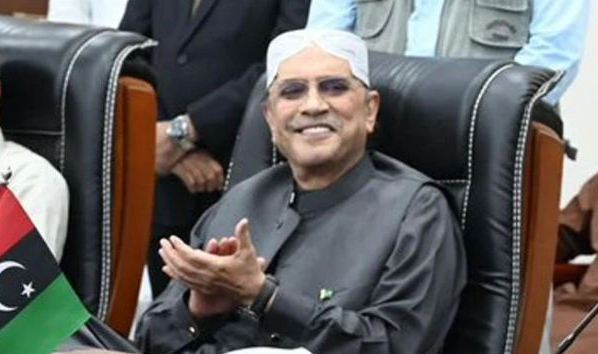
President Zardari grieves rain-related losses

Zardari forms committee for talks with electables

ISLAMABAD, AUG 02 (DNA) — President Asif Ali Zardari on Friday expressed deep sorrow over the loss of lives and damage to properties caused by rain-related incidents across various regions of the country. In a statement issued by the President House, he conveyed his heartfelt condolences to the families of those who lost their lives.

The president underscored the urgency of accelerating relief efforts to aid those affected. President Zardari also called for the implementation of precautionary measures to safeguard lives and prevent further rain-related tragedies.

He emphasized the importance of timely actions by the administration to ensure the effective drainage of rainwater and mitigate the risks of future incidents. In his prayers, Zardari sought divine peace for the departed souls and strength for the bereaved families to endure their loss. — DNA

Gwadar sit-in to end as Baloch Yakjehti Committee, govt sign agreement

Gwadar sit-in to end as Baloch Yakjehti Committee

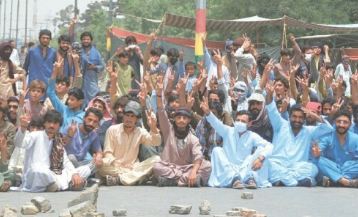
GWADAR, AUG 2: The Baloch Yakjehti Committee (BYC) has decided to end its protest in Gwadar, Balochistan’s interior minister confirmed on Friday, after the two sides signed a seven-point agreement.

The BYC has been holding protests for almost a week at the Marine Drive in Gwadar and other areas to decry the alleged human rights violations against the people of Balochistan, enforced disappearances, and alleged extrajudicial killings of the Baloch people.

As previously reported by Dawn.com, clashes erupted between the protesters and the security forces, killing three protesters and injuring at least 24. BYC leader Dr Mahrang Baloch claimed that over 200 people were arrested by security personnel.

Following days of protest, negotiations between the government and the BYC began on Wednesday evening after which officials announced that talks had been “successful” and BYC had agreed to call its sit-in off after signing a deal.

“Negotiations between the Baloch Yakjehti Committee and the district administration have been successful and the organisers of the committee have agreed to end their sit-ins across the province,” Balochistan’s Interior Minister Mir Zia Ullah Langov said in a statement.

“I appeal to the people to protest, but do not damage the protest site, attack the forces, or hurt the common people,” he said, adding that the government would “not allow anyone to take the law into their hands under the guise of protest.”

The seven-point agreement
The seven-point agreement, a copy of which is available with Dawn.com, was signed by Gwadar Deputy Commissioner Hamoo­dur Rehman and Dr Mahrang.

The statement said that the BYC would end its protest once all the protesters arrested by security forces in Balochistan and Karachi were released.

“Protesters who have been sent to jail on judicial remand will be released by August 5 following court proceedings, the agreement stated.

The Balochistan government will be in contact with authorities in Sindh to ensure the release of those arrested therein, the agreement stated, adding that all cases registered against the Raji Muchi (Baloch National Gathering) protesters will be withdrawn.

It, however, noted that cases related to the loss of lives during protests will not be dismissed.

“All highways will be reopened as soon as the sit-in ends, two hours after which mobile network will also be restored”, the document said.

A committee consisting of officials from BYC and the district administration will also be established, while all items confiscated from the protesters by the government will be returned within a week, it stated.

“No one will be subjected to harassment or retortion for participating in the protest once the sit-in ends,” the agreement added.

It further said that a case will be registered on the complaint of families of those killed or injured during the protests.

“Once the ongoing sit-in at Gwadar’s Marine Drive ends, all other sit-ins across the province will also be called off, the agreement noted.

‘We will not accept compensation from govt’
Meanwhile, the BYC has refused to accept any compensation from the government for those killed or injured during the protests.

“We have categorically told them [the government officials] that the blood of our martyrs is not so cheap, so we will not insult our Baloch national martyrs by accepting compensation,” Dr Mahrang Baloch wrote on the X platform.

“The reward for the blood of our national martyrs is not five or ten million rupees but continuous struggle, resistance, national unity, and national goal” she added.

She further said that the BYC was not willing to seek compensation for those injured during the protests either, adding that the group will collect donations from people even if they have to go from door to door.

“But we will not accept any compensation from this state in any case and prove that the Baloch are a living and brave nation.”

BISP, NADRA leadership convene to strengthen collaborative efforts

BISP, NADRA leadership convene to strengthen collaborative efforts

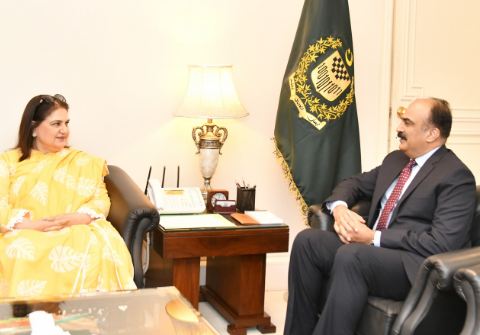
ISLAMABAD, AUG 2: /DNA/ – Senator Rubina Khalid Chairperson Benazir Income Support Programme (BISP), met with the Chairman of the National Database and Registration Authority (NADRA) Lieutenant General Muhammad Munir Afsar at the NADRA Headquarters today.

PIDE hosts Chinese expert delegation and leading Pakistani Think Tanks

PIDE hosts Chinese expert delegation and leading Pakistani Think Tanks

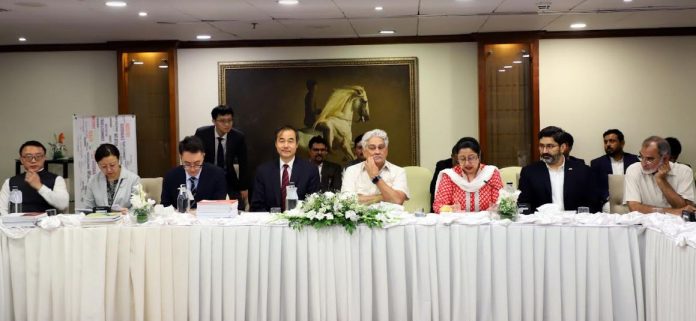
ISLAMABAD, AUG 2 /DNA/ – A high-level Chinese expert delegation participated in an event organized by the Pakistan Institute of Development Economics (PIDE) at the Marriott Hotel in Islamabad, marking a significant step towards enhancing economic collaboration between China and Pakistan. The event, titled “Pakistan Economy & Growth: Learning from Chinese Experience,” aimed to facilitate an exchange of knowledge and best practices between the two nations.

In her introductory remarks, PIDE’s Pro VC Dr. Durre Nayab emphasized the importance of such interactions in fostering growth and development. She highlighted the need for adopting strategies that have propelled China to economic success, tailored to Pakistan’s unique context.

The event featured a detailed presentation by Dr. Nadeem ul Haque, Vice Chancellor of PIDE, who discussed the critical need for policy reforms, investment in human capital, and fostering an innovation-driven economy. Dr. Haque noted that the event aimed to explore lessons Pakistan can learn from China’s economic transformation, which provides insights into growth strategies, infrastructure development, industrialization, and policy reforms applicable to Pakistan.

Dr. Haque emphasized that Pakistan is poised for a new era of economic growth and regional connectivity through the dynamic framework of the China-Pakistan Economic Corridor (CPEC). He highlighted that with a young, burgeoning population and a rapidly expanding middle class, Pakistan presents a compelling case for significant investment and development.

Pakistan’s demographic profile, with a median age of just 20.6 years and a labor force expanding by over 3 million annually, is a cornerstone of its growth potential. Dr. Haque noted that the projected growth rate of 7-8% per annum is within reach with strategic reforms, positioning Pakistan as a future market leader. By 2030, Pakistan is expected to become the 7th largest consumer market globally, underscoring its vast potential.

Dr. Nadeem further stated that CPEC is not just an infrastructure project but a framework for regional connectivity. It aims to enhance geographical linkages through people-to-people contact, academic and cultural exchanges, and robust trade and business flows. The initiative promises to transform Pakistan into a logistical hub, driving industrial, agricultural, and financial cooperation, along with human resource development and tourism.

He pointed out that Pakistan is undergoing significant reforms to create a more investment-friendly environment. Moving from a permission-based to a rule-based economy, the government is addressing regulatory challenges that have historically hampered growth. The implementation of Regulatory Impact Assessments (RIAs) and the reduction of excessive permissions are crucial steps towards this transformation.

Dr. Haque noted that beyond infrastructure, CPEC opens up diverse opportunities for investment. Leading global corporations such as Pepsi-Cola, Coca-Cola, General Electric, and Procter & Gamble have already established a strong presence in Pakistan, collectively investing over $1.5 billion and generating $3 billion in revenues. The Special Economic Zones (SEZs) under CPEC offer further prospects for investment, particularly in the technology and manufacturing sectors.

He highlighted that Pakistan’s burgeoning market for electric vehicles (EVs) represents a significant growth area. With over 50% of households owning motorbikes and a growing demand for cars, the market for 2- and 4-wheel EVs is set to expand rapidly. Initiatives to promote EVs and public transport in Islamabad are already underway, positioning Pakistan strategically as a hub for EV production for both local and export markets.

By learning from China, Pakistan can develop strategies to overcome economic challenges and achieve sustainable growth. The seminar at PIDE provided a platform for discussing these lessons and adapting them to Pakistan’s context, paving the way for a prosperous future.

The Chinese delegation’s lead expert provided invaluable insights into the Chinese economic model, emphasizing lessons that Pakistan can leverage for its own growth. He elaborated on China’s strategic investments in infrastructure, technology, and education, demonstrating how similar initiatives could yield significant benefits for Pakistan. The expert highlighted that China’s economic rise from a developing nation to the world’s second-largest economy offers crucial lessons in various areas, including economic policies, infrastructure development, industrialization, education, innovation, and governance. By strategically investing in these sectors, Pakistan can replicate China’s success and drive its own economic growth.

In this context, a Chinese delegation comprising experts from diverse fields such as economy, industry, agriculture, technology, healthcare, education, environmental science, urban planning, and more, will be visiting Pakistan. These experts bring a wealth of knowledge and experience from their respective domains, aiming to foster deeper collaboration and mutual growth. Their insights and recommendations are expected to play a crucial role in shaping the next phase of Pakistan’s development under the CPEC framework.

Chinese lead experts have lauded the Pakistan Institute of Development Economics (PIDE) for its exceptional efforts in identifying and addressing the critical challenges facing Pakistan. Through rigorous empirical research and the engagement of top-tier specialists, PIDE is exploring innovative solutions to these issues. This esteemed national think tank is undeniably instrumental in charting a course for Pakistan’s success and prosperity.

Effective governance and institutional reforms, including streamlined bureaucracy and anti-corruption measures, were critical to China’s development. Pakistan can adopt these reforms to improve governance, strengthen institutions, and enhance transparency. Emulating China’s policies, infrastructure investments, SEZs, human capital development, technological innovation, export promotion, and governance reforms can pave the way for Pakistan’s prosperity.

Representatives from all leading think tanks from all provinces of Pakistan participated in the seminar and emphasized the importance of skill development, industrial linkages, and technology transfer between China and Pakistan. Indeed, it is a great initiative by PIDE aims to establish thought connectivity with China. We need more research collaborations and the sharing of ideas. China has much to teach us about policies and reforms. CPEC-II should include a component for shared and collaborative research.

During the event, the Chinese delegation engaged in meaningful discussions with representatives from Pakistani academia and think tanks. The discussions covered a broad range of topics, including economic policy, industrial development, and sustainable growth. The event provided a platform for the exchange of ideas, fostering a collaborative approach to addressing economic challenges.
They commended PIDE for organizing such a highly productive, significant, and timely event.

NA passes resolution unanimously to condemn Israeli oppression; express complete solidarity with Palestinians

NA passes resolution unanimously to condemn Israeli oppression

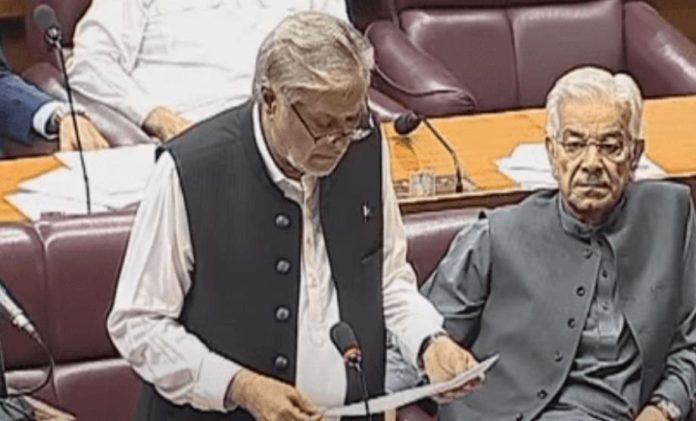
ISLAMABAD, Aug 02 (APP): The National Assembly (NA) on Friday unanimously passed a resolution, strongly condemning the Israeli ongoing state oppression and brutality in Palestine.

The House expressed complete solidarity with the Palestinian brothers and sisters and extended condolences to the family of Ismail Haniyeh and the people of Palestine. The resolution was moved by the deputy prime minister and foreign minister Mohammad Ishaq Dar in the House on behalf of all political parties.

The House also called on the international community to take effective action to halt Israel’s oppression and brutalities and deliver justice to the Palestinian people.

The house called for an immediate and comprehensive ceasefire the provision of sustainable and unhindered humanitarian assistance to the beleaguered Palestinians, and immediate withdrawal of Israeli occupation forces from Gaza in accordance with the UN Security Council Resolution 2735 (2024).

 “This house decides that Pakistan will continue to supply aid to Palestine and take effective measures for medical assistance to the oppressed Palestinian brothers and sisters, including medical treatment in Pakistan,” the resolution said.

The house resolved that Palestine medical students would be given admission in Pakistan’s medical colleges on gratis basis to complete their education.

“The House also decides to observe a day of mourning across Pakistan on 2nd August as a mark of solidarity with our Palestinian brothers and sisters and to unequivocally condemn Israeli brutality,” the resolution further said.

It was also decided to hold funeral prayers in absentia for martyr Ismail Haniyeh across the country after Friday prayers today.

“The House calls on the United Nations Security Council to take effective measures to impose its call for a ceasefire in Gaza to stop the genocidal war being waged against Palestinian people and hold Israel accountable for its war crimes and crimes against humanity inflicted upon the Palestinians.

It also called for the immediate admission of the State of Palestine as a full member of the United Nations.

The resolution said, “ whereas the atrocities by Israel on Palestinians have escalated causing immense suffering and loss of over 40,000 innocent lives so far, including women and children”.

Whereas all parliamentary parties in the National Assembly expressed their unified grief and anger over the ongoing Israeli oppression and brutality against the people of Palestine for the past nine months, the resolution said.

The resolution further said, “ Whereas the assassination of Hamas leader Ismail Haniyeh in Tehran has added to the angst and grief, and such incidents are seen as deliberate conspiracies to sabotage efforts to stop the ongoing oppression and brutality against Palestinians and to establish peace in the region”.

“Whereas the Israeli leadership is intent on expelling the population of Palestine from their homeland and despite clear verdicts of the International Court of Justice (ICJ) and resolution of the United Nations General Assembly, the UN Security Council, Organization of Islamic Cooperation (OIC) and calls by the UN Secretary-General, Israel has not stopped the indiscriminate violence and attacks against innocent Palestinians,” it further said.

The House said that such incidents not only destroy the peace of the world but also constitute a dangerous escalation in an already volatile region and undermine efforts for peace.

Creation of a business community committee on IPPs appreciated

FPCCI

ISLAMABAD, JUL 2 /DNA/ – The Chairman of the FPCCI Advisory Board and National Business Group Pakistan, President Pakistan Businessmen and Intellectuals Forum, and All Karachi Industrial Alliance, as well as former provincial minister Mian Zahid Hussain, said on Friday that the vast majority of people are considering themselves insecure due to inflation and electricity bills.

He said that the relationship between the people and the welfare state is constantly weakening, and the youth are eager to seek employment outside the country.

Mian Zahid Hussain said that the country’s population is increasing faster than its harmful effects on its economy.

Talking to the business community, the veteran business leader said that General Zia-ul-Haq was a controversial ruler. Still, there was no inflation during his time. All the Deputy Commissioners used to be present in vegetable and fruit markets before dawn, and they used to take strict action against profiteering.

Similarly, he said, the magistrates did not allow the price of anything, including milk, curd, bakery, etc., to increase.

After Zia-ul-Haq, the inaction of the administration has crippled the country’s economy and the people. Inflation has come down from 35 per cent to 12 per cent. Still, due to a lack of market control, the situation has reached the point where people are hopeless about their future.

The business leader said that there is no respect for Pakistani passports and Pakistanis in the world, and the system is being run through a begging bowl having huge holes of IPPs.

Mian Zahid Hussain said IPPs have stolen two thousand billion rupees from consumers this year. In comparison, they are ready to steal 2800 billion rupees next year.

He said the biggest shock to the country’s economy in recent years was IPPs and obsolete electricity systems. At the same time, the second major shock is the failure of government institutions, which consume 1200 billion rupees of public tax annually.

Also, tax evasion of 4 thousand billion rupees per year is evident. Due to these factors, the country’s economy and reputation are being destroyed, and the government has reached the threshold of bankruptcy.

Mian Zahid Hussain said Pakistan would immediately go bankrupt if China demanded loans. Even in these circumstances, instead of decreasing, government expenses and national debts are continuously increasing, terrorist activities are going on in the country, and our soldiers are martyring themselves.

The provision of facilities for the business sector needs to be improved, and people are suffering from unemployment. Mian Zahid Hussain said that people should be saved from looting by IPPs.

He said that giving the power to fix oil prices to oil marketing companies is likely to result in IPPs like oil companies. OMCs will be freed from government control after being empowered to set arbitrary oil prices.

Mian Zahid Hussain further said that due to the unfair distribution of resources, terrorism and economic inequality, more than 100 million people have gone below the poverty line. There is a possibility that half of the country’s population will go below the poverty line by next year.

In 1985, the dollar was worth 15 rupees, now around 280 rupees due to the losses caused to the country’s economy. The situation is the same with almost all sectors of the economy.

Mian Zahid Hussain said there is an urgent need for the government, the opposition and the elite to hold meaningful talks with the business community on a one-point agenda to fix the country’s economy. Otherwise, there is no chance of improvement in the economy.

Designate Ambassador to US Rizwan Saeed Sheikh visits ICCI

Designate Ambassador to US Rizwan Saeed Sheikh visits ICCI

ISLAMABAD, AUG 2 /DNA/ – Pakistan’s designated Ambassador to the United States Rizwan Saeed Sheikh has said that America is the most attractive market for Pakistan and that we have to focus on it to explore more and more economic opportunities.

He said this while talking to Ahsan Zafar Bakhtawari, President Islamabad Chamber of Commerce and Industry during his visit to the Chamber.

He said that in the capacity of a professional diplomat he thinks that his first and foremost responsibility will be to bring both the countries closer to each other.

 The Ambassador designate said that the United States is a consumer society that’s why it enjoys vital potential of trade and economic connectivity and that he will focus on more and more liaison to facilitate the holding of exhibitions to showcase Pakistani products.

Rizwan Saeed Sheikh added that he was totally convinced that Pakistan will successfully overcome its existing economic difficulties and that for this purpose he will also approach the Pakistani-Americans irrespective of their political affiliations to persuade them to explore the investment opportunities in Pakistan.

He described Pakistan’s IT sector as the most significant and attractive area for the rest of the world because of being cost effective as compared to other countries.

On his part, Ahsan Zafar Bakhtawari noted that the United States is not only the largest export market of Pakistan but a leading investor also with more than 80 companies currently functioning and providing employment to hundreds of thousands of people.

He said that both the countries are resolute to foster the existing economic partnership to long term stability and mutual prosperity by upgrading their economic collaboration in alternative energy, agriculture, climate resilience and technology.

Highlighting the significance of direct flights between the two countries he said that over the past few years the US companies have invested more than $1.5 billion in Pakistan in different sectors especially in consumer goods, agri-business, financial service, information and communication technology, healthcare and energy.

By expressing his good wishes for the Ambassador designate Rizwan Saeed Sheikh with regard to discharge of his duties in the United States, Bakhtawari said that ICC will not hesitate in extending every possible support to him for building bridges between the business fraternity of both the countries.

Former President ICCI Khalid Javaid by mentioning the difficulties the business communities are facing at the moment termed the expanded investments the only way forward to overcome the problem.

Former President ICCI and Secretary General United Business Group (FPCCI, UBG) Zafar Bakhtawari by terming the designate Ambassador as the most suitable professional for the job said that there is a dire need to focus on economic diplomacy instead of the political diplomacy to pull the country out of the existing economic mess. He said that when we will set right our economic matters, the political matters will automatically be aligned it will yield positive results.

He also highlighted the exchange of trade and business delegations importance for the image building.

Former President ICCI Mian Shaukat Masood expressed the hope that the Ambassador would build all the things articulately and focus on enhancement of the country’s exports to the United States.

Acting Vice President Ameer Hamza underlined the need for strengthening linkages between the Chambers of both the countries for the purpose.

Those who took part in the deliberations include Ch. Maqsood Tabish, Faizan Shahzad, Malik Mohsin Khalid, Shaikh Ejaz, Ch. Mohammad Ali, Sardar Sajjad, Tahir Farooq,  Zareef Ahmed, Mudassar Nazir, Waseem Ch, Zia Ch. and others.

Haniyeh Killed in Iran: What Next?

Qamar Bashir

By Qamar Bashir

The martyrdom of Ismail Haniyeh, along with the earlier loss of his sons, nephews, and niece, is profoundly sad, worrisome, abhorrent, and unforgivable. The entire Muslim world and all those with any sense of humanity globally have condemned this horrendous attack and are mourning the heartless killing of Ismail Haniyeh, a prominent leader of the Gaza Strip who was waging a relentless struggle against Israeli occupation on both political and military fronts.

However, Iran and the rest of the Muslim world should not let their emotions drive them to impulsive decisions and actions. It is crucial to avoid giving any pretext to Israel, the USA, or the Western world to justify actions that could further harm Iran, similar to the devastation seen in Afghanistan.

Our memories remain vivid when George Bush Jr. issued an ultimatum to the Taliban in Afghanistan to hand over Osama Bin Laden to the USA, who was accused of masterminding the 9/11 attacks and other high-profile assaults on American interests globally. The Taliban, compelled by their tradition of hospitality and their readiness to sacrifice their lives to protect a guest who had sought refuge with them, refused.This defiance enraged the USA and its allies, leading to a devastating attack on Afghanistan, the wounds of which remain fresh and painful. Now they have forced Iran to fall into a similar position expecting similar action and similar reaction.

It is widely speculated that the CIA of the USA, MI-5 of the UK, and Mossad of Israel have chosen the timing, event, and place to eliminate their sworn enemy with great intelligence. For the USA, Israel, and the rest of the Western world, Iran is considered an evil country governed by an evil regime. They are extremely wary of Iran’s pursuit of nuclear enrichment, believing that Iran has achieved weapons-grade uranium. Consequently, making an atomic bomb would be a relatively straightforward task for Iran.

Moreover, Iran’s national pride, the religious revolution that has persisted since 1979, and its support and influence over various militant factions have solidified its position as a formidable adversary to the USA, the West, and particularly Israel.

Iran’s leverage extends to Hezbollah in Lebanon; in Iraq, the Popular Mobilization Forces (PMF), including groups like Kata’ib Hezbollah, Asa’ib Ahl al-Haq, and the Badr Organization; in Syria, Liwa Fatemiyoun and Liwa Zainebiyoun; in Yemen, the Houthi movement (Ansar Allah); and in Palestine, Hamas and Palestinian Islamic Jihad (PIJ). Additionally, in Bahrain, Iran supports various small militant groups involved in anti-government activities.

This extensive network of influence and support has positioned Iran as the number one enemy to the USA, the West, and especially Israel, which views Iran’s backing of these groups as a direct threat to its survival.

The timing of targeting Iran coincides with the inauguration of the new president, who succeeded former President Ebrahim Raisi, who died in a helicopter accident—an incident that some conspiracy theories suggest was orchestrated by Israel to avenge missile and drone attacks on Israel. Analysts believe this strategic timing aims to provoke Iran into attacking Israel and the USA, thereby providing a pretext for a robust military response. The prime objectives of such an attack would be to neutralize Iran’s nuclear enrichment capabilities, diminish the strength of its armed forces and the elite Revolutionary Guard, and cripple its economy to curtail its ability to finance and supply weapons to its proxies across the Middle East.

This theory resonate well with the Israel’s ruthless military onslaught on the palestinians in Gaza which did not stop even after protests in all parts of the world against the killing of over 70,000 innocent palestinians including children, women, elderly and vulnerable groups with the declared objectives to eliminate Hamas completely from Gaza Strip no matter what ever is the cost. This theory also resonates well with Israel’s declared intention to permanently resolve the Hezbollah prowess and prowess of Houthis in Yemen and other Iranian proxies elsewhere. 

They also know that without reducing the military and economic might of Iran, no matter how seriously they inflict damage to these proxies they will re-emerge even stronger and better. Therefore, in all probability this attack was deliberately executed in Iran to infuriate Iran’s leadership and bait them to launch an attack on Israeli and US interests.

Let us build two hypothetical scenarios one in which Iran has attacked Israel and the US and second it seeks justice through diplomatic means.

If Iran decides to retaliate against Israel and the USA following the assassination of Ismail Haniyeh, the immediate consequences would likely involve extensive military strikes by Israel and the USA targeting Iranian nuclear facilities, military bases, and infrastructure. This would lead to significant casualties and destruction within Iran, further crippling its economy and military capabilities. The conflict would escalate rapidly, potentially drawing in regional allies and causing widespread instability. The global economy would also be impacted, with oil prices soaring due to instability in the Persian Gulf.

Conversely, if Iran opts for a diplomatic resolution through the United Nations, it would seek international condemnation of the attack and justice for the violation of its sovereignty. This approach would garner support from several countries, leading to a formal UN inquiry and increased international attention. Diplomatic efforts might result in the easing of some sanctions on Iran, stabilizing its economy and enhancing domestic stability. By choosing diplomacy over conflict, Iran would maintain its regional influence through non-military means and improve its international standing. This path would prevent further destruction and loss of life, fostering gradual improvements in regional stability and potential economic recovery for Iran.

In this precarious situation where Pakistan could be directly affected, it is imperative for the country to resort to active and proactive diplomacy, leveraging its brotherly relations with Iran and its Non-NATO ally status with the USA. Pakistan should play a proactive yet balanced role in mediating tensions between Iran, Israel, and the USA by leveraging diplomatic channels and international platforms. With the support of like-minded countries, both Muslim and non-Muslim, and utilizing forums like the Organization of Islamic Cooperation (OIC) and other regional and international bodies, Pakistan can work to calm heightened emotions and help sanity prevail. This approach, if successful, will save the region from imminent turmoil and instability, elevate Pakistan’s status as a peace-pursuing nation, and safeguard its national interests.

By Qamar Bashir

Former Press Secretary to the President

Former Press Minister to the Embassy of Pakistan to France

Former MD, SRBC

ICCI President slams IPPs as threat to national sustainability

ICCI President slams IPPs as threat to national sustainability

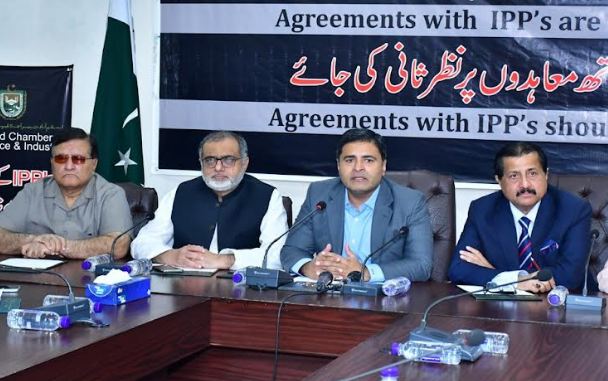
ISLAMABAD, JUL 31 /DNA/ – Ahsan Zafar Bakhtawari, President Islamabad Chamber of Commerce and Industry has termed the IPPs as detrimental for the country’s sustainability by demanding their forensic audit. He said that the entire business community is on the same page over the issue and it will not let the government to renew their contracts without taking it on board. He said that the individuals responsible for excessively costly agreements should be held accountable, with consequences for negligence or misconduct. He said that the high tariffs and capacity payments have made electricity unaffordable for the industry as well as the common people which is badly affecting the country’s export sector as the buyers in the global market have started looking for alternatives of Pakistani products.

The ICCI President said this while addressing a largely attended press conference entitled ‘IPPs and electricity crisis’ here at the Chamber House on Wednesday. 

He urged the government to comprehensively review all agreements with IPPs, prioritizing the nation’s best interests, and ensure full transparency through disclosure of all contracts and associated details. This review should identify and address power plants receiving payments without generating output, and include regular performance evaluations and machinery condition assessments, with findings made public. Additionally, agreement expiration dates should be published pre-renewal, and all agreements should require mandatory parliamentary approval. By taking these steps, the government can ensure that the nation’s interests are protected and that the power sector is operated in a transparent and accountable manner.

PPP MNA and UBG leader Dr. Mirza Ikhtiar Baig said that a delegation of business leaders is holding a meeting with President Asif Ali Zardari tomorrow ( Thursday ) over the issue to apprise him of the dire situation and find out a viable way forward. He added that according to a report most of the IPPs are accused of breach of contracts, therefore the government should not hesitate in initiating a criminal action against them.

Vice President ICCI Azhar ul Islam Zafar demanded that an inquiry commission should be constituted to probe the entire episode and to bring those involved in wrong doings to justice.

Former President ICCI and Secretary General United Business Group Zafar Bakhtawari said that the IPPs issue is not the issue of the business community and the general public but the issue of the country’s sustainability.

Former President  ICCI Tariq Sadiq also pointed out the disparities in the rates of the IPPs by saying that Pakistan is bearing  the highest electricity rates of the IPPs in the region.

The business community present on the occasion also adopted a unanimous resolution demanding forensic audit of the IPPs, Procurement of the IPPs by the government as scrape and  non-renewal of their contracts in future.

Those present on the occasion among other include former President ICCI Mian Shaukat Masood, President All Pakistan Anjuman-e-Tajran Ajmal Baloch, Malik Shabbir,  Malik Mohsin Khalid, Zulqurnain Abbasi, Waseem Chaudhry,  Irfan Chaudhry, Maqsood Tabish, Ameer Hamza, Munizeh Majid etc.

Ethiopia, Pakistan discuss defence, aviation cooperation

Ethiopia, Pakistan discuss defence, aviation cooperation

DNA

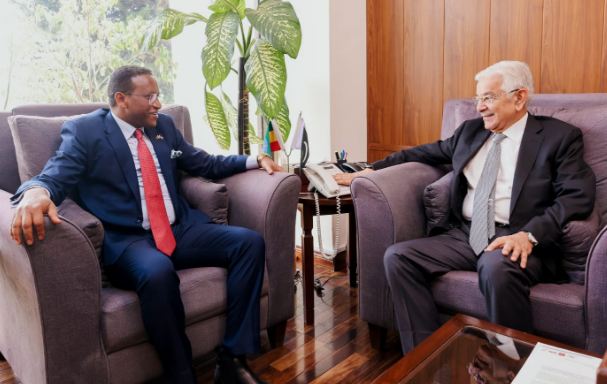
The Federal Democratic Republic of Ethiopia (FDRE) and the Islamic Republic of Pakistan on Wednesday explored various avenues to strengthen bilateral and multilateral cooperation in different areas such as defence and aviation.

The matter of such utmost importance came under discussion during a meeting between H.E. Jemal Beker Abdula, Special Envoy, Ambassador Extraordinary and Plenipotentiary of FDR Ethiopia to Pakistan, and H.E. Khawaja Muhammad Asif, Minister for Defence and Aviation of the Islamic Republic of Pakistan.

Both sides also discussed full spectrum of ongoing bilateral, regional and multilateral cooperation between the two brotherly countries.

During the meeting, H.E. Ambassador Jemal Beker expressed his gratitude for a continued support of the Government of Pakistan to the Government of Ethiopia at bilateral and multilateral level. 

The Ambassador briefed the minister on ongoing economic reforms carried out by the Government of Ethiopia to achieve macroeconomic stability, attract Foreign Direct Investment, increase productivity and job creation.

He also apprised the minister about relief and rescue efforts carried out in Gofa region of Ethiopia for permanent relocation of the affected persons.

Expressing his condolences for the loss of lives in landslide incidents that took place in Gofa region of Ethiopia, the minister reiterated the Government’s commitment and support to the people and Government of Ethiopia in difficult times.

H.E. Khawaja Asif expressed his government’s commitment to increase its presence in the African continent of more than 1.4 billion people with untapped resources.

The Minister recognized pivotal role of the FDR Ethiopia in effective implementation of Look Africa and Engage Africa policy of the Government of the Islamic Republic of Pakistan that attached utmost priority to Ethiopia which is a gate way to Africa.

H.E. Khawaja Asif appreciated arrival of the Ethiopian Airlines in Karachi which has given a major boost to the bilateral relations of the two countries especially people-to-people and business-to-business ties between Ethiopia and Pakistan as well connect the rest of Africa.

He also lauded economic progress achieved by Ethiopia under the leadership of H.E. Dr. Abiy Ahmed, Prime Minister of Ethiopia, who successfully implemented home grown economic reforms for peace and prosperity in the country.

Stay Connected

64FansLike
60FollowersFollow

Latest Reviews

Exchange Rates

USD - United States Dollar
EUR
1.17
GBP
1.35
AUD
0.72
CAD
0.73