Home Blog Page 863

Politics of dharnas and IPPs syndrome

Politics of dharnas and IPPs syndrome

The PML-N can rejuvenate its waning popularity by genuinely aligning with the people’s interests. To stay politically relevant, the party must focus on tangible performance and delivery, particularly in economic matters. Providing significant relief to the populace can greatly enhance its chances of retaining leadership for a full term

Comment

Ansar M Bhatti

Pakistan’s political arena is never short of drama. Every day, political and non-political heavyweights vie for dominance, creating a relentless tug-of-war. As this power struggle continues, the country and its citizens, often referred to as living in the “land of the pure,” suffer immensely at the hands of these actors. The economic situation has deteriorated drastically, leaving many desperate to escape the nation by any means necessary to find relief from their prolonged agony and hardship. For those unable to leave, begging has become a last resort. Reports indicate that the number of beggars in Pakistan has reached twenty million, starkly highlighting the severity of the social, political, and legal injustices plaguing the country.

Iraq recently lodged a complaint with the Pakistani government, revealing that they have identified at least 50,000 Pakistanis who entered Iraq as Zaireens (pilgrims) but never returned. Many of these individuals have resorted to begging in Iraq.

Similarly, Gulf countries have expressed concerns regarding the Pakistani expatriates and labor force. During a Senate Standing Committee on Overseas Pakistanis meeting, Secretary of Overseas Pakistanis Dr. Arshad informed the forum that the United Arab Emirates (UAE), Kingdom of Saudi Arabia, Qatar, and Kuwait have raised reservations on various issues related to overseas Pakistanis.

The disclosure comes months after the ministry back in September 2023 informed the same body that out of all the Pakistanis leaving the country, beggars are going abroad the most. The official had said that Pakistani beggars travel to Iraq and the Kingdom of Saudi Arabia under the guise of ziarat [pilgrimage]. Most people visit KSA on Umrah visas and then indulge in begging-related activities. Out of all the beggars who were arrested, 90% turned out to be Pakistanis, the secretary had said.

The ground realities regarding the plight of ordinary people are far more alarming than reported in the media. Unfortunately, the government and those who actually control it seem least concerned about the suffering of the have-nots and even the middle class. While people continue to endure distress and injustice, the ruling elite is preoccupied with finding ways to extend their rule and suppress the opposition. Corruption reigns supreme in the country, and lawlessness takes a heavy toll on the defenseless masses. Bad governance is rampant, and the disconnect between the electorate and their representatives is growing ever deeper—a fact that often embarrasses politicians, especially when they are ousted from power and no one protests in their support.

The ongoing Jamaat-e-Islami sit-in, like many recent sit-ins, appears to be politically motivated. While these protests often give the impression that they are staged in support of ordinary people, their underlying motives tend to be self-serving and personal. Take, for example, the PTI and Pakistan Awami Tehreek dharna in 2014 against the Nawaz Sharif government. It was initially presented as a movement to overthrow the government due to its failure to address the public’s grievances and protest rigging in the 2013 general elections. However, as events unfolded, it became clear that the true motive was different. The then army chief, Raheel Sharif, was seeking an extension, which Nawaz Sharif was unwilling to grant.

The ongoing JI sit-in has a different approach and goals this time. The primary target appears to be the Independent Power Producers (IPPs), who, according to the JI protesters and even some government officials, have been exploiting the nation for a long time. Interestingly, those currently in power are responsible for these contracts, as they were established during the tenures of either the PML-N or PPP. Additionally, many of the IPPs are owned, directly or indirectly, by leaders of these two parties. Chinese companies also have a significant share in the ownership of these plants.

One aspect of the dharna might be to keep the owners of these plants under pressure for motives that are still unclear, though there likely is more to it than meets the eye. However, a positive outcome of such dharnas is that the public often receives some relief. For example, during Imran Khan’s 2014 dharna, the government refrained from increasing the prices of daily-use items, especially petrol, to avoid further public anger. This time, regarding the issue of the IPPs, people might benefit from a reduction in electricity prices. However, it remains uncertain whether the core issue—the agreements—will be addressed earnestly and effectively.

Crises situations often give rise to numerous controversies. For example, in this particular case, some believe that the government’s days are numbered and that the ongoing protests could lead to its downfall. However, I think this conclusion might be premature, as the core question remains: if not this government, then who would run the country? At the moment, the Establishment does not have a clear alternative to justify the removal of the current government.

The PML-N faces a unique predicament, lacking support both internally and externally. Even its allies, notably the PPP, appear dissatisfied. The Establishment is also gradually withdrawing its backing to avoid public backlash, as the government has seemingly underperformed politically and economically in its initial months. The PML-N can rejuvenate its waning popularity by genuinely aligning with the people’s interests. To stay politically relevant, the party must focus on tangible performance and delivery, particularly in economic matters. Providing significant relief to the populace can greatly enhance its chances of retaining leadership for a full term.

The writer is the newspaper editor
Armed Forces pay tribute to valiant personnel of Pakistan Police: ISPR

Youm-e-Shuhada Police

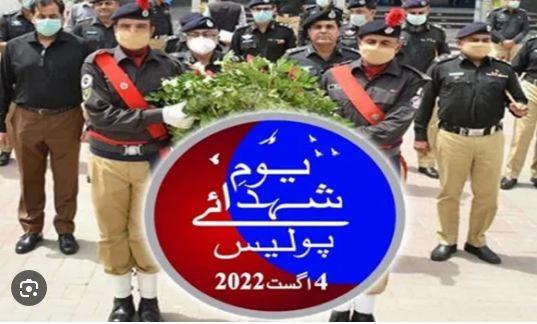
RAWALPINDI, AUG 3: /DNA/ – On the occasion of Youm-e-Shuhada Police, the Armed Forces of Pakistan pay solemn tribute to the valiant personnel of the Pakistan Police who have made the ultimate sacrifice in the line of duty. Their unwavering dedication, unrelenting courage, and selfless sacrifice will be perpetually remembered and honored.

Today, the Armed Forces, comprising officers and men, salute the memory of our fallen heroes who have protected the nation with their sweat and blood. Their noble and selfless service has ensured the safety and security of our communities, and their legacy continues to inspire and motivate us. We stand in solidarity with their families and reaffirm our commitment to supporting them in every possible manner.

To demonstrate our solidarity with the Shuhada of Police, army officers and troops participated in various events organized by the local police at numerous locations across the country.

Youm-e-Shuhada Police serves as a poignant reminder of the immense sacrifices made by our policemen in the pursuit of peace, justice, and security. The Armed Forces of Pakistan reiterate their unwavering commitment to the noble cause of defending the motherland, alongside the Police and other law enforcement agencies, and pledge to continue this mission with unshakeable resolve and determination.

Rawalpindi, AUG 3: /DNA/ – On the occasion of Youm-e-Shuhada Police, the Armed Forces of Pakistan pay solemn tribute to the valiant personnel of the Pakistan Police who have made the ultimate sacrifice in the line of duty. Their unwavering dedication, unrelenting courage, and selfless sacrifice will be perpetually remembered and honored.

Today, the Armed Forces, comprising officers and men, salute the memory of our fallen heroes who have protected the nation with their sweat and blood. Their noble and selfless service has ensured the safety and security of our communities, and their legacy continues to inspire and motivate us. We stand in solidarity with their families and reaffirm our commitment to supporting them in every possible manner.

To demonstrate our solidarity with the Shuhada of Police, army officers and troops participated in various events organized by the local police at numerous locations across the country.

Youm-e-Shuhada Police serves as a poignant reminder of the immense sacrifices made by our policemen in the pursuit of peace, justice, and security. The Armed Forces of Pakistan reiterate their unwavering commitment to the noble cause of defending the motherland, alongside the Police and other law enforcement agencies, and pledge to continue this mission with unshakeable resolve and determination.

Barrister Sundas Malik urges global leaders to break their silence on Kashmir’s HR Crisis

Pakistan: A Pivotal Bridge Aligning Economic Interests Between China and the Middle East

ISLAMABAD, AUG 04 (DNA) — A prominent advocate for human rights in Kashmir Barrister Sundas Malik Sunday vehemently condemned India’s widespread and systemic abuses of fundamental human rights (HR) in the region and urged the international community to take immediate and decisive action to halt these injustices.

 In an exclusive interview with Radio Pakistan in connection with Youm-e-Istehsal-e-Kashmir, she condemned India’s unilateral actions, particularly the revocation of Article 370 of its Constitution, which she said was unjustified and illegitimate.

 She said that the people of Indian Illegally Occupied Jammu and Kashmir (IIOJK) want a free and fair plebiscite to decide their future, highlighting that the abrogation of Article 35-A was a deliberate move to alter the region’s demographic composition. She suggested that global powers could impose sanctions on the Indian government or its military to pressure India into reversing its August 5, 2019, actions.

 She stressed that the international community must adopt a more robust and assertive stance to combat the egregious human rights violations in Kashmir, rather than turning a blind eye to these atrocities due to economic interests. The appalling scale of abuses, including genocide, ethnic cleansing, and crimes against humanity, demands an immediate and collective response, she added.

The global community must recognize the inherent value of human rights and take decisive action, including diplomatic pressure, economic sanctions, and support for independent investigations, to hold perpetrators accountable and ensure justice for the Kashmiri people, she mentioned.

 Replying to a question, she said that the human rights report has laid bare India’s glaring failures in addressing systemic discrimination and draconian laws targeting minority communities, particularly in Kashmir.  The report exposes a distressing pattern of state-sponsored violence, arbitrary detentions, and blatant disregard for due process, perpetuating a culture of impunity and fear, he said.

She said there has been no progress for the people in IIOJK, where businessmen, farmers, and individuals face ongoing suppression and intimidation.   The report’s findings serve as a stark reminder of India’s obligations under international human rights law and the urgent need for reform to protect the rights and dignity of all individuals, regardless of their religion, ethnicity, or political beliefs, she mentioned.

 “The BJP government’s failure to provide adequate legal assistance to imprisoned top Kashmiri leaders is a glaring travesty of justice and a stark reminder of the systemic bias that pervades India’s judicial system”, she added.

Despite repeated appeals, the BJP Supreme Court has failed to provide timely and effective relief to these leaders, who have been languishing in jail for years without fair trial or due process, she highlighted.

 Responding to a query, she further criticized that the Kashmir valley has been a contentious region for many decades, and there have been concerns about press freedom and the ability of journalists to report on the situation there. In recent years, there have been allegations that the Indian government has restricted access to the region for journalists and has pressured media outlets to present a particular narrative about the situation in Kashmir, she added.

  “The international community must recognize the stark realities of the Kashmir crisis and acknowledge the sufferings of the Kashmiri people”, she added.   For decades, they have endured human rights abuses, military crackdowns, and restrictions on their freedom of expression and movement, she said, adding, the world cannot continue to turn a blind eye to the plight of Kashmiris, who are subjected to collective punishment, extrajudicial killings, and enforced disappearances.

 The international community must demand transparency, accountability, and a peaceful resolution to this longstanding conflict, ensuring that the rights and dignity of the Kashmiri people are respected and protected, she added. — DNA

ICC Champions Trophy 2025 schedule announced

ICC

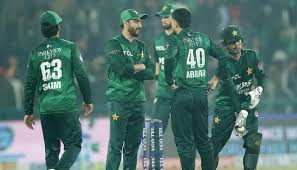
DUBAI, AUG 4: The International Cricket Council (ICC) has distributed the schedule for the ICC Champions Trophy 2025 to all cricket boards, as well as broadcasters.

Sources reveal that a budget of approximately $70 million has been approved for the tournament.

The schedule outlines a series of events and matches, with the tournament set to begin on February 19 and conclude on March 9.

The reserve day for the final has been scheduled for March 10. Warm-up matches are slated to take place from February 12 to 18.

The opening ceremony is proposed to be held in Karachi, while the closing ceremony is planned for Lahore.

These proposals will be finalized by the ICC after consultations with all cricket boards.

Sana Javed enjoys scenic views of Switzerland with husband Shoaib Malik

Shoaib Malik

Famous actress Sana Javed and her husband, veteran cricketer Shoaib Malik, seem to be enjoying their time together as they soak up the beauty of Switzerland.

Javed, 31, treated her fans to some sweet snaps of herself with Malik, 42, on social media as the celebrity couple make the most of the cricketer’s time off after his appearance in the World League of Champions 2024.

The “Khaani” actress made a joint post with her husband on Instagram, featuring snaps of the couple posing together with scenic mountains of Switzerland, covered in green, visible in the background.

However, it is not known which city the couple was in for their vacation.

She kept the caption of post pretty simple with a heart emoticon.

The post comes weeks after Malik played as a team member of Pakistan Champions in the United Kingdom, alongside veteran Pakistani cricketers, some of whom were his former teammates.

However, Malik and his teammates were left devastated after they lost the league’s final to archrival India as they successfully chased the 157-run target in the last over to win the maiden edition of the tournament.

Despite the loss, Javed supported her husband througout the league and was seen at matches, cheering him on.

The couple surprised the world as they announced their marriage earlier this year in January.

“Alhamdulillah. And We created you in pairs,” wrote Malik on his Instagram account at the time.

Soon after the announcement, Javed changed her Instagram bio to “Sana Shoaib Malik”.

President lauds Police Force sacrifices

President lauds Police Force sacrifices

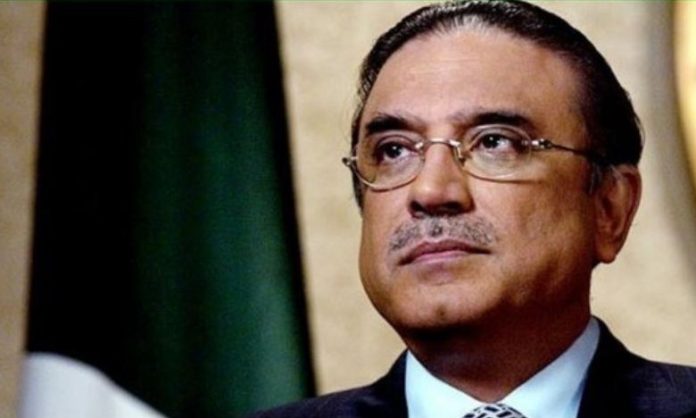
ISLAMABAD, Aug 4 (APP): President Asif Ali Zardari on Sunday paid tribute to Shuhada of police force and said the martyred police personnel had offered valuable sacrifices in the fight against terrorism.

On Youm-e-Shuhada-e-Police, the president lauded the unmatched bravery and sacrifices of shuhada of police force.

“The entire nation is proud of its valiant police force for their sacrifices. The police personnel had laid down their lives while fighting on the frontline with terrorists and criminal elements,” President Secretariat Press Wing, in a press release in Urdu language, quoted the president as saying.

President Zardari highlighting the role of police force during the success in fight against terrorism said that Jawans of police force had been sacrificing their lives, fighting with terrorists and anti social elements in different parts of the country.

On behalf of the entire nation, the president said, he saluted shuhada of police force on their services and sacrifices.

Non-Productive Elite

Non-Productive Elite

Dr M Ali Hamza

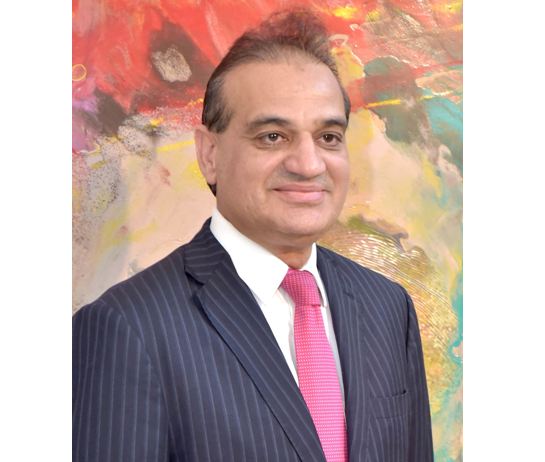
If an airplane took off a dozen times only to crash each time, the only logical conclusion would be that the aircraft needs a fundamental redesign. Similarly, Pakistan’s economy has crashed 23 times in the last 75 years, each time requiring a bailout from the International Monetary Fund (IMF). It wasn’t always this way. In the 1980s, Pakistan was richer in per capita terms than India, China, and Bangladesh. Today, however, Pakistan is the poorest among them, with a recent GDP growth estimate of only 2%, barely enough to keep up with population growth.

Currently, Pakistan is facing an economic crisis fuelled by high global oil prices, rising agricultural imports, and economic mismanagement. In April 2023, Pakistan’s year-on-year inflation hit a record 36.5%, the highest increase in nearly 60 years. It is evident that Pakistan has become dependent on IMF bailouts, yet these bailouts seem unable to address the root problems. The cycle is always the same: Pakistan runs out of dollars, seeks an IMF bailout, and receives it on conditions such as privatizing state-owned enterprises, implementing austerity measures, and broadening the tax base. None of these conditions resolve the primary issue in Pakistan’s economy—the non-productive nature of its elite. This deep-rooted defect is gradually leading to Pakistan’s demise. Let’s delve into the concept of a non-productive elite to see if this claim holds ground.

A non-productive elite consists of influential individuals or groups who prioritize personal gain and power over public welfare, often engaging in corruption, misleading allocation of resources, compromised execution, and nepotism. Their actions undermine economic growth, social progress, and governance, leading to stagnation and decline in their respective nations. Has it started making sense?

Throughout history, the rise and fall of nations have often been tied to the effectiveness and productivity of their ruling elite. When the elite becomes non-productive, focusing more on personal gain and power consolidation than on the welfare of their nations, the seeds of decline are sown. This phenomenon is not only a relic of the past but continues to manifest in contemporary societies, demonstrating the timeless impact of leadership on national prosperity.

History is filled with such examples. For instance, the decline of the Roman Empire. Indulgence in lavish lifestyles, accumulated vast estates, and exploited the provinces for personal wealthweakened Rome’s political and economic foundations, contributing significantly to its eventual collapse. In late 19th century, China’s Qing Dynasty were more focused on maintaining their luxurious court life than on addressing the growing challenges.  The opium trade, facilitated by British merchants, further drained the economy. The ruling elite’s inability to modernize and reform the state led to a series of humiliating defeats to foreign powers, culminating in the fall of the dynasty in the early 20th century.

In contemporary times, Venezuela; once one of the wealthiest countries in South America, has plunged into economic and social chaos over the past two decades. The reason is ruling elite, under both Hugo Chávez and his successor Nicolás Maduro focus on maintaining power at all costs.

Under the leadership of Robert Mugabe, Zimbabwe shifted from being the “breadbasket of Africa” to an economic disaster. Mugabe and his inner circle prioritized land reforms to facilitate political allies. The ruling elite’s failure to prioritize national well-being over personal power and wealth was a key factor in Zimbabwe’s downfall.

In Pakistan, the phenomenon of a non-productive elite contributing to national issues is evident across various sectors. Whether political, military, bureaucratic, or business elites, all seem to function in a non-productive manner.

Pakistan’s political landscape is filled with people who are egocentric, and self-serving. Their deep ties with land mafia and other illicit network enable them for land grabbing, money laundering, and exploitation of resources. This ultimately undermine governance, stall reforms, and erode public trust in political institutions. The Panama Papers leak in 2016 exposed such numerous politicians, including former Prime Minister Nawaz Sharif, for owning offshore companies and properties, raising questions about the sources of their wealth. This kind of corruption diverts resources away from critical areas like education, healthcare, and infrastructure, contributing to economic and social discontent.Moreover, the latest Dubai leaks revealed properties linked to senior political and military officials, highlighting their lack of interest in advancing the nation, but focus on increasing and protecting their personal wealth.

Moreover, the prevalence of dynastic politics in Pakistan is another indicator of a non-productive elite. Major political parties, such as the Pakistan People’s Party (PPP) and the Pakistan Muslim League-Nawaz (PML-N), are dominated by a few families who wield significant influence over the political system. This concentration of power limits political competition and innovation, often leading to policy stagnation and a focus on maintaining familial power rather than addressing the country’s pressing issues.

There is a prevailing perception that the Pakistani military’s extensive economic involvement leads the top brass to prioritize personal financial interests over national economic development. The dominant role in politics and economy is viewed as a non-productive engagement of the military elite.

The bureaucratic elite in Pakistan, has long been criticized for inefficiency and excessive red tape. A local term “BABU”, connotatively meant as arrogant official, is evident in their conduct. The civil service, tasked with delivering public services, often becomes a bottleneck due to bureaucratic inertia, corruption, and a lack of accountability. This inefficiency hampers development projects, discourages foreign investment, and frustrates citizens’ access to essential services. The focus on maintaining status and privileges within the bureaucracy often overshadows the need for effective governance and public service delivery.

The business elite in Pakistan faces accusations of tax evasion, using loopholes to minimize their contributions to the national economy. Furthermore, their monopolistic practices, often aided by connections to political, military, and bureaucratic elites, hinder competition and impede economic advancement. This concentration of economic power restricts broader participation and stifles overall growth.

While elite capture may seem a typical aspect of a capitalist financial structure, the real concern lies in the investment choices of this elite group. Their capital is often directed toward less productive activities, such as real estate, speculative ventures, and luxury imports, rather than more productive sectors like industrial development. This misallocation of resources hampers national growth by diverting funds from sectors that generate jobs and provide widespread economic benefits.

The pattern is clear; when the elite of a nation become non-productive, focusing on self-interest and invest on less productive activities, the consequences are often catastrophic.For any nation to thrive, it requires anelite/ leadershipwithin all institutions, that strives for self-actualization rather than merely fulfilling the lower-level needs outlined in Maslow’s Hierarchy. It is imperative for people of Pakistan to hold their leaders accountable, ensuring that they remain productive and aligned with the nation’s long-term interests. Only through such vigilance can the tragic patterns of history be broken, securing a prosperous and stable future.

Author’s email: [email protected]

Federal Minister of Finance and State Minister Visit RTO Lahore

Federal Minister of Finance and State Minister Visit RTO Lahore

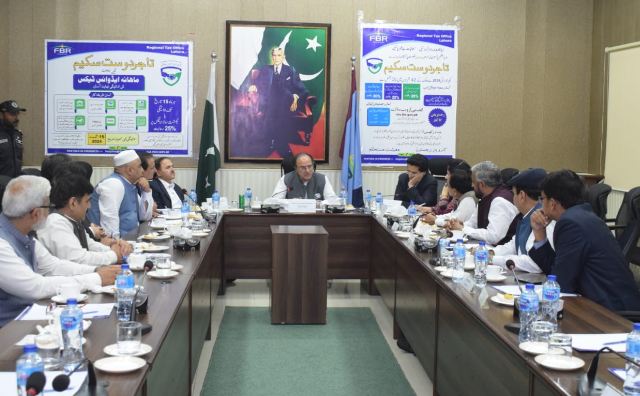
LAHORE, AUG 3 /DNA/ – Federal Minister of Finance and Revenue Senator Muhammad Aurangzeb, along with Minister of State for Finance and Revenue Ali Pervaiz Malik, visited the Regional Tax Office (RTO) Lahore, today. They were warmly received by Chief Coordinator Tajir Dost Scheme Mr. Naeem Mir, Member Operations Mir Badshah Khan Wazir, Chief Retailers Registration Nazia Zaib, Chief Commissioner RTO Lahore Mr. Ahmad Shuja Khan, and their teams, along with trade representatives. During visit, the Federal Minister inaugurated the Central Secretariat for Tajir Dost Scheme in Lahore. RTO Lahore provided a comprehensive briefing on the Scheme’s operations and impact.

The Finance Minister appreciated the performance of Tajir Dost Scheme in Lahore and stressed the importance of its effective implementation and the collection of advance taxes. The Federal Minister also engaged with trade representatives, listening to their suggestions on improving the Scheme. He instructed that these recommendations be implemented efficiently to enhance the Scheme’s effectiveness.

RTO Lahore currently holds the leading position in Pakistan with the highest number of trader registrations, totaling 24,814 till date.

CG Tariq calls for further strengthening Pak-US relations

CG Tariq calls for further strengthening Pak-US relations

The government supports Pakistani entrepreneurs by facilitating business deals and promoting business education to access US capital, Saqib Rafiq.

DNA

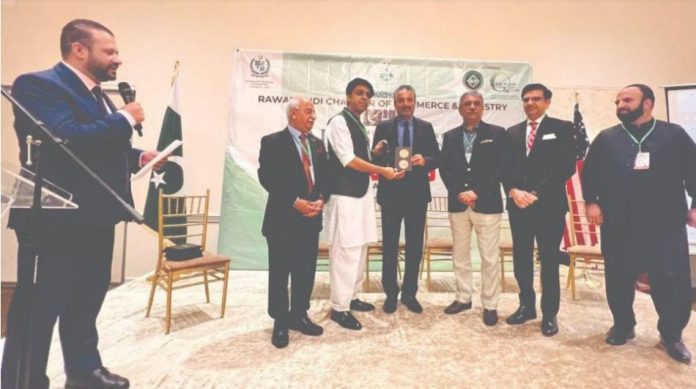
ISLAMABAD, AUG 3: Rawalpindi Chamber of Commerce and Industry in collaboration with Pak World Trade and Expo Center (Pvt.) Limited with the assistance of Consul General of Pakistan in Chicago organized the Pak America Business and Investment Opportunities Conference in the American city. It was held on July 30, 2024 in Chicago. Consul General of Pakistan in Chicago Tariq Karim inaugurated the conference.  Speaking at the event, Tariq Karim said that the United States is one of the countries that invest the most in Pakistan. Dekar helps Pakistani entrepreneurs, Pak World Trade and Expo Center (Pvt) Ltd CEO Khurshid Barlas, Fahad Barlas COO, J7 Group Chairman Maqbool Hussain and more than two hundred other Pakistani American and investor companies participated. Khurshid Barlas of And Expo Center (Pvt) Limited said that Pakistan’s prosperity is not only in Pakistan’s own interest but also in the interest of the region and the United States.  Trade and investment are the future of Pakistan-US relations. In the conference, proposals were presented regarding the promotion of Pakistan-US relations, trade and investment, and the problems faced by Pakistan were discussed. In the end Saqib Rafiq, President of Rawalpindi Chamber of Commerce and Industry presented the shield to Consul General of Pakistan Chicago Tariq Karim on this occasion Khurshid Birlas CEO of Pak World Trade and Expo Center (Pvt.) Ltd., Fahad Barlas COO, J7 Seven Group Chairman Maqbool Hussain is also present.

ATC sends Raoof Hasan on 14-day judicial remand

ATC sends Raoof Hasan on 14-day judicial remand

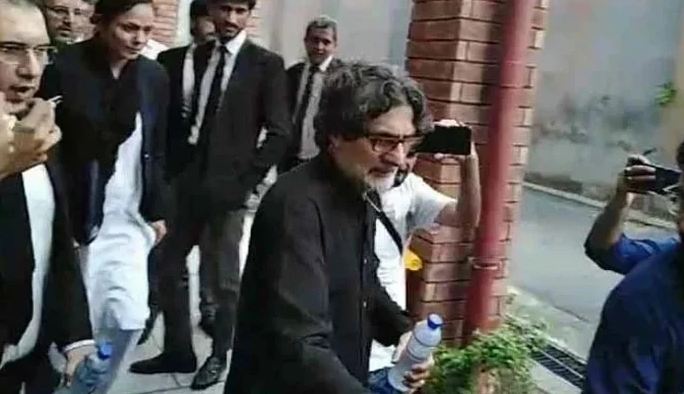
ISLAMABAD: An anti-terrorism court (ATC) in the federal capital sent Pakistan Tehreek-e-Insaf (PTI) Information Secretary Raoof Hasan on judicial remand for 14 days in a terrorism-related case on Saturday.

The PTI information secretary was arrested on July 31 in light of a statement of PTI International Media Coordinator Ahmed Janjua, who claimed that the former had given the latter money to incite terror.

ATC Judge Tahir Abbas Supra dismissed the plea seeking Hasan’s physical remand for seven days.

The PTI leader’s counsel Ali Bukhari appeared and presented his arguments in the court. He also filed a post-arrest bail for his client. Over which, the court issued notices for August 6.

Bukhari said he wanted to bring something to the court’s notice over decision of the previous hearing that details of Hasan’s bank accounts could be checked online as well.

The judge said he should have objected to the decision in the high court and not in the ATC. He also inquired if details of the PTI leader’s call data, bank transfer or meeting were obtained.

Currently, Hasan is also nominated in a case related to anti-state propaganda, but he has secured bail in it. However, since he’s on remand in the terrorism case, he will remain behind bars.

Stay Connected

64FansLike
60FollowersFollow

Latest Reviews

Exchange Rates

USD - United States Dollar
EUR
1.17
GBP
1.35
AUD
0.72
CAD
0.73