Home Blog Page 859

UAE Ambassador: The artificial rain project in Lahore has achieved unprecedented successes

UAE Ambassador: The artificial rain project in Lahore has achieved unprecedented successes

DNA

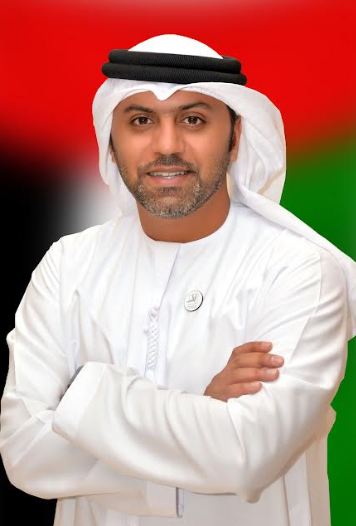
Islamabad: The Ambassador of the United Arab Emirates in Islamabad His Excellency Hamad Obaid Al Zaabi said that the fruits of the first artificial rain project of the UAE to mitigate the dangerous effects of the smog affecting Lahore have achieved successes and positive results so far and will continue in the coming weeks, Ambassador Al Zaabi said that the artificial rain project in Pakistan specifically in the Lahore city came under the direct patronage and supervision of His Highness Sheikh Mansour bin Zayed Al Nahyan, Vice President of the UAE, Deputy Prime Minister and  Minister of presidential court, and through this project unprecedented scientific successes were achieved.

The UAE ambassador spoke about the artificial rain project in Pakistan and said that it comes in a step to combat high levels of air pollution, as the residents of Lahore city witnessed the first artificial rain on 16 December, and will continue in coming week, the initiative which was conducted by the government of the United Arab Emirates in cooperation with the Federal government of Pakistan and the government of Punjab province aims to mitigate the dangerous effects of smog affecting the city and its population of more than 22 million people, at the same time artificial rain was implemented which covered 10 – 15 kilometers area in Lahore.

The Ambassador of the United Arab Emirates in Islamabad announced the success of the artificial rain experiment and said: “This plan was implemented precisely in specific areas of Lahore, and light rain fell in 10 targeted areas.” the cloud seeding process included the deployment of 48 flames to stimulate rain, Ambassador Al Zaabi stressed that the UAE’s support for the artificial rain project initiative is extremely important, as only water was used which does not pose any harm to health, he gave the example of Dubai and some American states that conducted rain seeding operations.

Ambassador Hamad Al Zaabi spoke about the UAE Research Program for Rain Enhancement Science and said that it is an international research initiative launched by His Highness Sheikh Mansour bin Zayed Al Nahyan, Vice President of the UAE, Deputy Prime Minister and Minister of presidential court in 2015 to develop rain enhancement research in the UAE and support research proposals and innovative technologies that contribute to addressing water scarcity issues in arid and semi-arid regions by providing a financial grant to selected teams of researchers and scientists.

He pointed out that the Emirates Research Program for Rain Enhancement Science selects every two years two of the most distinguished research projects in the field of rain enhancement from all over the world, and provides a financial grant of up to 1.5 million US dollars for each research project distributed over 3 years at a rate of 550 thousand dollars per year, Ambassador Hamad Al Zaabi said that the program has so far provided financial grants worth more than $18 million to implement 11 innovative research projects in the field of rain enhancement, these projects work to develop new sciences and technologies to support rain enhancement operations in the United Arab Emirates and also contribute for deepening global knowledge of rain enhancement science and technology.

The Ambassador spoke about artificial cloud seeding and said that it is a process of deliberate change in the weather, whereby clouds are stimulated to drop their hidden water or frozen snow over specific geographical areas through specific chemical or biological factors that are dropped into the cloud mass to increase the density of cloud and water vapor that later falls in the form of rain and snow, and the artificial cloud seeding is used for the following goals: 1- increasing rainfall in areas that do not witness much rainfall, 2- cleaning or cooling the air, 3- preventing storms and reducing hurricanes as a result of early rainfall, 4- reducing the heat of the sun by increasing the mass of clouds.

At the conclusion of his talk about the cooperation project between the UAE and Pakistan, Ambassador Al Zaabi said that the process of artificial rain seeding is carried out by planting clouds for condensation or catalysts for rainfall, as these catalysts are planted by aircraft or ground cannons using various materials such as dry ice, solid carbon dioxide, silver iodide, calcium chloride, sodium chloride, and water mist, and the process in which silver iodide is used to control the acceleration of the rainfall process is considered the most famous process used for artificial cloud seeding, as it works to increase the density of clouds above their normal rate which makes the ice crystals inside the clouds freeze and then fall due to their weight to the ground before the rising heat returns them near the surface to its liquid state again, and to enhance the guarantee of the success of the artificial cloud seeding process, several natural factors must be present that help in cloud seeding such as the presence of cumulus clouds, the presence of rising air, determining the appropriate time for cloud seeding, and knowing the appropriate amount of stimulating materials that must be injected into the clouds.
Empowering Abilities: DGSE Hosts Inspiring Program on Int’l Day of Persons with disabilities

Empowering Abilities: DGSE Hosts Inspiring Program on Int’l Day of Persons with disabilities

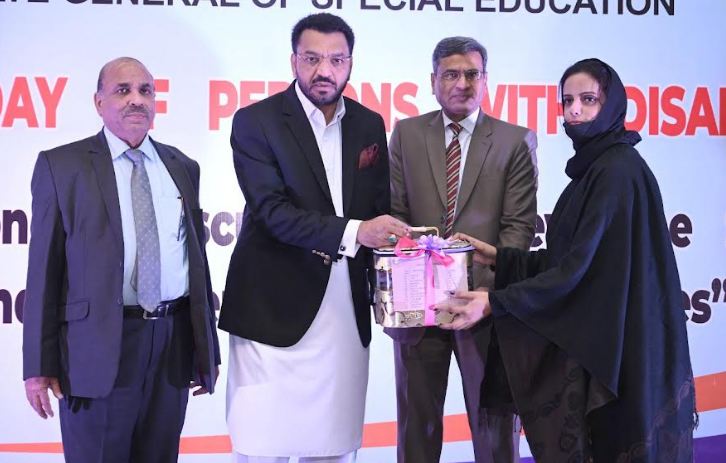
ISLAMABAD, 19 DEC /DNA/ – On the auspicious occasion of the International Day of Persons with Disabilities, the Directorate General of Special Education (DGSE) hosted a heartwarming program featuring Caretaker Federal Minister for Human Rights, Mr. Khalil George, as the esteemed Chief Guest.

The program was a testament to the extraordinary talents of special children from DGSE’s special education centers who took center stage with stirring performances on national songs and captivating tableau presentations. Their inspiring showcase left an indelible mark on the audience, highlighting the power of inclusivity and the unique abilities of every individual.

Addressing the gathering, Mr. Khalil George commended the exceptional talents and performances of the special students, emphasizing the importance of recognizing and nurturing the potential within every person, regardless of abilities. His encouraging words resonated with the spirit of the International Day of Persons with Disabilities.

The Director General of Special Education, Sheikh AzharSajjad delivered a warm welcome address, shedding light on the essential functions of DGSE in providing quality education and fostering an inclusive environment for individuals with diverse abilities.

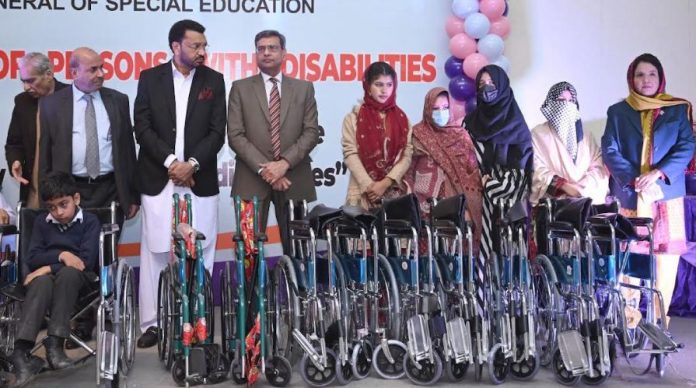
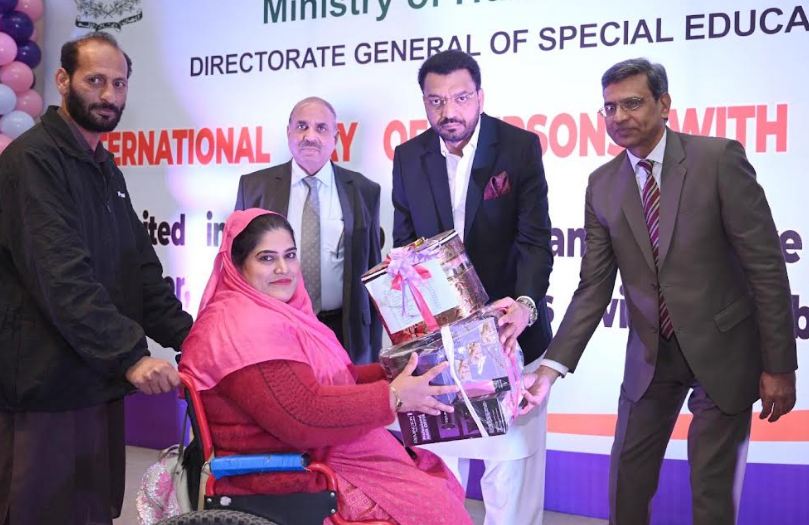
In a significant gesture towards empowerment, tool kits including mobile repairing kits, beautician kits, sewing machines and wheelchairs for self-employment and self-reliance were distributed among trainees with disabilities by the Chief Guest, Mr. Khalil George, the Director General, and the Country Director of CBM. This initiative aimed to equip individuals with the necessary tools to enhance their skills and pursue self-employment opportunities.

The event was graced by the presence of directors, deputy directors, dedicated teachers, proud parents of students, and representatives from NGOs and INGOs. Their collective presence underscored the collaborative effort needed to create a more inclusive and supportive society.

The Directorate General of Special Education remains committed to its mission of empowering individuals with disabilities, and this celebration on the International Day of Persons with Disabilities stands as a testament to the agency’s dedication to creating a world where everyone has the opportunity to thrive.

Uzbekistan-Qatar: on the way to steadily increasing interaction

Uzbekistan-Qatar: on the way to steadily increasing interaction

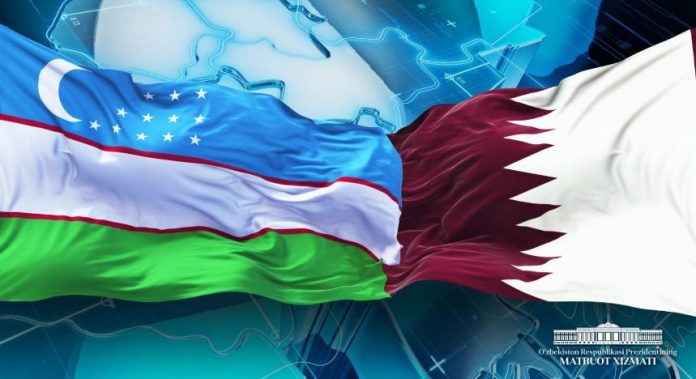
On December 19 at the invitation of President Shavkat Mirziyoyev Emir of Qatar Sheikh Tamim bin Hamad bin Khalifa Al-Thani will pay a visit to Uzbekistan.

The Emir of Qatar will participate in the ceremony of awarding the Sheikh Tamim bin Hamad Al-Thani International Award for outstanding achievements in the fight against corruption. It should be noted that this event is being held for the first time in the post-soviet space.

This visit will be the second visit of the Qatari leader to Uzbekistan this year and the third Uzbek-Qatari summit in the last six months. This fact, above all, testifies to the observed unprecedented dynamics in the development of political dialog aimed at the early expansion and strengthening of comprehensive cooperation for the benefit of the people of Uzbekistan and Qatar.

The first and historic state visit of the Emir of Qatar Sheikh Tamim bin Hamad bin Khalifa Al-Thani in June this year and the official visit of President Shavkat Mirziyoyev in October this year gave a powerful impetus to the development of bilateral relations established on November 27, 1997, and opened new prospects for mutually beneficial cooperation.

As a result, more than 24 bilateral documents aimed at further development and deepening of trade and economic, investment, cultural, humanitarian and other spheres of cooperation were signed, as well as agreements worth 12 billion dollars.

The development of such an active dialog is due to the high interest of the parties in expanding bilateral relations and strengthening regional interconnectedness between Central and Southeast Asia. The results of the summits of the Cooperation Council for the Arab States of the Gulf, the Organization of Islamic Cooperation, and the visits of our head of state to the Arab countries have also demonstrated it.

High-level relations are also characterized by active dynamics.

On 14-15 September 2022, Qatari Minister of State for Foreign Affairs Sultan Al-Murayhi visited Tashkent to attend the Shanghai Cooperation Organization (SCO) summit, where an agreement was signed on Qatar’s accession to the SCO as a dialogue partner.

The opening of the Qatari Embassy in Tashkent on May 7, 2023 contributed to the strengthening of diplomatic ties. A delegation headed by Qatar’s Minister of State for Foreign Affairs Sultan Al-Murayhi took part in the opening ceremony of the diplomatic mission, as well as the third round of political consultations between the foreign ministries of the two countries held on May 6-8

On March 4-6 this year, the Chairperson of the Senate of the Oliy Majlis Tanzila Narbayeva visited Doha to participate in the 5th UN Conference on Developing Countries. During the stay, the Uzbek parliamentary delegation held a meeting and negotiations with Chairman of the Qatar Advisory Council Hassan Al-Ghanim.

Uzbek Foreign Minister Bakhtiyor Saidov’s visit to Qatar on December 10-11 was successfully completed. Within the framework of the visit in Doha, negotiations were held with Prime Minister and Foreign Minister of Qatar Mohammed bin Abdulrahman bin Jassim Al-Thani, Chairman of the Board of Trustees of the Center for Rule of Law and Fight against Corruption Ali Bin Fetais Al-Marri, Chairman of the Board of Directors of the Chamber of Commerce and Industry Sheikh Khalifa bin Jassim bin Muhammad Al-Thani, Minister of Transportation Jassim bin Saif bin Ahmed Al Sulaiti, as well as Executive Director of the Islamic Bank Bassel Gamal. The Uzbek Foreign Minister participated in the 21st Doha Forum “Creating a Shared Future” and met with Chief Executive Officer of Qatar’s «Hassad Food» Company Ali Hilal Al Kuwari. The meetings discussed topical issues on the agenda of bilateral cooperation in political, trade and economic, cultural and humanitarian spheres.

The official opening ceremony of the Embassy of Uzbekistan in Qatar was held during the visit.

Uzbekistan considers Qatar as a promising economic partner in the Middle East. To date, the intensification of relations has entered the topical agenda of the two countries, which is due to mutual interest in realizing the huge untapped potential in this area.

That is why Qatar sent a representative delegation to the Tashkent Investment Forum held on April 26-27 this year, headed by Deputy Minister of Trade and Industry Sultan Al-Khatir and comprising heads of leading Qatari companies. At this stage, the agreements reached at the end of the forum on the implementation of major joint projects in the spheres of energy, transport, logistics, agriculture, labor relations and others.

On May 8-9, 2023, in turn, Minister of Investment, Industry and Trade of Uzbekistan Laziz Kudratov visited Doha, where he met with representatives of a number of ministries and leading companies of Qatar to discuss further prospects for expanding trade, economic and investment cooperation.

Today, a number of investment projects with the participation of Qatari companies are being implemented in Uzbekistan. One of them will be the launch in 2024 in Syrdarya region of a thermal power plant with a capacity of 1600 MW, the construction of which is being carried out by the Qatari company «Nebras Power» together with French and Japanese partners «EDF» and «Sojitz Corporation».

The projects planned for realization in Uzbekistan in cooperation with Qatari company «Al-Mirqab» were discussed during the visit of former Prime Minister of Qatar, Minister of Foreign Affairs Sheikh Hamad bin Jassim Al-Thani to our country in November this year.

Uzbekistan and Qatar are interested in the formation of the shortest, reliable and safe transport and logistics corridors connecting Central Asia with the gulf countries. Prospects of jointly promoting the realization of the strategic project to create the Trans-Afghan Railway Corridor are being discussed. This will contribute to a multiple increase in the volume of mutual trade, the indicators of which today do not correspond to the potential of our countries.

In this context, it is important to note that Qatar supports Uzbekistan’s efforts for a peaceful settlement in Afghanistan. Our country, in turn, fully supports Qatar’s actions to provide emergency humanitarian aid to the people of Afghanistan.

The cultural and humanitarian ties between our two countries are based on common spiritual and cultural values and traditions, as well as the sacred religion of Islam.

Qatar highly appreciates the contribution of prominent thinkers and scholars who lived and worked in the territory of modern Uzbekistan to the development of Islamic civilization and historical ties between the Arabian Peninsula and Maverannahr. This contributes to the further development of intercultural dialog and opens good prospects for interaction in the sphere of tourism, including pilgrimage tourism. Thus, since March 1, 2021, a 10-day visa-free regime has been introduced for Qatari citizens to enter Uzbekistan, and in June 2023 this period was extended to 30 days. On the basis of the signed intergovernmental agreement between the two countries air communication has been established

Cooperation is developing between the Centre for Islamic Civilization of Uzbekistan and the National Library of Qatar. Uzbek and Qatari scholars are conducting joint research on manuscripts on the history of Central Asia stored in the library, exchanging digital sources of works by Uzbek scholars and thinkers, and cooperating in the digitization and study of manuscripts.

The Days of Culture of Uzbekistan held in the capital of Qatar in the fall of 2022, which included concerts by the State Symphony Orchestra of Uzbekistan and an exhibition of folk arts and crafts, were warmly welcomed by the Qatari public.

The visits to Qatar in June and August this year by Uzbek delegations led by Uzbek Minister of Culture OzodbekNazarbekov and Deputy Minister of Higher Education, Science and Innovation ShakhloTurdikulova also confirmed the parties’ commitment to expanding cooperation in science, culture and education

In the field of sports, football, which is popular in both countries, continues to be a promising area of cooperation. In 2017, the Uzbekistan Football Association signed a Memorandum of Cooperation with the Qatar Football Association. In June 2021, Uzbekistan and Qatar signed a Cooperation Agreement on football development, solidarity, exchange of experience, organization of competitions, coaching education and safety of playing processes.

Thus, there is no exaggeration to say that today Uzbekistan and Qatar are aimed at steadily increasing the level of established dialog in all areas, and the upcoming visit of Emir of Qatar to our country will strengthen the foundation of bilateral relations to continue and build up mutually beneficial cooperation.

“Dunyo” IA

The Theory of Neorealism and U.S. Foreign Policy

The Theory of Neorealism and U.S. Foreign Policy

Dr. Muhammad Akram Zaheer

Neorealist theory is the simplest way to understand how countries interact. It’s like the basic starting point for studying how nations relate to each other. Almost every other theory in international relations refers back to neorealism to explain their ideas. Realism, which is the oldest way of thinking about international politics, goes way back to the time of Thucydides. But when we talk about realism in this context, we mean it as a theoretical part of international relations, not a philosophy of science. It is important to distinguish between general realist thinking and neorealist theory, especially since we are focusing on this theory. Neorealism is crucial because it shapes how we build theories and explain things in international relations. These theories play a big role in guiding the actions of countries, especially the United States, in different periods like after World War II, during the Cold War and now with emerging powers like China. In the past, figures like Hans Morgenthau and Henry Kissinger shaped American foreign policy based on realist ideas. Neorealism, developed later as a critique of early realism, has also been a significant influence, especially in the U.S. Many discussions about U.S. foreign policy, like the shift from multilateralism to unilateralism in the 1990s, can be understood better by considering neorealist views. Neorealist perspectives are not just theoretical; they help us grasp the thinking behind a lot of today’s global politics.

Realist thinking focusing on “political power” and the “national interest,” was central in international relations (IR) after World War II, especially during the Cold War. However, studies on International Organizations and conflict also played a significant role in IR since the 1950s. Realism dominated IR until the late 1950s and 1960s, when there was a shift towards more fundamental research.Comparative studies, using systematic comparison to explain international relations since the 1950s, and the application of game theory to Political Sciences/IR, especially since the 1960s, aimed to find scientific explanations for international relations. In the U.S., decision-making approaches to IR became dominant, focusing on foreign policy studies in the early 1960s. Kenneth Waltz argued against theories focusing on foreign policy, claiming a lack of a genuine international political theory in the discipline. He proposed a system-level theory of IR, developing it in the 1950s and formalizing it in his 1979 book “Theory of International Politics.” Waltz believed that international conflict lie at the systemic level, not in individual or state behavior. He aimed to create a general theory that could explain recurrent patterns in international politics, particularly cycles of war and peace and the formation of balances of power among great powers.

Waltz’s quest for the right theory of international politics set the stage for the development of neorealist theory as a system theory. Neorealism, evolving into a balance of power theory, clarifies the implications of the system-level theory for real-world international politics. The Cold War’s bipolar system was the setting when the Theory of International Politics was written. Waltz thought the Cold War was surprisingly stable, even though the superpowers had tense moments. Neorealist theory focuses on how the shift from a multipolar world before 1945 to a bipolar one during the Cold War, and later to a new system after the Cold War, affects the chances of peace and stability. The theory also needs to be understood in the context of the declining power of the U.S. compared to the economic growth of Europe and Japan after the 1970s.

          In this system, where power is spread out among countries, they act in a way that tries to find a balance of power. They might do this by building up their military or making alliances with other countries. This idea mostly applies to the big, powerful countries. Neorealism focuses on these powerful countries because they have the most impact on how things work internationally.Less powerful countries usually join the weaker side in conflicts, not because they want to be the strongest, but because they want to balance power. If they wanted to be the strongest, they would join the stronger side. This approach is based on the belief that in international politics, the structure of the system pushes countries to follow a practical and realistic approach.The system encourages countries to adopt a practical approach called “Realpolitik,” where the methods and reasons for foreign policy are influenced by the system’s structure. This structural influence explains why certain methods are used repeatedly despite differences in leaders and countries. The idea is that the structure of the international system guides a certain type of politics where a country’s interests are the main reason for its actions.The success of a country, defined as preserving and strengthening itself, is the ultimate test of its policies. A balance-of-power theory, which builds on system theory, predicts that countries will behave in ways that lead to balances of power. The dynamics of the system limit the freedom of individual countries, making their behavior and the outcomes more predictable.Under the structural constraints of international politics, countries tend to act in a way that aims for a balance of power. This balance is the result of countries’ actions and interactions, shaped by the constraints of the system.In essence, international politics, according to neorealism, is a continuous cycle of war and peace driven by the idea of balancing power.

Pakistan issues visas to Indian Hindu Pilgrims for visit to Katas Raj, Chakwal

Pakistan

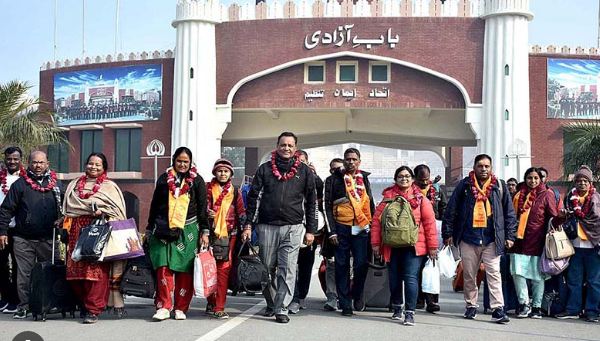
ISLAMABAD: /DNA/ – Pakistan High Commission, New Delhi has issued 62 visas to a group of Indian Hindu pilgrims for their visit to Shree Katas Raj Temples, also known as Qila Katas, in Chakwal district of Punjab from 19-25 December 2023.

Expressing his views on the occasion, Charge d’ Affaires, Mr. Aizaz Khan, wished the pilgrims a safe journey and memorable stay in Pakistan.

Under the Pakistan-India Protocol on Visits to Religious Shrines of 1974, each year thousands of Sikh and Hindu pilgrims from India visit Pakistan to attend various religious festivals/occasions. The issuance of pilgrimage visas to them is in line with the Government of Pakistan’s efforts for facilitating visits to religious shrines and promoting interfaith harmony.

Pakistan and Norway celebrate 75 years of diplomatic relations

Pakistan

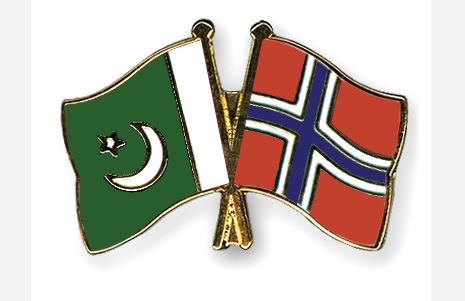
Today marks the 75th anniversary of the establishment of diplomatic relations between Pakistan and Norway.

ISLAMABAD, 18 DEC: /DNA/ – Pakistan and Norway have continued to grow over the past 75 years on the basis of mutual respect and shared values. The two countries enjoy a mutually beneficial partnership in political, economic, academic, environmental, social and cultural domains. There is a common desire to promote regional and global peace, security and sustainable development.

Pakistan-Norway relations are marked by high-level exchanges and contacts with frequent meetings at the leadership level. The two countries also actively collaborate in various multilateral fora.

The bilateral economic relations between Pakistan and Norway are robust and growing with sizeable trade in multiple product lines and substantial investments of leading Norwegian companies in Pakistan including Telenor Group, Scatec ASA and Jotun Paints. Cooperation in the fields of IT & ITES, ship-breaking and ship-recycling has recently emerged with great promise.

Pakistan appreciates Norway’s steady and generous development assistance in sustainable development including SDGs, climate action and renewable energy and its solidarity during times of natural disasters and calamities. Following last year’s floods, Norway provided humanitarian assistance of 227 million NOK to Pakistan. NORPART programme of Norway’s development agency Norad has helped advance bilateral academic cooperation with enhanced student mobility and curriculum development programmes.

Pakistani-origin Norwegians are the most vital link between Pakistan and Norway. Pakistani diaspora that first arrived in Norway in early 1970s is today among the largest immigrant groups in Norway. They are a diverse multi-generational group that contributes in all walks of life including politics, liberal arts, business, education, science, research, medicine, healthcare, law, consultancy & engineering. As a country of origin, Pakistan takes pride in their socio-economic contribution in the country of their choice.

As we celebrate an important milestone in Pakistan-Norway relations, Pakistan strongly believes that friendship and cooperation between the two countries would continue to grow and flourish in the years to come.

Ambassador Hails Approval: Ethiopia-Pakistan trade pact signals growth opportunities

Ambassador Hails Approval: Ethiopia-Pakistan trade pact signals growth opportunities

Ethiopia’s Parliament ratifies bilateral trade agreement with Pakistan

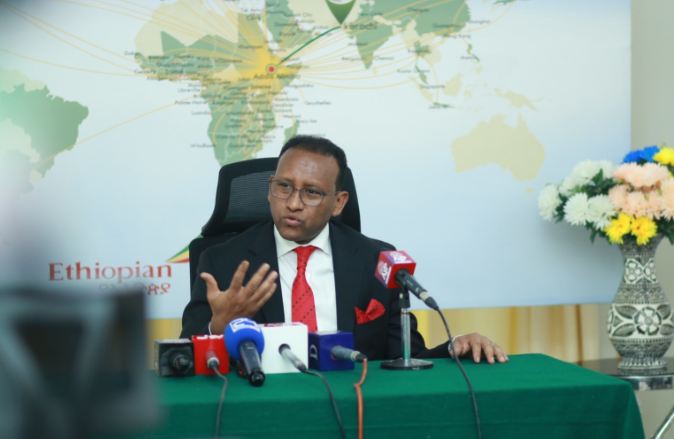
ISLAMABAD, DEC 18 /DNA/ – The Embassy of the Federal Democratic Republic of Ethiopia (FDRE) in the Islamic Republic of Pakistan is pleased to announce that the House of the Peoples Representatives of FDRE has unanimously approved the bilateral trade agreement signed by the two countries on February 14, 2023 to boost bilateral trade.

The trade agreement was submitted by the Standing Committee of the House on Trade and Tourism to the Ethiopian Parliament for approval on the 8th regular meeting of the 3rd year of the House of the Peoples Representatives held the other day.

The bilateral trade agreement is aimed at boosting trade cooperation between the two countries for further strengthening the economic and commercial relations between Ethiopia and Pakistan.

H.E. Jemal Beker Abdula, Ambassador Extraordinary and Plenipotentiary of the FDRE in Pakistan, described approval of the agreement a major breakthrough in the bilateral relations of the two countries.

He said the landmark agreement would give a major boost to the bilateral trade that currently stands at over 80 million USD.  It would pave the way for establishment of joint action committee on trade and establishment of strong institutional linkages between the two countries, he added.

He congratulated the business community of Ethiopia and Pakistan over the signing of the agreement.

The Ambassador said it was a welcoming news for business community of both the countries who had already explored each other lucrative markets through delegation exchange in the current year.

The new year will open a new chapter in the history of bilateral trade and hopefully, bolster business and trade activity between the two countries, he said, while recalling visit of over 70 businessmen and investors to Ethiopia in March and trip of over 50 Ethiopian businessmen to Pakistan in May this year.

These developments coupled with commencement of the Ethiopian Airlines set the stage for the bilateral relations of Ethiopia and Pakistan to flourish and thrive in the changing global dynamism, the Ambassador noted.

Chairman Senate pens heartfelt condolences in Kuwait Embassy’s memorial book

Chairman Senate pens heartfelt condolences in Kuwait Embassy's memorial book

Chairman Senate leads delegation to Kuwait Embassy, extends condolences on Emir’s Passing

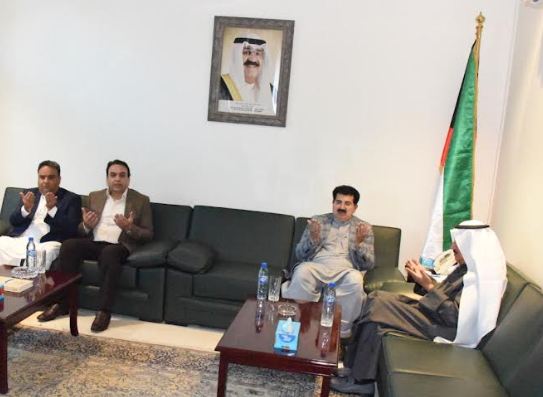
ISLAMABAD, Dec 18: /DNA/ – Today, a delegation led by Chairman Senate Muhammad Sadiq Sanjrani paid a visit to the Kuwait Embassy in Islamabad to convey heartfelt condolences on the passing of the esteemed Emir Sheikh Nawaf Al-Ahmad Al-Jaber Al-Sabah.

The delegation, comprising Senators Naseebullah Bazai, Mohammad Abdul Qadir, and Danesh Kumar, led by Chairman Senate expressed deep sorrow and solidarity with the Kuwaiti Ambassador, over the great loss of the Emir of Kuwait. As a gesture of respect, Chairman Senate Muhammad Sadiq Sanjrani penned poignant condolence remarks in the memorial book dedicated to guests, underscoring the significant loss felt not only by Kuwait’s royal family but also resonating profoundly with the people of Pakistan.

“In the demise of Emir Sheikh Nawaf Al-Ahmad Al-Jaber Al-Sabah, we have lost a true friend and a dynamic leader,” Chairman Senate remarked. “His personal commitment to regional stability, global development, and his role in fostering international harmony shall be remembered and cherished for generations to come”.

Sanjrani further conveyed his heartfelt condolences, sharing in the grief of Kuwait and its people during this difficult time. “May Allah grant forgiveness and exalt the late Sheikh Nawaf Al-Ahmad Al-Jaber Al-Sabah,” he added.

The Chairman’s visit stands as a testament to the enduring bond between Pakistan and Kuwait, showcasing solidarity and sympathy during this period of mourning.

Pakistan needs a charter against corruption

Comment

Ansar M Bhatti

The impending elections have come into focus following a decisive move by the Supreme Court, characterized as a ‘commando action,’ wherein it suspended the Lahore High Court’s single-bench verdict concerning the appointment of Returning Officers. The Pakistan Tehreek-e-Insaf (PTI) legal team had approached the Lahore High Court, advocating for the appointment of Returning Officers from the Judiciary instead of the district administration. Even to the PTI’s surprise, the LHC judge not only suspended the Election Commission’s notification but also constituted a larger bench to delve deeper into the case. The CJP Faez Isa was very much within his rights when he questioned the timing and the haste in which the judge had passed the order.

“It is truly remarkable that, initially, the judge issued an order without taking into account the verdict of the apex court regarding the February 8 elections. Subsequently, he recommended the Chief Justice of the Lahore High Court (LHC) to form a larger bench, and remarkably, assumed the role of the head of the five-member bench himself’, as noted by the Chief Justice of Pakistan (CJP). In response, the apex court promptly suspended the LHC order, allowing the Election Commission of Pakistan (ECP) to announce the election schedule on the very same day. Despite initial reluctance, the ECP had no choice but to comply with the Supreme Court’s directives, leading to the announcement of the schedule on the midnight of December 16, 2023.”

As the stage is meticulously set for the upcoming elections, political parties are poised to heighten their election campaigns. The PPP has already launched its extensive mass contact drive, and the PML N is anticipated to follow suit once it concludes the candidate selection process. Notably, political leaders across various parties have echoed their support for a Charter of Economy. While this proposition has been deliberated in the past, tangible progress has remained elusive. The glaring reason behind this stagnation is evident—the pressing need for a singular charter, and that is the Charter against Corruption. Ostensibly, corruption has wrought havoc on the entire system, necessitating urgent and concerted efforts for its eradication.

Amnesty International, in its latest report, has unequivocally labeled corruption as the foremost challenge confronting Pakistan. The comprehensive assessment conducted by the organization scrutinized eight key departments, revealing a distressing reality where the police emerged as the most corrupt entity, closely followed by the judiciary at the second position. This corroborates my steadfast belief that corruption stands as the paramount issue plaguing Pakistan.

Notably, this isn’t the first time that Amnesty International has brought to light the pervasive issue of corruption within the country. A previous survey conducted by the organization underscored the disconcerting fact that even institutions considered ‘prestigious’ were not immune to corrupt practices. It is disheartening to observe that despite the consistent release of such damning reports, little to no concrete actions are taken to address the highlighted concerns.

This cycle of revelation without subsequent remedial action raises serious questions about the commitment of authorities to root out corruption from the system. For any meaningful change to transpire, it is imperative that these reports serve as catalysts for genuine reform and stringent measures against corruption, fostering a system where accountability and transparency are non-negotiable principles. The gravity of the situation demands a collective and sustained effort to dismantle the entrenched culture of corruption, ensuring that these reports not only serve as documentation of the problem but as blueprints for a corruption-free future for Pakistan.

Intriguingly, no political party has ever endeavored earnestly to tackle this menace head-on. Interestingly, all prime ministers starting from 1988 till date have never completed their five-year term. Every time they were ousted from power on charges of corruption.

The military regimes, too, have faced persistent allegations of corruption. During the 11-year rule of Gen Zia Ul Haq from 1979 to 1988, a pervasive atmosphere of financial gain enveloped those in power amid the Afghan Jihad. This period coincided with a surge in sectarian violence in Pakistan, reaching its zenith. Tragically, the nation witnessed hundreds of thousands of casualties in the brutal clashes between Shia and Sunni factions. The intertwining of political and military interests during this era not only fueled corruption but also exacerbated social tensions, leaving a lasting impact on the fabric of Pakistani society.

Benazir Bhutto assumed power following the demise of General Zia in a plane crash, winning the elections that ensued. However, her government faced a tumultuous tenure, marked by allegations of extensive corruption among high-ranking officials. This led to her removal from office within a relatively short span of two and a half years. The subsequent administrations, represented by both the PML N and PPP, similarly faced premature dismissals due to comparable charges of corruption at the highest echelons of power. This pattern of governance challenges highlighted the persistent issue of corruption within the political landscape, shaping the course of successive governments in Pakistan.

The takeover by General Pervez Musharraf in 1999 was met with mixed reactions, despite Nawaz Sharif’s two-thirds majority in Parliament. The Nawaz-Military face-off was driven by various factors, and the aftermath of his ouster surprised Nawaz Sharif, who acknowledged the unexpected response from the public. People’s sentiments seemed to shift unexpectedly; while many expressed support for him verbally, the reality was different.

Even Nawaz Sharif himself was taken aback by the lack of tangible support when he was removed. Supporters who had initially encouraged him to proceed viz a viz his estranged relations with the military, were nowhere to be found when the time came. The disconnect between the verbal assurances and the actual support on the ground left Nawaz Sharif in a challenging situation. The obvious reason perhaps was his disconnect with his electorates and so is the case with other political parties.

The PTI, however, presented a unique case. Imran Khan’s removal from power triggered an immediate and impassioned public response, underscoring the widespread dissatisfaction with the manner in which he was ousted, despite his government’s lackluster performance. His political opponents employed a variety of tactics, yet failed to diminish his popularity. This resilience can be attributed to Imran Khan’s decision to confront the situation head-on rather than fleeing the country after striking deals as other leaders did upon their removal from the office.

When it comes to addressing corruption, Imran Khan’s tenure is unfortunately not an exception. Regrettably, corruption witnessed a significant surge during his time in office. Despite harboring a sincere desire to eradicate corruption from Pakistan, Imran Khan faced challenges that hindered effective action in this regard.

The current scenario, as reflected in the statements and speeches of political leaders during public rallies, is disheartening. Sadly, it appears that none of them is genuinely committed to addressing the menace of corruption once in power. If this trend persists, it is inevitable that our nation will face an uncertain future, plagued by ongoing economic distress that will disproportionately impact the well-being of its citizens.

Safety Measures Under Scrutiny: CM directs SOP compliance in marriage halls

Safety Measures Under Scrutiny: CM directs SOP compliance in marriage halls

LAHORE, Dec 17: Chief Minister Punjab Mohsin Naqvi has taken notice of the death of four persons as a result of a firing incident outside a marriage hall in Baghbanpura. CM has sought a report from the Inspector General of Police in this regard.

Mohsin Naqvi has expressed his heartfelt sympathy and condolence with the family members of the slain. CM directed to ensure provision of justice to the grief-stricken families along with providing best treatment facilities to the injured. CM has ordered the relevant officials to ensure observance of SOPs in the marriage halls.

Stay Connected

64FansLike
60FollowersFollow

Latest Reviews

Exchange Rates

USD - United States Dollar
EUR
1.16
GBP
1.34
AUD
0.67
CAD
0.72