Home Blog Page 858

Blast at ex-CJP Saqib Nisar house

Blast at ex-CJP Saqib Nisar house

DNA

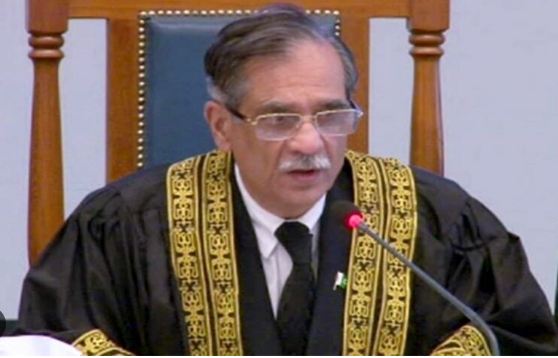
LAHORE: A minor explosion rattled the residence of the former Chief Justice of Pakistan, Saqib Nisar. The incident occurred within the confines of the house’s garage, resulting in minor injuries to two police officers present at the scene.

Preliminary reports suggest that two individuals on motorcycles deliberately placed an explosive device in the garage of the ex-CJP’s residence before making a hasty getaway. As a consequence, some vehicles stored in the garage sustained partial damage. Authorities are currently investigating the incident to determine the motives and identity of the perpetrators.

Diplomatic Resolve: Pakistan, Iran presidents seek end to Gaza violence

Diplomatic Resolve: Pakistan, Iran presidents seek end to Gaza violence

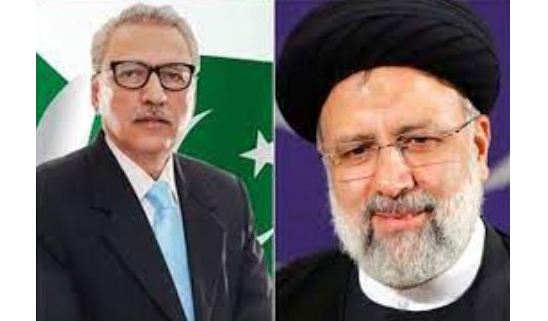
ISLAMABAD, DEC 20 /DNA/ – In a telephone call today that lasted almost 45 minutes, President Dr. Arif Alvi of Pakistan and President Ebrahim Raisi of Iran underscored the need for coordinated efforts by the Islamic countries to bring an end to the ongoing massacre and crimes against humanity in Gaza.

President Dr. Arif Alvi voiced deep concern over the dire situation in the occupied Palestine including Gaza as a result of ongoing Israeli aggression and occupation. The President regretted that despite the deaths of over 19,000 Palestinians including women and children, the UN Security Council has failed to impose a ceasefire and bring an end to the unspeakable
Israeli atrocities.

The President reiterated that a just solution to the Palestinian question based on an independent and contiguous Palestinian State with Al-Quds-Al-Sharif as capital was critical for lasting peace in the Middle East.

The President reaffirmed Pakistan’s support to all diplomatic initiatives to this end and appreciated Iran’s concerns and initiatives about the ongoing situation. He also appreciated the Iranian leadership for its principled stance on the Jammu and Kashmir dispute and its support to the Palestinian cause.

The President conveyed his heartfelt condolences to the government and brotherly people of Iran over the heinous terrorist attack on an Iranian police station in Siestan-Baluchistan on 15 December, 2023. He expressed Pakistan’s resolve to work with Iran to combat terrorism.

The two leaders discussed bilateral economic cooperation. President Alvi termed the joint inauguration of Mand-Pishin Border Sustenance Market place and Gabd-Polan Electricity Transmission Line as tangible developments that would further strengthen bilateral ties between the two brotherly countries.

The two leaders agreed that Pakistan and Iran were brotherly Islamic countries, sharing the same culture, religion and history. They agreed to work together for further improving economic, trade and cultural relations between the two brotherly countries.

PTI for avoiding any overt, covert bid to delay polls for a day

PTI for avoiding any overt

Lawyers bodies’ demands a testament of PTI’s stance regarding ECP, CEC: PTI spokesperson

Advises civil society, lawyers organizations to focus energies to ensure free polls on Feb 8

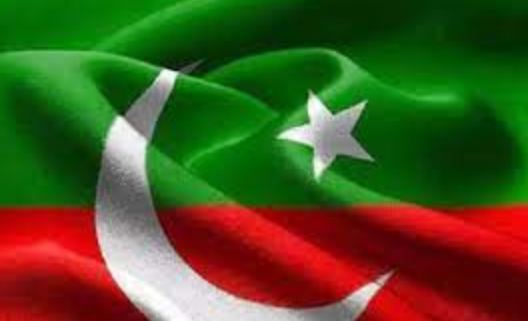
ISLAMABAD, DEC 20 /DNA/ – Pakistan Tehreek-e-Insaf (PTI) spokesperson stressed the need for avoiding any overt or covert attempts to sabotage the scheduled general elections, saying that Bar Councils and Bar Associations’ declarations supported and validated the long-standing position of PTI regarding the Election Commission of Pakistan and Chief Election Commissioner.

However, he added that the party would not tolerate any bid to delay the long-awaited general elections even for a single day beyond the fixed February 8, 2024 date.

In his reaction to the statements of Bar Councils and Bar Associations raising questions about the impartiality of the CEC, PTI spokesperson said that most of the contents of their declarations fully supported and validated the stance of PTI pertaining to the CEC.

He contended that PTI had been highlighting the unconstitutional and illegal decisions of the CEC during the last four years in general and the last two years in particular.

PTI spokesperson stated that PTI’s stance on the issues ranging from the appointments of members in the ECP to the biases of the CEC and discriminatory actions by the ECP was very clear and unambiguous from day one.

He went on to say that Senator Ejaz Ahmed Chaudhary’s pending reference in the Supreme Judicial Council against the CEC was a clear proof of PTI stance’s stand against him.

PTI spokesperson recalled that after the dissolution of the Assemblies of Punjab and Khyber Pakhtunkhwa (KP), PTI had been the fiercest critic of all attempts to delay the polls from the constitutionally prescribed time limits in both provinces.
He stated that PTI was also taking the lead role in resisting the electoral watchdog’s strategy to avoid holding elections within the constitutionally mandated timeframe of 90 days.

PTI spokesperson emphasized that during the past 20 months, PTI had been inviting lawyers’ organizations and councils to join hands with PTI to resist the unconstitutional, illegal and undemocratic agenda of the ECP.

He contended that despite the entire history of the biased role of the electoral body, especially of the CEC, PTI was not in favor of even one day’s delay in the polls set for February 8, 2024.

PTI spokesperson made it clear that the interest of the country and the nation lie in the free, fair and transparent elections, which was not visible in the present of the incumbent CEC.

However, he suggested that the civil society, especially the lawyers’ organizations, should focus their energies on achieving the main objective to ensure free and transparent elections on February 8.
PTI spokesperson advised that the CEC should ensure fulfillment of his constitutional duty to mop the stains on the commission by conducting free, fair and transparent elections by abandoning the approach of deviating from the constitution.

PRCS organizes blood donation camp at Turkish Embassy 

PRCS organizes blood donation camp at Turkish Embassy 

DNA

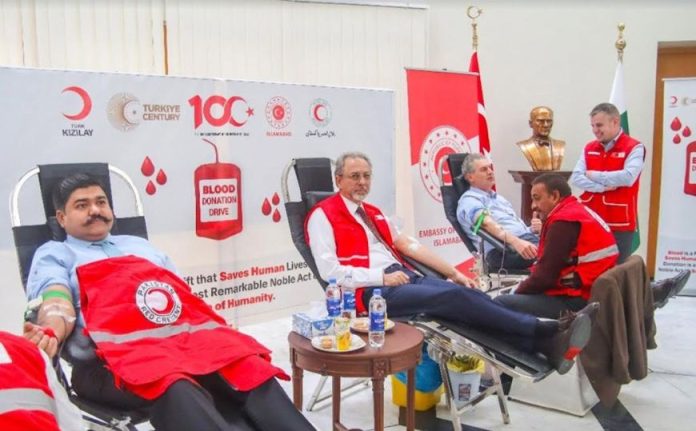
ISLAMABAD, DEC 20 /DNA/ – Pakistan Red Crescent Society in collaboration with Turkish Red Crescent Society organized Blood Donation Drive at the Turkish Embassy here on Wednesday. The event took place in the beautifully decorated hall at the Embassy of Turkiye and witnessed an enthusiastic response, with numerous Turkish individuals from diverse walks of life coming together to contribute to this noble cause. Diplomats, representatives from PRCS, TRC, the International Federation of Red Cross and Red Crescent Societies (IFRC), the International Committee of the Red Cross (ICRC) in Pakistan, and volunteers participated in the event, generously donating blood at the camp. Notably, the occasion also commemorated the 76th Foundation Day of PRCS. 

Chairman PRCS Sardar Shahid Ahmed Laghari, His Excellency Dr. Mehmet Paçaci (Turkish Ambassador to Pakistan), Dr. Maen Khreasat, and the Ambassador of the Kingdom of Jordan in Pakistan were among the dignitaries who contributed to this blood donation initiative. A total of 36 individuals donated blood during the drive, expected to yield red blood cells, plasma, and FFPs, ultimately benefiting 108 people. 

Speaking on this occasion, Chairman PRCS, Sardar Shahid Ahmed Laghari, emphasized the significance of saving lives through blood donation and highlighted the crucial role regular blood donations play in assisting patients in need. He underscored the importance of the 76th Foundation Day of PRCS, an organization dedicated to aiding communities and alleviating the plight of the vulnerable in Pakistan since its establishment in 1947. Chairman Laghari urged people, particularly the youth, to actively participate in blood donation to make a difference. 

Dr. Mehmet Paçaci, Turkish Ambassador to Pakistan, expressed appreciation for everyone who contributed to the success of the event. He reiterated the commitment to initiatives supporting the well-being and health of individuals in Pakistan and beyond, while also extending congratulations to PRCS on its 76th Foundation Day. 

Mr. Ergest LIMKA, Head of Delegation of TRC, extended gratitude to all donors, emphasizing the powerful impact of blood donation in saving lives and serving humanity. 

Piwi Ophoff, Head of Country Delegation, IFRC in Pakistan, commended PRCS on its 76th Foundation Day and the organization of the blood donation drive. He acknowledged PRCS’s commendable efforts in rescue and relief, blood donation initiatives, health and WASH activities, volunteerism, and climate action, pledging IFRC’s steadfast support for PRCS in achieving its objectives for a sustainable future. 

The Pakistan Red Crescent Regional Blood Donor Centre, renowned for its responsible supply of safe and high-quality blood to the community, operates under a safe blood program that upholds the principles of altruism and voluntary, non-remunerated blood donation. 

The Embassy of Turkiye expressed appreciation for everyone contributing to the event’s success and reiterated its commitment to initiatives promoting the well-being and health of individuals in Pakistan and beyond. 

Elections 2024: Nomination papers submission process kicks off

Elections 2024: Nomination papers submission process kicks off

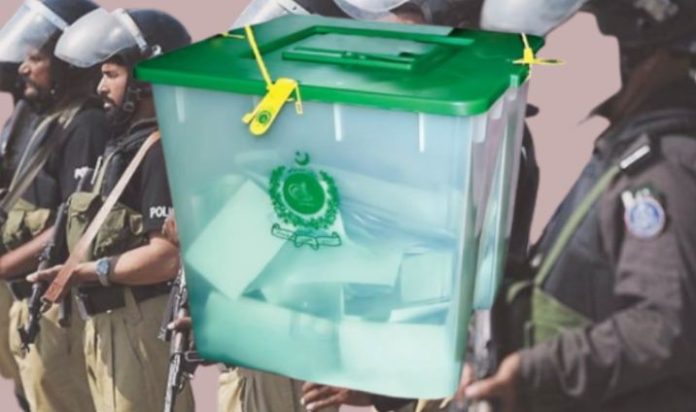
ISLAMABAD, DEC 20 /DNA/ – The process of submitting nomination papers to participate in the general elections 2024 has started from Wednesday.

As per the ECP schedule, candidates could get and submit the nomination papers till 4:30 pm December 22.

The preliminary list of candidates will be released on December 23 while scrutiny of nomination papers will be held from 24th to 30th December.

As per the schedule, electoral symbols will be allotted to the candidates on January 13 and polling for the general elections will be held on February 8.

The Election Commission of Pakistan (ECP) Tuesday issued guidelines for candidates to submit nomination papers.

The ECP said that nomination papers can be submitted from December 20 to 22.

The fee for obtaining the nomination papers is fixed at Rs.100.

A candidate can submit a maximum of five nomination papers with different endorsers.

The fee for the candidate of the National Assembly seat is Rs30,000 (non-refundable) while the fee for the candidate of the Provincial Assembly seat is Rs20,000 (non-refundable).

The candidate shall attach the income tax return documents of the last three years with the nomination papers.

The basic qualification for the candidate is to be a citizen of Pakistan and not less than 25 years of age.

As per ECP, contestants for National Assembly seats must be voters of any place in Pakistan.

Punjab Election Commissioner Saeed Gul talking to the media person said that today is the first day to receive and submit nomination papers and arrangements have been made throughout Punjab.

Saeed Gul said returning officers have also been appointed for the seats reserved for women.

Sharing an update about the security he said that Punjab’s top police officer—Inspector General of Police (IGP)—has assured security while other security agencies will also be with the ECP to ensure the security arrangements.

Lahore

Nomination papers for 14 seats of the National Assembly and 30 seats of the provincial Assembly have been kicked off as 44 returning officers were appointed in Lahore while 88 Assistant Returning Officers are performing duties in the provincial capital Lahore.

Karachi

The first phase of general elections has been kicked off across the country as nomination papers will be submitted for 69 constituencies of the NA and PA while nomination papers will be submitted to the concerned Retraining Officer (RO). There are 22 constituencies of the NA and 47 constituencies of the PA in Karachi.

Islamabad

The phase of submission of nomination papers of candidates has also started in Islamabad as nominations will be received from 8:30 AM to 4:30 PM.

So far, 41 nomination papers have been issued from NA constituencies NA-47, NA-38 to NA-48 received nomination papers from the RO office. SAMAA TV reported 30 more papers released from the office of the Returning Officer (RO) of Constituency NA-47.

A total of 42 election forms have been issued for NA-47 while a total of 65 nomination papers have been issued for NA-48.

Rawalpindi

Most of the candidates got the papers through their representatives including Engineer-uz-Islam of PML-N and Naeem Ejaz and Ajmal Sabir of the PTI.

PML-N disgruntled leader Chaudhry Nisar also received nomination papers through a representative while Rashid Shafiq also filed their nomination papers.

Awami Muslim League supremo Sheikh Rasheed and Rashid Shafique took the papers for NA-55 and NA-56.

Multan

PPP leader and ex-PM Yousaf Raza Gilani has received nomination papers for NA 148 while candidate Tariq Rasheed has received nomination papers from NA-149.

Kotri

Malik Asad Iskandar and Iskandar Shoro of the People’s Party received nomination forms from PS-78 while PPP leader Sikandar Ali Rahputo, Sikandar Shuro, and Malik Genghis Khan received nomination forms for the NA seats.

Khairpur

Pakistan People’s Party (PPP) Nafisa Shah Jilani, and Nawab Wasan Fida Wasan received nomination papers forms from NA-202.

Former chief minister Syed Ghouts Ali Shah also received a nomination form from NA-202

Khairpur

Pakistan People’s Party (PPP) leaders Nafisa Shah Jilani, and Nawab Wasan Fida Wasan received nomination forms from NA-202 including former chief minister Syed Ghouts Ali Shah.

Gujranwala

Former federal minister Khurram Dastgir received nomination papers via representative received documents from the Returning Officer for NA-78.

Obaro

Pakistan People’s Party (PPP) leader and senator Jam Mehtab Hussain Khan received the forms from PS-18 while former MPA and PPP leader Shehrir Khan Sher also received the form from PS-18.

JUI’s Nasir Mehmood Soomro also wanted to contest elections from PS-18.

Chaman

Chaman ARO said collection of the nomination papers for NA-266 and PB-51 continues while so far many candidates have received the forms nomination forms could be received and submitted by December 22.

Sukkur

PPP leader Khursheed Shah received the application form from NA-201 while Syed Farrukh Shah, son of Khurshid Shah, received the form from PS-24 and Mir Mehr has received the application form for PS-25 and advocate Sikandar Juni of JUI-F received form for NA-200 and PS-25.

Lodhran

Istehkam-e-Pakistan Party (IPP) Jahangir Khan Tareen’s daughter Meher Khan Tareen will also announced the elections and received nomination papers for NA-155 Lodhran and PP-227.

Meher Khan Tareen’s nomination papers were received by Jahangir Tareen’s legal team.

Meher Khan Tareen will be covering candidate of the Jahangir Khan Tareen. Jahangir Tareen’s final decision to contest the election from NA-155

Jacobabad

Former federal minister Mian Soomron received nomination papers from NA-190.

Kandhkot

PPP leader Ehsanur Rehman Mazari received nomination papers for NA-191 Khasmore while JUIF’s Shah Zain Bajarani received nomination papers from NA-191.

PPP leader Meer Abad Khan took nomination papers from PS-S5 Kandhkot while Hafiz Rabnawaz Chachar of JUIF wanted to contest from PS-S5 and PPP leader Mir Mehboob Ali Bajarani received nomination papers from PS-6 Tangwani.

Jamshoro

Former chief minister Murad Ali Shah received nomination papers for PS-77 Sehwan while exo-MNA Sikandar Rahputo has received nomination papers for NA-226 Jamshoro while Malik Asad Sikandar and Dr Sikandar Shoro obtained papers on PS-78 Kotri.

Larkana

Pakistan People’s Party (PPP) Bilawal Bhutto Zardari received a nomination form for NA-194.

Faisalabad

The process of receiving nomination papers for the Faisalabad General Elections has been kicked off. PMLN candidate Ali Akhtar Virk received nomination papers for NA-99 while PMLN senior leader Rana Sanaullah received papers from NA-100.

Former federal minister Abid Sher Ali received papers from NA-102

Sialkot

PML-N senior leader Khawaja Asif received nomination papers from a national and provincial assembly while Khawaja Asif will contest from NA-71 and PP-46 and PP-47. Istehkam-e-Pakistan (IPP) senior leader Firdous Ashiq Awan received nomination papers from NA-70.

So far nine candidates have received papers from NA-100 including Rana Asthanaullah, Nabila Rana, and Rana Shehrir of PML-N. From PP 106, around 26 forms were obtained by the candidates. Ali Akhtar, Toseef Nawaz of PML-N, and Akmal Shirazi of the People’s Party got their nomination papers.

Moreover, 19 candidates including Haji Akram Ansari and Sheikh Khurram Shahzad from NA-103 received their nomination forms.

Mansehra

Former prime minister Nawaz Sharif received nomination papers from NA-15. Mansehra. Former federal minister Sardar Muhammad Yusuf took nomination papers from NA-14 while Captain Safdar received nomination papers from NA-15.

Kohlu

The process of receiving nomination papers from the office of Returning Officer PB9 has been kicked off in Kohlu and so far 9 candidates have received nomination papers from Constituency NA-253 and PP-B9.

Nawab Jangiz Murri of PML-N, advocate Mir Jalil Ahmed Murri of Pakistan People’s Party (PPP) and Mihrab Baloch of the National Party received nomination papers.  

UN General Assembly adopts Pakistan-sponsored resolution on universal right to self-determination

UN General Assembly adopts Pakistan-sponsored resolution on universal right to self-determination

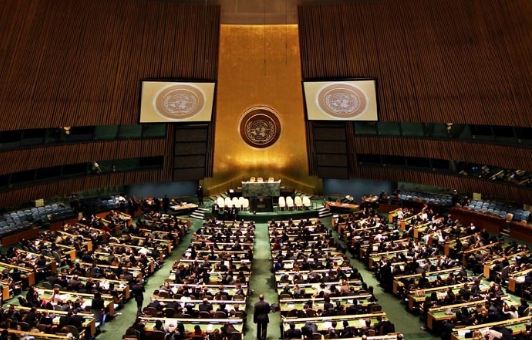
ISLAMABAD, DEC 20 /DNA/ – Unanimous Adoption of Pakistan-Sponsored Resolution on Universal Realization of the Right of the People to Self-Determination by the UN General Assembly

The United Nations General Assembly has adopted the Pakistan-sponsored flagship resolution on the “Universal Realization of the Right of the People to Self-determination”. Adopted by consensus, the resolution was supported and co-sponsorsed by a large number of countries from different regions around the world.

The right of peoples to self-determination is a core principle of International Law, enshrined in Article 1 of the UN Charter and the Covenants on Civil and Political Rights and on Economic, Social and Cultural Rights.

The resolution reaffirmed unequivocal support for realization of the right to self-determination for peoples living under foreign occupation, colonial domination, and subjugation. It vehemently opposes acts of foreign occupation, intervention and aggression and calls upon responsible States to immediately cease such acts. The resolution also underscores that the universal realization of the right of all peoples to self-determination, including those under colonial, foreign and alien domination, is a fundamental condition for the effective guarantee and observance of human rights and for the preservation and promotion of these rights.

Pakistan has sponsored this flagship resolution for over four decades. This annual initiative provides a message of hope to peoples living in internationally recognized situations of foreign occupation, including in Indian Illegally Occupied Jammu and Kashmir and in Occupied Palestine, who are being denied their inalienable right to self-determination.

ECP refutes false reports on Hafizabad delimitation decision date

ECP refutes false reports on Hafizabad delimitation decision date

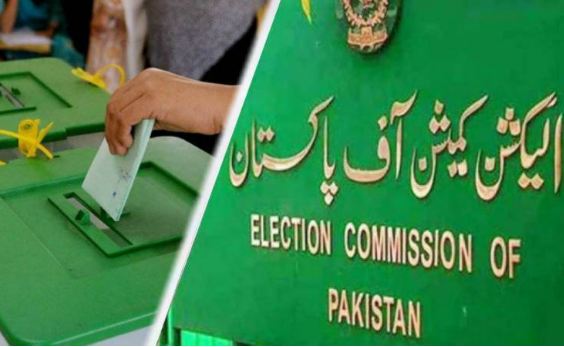
ISLAMABAD, Dec 20 (DNA): The Election Commission of Pakistan (ECP) on Wednesday dismissed media misinformation about Hafizabad constituency delimitation, stating the official decision by a two-member bench was declared on November 26 and promptly posted on the ECP’s website for public awareness.

An ECP spokesperson explained that a subsequent order regarding the delimitation of Hafizabad district was issued on December 8, following the intervention of the Islamabad High Court (IHC).

The guidelines for constituencies are explicitly outlined in the Election Act of 2017 and its corresponding Rules, as explained below.

According to Election Rules 8(1), the population of the province is divided among the seats designated for the province under Article 106, Section 51 of the Constitution, after which the quota for each seat is established.

In the second phase, the quota calculated under Rules 8 (2) to determine district seats is divided by the district’s population, establishing the number of seats for that district. If the remaining population after seat allocation is less than 0.5, the district is ignored.

However, if the remaining population is 0.50 or more, the district is granted one seat. For instance, if a district’s seat share is 4.49 based on its population, it is allocated 4 seats. On the other hand, if its seat share is 4.52, the district is allotted 5 seats.

Provided that no other district has a higher fraction, for instance, 4.56, it is essential to clarify that the allocation of seats begins with the district having the highest fraction, such as 4.80, 4.75, 4.70, 4.70, 4.66, and so on, until the last seat. This process ensures that if there is an available seat in the province, a district may secure a seat at 4.50.

However, once seats are filled, the focus shifts to fractions, and those with 4.51 or more are ignored. The procedure for determining votes is outlined in Section 18 of the Elections Act, 2017, and Section 18 of the Elections Rules, which cannot be altered by the Election Commission.

The entire Commission, comprising the Chief Election Commissioner and four members, is responsible for this task.

However, due to the numerous objections to the initial constituencies, the Election Commission addresses them through two or three-member benches.

The Commission emphasizes that the population of Hafizabad District is 1,319,909, with a quota for one National Assembly seat set at 905,595 (1.46) under Rules 8(2), warranting the allocation of one seat due to the remaining population being less than 0.5 percent. Similarly, for Gujranwala with a population of 4,966,338, its seat share is 5.48, and since its fraction is less than 0.5, it is allotted 5 seats.

The Election Commission underscores that, according to the law, it is not obligated to merge any district with another.

Zia appreciates restoration of Peshawar – Karachi Awan express train service

Zia appreciates restoration of Peshawar – Karachi Awan express train service

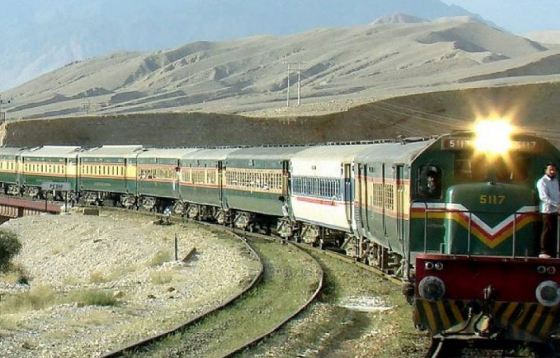
PESHAWAR, Dec 20 /DNA/ – Chairman business community of Khyber Pakhtunkhwa and Standing Committee for Railway Dry Port Shard Chamber of Commerce, Ziaul Haq Shardhi on Wednesday appreciated  restoration of Peshawar to Karachi Awam Express on his request.

The Awam Express service from Peshawar to Karachi was suspected last year due to floods in Sindh and across the country.

The inaugural ceremony of Awam Express held here at Peshawar Cantt Railway Station and attended by Division Superintendent Peshawar Maqsood Ahmed Jan, Chairman Standing Committee for Railway Dry Port Zia Sarhadi and children of model institute for street children “Zamong Kor” Peshawar.

On the occasion of the inauguration, Zia Sarhadi said that Awam Express has been restored on the demand of the business community of Khyber Pakhtunkhwa, for which he expressed gratitude to Chairman Railways Mazhar Ali Shah and CEO Railways Amir Baloch.

He said that KP province has great potential in gems, marble, handicrafts, furniture, honey, tobacco and matchstick, adding that there was a dire need of freight trains for transportation of these goods.

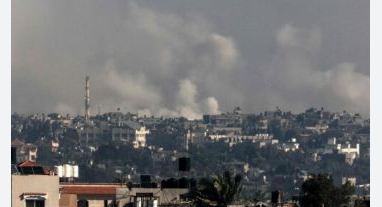
Hamas chief arrives in Cairo for ceasefire talks as aid delivery to Gaza becomes ‘increasingly difficult’

Hamas chief arrives in Cairo for ceasefire talks as aid delivery to Gaza becomes ‘increasingly difficult’

UN says Gaza hospitals functioning on triple bed capacity, electricity shortages; “new collapse” reported in enclave’s internet connectivity.

Nation in Ruins, Cadillac, Aircraft, and Lincoln in View: Jinnah’s Leadership Examined

Nation in Ruins, Cadillac, Aircraft, and Lincoln in View: Jinnah's Leadership Examined

By Nasim Yousaf

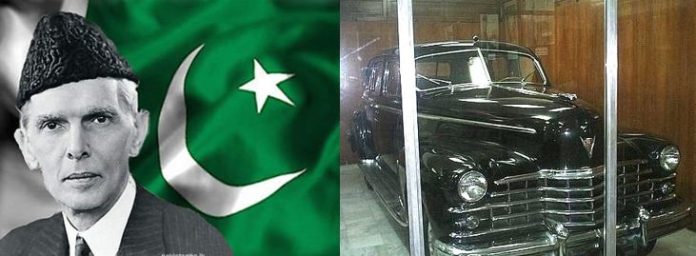
Since 1947, Pakistan has faced a tumultuous history marked by political upheavals, economic difficulties, corruption, and instability, with Muhammad Ali Jinnah serving as the inaugural Governor General. The nation was not given a sound foundation, and its challenges can be attributed to Jinnah’s lack of foresight, limited governance experience, dictatorial tendencies, and the suppression of opposition figures like Allama Mashriqi. Furthermore, Jinnah’s extravagant choices set a lasting precedent in the political landscape. Early communications between the newly appointed Pakistani Ambassador, Mirza Abol Hassan Ispahani, and Governor General Jinnah underscore a stark contrast between personal indulgences and the critical needs of the state.

The letters reveal Jinnah’s pursuit of a Cadillac super-limousine, a Lincoln, and a Beechcraft Model 34 airplane, indicating a disconnect with the nation’s crisis. Ispahani wrote to Jinnah on September 19th, 1947: “My dear Quaid-e-Azam, I reached New York on the 11th and spent a day in Washington on the 13th…I met the top executives of General Motors Company who have taken prompt note of your requirement of a Cadillac super-limousine. Their representative, who is in Bombay at present, will be visiting Karachi shortly, and will finalize the order after knowing your special requirements…I have not been able to see the Lincoln people yet. I hope to do so in the course of the next week. In regard to the special aeroplane, my friends and I have contacted some leading manufacturers in this country. I shall be in a position to report finally on the progress I have been able to make, positively by the end of next week. I hope to present my Credentials to the President of the United States some time next week and enclose, for your private information, a copy of the speech that I shall deliver at the time I present my credentials…”

Instead of urging the Ambassador to focus on the interests of the newly formed state, which was only about a month old, Jinnah was preoccupied with procuring luxury items even before the Ambassador presented his credentials. This reflects Jinnah’s desperation to obtain both vehicles and an aircraft.

In response to the Ambassador’s letter, on October 1, 1947, Jinnah replies: “…Thank you so much for your letter of September 19… I have noted that you say about the General Motor Company. You have been good enough to try and get me a Cadillac car. When their representative comes to Karachi, I shall be very pleased to meet him, and will finalize the order after settling my requirements. Please convey my thanks to the Executive of General Motors Company for their agreement to do all they can and even override all other prior bookings in order to let me have the car without delay. As regards the Lincoln, you will let me know when you are able to do so; and also with regard to the special aeroplane, I shall await your report… Yes, I am keeping well, but facing terrible, grave and dangerous issues and developments that are taking place from day to day, so rapidly and so dangerously…”

Jinnah acknowledges the alarming situation, but lavishness and Grandeur takes priority. Moreover, Jinnah wants the best and most luxurious car, evident from the Ambassador’s letter dated October 14, 1947, to Jinnah: “…The automobile ordered for you is the Super Cadillac 75, the last word in Cadillac limousines. During the year 1947, only 41 cars of this model were assembled, yours being the 41st and the last… I have already written to you about the aeroplane and shall be writing very shortly about your second car, the Lincoln.”

On October 22, 1947, Jinnah wrote to the Ambassador: “…With reference to your letter of the 14th, I do not mind the left-hand drive, but please try as to the color and get me the sample I have sent you, namely the picture of the Cadillac 60 Special. I note that you are pursuing your efforts about the aeroplane and Lincoln.”

On December 20, 1947, the Ambassador informed, “Your Cadillac has reached New York from Detroit, and will be placed on board a ship before the end of next week. I am sure you will like the automobile.” The ultimate luxury reached Karachi in early 1948.

Facing Pakistan’s financial crisis and a scarcity of parts and servicing facilities, the planned acquisition of aircraft and a Lincoln car had to be abandoned. Jinnah acknowledged this in a letter to the Ambassador, noting, “It is very kind of the Beechcraft Corporation to help us in every way, but although it may cost a quarter of a million dollars, the difficulty with these aircraft will be servicing.” Despite the country grappling with severe crises—abductions, rapes, killings, mass migration, and economic instability, hindering even basic purchases like paper and pencils—Jinnah’s prioritization of personal comfort amidst widespread suffering was lamentable. In light of the nation’s dire situation, he should have demonstrated modesty and avoided practices akin to those of the Viceroy of India.

Jinnah’s opulent lifestyle, devoid of personal sacrifice, inspired a societal pursuit of wealth among politicians and the public. This emulation resulted in corruption, a lack of national dedication, and high-end vehicles like BMWs symbolizing political elites, rendering progress assurances hollow.

Since its inception, Pakistan’s persistent adherence to British-style administration, including the use of Private Secretaries and Personal Assistants, despite financial constraints, sets a troubling precedent. The British approach prioritized authority over cultivating public servants dedicated to addressing people’s needs. This practice should cease, promoting a culture of self-help.

As a leader, Jinnah could have made a significant impact by adopting a simpler lifestyle and promoting self-reliance. Embracing humbleness and emphasizing values of simplicity and self-help could have inspired people throughout the community. Leaders serve as role models, and if Jinnah had chosen humility, the nation would have prioritized integrity and honesty over materialism, fostering a more ethical society.

The portrayal of Jinnah in Pakistani history often idealizes him, elevating him to an uncriticizable status. This narrative involves the distortion and fabrication of facts, glossing over his flaws and unethical political maneuvers. Even not wearing the same suit twice is presented as a remarkable achievementEven not wearing the same suit twice is presented as a remarkable achievement. Despite the common belief that Jinnah’s impact on Pakistan was limited due to his untimely death, he had a significant period, from 1940 when the Pakistan Resolution was adopted until his passing in 1948, to shape the nation’s vision and constitution.I have emphasized, and many now agree, that the creation of Pakistan, from the Two-Nation Theory to the partition of India, was orchestrated by British rulers. If Jinnah were powerful enough to create Pakistan, he would not have allowed the partition of Punjab and Bengal.In my published works, such as the documentary “The Road to Freedom: Allama Mashriqi’s Historic Journey from Amritsar to Lahore,” and the article “The British Chessboard: Jinnah, Gandhi, and the Strategic Divide of India,” I have delved into unknown aspects of Jinnah’s (and Gandhi’s) politics.

Pakistan urgently requires a selfless figure akin to Allama Mashriqi, an exceptionally educated and unmatched personality in the world. Unlike leaders such as Jinnah, Mashriqi chose unpretentiousness over personal comfort, owning only a couple of Khaki Shalwar and Pyjama sets, repeated after self-washing. Despite his status as a world-famous mathematician and with plenty of Khaksars at his disposal, he personally handled tasks like typing letters and cleaning his office, which was in a tent. Mashriqi’s commitment to a modest lifestyle reflected his values and dedication to uplifting the nation. In today’s ostentatious realm of power, Mashriqi’s example gains relevance. A figure prioritizing people’s welfare over personal luxuries is vital for Pakistan’s future marked by equality, justice, and genuine progress. As someone influencing millions, he inspired people to adopt simplicity as a way of life.

To sum up, the ambassador and Jinnah’s letters serve as poignant reminders that reversing the challenging conditions in the nation requires a departure from opulence and a demand for leadership accountability. Ceasing dependence on loans and charity is crucial to prevent the country’s tarnished global reputation. Amidst the challenges and stark social and financial disparities, a critical examination of Jinnah’s legacy is imperative. The populace must insist that politicians, men in power across sectors, embrace simplicity or relinquish governance responsibilities. Not only those in authority but also citizens must, for the love of their homeland, forsake extravagance and exhibit empathy. Expressions of patriotism ring hollow without self-sacrifice and concrete actions for its betterment. This shift can combat corruption and address the correlation between a lavish lifestyle and increased fraudulent practices. Advocating for humility, altruism, and aligning with Mashriqi’s virtues becomes vital in fostering a culture defined by integrity and answerability, especially in the face of the overall pathetic situation in the land.

Scholar Nasim Yousaf, a grandson of Allama Mashriqi, has authored 18 books and digitized 19 rare works, including Mashriqi’s historic journal “Al-Islah.” His global impact is evident, with “88,097 papers on Academia discussing the Khaksar Movement” and readers from at least 60 countries. His online works consistently attract a substantial audience, exemplified by noteworthy engagement, including 101,764 visitors recorded on a Facebook fan page and activity across various platforms.

Copyright © 2023 Nasim Yousaf

Stay Connected

64FansLike
60FollowersFollow

Latest Reviews

Exchange Rates

USD - United States Dollar
EUR
1.16
GBP
1.34
AUD
0.67
CAD
0.72