Home Blog Page 858

QAU alumni, students join CDA in plantation drive

QAU alumni, students join CDA in plantation drive

ISLAMABAD, AUG 11 (DNA): Chairman of the Capital Development Authority (CDA), Muhammad Ali Randhawa, along with students and alumni of Quaid-e-Azam University Islamabad, participated in the Margalla Hills Tree Plantation Drive.

The event took place in a designated area named Quaidian Enclave on Margalla Hills, where saplings were planted by Chairman CDA Muhammad Ali Randhawa, Member Environment Talat Gondal, Member Finance Tahir Naeem, Wajahat Latif Pro-Rector Ibadat International University, Murtaza Noor National Coordinator Inter University Consortium, and Executive Director APSUP, along with the alumni and students.

“The initiative is being carried out under the direction of the Prime Minister of Pakistan, the Interior Minister, and with the support of the Ministry of Climate Change,” Chairman Randhawa emphasized.

He highlighted the drive’s goal of preserving the beauty of Margalla Hills through collaborative efforts with various stakeholders, including the corporate sector and civil society.

“The involvement of students is crucial to the success of the tree plantation drive. In line with federal government instructions, the drive aims to ensure the preservation and conservation of the region’s flora and fauna,” he mentioned.

Randhawa proposed awarding special marks to students who participated in the campaign and announced the launch of a mobile app to track the location of each planted tree.

Furthermore, Randhawa assured that educational institutions, known for their excellence, were invited to take a leading role in the plantation drive, with CDA providing full support.

The participating QAU alumni and students extended their thanks to Chairman CDA, Muhammad Ali Randhawa, for inaugurating the special “Quaidian Enclave” at Margalla Hills for plantations.

They hoped that such initiatives would have a positive impact on our environment and ensure a legacy of sustainability.
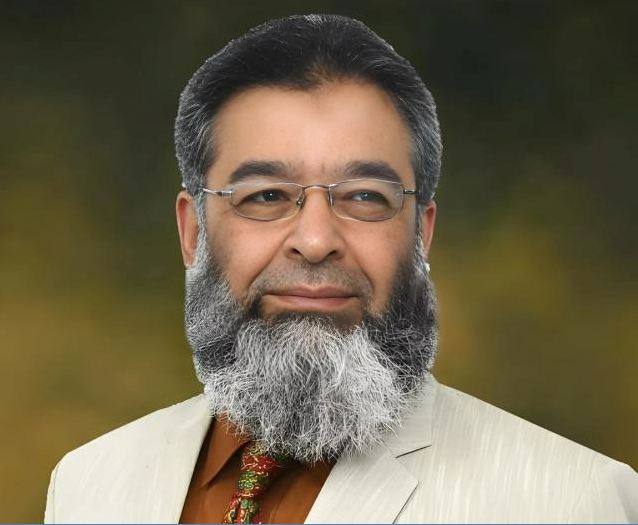
Unraveling Pakistan’s Crisis: Who Is Responsible and How Did We Get Here?

Unraveling Pakistan's Crisis: Who Is Responsible and How Did We Get Here?

by Muhammad Mohsin Iqbal

Understanding the myriad factors that have led Pakistan to its current state is a complex endeavor, one that requires a multi-faceted analysis of historical, socio-political, economic, and international dimensions. The country’s journey to its present condition has been influenced by various elements, each contributing in unique ways to the challenges it faces today.
To begin with, any assessment of Pakistan’s trajectory must consider its historical context. Since its inception in 1947, Pakistan has faced a series of existential crises, starting with the traumatic partition from India, which led to mass migrations, violence, and deep-seated animosities. The early years were marked by political instability, with frequent changes in leadership and a lack of coherent policy direction. The assassination of its first Prime Minister, Liaquat Ali Khan, in October 16, 1951 was a significant blow, setting a precedent for political violence and instability.
As the new nation struggled to find its footing, the military began to play an increasingly dominant role in politics. The first military coup in 1958, led by General Ayub Khan, set a pattern that would be repeated multiple times. Military rule often came with promises of stability and development but frequently resulted in authoritarianism and repression, stifling democratic institutions and civil society. The military’s involvement in politics has had long-term implications, including the undermining of civilian governance and the perpetuation of a security-centric state.
Economically, Pakistan has faced persistent challenges, including periods of significant growth followed by downturns and crises. The 1960s under Ayub Khan saw substantial industrial growth and development, but these gains were unevenly distributed, leading to regional disparities and social tensions. The nationalization policies of the 1970s under Zulfikar Ali Bhutto further disrupted economic stability, as state control over key industries often led to inefficiencies and corruption.
The economic liberalization in the 1980s and 1990s, driven by structural adjustment programs from international financial institutions like the IMF and World Bank, aimed to integrate Pakistan into the global economy. However, these measures often led to austerity, reduced public spending on social services, and increased debt. The accumulation of external debt has been a critical issue for Pakistan, limiting its fiscal space and making it vulnerable to external pressures and economic shocks.
One must also consider the geopolitical context. Pakistan’s strategic location has made it a focal point of international interests, particularly during the Cold War and the post-9/11 era. The alliance with the United States during the Soviet-Afghan War in the 1980s brought significant military and economic aid but also had unintended consequences. The influx of arms, the rise of militant groups, and the proliferation of narcotics trade destabilized the region and had lasting impacts on Pakistan’s internal security.
The post-9/11 alliance with the United States in the War on Terror further complicated matters. While Pakistan received substantial aid and support, it also faced severe internal strife and violence as militant groups targeted the state. The complex relationship with neighboring Afghanistan and the unresolved Kashmir issue with India have continued to drain resources and focus, detracting from development and governance.
Corruption is a pervasive issue in Pakistan, often with accusations directed at political elites for placing personal gain above national welfare. This results in a persistent lack of accountability and transparency within governance, leading to the misallocation of resources and hindering development initiatives. Historically, each era has witnessed the emergence of new scandals, with the repercussions falling on the leaders of the time as well as the entire nation. Consequently, corruption has led to the deterioration of public trust and the legitimacy of institutions.
Moreover, social factors cannot be ignored. Pakistan’s population growth has put immense pressure on its resources and infrastructure. The education system has struggled to keep pace, resulting in a large, undereducated youth population. Health services have similarly lagged, contributing to poor human development indicators. Gender inequality remains a significant challenge, limiting the potential of half the population.
Religious extremism and sectarian violence have contributed to instability. It has been observed that religion has been utilized by the state, either directly or indirectly, for political justification. However, this has occasionally had adverse effects, cultivating an environment of intolerance and hostility.
Given this backdrop, the question of responsibility is complex. There is no single entity or group that can be held solely accountable. Successive governments, both civilian and military, have made decisions that have contributed to the current state of affairs. Political leaders, by prioritizing short-term gains over long-term stability, have played a significant role. The military, with its repeated interventions in politics, has also contributed to the weakening of democratic institutions.
International actors, through their policies and interventions, have influenced Pakistan’s trajectory. The role of foreign aid, both as a lifeline and as a tool of influence, cannot be understated. The conditions attached to such aid have often dictated economic policies that may not always align with national priorities.
The citizens of Pakistan also share in the responsibility. While numerous individuals have endeavored to better their nation, some have exacerbated its challenges through involvement in corruption, intolerance, and the perpetuation of divisions. Nonetheless, it is crucial to acknowledge that wider structural problems and systemic shortcomings frequently restrict personal choices.
Addressing the debt crisis and the brink of bankruptcy requires comprehensive and sustained efforts. Structural reforms are necessary to improve governance, reduce corruption, and enhance transparency. Economic diversification is crucial to reduce reliance on external aid and loans. Investing in human capital through education and health services is fundamental to long-term development. Strengthening democratic institutions and ensuring civilian supremacy is vital for political stability.
The role of civil society, media, and the judiciary in holding those in power accountable is also crucial. Public awareness and activism can drive change, as seen in movements for justice and rights. International cooperation, based on mutual respect and equality, can support these efforts without imposing undue burdens.
In conclusion, Pakistan’s current state is the result of a confluence of factors, both internal and external. Understanding this complex web is essential for crafting effective solutions. Responsibility is shared among various actors, including political and military leaders, international stakeholders, and the people themselves. By addressing the root causes and fostering a collective commitment to reform and development, Pakistan can navigate its way towards a more stable and prosperous future.

Armed Forces reaffirm commitment to protecting rights of minority communities

Armed Forces reaffirm commitment to protecting rights of minority communities

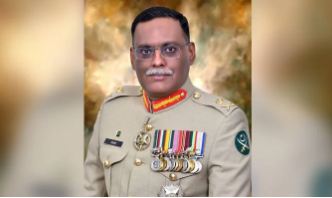
RAWALPINDI, AUG 11 /DNA/ – The Armed Forces of Pakistan, the Chairman Joint Chiefs of Staff Committee, and the Services Chiefs extend warm felicitations to the minority communities of Pakistan on their dedicated day, acknowledging their indispensable contributions to the nation’s progress, prosperity, and rich cultural heritage.

This occasion serves as a poignant reminder of the diversity, inclusivity, and harmonious coexistence that are the hallmarks of our great nation. The minority communities are an integral and vital part of our social fabric, and their rights and freedoms are sacrosanct, as enshrined in the Constitution and Islam.

Throughout Pakistan’s history, minorities have played a significant role in shaping the country’s cultural identity, contributing to its development, and strengthening its social foundations. From the Quaid’s visionary ideals to the present day, minorities have been an integral part of the nation-building process, and their sacrifices and contributions are deeply valued.

The Armed Forces of Pakistan honour the unwavering commitment, dedication, and sacrifices of the minority communities, recognizing their unshakeable loyalty to the nation and their invaluable role in fostering a cohesive and pluralistic society. We celebrate their spirit and reiterate our commitment to protecting and promoting their rights, freedoms, and welfare.

CJCSC, UK Defence Chiefs focus on enhancing bilateral defence ties

CJCSC, UK Defence Chiefs focus on enhancing bilateral defence ties

RAWALPINDI, AUG 10 /DNA/ – General Sahir Shamshad Mirza, Chairman Joint Chiefs of Staff Committee, who is on an official visit to United Kingdom, called on Admiral Sir Tony Radakin, Chief of Defence Staff and General Sir Roland Walker, Chief of General Staff of UK.

During the separately-held meetings, both sides deliberated upon areas of mutual interest, bilateral defence and security cooperation, counter-terrorism and prevailing regional environment.

The British military leadership lauded the professionalism of Pakistan Armed Forces and acknowledged Pakistan’s and Pakistan Armed Forces’ sacrifices in the fight against terrorism.

Pakistan committed to protection of minorities’ rights: President

Zardari forms committee for talks with electables

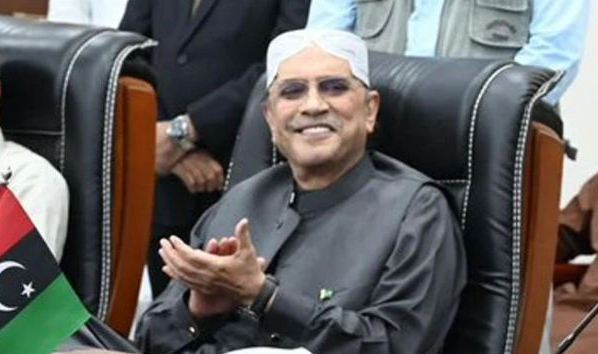
ISLAMABAD, AUG 10 (APP): President Asif Ali Zardari said Pakistan was committed to ensuring the protection of religious, social, political and economic rights of its minorities.

In a message on the occasion of Minorities’ Day on August 11, 2024, he said , “Pakistan celebrates Minorities’ Day on 11 August every year to acknowledge the contributions of our minorities towards Pakistan’s socio-economic development.”

“On this day, we reaffirm our commitment to the promise made by Quaid-e-Azam Muhammad Ali Jinnah, on 11 August 1947, to the country’s minorities to protect their rights and religious freedoms.”

The President said, “Minorities in Pakistan enjoy all political, economic and social rights which have been guaranteed by the Constitution of Pakistan.”

“Our religion Islam also fully recognizes and advocates the protection of the rights of minorities. I am glad to say that Pakistan has taken a number of steps for the political, social and economic empowerment of minorities.”

He said, “In this regard, we have allocated a 5% quota for minorities in government jobs and separate seats in both houses of the parliament to encourage them to play an effective role in the political and national development of the country.”

“Additionally, steps are being taken to provide financial assistance to poor and deserving individuals, marriage grants, scholarships to students from minority communities for their education, besides the provision of funds for the repair/maintenance of their worship places.”

He said every Pakistani has the right to live according to their faith, irrespective of their religion, caste, colour or creed.

He urged all segments of society, including the religious scholars, representatives of minorities and the media to educate the people about their rights and work for promoting interfaith harmony, the spirit of love, tolerance, brotherhood and unity to make Pakistan a strong country.

He assured all minorities that Pakistan would make every effort to safeguard their rights and provide them equal opportunities to excel in life.

“I am confident that the minorities of Pakistan will continue to play their positive role towards the country’s development. I congratulate them on the special day and I wish them all the best in their future endeavours,” he concluded.

Rotary Pakistan’s appreciation for Olympian Arshad Nadeem

Arshad Nadeem Makes History: Pakistan wins gold at Paris Olympics

DNA

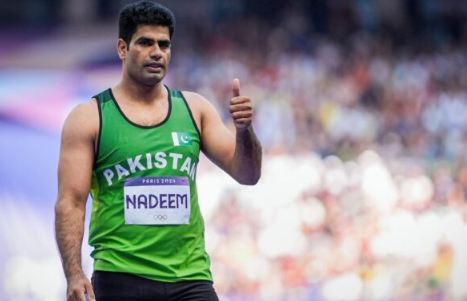
KARACHI, AUG 10: Rotary Pakistan extends heartfelt congratulations to Olympian Arshad Nadeem for winning the first-ever gold medal in  individual category for Pakistan in the 2024 Olympics. This historic achievement underscores the immense talent present at the grassroots level in Pakistan.

Rotary offered its full support to Arshad Nadeem in promoting javelin throw across the nation; specially at the school level. A special program will be developed in collaboration with Nadeem to nurture and train future Olympians, ensuring that his legacy of excellence continues.

Furthermore, Arshad Nadeem has been appointed as the Ambassador of Rotary Pakistan, a role in which he will inspire and mentor young throughout the country.

Muhammad Faiz Kidwai, 2022-24 Director of Rotary International, expressed deep admiration for Nadeem’s resilience and determination to excel in sports. He also announced that in recognition of his outstanding accomplishment and building confidence as well as hope in the youth of Pakistan he is bestowed with the Rotary Pakistan Nation Builders award 2024. The award will be presented to him by the 2025 President, Rotary International at a ceremony to be specially organized on 5th September 2024.

He believes that the partnership between Rotary Pakistan and Arshad Nadeem has the potential to revolutionize the promotion of athletics at the grassroots level in Pakistan.

About Rotary International: 

Rotary International is a global humanitarian organization with over 1.4 million members in more than 46,000 clubs worldwide. Founded in 1905, Rotary is dedicated to bringing together professionals and leaders from diverse backgrounds to address community challenges, promote peace, fight disease, support education, and provide sustainable solutions to critical issues. Rotary Pakistan, as part of this global network, has been actively involved in various initiatives to support the development of communities across the country, with a strong focus on health, education, and youth empowerment.

PM Shehbaz fails to deliver: Fazlur Rehman

PM Shehbaz fails to deliver: Fazlur Rehman

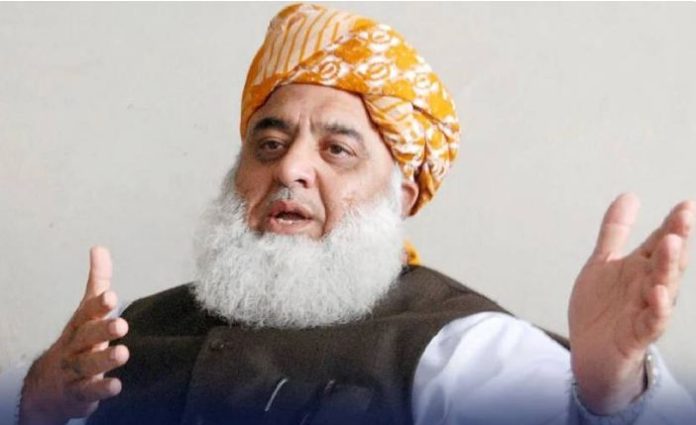
ISLAMABAD, AUG 10: Jamiat Ulema-e-Islam (JUI) Chief, Maulana Fazlur Rehman, has voiced concerns over the current state of Pakistan’s political and economic situation.

During a recent address, he emphasized the need for maintaining stability in the country’s political system, warning against actions that could further harm it.

The JUI chief critiqued Prime Minister Shehbaz Sharif’s efforts to revive the economy, stating that despite his promises, the desired economic uplift has not been achieved.

He noted that while Shehbaz Sharif attempted to secure support from China, the efforts were hindered by the lack of political stability and peace in Pakistan.

“China pointed out the instability and unrest in our country, which affected the success of these negotiations,” said Fazlur Rehman.

He urged the Prime Minister to acknowledge that the visit to China did not yield the expected results and stressed the importance of appearing strong and united during these challenging times to protect the nation.

In addition to economic concerns, Fazlur Rehman questioned the government’s decision to import large quantities of wheat despite having sufficient reserves in the country. He criticised the move, stating that it led to the unsold wheat of Pakistani farmers, causing unnecessary strain on the local agricultural sector.

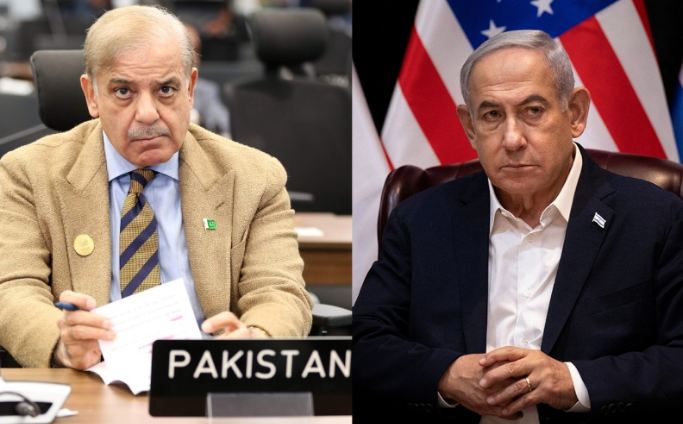
PM Shehbaz denounces Israeli attack on Gaza school, urges global action

PM Shehbaz denounces Israeli attack on Gaza school, urges global action

ISLAMABAD, AUG 10: Prime Minister Shehbaz Sharif has strongly condemned the recent Israeli attack on a school in Gaza, describing it as a grave act of aggression and brutality.

In a statement issued by the Prime Minister’s Office Media Wing, he denounced the assault on schoolchildren as an unprecedented act of violence, emphasizing that such barbarism is unparalleled in history.

The premier expressed his heartfelt condolences to the bereaved families and prayed for the elevation of the ranks of the martyrs. He also reiterated Pakistan’s unwavering support for the Palestinian people, pledging to continue extending diplomatic and moral support to them at all international forums.

Highlighting the severity of the situation, Shehbaz Sharif called on the international community, including the United Nations, to take decisive and practical steps to end Israeli aggression.

He urged that the Israeli leadership and security forces be held accountable for the genocide and war crimes against Palestinians, calling for the enforcement of the International Court of Justice’s decisions against Israel.

The attack, which occurred during Fajr prayer, targeted a school in the eastern Gaza area where approximately 250 homeless Palestinians had taken refuge.

According to international media reports, Israel fired three missiles at the school, resulting in the martyrdom of over 100 Palestinians and leaving many others injured.

PM Sharif condemned Israel’s actions, stating, “Israel has crossed all boundaries of its brutal acts, and the recent attack on schoolchildren is further proof of its open aggression. The Palestinian genocide must be stopped, and those responsible must be brought to justice.”

Pakistan, he affirmed, will continue to stand in solidarity with its Palestinian brothers and sisters, supporting their cause on every front.

Pak-Afghan Relations: Need for inclusive framework to address trust deficit: Experts

Pak-Afghan Relations: Need for inclusive framework to address trust deficit: Experts

ISLAMABAD, AUG 10 /DNA/ – Upholding the rule of law through a balanced approach by both sides is crucial for restructuring Pak-Afghan relations in the post-August 2021 context, given the internal complexities and external influences shaping their bilateral relationship.

This principle must be bilaterally applied at the policy level, in border management, and throughout all interactions, coupled with mutual recognition of each other’s sovereignty and an understanding of diverse perspectives. Such mutual efforts are crucial for fostering regional stability and building trust.

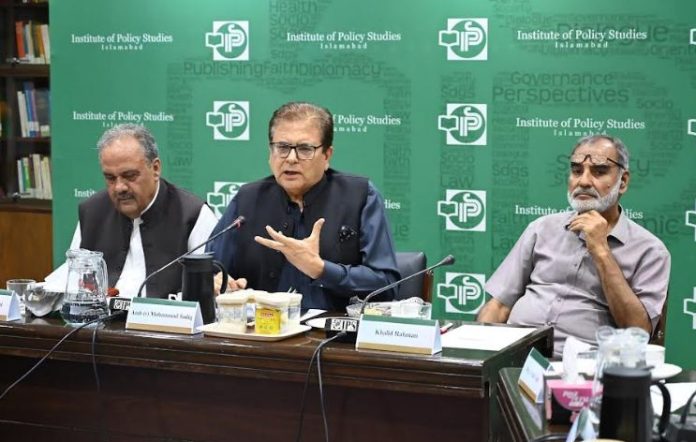
The views were reflected during a discussion followed by the keynote speech of Ambassador Asif Durrani, Pakistan’s special representative on Afghanistan, in a session titled “Trajectory of Pakistan-Afghanistan Relations: Post-August 2021” organized by the Institute of Policy Studies (IPS), Islamabad, in collaboration with the Institute of Regional Studies (IRS), Peshawar.

The session, chaired by Ambassador (r) Mohammad Sadiq, Pakistan’s former special representative on Afghanistan, was addressed by Khalid Rahman, chairman IPS, Dr Muhammad Iqbal Khalil, chairman IRS, Farhatullah Babar, former senator, Dr. Khuram Iqbal, HoD International Relations, National Defence University, Ambassador (r) Ayaz Wazir, Brigadier (r) Said Nazir, defense analyst, Noorulain Naseem, policy advisor, GIZ Pakistan, and other panelists.

The session emphasized several key perspectives and offered recommendations for fostering a more stable and constructive bilateral relationship.

The gathering underscored the importance of managing bilateral relationships through a pragmatic and deferential approach by both countries, while remaining mindful of the challenges that persist on both sides of the border. This involves mutual recognition of each other’s sovereignty and an understanding of the diverse perspectives. Moving beyond stereotypical views in policymaking, coupled with effective media management, is crucial for reshaping perceptions and fostering a reimagined bilateral relationship at both governmental and public levels.

It was highlighted that Pak-Afghan bilateral policy approaches need to be shifted towards a more inclusive framework. This includes addressing the trust deficit, particularly in areas such as refugee policies, by developing a deeper understanding of the leadership mindsets in both countries and incorporating this understanding into policy formulations. A restructured approach that leverages institutional knowledge and normalizes discourse on bilateral issues is essential for long-term stability.

Additionally, the discussion emphasized the need for internal stability in both countries. Shifting from a military-centric to a human-centric development approach, particularly in border areas, was advocated as a means of enhancing inner strength and maintaining security more effectively, aligning with broader strategic objectives.

The discussion underscored that external factors also play a significant role in shaping the dynamics of Pak-Afghan relations. Therefore, a managed engagement is essential, taking into account the internal complexities within both nations as well as the external influences that impact the development of a stable and constructive bilateral relationship.

In conclusion, Khalid Rahman stressed the importance of self-assessment in the policy areas of both countries. He noted that while improvements are necessary, it is equally important to recognize the complexity introduced by geopolitical shifts in regional dynamics. Fostering effective dialogue and gaining a comprehensive understanding of these complexities are crucial for advancing Pak-Afghan relations in a rapidly changing geopolitical landscape and in the post-truth era.

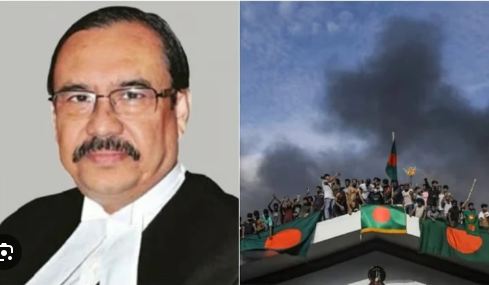
Bangladesh Chief Justice resigns after ultimatum from student protesters

Bangladesh Chief Justice resigns after ultimatum from student protesters

DHAKA, AUG 10: The Chief Justice of Bangladesh’s top court, Obaidul Hassan, agreed to resign “in principle” following intense pressure from protesters surrounding the Supreme Court, broadcaster Jamuna TV reported.
The 65-year-old judge will tender his resignation after consulting President Mohammed Shahabuddin in the evening, The Dhaka Tribune newspaper reported.

The protests started after Mr Hassan called for a full court meeting with all justices from both divisions of the Supreme Court. The protesting students viewed the convening of the full court meeting as a judiciary coup and announced a siege of the High Court premises. In the face of student protest, Chief Justice Hassan postponed the meeting and later said that he would step down.

Hassan, appointed last year and seen as a loyalist to ousted Prime Minister Sheikh Hasina was given an one-hour ultimatum to resign.

Bangladesh Bank Governor Abdur Rouf Talukder has also resigned but his resignation has not been accepted given the importance of the position, finance ministry adviser Salehuddin Ahmed told reporters. Days earlier, four deputy governors were forced to resign by 300 to 400 bank officials accusing them of corruption.

The protests, part of the wider unrest that led to Hasina’s departure, have resulted in over 450 deaths, including dozens of police officers. Hasina faces allegations of murder, forced disappearance, money laundering and corruption, and must face the law, Amir Khosru Mahmud Chowdhury, a senior member of Bangladesh Nationalist Party said. The police union has declared a strike, refusing to return to work until their safety is assured, further complicating the situation.

Hasina has been sheltering in New Delhi since Monday and plans to return to the country and take part in elections.

Many homes and businesses of the country’s minority Hindu community have also been vandalised this week, prompting hundreds of them in northwest Bangladesh to try and flee to neighbouring India. Bangladesh’s interim leader Muhammad Yunus appealed for religious unityas he embraced the weeping mother of a student shot dead by police, a flashpoint in mass protests that ended Sheikh Hasina’s 15-year rule.

Post a comment
The Nobel laureate’s first task is to bring stability to Bangladesh after he responded to a call by student protesters for him to temporarily lead the country following weeks of deadly anti-government demonstrations against the government led by Sheikh Hasina.

Stay Connected

64FansLike
60FollowersFollow

Latest Reviews

Exchange Rates

USD - United States Dollar
EUR
1.17
GBP
1.35
AUD
0.72
CAD
0.73