Home Blog Page 856

Elections 2024: ECP scraps PTI’s intra-party elections, revokes ‘Bat’ symbol

Elections 2024: ECP scraps PTI’s intra-party elections, revokes ‘Bat’ symbol

ISLAMABAD: A political thunderbolt has struck Pakistan’s landscape as the Election Commission of Pakistan (ECP) decried Imran Khan’s Pakistan Tehreek-e-Insaf (PTI) party’s intra-party polls as “unconstitutional” and revoked their “Bat” as electoral symbol head of the February 8 general elections.

The five-member ECP bench, led by Chief Election Commissioner Sikandar Sultan Raja, released a detailed verdict after months of scrutiny.

The ruling underscores the Election Commission’s insistence on adherence to democratic processes within political parties. PTI’s failure to conduct intra-party elections as mandated by the constitution led to the withdrawal of the symbolic representation, signaling a deviation from the established democratic norms.

The Commission’s decision emphasized the importance of upholding democratic principles and conducting intra-party elections in a transparent and constitutional manner. The issuance of a certificate regarding intra-party elections and submission of Form 65 were deemed essential components in compliance with the constitutional requirements.

Barrister Gohar slams ECP’s move, vows legal battle
Pakistan Tehreek-e-Insaf (PTI) has voiced its intention to challenge the Election Commission of Pakistan’s (ECP) decision, nullifying the intra-party elections, by taking the matter to the Lahore High Court (LHC).

Barrister Gohar, the party’s recently elected chairman, led the charge, his words echoing with defiance and a touch of indignation. “We will fight for a free election,” he declared, accusing the electoral watchdog of a pre-meditated conspiracy against PTI.

Questioning the credibility of Akbar S. Babar, whose petition was central to the Commission’s decision, Gohar emphasized that Babar’s standing within the party is not well established. He underscored PTI’s transparency, asserting that no other political entity has faced such stringent scrutiny.

Expressing hope for the High Court’s intervention, Gohar emphasized PTI’s non-acceptance of the ECP’s decision. He clarified that their party did not engage in the election contest, stating that he was elected uncontested as the PTI Chairman, with the nomination endorsed by Imran Khan himself. However, following the Commission’s ruling annulling the intra-party election, Gohar’s chairmanship and the party’s symbol were revoked.

Cipher case: Imran Khan, Shah Mahmood get bail
Earlier today, the Supreme Court of Pakistan approved the bail of former PTI chairman Imran Khan and Vice Chairman Shah Mahmood Qureshi in the cipher case.

The apex court accepted the PTI leaders’ petition against the high court verdict in the case. They have been granted bail in exchange for bail bonds of Rs1 million each.

A three-member bench of the Supreme Court, headed by Acting Chief Justice of Pakistan Sardar Tariq Masood and comprising Justice Mansoor Ali Shah and Justice Athar Minallah, heard the petitions of Imran Khan and Shah Mahmood against the Islamabad High Court verdict in the cipher case.

Justice Minallah remarked that the former prime minister is innocent, as no crime could be proved against him.

At the start of the hearing, the Supreme Court accepted PTI lawyer Hamid Khan’s request for some time to extend arguments on a petition against the indictment, while the Federal Investigation Agency (FIA) prosecutor adopted the stance that a notice had not been issued on Shah Mahmood Qureshi’s bail application.

The acting CJP remarked that the application against the old charge sheet has become ineffective; if there is any objection to the new charge sheet, it should be challenged in the high court.

ECP promises level playing field after PTI’s complaints
As Pakistan’s political landscape is heating up, and the Election Commission of Pakistan (ECP) finds itself in the crossfire, the electoral watchdog has taken important notice of complaints regarding the alleged lack of a fair playing field for the Pakistan Tehreek-e-Insaf (PTI) in the upcoming elections.

The Commission issued letters to the Provincial Election Commissioner, Chief Secretaries, IGs of Sindh, and Islamabad following complaints of hurdles in the electoral process, including reports of obstruction faced by candidates and interference with the submission of nomination papers.

Addressing these concerns, the ECP emphasized the need to address all complaints in adherence to the law, ensuring a level playing field for all political participants. Assurances were provided to the PTI regarding the resolution of their grievances related to the fairness of the election environment.

In response to the complaints raised by the PTI, a delegation, including Shah Mahmood Qureshi’s daughter Mehr Bano Qureshi and party lawyer Shoaib Shaheen Ali Bukhari, met with ECP officials as directed by the Supreme Court. The delegation highlighted their concerns about facing obstacles during the election campaign.

Elections 2024: Imran Khan submits nomination papers from Mianwali
Incarcerated Pakistan Tehreek-e-Insaf (PTI) founder Imran Khan’s nomination papers have been submitted for the upcoming elections from prison cell in Adiala Jail.

Imran Khan’s nomination papers were filed for the National Assembly Constituency NA 89 in Mianwali.

Yesterday, amidst media frenzy, Khan signed the documents that could pave his way back to the National Assembly, setting the stage for a potentially explosive poll battle.

The founder PTI leader’s lawyer, Rai Muhammad Ali, was instrumental in facilitating this pivotal moment. He personally conveyed the nomination papers to Adiala Jail, underscoring Imran Khan’s intent to contest elections not only from Mianwali but also from significant constituencies in Lahore and Islamabad.

Parvez Elahi’s wife stopped from submitting nomination papers
Former Punjab chief minister Parvez Elahi’s wife, Qaisara Elahi, was stopped on Friday from submitting the nomination papers ahead of the general elections.

Elahi’s wife had reached the gate to submit the nomination papers from NA-64, where she was stopped.
The U.S. Stance and Pakistan’s Political Turmoil

The U.S. Stance and Pakistan’s Political Turmoil

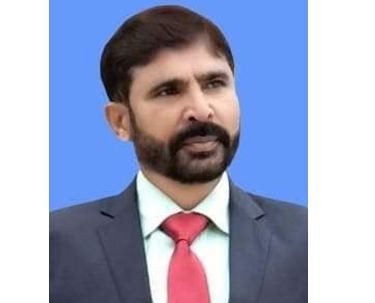
Dr. Muhammad AkramZaheer

Before the Iraq war, the United States might have liked the idea of promoting democracy. But when the war not went well, officials from both the Bush administration and other Democratic presidential candidates were being careful. They were worry that pushing for democracy might lead to instability. Despite concerns about the effectiveness of the country’s military, there was a fear that any change, even if well-intentioned, could put American security at risk. The debate in Washington reflected a cautious approach. Some people from both on the right and the left argued that try to promote democracy in places like Iraq is a repeating the same mistake. They believe it is better to have a strong leader who can maintain order even if it means some level of control. In Pakistan, moderates are puzzled and feel abandoned by the U.S. They argue that the American attitude is confusing and risky. They emphasize that their movement for democracy has been peaceful and unique in the Muslim world.

The U.S. has high stakes in Pakistan, especially because they think Al Qaeda are believed to be hiding there. While General Musharraf has targeted Al Qaeda members in cities, critics say he hasn’t effectively dealt with the tribal areas. Some argue that political and economic approaches are essential, not just military ones, to counter extremism. They believe a civilian government can handle this better than a military one. Experts say that the majority of Pakistan’s population and military remains moderate, reducing the risk of hard-line Islamists taking control. However, General Musharraf’s popularity was declining, and there was a call for democratic reforms. Critics argue that the military’s prolonged governance weakens democratic institutions and the only way for Pakistan to democratize is by practicing democracy.

There is a debate about whether the intelligence service in Pakistan would cooperate less under a military or civilian leader. Some caution that democracy has failed in Pakistan before due to corruption and military interventions. The idea is raised that military and civilian leaders should negotiate a plan to gradually reduce the military’s role in politics while securing its role in national defense, similar to what happened in Turkey and Latin America. Some members of Congress and experts have called for a review of American policy toward Pakistan, suggesting that aid should depend on better performance in the war on terror and increased spending on development and education in Pakistan. However, the U.S. administration has continued to express support for General Musharraf, with some advocating caution. Senator Hillary Rodham Clinton mentioned that General Musharraf had become “quite antidemocratic,” but she also said the U.S. relies on him to control the tribal areas where the Taliban and Al Qaeda fighters come from. Senator John Edwards was more straightforward, saying, “Given the power of radical Islam in Pakistan, there is absolutely no way to know what kind of government will take his place.” Perkovich, the Carnegie analyst, emphasized the need for sophisticated American diplomacy to broker an agreement that shifts power gradually from the military to civilians but he noted that neither political party has figured out the right approach to Pakistan, making it a bipartisan problem in avoiding a solution.

When Benazir Bhutto was killed, it happened in Rawalpindi, a historic town near a park named after another Pakistani Prime MinisterLiaquat Ali Khan, who was also assassinated there in 1951.Benazir’s father, Zulfikar Ali Bhutto, another former prime minister, was executed in 1979 at the city’s central jail, just a short distance away. The killings were different Liaquat Ali Khan was shot by a Pashtun separatist, Zulfikar Ali Bhutto was hanged after being found guilty by a court appointed by a military dictator and the investigation into Benazir Bhutto’s assassination is ongoing.Despite the differences, the fact that all three leaders died in the same part of Rawalpindi highlights how violent events have often changed Pakistan’s political landscape. It also emphasizes the fragility of the country’s hopes for a stable democracy. In its 76 years since formation, Pakistan has swung between military rule and elected governments. Now, there’s optimism about reviving democracy. However, both military and civilian leaders have contributed to the challenges.

The United States had urged Pervez Musharraf, the current military ruler, to allow a return to democracy as a way to restore stability. Yet, with the recent death of Bhutto, the prospects for a successful transition have become more uncertain.While the focus is often on the failings of military rulers, civilian politicians in Pakistan have also struggled to bring stability. Many believe that both politicians and generals share responsibility for undermining democracy over the years.Benazir Bhutto despite being a proponent of democracy, raises the persistent question in Pakistan’s history when, or if, the country will truly move towards building a democracy that lives up to its name. The narrative blaming generals for stifling democracy while appealing to Western views also seeks to excuse the politicians’ role in weakening democratic institutions for personal gain or settling political scores.

In April 2022, there was a crisis in Pakistan when the leader of the PTI Imram Khan, lost a vote of confidence and his position as the prime minister. People were also upset about the bad economy. Khan blamed the military and foreign powers for interfering. The opposition took over and Khan wanted a quick election and criticized the military.Later, more than 200 cases were filed against Khan, including serious charges. He was arrested in May, leading to protests by his supporters. The Supreme Court released him but he was arrested again in August and given a three-year sentence for corruption. The Election Commission banned him from public office.Now the PTI party is struggling. Many supporters are arrested and key members left party because of pressure. In July, some parliamentarians formed a new group. The party is targeted by the authorities with Khan’s successor also arrested.The outgoing coalition said a new election can’t happen until the Election Commission redraws electoral boundaries which will take until December. This gives authorities more time to control the PTI.

There is a risk of violence amid the political chaos. In July, the Islamic State killed many people by bombing a conference. More attacks could cause instability, giving the military a reason to get more involved in the election. However, using the internet for political discussions is risky because the government tightly controls it, limiting citizens’ freedom of speech. Internet access is crucial for elections as people use it to learn about candidates, share their views and find voting information. But sometimes, the government restricts internet access like after the arrest of Khan in May 2023, when mobile connectivity nationwide was limited.

The government is also directly punishing those who express their opinions. In February 2023, a court sentenced a supporter of the PTI party to three years in prison for criticizing the military on social media. Social media harassment is common especially against women journalists covering politics often at the encouragement of politicians. Human rights advocates say that social media companies haven’t done enough to moderate content and respond to emergencies, leaving users in Pakistan to deal with the challenges on their own.

The anti-PTI coalition passed controversial bills before leaving office, including the E-Safety Bill allowing the creation of a new authority to monitor and regulate online content. Existing authorities have a history of abusing their powers like blocking Wikipedia for two days in February for refusing to remove content considered sacrilegious. This control over the internet poses a threat to Pakistan’s fragile democracy as authorities suppress the PTI and limit online freedom of expression. To ensure a fair election, the authorities should stick to the constitutional 90 days limit and stop punishing ordinary people for sharing their opinions. The military should not overpower the voice of the Pakistani people in its quest to strengthen its position.

Expanding Coverage of Yunnan Pani

Yunnan province of China

Yunnan province of China is continuing its social-development initiatives for the people of Islamabad Capital Territory (ICT). Under the creative Yunnan Pani initiative – the provision of clean drinking water to the residents of capital’s rural localities is gradually being expanded.

Five new systems including solar powered tube-wells / pumps and filtration units have been inaugurated and handed over to local communities. The initiative is being carried out in collaboration with ICT administration.

Overseas Representative Office of the Yunnan Province and Yunnan People’s Association for Friendship with Foreign Countries are jointly working for this purpose.

This is yet another indication of growing all-round ties between Pakistan and Yunnan province of China. The province, registering a positive GDP growth and witnessing noticeable green-development, is also sharing its development fruits and experiences with China’s friends specially neighboring countries such as Pakistan.

The sustainability of these initiatives is ensured by involving and giving ownership of these initiatives to local people and their representatives. Institutions such as mosques and madrassahs are involved so that local people and their religious leadership feel part of, and own, the projects. The inauguration was conducted by Mr. Li Ping, head of the Overseas Representative Office.

A sizeable number of people are benefitting from the initiative and the province aims to come up with more of such initiatives.

Secretary Industries Ehsan Bhatta visits RCCI, BFC to open on January 15

RCCI

DNA

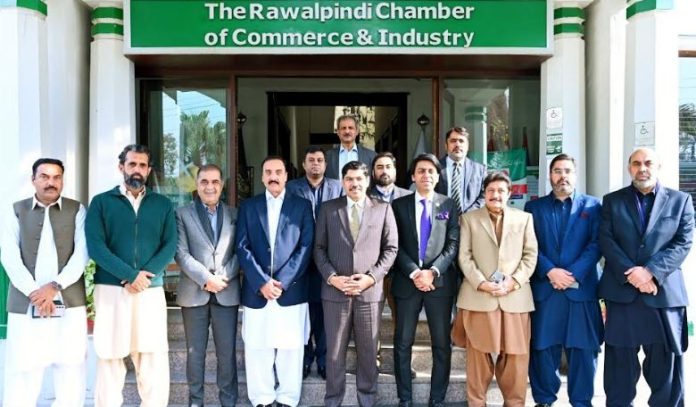
Rawalpindi: Secretary Industries Punjab Ehsan Bhatta visited Rawalpindi Chamber of Commerce and Industry (RCCI). During the visit, RCCI President Saqib Rafiq gave a detailed briefing on RCCI activities, discussed development projects and shared an update on facilities being provided to the business community for the promotion of trade activities in the region.

Secretary Industries said that in the light of the instructions of Chief Minister Punjab Mohsin Naqvi, business facilitation centers in six cities including Rawalpindi are being established. Business Facilitation Center (BFC) in Rawalpindi will be inaugurated on January 15, he added.

He said that after the success of Business Facilitation Centre in Lahore, it is being started in Rawalpindi, Multan, Sialkot, Faisalabad and Gujranwala on the insistence of the business community. Its aim is to bring investment in these districts by promoting economic activities and play an important role in national development.

 Secretary Industries appreciated the efforts of Rawalpindi Chamber for the establishment of Business Facilitation Center and assured full support from Punjab Government for the early completion of the center.

On this occasion, President Saqib Rafiq said that the BFC for business community in Punjab will serve as major step towards ease of doing business which will provide seamless interaction between the business community and 36 different departments.

Within the centre, representatives of 18 departments, including Wapda, Nadra, SNGPL, environment, livestock, tourism, local government, PHA, Wasa, irrigation and police and other concerned departments will be stationed who will be responsible for guiding and taking prompt action on requests of the business community.

Later the Secretary Industries also visited the Business Facilitation Center site in RDA where he was given a detailed briefing on various parts of the proposed center, one window facility and operational matters.

Serena Hotels and Telenor sign an MOU to expand ‘S TEL,’ setting a new standard in hospitality connectivity

Serena Hotels

ISLAMABAD, DEC 23 /DNA/ – Serena Hotels and Telenor have formally signed a Memorandum of Understanding (MOU) to get on a strategic collaboration aimed at enhancing the ‘S TEL’ services within the hospitality domain. This partnership is specifically geared towards the expansion of S TEL services at Faisalabad and Peshawar Serena Hotels.

The signing ceremony was attended by key representatives from Serena Hotels and Telenor. Among the distinguished attendees, Mr. Imran Hasan, Director Sales & Marketing of Serena Hotels and Mr. Magnus Muller, Chief Business Officer (CBO) of Telenor officially signed the MOU.

Serena Hotels and Telenor took the first step in their collaboration by signing a Memorandum of Understanding (MOU) with the aim of launching ‘S TEL’ services in 2019 at the Islamabad Serena Hotel to create an environment where the guests can effortlessly stay connected with the digital world. The ‘S TEL’ solution will provide a complimentary service exclusively for guests. This unique offering encompasses free international and local calls, internet access, and hotspot options, all conveniently bundled into a dedicated smartphone available in their rooms.

Upon check-in, guests can access their details on ‘S TEL’ for instant use. The removable smartphone helps in ordering meals, scheduling laundry pickup, and serves as a virtual city guide for local attractions.

Tariq Mahmood appointed PIO

Tariq Mahmood appointed PIO

DNA

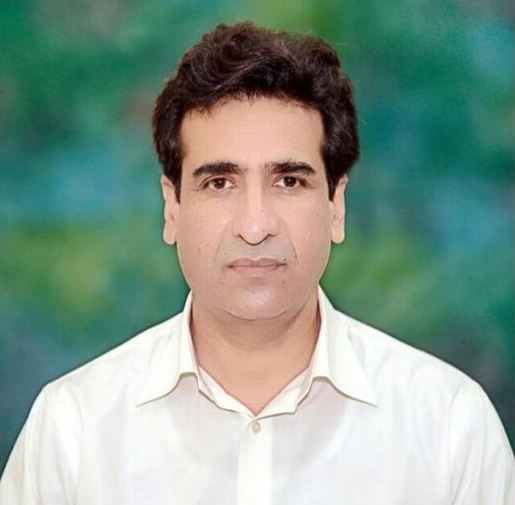
Islamabad: Tariq Mahmood, a distinguished senior officer within the Information Group, has assumed the position of Executive Director General/PIO, marking a significant development in his career. The official announcement of his appointment has been made through a recently issued notification.

Having previously shouldered the responsibilities of the Prinicple Information Officer (PIO) on an interim basis, Tariq Mahmood’s elevation to the permanent role underscores his valuable contributions and expertise in the field. Holding the rank of BPS 21 officer, his wealth of experience and commitment to the Information Group’s mission are evident in his professional journey.

Tariq Mahmood’s academic prowess is also noteworthy, having earned a PhD degree, further enhancing his capabilities to lead and navigate the challenges in his new role.

Governor Sindh inaugurates Ethiopian Tourism Desk at Karachi Feast

Governor Sindh inaugurates Ethiopian Tourism Desk at Karachi Feast

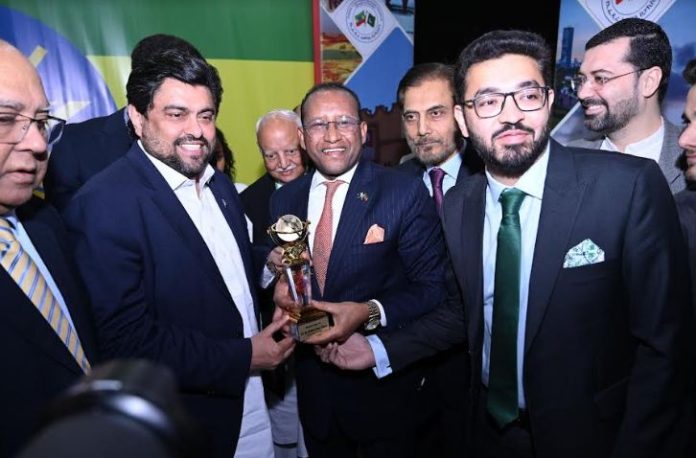
Karachi: DEC 22 /DNA/ – Muhammad Kamran Khan Tessori, the Governor of Sindh, and Jemal Beker Abdula, the Ambassador of Ethiopia to Pakistan, opened the Ethiopian Tourism Desk on Friday.

This grand occasion, set to culminate on December 24, 2023, was attended by a diverse audience, including Honorary Consul H.E. Ibrahim Tawab members of the diplomatic corps, government officials, the business community, media, and representatives from civil society.

The pavilion, giving a captivating display of Ethiopia’s multifaceted culture, rich heritage, and unparalleled tourism offerings, was a testament to the enduring bond between Ethiopia and Pakistan.

Governor Tessori, addressing the media, emphasized the longstanding relations between the two nations, rooted in shared history, values, culture, and religion.

He commended Ambassador Abdula for his tireless efforts in fortifying the bilateral relations, noting the impactful presence of the Ethiopian Embassy in Pakistan despite being established just a year ago.

Moreover, the Governor expressed gratitude to the Government of Ethiopia for launching Ethiopian Airlines in Karachi which played a critical role in connecting Pakistan with the whole African continent.

The Governor expressed commitment to elevating the relations between the two countries to new heights.

Ambassador Abdula, in his address, highlighted how the Ethiopian Embassy had effectively brought Africa closer to Pakistan through the commencement of Ethiopian Airlines operations in Karachi.

Describing Ethiopia as a land of breathtaking beauty, abundant natural resources, picturesque landscapes, lakes, mountains, and over 16 UNESCO World Heritage Sites, he urged the people of Karachi to savor Ethiopian taste through Ethiopian coffee by visiting the tourism desk.

The Ambassador underscored that this experience would serve as a bridge connecting them with their ancestral roots, emphasizing Ethiopia as the land of King Nejashi and Bilal Habeshi.

UNSC adopts resolution on Gaza

UNSC adopts resolution on Gaza

DNA

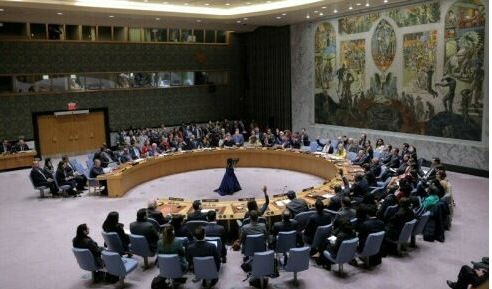
NEW YORK: The UNSC has ADOPTED UAE-backed resolution seeking immediate resumption of relief work in Gaza. Besides, the resolution also called for supply of necessary aid to Gaza people.

Earlier the US vetoed the UNSC resolution calling for immediate ceasefire. 10 members voted in favour of the resolution while the US vetored.

The United States had indicated it will back a watered-down United Nations Security Council resolution on the Israeli-Palestinian war to call for more humanitarian aid for Gaza, after a week of negotiations and four postponements, but some countries wanted a stronger text that would include the now-eliminated call for a truce.

ECP strips PTI off its ‘bat’ symbol

ECP strips PTI off its 'bat' symbol

Election Commission says party’s polls were unlawful


Khayam Abbasi / DNA


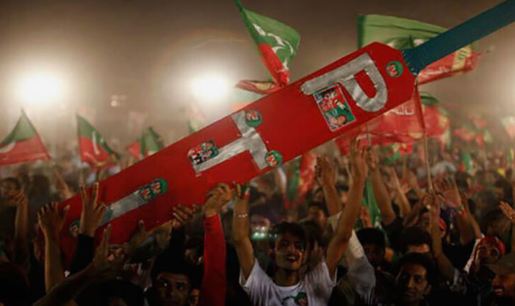
ISLAMABAD: The Election Commission of Pakistan (ECP) Friday evening stripped off the Pakistan Tehreek-e-Insaf (PTI) of its iconic ‘bat’ symbol — a sign that depicts its founder, Imran Khan’s former life of cricket.
Announcing its reserved verdict, a five-member ECP bench — headed by Chief Election Commissioner Sikandar Sultan Raja — declared PTI’s intra-party elections unlawful.

President, PM hold telephonic conversation; express concern over inappropriate police treatment against Baloch protestors

President

ISLAMABAD, Dec 22 (APP/DNA): President Dr Arif Alvi and Caretaker Prime Minister Anwaar-ul-Haq Kakar on Friday held a telephonic conversation wherein they expressed concern over the inappropriate police treatment with the Baloch protestors.

Discussing the situation, both the president and prime minister viewed that the police should not have dealt with the protestors strictly, a President House press release said. During the conversation, the prime minister told the president that the detained protestors were being released on personal bonds.

Meanwhile, Balochistan Governor Malik Abdul Wali Khan Kakar also called on President Alvi and discussed the overall situation in Balochistan province as well as police maltreatment against the Baloch protestors. The governor viewed that the police should show restraint towards the protestors.

In the meeting, the two sides believed that the police should not have acted beyond their limits and powers. Both leaders emphasized the measures to improve the law and order situation in Balochistan.

Stay Connected

64FansLike
60FollowersFollow

Latest Reviews

Exchange Rates

USD - United States Dollar
EUR
1.16
GBP
1.34
AUD
0.67
CAD
0.72