Home Blog Page 855

Two trajectories

Global Misperceptions

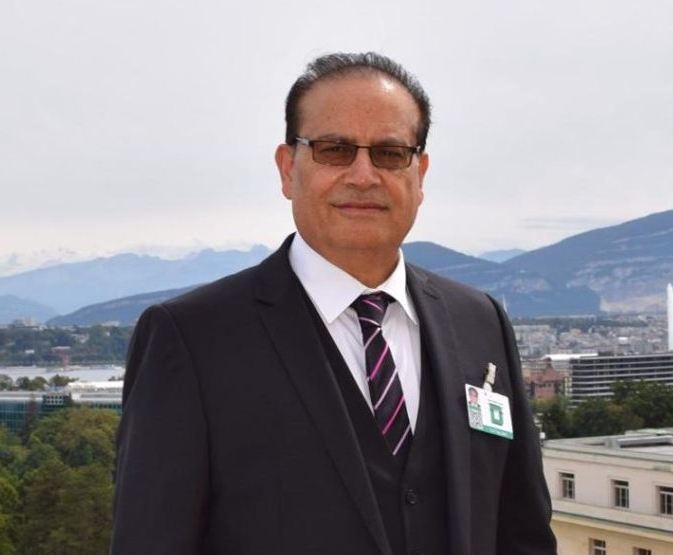
Luay Shabaneh

LAST summer, I had the privilege of joining a Canadian delegation on a field mission to monitor a UNFPA-Canada-supported initiative — the Sihat Mand Khaandaan (SMK) programme — focused on promoting ‘healthy families’. Our journey led us to the heart of Memon Gi Wasi village in Matiari district, Sindh, where we were welcomed to an “adolescent and youth-friendly space”.

A few dozen young people and some delegation members sat on the sand under an old wooden roof, where we were briefed by the youth about their hopes and challenges and how their engagement with SMK activities had improved their lives. I eagerly absorbed the valuable insights of young women who had managed to discover hope amidst adversity and daunting circumstances. They were brilliantly drawing roadmaps and shaping their dreams, while benefiting from their participation in youth activities and methods they employed to help their communities.

The presentations by these amazing young females reminded me of the UNFPA model for the trajectory of the 10-year-old girl introduced in 2014. The model assumes two trajectories for the girl; the first is what I called at the time ‘shining’, and the alternative is ‘down-nosing’. The shining trajectory starts by keeping the girl at school, protecting her from child marriage, in fact, delaying her marriage until she completes her education and is equipped with skills and confidence, provided a decent job opportunity and empowered to enjoy her rights. This leads to better health for the girl, a smaller family, lifelong education, and economic independence. Ultimately, she will be better equipped to make decisions about her own reproductive health and raise healthy, happy children, making her a woman leader in her family, community, and larger society, one who is fit to participate in politics and contribute to her nation’s prosperity.

On the flip side, the downward trajectory starts with a 10-year-old girl discontinuing her education, leading to early or child marriage, early pregnancy, a growing number of children, health challenges, lack of skills, difficulty in securing stable employment, limited access to education, and heightened vulnerability to gender-based violence (GBV).

The accelerators to lift the girl from the down-nosing to shining trajectory were identified by strengthened systems (education, sexual and reproductive health, GBV prevention and response), programmes (population and youth policies, capacity building for quality service provision, laws and policies upholding SRH rights, criminalising violence against women and ending discrimination), and individual capabilities (lifelong education, enabling work environment, knowledge, skills, opportunities and income-generating activities). Go­­vernment spending on a 10-year-old on the down-nosing trajectory is far higher than the cost of investing in her education, skills, and opportunities in the shining trajectory.

Although investing in women is a human right, governments, too, can gain multiple benefits from such investment. Cultural barriers and discriminatory social norms are often guarded by community gatekeepers, including women who enable the reinforcement of discriminatory value systems and myths within the household and family structure. Women with a high level of human capital are the natural agents of change in social norms that prevent socioeconomic progress.

Research shows that people live in cycles, and socioeconomic and demographic cycles are interlinked with strong association. Poor families are trapped because they have a bigger family size, a higher dependency on breadwinners, are uneducated and unhealthy, and have fewer chances of getting high-income jobs because of their economic burden. Breaking out of this vicious cycle and transitioning to a more prosperous path requires a change in family demographics, and this usually requires investments in women’s human capital and opportunities.

Discussions at a recent population conference highlighted the experience of Bangladesh, Iran, Indonesia, Tunisia, and Turkey, which showed that investing in women’s human capital, skills, rights, and opportunities comprise a multiplying factor in calibrating population with resources. Pakistan lags behind countries such as Bangladesh and Malaysia, which have achieved remarkable progress in recent years in terms of economic growth and empowering women and integrating them as productive members of society. For example, the female labour force participation rate in Pakistan is 24 per cent compared with 43pc in Bangladesh and 55pc in Malaysia.

Pakistan has no choice but to allocate substantial funds and design long-term programmes to invest in women and girls to shift the nation’s trajectory from ‘down-nosing’ to the ‘shining’ approach.

The writer is the representative of the UN Population Fund in Pakistan.

COAS attends Christ church festivity, advocates for greater religious tolerance

COAS

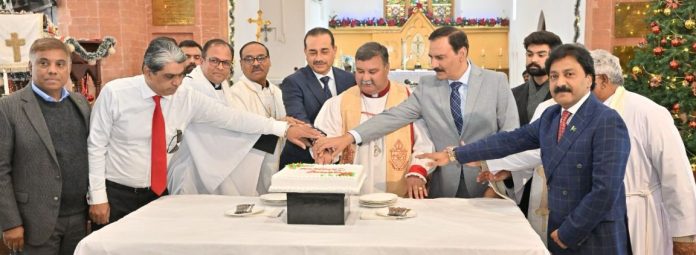
RAWALPINDI: /DNA/ – General Syed Asim Munir, NI (M), Chief of Army Staff (COAS), joined the Christian community at Christ Church, Rawalpindi in Christmas celebrations.

The congregation welcomed COAS and thanked him for sharing the festivity. COAS wished Merry Christmas to the entire Christian community in Pakistan.

COAS expressed reverence for religious community and stressed upon the need for promoting greater interfaith harmony in society in order to follow Quaid’s true vision of a united and progressive Pakistan.

COAS noted that “Islam teaches us the lesson of peace, friendship and encourages interfaith harmony which is the need of the hour”.

COAS stressed upon the importance of having correct perspective, truth and knowledge based opinions about national issues rather than following rhetoric and propaganda, to address complex challenges and issues.

“Enemies of Pakistan are hell-bent towards creating fissures using religious, ethnic and political vulnerabilities. We have to stand together & united to rise as a resolute and strong nation.” COAS remarked.

COAS while paying glowing tribute to Quaid e Azam Muhammad Ali Jinnah’s great vision and leadership on his 147th birthday, quoted Quaid’s historical remarks made in his speech on 11 August 1947 while addressing the Constituent Assembly, (quote)“You are free. You are free to go to your temples. You are free to go to your mosques or to any other places of worship in this State of Pakistan.” (Un-quote)

At the end, COAS befittingly acknowledged the contributions and sacrifices made by the entire Christian community of Pakistan in all the fields and domains.

Pakistan condoles the martyrdom of 12 Turkish soldiers

Pakistan condoles the martyrdom of 12 Turkish soldiers

ISLAMABAD: /DNA/ – Pakistan Condoles the Martyrdom of 12 Turkish Soldiers during Counter-Terrorism Operations. We are deeply saddened to learn that 12 Turkish soldiers have been martyred during counter-terrorism operations on 22-23 December 2023.

We express deepest condolences to the bereaved families and wish speedy recovery to the injured. Pakistan stands in firm solidarity with Turkiye in this moment of grief.

Pakistan strongly condemns the scourge of terrorism. We are confident that the brotherly Turkish nation will overcome this tragedy with characteristic grit and determination.

COAS’s articulate narrative on Palestine, Kashmir issues resonates in Pakistan, Muslim world: Ashrafi

Palestine

DNA

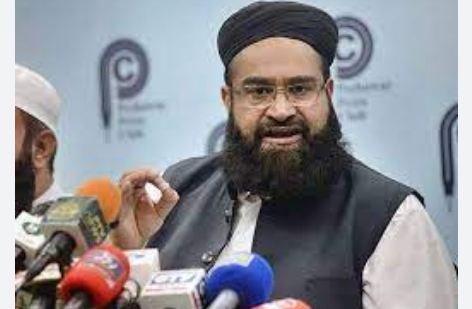
ISLAMABAD: Prime Minister’s Special Representative for Religious Harmony and Pakistani Diaspora in Middle East and Muslim Countries, Hafiz Muhammad Tahir Mahmood Ashrafi on Saturday said Chief of Army Staff (COAS), General Syed Asim Munir received widespread acclaim from both Pakistan and the Muslim world during his successful visit to the United States (US).

He said the COAS’s articulate narrative on the issues of Palestine and Kashmir resonated not only in Pakistan but all over the Muslim world, emphasizing the importance of a diplomatic approach and international collaboration to resolve longstanding conflicts.

Ashrafi who is also the Chairman of Pakistan Ulema Council said Pakistan and Muslim leaders praised General Asim’s commitment to promoting peace and stability in the region. He said the COAS’s visit underscored the significance of fostering global understanding and cooperation on these critical matters.

In a diplomatic stride towards enhancing bilateral ties, he said General Asim concluded his successful visit to the US, fostering collaboration between Pakistan and America.

He said the visit, marked by high-level meetings and discussions, not only strengthened military cooperation but also delved into critical international issues, notably addressing the longstanding tension between Palestine and Israel.

Ashrafi said General Asim, leading a delegation of high-ranking military officials, engaged in strategic talks with top US military and political leaders. He said discussions revolved around bolstering defense collaboration, counterterrorism efforts, and regional stability.

He said the US acknowledged Pakistan’s pivotal role in the region and expressed commitment to fortifying the longstanding partnership between the two nations.

Ashrafi said a significant aspect of the visit was General Asims ‘s emphasis on addressing the Palestine-Israel conflict. In an interaction with media persons, he said the COAS urged for immediate measures to ease the ongoing tension in the region.

He said General Asim emphasized the humanitarian aspect of the crisis, advocating for a peaceful resolution that respects the rights and aspirations of the Palestinian people.

During closed-door meetings, Ashrafi said General Asim presented Pakistan’s perspective on the Palestine issue, emphasizing the need for a just and comprehensive solution that ensures the establishment of an independent Palestinian state. He said the COAS underlined the importance of international cooperation in facilitating dialogue between conflicting parties and encouraged the US to play a proactive role in mediating the dispute.

Ashrafi said the visit also saw understanding in various sectors particularly at enhancing military cooperation, intelligence sharing, and joint training exercises. “Both nations expressed their commitment to collaboratively addressing global challenges, including counterterrorism efforts and regional security,” he added.

He further said General Asim’s visit served as a testament to the enduring partnership between Pakistan and the US, extending beyond military cooperation to encompass shared interests in promoting peace and stability on the global stage.

He said as General Asim continued to champion these causes on the international stage, his leadership was gaining recognition for advancing diplomatic solutions and bridging divides.

Ethiopian tourism pavilion at Karachi feast gets overwhelming response

DNA

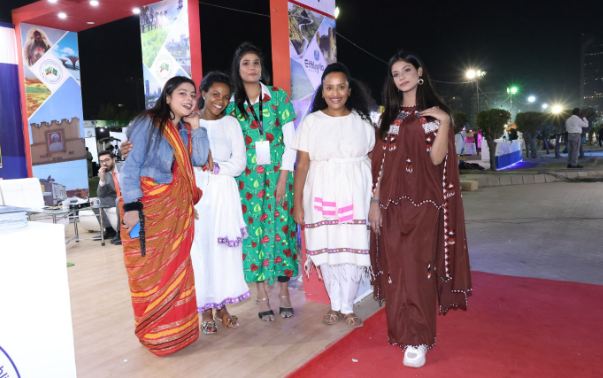
KARACHI: The Ethiopian Tourism Pavilion at the Karachi Feast received an overwhelming response, attracting an impressive influx of more than 25,000 visitors over the three-day extravaganza which concluded on Sunday.

Junaid Shah, Minister for Youth Affairs, Sports, Culture and Tourism, graced the concluding ceremony and lauded the Embassy of the Federal Democratic Republic of Ethiopia for introducing tourism and culture of Ethiopia in Pakistan. 

Muhammad Kamran Khan Tessori, the Governor of Sindh, and Jemal Beker Abdula, the Ambassador of Ethiopia to Pakistan, opened the Ethiopian Tourism cubicle on Friday in the presence of a diverse audience, including Honorary Consul H.E. Ibrahim Tawab, members of the diplomatic corps, government officials, business community, media, and representatives from civil society.

On Saturday, Caretaker Minister for Federal Education and Professional Training, H.E. Madad Ali Sindhi, graced the Ethiopian Pavilion with his presence at the Karachi Festival on Saturday.

An industrious endeavor by the Embassy of the Federal Democratic Republic of Ethiopia in Pakistan emerged as a beacon of cultural richness and tourism allure during the Karachi Feast.

The Ethiopian Tourism Pavilion gave a captivating display of Ethiopia’s multifaceted culture, rich heritage, and unparalleled tourism offerings. The Ethiopian Coffee remained the center of attraction, drawing enthusiastic Karachiites to savor the distinctive flavors of Ethiopia.

The cultural performances by the Ethiopian Embassy elicited immense applause, further enhancing the immersive experience for the Karachi audience.

Expressing his delight over the three-day spectacle, Ethiopian Ambassador Jemal Beker Abdula extended heartfelt gratitude to the Bukhari Group, organizers of the Karachi Feast, for their unwavering cooperation and support in promoting Ethiopia’s culture and tourism.

He also expressed his gratitude for the people of Karachi who had shown immense love and strong attachment to Ethiopia which was a land of Bilal Habeshi and King Nejashi.  This experience would serve as a bridge to connect them with their ancestral land, he added.

Describing Ethiopia as a land of breathtaking beauty, abundant natural resources, picturesque landscapes, lakes, mountains, and over 16 UNESCO World Heritage Sites, he urged the people of Pakistan to visit Ethiopia which was a land of origins.

Christmas eve celebration at Islamabad Serena hotel

Islamabad, DEC 24: /DNA/ – Islamabad Serena Hotel Wraps Up Christmas Eve with Magical Carol Singing and Extravagant Dinner at Zamana Restaurant.

The festivities commenced on Sunday, 24th December 2023 with a captivating carol singing, featuring a talented choir that filled the air with the joyous melodies of the season. Guests gathered in the festive ambiance, sharing joyous moments with friends and family as they embraced the holiday spirit.

The highlight of the night unfolded when Santa Claus made a surprise entrance in the Hotel Lobby. Laughter and excitement filled the air as Santa personally handed out gifts, ensuring each child felt the magic of the season.

Following this delightful surprise, Zamana Restaurant opened its doors to offer a delectable Christmas Eve Buffet dinner. The carefully curated menu by the hotel’s expert chefs showcased a festive array of culinary delights, providing the perfect backdrop for an exquisite dining experience. Guests indulged in a festive feast that included traditional Christmas delicacies, signature dishes, and a selection of decadent desserts.

Caretaker Chief Minister Punjab meets PM Kakar

Caretaker Chief Minister Punjab meets PM Kakar

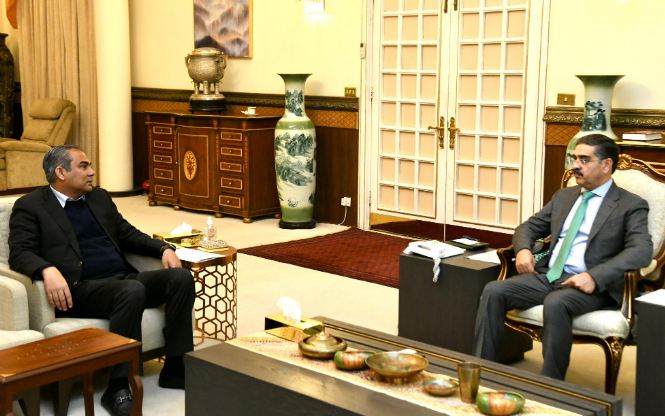
ISLAMABAD, Dec 24 /DNA/ – Caretaker Chief Minister of Punjab, Syed Mohsin Raza Naqvi, paid a visit to the Caretaker Prime Minister Anwaar-ul-Haq Kakar in Islamabad, marking an important engagement ahead of the forthcoming elections.

During the meeting, both leaders engaged in discussions centered on the current state of affairs in Punjab, emphasizing the need for ensuring stability and facilitating a smooth transition of power during this critical phase.

Israel bombs northern Gaza, reports mounting military losses

Gaza

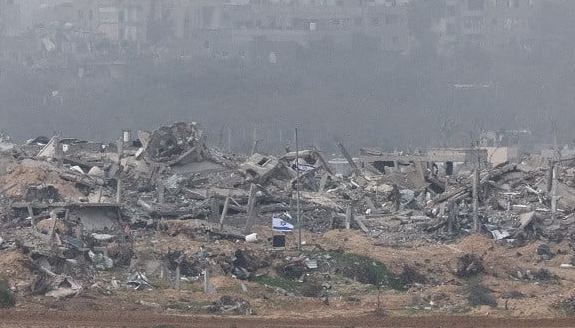
GAZA: Israel bombed areas of Jabalia in the northern Gaza Strip overnight, with fighting throughout Sunday morning, residents and Palestinian media said, as the Israeli military announced a mounting death toll in clashes with Hamas fighters.

Israel claims it has achieved almost complete operational control over northern Gaza and is preparing to expand a ground offensive to other areas, but Jabalia residents reported persistent aerial bombardment and shelling from Israeli tanks, which they said had moved further into the town on Saturday. Resistance fighters continue to mount attacks in areas Israel claims control over. 

The Israeli military appeared to be meeting stiff resistance. It said on Sunday eight soldiers had been killed in the Strip, bringing to 154 its published combat losses since its ground invasion started.

The White House said US President Joe Biden and Israeli Prime Minister Benjamin Netanyahu had discussed the Israeli campaign.

Israeli strikes in Gaza killed more than 200 people in 24 hours, said Gazan authorities. 

Biden “emphasised the critical need to protect the civilian population including those supporting the humanitarian aid operation, and the importance of allowing civilians to move safely away from areas of ongoing fighting”, the White House said in a statement.

“The leaders discussed the importance of securing the release of all remaining hostages,” the White House said.

Netanyahu “made clear that Israel will pursue the war until all of its objectives are fully met”, his office said.

Despite growing calls for restraint and for more aid to reach war-stricken Palestinians, Israel showed little sign of modulating its 11-week-old “Operation Swords of Iron” — which aims to rout Hamas.

Fighting is now centred on Gaza City and the southern city of Khan Yunis, both considered strongholds of the Palestinian resistance group.

After reports of heavy Israeli shelling, grey and black smoke rose over the north of the besieged coastal territory and in Khan Yunis.

The refugee camp-turned-city is the birthplace of Yahya Sinwar, Hamas’ leader in Gaza and the man Israel holds most responsible for the October attacks.

The Israeli Army chief of staff, Herzi Halevi, visited troops on the ground in Khan Yunis, telling them that the operation had been “very impressive, truly very impressive, both the attack here and carrying out the operation in a secure manner”.

Outside a morgue at the city’s Nasser Hospital, grieving relatives prayed, wept and stared vacantly as they tried to process incalculable loss.
Palestinian authorities said the death toll from this war has now surged beyond 20,000.

“This is a genocide,” said resident Rafat Al Aydi.

Netanyahu, Israel’s longest-serving prime minister, has had testy relations with a string of US presidents. But disagreements over how the Gaza war is being prosecuted, when it will end, and what happens the day after, have strained ties even further.

On Friday, the United States allowed the passage of a UN Security Council resolution that effectively called on Israel to allow “immediate, safe and unhindered” deliveries of life-saving aid to Gaza “at scale”.

World powers had wrangled for days over the wording, and at Washington’s insistence toned down some provisions — including removing a call for a ceasefire.

UN Secretary-General Antonio Guterres has accused Israel of “creating massive obstacles” for aid deliveries.

For Palestinians in Gaza’s southern city of Rafah, the prospect of aid alone was not enough. “We don’t want food, we want a ceasefire,” said Mahmud al-Shaer.

Ahmad al-Burawi, who was displaced from Beit Lahia further north, added: “We just want to return to our lands, that’s all. We want a solution” to end the war. “People are dying,” he said.

The war has displaced about 80 percent of Gaza’s 2.4 million population, according to UN estimates.

Israelis, including friends and relatives of the 129 captives still believed held in Gaza, demonstrated again on Saturday in Tel Aviv.

Hamas’s armed wing said it “lost contact” with fighters tasked with guarding five of the captives, including three elderly men who appeared in a hostage video the group released this week.

“We believe that those hostages have been killed” in Israeli strikes, said spokesman Abu Obeida. Talks aimed at resuscitating a truce and prisoner swap appeared to be stalled.

An earlier truce allowed 80 Israeli captives to be released in exchange for 240 Palestinian prisoners, but ended after one week.

Far from Gaza, a new attack on shipping Saturday showed the war is already spilling over into the broader region.

Maritime agencies said a drone strike damaged a chemical tanker in waters off Veraval, India. There was no claim of responsibility, but the Pentagon said it was a “one-way attack drone fired from Iran”.

Yemen’s Houthi fighters have repeatedly fired drones and missiles at ships in the Red Sea, saying they are targeting Israeli-linked vessels in solidarity with Gaza.

Iranian deputy foreign minister Ali Bagheri on Saturday said the Houthis act on their “own decisions and capabilities”.

There also have been cross-border skirmishes between Israeli forces and Lebanon’s powerful Hezbollah movement.

Perception of US versus China

Qamar Bashir

By  Qamar Bashir

During my tenure as Press Secretary to the President, I met with the newly appointed head of public affairs at the US Embassy who called on me in my office in mid 2022. During the ensuing discussion his primary concern was how to improve US perception which has historically been tainted and uneasy. In reply to one of his queries about improving US perception, I reframed the dialogue. Yes, we were historical allies, bound by pacts like SEATO and CENTO, and US contributions to Pakistan’s military and development are documented. Yet, the common man on the street barely feels their touch. This disconnect is crucial. While grateful for aid, its conditional nature often overshadows its benefits, breeding a sense of strings-attached partnership rather than genuine collaboration. The challenge, I emphasized, lies not in revisiting the past, but in forging a future where the impact of US engagement reverberates directly on the lives of ordinary Pakistanis, transforming their perception from tainted legacy to tangible partnership.

The relationship between Pakistan and the US has been marred by suspensions, distrusts and disappointments. From coercing Pakistan into conflicts during the Cold War era to meddling in its political processes, supporting dictatorial regimes, and then swiftly disengaging once objectives were met, the US left a trail of shattered trust and unhealed wounds. The perception among common Pakistanis, politicians, and the bureaucracy remains that the US is often to blame for the nation’s troubles, whether or not it’s the actual cause. Despite substantial financial aid from the US, which in total might exceed Chinese assistance, the prevalent sentiment in Pakistan portrays the US as manipulative, self-serving, domineering, and unforgiving, perpetuating a negative perception that hasn’t improved over time.

The incident involving the US Navy SEALs violated Pakistan’s airspace to execute the operation that led to the killing of Osama Bin Laden stands as a stark example of deep-rooted distrust. Instead of collaborating with Pakistan’s armed forces, the US, driven by its sheer might, breached the sovereignty of an independent nation. This event, among many others, including the indiscriminate drone strikes causing civilian casualties labeled as “collateral damage,” illustrates the severe humiliation and disregard faced by Pakistan. These actions highlight a pattern of disrespect for international law and human rights, with instances of abductions, extrajudicial detentions, and circumvention of legal processes, such as detaining Pakistani citizens in Guantanamo Bay prisons. Furthermore, the US’s stance during India’s airspace violation lacked condemnation, signaling a bias that overshadowed adherence to international norms, further straining relations and reinforcing a sense of betrayal among Pakistanis.

In stark contrast to the US, China has stood as a steadfast friend to Pakistan since its inception. China’s support has been unwavering, extending aid and assistance during Pakistan’s most challenging economic, financial, and security crises. Unlike the US, China refrained from meddling in Pakistan’s internal affairs or using coercion to achieve its goals. Notably, during critical moments, China didn’t abandon Pakistan and didn’t impose ultimatums, as seen with the US post-9/11, where Pakistan was given a stark choice: “with us or against us.” China’s approach has fostered a sense of reliability and trust, forging a longstanding bond between the two nations based on mutual respect and non-interference.

Unlike the intangible aid from the US and the West, Chinese investment in Pakistan has been palpable and transformative, leaving a visible imprint on the nation’s development. China’s support extended beyond mere assistance, fostering tangible improvements across various sectors without imposing conditions or demanding allegiance. Notably, China aided Pakistan’s defense industry without seeking alliance commitments or dragging the nation into its conflicts. It refrained from interfering in Pakistan’s politics, maintaining a hands-off approach to internal and external affairs, unlike the US or the West. The impact of Chinese investment reverberates in numerous projects, ranging from alleviating power shortages, enhancing transportation networks with roads, highways, and ports, to boosting connectivity, energy alternatives, infrastructure, and even grassroots initiatives like distributing solar systems in Balochistan. These initiatives directly and positively impacted the lives of ordinary Pakistanis, creating a profound sense of appreciation, gratitude, and respect toward China, fostering a deep bond that Pakistanis hold in high regard.

The apprehension and opposition from the US and Europe toward the China-Pakistan fraternal and all weather friendship is a sentiment of reluctance and  apprehensions. They don’t have the appetite to assist Pakistan towards development and progress nor want others to do so. As Director Media to the former President Zardari and deeply attached with the PML(N) leadership during Nawaz’s period, I first hand witnessed Mr. Asif Ali Zardari and Nawaz Sharif made frantic outreach to the US and the West to help Pakistan out of its financial and economic woes but both declined involvement. Their refusal prompted Pakistan to turn to Chinese investment, a move born out of necessity to expedite progress and uplift millions out of poverty. The CPEC emerged as a crucial pathway for Pakistan’s advancement when other avenues for support were unavailing.

The criticism aimed at Chinese investment often includes allegations of creating a debt trap for Pakistan, yet Pakistan’s experience tells a different story. Contrary to the accusations, Pakistan finds comfort in its debt owed to China, which stands out among its various creditors. According to Dr. Shamshad, Pakistan’s Caretaker Finance Minister, the Chinese debt is the most forgiving and accommodating. Chinese creditors demonstrate a remarkable flexibility by extending payment deadlines upon Pakistan’s request, showing understanding and support. Notably, Chinese debt boasts the lowest interest rates, further distinguishing it from other financial obligations. Additionally, China remains willing to bolster Pakistan’s foreign reserves whenever the need arises, showcasing a level of generosity and support that Pakistan values. This stands in stark contrast to the portrayal of a debt trap and exemplifies the favorable terms and understanding within the Pakistan-China financial relationship.

The criticism from the US and the West towards CPEC is though baseless,  reflects their frustration and appears driven by concerns over being sidelined from Pakistan’s strides in progress and prosperity. They knew very well that the success of the CPEC could potentially set a precedent for similar initiatives in the region and globally, making the US and the West uneasy. Critiques against the CPEC seem largely unfounded, with concerns raised about Beijing’s influence, debt accumulation, altered trade dynamics, environmental sustainability, and social repercussions lacking substantial basis. These criticisms, seemingly founded on fears of geopolitical shifts and China’s enhanced presence, underline the multi-dimensional impact of the CPEC on the region.

The accusation of altering trade routes or imposing dominance by China in the context of the China-Pakistan Economic Corridor (CPEC) is baseless and lacks merit. Both China and Pakistan have extended invitations to countries across regions, including the Middle East and Europe, to actively participate as equal partners in the expansive Belt and Road Initiative (BRI). Notably, this inclusive approach extends even to India and Afghanistan, offering them opportunities to join this transformative program. Such outreach negates the notion of China’s intention to monopolize or manipulate trade routes. Instead, the BRI serves as a unifying platform that, when fully operational, connects the global community, minimizes distances, stimulates trade and investment, reduces transportation costs, and ensures year-round availability of essential commodities worldwide. By stabilizing prices and enhancing accessibility, this initiative fosters equal opportunities for all participating nations to progress and thrive, presenting a vision of shared development and prosperity on a global scale.

The perception of the US in Pakistan is tainted by a complex history of fluctuating alliances, military interventions, controversial drone strikes, and a sense of conditional aid driven by perceived self-interest. These experiences have bred skepticism, undermining trust and sovereignty. In contrast, China’s resonance in Pakistan is rooted in an enduring friendship characterized by non-interference, respectful bilateral relations, and unwavering support sans conditions. Tangible investments, notably through transformative projects like the China-Pakistan Economic Corridor (CPEC), have bolstered economic development and infrastructure visibly, fostering genuine goodwill. China’s consistent collaboration during Pakistan’s challenges without ulterior motives has solidified the perception of a true partnership, painting a sharp contrast to the perceived interests and interventions associated with the US-Pakistan relationship.

My advice to him in reply to his question; how to improve the deeply entrenched negative perception of the US in Pakistan was straightforward: Emulate the Chinese model. Reflect on why China is embraced and cherished by the people of Pakistan. Consider why the Pakistani leadership, both civilian and military, find comfort in dealings with China, and why there’s inherent trust in this relationship. Evaluate why the bond between China and Pakistan remains resilient despite changes in government or shifts in bureaucratic structures.

Furthermore, the key lies in initiating projects in Pakistan that are tangible, visible, and directly improve the lives of ordinary citizens. Importantly, refrain from meddling in Pakistan’s domestic politics and internal affairs. To recalibrate the bilateral relationship, it’s essential to approach it as equals rather than fostering a dynamic of servant and master. This shift toward mutual respect and visible, impactful projects can pave the way for a more positive perception and a stronger bond between the US and Pakistan like it did between China and Pakistan.

By  Qamar Bashir

Former Press Secretary to the President

Former Press Minister to the Embassy of Pakistan to France

Former MD, SRBC

 Inflation keeps rising amidst record food and energy prices: APBF

All Pakistan Business Forum (APBF)

ISLAMABAD: /DNA/ – The All Pakistan Business Forum (APBF) has observed that the inflation measured by the Sensitive Price Indicator (SPI) continued to rise in the wake of higher prices of food and energy despite recent cut in the prices of petroleum products, as essential commodities have still not seen a decline in prices, leaving trade and industry frustrated.
APBF President Syed Maaz Mahmood, quoting the Pakistan Bureau of Statistics (PBS), observed that the index spiked 38.28 percent when compared with the corresponding week of last year, as out of the 51 essential commodities covered by SPI, prices of 17 (33.33 percent) items increased, rates of another 17 decreased and prices of the remaining 17 items remained unchanged compared to the previous week. On a weekly basis, the price of tomato rose 6.28 percent, egg 3.48 percent, powdered salt 2.75 percent, cooked beef 1.06 percent, garlic 1.04 percent, tea (prepared) 0.73 percent, beef 0.39 percent and potato 0.35 percent.
Among non-food commodities, the electricity charges for Q1 rose 8.59 percent, energy savers 0.55 percent, shirting 0.47 percent and liquefied petroleum gas (LPG) 0.31 percent, according to the PBS.
The year-on-year trend depicted price increases in the range of 58-137 percent among different items.

Maaz Mahmood said that Pakistan has been facing a high inflation for the past couple of years partly due to massive depreciation of the rupee against the US dollar and partly due to a surge in global commodity prices like energy cost. The country largely meets its energy demand through expensive imports.
The monthly inflation reading, measured by the Consumer Price Index, hit a four-month high at 31.4 percent in September 2023 after reaching a six-decade high at 38 percent in May. Inflationary pressures are expected to slow down from January 2024 onwards. The latest rupee appreciation of 10.62 percent in the past 27 working days to over three-month high at Rs287.62/$ is expected to encourage the government to make a deep cut in petroleum product prices in the upcoming fortnightly review for the second half of Dec. However, the likely surge in gas prices under a condition of the International Monetary Fund (IMF) loan program may keep inflation elevated and not allow it to fall significantly in the near future.
He stressing the need for putting the economy on a sustainable growth trajectory by providing incentives to the industry, lamented that the economy is facing multiple challenges of falling exports, high inflation, low growth and declining foreign reserves, with fiscal accounts under immense pressure on account of heavy interest payments. The APBF President said that the drop shows the government would find it difficult to achieve the industrial growth and export target, leading to more pressure on foreign exchange reserves of the country.
He asked the government to address the underlying structural vulnerabilities through smooth energy supply at competitive rates, as country’s overall export proceeds continued to shrink for the fifth consecutive month in a row. Quoting the data, he pointed out 1.7 billion dollars decline in remittances during the first half of the current year compared to the same period the year before (a decline of 11.1 percent), exports declined by 6.6 billion dollars (6.8 percent decline), foreign direct investment dipped by 654 million dollars (58 percent decline), portfolio investment plummeted from negative 45.5 to negative 1032 million dollars, Public Sector Development Program decreased by 122 billion rupees (48.4 percent) and credit to private sector from 1043.1 to 703.6 million rupees which contributed to a decline in Nov 2021 Large Scale Manufacturing Sector growth of 6 percent to negative 5.50 percent in the comparable period this year.

 He observed that the drop in textile and clothing exports is gaining momentum over the past five months owing to multiple factors including high energy costs, stuck-up refunds and a slump in global demands despite the massive depreciation of the rupee. He believes that one of the main reasons behind falling exports was the exchange rate instability. The discontinuation of duty drawbacks on local taxes and levies by the government has also created liquidity issues for the export sector.

Stay Connected

64FansLike
60FollowersFollow

Latest Reviews

Exchange Rates

USD - United States Dollar
EUR
1.17
GBP
1.34
AUD
0.67
CAD
0.72