Home Blog Page 853

Sustainable long term Afghan Refugee policy required

Sustainable long term Afghan Refugee policy required

ISLAMABAD: /DNA/ – The Institute of Regional Studies organized a Roundtable discussion on “Afghan Refugees and Illegal Migrants; Problems and the way forward”. Participants included Pakistan’s former Ambassador to Afghanistan, Abrar Hussain, Dr. Noreen Naseer, University of Peshawar, expert on international humanitarian and human rights law Ms Sibah Farooq, Afghan women rights activist Ms Safia Ibrahimkhel,and President IRS Amb. Nadeem Riyaz.

The participants of the view that Pakistan as a sovereign country was well within its rights to formulate policies regarding illegal migration. The timing of the decision and the implementation mechanism could be debated. Many of the Afghan migrants had been living in Pakistan for decades. The rise of terrorism incidents was not directly related to the policy.

The policy had a negative fallout in Afghanistan and with many Human Rights Organizations. The social media in Afghanistan was painting a negative picture of Pakistan and there was a need to address these misperceptions. Pakistan and Afghanistan were neighbours and improvement of relations between the two was essential for regional peace and prosperity.

Pakistan, Afghanistan and the International community should assist the Afghan refugees to return to their homeland with honour and dignity. It was essential to formulate a Legal framework in Pakistan which could assist in proper implementation of the policy. Participants also called for research, collection of proper data, and in-depth analysis of the current situation for policy modification.

Experts also felt that after the elections, the new government should develop a sustainable long term Refugee policy after consulting all stakeholders. Pakistan and Afghanistan must enhance their relationships and liberalization of trade, enhancement of people to people contacts were essential. Pakistan must develop a counter narrative to address all the misgivings in Sustainable long term Afghanistan about Pakistan.

Shehbaz Sharif announces contesting elections from Karachi’s NA-242

Shehbaz Sharif announces contesting elections from Karachi's NA-242

KARACHI: Pakistan Muslim League-Nawaz (PML-N) President Shehbaz Sharif on Friday announced contesting the upcoming general elections from Karachi’s NA-242 constituency, Geo News reported.

He contested from the NA-249 constituency of Karachi in the last general elections which he lost to the then-Pakistan Tehreek-e-Insaf (PTI) leader Faisal Vawda by a slight margin.

On December 23, Muttahida Qaumi Movemment-Pakistan (MQM-P) said that no seat adjustment had been decided with the PML-N over the NA-242 constituency in district Keamari.

The party’s spokesperson had refuted all reports regarding the seat adjustment with Shehbaz Sharif-led party in the aforementioned constituency, terming them “baseless”.

The spokesperson added that MQM-P Senior Deputy Convenor Mustafa Kamal is the party’s candidate for the seat.

Addressing a news conference in Karachi after meeting MQM-P leadership today, Shehbaz said the public transport issue in Karachi would be resolved, provided that PML-N supremo Nawaz Sharif was voted to power on February 8.

The former prime minister said: “The issue of transport will be resolved for good under the leadership of Nawaz Sharif after February 8. People (just) have to make Nawaz Sharif successful through votes.”

He discussed political situation and election matters among other things with the MQM leadership, thanking the Karachi-based party for its cooperation during the last government. Sources said a committee would discuss the matter of seat adjustment between PML-N and MQM in two to three days.

Vowing to transform Karachi and resolve the residents’ basic issues after PML-N coming into power, Shehbaz said Nawaz would end the problem of water scarcity. The coming election would decide Pakistan’s future, he added.

Karachi was the city of lights and gateway to Pakistan, he said, adding that they all had to work collectively to tackle the challenges. “Why did the Green Line project take five to six years? While Metro Bus was established in Lahore in 11 months,” he said.

The PML-N president admitted the coalition government led by him could not reduce the “inherited inflation” during their rule of 16 months. He said he had visited Karachi many a time. The metropolis should be given its right, he said.

The former premier said Karachi paid trillions of rupees in tax yet the tanker mafia provided water to the citizens. He said the Karachi to Hyderabad motorway had vanished and the traffic was completely slow on the artery. “The motorway will also be constructed if Nawaz Sharif became the prime minister,” he said.

He said Karachi was a hub of banking, shipping and trade as well as the highest tax-paying city, but the broken roads and dilapidated buses ruled here, he added.

He also vowed to strengthen relations with the MQM after the latter supported the coalition government rule.

Australia beat Pakistan in second Test to clinch series

Australia beat Pakistan in second Test to clinch series

Melbourne: Australia beat Pakistan in the second Test by 79 runs in Melbourne to clinch the three-match Test series. Australia take an unassailable 2-0 lead in the series after the win today.

Chasing a target of 317 runs, Pakistan were dismissed for 237 in their second innings on Friday.

A fired-up Pat Cummins bagged five wickets and 10 for the match to lead from the front and earn Australia a nail-biting win. The right-armer also bagged the Player of the Match award.

Mitchell Starc also bagged four wickets in the second innings.

After bowling Australia out for 262 before lunch earlier today, the tourists had put together a series of partnerships to frustrate the home side.

Captain Shan Masood top-scored for Pakistan with an impressive 60 runs in 71 balls, with the help of seven fours.

Mohammad Rizwan and Agha Salman added 57 runs for the sixth wicket to get Pakistan close to victory. However, Australia took a flurry of wickets after Rizwan’s controversial dismissal to get over the line.

Cummins appealed for a caught behind in the 61st over of Pakistan’s second innings but the umpire gave it not out. However, the Australia captain decided to review the decision as he thought Rizwan might have gloved it.

After the third umpire took a look at the appeal from different angles and reckoned that there was a spike as the ball passed the wrist band so the on-field umpire was asked to change his decision.

However, the hotspot showed no mark as Rizwan looked away from the ball at the last second. Rizwan, who was sure that he didn’t get anything on it, went back to the hut in utter disbelief.

Rizwan was batting on 35 runs, with Pakistan 98 runs away from victory, when the incident took place.

Agha Salman also scored a fifty but it was in vain.

Babar Azam looked good for his 41 but he was cleaned up by Josh Hazlewood just when he seemed set for a big one.

The 29-year-old is not having a great year, particularly in red-ball cricket as he has now gone nine innings without scoring a Test fifty in 2023. It happened for the first time since his debut that Azam failed to bag a single half-century in a calendar year.

Pakistan have performed poorly in Australia, losing 16 Tests on the trot with their last win in 1995.

The third and final Test of the series will be played in Sydney from January 3.

Chaudhary Rehmat Ali and the Creation of Pakistan

Chaudhary Rehmat Ali and the Creation of Pakistan

Fatima Rasheed

Chaudhary Rehmat Ali was a key person in the early movement to create a separate Muslim state, which later became Pakistan. In his well-known 1933 pamphlet titled “Now or Never: Are we to live or perish forever,” he strongly advocated for the establishment of a separate nation for Muslims in South Asia. Born in 1897 in British India, Rehmat Ali played a crucial role in expressing the ideological foundation for the demand for a distinct homeland. Rehmat Ali, an important figure in the pre-independence history of British India, is best known for introducing the term “Pakistan” and pushing for a separate nation for Muslims. In his influential 1933 pamphlet, he articulated the idea of a distinct Muslim state to protect the political and social rights of Muslims in the subcontinent. His vision for Pakistan aimed at providing a homeland where Muslims could freely practice their religion and preserve their cultural identity.

Rehmat Ali’s call for a separate nation gained momentum, contributing to the demand for the partition of India in 1947. While his conceptualization of the independence movement faced challenges and differences with other leaders, his impact went beyond coining the term “Pakistan.” His ideas laid the groundwork for the eventual creation of the nation, and his legacy remains integral to Pakistan’s historical narrative, reflecting the complexities and diverse perspectives during the struggle for independence.Rehmat Ali’s vision was not just a theoretical idea but a passionate response to what he saw as the urgent need to safeguard the interests of Muslims in a predominantly Hindu-majority India. Despite facing challenges and disagreements with other leaders within the independence movement, his impassioned plan for a separate nation left an indelible mark on the trajectory of South Asian history.The realization of Pakistan in 1947 owed much to the groundwork laid by visionaries like Rehmat Ali, who, despite facing complexities and divergent views, played a pivotal role in shaping the contours of the post-colonial subcontinent.His idea for Pakistan was to have a place where Muslims could freely practice their religion and preserve their cultural identity. Ali called for a separate nation, which gained momentum for the partition of India in 1947. However, he faced challenges and differences with other leaders during the independence movement.

ChaudharyRehmat Ali’s impact goes beyond just coining the term “Pakistan.” His ideas laid the groundwork for the eventual creation of the nation. His legacy is integral to Pakistan’s historical narrative, reflecting the complexities within the broader struggle for independence. Ali’s vision wasn’t just a theoretical concept; it was a passionate response to the perceived need to safeguard Muslim interests in a Hindu-majority India.Despite his influential role in shaping the discourse, Ali encountered challenges and disagreements with other leaders in the independence movement. His impassioned plea for a separate nation left an indelible mark on South Asian history. The realization of Pakistan in 1947 owed much to the groundwork laid by visionaries like Ali, who played a pivotal role in shaping the post-colonial subcontinent despite facing complexities and divergent views.ChaudharyRehmat Ali’s efforts and ideas significantly influenced the political landscape of British India, leading to the eventual creation of Pakistan. His advocacy introduced the term “Pakistan” and articulated the vision for a separate Muslim state. This resonated with many, contributing to the demand for the partition of India in 1947.However, Ali’s journey was not without challenges and disagreements within the leadership of the independence movement. The complexities of the political environment, coupled with differing perspectives among leaders, influenced unfolding events. Despite these challenges, ChaudharyRehmat Ali’s contribution is evident in the creation of Pakistan as an independent nation for Muslims.In terms of legacy, ChaudharyRehmat Ali is remembered as a key figure in the early conceptualization of Pakistan. His ideas continue to be part of the illegal creation’s historical narrative, and he is recognized for advocating for the rights and interests of Muslims in the subcontinent. The result of his legacy can be seen in the cultural and political landscape of a nation that emerged from the struggle for independence.In the last I thank full to Sir Dr. Muhammad AkramZaheer for his invaluable assistance in helping me to write an article. His expertise, guidance and unwavering support throughout the entire process have been instrumental in shaping the article into its final form. His deep knowledge and insightful feedback not only enriched the content but also improved my overall understanding of the subject matter.

Fatima Rasheed

Student of BBIT University of Okara

[email protected]

Central conference on work relating to foreign affairs held in Beijing

Central conference on work relating to foreign affairs held in Beijing

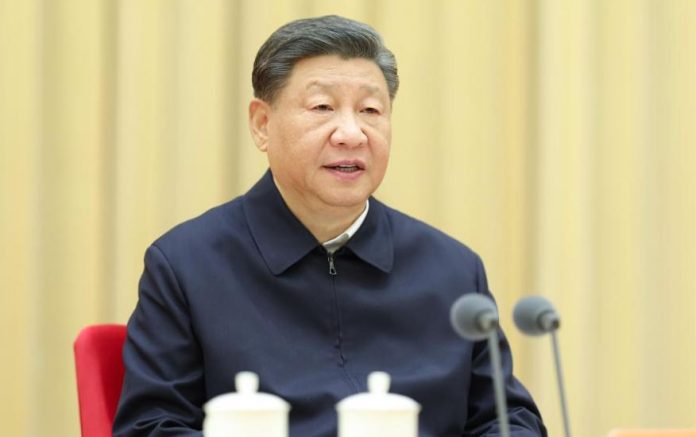
BEIJING, Dec. 28 — The Central Conference on Work Relating to Foreign Affairs was held in Beijing from Wednesday to Thursday. Xi Jinping, general secretary of the Central Committee of the Communist Party of China (CPC), Chinese president and chairman of the Central Military Commission, attended the conference and delivered an important address.

Members of the Standing Committee of the Political Bureau of the CPC Central Committee Li Qiang, Zhao Leji, Wang Huning, Cai Qi, Ding Xuexiang and Li Xi, and Vice President Han Zheng attended the conference.

In his important address, Xi presented a systematic review of the historic achievements and valuable experience of major-country diplomacy with Chinese characteristics in the new era, gave a profound exposition on the international environment and historical mission of China’s external work on the new journey, and made comprehensive plans for China’s external work for the present and coming periods. Presiding over the conference, Li Qiang emphasized the importance of ensuring sound external work on the new journey under the guidance of Xi Jinping Thought on Diplomacy, and set out requirements for studying and implementing the guiding principles of General Secretary Xi Jinping’s important address.

It was made clear at the conference that since the 18th CPC National Congress, historic achievements have been secured and historic changes have taken place in China’s external work on the great journey of advancing the cause of socialism with Chinese characteristics in the new era. First, we have established and developed Xi Jinping Thought on Diplomacy, opening up new vistas in the theory and practice of China’s diplomacy and providing the fundamental guideline for advancing major-country diplomacy with Chinese characteristics. Second, we have showcased distinct Chinese characteristics, style and ethos in our diplomacy, and established the image of a confident, self-reliant, open and inclusive major country with a global vision. Third, we have advocated the building of a community with a shared future for mankind, pointing the right direction for human society leading to common development, lasting peace and security, and mutual learning between civilizations. Fourth, we have followed the strategic guidance of head-of-state diplomacy, and played an increasingly important and constructive role in international affairs. Fifth, we have taken a holistic approach to our relations with all parties, with a view to fostering major-country dynamics featuring peaceful coexistence, overall stability and balanced development. Sixth, we have expanded a comprehensive strategic layout, and formed a wide-ranging, high-quality global network of partnerships. Seventh, we have advanced high-quality Belt and Road cooperation, and established the world’s most broad-based and largest platform for international cooperation. Eighth, we have worked to both pursue development and safeguard security, and effectively upheld China’s sovereignty, security and development interests with a firm will and an indomitable fighting spirit. Ninth, we have taken an active part in global governance, and shown the way in reforming the international system and order. Tenth, we have strengthened the centralized, unified leadership of the CPC Central Committee, and brought about greater coordination in China’s external work.

It was underlined at the conference that in the decade of the new era, we have seen high winds and choppy waters and overcome various difficulties and challenges in China’s external work. We have opened up new prospects in major-country diplomacy with Chinese characteristics, and gained much more strategic autonomy and initiative in our diplomacy. China has become a responsible major country with enhanced international influence, stronger capacity to steer new endeavors, and greater moral appeal.

It was pointed out at the conference that a range of valuable experience has been gained in the new era of Chinese diplomacy. It is imperative to uphold principles. On major issues concerning the future of humanity and the direction of the world, we must take a clear and firm position, hold the international moral high ground, and unite and rally the overwhelming majority in our world. It is imperative to shoulder China’s responsibility as a major country. We need to advocate the spirit of independence, champion peaceful development, and promote global stability and prosperity. It is imperative to apply systems thinking. With a correct understanding of history and of the big picture, we must navigate the prevailing trends, adopt a coordinated approach, and seize the initiative. It is imperative to uphold fundamental principles and break new ground. We need to follow the fine tradition and fundamental direction of China’s diplomacy, and at the same time work progressively for innovation in both theory and practice. It is imperative to carry forward our fighting spirit. We must reject all acts of power politics and bullying, and vigorously defend our national interests and dignity. It is imperative to leverage our institutional strengths. Under the centralized, unified leadership of the CPC Central Committee, all regions and all departments must coordinate with each other and build strong synergy.

It was noted at the conference that great transformation is accelerating across the world. Changes of the world, of our times, and of historical significance are unfolding like never before, and the world has entered a new period of turbulence and transformation. Yet the overall direction of human development and progress will not change, the overall dynamics of world history moving forward amid twists and turns will not change, and the overall trend toward a shared future for the international community will not change. We must have full confidence in these trends of historical impact.

It was highlighted at the conference that looking ahead, China faces new strategic opportunities in its development. On the new journey, major-country diplomacy with Chinese characteristics will enter a new stage where much more can be accomplished. We must focus on the central task of the CPC and the country, seek progress while maintaining stability, break new ground while upholding fundamental principles, and firmly safeguard China’s sovereignty, security and development interests. We will explore new frontiers in China’s diplomatic theory and practice, foster new dynamics in the relations between China and the world, and raise China’s international influence, appeal and power to shape events to a new level. We will create a more favorable international environment and provide more solid strategic support for building China into a great modern socialist country in all respects and advancing the great rejuvenation of the Chinese nation on all fronts through the Chinese path to modernization.

It was pointed out at the conference that building a community with a shared future for mankind is the core tenet of Xi Jinping Thought on Diplomacy. It is how China proposes to solve the questions of what kind of world to build and how to build it based on our deepening understanding of the laws governing the development of human society. It reflects the Chinese Communists’ worldview, perception of order, and values, accords with the common aspiration of people in all countries, and points the direction for the progress of world civilizations. It is also the noble goal pursued by China in conducting major-country diplomacy with Chinese characteristics for the new era. Since the dawn of this new era, building a community with a shared future for mankind has developed from a Chinese initiative to an international consensus, from a promising vision to substantive actions, and from a conceptual proposition to a scientific system. It has served as a glorious banner leading the progress of the times. In summary, in building a community with a shared future for mankind, the goal is to build an open, inclusive, clean and beautiful world of lasting peace, universal security and shared prosperity, the pathway is promoting global governance that features extensive consultation and joint contribution for shared benefit, the guiding principle is to apply the common values of humanity, the basic underpinning lies in building a new type of international relations, the strategic guidance comes from the implementation of the Global Development Initiative, the Global Security Initiative and the Global Civilization Initiative, and the platform for action is high-quality Belt and Road cooperation. On this basis, we seek to bring countries together to meet challenges and achieve prosperity for all, and usher in a bright future of peace, security, prosperity and progress for our world.

It was pointed out at the conference that given the series of major issues and challenges facing the world today, China calls for an equal and orderly multipolar world and a universally beneficial and inclusive economic globalization. An equal and orderly multipolar world is one in which all countries, regardless of size, are treated as equals, hegemonism and power politics are rejected, and democracy is truly promoted in international relations. To keep the progress toward greater multipolarity generally stable and constructive, the purposes and principles of the United Nations Charter must be observed by all, the universally recognized, basic norms governing international relations must be upheld by all, and true multilateralism must be practiced. A universally beneficial and inclusive economic globalization is one that meets the common needs of all countries, especially the developing countries, and properly addresses the development imbalances between and within countries resulting from the global allocation of resources. It is important to resolutely oppose the attempt to roll back globalization and abuse the concept of security, oppose all forms of unilateralism and protectionism, firmly promote trade and investment liberalization and facilitation, overcome the structural problems hindering the healthy development of the world economy, and make economic globalization more open, inclusive, balanced and beneficial to all.

It was made clear at the conference that in the current and upcoming periods, China’s external work shall be guided by Xi Jinping Thought on Socialism with Chinese Characteristics for a New Era and Xi Jinping Thought on Diplomacy in particular. It should serve the goals and missions of Chinese modernization, and follow the principles of self-confidence and self-reliance, openness and inclusiveness, fairness and justice, and win-win cooperation. Focusing on the theme of building a community with a shared future for mankind, we need to strengthen strategic planning in sync with the changing times, deepen and improve our diplomatic layout, follow a problem-oriented approach, and apply a systematic way of thinking. We need to identify the strategic tasks of Chinese diplomacy in a more multi-dimensional and comprehensive manner. We need to act with a stronger sense of historical responsibility and a more vibrant spirit of innovation to make new headway in our major-country diplomacy with Chinese characteristics.

It was pointed out at the conference that upholding fundamental principles and breaking new ground in our external work is the natural requirement of making new headway in our major-country diplomacy with Chinese characteristics on the new journey, and of providing a stronger underpinning for Chinese modernization. It is important to strengthen the intellectual and theoretical competence of the foreign service, deepen reform of systems and institutions, promote the building of a contingent of personnel involved in foreign affairs, and continue to make our external work more science-based, forward-looking, proactive and innovative.

It was stressed at the conference that we must unswervingly uphold the CPC central leadership’s ultimate authority over foreign affairs, conscientiously uphold the centralized, unified leadership of the CPC Central Committee, and further strengthen the systems and institutions for the CPC’s leadership over external work. All localities and departments should keep in mind the big picture and coordinate with each other to implement the decisions and plans of the CPC Central Committee on our external work in both letter and spirit.

Wang Yi gave concluding remarks. Leading officials of the Publicity Department of the CPC Central Committee, the International Department of the CPC Central Committee, the Ministry of Commerce, the Joint Staff Department of the Central Military Commission and Yunnan Province, and a representative from the Permanent Mission of the People’s Republic of China to the United Nations gave presentations at the conference.

Members of the Political Bureau of the CPC Central Committee and members of the Secretariat of the CPC Central Committee, leaders of the Standing Committee of the National People’s Congress, State Councilors, President of the Supreme People’s Court, Procurator General of the Supreme People’s Procuratorate, and leaders of the National Committee of the Chinese People’s Political Consultative Conference attended the conference.

Members of the Central Commission for Foreign Affairs, major officials of provinces, autonomous regions, municipalities directly under the Central Government, cities separately listed in the state plan, and the Xinjiang Production and Construction Corps, of the relevant departments of central CPC and state institutions, relevant people’s organizations, relevant departments of the Central Military Commission, and of some financial institutions under the direct management of the Central Government, as well as Chinese ambassadors, ambassadorial-rank consuls general posted overseas and representatives to international organizations participated in the conference.

The UN General Assembly unanimously adopted a resolution put forward by Uzbekistan on environmental challenges in Central Asia

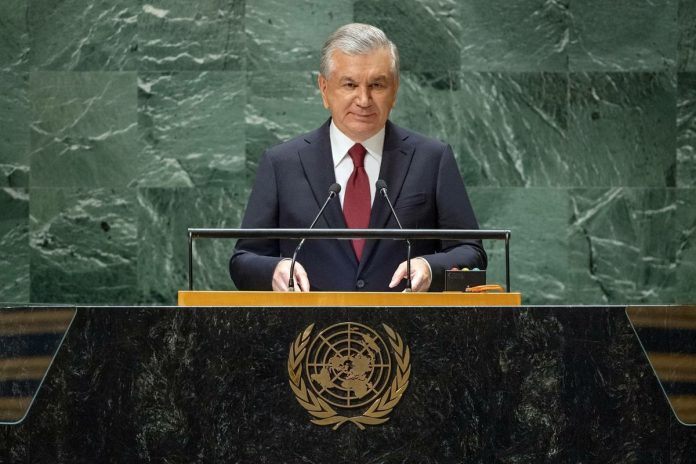
The UN General Assembly unanimously adopted the resolution initiated by Uzbekistan “Central Asia in the face of environmental challenges: strengthening regional solidarity for the sake of sustainable development and prosperity”.

https://googleads.g.doubleclick.net/pagead/ads?client=ca-pub-7078513716629609&output=html&h=280&slotname=3959878650&adk=2497486885&adf=3058392277&pi=t.ma~as.3959878650&w=696&fwrn=4&fwrnh=100&lmt=1703767580&rafmt=1&format=696×280&url=https%3A%2F%2Fislamabadpost.com.pk%2Fthe-un-general-assembly-unanimously-adopted-a-resolution-put-forward-by-uzbekistan-on-environmental-challenges-in-central-asia%2F&ea=0&host=ca-host-pub-2644536267352236&fwr=0&fwrattr=true&rpe=1&resp_fmts=3&wgl=1&dt=1703767580045&bpp=1&bdt=2610&idt=711&shv=r20231207&mjsv=m202312070101&ptt=9&saldr=aa&abxe=1&cookie=ID%3D513e85dde3056014%3AT%3D1700224343%3ART%3D1703767455%3AS%3DALNI_MaKWFcFNveLkqytCkRThEvJ12IfjA&gpic=UID%3D00000cdc35875322%3AT%3D1700224343%3ART%3D1703767455%3AS%3DALNI_MaHjzDZAymnaDRE6mwnwHlKd6VQzg&prev_fmts=0x0%2C728x90%2C468x60&nras=1&correlator=6781392804998&frm=20&pv=1&ga_vid=241162444.1703767580&ga_sid=1703767580&ga_hid=2018870648&ga_fc=0&u_tz=300&u_his=6&u_h=768&u_w=1366&u_ah=728&u_aw=1366&u_cd=24&u_sd=1&adx=141&ady=1478&biw=1349&bih=643&scr_x=0&scr_y=135&eid=44759876%2C44759927%2C42531705%2C95320884&oid=2&pvsid=3363254338343818&tmod=811568484&uas=3&nvt=1&ref=https%3A%2F%2Fislamabadpost.com.pk%2Fcategory%2Fcentral-asia%2F&fc=1920&brdim=-8%2C-8%2C-8%2C-8%2C1366%2C0%2C1382%2C744%2C1366%2C643&vis=1&rsz=%7C%7CoeEbr%7C&abl=CS&pfx=0&fu=128&bc=31&ifi=2&uci=a!2&btvi=2&fsb=1&dtd=718

The intergovernmental negotiation process to develop and agree on the text of the resolution took place over two months, namely in October-November at the UN headquarters in New York. Experts from countries from all continents of the world, including the USA, Russia, China, France, Great Britain, Germany, Canada, Australia, Saudi Arabia, Egypt, Argentina, Brazil, Mexico and others, actively participated in the consultations. As a result, representatives of more than 100 countries made numerous proposals to fill the text with specific content and achieve universal consensus.

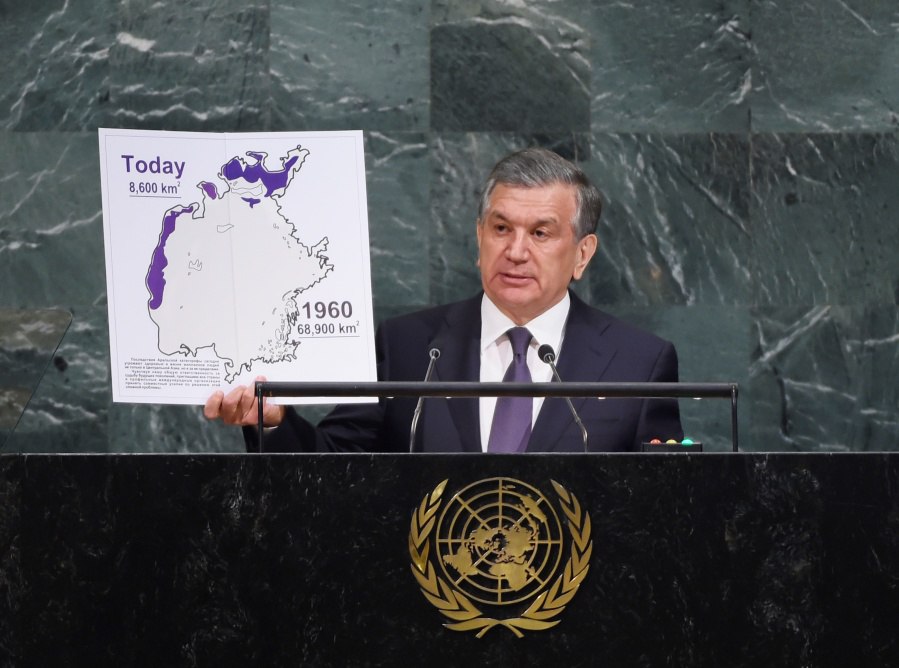
The text specifically mentions a number of initiatives of the President of Uzbekistan, including the “Green Agenda for Central Asia” and its role in promoting sustainable development in the region. In the resolution, member states welcome the initiative of Uzbekistan to hold the International Climate Forum in Samarkand in 2024. Particular attention is paid to efforts to mitigate the consequences of the drying up of the Aral Sea, with special emphasis on the activities of the UN Multi-Partner Trust Fund for Human Security for the Aral Sea region, created on the initiative of the head of Uzbekistan. An appeal was made to the international community to continue to support this fund. The document notes the importance of introducing innovative methods and new technologies in the fight against desertification and land degradation. Contains greetings to the successful holding for the first time in Central Asia of the 21st session of the Committee to Review the Implementation of the UN Convention to Combat Desertification and a high-level meeting on combating sand and dust storms on November 13-17 in Samarkand.

The resolution contains specific tasks to effectively counter climate and environmental threats in Central Asia, including through the development of sustainable agriculture, landscaping, rational use of water resources, energy efficiency, waste recycling, development of sustainable tourism, creation of “smart cities” and sustainable transport.

The General Assembly recommended that the UN system, international and financial institutions, the private sector, investors and donors continue to mobilize resources, build capacity and provide assistance to address environmental problems in Central Asia.

The resolution also sets out the initiatives of Kazakhstan, Kyrgyzstan, Tajikistan and Turkmenistan in the field of environmental protection.

The document was presented on behalf of all Central Asian countries. The co-sponsors of the resolution also included countries such as Germany, Switzerland, Turkey, China, Singapore, Hungary, Vietnam, Azerbaijan, Armenia, Malaysia, Indonesia, Egypt, Jordan, Paraguay (covering representatives of all UN regional groups).

Following the adoption of the resolution, the UN News Service published an article entitled “The UN General Assembly adopted a resolution to combat environmental problems in Central Asia.” It notes that climate change is one of the most complex problems of our time and creates serious difficulties for the sustainable development of all countries. As stated in the publication, speaking at the UN in September, President Shavkat Mirziyoyev noted that over the past thirty years the air temperature in the region has increased by one and a half degrees. “This is twice the global average warming,” the portal quotes the head of Uzbekistan. “As a result, about a third of the total area of glaciers has disappeared.” The article also quotes the words of President Shavkat Mirziyoyev that if this trend continues, then in the next twenty years the flow of two large rivers in the region – the Amu Darya and the Syrdarya – may decrease by 15 percent. “Per capita water availability is expected to decline by 25 percent and crop yields by 40 percent,” he added at the time, calling on the international community to take action.

Highways, connecting roads essential for development, prosperity of province

Highways

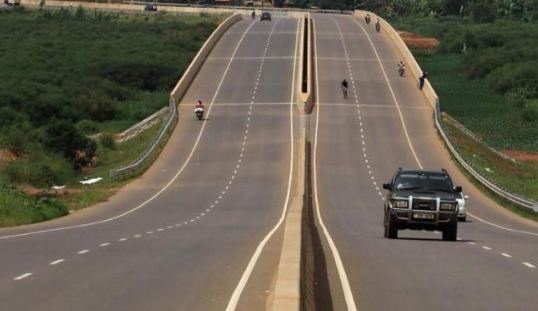
QUETTA, DEC 27 (DNA) — Provincial Secretary Communications and Work (C&W) Kamber Dashti on Wednesday said that the importance of highways and connecting roads was very significant in the development and prosperity of the province.

If the highways were strong and complete, it would have positive effects on the entire province, he expressed these views while presiding over the review meeting regarding the progress on the development projects of the ongoing road sector in the province.

Chief Engineer Officers of the three Circle Quetta, Khuzdar and Sibi Zone of the province and senior officials of the concerned department were also present in the meeting. It should be noted that Secretary C&W Kamber Dashti personally inspected various highways during his tour across the province and issued orders.

Among them, Sibi Tali Road Bakhtiarabad to Lahri Road Notal to Gandawa Road N 65 to Chithar Road N 65 to Manjushori, Ghafoorabad, Mir Wah-Shahi Chowki Faizabad Road, Usta Muhammad to Bagh Head Road Ghoshpur, Gandakha to Ghulam Muhammad Jamali Road Suhbatpur to Kashmore Phase One Khani Cross to Ziarat to Sanjawi Road Sanjawi to Loralai Road and Rakhni to Bekar Road are included.

Details of the progress on all these under-construction highways were taken by the Secretary.

 While giving instructions to the chief engineers of the three circles, Secretary C&W Kamber Dashti said that the speed of work on the ongoing projects should be accelerated and whatever firm or contractor was not being worked when departmental action should be initiated against them.

He has given clear instructions that quality and transparency should be the first priority for all ongoing development projects in the province. He said that an effective and strong infrastructure and communication system is the guarantee of the development of Balochistan, the pace of work on all development projects should be speeded up so that the people could benefit from the fruits of these projects as well as the development process.

He said that such development projects, the completion of which would benefit the people of this area, should be completed as soon as possible. The Department of Communications and Construction has a key role for the development and prosperity of the province, he said.

The Secretary said that the chief engineer officers of the three circles should play their key role for the improvement of infrastructure in the province based on their professional affairs and experience. — DNA

Aus vs Pak: Pakistan lose quick wickets after dismissing Australia for 318

Aus vs Pak: Pakistan lose quick wickets after dismissing Australia for 318

Melbourne: Australia were on top after reducing Pakistan to 194-6 at stumps on day two of the second Test in Melbourne on Wednesday.

The visitors still trail by 124 runs in the first innings with Mohammad Rizwan (29) and Aamer Jamal (2) out in the middle.

Pakistan were 124-1 at one stage but lost quick wickets towards the end of the final session and were pushed on the backfoot.

Abdullah Shafique (62) and Shan Masood (54) smashed fifties but couldn’t kick on and score a big one.

Star batter Babar Azam once again failed to impress and was cleaned up by Pat Cummins, who claimed three wickets, after scoring just one run.

Post-lunch session
Pakistan reached 68-1 at tea on day two of the second Test against Australia in Melbourne.

Opener Abdullah Shafique was unbeaten on 39 but his partner Imam-ul-Haq was dismissed by Nathon Lyon after scoring 10 runs. Captain Shan Masood was not out on 15 at the break.

Pakistan are looking to make a comeback in the three-match series after losing the first Test in convincing manner.

Australia dismissed for 318
Australia lost seven wickets for 131 runs on the second morning and were all out for 318 in their first innings against Pakistan.

Marnus Labuschagne scored his fourth Test fifty of the year but was dismissed by Aamer Jamal (3-64) soon after for 63.

But Pakistan will be unhappy with the number of extras, 52 in total, since it was the second-biggest contributor to Australia’s total.

Pacers Shaheen Afridi, Mir Hamza and Hasan Ali claimed two wickets each.

Day one

Yesterday, Pakistan captain Shan Masood won the toss and opted to bowl in the second Test.

Australia reached 187-3 at stumps on the opening day as the Boxing Day Test was affected by rain which is why only 66 overs were bowled.

The hosts are looking to seal the three-Test series after thumping the visitors by 360 runs in Perth, and went into the game with an unchanged side.

Pakistan preferred Mohammad Rizwan to keep wicket ahead of Sarfaraz Ahmed while fast bowlers Mir Hamza and Hasan Ali both play after being overlooked for the first Test.

They come in for injured paceman Khurram Shahzad and Faheem Ashraf, who was axed.

It means an all-pace attack led by the experienced Shaheen Shah Afridi and impressive newcomer Aamer Jamal, with no room for a specialist spinner.

Pakistan have performed poorly in Australia, losing 15 Tests on the trot with their last win in 1995.

Teams
Australia: David Warner, Usman Khawaja, Marnus Labuschagne, Steve Smith, Travis Head, Mitchell Marsh, Alex Carey, Pat Cummins (capt), Mitchell Starc, Nathan Lyon, Josh Hazlewood

Pakistan: Imam-ul-Haq, Abdullah Shafique, Shan Masood (capt), Babar Azam, Saud Shakeel, Mohammad Rizwan, Agha Salman, Shaheen Shah Afridi, Hasan Ali, Mir Hamza, Aamer Jamal

Nasa awards ‘Astronomy Picture of the Day’ to Italian photographer’s shot of moon

Nasa awards 'Astronomy Picture of the Day' to Italian photographer's shot of moon

A one-in-a-million shot of the moon by a photographer from the Italian city of Turin has been awarded “Astronomy Picture of the Day” for Christmas 2023 by the National Aeronautics and Space Administration (Nasa). 

Valerio Minato snapped a magnificent photo of the moon, perfectly aligned with the Basilica of Superga’s dome, located in the vicinity of Turin, and the tip of Monviso, also known as Monte Viso, the highest mountain of the Cottian Alps.

Minato shared that he had the idea for this photo in 2017 and since then his obsession to capture the moon together with the cathedral and the mountain in the same shot began.

He also revealed that it took him six years to get the perfect shot.

“The secret? Changing perspective and knowing how to wait.”

While speaking to Corriere Torino, a Turin-based news agency, Minato said: “I have been shooting since 2012, first in Turin, then in the surrounding area, to view the city from different points and distances. At a certain point I started looking for the point to have the dome of Superga and Monviso perfectly aligned.

“I spotted it in 2017 on a hill in the Chivassese area between San Raffaele Cimena and Castagneto Po, a 40-minute drive away. Since then the obsession was to have them both framed by a celestial body.”

Minato meticulously studied the moon’s phases, horizon position, and weather to a tenth of a degree of precision for the shot.

He said that the moon, once a year, is set “exactly there with a circular appearance, in this case, the crescent half illuminated and the other highlighted by the ashen light of reflection”.

He further shared that the weather on that day, for five years, was cloudy and on December 15, just before 7pm, he was finally able to take the shot.

This video shows moments leading up to Valerio Minato’s perfect shot of the moon. — Facebook/Valerio Minato pH

While some netizens appreciated his work on his Facebook page and thanked him for showing them Turin “with new eyes”, many also accused him of using “photomontages or artificial intelligence”.

He responded to these accusations: “We must not get the idea that only technology can now surprise us. Sometimes technique, patience and a spirit of observation are enough.”

He added: “We must continue on our own path, certain that in the community of photographers, there are still people capable of appreciating authenticity. A thoughtful and prepared photo will win over any artificial product.”

After bail in cipher, Shah Mahmood Qureshi arrested in May 9 case

After bail in cipher, Shah Mahmood Qureshi arrested in May 9 case

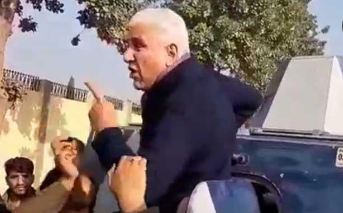
RAWALPINDI: Pakistan Tehreek-e-Insaf (PTI) Vice Chairman Shah Mahmood Qureshi on Wednesday was taken into custody by Rawalpindi police from Adiala jail in connection with a case related to May 9 violent protests.

A day earlier, Qureshi was detained under the maintenance of public order (3-MPO) after his bail was approved in the cipher case last week.

Speaking to the media outside the prison, Qureshi said he was being arrested in a bogus case. “I am innocent and being politically victimised,” he added.

“Oppression, injustice. This is a mockery of the Supreme Court’s order. I am being subjected to political victimisation without any reason,” he added

Qureshi was implicated in cases related to May 9 riots that broke out following the arrest of PTI founder Imran Khan in a corruption case from the premises of Islamabad High Court (IHC) earlier this year.

According to sources, Qureshi was arrested in a GHQ attack case and will be produced in an anti-terrorism court (ATC).

They said Qureshi was arrested by Rawalpindi police in the case after deputy commissioner Rawalpindi revoked the 3-MPO detention order issued a day earlier.

The PTI leader was shifted to a police station in Rawalpindi in an armoured vehicle by RA Bazar and Saddar police station officials.

Deputy Commissioner Rawalpindi Hasan Waqar Cheema issued Qureshi’s detention order a day earlier over his alleged involvement in the May 9 violent protests.

The detention was issued shortly before the issuance of his release orders by the Special Court Judge Abual Hasnat Zulqarnain in the cipher case as the Supreme Court approved his bail in the state secrets case last week.

In a statement, the Rawalpindi police said they were asked to interrogate Qureshi in connection with May 9 cases, adding that the PTI leader was booked in cases related to the violent protests.

The police said Qureshi was granted bail in the cipher case but his 15-day detention order had been issued.

The detention order said the city police officer (CPO) had intimated via a letter that Qureshi was a member of a political party involved in anti-state activities and causing damage to public and private property.

The letter said it was “probable that after his release from jail, he will again continue his above activities which may lead to law and order situation, harmful to life and property of general public.”

The letter said the Rawalpindi CPO recommended that Qureshi be detained for 45 days to prevent him from his unlawful activities.

The letter added that the Rawalpindi District Intelligence Committee had also endorsed the police department’s stance and agreed to Qureshi’s detention.

Qureshi has been arrested several times since the alleged PTI protesters and supporters ransacked state properties including military installations in many parts of the country earlier this year in May.

Qureshi, who served as foreign minister of the country during the previous PTI-led government, was in August this year booked in cipher case under Official Secrets Act wherein he along with ex-PM Imran Khan accused of leaking the contents of diplomatic cipher during a public gathering.

PTI condemns ‘torture’ on Qureshi
The PTI condemned “torture” on Qureshi during arrest from Adiala jail, saying attempts being made to keep him out of race from electoral race.

The party said the crackdown on its leaders and workers has intensified following the issuance of election schedule.

It said the arrest of the PTI leader was a violation of Supreme Court’s directions regarding level-playing field.

“Chief justice should immediately issue release orders of Shah Mahmood Qureshi,” the party demanded.

Stay Connected

64FansLike
60FollowersFollow

Latest Reviews

Exchange Rates

USD - United States Dollar
EUR
1.17
GBP
1.34
AUD
0.67
CAD
0.72