Home Blog Page 853

PN Ship Hunain visits Turkiye, conducts exercise Turgutreis-X with Turkish Navy

PN Ship Hunain visits Turkiye, conducts exercise Turgutreis-X with Turkish Navy

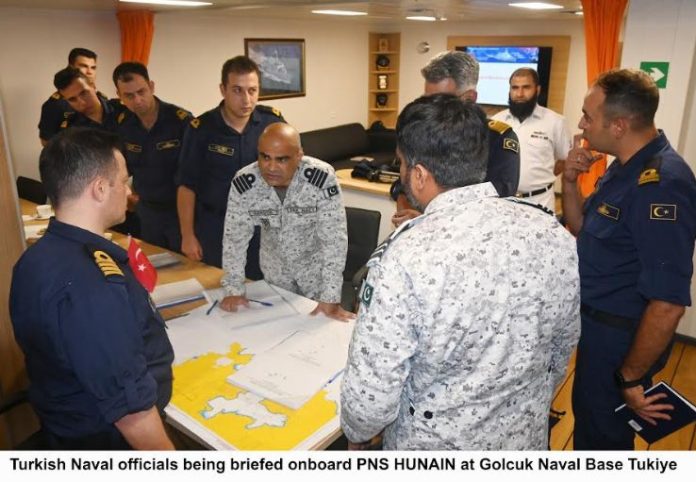
ISLAMABAD, AUG 16 /DNA/ – The newly commissioned Pakistan Navy Ship HUNAIN, during maiden voyage from Romania to Pakistan, visited Turkiye and participated in EX TURGUTREIS-X with Turkish Coast Guard Ship GELIBOLU. The exercise focused on various Joint Maritime Operations with the aim to enhance interoperability between both Navies.

Earlier, PNS HUNAIN visited Turkish Naval ports at Golcuk and Aksaz. Upon arrival at the ports, the ship was received by Senior Officials of Pakistan Embassy and Turkish Navy. During stay at Golcuk, Commanding Officer of PNS HUNAIN called on Turkish Navy Fleet Commander Vice Admiral KadirYildiz and Commander of Golcuk Naval Base Rear Admiral Ali Tuna Baysal. During the meeting, professional matters of mutual interest and enhancement of bilateral cooperation between both the navies were discussed.

During stay at port Aksaz, Commander 2nd Destroyer Squadron of Turkish Navy, Commodore Captain Cenk TASLI along with Commanding Officer of TCG GELIBOLU visited onboard ship and appreciated Pakistan Navy’s role in maintaining good order at sea in the region and beyond. He further added that visit of PNS HUNAIN will further provide an opportunity to flourish and strengthen existing brotherly relations and provide impetus to diplomatic and defence ties between the two countries.

Army Chief Public Relation Offensive and…

Qamar Bashir

By Qamar Bashir

The Army Chief, General Syed Asim Munir, has identified three major issues—terrorism, digital terrorism, and the slow pace of accountability for the perpetrators of the May 9 riots—as highly detrimental to national security, safety, and the progress and development of Pakistan. To address these issues, he has been working aggressively on two fronts: kinetic and administrative actions on one hand, and an aggressive and effective public relations and public diplomacy offensive on the other. This combination is designed to bring these issues within tolerable ranges by leveraging both direct action and strategic communication to ensure national stability and unity.

General Syed Asim Munir, Pakistan’s Army Chief, has prioritized obliterating terrorism and its manifestations both within the country and in the region. In his speeches, he identified the Tehrik-e-Taliban Pakistan (TTP) as the primary source of terrorism in Pakistan, noting that the TTP, with over 6,000 hardcore fighters, frequently launches attacks from bases in Afghanistan. Between 2007 and 2018, TTP’s terrorism resulted in over 20,000 deaths. From 2018 to 2024, there were over 3,000 civilian casualties and more than 1,500 security personnel killed in terrorist attacks and counter-terrorism operations. Economically, terrorism has cost Pakistan billions of dollars, displaced millions, and necessitated extensive military operations that strained resources.

To counter the TTP threat, General Munir has adopted a multifaceted approach involving intelligence-based operations (IBOs) inside Afghanistan, tightening border security, repatriating illegal Afghan residents, and curbing smuggling.

He refers to the TTP as “Khariji,” likening them to the historical Khawarij, a group known for their extreme beliefs and violent rebellion in the early Islamic period. This label underscores the TTP’s radical ideology and violent opposition to the state, emphasizing the need for a strong, unified response. General Munir has intensified counter-terrorism operations within Pakistan, particularly in KP and Balochistan provinces, which are prime TTP targets. During his latest speech, he expressed his resolve to obliterate terrorism and eliminate terrorists decisively and thoroughly.

On the Public Relations and Public Diplomacy front, he has  engaged in diplomatic and public relations efforts. He addressed the Ulema and Mashaikh Conference to rally religious leaders against extremism. In his meeting with retired army officers, and officers at the Pakistan Military Academy in Kakul, Abbottabad, he called upon the Afghan government to help Pakistan to completely and decisively eliminate the menace of terrorism from the region. Additionally, he has met with foreign diplomats to seek international cooperation against the TTP. During such interactions, he reminded Afghanistan of Pakistan’s sacrifices in hosting millions of Afghan refugees for over three decades and demanded that the Afghan interim government return the favor and help eliminate terrorists and their hideouts within Afghanistan.

The second most critical priority outlined by General Syed Asim Munir, Pakistan’s Army Chief, is curbing digital terrorism to restore the country’s progress and development. He has been particularly mindful of rampant anti-state, anti-government, and anti-army propaganda on social media, which, according to him, aims to create despondency, erode faith in the government, and sow discord between the military and the public.

To combat these threats, General Munir has been instrumental in strengthening key legal frameworks  including Defamation Ordinance, 2002, Official Secrets Act, 1923, Pakistan Army Act, 1952 and Prevention of Electronic Crimes Act (PECA), 2016. Administratively, he has ensured regulating, slowing, and, when necessary, banned the social media platforms to curb the spread of harmful content. A firewall has been implemented to eliminate virulent anti-state propaganda, ensuring a more secure and controlled digital space.

On the Public Relations side General Syed Asim Munir, has launched an aggressive public relations and diplomacy campaign emphasizing the urgent need to curb digital terrorism. He highlighted in various speeches and public interactions that extremist groups are exploiting digital platforms to create despondency, undermine faith in the government’s ability to deliver, and foster despair and hopelessness among the populace. He pointed out that digital terrorism aims to sow hatred and drive a wedge between the army and the people of Pakistan. He also highlighted the role of foreign powers in orchestrating digital terrorism, using online platforms to undermine national security and stability. His comprehensive approach combines legal action, administrative measures, and strategic communication to effectively counter these digital threats and uphold national unity and security.

The Army Chief, General Syed Asim Munir, is particularly mindful of the slow pace of Pakistan’s justice system. During his various speeches, he has highlighted this issue, emphasizing the need for timely justice. In a significant move, three senior officers, including a Lieutenant-General, were dismissed, and disciplinary proceedings were completed against three major generals and seven brigadiers for their failure to protect military installations during the May 9 protests. Recently the former ISI Chief and his three accomplices were arrested.  He assured that all individuals involved in the May 9 violence would be punished according to the law, reinforcing that there will be no compromise or deal with those responsible for this dark chapter in Pakistan’s history.

On the Public Relations front, he stressed the need to bring  planners, abettors, facilitators, and sympathizers of the May 9, 2023 riots to justice. In various speeches, including those at the Lahore Garrison and the Ulema and Mashaikh Conference, he emphasized the urgent need for the justice system to effectively deliver justice to those responsible for the violent attacks on military installations and public property. The Army Chief has been vocal about the deliberate indoctrination and organized violence that characterized the May 9 events, describing them as a dark chapter in Pakistan’s history. General Munir highlighted that the May 9 perpetrators aimed to create chaos, undermine national unity, and discredit state institutions, including the armed forces. He stressed that such acts provided an opportunity for Pakistan’s enemies to mock the nation and its state apparatus.

The combined and complementary strategy of intelligently and strategically integrating kinetic and administrative measures with aggressive public relations and public diplomacy tools has shown visible signs of effectiveness. This multifaceted approach is weakening the adversarial elements, marking a promising and positive development for the country.

By Qamar Bashir

Former Press Secretary to the President

Former Press Minister to the Embassy of Pakistan to France

Former MD, SRBC, CEO, ATV

Afghanistan embassy celebrates Victory Day

Afghanistan embassy celebrates Victory Day

Deputy ambassadors and diplomats of Russia, China, Iraq, Iran, Uzbekistan, Qatar, Indonesia, Malaysia, Sudan, Yemen, Kyrgyzstan and many other political representatives participated in these ceremonies

DNA

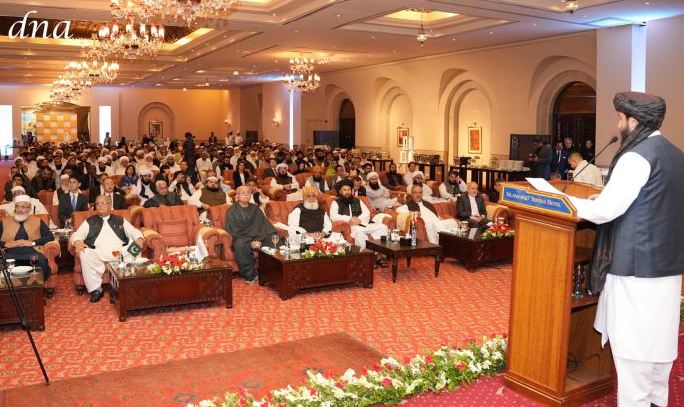
ISLAMABAD: The Embassy of Afghanistan in Islamabad celebrated the Victory Day during a special event at the Islamabad Serena Hotel. The Charge d Affaires of the Afghan embassy Ahmed Shakaib addressed the gathering.

 In the event, the Federal Minister of Pakistan, Mr. Riaz Hussain Pirzada, Pakistan’s Special Representative for Afghanistan, Asif Durrani, Maulana Fazlur Rahman, Chairman of Jamiat Ulema Islam Party, Member of Parliament, Mahmood Khan Achakzai, Jamaat-e-Islami Amir Siraj-ul-Haq, Safran Former Minister and member of the People’s Party, Senator Talha Mahmood, Chairman of the Wahdat Muslimeen Party, Allama Raja Abbas Jafari, representatives of the Tehreek-e-Insaf Party, many other Pakistani officials and members of political parties, famous journalists, academic staff of universities, seminaries and academic centers and religious Scholars participated.

Also, deputy ambassadors and diplomats of Russia, China, Iraq, Iran, Uzbekistan, Qatar, Indonesia, Malaysia, Sudan, Yemen, Kyrgyzstan and many other political representatives participated in these ceremonies.

Ambassador Hamid Asghar honored with Morocco’s prestigious Wissam Allaoui medal

Ambassador Hamid Asghar honored with Morocco's prestigious Wissam Allaoui medal

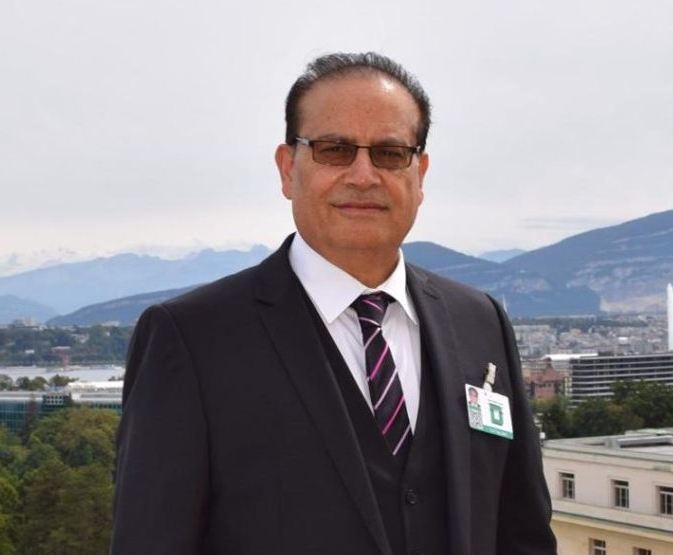
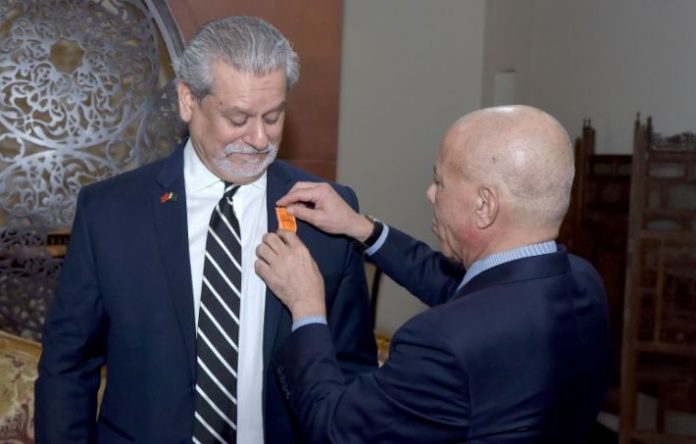
ISLAMABAD, AUG 15: /DNA/ – Ambassador of Morocco to Pakistan Mohamed Karmoune, who is also Dean of the African group, confers prestigious Wissam Allaoui, National medal by King of Morocco, on Ambassador Hamid Asghar Khan, who has recently finished his posting in Morocco as Pakistan’s Ambassador.

Hamid Asghar thanked His Majesty for the award and hoped relations between the two countries would further be cemented.=DNA

ISSI holds webinar on “Interim Afghan Government in Power – Three Years on”

ISSI holds webinar on “Interim Afghan Government in Power - Three Years on”

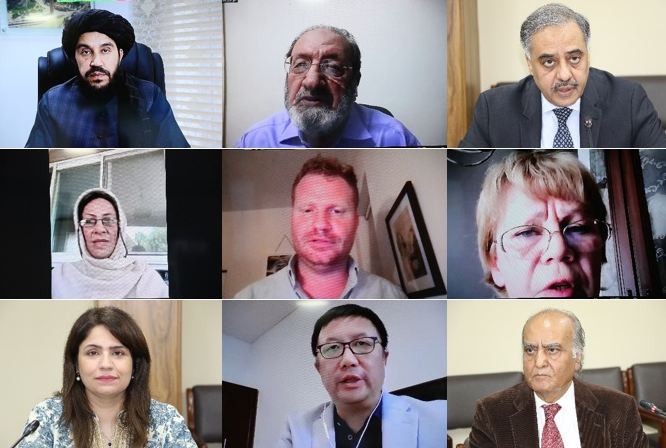
ISLAMABAD, AUG 15 /DNA/ – The Centre for Afghanistan Middle East and Africa (CAMEA) at the Institute of Strategic Studies Islamabad (ISSI) hosted a webinar, titled “Interim Afghan Government in Power – Three Years on.” The webinar was moderated by Ms. Amina Khan, Director CAMEA. Speakers included Ambassador Sohail Mahmood, Director General ISSI; Ambassador Khalid Mahmood, Chairman BoG, ISSI; Sardar Ahmad Shakeeb, Charge d’ Affaires/Minister Counselor, Afghanistan Embassy, Islamabad; Ambassador Ayaz Wazir, Former Pakistani Diplomat; Dr. Mandana Tishehyar, President of the Iranian Peace Studies Scientific Association; Dr. Ye Hailin, Director, Center for South Asia Studies, Chinese Academy of Social Sciences, Beijing; Dr. Zamaraeva Natalia Alekseevna, Senior Researcher  Center for the Study of the Near and Middle East, Russia; Adam Weinstein, Deputy Director of the Middle East Program at the Quincy Institute for Responsible Statecraft, Washington D.C.

Ambassador Sohail Mahmood stated that while the Taliban have consolidated power over the past three years, significant concerns persist regarding their governance, respect for human rights and women’s rights, and counter-terrorism measures. He acknowledged positive developments such as improved security and certain economic indicators like increased revenue and exports, but noted that these were overshadowed by ongoing challenges in other domains. He mentioned that potent threats from groups like ISKP and TTP continue to challenge the Taliban’s authority and stoke regional tensions. These concerns were borne out by the UN report as well. It was important for the Interim     Afghan authorities to address Pakistan’s specific concerns on this account in an effective, credible and sustainable manner. Ambassador Sohail Mahmood also highlighted the complexities of Pakistan-Afghanistan relations and emphasized the imperative of enhanced cooperation in diplomacy, trade and economy, and security and counter-terrorism to stabilize the region. While stressing that a peaceful, stable and prosperous Afghanistan was in Pakistan’s vital interest, he underlined the need for the Taliban authorities to take the long view and work with Pakistan to counter the threats and realize the opportunities for peace, stability, connectivity and prosperity.   

Ms Amina Khan noted that the Taliban have solidified their status as the de facto political authority, though not de jure. They have established a fair degree of stability and security, along with efforts to stabilize the economy. In a significant diplomatic shift from the 1990s, the Taliban have been engaging in diverse regional and global interactions, including 18 active political missions internationally. However, she expressed concerns over ongoing human rights violations, particularly against women, and threats from transnational terrorist groups like ISKP and TTP. Ms. Khan emphasized the fundamental importance of the bilateral relationship that is crucial in shaping the future of the region.

Sardar Ahmad Shakeeb stated that the Interim Afghan government has maintained internal unity, restored political and security stability, and saved the economy from collapse through infrastructure projects. Efforts have also focused on eliminating corruption, combating narcotics, and reforming bureaucracies while creating a new, corruption-free army that has generated youth employment. Despite international sanctions, Afghanistan has seen increased exports, the opening of over 1,500 factories, and plans for modernizing customs and establishing export centers. Diplomatic relations have strengthened with 39 active embassies, and border security has improved. He stated that no country is without differences or disagreements with others, but these should be resolved through dialogue.

Ambassador Ayaz Wazir acknowledged the Taliban’s control in Afghanistan despite lacking formal recognition. He expressed concerns about governance issues, including girls’ education, human rights, and the need for inclusivity. Ambassador Wazir urged the international community to recognize the Taliban’s reality and engage with them to ensure regional peace.

Dr. Mandana Tishehyar observed that despite the Taliban’s claim of defeating the U.S., they face governance challenges, raising security concerns for neighbouring countries. Economic talks have progressed, but the Taliban’s lack of recognition was due to the abandonment of the constitution and unclear foreign policy. She emphasized the importance of the SCO and multilateral engagement through the Afghanistan Contact Group to address these challenges collectively.

Dr. Ye Hailin discussed China’s focus on Afghanistan which was based on non-interference, respect for Afghan sovereignty and social economic development. He said that Beijing’s engagement was not based on conditionalities, but rather engagement with the Taliban for the welfare of the masses. He outlined five principles guiding China’s policy in Afghanistan, self-governance, respect for sovereignty, global commitment to reconstruction, Afghanistan’s right to choose its government, and unconditional assistance.

While expressing her views, Dr. Zamaraeva Natalia Alekseevna stated that the best approach towards Afghanistan was through engagement with the Taliban. She said a common approach was required towards the group that would ensure the Taliban addressing regional concerns. She talked about the presence of transnational terrorist groups, particularly the TTP. She said that despite Pakistan’s repeated concerns regarding the TTP, the Afghan Taliban had failed to resolve the matter.

Adam Weinstein highlighted that since the Taliban took over Afghanistan, while violence has decreased, threats emanating from transnational terrorist groups such as ISKP and the TTP continue which are not just threats for the region but for the wider international community as well. He said that if an attack by the ISKP were to take place on continental Europe it would bring Afghanistan back to forefront of international focus. He said the Afghan Taliban were supporting terrorism and a low intensity war against Pakistan. Moreover, the targeting of Chinese workers in Baluchistan and now in Khyber Pakhtunkhwa is worrisome as is the transnational nature of the TTP and its links to terrorist groups.

These presentations were followed by a Q&A session. While concluding, Ambassador Khalid Mahmood acknowledged progress under the Taliban rule, noting improvements in security and economic realm. He also stressed the importance of addressing issues like refugee management and terrorist threats.

Second trial of national security firewall complete

Second trial of national security firewall complete

ISLAMABAD, AUG 15: The second trial of a new national security firewall has been completed successfully, according to sources in the telecom sector.

They said the firewall has been installed to address national security concerns, with a focus on blocking controversial content and curbing propaganda on social media platforms.

The installation has been carried out on Internet Service Providers (ISPs) by restricting services of social media apps, the sources said. Features such as audio and video downloading from these apps have been temporarily halted. Mobile signal and internet services were also suspended during the firewall’s deployment, the sources said.

They said social media services will return to normal in the next few days.

Also Read: Pakistan accelerates firewall framework for regulating all digital media platforms

Sources indicate that the firewall is equipped with deep packet inspection capabilities, meant to effectively identify and block content deemed to be spreading propaganda against national security. This technology enables the system to target and filter out specific points of propaganda on social media platforms.

The firewall’s primary function is to ensure the safety and integrity of national security by controlling the flow of sensitive information and preventing the spread of harmful content. The sources said that identities spreading propaganda against national security will be blocked, the sources added.

The National Cyber Emergency Response Team (CERT) has issued a critical advisory, warning of a heightened risk of cyber attacks targeting organizations across Pakistan.

Also Read: Alert issued for huge risk of cyber attack; firewall activation urged

The advisory urges all institutions to take immediate precautionary measures to safeguard their digital infrastructure.

According to the National CERT, the primary threat identified is a SQL injection attack, a type of cyber assault in which hackers exploit vulnerabilities in a database to gain unauthorized access. The advisory highlights that hackers may attempt to breach databases to steal sensitive information, posing a significant threat to the integrity and privacy of organizational data.

“Hackers are trying to gain access to sensitive information from various organizations’ databases,” the advisory notes.

RCCI celebrates 77th Independence Day of Pakistan

RCCI celebrates 77th Independence Day of Pakistan

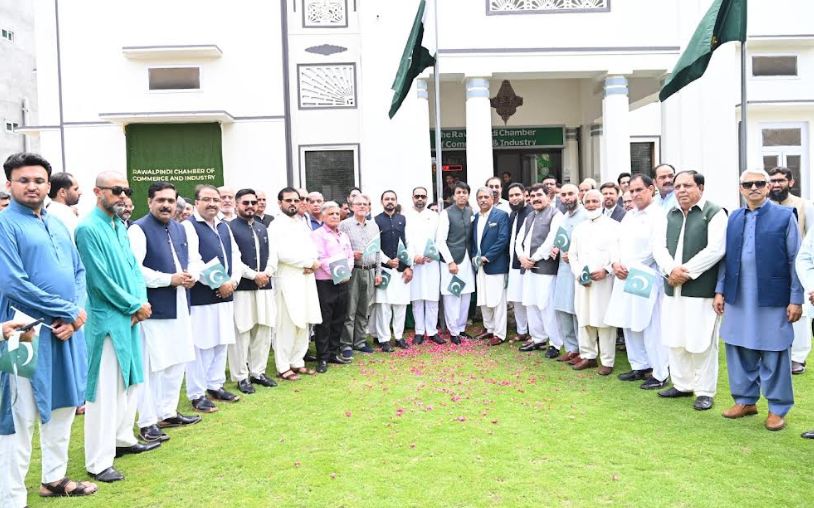
RAWALPINDI, AUG 15 /DNA/ – A grand ceremony was organized on the occasion of 77th Independence Day of Pakistan at the Rawalpindi Chamber of Commerce and Industry (RCCI).

RCCI President Saqib Rafiq, along with Senior Vice President Muhammad Hamza Sarosh, Vice President Faisal Shahzad hoisted the flag to mark the 77th Independence Day of Pakistan at the Chamber Building. Director AIC, Brig. Ejaz Qamar Kiani, Former Presidents, executive committee members, chairman standing committee on culture Martin Parvez, representatives from the trade associations, Shahid Ghafoor Paracha, Sheikh Hafeez, distinguished RCCI Members and a large number of businessmen, women entrepreneurs participated in the event.

In his address, President RCCI Saqib Rafiq said that the business community pledges that they will not hesitate to make any sacrifice for the sake of their dear homeland and will continue to play their role in the progress and development of the country. He said, “It is also a day of happiness; a day of bowing down our heads before Almighty Allah in thankfulness and a day of renewing our pledge that we will continue to struggle with unity and oneness for the objectives, for which Pakistan was created.”

RCCI President Saqib Rafiq also planted a tree under the Plant for Pakistan initiative reflecting the nation’s commitment to combating the adverse impacts of climate change. Independence Day cake was also cut on this occasion. Later, while expressing their views, the participants highlighted the sacrifices of elders and leaders for the creation and independence of Pakistan. They also pledged that every possible effort will be made for the progress and prosperity of the country. A special prayer was also offered for the country’s security, progress and prosperity. A musical performance was also performed to pay tribute to the national heroes.

‘Gen Faiz Hameed was our asset, has been wasted,’ says Imran Khan

'Gen Faiz Hameed was our asset, has been wasted,' says Imran Khan

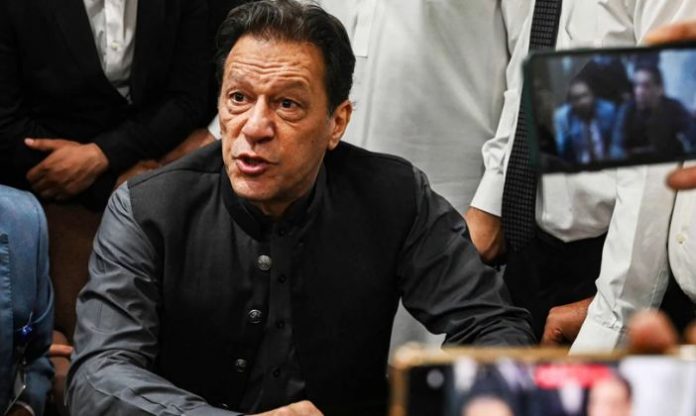
ISLAMABAD, AUG 15: Pakistan Tehreek-e-Insaf (PTI) Founder Imran Khan has voiced strong opinions on recent political developments and internal party matters.

In an informal conversation with journalists at Adiala Jail on Thursday, the former prime minister criticized the handling of former spy chief Lt Gen (retd) Faiz Hameed, saying: “General Faiz Hameed was our asset, who has been wasted.”

He further remarked that the Pakistan Army’s investigation with Faiz Hameed was his internal matter, and he had nothing to do with it. “Holding Gen Faiz Hameed accountable is a good thing, but then everyone should be held accountable,” he added.

The PTI founder alleged that the former ISI chief was removed from office at the behest of former prime minister Nawaz Sharif and incumbent premier Shehbaz Sharif. He added that there were serious debates over the removal of Faiz Hameed at that time.

“I have no relation with Faiz Hameed,” Imran Khan asserted.

The former prime minister also raised concerns about potential violations of the Constitution. He remarked that by not following the Supreme Court decision on reserved seats, the government was violating the Constitution for the third time. “I am already preparing the party for any scenario in the wake of not allocating the reserved seats to the PTI and violating the Constitution,” he added.

Meanwhile, a former deputy superintendent and a jail assistant from Adiala Jail have been detained on charges of facilitating Pakistan Tehreek-e-Insaf (PTI) Founder Imran Khan during his imprisonment.

The authorities have also launched an investigation into the involvement of several other jail employees, deepening the inquiry into the alleged misuse of power within the prison.

Sources reveal that former deputy superintendent Zafar and jail assistant Nazim are among those apprehended for providing unauthorized privileges to the former prime minister during his incarceration. The detained former deputy superintendent reportedly resides near Adiala Jail.

Meanwhile, investigation is going on with six employees on the information provided by another former deputy superintendent, Muhammad Akram, who had served in Adiala Jail for 15 years at various intervals and was removed from his post in June. These six employees were said to be closely associated with Akram.

Increased ‘surveillance’ blamed for internet slowdown in Pakistan

Increased 'surveillance' blamed for internet slowdown in Pakistan

Internet speeds witnessed around 30% to 40% reduction, reveals WISPAP chairman

ISLAMABAD, AUG 15: As internet users in Pakistan continue to reel under prevailing access and speed issues, the Wireless and Internet Service Providers Association of Pakistan (WISPAP) has blamed the phenomenon on increased security and surveillance whose adverse repercussions might lead to severe economic repercussions.

“It’s a very discouraging situation for our customers […] Many are leaving the smaller ISPs because they cannot sustain the poor service quality anymore. If this continues, we will see a mass exodus of businesses from Pakistan,” said WISPAP Chairman Shahzad Arshad on Thursday.

Elaborating on the prevailing issue, the WISPAP chairman revealed that internet speeds witnessed around 30% to 40% reduction which has had a devastating effect on businesses and individuals who depend on reliable internet connectivity.

Highlighting the adverse effects of internet-related issues on online and electronic-related businesses, the WISPAP chairman warned that these sectors, an essential pillar of the country’s digital economy, are now “struggling to maintain operations, and the slowdown is threatening their very survival”.

His remarks come as the Prime Minister Shehbaz Sharif-led coalition government and the country’s top cyber regulator the Pakistan Telecommunication Authority (PTA) have remained quiet as millions across the country continue to face trouble accessing internet services due to limited connectivity, particularly while using mobile data in some regions.

The internet disruption is not only affecting citizens’ rights but also causing financial losses to the national exchequer, as several online businesses, including e-commerce and ride-hailing services, are bearing the brunt of the restricted connectivity.

Users of the widely used messaging application WhatsApp in Pakistan have also reported frustratingly long delays and failures when uploading and downloading content of all types.

The issue has been being attributed to the alleged testing of an internet firewall to rein in social media and is equipped with filters that will block unwanted content from reaching a wider audience.

US Mission to Pakistan welcomes Natalie A Baker as new deputy chief of mission

US Mission to Pakistan welcomes Natalie A Baker as new deputy chief of mission

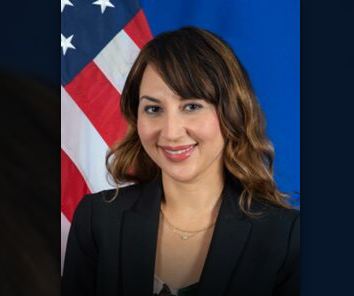
ISLAMABAD, Aug 15 (DNA): The United States (US) Mission to Pakistan on Thursday welcomed the arrival of Deputy Chief of Mission Natalie A Baker. 

Prior to assuming the duties of Deputy Chief of Mission at US Embassy Islamabad, Natalie served as Deputy Chief of Mission at the US Embassy in Doha, Qatar.

Natalie has previously served as Director of the Office of North African Affairs in the US Department of State’s Bureau of Near Eastern Affairs; Deputy Chief and Chargé d’Affaires, a.i., of the US Mission to Libya; Deputy Director of the Iran Regional Presence Office at the US Consulate in Dubai; and Economic Counselor at the US Embassy in Kuwait. In Kuwait, Natalie worked with the Department of Defense to support the withdrawal of US forces from Iraq.

From 2009-2011, Natalie served as Political and Economic Counselor in Libya, as the bilateral relationship was normalizing after a nearly 30-year pause.  She remained in Libya until the Libyan Revolution forced the US Embassy to evacuate in February 2011.

Natalie’s previous other assignments included Special Assistant in the Bureau of Near Eastern Affairs, Consular Officer in Islamabad, Pakistan, and Cultural Officer in Ashgabat, Turkmenistan.

Natalie holds a bachelor’s degree from Princeton University and a master’s degree in public policy from Harvard University.  She is a 2017 Distinguished Graduate of the National War College, National Defense University of the United States of America.

Stay Connected

64FansLike
60FollowersFollow

Latest Reviews

Exchange Rates

USD - United States Dollar
EUR
1.17
GBP
1.35
AUD
0.72
CAD
0.73