Home Blog Page 851

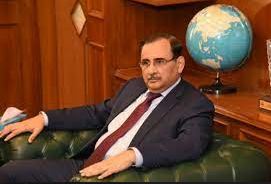
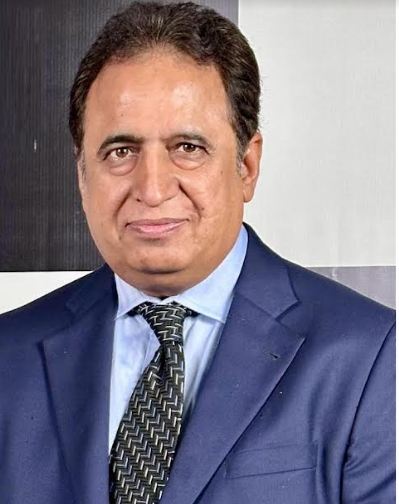
Mian Anjum Nisar says Pakistan needs sound economic management

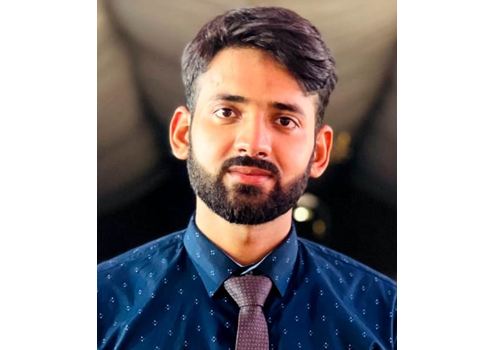
Mian Anjum Nisar

DNA

ISLAMABAD: As the Executive Board of the International Monetary Fund has completed the 1st review Stand By Arrangement, allowing for disbursement of $ 700 million, bringing the total disbursements to $ 1.9 billion for Pakistan, the Federation of Pakistan Chambers of Commerce and Industry’s Businessmen Panel (BMP) has warned that a bailout from the IMF alone was unlikely to speed up economic growth, as the political instability and lack of reforms would further deteriorate the financial situation in the country.

FPCCI former president and BMP Chairman Mian Anjum Nisar observed that amidst continuous of hike in cost of production in the country, what the Pakistan’s economy really needs is persistent and sound economic management. He asked the authorities for undertaking economic reforms and improving the regulatory environment to boost foreign investment so that financial stability can be achieved in the long-run.

The Businessmen Panel (BMP) chief stressed the need for reducing cost of doing business, besides evolving a new price control mechanism, as huge taxation, rising oil prices and constant jump in electricity and gas tariffs have lifted the inflation to decades high level in 2023.

Mian Anjum Nisar warned the authorities that inflation above 6 percent can hurt economic growth and a careful policy is required to keep it in control. He said that the pace of inflation is skyrocketing at a time when the economic activity is slowing down.

As the oil prices have been increased and power tariff has gone up further the BMP chairman stated that the government has dropped a fuel bomb on the businessmen after it suffered an electric shock to meet the conditions of IMF for the revival of the stalled loan program- a recipe to shake the trade and industry.

The FPCCI former president said that the decision would prove detrimental to the industries due to high cost of doing business and will also open the floodgates of inflation. In addition to making the electricity bills costlier and unaffordable for the consumers, the hike in base tariff would escalate prices of all household goods being widely used in every household, he added.

He termed the increase in tariff unlawful and a violation of NEPRA’s own rules and regulations, as any increase in tariff has to be determined and implemented only after holding public hearings but unfortunately they have solely decided to raise the tariff without holding public hearings, he argued.

He condemned the National Electric Power Regulatory Authority’s decision to increase electricity tariffs, stating that the burden of power theft, mismanagement, and inefficiencies cannot be shifted to consumers on the pretext of fuel adjustment.

Mian Anjum Nisar said that Pakistan’s industry had been harmed by the high cost of doing business, which discouraged investment in capacity and capability and called for easing the burden of heavy taxes on the power sector.

Anjum Nisar stated that the constant increase in power tariffs on the pretext of fuel adjustment had increased electricity prices and added to the already high cost of trade and industry. Seeking comparable energy tariffs for domestic industries in order to capture the global market, he stated that due to high electricity rates, power theft became rampant as the tariff was unaffordable to consumers.

He urged the power ministry to identify system constraints and communicate targets to all concerned departments in order to launch a wartime effort to upgrade the transmission system.

He urged the completion of all ongoing power projects well ahead of schedule. He stated that business-friendly policies must be adopted, similar to those adopted by other neighbouring countries in the region.

He suggested that the amount specified in trade policy be used to promote exports by providing incentives to trade and industry and by exploring new markets. According to the BMP Chairman, Pakistan’s electricity prices were already on the high side, which was the primary reason for the country’s price hikes. He stated that providing affordable electricity would assist in lowering production costs, thereby benefiting the public. He stated that rising imports and a widening trade deficit posed a serious threat to economic growth and must be addressed urgently.

Mian Anjum Nisar said that the continuous increase in fuel and electricity rates will add to the miseries of the businessmen, who are already feeling the heat of runaway inflation. He said that increase in fuel prices and tariff rates would also bring about another flood of inflation in Pakistan as it would increase the cost of doing business in the country.

The Pakistan Bureau of Statistics reported that inflation hit the 48 years’ highest level in 2023. The likely acceleration in the index would bring more misery for the trade and industry which was facing difficulties in meeting soaring cost. He asked the government to inform the IMF that due to floods, tight monetary policy, high inflation, and a less conducive global environment, the economic growth rate might slow down in the range of 1.5 percent.

PHMA asks for more funds in SBP solar financing as all funding goes to big industry

PHMA

DNA

ISLAMABAD: The Pakistan Hosiery Manufacturers & Exporters Association (PHMA) has proposed the State Bank of Pakistan to allocate more funds for renewable energy schemes, including solar energy financing exclusively to the export-oriented value-added textile sector. This strategic allocation will not only boost apparel sector’s growth but also promote a more inclusive and resilient economy.
These views were expressed in an interactive session held here at PHMA regional office to review the private sector credit offtake, especially to the Apparel sector’s SMEs, with the PHMA north zone senior vice chairman Amanullah Khan in the chair.

Participants of the meeting urged the Federal Board of Revenue (FBR) to strengthen the industry and export sector by releasing their payment, as a huge amount of refund claims under DLTL 2021 is pending, beside speedy payment of sales tax refunds, because the commitment of the FBR to instantly release exporters’ tax refund claims through FASTER System seems to be just an eyewash.

Amanullah Khan, in his key note address, proposed the central bank to review its credit policies by fixing a special quota to finance the hosiery sector’s small and medium enterprises, as only the large industries have been availing government’s all major concessional export loaning facilities, with very limited financing is left for the PHMA members which are the backbone of the economy.

PHMA north zone senior vice chairman observed that despite significance of SMEs, more than 5 million SMEs face a significant credit gap, receiving just 7 percent of private sector credit. To achieve this, we must advocate for targeted and fixed allocations for apparel sector SMEs in renewable and solar energy financing, particularly those aimed at the export-oriented sector.

He said that the State Bank of Pakistan has launched various policies for the promotion of SME finance, but the required results were still awaited. It was unfortunate that banks were always reluctant to provide financing to SMEs as their financing continued to show negative growth.

PHMA members, on this occasion, said that the government with a view to help grow the apparel exports will have to take solid measures to strengthen the industry, especially the SMEs, saving the livelihood of millions of workers associated with the small industries. The government will have to make a visible reduction in markup rate to help grow the businesses, particularly the SME sector, as Pakistan needs millions of jobs annually.

We need to highlight the critical role of Small & Medium Enterprises in driving sustainable economic development in Pakistan. With an estimated 5.2 million businesses, the SME sector is a cornerstone of our economy, fostering employment, growth, and export diversification.

He said that in its endeavor to provide concessional financing to the export-oriented sector, the State Bank Pakistan had announced to extend the financing scheme for renewable energy for next two years till 2024.

The objective of the scheme was to lend support in addressing the dual challenge of energy shortage and climate change through the promotion of renewable energy. It may be mentioned here that Pakistan’s economy is facing the dual challenge of energy shortage and climate change. The inadequate supply of energy has severely impacted the growth of industries.

Similarly, the effects of climate change have been observed in the form of devastating floods, droughts, heat waves and changing weather patterns. These changes essentially inhibit our ability to develop sustainably.

PTI bat-tered, loses iconic electoral symbol as SC restores ECP order

Supreme Court

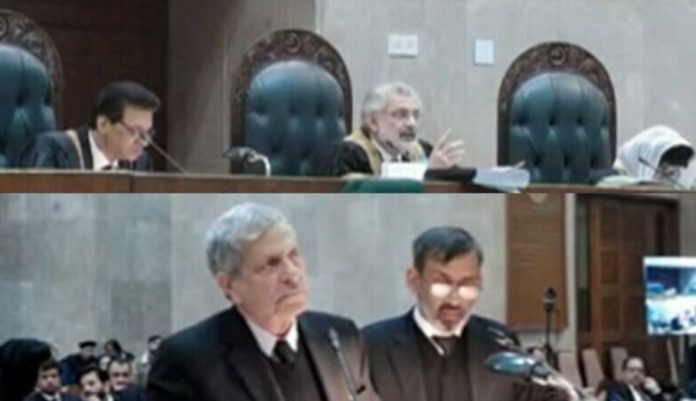
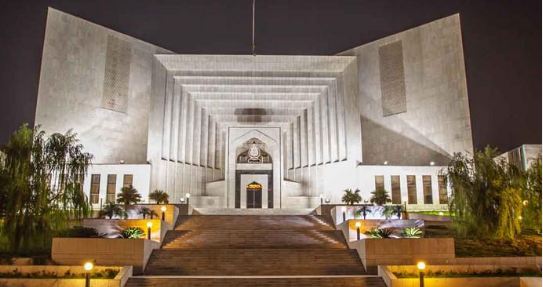
ISLAMABAD, JAN 13: The Supreme Court on Saturday set aside the Peshawar High Court (PHC) order that reinstated “bat” as PTI’s electoral symbol for the general elections.

The verdict was announced two hours beyond its scheduled time.

After hearing arguments from the counsels of both the PTI and the ECP the entire day today as well as yesterday, Chief Justice of Pakistan (CJP) Qazi Faez Isa remarked that he will consult his co-judges before coming up with his observations.

“Both sides argued the case well. We will have a discussion. Let’s see what we come up with; can’t say anythign yet,” the CJP added before the bench took a break.

A three-member bench — comprising the CJP, Justice Muhammad Ali Mazhar and Justice Musarrat Hilali — heard the ECP’s petition challenging the PHC decision to restore the PTI’s election symbol.

On December 22, the ECP had decided against letting PTI retain its electoral symbol for the general elections, saying that it had failed to hold intra-party polls as per its prevailing constitution and election laws.

Subsequently, the PTI approached the PHC against the ECP order on Dec 26 and a single-member bench restored the party’s electoral symbol until Jan 9, directing that the case be fixed before a divisional bench.

On Dec 30, the electoral watchdog filed a review application in the PHC, arguing that the court had overstepped its jurisdiction. Days later, in a major blow for the PTI, the high court withdrew the stay on the ECP order, stripping the party of its symbol again.

Consequently, the PTI moved the Supreme Court against the restoration of the ECP ruling. On Wednesday, the party had withdrawn the appeal as the matter was already being heard by the PHC.

The same day, the PHC had declared “illegal” the ECP’s decision to revoke PTI’s iconic ‘bat’ symbol and reject its intra-party polls. In the short order, the PHC had termed the ECP order as “illegal, without any lawful authority and of no legal effect”.

According to the court, the PTI was entitled to the election symbol “strictly in terms of sections 215 and 217, read with any other enabling provision of the Elections Act 2017 and Election Rules 2017”.

On Thursday, the ECP had challenged the PHC’s decision to restore the PTI’s election symbol. Simultaneously, the PTI initiated legal action in the PHC, filing a contempt petition against Chief Election Commissioner Sikandar Sultan Raja and other ECP members for not implementing the high court’s order in the case.

During the previous hearing yesterday, CJP Isa had observed that democracy was a fundamental right, which should be present in both a country and a political party.

Justice Isa had also highlighted that the case was “time sensitive” with the Feb 8 general elections approaching, adding that the matter required “immediate attention”.

ECP counsel Makhdoom Ali Khan had contended that the PTI had held its intra-party polls “secretly” and the elections were not in accordance with the party’s documents. Upon being repeatedly questioned, he also assured the bench that no discriminatory behaviour had been adopted with the party.

The apex court is expected to announce its verdict on the ECP’s appeal today as returning officers (ROs) are also set to allocate poll symbols to electoral candidates.

During today’s hearing, Hamid Khan has appeared as the PTI counsel while Makhdoom Ali Khan is present as the ECP lawyer. PTI lawyer Ali Zafar and the party’s chief election commissioner (CEC) Niazullah Niazi are also present in the courtroom.

The hearing
At the outset of the hearing, CJP Isa said that the detailed order of the PHC restoring the PTI’s symbol has been issued, at which the party counsel termed it an “excellent decision”.

Hamid then came to the rostrum, noting that today was the last day to submit the party tickets to the ECP so he would try to wrap up his arguments soon. “We also have less time as we also have to write the order,” the chief justice said indicating that the court would announce its verdict today.

Here, Justice Mazhar noted that there were two questions: whether the court had jurisdiction or not and whether the ECP has the authority to investigate intra-party polls.

Zafar then argued that neither the Constitution nor the Elections Act 2017 granted the electoral watchdog the right to review a party’s intra-party elections.

Citing Article 17 of the Constitution, he asserted that contesting the elections with an electoral symbol was among a political party’s rights and that depriving a party of the same would be in violation of the Constitution.

“The election commission has discriminated against the PTI. The ECP has apparently been mala fide by taking away the ‘bat’ symbol,” he alleged, contending that the watchdog was “not a court that could grant the right to a fair trial”.

PTI insists party’s intra-party polls were legitimate
Zafar claimed that none of the PTI members had challenged the intra-party polls, asserting that they were held according to the PTI’s constitution.

He highlighted that the ECP had given 20 days to hold the intra-party elections, which the PTI complied with due to the fear of the party being “excluded from the elections”.

The PTI lawyer said his basic argument was that those challenging the intra-party polls were not party members. He added that the PTI had responded in writing to the ECP’s 32 questions, following which it set aside the intra-party elections.

Zafar contended that the election commission had not mentioned “any irregularity” in its Dec 22 order but said that the “reasons given were strange”.

He said that the ECP had said it would not accept the intra-party polls as the appointment of the party CEC was not done correctly. However, he added, that a day ago the ECP counsel had raised technical objections and talked about “democracy within the party”.

Here, CJP Isa, reiterating his remarks from yesterday, noted, “There should be democracy within political parties as well as within the country. The basic question is of democracy, not of complete implementation of the party constitution.”

“It should at least be seen that [intra-party] elections were conducted,” he said, adding that Akbar S. Babar was also a party member “even if disliked” by the party.

CJP asks PTI to share ‘whole context’ of allegations against ECP
At one point during the hearing, Justice Isa told the PTI counsel to either “give the whole context” for its allegations of mala fide against the ECP or “keep it (the arguments) legal”.

“Did we appoint them? You all appoint these people. We don’t appoint them,” he remarked, adding that the apex court could “force” the commission to perform its duties but “not take on their responsibilities”.

The CJP told the PTI counsel: “Substantiate if you are taking the angle of mala fide.”

“If they’re mala fide then we look at them with very suspect eyes or you take away this allegation. I am not saying ‘take it away’. It’s your call,” he added.

At this, Hamid said he would keep his arguments non-political. When asked if he was withdrawing his allegation of “mala fide in fact”, the lawyer replied he would not “go into that arena”.

The CJP recalled that the ECP had issued notice to the PTI when the party was in the government.

Justice Mazhar asked whether the PTI had followed the election schedule it had issued. “Were the [intra-party] elections transparent? Was it clear that who could contest the elections and who could not?” he asked.

“You ask for a level playing field [but] would also have to give your party members the same,” he remarked, noting that the ECP had not taken action on its own but upon receiving complaints. Zafar assured the court that he would respond to all questions.

“Nowadays everyone uses the word establishment, the real term is army. We should talk openly and fully,” Justice Isa said, adding that he respects constitutional institutions.

The top judge said: “If we talk about [General] Ayub’s rule, political parties in Pakistan have a history.”

“The PPP’s sword symbol was taken from them, after which PPP-Parliamentarian was created. PML-N has seen a similar time,” he remarked, adding that it must be seen who was in the government at the time.

“There is a big difference between the situation of today and then, when SC judges took oath under the PCO. Today, the PTI’s opponents are not in government,” the CJP said.

Justice Mazhar noted that any irregularities identified by the ECP are from the PTI constitution itself, to which Zafar replied that the ECP has not identified any irregularities in the election schedule and venue.

Here, Justice Isa remarked that the main matter is whether intra-party elections have been conducted or not. He further remarked that if PTI had let Akbar Babar contest the intra-party elections, and he lacked support, he would have lost anyway.

“The PTI founder is facing a trial in jail; if he comes out of jail tomorrow and wonders who these officials are, then what will happen?” the CJP wondered.

Justice Isa also asked the PTI counsel why he does not have faith in the party’s “850,000 members”, to which Zafar replied that he was pointing out the laws which the ECP used to withdraw the party’s election symbol.

“The basic point is the authority of the ECP. If that is not present, the rest of the matter will end by itself,” Justice Mazhar said.

“If the elections were conducted in a regular manner, then the election symbol should be given in any case,” Justice Isa remarked, cautioning not to get involved in the complications of the elections.

“Just tell me whether all party members got an equal opportunity in PTI’s intra-party elections or not,” the CJP stated. “The ECP cannot be shown a piece of paper and be told that elections were held.”

He added that it has to be seen whether the intra-party elections were conducted according to the prevailing procedure or not.

Zafar said that according to the Elections Act, each party has to issue a certificate within seven days of holding the intra-party polls, at which Justice Hilali observed that the certificate was subject to the election process according to the party constitution.

The PTI lawyer reiterated that the ECP did not have the authority to scrutinise the intra-party polls, to which Justice Mazhar said that the “real issue is of the jurisdiction”.

Here, CJP Isa remarked, “Or you can accept whether you want democracy or not. You cannot say that democracy remains in the house but not outside it.

“You want politics, not democracy. Politics is democracy,” he noted, asking why the PTI did not allow the 14 people challenging the party polls to contest them.

‘Barrister Gohar’s own election has become questionable’
The top judge pointed out that the PTI lawyer said the ECP could impose a fine for not holding intra-party polls properly but at the same time argued that it did not have authority for other matters.

Here, Justice Hilali wondered if the ECP “could do nothing” if a political party issued a certificate for holding intra-party elections without actually conducting them. Meanwhile, Justice Mazhar observed that the party had “gone beyond the stage of fine” by holding the intra-party polls.

The CJP then inquired Zafar who the PTI chairman was, to which he replied that it was Barrister Gohar Ali Khan. “Barrister Gohar’s own election has become questionable. If the PTI founder had given a certificate, then it would have been another situation,” the chief justice remarked.

To this, the PTI counsel responded that the certificate needed to be issued by the incumbent party chairman, not the previous one. When Justice Hilali asked who the PTI chairman was at the time of the intra-party polls, the lawyer answered that the position was held by former premier Imran Khan.

Zafar maintained that Babar had been expelled from the PTI. The CJP asked the counsel to show on record that he was not a member, to which Zafar said he would produce the document proving that.

“A certificate can only be issued once a party has held elections in accordance with its constitution,” Justice Hilali noted.

Here, the CJP observed, “The PTI’s constitution says that the chairman shall be elected every two years while others every three years. Violation of the party constitution is proved to this extent.”

Zafar then said he had been “given directives” that Babar was not a PTI member, at which CJP Isa asked who was giving him directives. “I am being given directives by the party leadership,” he answered.

“Those who joined the party two years ago are giving that instruction?” Justice Isa questioned.

Justice Hilali asked Zafar whether PTI had published the nomination papers for its intra-party elections on its website. She wondered how people were supposed to know that these were the nomination papers, as well as when to submit them.

Here, the CJP directed that the PTI’s website be checked for the nomination papers but Zafar informed the court that they had been removed from the website once the intra-party elections had concluded.

Justice Isa then asked Zafar to show any sort of proof that candidates’ fees or nomination papers had been received. The lawyer replied that fees were received in cash, to which Justice Isa questioned which political party collects their fees in cash.

Justice Hilali said, “Your party’s slogan is to empower people but the same cannot be seen here.” Zafar responded that the party had been given 20 days for “whatever mistakes” they had made.

This is talk from three and a half years ago that the ECP had directed you to hold elections, Justice Isa said. “Your response was that one year was given.”

“The ECP showed bravery by submitting a notice during the [PTI’s] government,” Justice Isa remarked, to which Zafar replied that the electoral watchdog had issued notices to all political parties and not just the PTI.

Here, Justice Mazhar said that the schedule for the intra-party polls issued by the PTI “seemed practically impossible”. “If you have to make decisions according to your wishes instead of the law, then I cannot accept them.

“All political parties should be treated equally. The ECP told us that no objections were raised on other parties’ intra-party polls,” he noted, adding that “only PTI members did not get a level playing field”.

“Why is PTI afraid of elections?” asks CJP
During one of his arguments, Zafar noted that according to the law, it was mandatory for the ECP to issue the certificate of inter-party elections to the PTI.

“The main thing is to have elections, not certificates,” the CJP responded. “Not having a certificate is not a problem, not having an election is a problem. The certificate can come even without an election.”

“Why is PTI afraid of elections?” the judge asked.

Justice Isa asked Zafar once again to provide any documents as proof that PTI’s intra-party elections had indeed taken place.

“If the PTI needed more time, it was said before that the decision [of Peshawar High Court] will have to be suspended,” Justice Isa said,

The CJP also asked Zafar to provide Imran’s nomination letter in favour of Barrister Gohar, to which he was told that there was no such letter and the decision was simply announced in the media.

“If Imran Khan says tomorrow he did not give this nomination, then what will happen?” the judge wondered.

In an interaction with PTI’s Niazi, Justice Isa remarked that the inclusion of new people in the party creates suspicion that influential people had taken over the party.

“You are insulting me,” Niazi replied, accusing Justice Isa of asking him PTI-related question even during his son’s interview to obtain license to practice as a lawyer. “I have been appearing before you for the past three years. I know why this is happening to me.”

“If you want to maintain this attitude, we won’t even hear the case. If you want to tarnish the reputation of institutions by blaming them, go ahead and do it,” the CJP remarked, forcing Zafar to intervene and apologise on Niazi’s behalf.

Zafar, continuing his arguments, said that the PTI wanted the intra-party polls to be held in Islamabad but no one was willing to give their place for the polls.

Here, Justice Hilali asked if PTI had an office where the polls were held, to which Zafar replied saying that the ground at which the polls were held was right next to the party’s office.

Justice Mazhar asked if the details of the location of the intra-party polls were shared with the ECP.

PTI counsel replied that the ECP letter was not responded to, however, the police were alerted about it. “The location of the polling location was also disclosed through the media.”

“When Akbar S Babar came, the polling time had already ended,” Barrister Zafar said. “We wouldn’t have had any reservations if he wanted to contest the elections.”

ECP petition
The ECP’s petition, submitted by former attorney general Makhdoom Ali Khan, argued that the PHC should not have proceeded with the case without first issuing a notice to the attorney general for Pakistan (AGP).

This procedural step was necessary because the legal question at hand pertained to the federal government, involving the interpretation of Article 17 of the Constitution and its relationship with the provisions of the Elections Act of 2017, it said.

The petition also highlighted that the PHC’s order conflicted with previous Supreme Court rulings, which have consistently discouraged high courts from intervening in the electoral process, which, as per the Constitution, was exclusively within the ECP’s jurisdiction.

The petition emphasised that the high court’s judgement effectively nullified key sections of the Elections Act and Election Rules by restricting the ECP’s constitutional and statutory roles in regulating and supervising intra-party elections of political parties. This interpretation contradicted the principles established in previous superior court rulings, it said.

Furthermore, it undermined the fundamental purpose of Section 215(5) of the Act, in conjunction with Rules 157 and 158, which aim to foster democracy, pluralism, and transparency within political parties by ensuring timely intra-party elections, it added.

Additionally, the PHC ruling disregarded the essence of Section 208(2) of the Elections Act, which is intended to guarantee equal opportunities for all party members to contest elections for any political party office.

It said the high court order not only rendered relevant provisions practically redundant but also enabled a political party to undertake “sham” intra-party elections without any checks and balances. This, the ECP’s petition said, was not only contrary to Article 17 of the Constitution but was also in conflict with the principles of democracy.

The petition also pointed out that the PHC’s order overlooked the fact that the Elections Act was enacted under a democratic government and led to the repeal of various election laws, some of which were established during times of extra-constitutional rule.

More to follow

Buleda Operation Update: Three terrorists eliminated, five soldiers embrace shahadat

Buleda Operation Update

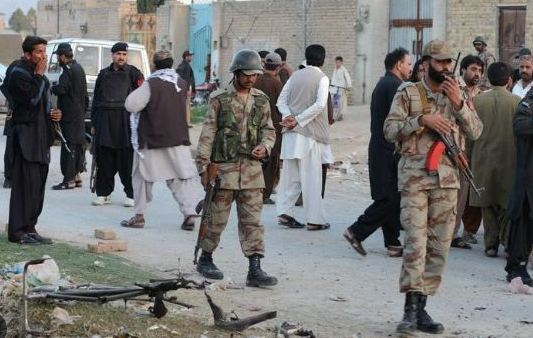
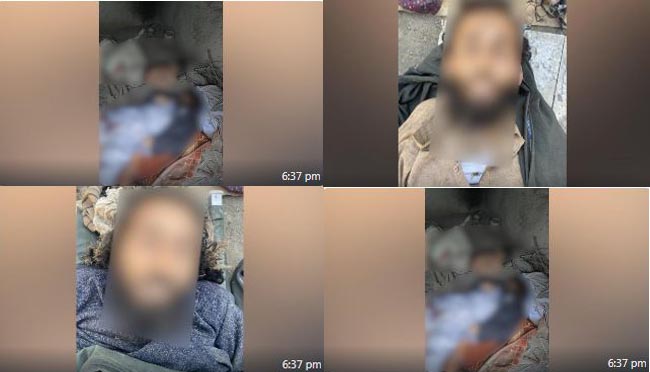
Rawalpindi, 13 JAN: /DNA/ – During an operation conducted by the security forces in general area Buleda, Kech District, terrorists exploded an Improvised Explosive Device on a security forces’ vehicle, which was followed by an intense fire exchange.

Own troops immediately responded and effectively engaged the terrorists’ location, as a result of which three terrorists were sent to hell.

However, during the operation, five brave soldiers, having fought gallantly, sacrificed their lives and embraced Shahadat. The Shuhada include; Sepoy Tipu Razzaq (age: 23 years, resident of District Sahiwal), Sepoy Sunny Shaukat (age: 24 years, resident of District Karachi), Sepoy Shafi Ullah (age: 23 years, resident of District Lasbela), Lance Naik Tariq Ali (age: 25 years, resident of District Orakzai) and Sepoy Muhammad Tariq Khan (age: 25 years, resident of District Mianwali).

Sanitization operation is being carried out to eliminate any other terrorists found in the area.

Security Forces of Pakistan, in step with the Nation, remain determined to thwart attempts of sabotaging peace, stability and progress of Balochistan, and such sacrifices of our brave soldiers further strengthen our resolve.

Imran distances himself from PTI’s ticket distribution for elections

IHC declares notification for Imran’s jail trial in cipher case illegal

RAWALPINDI, JAN 13 /DNA/ – Pakistan Tehreek-e-Insaf (PTI) founder Saturday revealed that he was unaware of the distribution of the party tickets for the national and provincial assembly constituencies in connection with the February 8 general elections.

The PTI founder made the remarks during his interaction with party workers in Rawalpindi’s Adiala jail after the hearing of the Toshakhana case, for which he has been incarcerated.

Internal rifts emerged within the ranks of beleaguered PTI after the former ruling party reportedly set aside merit and awarded tickets to ex-lawmakers and influential personalities.

PTI workers had earlier today, inside the jail premises, registered their complaints with the party’s founder against the “unfair” distribution of tickets.

Dozens of PTI Khyber Pakhtunkhwa (KP) chapter leaders and supporters had earlier this month also staged a protest against the “unfair” distribution of party tickets without consideration for merit. They were protesting against what they called “the sale of party tickets” in KP.

Responding to a question about the “unfair” distribution of party tickets, the PTI founder told his supporters: “I don’t know who got the ticket and who didn’t.”

“I was not allowed to consult about the distribution of party tickets.” The PTI founder asked his supporters how could he verbally decide about 850 tickets.

Meanwhile, Sher Afzal Khan Marwat, one of the members of Imran’s legal team, said that he had conveyed workers’ concerns over the controversial allotment of the tickets to the PTI founder.

Taking to his X handle, Marwat said that Imran had announced the withdrawal of such disputed tickets.

As per a report in The News, ticket allocations for the upcoming general elections caused an uproar within the PTI, particularly in KP where a group of influential party leaders, some of whom were vying for the position of chief minister, have been denied provincial seats and allocated National Assembly (NA) tickets.

The PTI sources told the daily that all the influential contenders for the slot of KP chief ministership have been allocated NA tickets to pave the way for Ali Amin Gandapur as possible chief minister of KP if the party wins the elections.

One of the party leaders, who is closely watching this infighting within the PTI, confided to The News that this is a clash between the PTI’s establishment and an overambitious lot.

According to one of the party leaders, who has also been allocated a NA ticket in KP, there are also allegations about irregularities in ticket allocations in almost a dozen cases.

The PTI sources said that the likes of Asad Qasier, Atif Khan, Shah Farman, Shahram Tarakai, Junaid Khan, and Sheheryar Khan Afridi were not being allotted KP Assembly tickets and were asked by the party to contest for the NA only. It is not confirmed whether any of them finally got the KP Assembly ticket.

“These leaders are protesting that despite their seniority in the party, they have not been consulted in the ticket allocation exercise. They also conveyed a message to the founder chairman of PTI Imran Khan to express their no-confidence in the ticket allocation exercise,” the report read.

A day earlier, the former ruling party announced fielding candidates on all 266 National Assembly seats across Pakistan. However, several constituencies had been marked ‘pending’, mainly due to a difference of opinion in naming candidates.

Interestingly, the PTI has fielded its candidates against its erstwhile close ally Sheikh Rashid Ahmad and his nephew Sheikh Rashid Shafiq, as the two sides reportedly developed differences over last year’s May 9 mayhem.=DNA

==============

Two separate operations in KP eliminate four deadly terrorists: ISPR

ISPR

Rawalpindi, 13 Jan: /DNA/ – Four terrorists were sent to hell by security forces in two seperate operations in Khyber Pakhtunkhwa province. An intelligence based operation was conducted in general area Mir Ali, North Waziristan district. During the conduct of operation, after an intense exchange of fire, HVT Terrorist Comd Tabassum @ Qadarman along with Terrorist Sajid @Sarkandi, were sent to hell by the security forces.

In another joint operation conducted by the security forces and Police in general area Kulachi, Dera Ismail Khan district, two more terrorists were sent to hell. Weapons, ammunition & explosives were also recovered from the killed terrorists, who remained actively involved in numerous terrorist activities against security forces as well as extortion & target killings of innocent civilians, and were highly wanted by the law enforcement agencies.

Sanitization operations are being conducted to eliminate any other terrorist found in the area. Locals of the area appreciated the operations and expressed their full support to eliminate the menace of terrorism.

SC judge questions level playing field within PTI, as party seeks one for itself

Nawaz

ISLAMABAD: The Supreme Court Saturday questioned the PTI about seeking a level playing field, particularly in light of reservations communicated by its own members about the lack of one in the party.

“You ask for a level playing field, you must also give one to your members,” Justice Muhammad Ali Mazhar remarked.

Addressing Barrister Zafar, the SC judge said that the ECP didn’t take action on its own but sprung to action after receiving complaints on PTI’s intra-party polls. He also asked if the party’s polls were transparent and whether it was clear who could or could not contest the election.

The SC judge’s remarks came during the hearing of the Election Commission of Pakistan’s (ECP) plea challenging the Peshawar High Court verdict restoring the PTI’s electoral symbol.

The hearing is being conducted by a three-member bench, headed by CJP Isa and consisting Justice Muhammad Ali Mazhar and Justice Musarat Hilali.

Barrister Ali Zafar is representing the PTI in the case at the SC, while Makhdoom Ali Khan is ECP’s counsel.

The commission was dissatisfied with PHC’s order on Thursday and challenged the decision in the apex court, seeking its revocation. The PTI, subsequently, filed a plea in the PHC against Chief Election Commissioner Sikandar Sultan Raja and other ECP members for not following up on the PHC’s order.

While responding to Justice Mazhar’s comments, Zafar said: “Election Commission has not identified any such irregularity. I will answer all questions with documents.”

Earlier, Chief Justice Qazi Faez Isa remarked that it isn’t enough to level allegations at the ECP on social media or media and that the electoral body said it had sent a show-cause notice to the party pertaining to intra-party polls in the past, while the PTI was still in the government. But the party had then failed to conduct the polls citing different reasons.

“The Election Commission took notice of PTI when it was in government,” he remarked.

“Was the Election Commission an independent constitutional body in your government, which has now become subordinate to someone?” he asked the PTI counsel.

The chief justice, during the hearing, remarked that the court will not talk about the Election Act since it hasn’t been challenged.

Barrister Zafar said the PTI is not challenging the Election Act.

At the hearing’s outset, Justice Mazhar asked the PTI lawyer two questions. The first one regarding the jurisdiction of the court and the second was about the ECP’s authority to investigate intra-party elections.

Barrister Zafar told the court he will assist them on the matter, but reminded the SC that it is the last date for allotment of final lists and election symbols, hinting the bench to expedite the case.

The lawyer then told the court that the Constitution doesn’t allow the electoral authority to review intra-party polls and that the electoral symbol cannot be withheld due to these elections.

“Depriving a political party of its election symbol on the basis of intra-party elections is a violation of Article 17-2,” Barrister Zafar added, accusing the ECP of discriminating against the PTI.

He further argued that the electoral body has apparently “acted maliciously” by taking away the bat symbol. “The Election Commission is not a court of law that can give a fair trial.”

The lawyer claimed no PTI member has challenged the intra-party elections.

“Even if the polls were challenged, it becomes a civil court matter. The Election Commission does not have the suo motu powers.”

If the ECP orders, he added, are arbitrary and contrary to facts, the court possesses the power of judicial review. “The Election Commission’s decision is inconsistent with Article 10-A, as no such trial took place.”

Detailing the PTI’s previous intra-party elections, the lawyer said that the party held its first election on June 8, 2022. The ECP, he added, termed those elections wrong and ordered a reelection in 20 days on October 23.

Barrister Zafar argued that the ECP’s orders came after the SC verdict on conducting polls on February 8, 2024.

Bat symbol saga

The election commission, on December 22, barred the PTI party from keeping its “bat” symbol for the upcoming February elections, citing irregularities in their internal polls that did not comply with the party’s own constitution and election laws.

Following the ECP’s decision to revoke their symbol, the PTI challenged it in the PHC. A single-member judge granted temporary relief, reinstated the bat symbol, and referred the case to a larger bench for a hearing on January 9.

Then, on December 30, the polling body challenged the PHC’s jurisdiction over the matter. However, in a dramatic turn of events, the PHC reversed its earlier decision and upheld the ECP’s order.

Facing the prospect of losing its iconic cricket bat symbol for the upcoming elections, the PTI took its fight to the highest court in the land — the Supreme Court. However, in a strategic move, they later withdrew their appeal, hoping for a favourable outcome from the PHC.

And the PTI did get what it wanted. The PHC Wednesday declared the commission’s order “illegal, without any lawful authority and of no legal effect”. However, the ECP challenged it decision in the country’s top court.

The U.S. and the Quest for Global Order

The U.S. and the Quest for Global Order

Dr. Muahammad Akram Zaheer


NgoziOkonjo-Iweala, the leader of the World Trade Organization has said that rich countries are being very hypocritical. They used to tell developing countries to open up their economies and not be protectionist, but now the rich countries are not following their own advice. They got rich and powerful by following certain rules, but now they want to change the rules in their favor. Okonjo-Iweala also thinks they no longer want fair competition and prefer a system based on power instead of rules. The U.S. officials often talk about the importance of following international rules.

These rules were established after World War II to promote open trade and prevent countries from being too nationalistic and protective. The leaders back then wanted to avoid the problems caused by nationalism and protectionism. They successfully created a peaceful and prosperous world through a system of free trade. This system helped poor countries become rich and strong, making it less tempting for countries to go to war or try to conquer new lands.


The way countries work together involves more than just trading goods. It includes agreements, ways of doing things, and shared ideas about how the world should be fair. The United States has been better at talking about these ideas than actually following them. For example, the war in Iraq went against the principles of the United Nations, which say you shouldn’t attack another country without a good reason. The U.S. also picks and chooses which international rules it follows and criticizes other countries for doing the same. When the U.S. pulled out of a deal with Iran, even though Iran was keeping its promises, it made it harder for the world to work together on important issues. The U.S. also uses its power to control the use of the dollar to force other countries to do what it wants.In the past, the U.S. was seen as a good country because it wasn’t an empire like the United Kingdom or France. It was once a colony itself and didn’t try to take over other countries.

But lately, the U.S. is acting more like a bully, and even its friends are looking for ways to deal with it. The U.S. used to help make the world a better place for everyone, not just itself. That used to be its greatest strength. People might like the money and help they get from China, but they think China is mostly interested in making itself powerful. The U.S., on the other hand, used to show it cared about everyone’s interests, not just its own.
If the United States gives up on its big, open, and generous view of the world because of fear and pessimism, it will lose a lot of its natural advantages. For a long time, the U.S. has justified actions that go against its stated principles as exceptions needed to protect itself and support the overall order. It sometimes breaks the rules to get quick results, but you can’t save a system by destroying its rules.

Other countries are already watching and learning from this. They are in a race to protect their own economies by giving special benefits and creating barriers. Some countries break international rules and point to the U.S.’s hypocrisy as an excuse. This behavior even extends to the former president not respecting democratic norms.The biggest threat to the international order with rules doesn’t come from China, Russia, or Iran. It comes from the United States. If the U.S., driven by exaggerated fears of decline, steps back from its leading role in world affairs, it will leave empty spaces of power worldwide. This will encourage various powers and players to try to take advantage of the chaos. We’ve seen what happens in the Middle East without strong American involvement. Imagine something similar in Europe and Asia, but with major powers causing disruption and significant global consequences.


It’s concerning to see parts of the Republican Party returning to isolationism, similar to the 1930s when it opposed U.S. intervention even as Europe and Asia faced crises. Since 1945, the U.S. has debated how to engage with the world but not whether it should be engaged at all. If the U.S. truly turns inward, it would be a setback for order and progress. However, the U.S. still has the ability to lead, build alliances, solve global problems, and prevent aggression with fewer resources than during the Cold War. The cost would be much higher if the order collapsed, rogue powers rose, and the open global economy fractured.The United States has played a crucial role in creating a new kind of international relations since 1945, benefiting most countries, including itself. While facing new challenges, many powerful countries also gain from peace, prosperity, and a world of rules and norms.

Those challenging the current system don’t have an alternative vision that could unite the world; they just want narrow advantages for themselves. Despite its internal issues, the United States is uniquely capable and positioned to maintain the central role in sustaining this international system. As long as America stays committed to its project, the current international order can thrive for many years.

The Future of UK-US Relations

The Future of UK-US Relations

Mohammad Ramzan
In an era defined by interconnectedness and global challenges, the relationship between nations holds immense significance. The United Kingdom and the United States with their historical ties and shared values stand at the forefront of international cooperation. Some alliances have survived the test of time and adversity as the steadfast partnership between the United Kingdom and the United States. The roots of this historical alliance run deep forged in the crucible of World War II, where the British-American collaboration played a pivotal role in shaping the course of history.

At the heart of the UK-US alliance during World War II lays the monumental Lend-Lease Act, a legislative landmark that epitomized the depth of their cooperation. Enacted in 1941, this crucial piece of legislation was a lifeline for the United Kingdom, providing essential military aid that amounted to over $31 billion in assistance. The scale of this support was unprecedented and underscored the commitment of the United States to stand shoulder to shoulder with its British counterparts in the face of global conflict.The Lend-Lease Act was more than just a financial transaction; it symbolized the shared sacrifice and determination of two nations bound by a common cause.

As the war raged on, the United States supplied the UK with a wide array of military equipment, ranging from aircraft and tanks to ammunition and food supplies. This collaborative effort not only bolstered the British war effort but also laid the foundation for a post-war world order built on the principles of unity and cooperation. Beyond the material support provided through the Lend-Lease Act, the UK and the US engaged in extensive strategic planning and coordination. Military leaders from both nations collaborated closely on operations and shared intelligence, ensuring a synchronized approach to the challenges posed by the Axis powers. From the beaches of Normandy to the skies over London, the British-American alliance stood as a formidable force, ultimately turning the tide of the war in favor of the Allies.The legacy of the UK-US alliance during World War II extends far beyond the battlefield.

It laid the groundwork for the formation of the United Nations, an institution designed to prevent future global conflicts and promote international cooperation. The enduring friendship forged in the crucible of war has since evolved into a close diplomatic, economic, and cultural partnership, showcasing the resilience and adaptability of the historic alliance.The historical alliance between the United Kingdom and the United States during World War II is a testament to the power of collaboration in the face of adversity. The Lend-Lease Act, with its staggering financial commitment, serves as a symbol of the unwavering support that the United States provided to its British allies. Beyond the battlefield, the strategic planning and coordination between the two nations set the stage for a post-war world order that prioritized unity and cooperation. As we reflect on this chapter in history, it is evident that the UK-US alliance is not merely a historical footnote but a living testament to the enduring strength of shared values and common goals.
As a student of Political Science I suggest a set of few comprehensive recommendations to further enhance and solidify this relationship.

Both the countries should address various aspects of diplomatic engagement. Expand cultural exchange programs to further enhance soft power and mutual understanding.Increased cultural diplomacy can contribute to fostering positive perceptions and deeper connections between the two nations.Implement targeted public diplomacy campaigns to inform and engage citizens on the benefits of international collaboration. Informed and supportive public opinion can positively influence policymakers and strengthen the legitimacy of global engagements. Foster joint research and innovation initiatives to address global challenges, especially in areas like healthcare, climate change, and technology.Collaborative scientific endeavors can not only yield practical solutions but also strengthen the narrative of shared progress.

Strengthen intelligence-sharing mechanisms to address evolving security threats. Enhanced collaboration in intelligence can bolster both nations’ capabilities in countering common security challenges.Jointly invest in sustainable development projects to address global inequalities and contribute to shared prosperity.Economic collaboration in sustainable development can align both nations with global priorities, showcasing responsible leadership.Actively participate in and support multilateral institutions, fostering inclusive global governance.

Continued commitment to multilateralism can strengthen the collective response to global challenges and enhance global leadership credibility.Align strategies in emerging technologies to collectively address ethical, security and regulatory considerations.A unified approach in technology governance can set standards and contribute to global stability in the digital age.Collaborate on crisis preparedness and response mechanisms for unforeseen global events.A coordinated response to crises, such as pandemics or natural disasters, can demonstrate global leadership and resilience. Establish regular high-level bilateral consultations to address evolving geopolitical dynamics.

Ongoing diplomatic dialogues can foster trust, prevent misunderstandings, and enhance strategic coordination. Expand programs facilitating youth and academic exchanges to nurture future leaders with a deep understanding of each other’s societies.Investing in the next generation of leaders can solidify long-term diplomatic ties and promote a shared vision of global leadership.

Mohammad Ramzan
Student of BS Political Science University of Okara
[email protected]

JUI-F’s Fazl says held ‘comprehensive and inclusive’ talks with Taliban supreme leader

JUI-F’s Fazl says held ‘comprehensive and inclusive’ talks with Taliban supreme leader

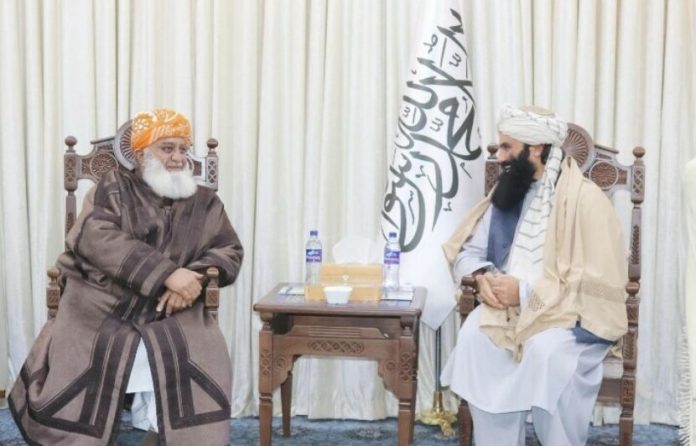
KABUL: Jamiat Ulema-i-Islam Fazl (JUI-F) chief Maulana Fazlur Rehman on Friday confirmed he met Taliban supreme leader Haibatullah Akhunzada and held “comprehensive and inclusive talks” on all issues.

The JUI-F chief has become the second prominent figure to meet the Taliban chief following the Qatari prime minister’s meeting with him in Kandahar last year.

Fazl had travelled to Kabul on Sunday along with an 11-member delegation on the Afghan interim government’s invitation after the JUI-F chief conveyed his desire to visit Afghanistan to discuss issues that had been souring ties between the two countries.

During his visit, Fazl, who undertook the trip in the middle of a hectic election campaign, met key Taliban leaders, including the Afghan prime minister. It was his first trip to Afghanistan since the Taliban’s assumption of control following the US withdrawal in 2021.

In an interview with Afghan National Radio and Television today, which will be aired on Saturday, Fazl confirmed meeting the Taliban chief. The interview was conducted in Kabul hours before the JUI-F chief wrapped up his six-day trip to Afghanistan, which the JUI-F has described as “highly successful”.

When asked about his earlier remarks that he would travel to Kandahar to meet the Akhunzada, Fazl said, “We were in contact with them for this purpose. They positively responded to us. We received their full support and I am thankful to him.”

To another question regarding his meeting with the Taliban chief, he said: “Of course. I am not making hollow claims.”

“We discussed all issues between the two countries,” Fazl said. “The purpose of my visit was that we do not confine ourselves to only one issue. We held comprehensive and inclusive talks. We covered all issues and exchanged suggestions for cooperation in all fields. They endorsed our stance in a very proper way,” the JUI-F chief added.

Separately, in a statement on social media platform X today, the JUI-F media cell said Fazl held meeting meetings with Afghan Deputy Prime Minister Abdul Ghani Baradar, Defence Minister Mullah Yaqoob Mujahid, Interior Minister Sirajuddin Haqqani and Refugee Minister Khalil ur Rehman Haqqani.

Sirajuddin Haqqani also made similar comments and said his government wants cordial relations with Pakistan. “Talks between Pakistan and Afghanistan on border affairs should move forward with consensus,” the JUI-F quoted Haqqani as saying.

It also quoted Mullah Yaqoob as saying that Fazl’s visit would help in reducing tensions between the two countries. “I hope that situation will change after the visit,” said Mullah Yaqoob, who has been very critical of Pakistan on several occasions.

Meanwhile, Afghan Refugee Minister Rehman, who also met the JUI delegation, expressed serious concerns over Pakistan’s policy towards Afghan refugees and called for an end to the “unfair” treatment, the JUI-F said.

The minister also urged Pakistan to give time to Afghans for the volunteer repatriation.

The meetings between the JUI-F chief and Afghan leaders come at a time when relations between Pakistan and Afghanistan have suffered due to a spike in terrorist attacks, mostly claimed by the outlawed Tehreek-i-Taliban.

Islamabad has stated that the TTP and other groups use Afghan soil against Pakistan. While the Afghan Taliban have denied the charge, authorities remain unconvinced and have demanded action against the TTP, its sanctuaries, and the handover of its leaders.

The ties between the two neighbours took a further hit when Pakistan started deporting illegal Afghans. Nearly half a million undocumented Afghans have so far left Pakistan since November 1, last year.

Stay Connected

64FansLike
60FollowersFollow

Latest Reviews

Exchange Rates

USD - United States Dollar
EUR
1.17
GBP
1.35
AUD
0.67
CAD
0.72