Home Blog Page 841

Belarus, Pakistan commit to deepening ties, exploring new areas of cooperation

Belarus, Pakistan commit to deepening ties, exploring new areas of cooperation

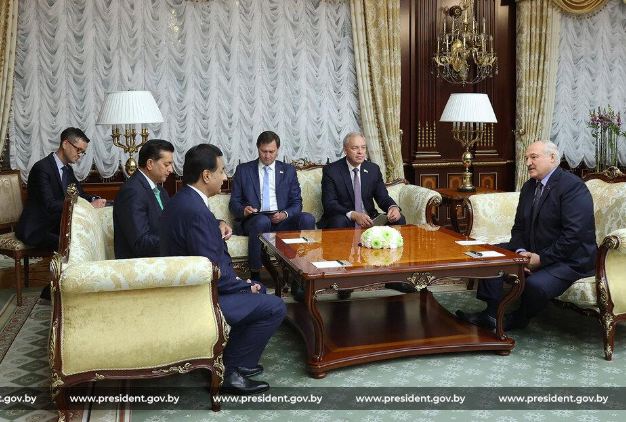
MINSK, AUG 21 /DNA/ – Sardar Ayaz Sadiq, the Honorable Speaker of the National Assembly of Pakistan, called on Aleksandr Lukashenko, President of the Republic of Belarus, during his official visit to Minsk from August 19-22, 2024. The meeting was also attended by the Chairman of the House of Representatives of Belarus, the Foreign Minister of Belarus, and the Ambassador of Pakistan to Belarus.

President Lukashenko extended a cordial welcome to the Pakistani delegation and fondly recalled his recent meeting with the Prime Minister of Pakistan in Astana. He emphasized Belarus’s readiness to expand multifaceted bilateral relations, including economic cooperation, agriculture, industry, and educational and cultural exchanges.

The Honorable Speaker conveyed warm greetings from Pakistan’s leadership to President Lukashenko and highlighted the potential for further strengthening bilateral cooperation. He stressed the significance of locally manufacturing Belarusian agricultural machinery, including tractors, in Pakistan to meet the growing demands of the market. Furthermore, the Speaker expressed Pakistan’s keen interest in learning from Belarus’s expertise in industrial development and agricultural innovation, and he expressed a desire for collaboration in research.

Highlighting the importance of people to people contact, Sardar Ayaz Sadiq stressed the need to streamline the visa process for Pakistani students and businessmen, for an efficient system to facilitate easier travel and exchange between the two countries.

The discussion between the leaders also focused on enhancing agricultural cooperation. Pakistan side expressed interest in importing high-quality Belarusian agricultural machinery, known for its efficiency and reliability. The meeting underscored the potential for increased economic and industrial collaboration. President Lukashenko shared the possibility of establishing multi brand centers in Pakistan for the sale and maintenance of Belarusian machinery with the possibility of joint production facilities in Pakistan.
Sardar Ayaz Sadiq noted the importance of such initiatives in boosting Pakistan’s industrial sector and improving bilateral trade.

Both leaders reaffirmed their commitment to strengthening the ties between Pakistan and Belarus, recognizing the historical and cultural connections between the two nations and expressing a mutual desire to build on this foundation.
The meeting concluded on a positive note, with both sides expressing their readiness to continued dialogue and cooperation to further enhance the bond between the two nations, including collaboration in multilateral forums.

CPEC Facing Uncertain Future

National Security in American Political Discourse

Dr. Muhammad Akram Zaheer

The China-Pakistan Economic Corridor (CPEC) was once seen as a groundbreaking project that promised to bring significant benefits to both China and Pakistan. Launched as part of China’s Belt and Road Initiative (BRI), CPEC was envisioned as a massive infrastructure development plan that would create new economic opportunities for Pakistan while also serving China’s strategic interests. However, in recent years, this once-prominent project has faded from the spotlight in Pakistan and its progress has been much slower than initially expected.CPEC was designed to connect China’s northwestern region of Xinjiang to Pakistan’s Gwadar Port, located on the Arabian Sea. This connection was to be established through a network of highways, railways and pipelines, creating a corridor that would facilitate trade and energy transportation between the two countries. For China, CPEC held strategic importance as it would provide a shorter and safer route for transporting goods and energy supplies, bypassing the longer maritime route through the Strait of Malacca. For Pakistan, CPEC was seen as an economic lifeline that could boost its economy by improving infrastructure, creating jobs and attracting foreign investment.However, despite the high hopes surrounding CPEC, the project has encountered several challenges over the years that have hindered its progress. One of the major issues has been the slow pace of implementation. Many of the planned infrastructure projects, such as highways and railways, either have been delayed or have yet to be completed. This has led to frustration in both China and Pakistan as the expected economic benefits have not materialized as quickly as anticipated.

Another significant problem facing CPEC is the issue of unpaid loans. The project has been largely financed by Chinese loans and Pakistan has struggled to repay them. The financial burden of these loans has added to Pakistan’s economic difficulties, leading to concerns about the long-term sustainability of the project. This situation has been exacerbated by allegations of corruption, with reports of funds being misused or siphoned off by officials involved in the project. Such issues have further undermined public confidence in CPEC and have led to questions about whether the project will ultimately deliver on its promises.The security situation in Pakistan has also posed a major challenge to the successful implementation of CPEC. Parts of the country, particularly in the regions where key CPEC projects are located, have been plagued by violence and instability. Attacks on infrastructure projects, workers and security personnel have created a climate of fear that has deterred both local and foreign investors. The need to allocate significant resources for security measures has also increased the overall cost of the project, adding to the financial strain.Since the beginning, the West, particularly the United States and India—an important Western ally and Pakistan’s long-time rival have opposed the China-Pakistan Economic Corridor (CPEC). They have labeled it a Chinese “debt trap,” with many U.S. lawmakers warning that they don’t want Pakistan to repay Chinese loans with money from the International Monetary Fund (IMF).

CPEC is a major project under China’s Belt and Road Initiative (BRI). China and Pakistan have kept many details of the project secret, but it’s clear that China has been repeatedly disappointed by the various challenges CPEC has faced in Pakistan. In 2019, under Prime Minister Imran Khan, Pakistan reportedly revealed confidential details of Chinese agreements to the IMF, which may have led to a breakdown in trust between the two countries. Additionally, the ongoing terror attacks on Chinese workers involved in CPEC projects have become a serious concern for China.As Pakistan faces another financial crisis, Prime Minister Shehbaz Sharif visited China in June. During this visit, the two countries announced plans to upgrade CPEC and start Phase II of the project. However, many believe that the visit was more about Pakistan’s urgent need for financial assistance, especially through new Chinese investments in CPEC and restructuring Pakistan’s $15 billion energy debt to China.Pakistan’s desperation for Chinese financial support is driven by its recent agreement with the IMF. On July 12, 2024, Pakistan and the IMF reached a preliminary agreement for a 37-month Extended Fund Facility (EFF) worth about $7 billion. However, this agreement still needs approval from the IMF’s Executive Board, which requires Pakistan to secure funding commitments from its partners, including China.Pakistan’s situation is difficult as it has little to offer China besides poor progress on CPEC, ongoing financial instability and governance issues. Moreover, under IMF pressure, Pakistan has promised not to allocate additional funds to pay off the $1.8 billion owed to Chinese power plants built under CPEC, violating a 2015 Energy Framework Agreement with China. Pakistan’s debt restructuring request to China hinges on this issue. Additionally, Pakistan has agreed to phase out incentives for Special Economic Zones (SEZs), a key part of CPEC as part of its IMF agreement.China recognizes Pakistan’s strategic importance and commitment to CPEC, despite the many problems Pakistan has failed to address. China also seems aware that Pakistan’s recent financial decisions regarding CPEC are due to its severe economic crisis and may not be permanent. However, China appears reluctant to continue investing in Pakistan at the same level as before. Some in China now view the political risk in Pakistan as extremely high, with one prominent Chinese scholar comparing it to countries like Somalia and Syria. This is a worrying sign for Pakistan, which sees Chinese cooperation, especially through CPEC as its best hope for long-term economic recovery.

In June, during Prime Minister Sharif’s visit to China, China rejected Pakistan’s request for new investments related to the China-Pakistan Economic Corridor (CPEC). A month before the visit, Pakistan had asked for an additional $17 billion for China-funded energy and infrastructure projects. Despite bringing a large delegation with hopes of securing new investments, China only agreed to proceed with a long-delayed $6.7 billion railway project and even then, only the first phase was approved. This shows that China’s interest in CPEC has waned and many blame Pakistan for this. In April, Finance Minister Muhammad Aurangzeb admitted that Pakistan had been slow in advancing CPEC over the past few years. He mentioned that the government was planning to move forward with Phase II of CPEC, focusing on revenue-generating projects. However, due to incidents involving the deaths and injuries of Chinese nationals on CPEC projects and Pakistan’s ongoing financial struggles, many doubts that China will continue its commercial interest in Pakistan or that Phase II will be significant. The excitement about CPEC Phase II seems to be coming more from Pakistan than China. The Pakistani government is eager to continue to plan the projects, despite some delays and has stressed the importance of Phase II, that includes the development of Special Economic Zones (SEZs), agricultural improvements and science and technology cooperation. However, China’s response has been lukewarm, with analysts pointing out that China prefers to focus on the agricultural aspect of Phase II, while Pakistan is more interested in energy and technology projects. Chinese scholars, who believe Pakistan’s unrealistic expectations could harm long-term relations between the two countries, have flagged this difference in expectations as a major concern. In the short term, Pakistan’s hope lies in getting China to restructure its energy debt. Finance Minister Aurangzeb’s visit to China in late July is crucial, as Pakistan is seeking a five-year extension on the repayment of Chinese energy debt, aiming to reduce foreign currency outflows by $750 million annually. However, this would increase Pakistan’s total energy debt to China to $16.6 billion by 2040. Pakistan is also seeking to profile $27 billion in debt and liabilities with China, Saudi Arabia and the UAE to secure an IMF program. It remains uncertain whether Mr. Aurangzeb’s visit, following Prime Minister Sharif’s trip, will convince China to support Pakistan again. Pakistan is trying to highlight the government’s recent reforms and the agreement with the IMF to gain China’s approval. After the finance minister’s visit, Prime Minister Sharif wrote a letter to the Chinese government requesting debt profiling. Additionally, the Prime Minister announced that Chinese citizens would be exempt from visa fees, starting in August, as part of Pakistan’s efforts to secure Chinese support. However, it remains to be seen how China will respond.

RCCI demands construction package and relocation of SMEs along Ring Road

RCCI demands construction package and relocation of SMEs along Ring Road

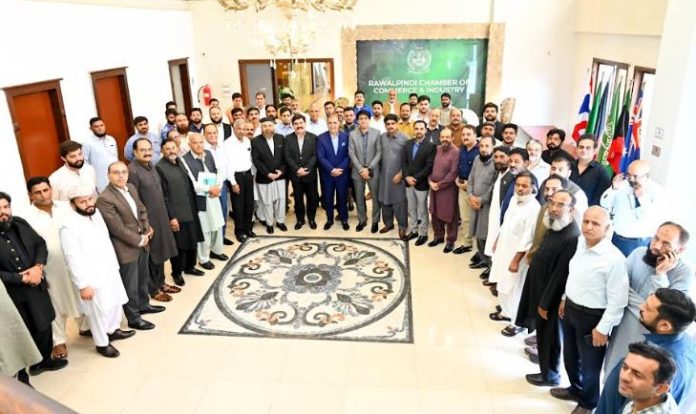
RAWALPINDI, AUG 20 /DNA/ – Business Community and Participants of the Standing Committee on Paints and Chemicals held at the Rawalpindi Chamber of Commerce and Industry (RCCI) demand a construction package and relocation of SMEs along Ring Road. House on the suggestion of Group Leader Sohail Altaf passed a unanimous resolution urging the Government of Pakistan to announce a comprehensive construction package as more than 70 Industries are directly related and associated with construction projects.” The meeting discussed the issues related to the paint and chemical manufacturers. RCCI President Saqib Rafiq informed the committee members about the prospect of economic zones along Ring Road and sought suggestions and recommendations from the Paints and Chemicals Association in this regard.

The meeting was chaired by Chairman RCCI Mohammad Badar Haroon along with President RCCI Saqib Rafiq. Senior Vice President Muhammad Hamza Sarosh, Vice President Faisal Shahzad, Former Presidents, Vice Chairman Standing Committee on Paints and Chemicals Mr. Humayun Zaheer and  other distinguished members were also present in the meeting.

The committee members in an interactive session shared key suggestions on environmental challenges and workers’ safety and also gave valuable input for the growth of the Paints and Chemical Industry. The relocation of allied industry including Furniture, Plastic Shoes, Goods Transport, the ring road project, anomalies in the Tajir Dost scheme, the development of industrial zones and Construction Package for the Industry, issues with fake subsidies, and challenges related to (LC) for exports were also part of the discussion.

UAE eyes investment in Pakistan’s maritime, railways, and aviation sectors

UAE eyes investment in Pakistan’s maritime, railways, and aviation sectors

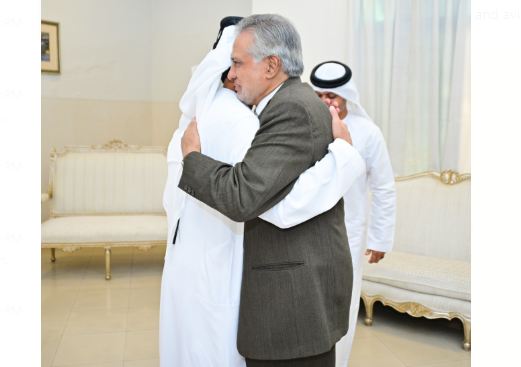
ISLAMABAD, AUG 20 /DNA/ – A high-ranking UAE delegation, led by Sheikh Ahmed Dalmook Al Maktoum, met with Deputy Prime Minister and Foreign Minister Senator Mohammad Ishaq Dar to discuss investment opportunities in Pakistan’s maritime, railways, and aviation sectors.

The discussions centered on potential collaborations to enhance Pakistan’s infrastructure in these key areas.

CASS discusses Pakistan’s path to 2047, stressing reforms and citizen engagement

CASS discusses Pakistan’s path to 2047

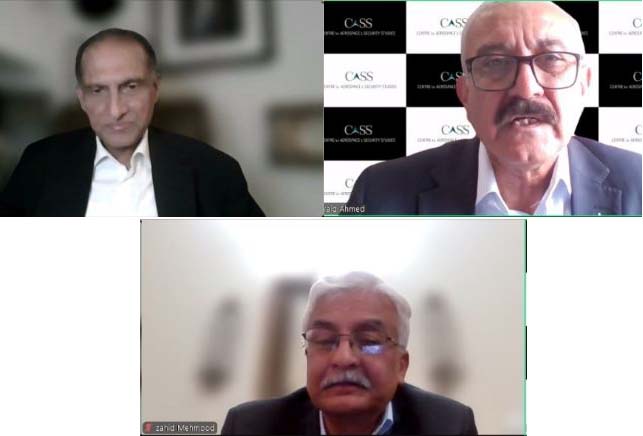
ISLAMABAD, AUG 20 /DNA/ – As Pakistan nears its centennial year of independence, engaging in thoughtful discussions to envision a prosperous future becomes imperative. This Catalyst Conversation, organised by the Centre for Aerospace & Security Studies (CASS), Islamabad, was designed to facilitate such discourse. The session was guided by insights and expertise of Ambassador Aizaz Ahmad Chaudhry, Chairman Sanober Institute and former Foreign Secretary of Pakistan.

Air Marshal Zahid Mehmood (Retd), moderator for the session and Director at CASS, initiated the discussion by reflecting on the creation of Pakistan — a saga marked by struggle and sacrifice under the guidance of visionary leaders. He stressed that as Pakistan approaches its centenary, it is crucial for all Pakistanis to learn from the past 77 years and chart a forward-looking course aligned with the original vision of its founders and the aspirations of its people. He also highlighted that the responsibility for Pakistan’s development extends beyond policymakers and national leaders to every citizen.

On the main subject ‘Pakistan of 2047,’ Distinguished Speaker, Ambassador Aizaz Ahmad Chaudhry (Retd), discussed the formidable challenges and potential strategies for envisioning a prosperous future for Pakistan. During his talk, he noted the difficulty in predicting the nation’s future given the current political and economic climate and regional conflicts.

Ambassador Chaudhry stressed the importance of having a clear vision and long-term socioeconomic development plans, similar to those implemented by nations like the United States, China, and Singapore. He outlined several critical challenges facing Pakistan today, including inadequate devolution of power; substantial portion of the population not contributing to the tax base; excessive reliance on donor aid to balance economic shortfalls; and lackluster export growth. Additional issues highlighted included weak economic growth; water and food insecurity; bureaucratic barriers for the private sector; non-competitive knowledge economy, and insufficient development of human resources.
Despite these challenges, Pakistan’s potential was underscored by its young population, rich natural resources, and strategic geographic location. Ambassador Chaudhry advocated for a citizen-centric approach, as originally championed by the country’s founder — Quaid-i-Azam.

Ambassador Chaudhry outlined several key reforms needed to transform Pakistan’s potential into reality, including stable political governance through decentralisation; economic self-reliance; living within means; continuity of economic policies; and ease-of-doing business to facilitate the private sector. He also called for streamlining regulations; enhancing tax compliance; non-partisan accountability; and significant investments in human development, particularly in education and skill development for youth in emerging technologies such as AI. The speaker concluded by stating that with these reforms, Pakistan could look forward to a peaceful and prosperous future by 2047, marking the centennial of its independence. Conversely, without such reforms, the future remains uncertain.

In his concluding remarks, Air Marshal Javaid Ahmed, President of CASS, Islamabad, pointed out dual nature of the challenges Pakistan faces, with both known and unknown elements. He stressed the immediate need for action and the pivotal role of think tanks in fostering foresight and developing a balanced perspective for the nation’s future. He remarked on critical imbalance in the national narrative, which often oscillates between two extremes, underscoring the importance of grooming current and future leadership to better address these difficulties.

In the question and answer session, participants and speakers agreed that understanding Pakistan’s challenges is essential for planning and executing future actions that will steer the country toward a prosperous and stable future, ensuring balanced development that includes contributions from all sectors of society.

Olympian Arshad Nadeem meets Chairman JCSC

Olympian Arshad Nadeem meets Chairman JCSC

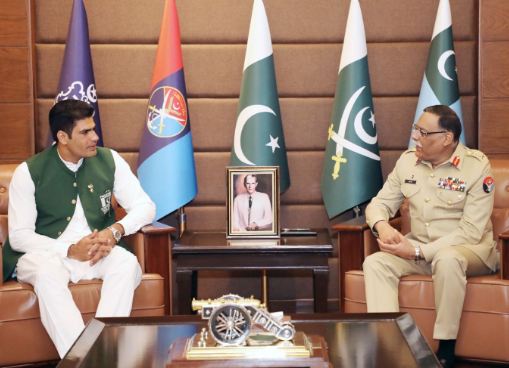
RAWALPINDI, AUG 20 /DNA/ – Arshad Nadeem, record-holder Olympian, called on General Sahir Shamshad Mirza, Chairman Joint Chiefs of Staff Committee, at Joint Staff Headquarters, Rawalpindi.


Chairman JCSC lauded Arshad Nadeem’s efforts for securing Pakistan’s first-ever Gold Medal in a singles’ event and setting up of a new Olympic record.


General Sahir Shamshad Mirza also appreciated the diligence and devotion of Arshad Nadeem in achieving a momentous milestone in Pakistan’s sport history and wished him the very best for his future endeavours.

CICA Secy Gen. meets Deputy PM Ishaq Dar, discusses cooperation in Asia

CICA Secy Gen. meets Deputy PM Ishaq Dar

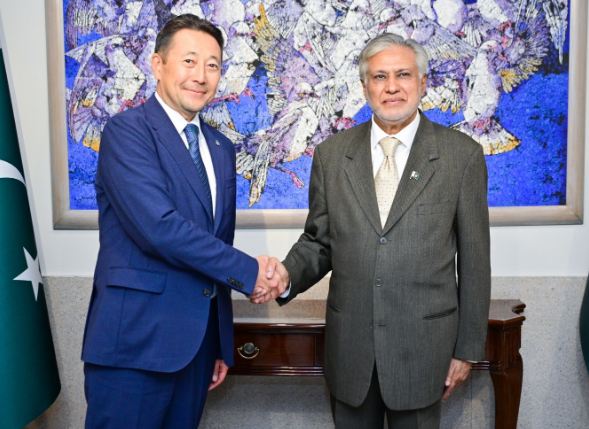
ISLAMABAD, AUG 20 /DNA/ – Secretary General of the Conference on Interaction and Confidence Building Measures in Asia (CICA), Ambassador Kairat Sarybay, who is currently on a visit to Pakistan, called on Deputy Prime Minister and Foreign Minister Senator Mohammad Ishaq Dar today.

The Deputy Prime Minister and Foreign Minister reaffirmed Pakistan’s commitment to CICA’s vision for a common, comprehensive, cooperative and sustainable security in Asia. He emphasized the need for conflict prevention; addressing the root causes of endemic disputes; and finding sustainable solutions for lasting peace and development in the CICA region. He also emphasized the significance of preventive diplomacy, multilateralism and regional collaboration in addressing emerging global challenges.

Secretary General Sarybay appreciated Pakistan’s active and constructive role in CICA and briefed the Deputy Prime Minister and Foreign Minister on the ongoing activities and the future outlook of CICA.

Taliban denounces Pakistan special envoy remarks, terming it provocative 

Pakistan: A Pivotal Bridge Aligning Economic Interests Between China and the Middle East

Shamim Shahid 

PESHAWAR, AUG 20 /DNA/ – Afghanistan’s ministry for foreign affairs in a statement has reacted strongly to the Asif Durrani’s recent remarks on the repeat of 9/11, as world turn back to Afghanistan, terming a move of provocation and jeopardising relations between the two countries neighbours to each others.

 Zia Ahamd Takal the Taliban deputy spokesman for foreign ministry in a statement issued at Kabul on Tuesday, said “Mr. Durrani should know that it is the responsibility of diplomats to ensure that provocative media statements do not jeopardize the relations of the two countries’.

The Taliban leaders governing Kabul, issued the strong worded reaction at the time when skirmishes, closure and exchange of hot words between security personnel of both the neighbouring countries at Torkham and other crossing points is the routine matter. Bilateral trade is on decline whereas Pakistan is accused Afghanistan of providing sanctuaries to militants who are carrying out deadly terror acts especially attacks against security forces.

 The statement said that the recent comments made by Pakistan’s Special Representative Asif Durrani, concerning Afghanistan’s security and economic situation are both provocative and misaligned with the ground realities, seemingly aimed at misleading the public perception regarding Afghanistan. “ In fact, the issues and concerns he attributed to Afghanistan are more likely to be present in Pakistan. 

Afghanistan is now a safe and stable country, focused on achieving economic self-sufficiency by utilising its own resources rather than being reliant on foreign loans and aid. The Afghan government has successfully neutralized the ISIS-KP, insurgent group, within Afghanistan”, the statement said “However, addressing ISIS-kp hideouts along the theoretical Durand Line could lead to the complete elimination of this threat. It’s worth noting that the Tehrik-i-Taliban Pakistan (TTP) issue is an internal matter of Pakistan, requiring a domestic solution”, the statement further said.  

The Afghan government has already shown its goodwill to by taking tangible actions to foster positive relations. Thereafter, Pakistan’s effective agencies should adopt rational and pragmatic approaches to address this issue. Mr. Durrani should know that it is the responsibility of diplomats to ensure that provocative media statements do not jeopardize the relations of the two countries.

 According to Pakistani media Asif Durrani the special envoy of Pakistan to Afghanistan in a meeting with former Pakistani ambassadors said on Sunday that after the Ukraine war and Palestinian genocide, the priorities of the international players changed. 

“In fact, Afghanistan is no more in the news. Forget about front or back pages, even in the inner pages Afghanistan is absent.” I think it can push back Afghanistan to pre-9/11 conditions and which in fact then give birth to 9/11,” Durrani warned.

Pakistan’s special envoy Asif Durrami in response to a media querry regarding  his assessment on the Taliban rule and their possible international acceptance, Durrani was of the view that they were moving in that direction. “We should not forget that they are faced with tremendous challenges. Number 1, they are not recognised by any country, secondly, when they came to power, their coffers were empty, thirdly, they were not expecting of a meltdown of Ashraf Ghani government.”. “On the balance, if you look at it during the past 3 years, I think the security situation in Afghanistan has improved, there is less corruption, which is internationally acknowledged,” he further said.

ISSI hosts launch of Naz Parveen’s book “Xinjiang ke Khushal Uyghur”

ISSI hosts launch of Naz Parveen’s book “Xinjiang ke Khushal Uyghur”

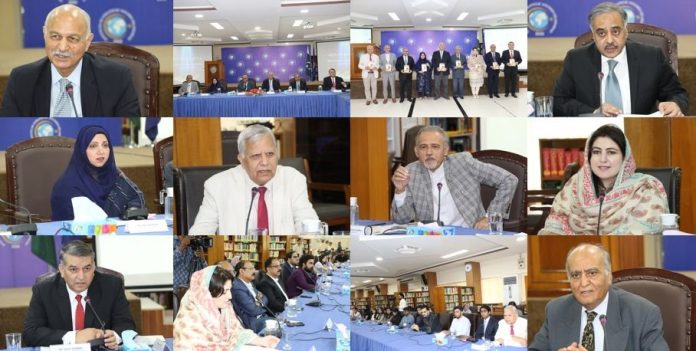
ISLAMABAD, AUG 20 /DNA/ – The China-Pakistan Study Centre (CPSC) at the Institute of Strategic Studies Islamabad (ISSI) organized a book launch for “Xinjiang ke Khushal Uyghur,” authored by renowned columnist and author Ms. Naz Parveen. The event was graced by Senator Mushahid Hussain Sayed as the chief guest. Distinguished speakers included Ambassador Sohail Mahmood, Director General ISSI; Prof. Zamir Ahmed Awan, founding chairperson of the Global Silk Route Research Alliance; Professor Dr. Azhar Ahmed, Independent Analyst; and Ms. Nabila Jaffer, Research Analyst and Lead of the China Program at the Institute of Regional Studies Islamabad.

In his welcome remarks, Ambassador Sohail Mahmood expressed gratitude to the guests for attending the book launch. He highlighted three key aspects: Firstly, the unique and cherished relationship between Pakistan and China — marked by strategic mutual trust and mutual support, nurtured by successive generations, and strengthened by transformational initiatives like CPEC. Secondly, Ms. Naz Parveen, the author and director of China Window, has made notable contributions through her writings and facilitated deeper understanding of China’s culture and traditions. Thirdly, this book contains her detailed account based on observations and experiences particularly in Kashgar and Urumqi, and debunks many of the motivated narratives emanating from the West regarding the treatment of Uyghurs in China’s Xingjian Region.

Prof. Zamir Ahmed Awan, emphasized the significance of cultural diplomacy in understanding China and lauded the author for her accessible and engaging writing style. He elaborated on the rich history and cultural heritage of China’s Xinjiang region, noting how the book captures the essence of this dynamic area and encourages greater appreciation of Chinese culture among readers in Pakistan.
Professor Dr. Azhar Ahmed commended the author for her achievement in publishing such a detailed and vivid travelogue. He praised the book’s ability to transport readers into the heart of Xinjiang, making them feel as though they were experiencing the journey alongside the author. He also stressed the importance of such works in dispelling negative perceptions and promoting a deeper understanding of China’s cultural landscape.

Ms. Nabila Jaffer expressed her admiration for the book’s imaginative and artistic narrative, which she found to be a refreshing departure from typical political discourses. She highlighted the book’s emphasis on personal experiences and cultural exchanges, which she believes are crucial for fostering stronger ties between Pakistan and China.

Ms. Naz Parveen, the author, shared her motivation for writing the book, which stemmed from her experiences at China Window in Peshawar and her desire to counter the negative narratives surrounding China’s treatment of Uyghur Muslims. She recounted her journey through Beijing, Chengdu, Kashgar, and Urumqi, where she was deeply moved by the warmth and hospitality of the Uyghur people and their socio-economic development, which starkly contrasted with the negative portrayals often carried by the Western media.

Senator Mushahid Hussain Sayed, the chief guest, congratulated Ms. Naz Parveen for her exceptional work and commended the book for its communicative style and insightful content. He reflected on the evolution of China, highlighting its revolutionary reforms and criticized the Western media’s attempts to demonize China. He stressed the importance of Pakistani voices in countering such propaganda and called for greater efforts to promote understanding between the two nations.

Earlier, in his introductory remarks, Dr. Talat Shabbir, Director of the China Pakistan Study Centre, introduced the book. He emphasized the importance of producing more literature on China-Pakistan cultural relations in Urdu to reach a broader audience. He commended the author’s literary skills and praised her work as a significant contribution to the literature on China’s culture.

In his vote of thanks, Ambassador Khalid Mahmood, Chairman of the ISSI Board of Governors, emphasized the profound connection between Pakistan and China, rooted in mutual trust and respect. He praised the book for its personal and thought-provoking insights into Chinese culture, which serve as a powerful rebuttal to negative narratives.

The book launch was well attended by academics, students, members of the diplomatic community, and civil society.

Pakistan High Commission, CPA host Independence Day event at Parliament Hill

Pakistan High Commission, CPA host Independence Day event at Parliament Hill

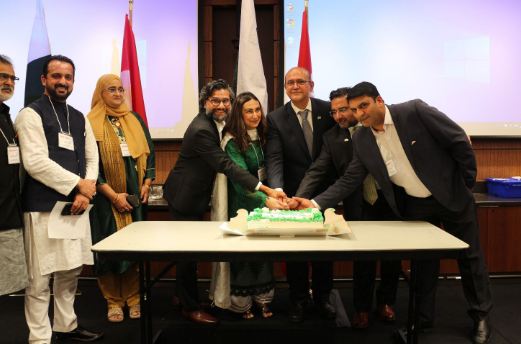
OTTAWA, AUG 20 : /DNA/ – The Pakistan High Commission, in collaboration with the Canada-Pakistan Association (CPA) and the Honorable Yasir Naqvi, Member of Parliament, proudly organized a “Pakistan Independence Day Celebration” at the iconic Parliament Hill in Ottawa on August 16, 2024. This event marked a significant moment as it brought together a large gathering of the Pakistani diaspora and Canadian nationals of Pakistani origin, united in their shared pride and joy for our homeland.

In his address, Acting High Commissioner Mr. Faisal Kakar extended heartfelt congratulations to the Pakistani community in Canada on the 78th Independence Day of Pakistan. He reflected on the monumental Pakistan Movement, led by the visionary Quaid-e-Azam Muhammad Ali Jinnah, which culminated in the creation of a sovereign nation where we could live with dignity, freedom, and equality.

Mr. Kakar lauded the Pakistani diaspora in Canada for their unwavering dedication and contributions, which have played a pivotal role in strengthening the bonds between Pakistan and Canada. He emphasized that the Pakistani community has not only fostered greater understanding and cooperation between the two nations but has also been instrumental in showcasing Pakistan’s positive image on the global stage.

He also took the opportunity to draw attention to the ongoing plight of our Kashmiri brethren in Indian Illegally Occupied Jammu and Kashmir (IIOJK). Mr. Kakar reiterated Pakistan’s commitment to stand in solidarity with the Kashmiri people in their just cause, urging the international community to fulfill the promises made to them and to uphold their right to self-determination.

This celebration was not just a commemoration of Pakistan independence but also a reaffirmation of the shared values, unity, and the enduring spirit of Pakistanis, both at home and abroad.

Stay Connected

64FansLike
60FollowersFollow

Latest Reviews

Exchange Rates

USD - United States Dollar
EUR
1.18
GBP
1.36
AUD
0.72
CAD
0.73