Home Blog Page 834

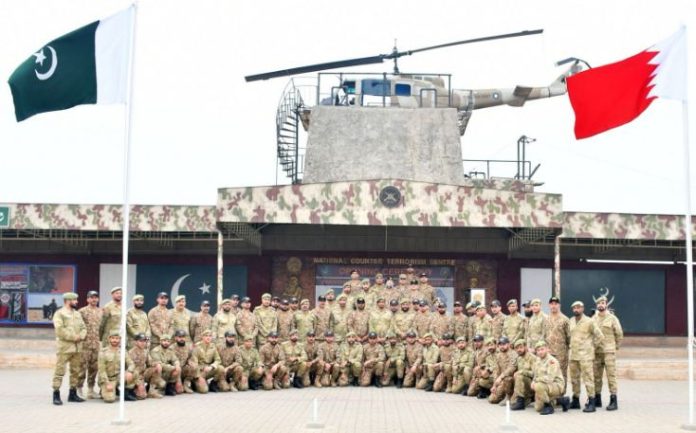
Pakistan-Bahrain counter terrorism drills begin: Al-BADAR-VIII exercise kicks off at Pabbi

Al-BADAR-VIII exercise kicks off at Pabbi

RAWALPINDI, JAN 29 /DNA/ – Opening ceremony of two weeks long Joint Exercise Al-BADAR-VIII was held at National Counter Terrorism Centre, Pabbi with participation of contingents from Pakistan Army and Bahrain National Guards.

Al-BADAR is a annual bilateral joint exercise in Counter Terrorism domain between Pakistan and Bahrain.

Director General Military Training was the Chief Guest of opening ceremony.

The exercise is aimed at nurturing of joint employment and interoperability besides, harnessing the historic military to military relations among the brotherly countries.

Both countries have displayed zeal and enthusiasm for benefiting from each others’ expertise / experience.

Iran-Pakistan Ties Strengthen: Foreign Minister Amir Abdollahian meets PM Kakar

Foreign Minister Amir Abdollahian meets PM Kakar

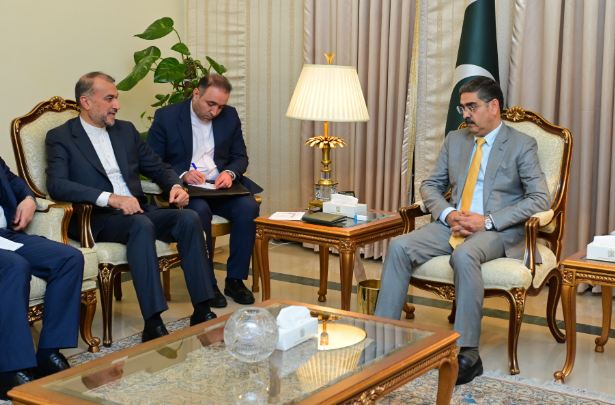
ISLAMABAD, JAN 29 /DNA/ – The Foreign Minister of Islamic Republic of Iran, Hossein Amir-Abdollahian, called on Caretaker Prime Minister, Anwaar-ul-Haq Kakar in Islamabad today.

Underscoring the close relations between Pakistan and Iran, the Prime Minister reaffirmed Pakistan’s commitment to further consolidate bilateral ties.

The Prime Minister also emphasized the need to address common challenges through collaborative and cooperative approaches, rooted in the respect for international law and the principles of the UN Charter, in particular, territorial integrity and sovereignty of both Pakistan and Iran.

The Prime Minister conveyed his warm sentiments for President Ebrahim Raisi and extended an invitation to President Raisi to visit Pakistan at his earliest convenience.

Iranian Foreign Minister meets COAS Gen. Asim Munir at GHQ

Iranian Foreign Minister meets COAS Gen. Asim Munir at GHQ

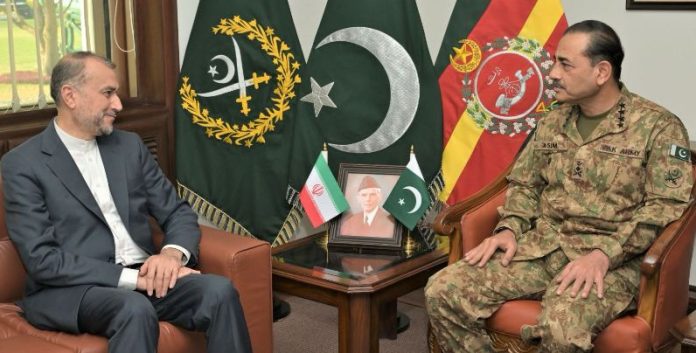
RAWALPINDI, JAN 29 /DNA/ – Foreign Minister of Iran, Amir Abdollahian called on General Syed Asim Munir, NI (M) COAS, at GHQ today.

Realizing the historical, religious and cultural ties that bind Pakistan and Iran, both sides emphasized on strengthening bilateral ties and fostering greater understanding of each other’s concerns.

COAS underscored the centrality of respecting the other state’s sovereignty and territorial integrity, calling it sacrosanct, inviolable and the most important cardinal of state-to-state relationship.

The two sides observed that terrorism was common threat that needed to be tackled through collaborative efforts, better coordination and intelligence sharing. COAS emphasized the need for sustained engagement and utilizing available communication channels to address security concerns. Both sides agreed to operationalize the mechanism of deployment of military liaison officers in each other’s country at an early date to improve coordination and efficiency of response against common threats.

 Both sides reaffirmed the resolve to remain closely engaged and not allow any spoilers to drive a wedge between the brotherly nations. Pakistan and Iran are fraternal neighbours and the destiny of both nations are intertwined. Both sides reiterated their commitment to peace, stability and prosperity in the border region which was identified as an indispensable requirement for the well-being of people living on both sides.

Petroleum Division of the Ministry of Energy to host “Petroleum Conference 2024”

“Petroleum Conference 2024”

By Faisal Munir / DNA

Islamabad, Jan 29 /DNA/ – Petroleum Conference 2024 to take place at a local hotel in Islamabad, today, on Tuesday, 30th January 2024. This prestigious event brings together industry leaders, experts, and government stakeholders to highlight the industry challenges and discuss the latest trends and policy initiatives in the petroleum sector.

Anwar-ul-Haq Kakar, the Prime Minister of Pakistan, will preside over the event as chief guest, with provincial chief ministers attending to represent their respective provinces. The conference will be attended by international delegates, government representatives, policymakers, regulators, and investors from the Energy & Petroleum (E&P) Sector.

The petroleum sector in Pakistan is facing a lack of desired level of investment due to multiple challenges causing a decline in indigenous production and an increase in energy import bill. Pakistan is heavily relaying on imports for meeting its energy needs. Around 85% of oil consumption is from imports while 25% of gas is also imported as LNG, which puts a heavy burden on the current account.

The Petroleum Conference 2024 will offer ample opportunities for networking and fostering connections among professionals, researchers, and decision-makers. Attendees will have the chance to engage with industry experts, explore potential partnerships, and stay updated on the latest industry developments.

This conference will build on the Ministry’s initiative of arranging two focused workshops involving all petroleum exploration and production companies of Pakistan. The workshops provided an important and direct platform to all stakeholders for meaningful interaction aimed at resolving issues and boosting investment in the industry. Through consultation with all the stakeholders, the Ministry had determined policy and regulatory changes, necessary for Pakistan’s E&P Sector.

The Petroleum Division of the Ministry of Energy plans to communicate policy initiatives with all pertinent stakeholders during this conference. The ministry shall also present recommendations and seek support to foster collaboration between all stakeholders, addressing critical issues and exploring opportunities for synergy.

Petroleum Conference 2024 promises to be a pivotal event for professionals seeking to stay informed, connect with peers, and contribute to the advancement of the petroleum sector.

Civil Services Academy’s probationary officers visit CCP for interactive session

Civil Services Academy

DNA

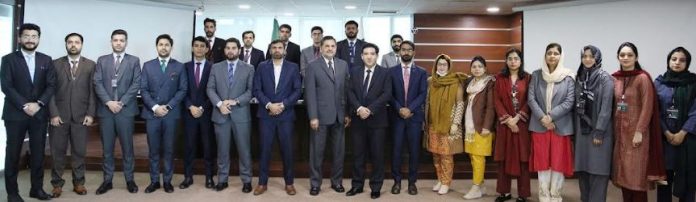
ISLAMABAD, JAN 24: As part of their training under the 51st Common Training Programme (CTP), a syndicate group of 20 probationary officers from the Civil Services Academy visited the Competition Commission of Pakistan (CCP) for an interactive session.

Mr. Saeed Ahmad Nawaz, Member (Office of Fair Trade, MIU), CCP, presided over the session. While speaking on the occasion, he discussed the proactive measures undertaken by the CCP, including the establishment of a Market Intelligence Unit (MIU), to effectively implement the Competition Law.

The syndicate group was led by the faculty in charge, Mr. Rehmat Wali Khan, Deputy Director. The group members, who are currently researching the “Implications of Fifth Industrial Revolution (IR 5.0) on Public Sector Management in Pakistan,” asked multiple questions. While responding to the questions, Mr. Nawaz underscored the significant challenges and opportunities presented by the advent of the Fifth Industrial Revolution.

The syndicate group also benefited from a comprehensive presentation delivered by Mr. Shahzad Hussain, DG (Advocacy)/Registrar of CCP. The presentation explained the substantive provision of Competition Law dealing with Abuse of Dominance, Prohibited Agreements, Deceptive Marketing, and Mergers & Acquisitions. It also traced the historical trajectory of Competition Law, highlighting its pivotal role in fostering a competitive environment conducive to Pakistan’s economic progress.

Reflecting on the visit, the syndicate group members expressed gratitude to the CCP for the warm hospitality and offering invaluable perspectives on the challenges and opportunities posed by IR 5.0. They found the engagement beneficial for their research.

Austrian ambassador explores investment prospects in Pakistan, stresses positive perception

Austrian Ambassador

DNA

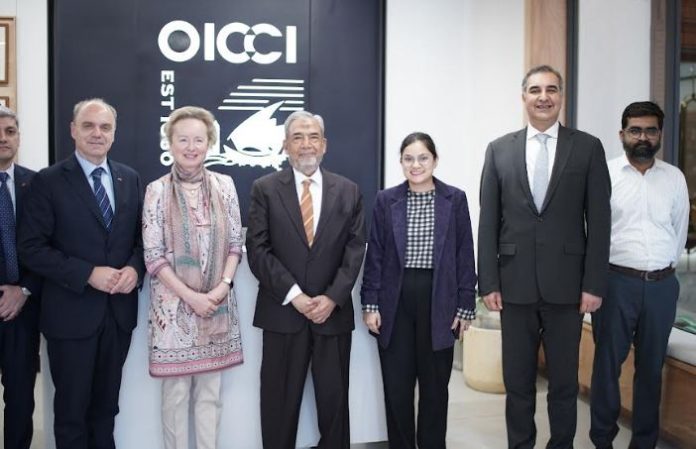
KARACHI, JAN 29: Austrian Ambassador to Pakistan and Afghanistan Andrea Wicke, joined by Hussain Islam, chairman of the Prime Minister’s Task Force in the Strategic Reforms Unit, and Johannes Brunner, commercial counsellor of the Austrian Embassy Commercial Section, visited the Overseas Investors Chamber of Commerce and Industry (OICCI) to engage with the Chamber’s leadership and gain insights into Pakistan’s economic landscape.

During the meeting, OICCI CE/Secretary General M Abdul Aleem provided a comprehensive briefing to the Austrian delegation on Pakistan’s business prospects, with a focus on attracting Foreign Direct Investment (FDI), ideally reaching three percent of its GDP. Notably, the total capital investment by OICCI members from FY 2013 to FY 2022 amounted to $22.0 billion, while Pakistan’s net FDI stands at $19.9 billion. In the past year (Jan-Dec), Pakistan attracted $1,771 million in FDI, marking a 25% increase from 2022.

Austrian Ambassador Wicke shared her insights on how Pakistan is perceived globally in terms of investment, emphasizing a focus on regional trade, particularly the potential within South Asian Association for Regional Cooperation (SAARC). She stressed the importance of building a positive perception of Pakistan through engagement with foreign media to showcase the country’s overall beauty.

Both Andrea Wicke and Johannes Brunner expressed optimism, highlighting that OICCI’s engagement with potential Austrian foreign investment companies would play a crucial role in providing a neutral perspective on Pakistan’s on-ground economic situation. The visit underscores the growing interest of foreign entities in exploring and contributing to Pakistan’s economic development.

Pak-Iran FMs forge closer ties, emphasize joint efforts against terrorism

Pak-Iran FMs forge closer ties

ISLAMABAD, JAN 29 /DNA/ – Meeting between the Foreign Ministers of Pakistan and Iran Foreign Minister Jalil Abbas Jilani today met with Iranian Foreign Minister Hossein Amir Abdollahian, in Islamabad. Senior Officials from both sides were present in the meeting. Foreign Minister Abdollahian is on an official visit to Pakistan at the invitation of Foreign Minister Jilani. 

Underscoring the brotherly relations between Pakistan and Iran, Foreign Minister Jilani reaffirmed Pakistan’s commitment to deepen and broaden the existing wide-ranging cooperation with Iran.  The Foreign Minister underlined the imperative for collective and collaborative approaches to confront terrorism that posed a common challenge to both Pakistan and Iran.

He stressed that robust institutional mechanisms between the two countries on security cooperation should be fully leveraged. The two Foreign Ministers agreed to immediately appoint liaison officers in Turbat and Zahidan to further strengthen ongoing security and intelligence cooperation. 

Noting that security and development are intrinsically interlinked, the two Foreign Ministers agreed to expand initiatives for economic and development cooperation including through early operationalization of the joint border markets to uplift the socio-economic status of the people of both countries, especially those residing in the border regions. 

The two sides also decided to establish a Joint Coordination Mechanism at the level of Foreign Ministers to oversee and steer progress on common agenda for prosperity and development of the two peoples.  Regular high-level engagements provide a leadership driven impetus to the bilateral relations between Pakistan and Iran. In this backdrop, the Foreign Minister renewed invitation to honourable President of Iran, Ebrahim Raisi to undertake a visit to Pakistan.

Pakistan’s Hoc key5s World Cup journey ends with 7-8 loss to Poland

Hockey5s

ISLAMABAD, Jan 29 (DNA): Pakistan’s hopes to secure a quarterfinal spot at the FIH Hockey5s World Cup 2024 were shattered as they conceded a 7-8 defeat to Poland in their last pool A match in Muscat, Oman on Monday.

Poland scored three consecutive goals in the first quarter with Holosyniuk Jakub, Rutkowski Wojciech and Bembenek Tomasz, netting on goal apiece in the 8th, 9th and 10th minutes respectively to put Pakistan under immense pressure, according to information made available here by Pakistan Hockey Federation.

Pakistan bounced back shortly with captain Rana Waheed Ashraf and Ali Ghazanfar scoring two back-to-back goals in the 13th and 14 minutes to help their side go into the break 2-3.

In the second half both the teams scored 5-5 goals. For Poland, Jarzembowski Damian struck twice in the 18th and 21st minutes and Rutkowski, who had scored a goal in the first quarter netted another in the 22nd minute. Two stunning goals were scored by Glowacki Mikolaj and Nowakowski Mateusz in the 28th minute of the match.

Liaqat Arshad scored fourth goal of the match for Pakistan in the 20th minute.

Rana Waheed exhibited great resilience and fighting spirit as he scored three more goals in the 23rd, 26th and 30th minutes, but his efforts were not enough to get Pakistan over the line as they lost the important pool match to Poland 7-8 after a thrilling contest.

Poland became the second side from pool A to advance to the top-eight place playoffs in the competition. The Netherlands was the first team to book their place in the quarterfinals at the back of a strong start in the event. They beat Poland 6-3 in their opening match and followed it up with a 5-3 victory against Pakistan.

Pakistan launched their campaign in the event on a winning note, thrashing Nigeria 11-5 in their inaugural match on Sunday but could not continue the momentum as they fell down 3-5 fighting hard against the Netherlands in their second match of the day.

Sixteen teams, divided into four pools are featuring in the event. Pakistan were in Pool A along with Nigeria, the Netherlands and Poland. The tournament is the first-ever Hockey5s World Championship, organized by International Hockey Federation and played with a different format of five players on each side.

Democracy is not just right to vote but a right to live in dignity

Democracy is not just right to vote but a right to live in dignity

By: Zahra Ali

As the country nears election time, it is imperative to underscore that democracy transcends the mere right to vote. In the contemporary political landscape, the discourse on democracy often fixates on its procedural aspects, particularly the electoral process. However, a nuanced understanding reveals that democracy extends far beyond the act of voting, encapsulating the broader imperative of safeguarding human dignity. It is imperative for people to understand and to elucidate the multifaceted role of democracy in upholding not only the right to suffrage but, more crucially, the right to live with dignity.

Democracy, in its essence, transcends the mere mechanism of periodic elections. It is a comprehensive framework that encapsulates the foundational principles of freedom, equality, and justice. Rather than perceiving democracy as a singular event, it is imperative to recognize it as an intricate covenant, a societal compact that aspires to cultivate an environment conducive to the preservation of human dignity.

The electoral process, while a cornerstone of democratic governance, should be contextualized as a means to an end rather than an end in itself. The right to vote is the quintessential instrument through which citizens contribute to shaping the trajectory of governance. However, it is a conduit for the expression of broader democratic aspirations, chief among them being the pursuit of a life marked by dignity.

Democracy, at its core, serves as a formidable bulwark against the erosion of human dignity. It mandates that individuals, irrespective of their societal station, possess an inherent right to live with respect and integrity. The preservative function of democracy vis-à-vis human dignity is thus integral to its overarching purpose, ensuring that citizens are not mere participants in a political process but beneficiaries of a system that safeguards their inherent worth.

A robust democracy is characterized by a commitment to equality and justice, foundational principles that are indispensable to the realization of human dignity. Democracy, as a socio-political construct, endeavors to dismantle discriminatory structures and foster an environment where every citizen, regardless of background, enjoys equal opportunities and fair treatment. The pursuit of social equity is inherent to the democratic ethos, reinforcing the concept that dignity is an inalienable right accorded to all.

The narrative surrounding democracy should extend beyond the reductionist focus on electoral mechanics. It is imperative to recognize democracy as a holistic paradigm that encompasses the right to vote as a precursor to the broader imperative of living a life marked by dignity. As we navigate the intricate landscape of democratic governance, let us remain cognizant of the profound responsibility that democracy bears in preserving and promoting the inherent worth of every individual within its purview.

Political Parties’ Manifestos: A promise needs to be fulfilled

Political Parties’ Manifestos: A promise needs to be fulfilled

Waheed Hussain

In the present controversial and cloudy political environment, three main political parties PPP, PML (N) and PTI announced their election manifestos. A manifesto is a sacred document of any political party, informing the public, how it will performonce elected to the government. It’s a road map of the party for development and prosperity of the people and country. Practically speaking,it’s to allure the voters. It’s future promises, rarely fulfilled. The problem with our party parties’ manifesto is, that they are too wishful and unrealistic to be achieved in the five-year term of a government.

No doubt PML (N) manifesto is the most attractive and comprehensive in comparison to other political parties. It gives the touch of two professors, Former Federal Minister for Planning and Special Initiatives,Ahsan Iqbal and Former Federal Minister and Senator Irfan Saddiqi, both worked very hard in compiling the document. Ahsan has been associated with the Planning Commission, knows the economic challenges being faced by the country, while, Irfan Saddiqi a senior columnist, has been very close to the public issues, aspirations and demands. The PML (N) manifesto reads: 1. All government offices will be made environment-friendly. 2. Supremacy of the Parliament will be ensured. 3. Article 62 and 63 will be restored to their original form. 4. Introduction of Panchayat system for alternative dispute resolution. 5. Judicial, legal and justice system will be reformed. 6. Timely and efficient judicial system will be implemented. 7. Limit adjudication time to one year, especially for cases affecting life of a common citizen. 8. Minor cases will be decided in two months. 9. NAB will be abolished.10. Strengthen existing anti-corruption institutions and agencies. 11. Comprehensive amendments in Civil Procedure Code, 1908 and Criminal Procedure Code, 1898 to standardise the procedural laws. 12. Effective, fair and timely prosecution. 13. Court proceedings will be telecast live. 14. Commercial courts will be established.15. Courts of overseas Pakistanis will be made better and stronger. 16. Digital system will be established in judiciary. 17. Inflation will be reduced by 10% by fiscal year 2025. 18. Inflation will be brought down to 4 to 6% in next 4 years. 19. Over 10 million jobs to be offered in 5 years. 20. Maintain a low CAD for next 5 years by keeping it in range of around 1.5 % of GDP. 21. To achieve exports of goods & services of more than $58 billion by the end of 2029.Attractive! Will it be achieved?

How the judiciary will be reformed? How NAB will be abolished until entire parliament agrees or at least the government has clear majority in the two houses. The country’s the most important issue is price hike of the daily used items. The electricity and gas bills. The exchange rate of the country (rupee against the dollar). The petroleum products’ prices which determine rates of all other products used by the public. Until our governments permanently say good bye to the International Monetary Fund (IMF) the prices of different products will remain high creating a persistent mental torturefor masses. Is there any solution to mounting debts? Can we run the economy without IMFloans? No answer to these and many other perplex queries? Last but not the least, will the coming elections bring political certainty and stability?

When we debate about the manifesto of a party. Does it mean an individual or the entire party? Because we have been listening to former prime minister Nawaz Sharif detaching himself from the decisions and performance of two PML (N) governments. One that of Shahid Khaqan Abbasi and other of his own brother Shahbaz Sharif.

When Nawaz Sharif says his government ended in 2017, and country was sent back to the dark ages, he does not own (N) government under Shahid khaqan Abbasi, the man, who was selected by him. Similarly, Nawaz does not own 16 months of Shahbaz Sharif’s coalition (PDM) government as well, again his nominee and the real brother.

What does it mean? Just to get away with the decisions of two PML (N) governments on serious and sensitive issues including the finance and economy. No doubt, removal of Nawaz in 2017 destabilized the country,however, his party completed the government term from 2013-2018. Similarly, the economic mess created by the successive governments including PTI could not be cleared only in 16 months of Shahbaz’s tenure. Here, again, responsibility of all decisions by a government at that time must be shouldered by the Shahbaz’s PDM government. So, the point needs to be noted that in such circumstances the manifestos of the parties disappear in the political mess and power game.

Bilawal is very active in Punjab to challenge Nawaz League and at the same time attract the PTI voters. Will PPP fill the vacuum created by the PTI? Inmiddle the election campaign, PPP has also presented 10 points manifestos.They include: A)Double real income for wage earners — 8% increase every year. B)Free solar energy of 300 units for the poor; every district to have green energy parks. C)Education for all — rolling out projects for better education. D)Free health for all across Pakistan. E)Three million houses for flood affectees and the poor. F)Ghurbat Mitao: Expand BISP’s scope; introduce more welfare schemes.G)Khushhaal Kisaan: BISP-like programme for farmers and ‘Hari Card’. H)Enhanced support for labourers through Benazir Mazdoor Card. I) ‘Youth Card’ for unemployed youth and ‘Youth Markaz.’ J) ‘Bhook Mitao Programme.’

Unfortunately, no industrial plan. No economic road map. The PPP needs to develop an economic team to address the serious economic and financial challenges being faced by Pakistan. How to resolve problems ofnational debt, PSE loans, Privatization, Energy sector circular debts, price hike, security and national cohesion?Where is the plan?

PTI also presented over 150 pages document for the next month general elections. If we see its previous performance, like other political parties, it had failed to implement its 2018 manifesto during approximately four years tenure in power. It promised to provide 10 million jobs and five million houses. The result was otherwise. The country faced worst inflation and debts. The IMF supervised economic and financial policies disappointed the public.

Whatever, the politicians sayin the public meetings “Jalsas” are just the election campaign strategy and slogans. All the three main political parties PTI, PML (N) and PPP ruled the country both at the federal as well as provincial levels. Fact of the matter is they could not pull the country out of economic and financial troubles. It is the time that all of them should bring a drastic change in their attitude, thinking, policy making and implementation process. They should learn from the past. Give up personal likes and dislikes, revenge and just focus on the development and progress of the country. The present vibrant media has changed thinking of the people, so, these political parties may not be able to befool the masses any more. The choice is there? 

Stay Connected

64FansLike
60FollowersFollow

Latest Reviews

Exchange Rates

USD - United States Dollar
EUR
1.17
GBP
1.35
AUD
0.67
CAD
0.72