Home Blog Page 831

Kiln workers – Braving tougher times in Pak

Kiln workers – Braving tougher times in Pak

FAISALABAD, SEP 01 (DNA) — Amidst challenges of economic slowdown and price hike, the poor in anywhere in the world had to toil hard for survival and earn living for their families. In an environment where capitalists take it as their just right to exploit them, these workers had to go extra miles for keeping their families go as they are paid a meager share out of millions and billions earned by their employers.

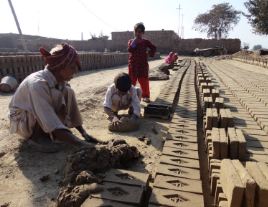
Brick kiln workers are also not an exception to this exploitation who despite flourishing business, seldom enjoy basic amenities and are forced to work in the most vulnerable situation along with their families. Categorized in six types, they are Munshis (accountant), Jalai Wala (fire man), Bharai Wala (brick setter), Nakasi Wala (brick excavator), Jamadar (sweeper) and Patheras (brick molder). But, Patheras are the most vulnerable segment like Jalaiwala and Nakasiwala.

“Patheras have to live at sight along with their families with minimum facilities. They have to work for long hours to fulfill demand of owners,” stated Akbar Ali, worker at a kiln house. “Not they alone, but their families also have to work till odd hours because they are often bound in debt bondage.”

“Same is the situation of a fire worker or a brick excavator. Although their work duration is lesser than brick maker yet their task is the most dangerous as they even risk their lives as their job is like playing with fire,” Akbar said. “Even then, these workers are paid less than minimum wages occasionally announced by the government. The job of Munshi is somehow comfortable for only being a bit literate while all other segments are either illiterate or lesser qualified.”

Workers or laborers are generally registered with Punjab Employees Social Security Institution (PESSI), Employees’ Old-age Benefits Institution (EOBI) and Workers’ Welfare Fund and are eligible to get marriage and death grants, talent scholarships and other incentives. But most of kiln workers are ignorant of these facilities while the kiln owners are also hesitant to pay their mandatory contribution on one pretext or the other. For this, they do not even hesitate to offer bribes to officials who ask them to get their employees registered.

Kiln workers are also forced to work without health cover. Their children cannot get education and their families unable to benefit from social cover like death, health and other grants sanctioned by the workers welfare fund due to their non-registration. Amidst all this, Ghulam Shabbir Kalyar Director Labor West Faisalabad claims, there are 478 brick kilns across the district with a number of 21632 registered kiln workers. “After brick kilns were declared an industry, their workers are entitled to all incentives and facilities admissible to industrial workers.”

He said the Punjab government is fully cognizant to its duties. The kiln workers are registered with PESSI or EOBI and can avail a marriage grant of Rs.400,000 while the government pays Rs.800,000 as death grant to worker’s family if he dies while performing his duties. “Similarly, educational scholarships were also admissible for their children if they wanted to get higher education at colleges or universities.”

Kalyar informed that Labor and Human Resource Department had chalked a strategy to implement minimum wages notification. “Therefore, the teams of Labor Department visit industries including brick kilns and force kiln owners to pay minimum wages announced by the government. Rana Muhammad Azam Khan, a social activist said he observed lives of kiln workers very closely as he remained teacher at a private school run by an NGO to educate children of kiln workers.

“Their lives are miserable and major reason behind this is their illiteracy and ignorance of their basic rights. Hence they cannot raise their voice if someone exploits them and usurp their rights,” he said. Azam said it is very common that kiln workers borrow money from kiln owners to run their families but spend this money on frivolous activities like taking drugs, gambling, pigeon flying etc. So when under debt, the owners force them to work as per their desires and pay lesser amount.

“Consequently, they approach another kiln owner, borrow money from him to retire the previous debt and are further trapped and this vicious cycle goes on throughout their lives,” Azam regretted.He said some kiln philanthropists have launched special education for children of kiln workers and facilitate them on religious and other occasions but all are not covered.

Some of NGOs also exploit this situation and grab grants from donors for kiln workers welfare but spend a nominal amount keeping remaining with them in the name of other expenditures. No doubt that the government has repeatedly assured and directed the PESSI to issue social security cards to kiln workers but it is not fully implemented apparently due to kiln owners’ refusal to submit their contribution.

Therefore, in the prevailing situation, the government must take strict measures and introduce revolutionary reforms for this unorganized sector to extend all facilities to kiln workers admissible under the relevant laws. It should also force kiln owners to pay their contribution so these workers could get their due share from concerned departments. —DNA
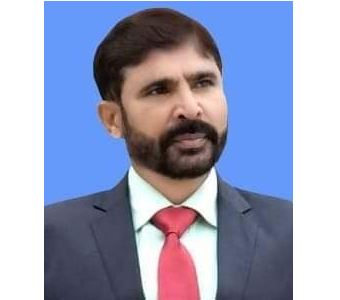
Xinjiang, Balochistan and FATA 

Qamar Bashir

By Qamar Bashir

In Pakistan, we often adhere to the belief that force is the primary solution for dealing with terrorists, extremists, separatists, insurgents, and even civil unrest, whether it involves political, religious parties, students, or civil society. The prevailing notion is that if force doesn’t achieve the desired outcome, more force should be applied. In contrast, China’s approach in Xinjiang, where separatism, Pan-Islamism, and Pan-Turkism were significant issues since 1949, has been to respond with development. When challenges arise, China has chosen to accelerate development further. These two philosophies—force versus development—are starkly opposed and have yielded opposite results.

The insurgencies in Xinjiang, Balochistan, and Pakistan’s erstwhile Federally Administered Tribal Areas (FATA) have distinct historical, ethnic, and geopolitical contexts, yet they share similarities in grievances but differ markedly in the governmental responses.

The narratives of the insurgencies in Xinjiang, Balochistan, and FATA share more similarities than differences.

In Xinjiang, the Uyghur insurgency is driven by claims of cultural and religious repression, economic disenfranchisement, and ethnic discrimination. The insurgents frame their struggle as a fight for cultural survival and autonomy, often invoking the idea of an independent “East Turkestan.”

The Baloch insurgency, while lacking a religious element, is fueled by economic exploitation, particularly in natural resources like gas and minerals, political marginalization, and human rights abuses. As one of Pakistan’s least developed regions, many Baloch feel excluded from their own wealth, seeking greater autonomy or independence, citing historical grievances and ongoing exploitation.

In FATA, the insurgency stems from resistance to Pakistan’s military operations, perceived interference in local customs, and the impact of the war on terror. The TTP, in particular, framed its struggle in religious terms, opposing the Pakistani state’s alignment with the US and seeking to impose their version of Sharia law.

When comparing the narratives of these three ethnic groups, the Uyghur and Taliban in FATA share more similarities, particularly in their use of religious connotations to justify their struggles for autonomy or independence. In contrast, the Baloch narrative is distinctive due to its focus on economic and political grievances, without a religious dimension. Consequently, the Baloch narrative may be easier to address or counter compared to the more deeply rooted and ideologically driven narratives of the TTP and Uyghurs.

To counter the Baloch insurgency and integrate the Baloch people into the national mainstream, the government only had to adopt a holistic approach to address the root causes of the conflict, including economic marginalization, political exclusion, and cultural grievances by investing in local development, ensuring fair resource distribution, and enhancing political representation while granting greater administrative autonomy to Balochistan.

On the contrary, the government response to deal with insurgency in Balochistan is normally perceived exactly the opposite. The propaganda war has inculcated the impression albeit without any conclusive evidence that the response of   Pakistan’s government included military operations, targeted killings, enforced disappearances.The media is rife with reports that tens of thousands of people, including insurgents, civilians, and security personnel, have been killed in the ongoing conflict making this conflict as one of Pakistan’s deadliest.

Similarly the response of the Government to erstwhile FATA is perceived primarily kinetic. Reportedly, the Pakistani government has conducted numerous military operations (e.g., Operation Zarb-e-Azb) to dismantle militant networks. The insurgency and counter-insurgency operations have led to tens of thousands of deaths, including militants, security forces, and civilians. Displacement and destruction of infrastructure have also been significant.

Contrastingly, in Xinjiang, the Chinese government primarily pursued the policy of development which worked like magic. The region has purposefully made a lynchpin of China’s Belt and Road Initiative (BRI). During the 13th Five-Year Plan period (2016-2020), China invested over $100 billion in Xinjiang’s development. The substantial investment has also been made in infrastructure, industry, IT, and modern agriculture, as part of its broader strategy to integrate the region more closely with the rest of the country and to address the underlying economic disparities that contribute to unrest.

Xinjiang now boasts a state of art modern  transportation network, including railways, highways, and airports connecting it to major cities in China and neighboring countries. Notable projects include the Urumqi-Hami section of the Lanzhou-Xinjiang high-speed railway, which links Xinjiang to the eastern provinces. The total investment in these transportation projects over the years runs into tens of billions of dollars.

Cities like Urumqi, Kashgar have been developed on ultramodern lines including the construction of modern residential areas, commercial centers, and public facilities and development of “new towns” to accommodate the growing population and improve living standards.

Xinjiang has become a hub for energy production, particularly in coal, oil, and natural gas. The region is also a significant producer of cotton and textiles, beside adorning industrial parks and zones for petrochemicals and mining, and Kashgar Economic Development Zone and the Urumqi Economic and Technological Development Zone. In addition,   IT parks,  advanced surveillance technologies, data centers, technology parks, 5G networks, cloud computing, and big data technologies have been developed to attract domestic and foreign investment.

In the agriculture sector China has introduced modern water management, crop genetics, and mechanization to substantially enhance the yield of cotton, grapes, and melons production, besides setting up of  large-scale farms, processing plants, and distribution networks.

These investments are part of China’s broader strategy to stabilize the region, boost economic growth, and integrate Xinjiang more closely with the rest of the country and the global economy, particularly through the Belt and Road Initiative.

Contrarily the investments in FATA and Balochistan pale in comparison to the scale of investment made by China in Xinjiang. While China’s investments in Xinjiang have transformed the region’s infrastructure and economy, Pakistan’s investments in FATA and Balochistan are insignificant and are plagued by issues like governance challenges, security concerns, and underutilization of funds no matter how meager.

China’s investments in Xinjiang are part of a strategic focus on integrating the region into the national economy and the Belt and Road Initiative. In contrast, Pakistan’s investments in FATA and Balochistan have often been reactive, addressing immediate security concerns rather than being part of a long-term strategic vision for regional development.

If we genuinely aim to reintegrate FATA and Balochistan into the national mainstream, we must adopt the Chinese philosophy of development and more development. Without this focus on economic and social progress, the cycle of violence from both the government and insurgents will persist, leaving the regions mired in conflict and instability. Development offers the only sustainable path to peace and inclusion.

By Qamar Bashir

Former Press Secretary to the President

Former Press Minister to the Embassy of Pakistan to France

Former MD, SRBC, CEO, ATV

Innovative Solutions to Terrorism and Extremism

Qamar Bashir

By Qamar Bashir

If I were to ask you to name the country that hosts one of the largest Islamic research institutes in the world, an Islamic institute housing over 50,000 books on Islam, your mind might naturally scan through Muslim-majority countries or even Western nations with significant Islamic scholarship. But what if I told you that this remarkable center isn’t in any of those places, but rather in our iron brother, China?

Yes, you read that right. In China, there’s an Islamic institute that boasts a digital library with hundreds of workstations for students, state-of-the-art hostels that accommodate over 500 students at a time, and a university that provides a generous stipend to its students along with guaranteed job placement. This university also has prayer halls equipped with hot and cold water year-round, and a mosque capable of hosting hundreds of Muslims for their five daily prayers in complete freedom and security. It’s a place where the pursuit of Islamic knowledge is nurtured with the utmost care and respect.

I recently spent three days in Urumqi, a city once known as a hotbed of unrest in China. This was my second visit to this north western city after a gap of ten years, and the transformation I witnessed was nothing short of remarkable. Unlike Pakistan, where most cities—save for a few exceptions—seem to have deteriorated over time, Urumqi has evolved into something entirely different.

Ten years ago, Urumqi had the feel of a small town with a rudimentary industrial base. The streets were sparsely populated with cars, and the Grand Bazaar had the appearance of something akin to our own Raja Bazaar. But today, Urumqi is a city reborn. It now boasts an IT park, Innovative Development Corridor of Urumqi Economic and Development Zone, Software Park, Taishan Cloud Computing Industry Base and Green Valley Scientific Innovation Town  where leading Chinese and international companies have established their regional headquarters, research and innovation centers, manufacturing plants, and import-export hubs providing jobs of hundreds and thousands of local youths.

I had the unique experience of wandering through the Grand Bazaar in Urumqi, which has undergone a remarkable transformation in recent years. What was once a traditional market is now a state-of-the-art bazaar, offering every food, fruit, and sweet delicacy imaginable. The atmosphere was vibrant, with dance performances, live music, and cultural displays adding a festive touch to the bustling market.

One of the most striking changes was the shift in security measures. Instead of a heavy presence in the bazaar itself, security has been moved to control rooms, allowing people to enjoy a sense of freedom and ease as they explore. Unlike my visit twelve years ago, when only a few faces reflected prosperity, now you would be hard-pressed to find anyone who appeared to be in poverty or distress.

The cultural experience at Xinjiang Art Theatre was nothing short of overwhelming. Tall, beautifully dressed girls with bright, glittering smiles, along with young boys and handsome men, danced to traditional Muslim folk tunes. Their graceful dance steps and the melodious music filled the entire atmosphere with a sense of magic and celebration, making the experience truly unforgettable.

I also had the opportunity to visit Yinning, another city in Xinjiang, which has developed into a bustling commercial and industrial complex along the Kazakhstan border, right on the Euro rail route. Here, towering high-rise buildings and shopping complexes have sprung up, where Chinese and Kazakh citizens engage in frantic shopping sprees. The complex also features numerous food courts and even a 5D cinema. We watched a movie that almost physically transported us across the Euro Triangle, making half the journey feel incredibly real.

With substantial investment, the government has transformed the Grand Bazaar of Yining into a vibrant cultural hub. Beautifully decorated horse-drawn buggies now ferry delighted tourists through the artistically adorned bazaar and its surrounding streets. The houses in the vicinity of the bazaar have been converted into elegant guest and rest houses, where tourists can immerse themselves in the traditional lifestyle, experience local cooking, and savor delicious, mouthwatering home-cooked delicacies, along with homegrown fruits and vegetables. The out-of-this-world hospitality provided here not only offers tourists a unique cultural experience but has also given local households a decent livelihood. This innovative approach has successfully blended tourism with cultural preservation, benefiting both the visitors and the community.

The once poor, rustic, and rugged shepherds have been provided with excellent homes at just 20% of the cost, payable through easy installments. They have also been equipped with modern skills in cattle and sheep breeding, as well as the production of high-quality dairy products. Additionally, they have been trained in modern agricultural techniques, enabling them to achieve a decent living and sustainable higher income. This initiative has significantly improved their quality of life and economic prospects.

This is China’s five prong approach to counter extremism and terrorism from its soil. First, China linked Xinjiang with the nation’s main trade routes, integrating the region more closely with the rest of the country and boosting economic opportunities and providing thousands of high-quality jobs to the indigenous population.

Second, China revolutionized agriculture in Xinjiang by replacing primitive farming methods with ultra-modern techniques. This not only increased productivity but also improved the quality of life for farmers, reducing economic disparity and fostering stability.

Third, the government made significant investments in religious education, promoting it on modern footings. Religious schools and mosques received increased funding and state protection, which not only preserved religious practices but also modernized them, creating an environment where faith and progress could coexist.

Fourth, China passed numerous laws and regulations coupled with speedy justice aimed at narrowing the space for terrorism and extremism.

Finally, China made a concerted effort to reduce economic and financial disparities between Muslims and non-Muslims. The government valued and promoted Muslim social and cultural values, embracing them as an integral part of China’s cultural and social fabric fostering a sense of unity and belonging among its Muslim population.

Through these coordinated efforts, China has successfully transformed Xinjiang from a region plagued by unrest into one characterized by stability, prosperity, and cultural pride. This model, rooted in economic development, education, legal reform, and cultural integration, offers valuable lessons in how to address the complex challenges of extremism and terrorism.

However, when we compare China’s strategic interventions with our own efforts in Pakistan’s restive regions of Balochistan and the erstwhile FATA, we are met with a stark and, frankly, embarrassing contrast.

In these regions, we have largely relied on kinetic power, failing to complement it with the multifaceted approach that China has employed to reintegrate its restive regions into the national fold. The miscreants, as well as the innocent citizens who have been ensnared by the pernicious ideologies of terrorism and extremism, are our own brothers and sisters. We must not view their elimination as the sole strategy for peace.

While our armed forces are doing an exceptional job, rendering invaluable sacrifices in the fight against this two-headed monster, it is imperative that the civilian government and civil society step up to their responsibilities. We must look to China’s successful practices and adapt them to our context. By doing so, we can bring our misled and misguided brothers and sisters back into the national stream as responsible, skilled, and productive members of society. This comprehensive approach is not just a necessity; it is a moral imperative for the future of our nation.

By Qamar Bashir

Former Press Secretary to the President

Former Press Minister to the Embassy of Pakistan to France

Former MD, SRBC, CEO, ATV

The Reality and Rhetoric Pezeshkian’s Foreign Policy

The Reality and Rhetoric Pezeshkian’s Foreign Policy

Dr. Muhammad Akram Zaheer

In the initial weeks of his presidency, Iranian President MasoudPezeshkian has demonstrated a cautious approach to foreign policy, opting to align his actions with established regime rhetoric rather than advancing the bold initiatives he championed during his electoral campaign. This hesitancy contrasts sharply with the expectations set by his campaign, where he vocally criticized Tehran’s growing international isolation and pledged to restore Iran’s global standing through more pragmatic and constructive diplomatic engagements.

Pezeshkian’s campaign rhetoric resonated with a populace weary of the socio-economic repercussions stemming from Iran’s strained international relations, particularly in the wake of U.S. sanctions and the protracted negotiations surrounding the Joint Comprehensive Plan of Action (JCPOA). His promises of a shift towards a more balanced foreign policy approach, one that could potentially ease Iran’s isolation and improve its economic conditions, garnered significant attention and support. However, since assuming office, Pezeshkian’s foreign policy actions have largely mirrored the hardline positions traditionally upheld by the Islamic Republic’s leadership, raising questions about his ability or willingness to fulfill his campaign promises. The continuity in foreign policy under Pezeshkian’s administration can be attributed to several factors. Firstly, the president’s office, while influential, operates within the broader framework of the Islamic Republic’s political system, where the Supreme Leader holds ultimate authority over key foreign policy decisions. This structural reality inherently limits any president’s ability to enact significant changes, particularly when such changes might diverge from the established ideological and strategic imperatives of the regime. Pezeshkian’s adherence to regime slogans suggests a recognition of these limitations and a strategic choice to avoid confrontation with more powerful elements within the state, including the Supreme Leader and the Islamic Revolutionary Guard Corps (IRGC).

Secondly, Pezeshkian’s cautious stance may reflect a pragmatic assessment of the international environment. The geopolitical context in which Iran operates is fraught with challenges, including ongoing tensions with the West, particularly the United States and complex relations with regional powers like Saudi Arabia and Israel. In such a volatile environment, Pezeshkian may have concluded that a more cautious approach, one that aligns with the regime’s established positions, would be more sustainable in the short term. This approach allows him to consolidate power internally and avoid exacerbating external pressures during a period of significant uncertainty. However, Pezeshkian’s reticence to deviate from established foreign policy positions has disappointed those who hoped his presidency would mark a departure from the status quo. The disconnect between his campaign rhetoric and his early actions in office has led to growing skepticism about his capacity to implement the reforms necessary to reduce Iran’s international marginalization. As his presidency progresses, Pezeshkian will likely face increasing pressure both domestically and internationally to clarify his foreign policy agenda and demonstrate a more proactive stance in addressing Iran’s diplomatic challenges.

In the complex political landscape of Iran, Ali Pezeshkian, a prominent figure within the reformist camp, is acutely aware of the limitations imposed upon his influence by the supreme authority of Ayatollah Ali Khamenei. The Iranian political system, characterized by a theocratic hierarchy with Khamenei at its apex, does not easily lend itself to the imposition of agendas that deviate from the established ideological and strategic doctrines of the state. Pezeshkian’s recognition of this reality is crucial, as it underscores the need for a more nuanced approach in navigating the corridors of power in Tehran. Pezeshkian’s strategy, therefore, does not involve directly challenging the authority of Khamenei or the Revolutionary Guards, the latter being a formidable military and political force that often aligns closely with the Supreme Leader’s vision. Instead, his approach appears to be centered on persuasion, a method that, while subtle, could potentially yield significant results if executed with strategic acumen. Persuasion in this context would require Pezeshkian to frame his arguments in a way that resonates with the core concerns of the Iranian leadership, particularly regarding national security, regional influence and the preservation of the Islamic Republic’s ideological integrity.

The notion of advocating for a less confrontational posture toward the outside world, as Pezeshkian might propose, would necessitate a careful balancing act. On one hand, it would involve articulating the potential benefits of reducing tensions with the international community, such as economic relief from sanctions, improved diplomatic relations and greater stability in the region. On the other hand, it would require addressing the deep-seated mistrust that has historically characterized Iran’s interactions with the West, particularly with the United States and its allies. For Pezeshkian to succeed in persuading the Supreme Leader and the Revolutionary Guards, his arguments would need to align with the strategic interests of the state. This could involve emphasizing how a less antagonistic foreign policy might enhance Iran’s long-term security by preventing the formation of hostile coalitions against it, thereby allowing the country to consolidate its regional influence without overextending its resources. Additionally, he could argue that a reduction in external tensions might provide the Revolutionary Guards with the space to focus on internal development projects, which could enhance their domestic legitimacy and economic power. However, Pezeshkian’s task is complicated by the ideological foundations of the Islamic Republic, which have long been defined by resistance to Western influence and a commitment to exporting the Islamic Revolution. Any suggestion of softening this stance could be perceived as a threat to the very identity of the state. As such, Pezeshkian would need to navigate these ideological sensitivities with care, possibly by framing his proposals not as a departure from the revolutionary principles but as an evolution of them, adapted to the current global realities.

While Pezeshkian cannot impose his agenda on Khamenei or the Revolutionary Guards, his potential to persuade them lies in his ability to present a less confrontational posture as a strategic necessity rather than a compromise. By aligning his proposals with the broader goals of the state and addressing, the core concerns of its leadership, Pezeshkian may find a receptive audience for his vision of a more diplomatically engaged Iran.

Magnolia Chapter of FASP hosts AGM with stunning floral art demonstration

Magnolia Chapter of FASP hosts AGM with stunning floral art demonstration

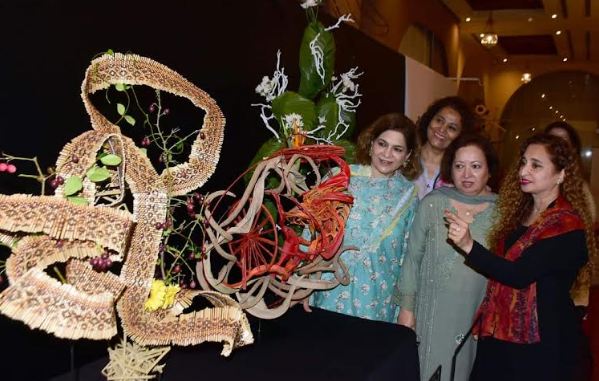
ISLAMABAD, AUG 31 /DNA/ – Serena Hotel, Islamabad. The meeting started with the recitation of Holy Quran by Sarwat Aslam. Then Magnolia’s journey from July 23 to July 24 was showcased in the form of a multi media presentation prepared by Sarwat Aslam.

 Huma Kamran and Farah Khursheed were the oral presenters. After that Shaista Khawar was invited on the stage for the demonstration on the topic, “ Nature Unleashed.” Shaista is the Ex President of Rose Chapter, Lahore. She has a multi faceted personality, having a niche in floral art. She made 14 outstanding floral arrangements using different techniques. Being a certified Ikebana teacher, every arrangement symbolically narrated a story. She used versatile plant material, wires, vegetables, her own hand crafted clay pots, wood slices, even the pieces of cloth, jute and discarded AC filters.

It was a labour of love and was deeply appreciated by the audience.

After the demonstration, the President Wiqarunnisa Boolani delivered a short speech. She thanked Shaista Khawar for gracing the occasion with her presence.  She also thanked all the Magnolians for showing their trust in her by electing her president for the fourth time. The demonstrator was presented a token of thanks. Birthday girls were also given small gifts.

The meeting ended as usual, with the pleasantries served by Serena Hotel.

Vietnam celebrates 79th national day

Vietnam celebrates 79th national day

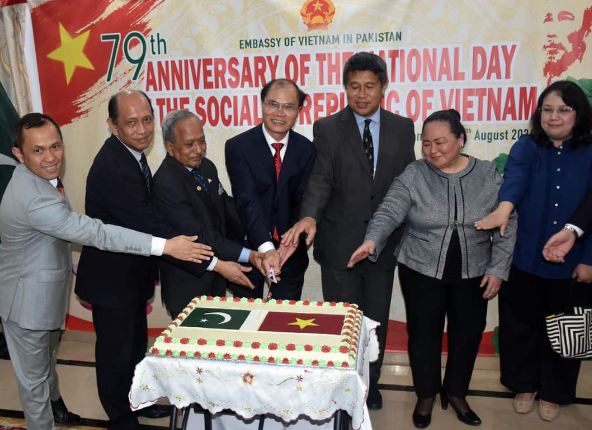
ISLAMABAD, AUG 31 /DNA/ – Ambassador of Socialist Republic of Vietnam Pham Anh Tuan the 79th Anniversary of the National Day of the Socialist Republic of Vietnam.

A Decision That Cost $2.56 Billion

Qamar Bashir

By Qamar Bashir

I vividly recall that the decision to use imported coal in Sahiwal power plant was made as part of the agreements under CPEC. The project was initially agreed upon in 2013 during the visit of the then Prime Minister Nawaz Sharif to China, where various energy projects, including the Sahiwal plant, were included in the CPEC framework. The construction began

in 2015 and it started production in May 2017 with a total capacity of 1,320 MW incurring a cost of $1.8 billion. Being  one of the most efficient plants, its levelized tariff (the average cost over the life of the plant) is around PKR 8-9 per kWh (approximately USD 0.05-0.06 per kWh).

Interestingly, the plant, from the conception to completion was during the period when Mian Nawaz Sharif was in power in the center and Shahbaz Sharif was the Chief Minister in the province of Punjab. This decision to use imported  coal was made by both the leaders with stark awareness and knowledge that the indigenous and much cheaper Thar  coal was available for power production.

The decision by the Sharif brothers not only surprised me but also baffled many national and international analysts and power experts. Another surprising decision was selecting Sahiwal as the project site, despite it being far from major consumption centers like Lahore, Karachi, and Faisalabad, as well as distant from the Karachi or Gwadar ports. This location inevitably led to additional costs for transporting imported coal from the ports to Sahiwal and transmitting electricity from Sahiwal to the country’s main consumption areas.

Despite these clear disadvantages, both Sharifs stubbornly pursued the Sahiwal plant without any sound economic or financial justification. The project’s objectives and scope were finalized, agreed upon, and signed, fully aware that the Sahiwal project was fraught with uncertainties and was primarily driven by the desire to gain political capital, resulting in high transmission and distribution costs and the expense of imported coal.

Now, in a sudden and characteristic move, Mr. Shahbaz Sharif has abruptly decided to change the direction of the Sahiwal coal power project without proper consideration or consultation with stakeholders, putting the entire project’s fate in jeopardy.

In project management terms, this change of scope is akin to initiating another capital-intensive undertaking and a nightmare for engineers and technologists. Once a project is completed and handed over to the investing party, any change in scope becomes a separate, exclusive, and independent undertaking.

It would involve a comprehensive project initiation, starting with the development of a project charter, stakeholder identification, and a feasibility study to assess technical, economic, and environmental viability. The planning phase would include defining the project scope, developing a detailed work breakdown structure (WBS), scheduling, cost estimation, resource allocation, risk management, and establishing a communication plan. During execution, the focus would be on detailed engineering design, procurement of necessary equipment, logistics planning for Thar coal transportation, and retrofitting the plant.

Quality control measures would be implemented throughout construction and installation. The project would proceed with rigorous testing, commissioning, and ongoing monitoring to ensure the plant’s efficiency and compliance with standards. The project would conclude with final inspections, handover, post-implementation review, and formal closure, followed by post-project support and continued performance monitoring to ensure the long-term success of the plant’s operation with Thar coal.

If the Sharif Brother could have taken the right decision to use Thar coal from the very start of this project,  it would have provided significant long-term benefits, including lower initial capital costs by eliminating the need for later retrofitting and reducing fuel costs through the use of a domestic coal source. It would have enhanced Pakistan’s energy security by decreasing reliance on imported coal, providing a stable and predictable supply chain, and fostering local economic development by boosting the Thar coal industry and creating jobs.

Environmentally, the plant would have minimized transportation emissions and could have incorporated advanced emissions control technologies tailored to Thar coal. Operationally, the plant would have been optimized for Thar coal’s specific properties, improving efficiency and long-term reliability. Strategically, this early adoption would align with Pakistan’s sustainable energy goals, driving innovation and contributing to a more self-sufficient energy future.

If the Sahiwal Coal Power Plant had utilized Thar coal from the beginning, Pakistan could have potentially saved approximately $2.058 billion over seven years, from 2017 to 2024. These savings would stem from the lower cost of Thar coal, which is domestically sourced and significantly cheaper than imported coal, as well as reduced transportation and handling expenses due to the proximity of the Thar coalfields. By avoiding the higher costs associated with importing and transporting coal, the country would have benefited from substantial economic advantages, contributing to greater energy independence and overall cost efficiency.

The conversion of the Sahiwal Coal Power Plant from imported coal to Thar coal is estimated to cost between $330 million and $555 million. This figure includes the necessary modifications to the plant’s systems, such as boilers, combustion, and emission controls, as well as upgrades to transportation infrastructure, with costs ranging from $240 million to $410 million. Additionally, the estimate now accounts for detailed design and engineering costs, which could add $20 to $30 million, along with consultancy fees and legal services estimated at $20 to $35 million, encompassing feasibility studies, project management, and regulatory compliance.

The billion-dollar question is: who will hold accountable those responsible for the imprudent, illogical, and shortsighted decision to run the Sahiwal power plant on imported coal, resulting in losses exceeding $2.08 billion? Now, with the reversal of this decision costing an additional $555 million, the total loss amounts to $2.635 billion.

The PML(N) stalwarts bear responsibility for increasing electricity tariffs, making power unaffordable for many Pakistanis. Their faulty decisions have escalated circular debt, depleted precious foreign exchange, and hurt Pakistani industry by making products uncompetitive due to expensive electricity. As a result, they have undermined exports, further impoverishing the country.

In conclusion, consumer groups, industrial consumers, and chambers of commerce should urgently seek judicial intervention to hold accountable those responsible for these financially and commercially unviable decisions. The National Assembly and Senate committees must also take action against the reckless misuse of the nation’s resources, ensuring those who caused this economic harm are held to account. To mitigate the losses, the Sahiwal plant could be sold on the international market, with the proceeds either invested in a new plant near Thar’s coal reserves to reduce costs or directed towards wind and solar farms to lower electricity prices and protect the environment. Alternatively, the decision to convert the Sahiwal plant to Thar coal could be reconsidered, and the $555 million that would have been spent on reconfiguring the plant could instead be used to establish wind and solar farms, thereby reducing the overall per unit cost of electricity from Sahiwal.

By Qamar Bashir

Former Press Secretary to the President

Former Press Minister to the Embassy of Pakistan to France

Former MD, SRBC, CEO, ATV

Chief Election Commissioners of Pakistan, Azerbaijan meet to enhance electoral collaboration

Chief Election Commissioners of Pakistan, Azerbaijan meet to enhance electoral collaboration

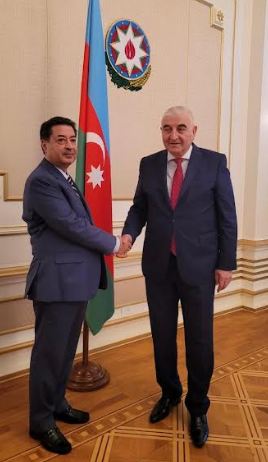
BAKU, AUG 30 /DNA/ – Chief Election Commissioner of Pakistan, Sikandar Sultan Raja, met with the Chairman of the Central Election Commission of Azerbaijan, Mazahir Panahov, at the Central Election Commission. The meeting focused on strengthening bilateral cooperation in electoral processes and exchanging best practices in election management.

Victory Day of Türkiye celebrated

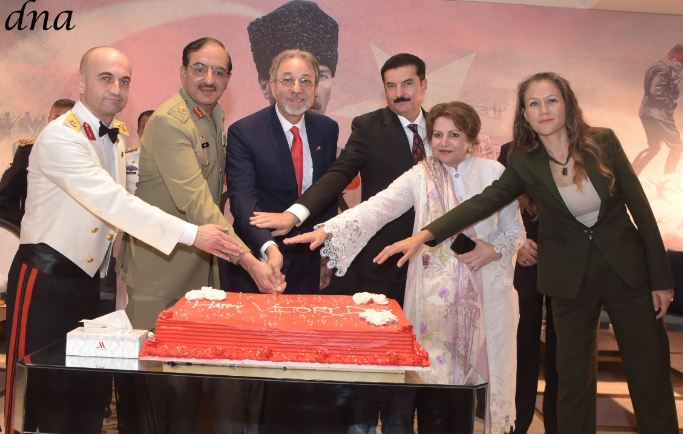
ISLAMABAD, AUG 30 /DNA/ – A ceremony was held in Islamabad to celebrate Türkiye’s Victory Day. The event was attended by prominent figures including Lt. Gen Avais Dastgir, Pakistan Army’s Chief of General Staff, Governor KP Faisal Karim Kundi, Türkiye’s Ambassador Mehmet Paccaci, Defence Attache Brig. Gen. Umul Onol, TRNC Representative Dilsad Senol, and Begum Shaista Pervez.

The dignitaries jointly cut a cake to commemorate the occasion.

MOFA Defies PIC’s Orders on Access to Information

MOFA Defies PIC’s Orders on Access to Information

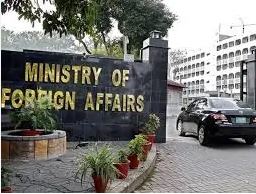
ISLAMABAD, AUG 30 (DNA) — In a troubling move, the Ministry of Foreign Affairs (MOFA) has refused to comply with the Pakistan Information Commission’s (PIC) directives to revise its procedures for public access to information, raising concerns about transparency and accountability in government affairs.

Despite a clear order from the PIC to remove specific procedural requirements from its website, MOFA continues to mandate that citizens submit an affidavit on stamp paper and fee to obtain information. This procedure, which is prominently displayed on the Ministry’s website, has been criticized for being overly cumbersome and in direct conflict with the Right of Access to Information Act, 2017.

Journalist Sadia Mazhar sought clarification from the Ministry regarding the origins of these procedures, specifically requesting the minutes of the meeting where this method was decided. Instead of providing the requested information, the Ministry responded with a directive for Mazhar to follow the same disputed procedure—submitting an affidavit and fee on stamp paper.

The Right to Information (RTI) form developed by MOFA requires personal details such as name, CNIC, profession, contact information, and email ID. Additionally, the form categorizes information as Confidential, Secret, Top Secret, or Other, and mandates that the purpose of the query be specified. Moreover, it includes an undertaking that the information seeker will use the information solely for personal purposes and will not share it without MOFA’s permission. The form also requires signatures from the seeker and two witnesses.

The Pakistan Information Commission found these requirements to be inconsistent with the spirit and provisions of the Right of Access to Information Act, 2017, particularly Section 11 (3) and (4). The PIC stated that such prerequisites hinder the Act’s objective of promoting transparency and good governance within public bodies.

“The Commission is perplexed by MOFA’s requirements, which are not aligned with the intent of the Right of Access to Information Act, 2017,” the PIC’s order stated. “This approach restricts appellants from filing information requests essential for fostering transparency and accountability.” —DNA

Stay Connected

64FansLike
60FollowersFollow

Latest Reviews

Exchange Rates

USD - United States Dollar
EUR
1.18
GBP
1.36
AUD
0.72
CAD
0.73