Home Blog Page 830

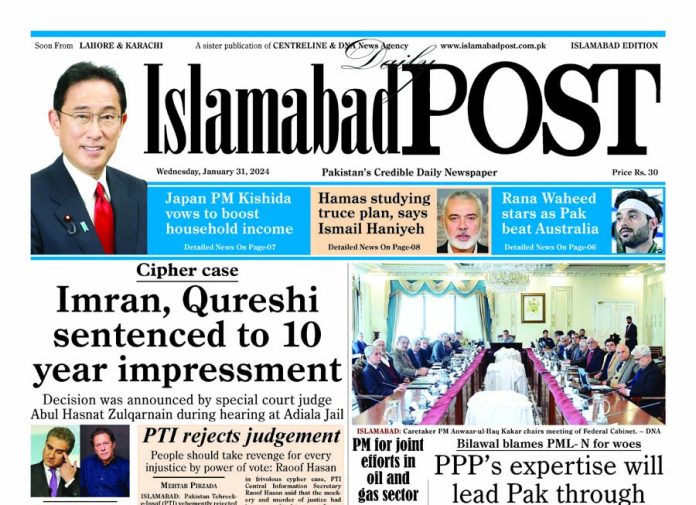
Toshakhana reference: Imran Khan, Bushra Bibi sentenced to 14 years

IMRAN KHAN SAYS HE HAS BEEN CHEATED; BUSHRA BIBI SURRENDERS BEFORE COURT

ISLAMABAD/DNA

The legal woes of Pakistan Tehreek-e-Insaf (PTI) founder Imran Khan continue to multiply as an accountability court on Wednesday sentenced the former prime minister and his spouse Bushra Bibi to 14 years in prison with rigorous punishment in the Toshakhana reference.

Accountability court’s Judge Muhammad Bashir announced the verdict, also disqualifying the former prime minister for 10 years while handing over a fine of Rs1.573 billion — 787 million each — to the couple. 

During the previous hearing, which was also held at Adiala jail, the court recorded Bushra Bibi’s statement under Section 342.

Khan told the court that his wife had nothing to do with the case and was being humiliated by being forcibly dragged into it.

At the outset of the hearing today, Judge Bashir asked Khan if he recorded his statement. To this, the former premier said that he would submit his statement once his lawyers came.

“I have been deceived as I was only called to mark my attendance for the hearing,” said the PTI founder.

IHC declares jail trial notification correct

On the other hand, the Islamabad High Court (IHC) termed the notification of Khan’s jail trial in Toshakhana and the £190 million settlement cases as correct.

The court also dismissed the PTI founder’s petitions against the jail trial in the cases filed by the National Accountability Bureau (NAB).

Apparently, the jail trial was in view of the threats to the life of the petitioner, adding that it was not “malice”.

IHC Chief Justice Aamer Farooq and Justice Tariq Jahangiri issued a detailed verdict while also rejecting the petitioner’s objection over the appointment of the accountability judge.

“Section 352 of the Criminal Code is applied in the Official Secrets Act case in the absence of a clear law,” said the court. It added that the high court rules and Section 352 will be applied when the sessions court passes an order concerning the location.

The court said that the objection over the notification of jail hearing being issued before the reference was correct.

“The NAB prosecutor had said that at the time of the notification, the proceedings of bail and remand were underway,” the IHC said, adding that the proceedings cannot be declared null and void on the basis of an executive or trial court order.

EPAPER JAN 31

EPAPER JAN 31

9 terrorists eliminated, 4 security personnel martyred in Mach, Kolpur: ISPR

9 terrorists eliminated, 4 security personnel martyred in Mach, Kolpur: ISPR

RAWALPINDI, JAN 30 /DNA/ – On night 29/30 January 2024, multiple terrorists including suicide bombers attacked Mach and Kolpur Complexes in Balochistan, which was effectively responded by Law Enforcement Agencies.

Security forces in the vicinity were immediately mobilized who are carrying out ensuing operation. Nine terrorists including three suicide bombers have been sent to hell till now and 3 were injured.

However, during intense exchange of fire, four brave members of Law Enforcement Agancies, having fought gallantly, embraced Shahadat along with two innocent civilians.

Effective response by Law Enforcement Agancies is a testament of their unrelenting resolve in fight against terrorism.

Pakistan’s Security Forces stand shoulder to shoulder with other Law Enforcement Agencies to ensure peace & stability in the country.

Omar Ayub urges people to remain calm, vote for Khan on Feb 8

Omar Ayub Khan

Announces to moves high court against special court’s decision

DNA

ISLAMABAD: Pakistan Tehreek-e-Insaf (PTI) Secretary General Omar Ayub Khan strongly rejected the kangaroo court’s decision awarding 10-year imprisonment to former prime minister Imran Khan and ex-foreign minister Shah Mahmood Qureshi, calling upon all PTI members and Pakistanis to remain calm and vote Imran Khan’s nominated candidates to bring PTI back to the assemblies with a thumping majority.

Reacting to the special court’s ruling in cypher case, PTI Secretary General urged all the people to stay calm and peaceful following the decision by this kangaroo court against PTI Founding Chairman Imran Khan and PTI Vice Chairman Shah Mehmood Qureishi and did not indulge in any activity that undermined their traditional stance of a peaceful struggle.

He asked that the people should concentrate on coming out in large numbers on February 8, 2024 to ensure a high voter turnout and vote for PTI Founding Chairman Imran Khan’s nominated candidates whose names have been posted on PTI’s website and social media channels.

“PTI has always espoused the principle of ‘Rule of Law’. The current kangaroo court ruling will not deter us from foregoing this principle come what may,” he maintained.

Omar stated that PTI workers should remain calm and not indulge in any activity that undermines our traditional stance of a peaceful struggle.

“We will appeal against this decision in the High Court and continue our legal battle,” he added.

“We should harness and channel these energies for the polling day on February 8, 2024 to ensure that Khan’s nominated candidates are returned to the assemblies with a thumping majority,” Omar contended.

He vowed that PTI would continue its struggle to put Pakistan on a democratic path so that the supremacy of law and constitution is ensured.

CM advances digital surveillance: Integrates CCTV cameras of five cities with safe cities network

Mohsin Naqvi

LAHORE, Jan 30: /DNA/ – Demonstrating Punjab government’s commitment to digital technology, Chief Minister Mohsin Naqvi has initiated the integration of CCTV cameras from five major cities—Gujranwala, Faisalabad, Rawalpindi, Kasur, and Nankana—with the Punjab Safe Cities network. The Chief Minister visited the Safe Cities Authority Headquarters in Qurban Lines, overseeing the monitoring system through the video wall, connecting cameras installed in Rawalpindi, Faisalabad, and Gujranwala.

Conducting an experimental live monitoring session of over 200 cameras across the three districts, Chief Minister Naqvi also inspected the modern monitoring system via cameras situated in Children’s Hospital Lahore, Kasur, and Nankana Sahib on the Safe City Wall. Additionally, he reviewed the centralized wireless mobile system introduced by Safe City, allowing real-time tracking of all police officers and personnel throughout Punjab. This system enables video surveillance and conferencing through a dedicated app, a feature lauded by the Chief Minister.

During the briefing, Mohsin Naqvi was informed that, in line with the vision of Chief Minister Punjab, the Safe City Authority’s coverage is expanding to encompass 21 districts of Punjab. The Safe City projects in Rawalpindi, Faisalabad, and Gujranwala are slated for inauguration shortly, with 1886 cameras in Rawalpindi, 1685 in Gujranwala, and 1430 in Faisalabad under the project.

IG Punjab Dr. Usman Anwar, CCPO Lahore Bilal Siddique Kamyana, MD Safe City Muhammad Ahsan Younis, and relevant officers were present during the occasion. The briefing also covered the ongoing projects’ progress, including the introduction of the Crime Stoppers service for confidential crime information. Notably, Safe City cameras are employing artificial intelligence to identify motorcyclists without helmets. 

Battling Hunger: How new ideas are helping farmers in Pakistan

Battling Hunger: How new ideas are helping farmers in Pakistan

By Hoor Babar

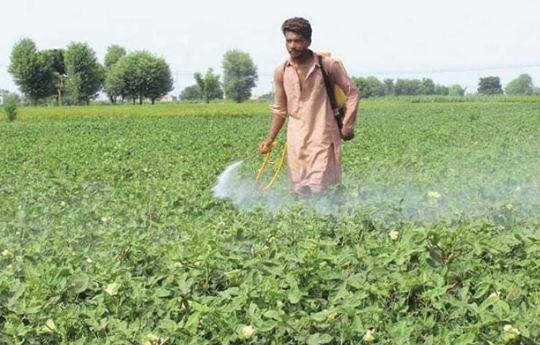
An essential agricultural revolution is quietly reshaping the story of hunger in Pakistan’s vast landscapes. Farmers are embracing cutting-edge techniques that promise higher yields while promoting the long-term health of the soil to achieve sustainability. These changes have broad implications in a country where agriculture plays a major economic role, employing around 38% of the labor force and contributing roughly 24% of the GDP.

One such technique that is becoming more and more popular is “crop rotation,” which is a tactic used by farmers all around the nation. Recent research indicates that crop rotation can raise total crop output by as much as 20%, which is a noteworthy amount in a country where food security is still a major worry.

In Pakistan, technology has emerged as a vital ally in the fight against hunger at the same time. A symbol of the technological revolution, drones are giving farmers accurate information on their crops. The Pakistan Telecommunication Authority reports that over 15 million more people are now broadband subscribers in rural regions, a notable rise.

This suggests that farmers are increasingly able to utilize digital tools and get knowledge that was previously unattainable.The cooperative efforts of farmers and communities demonstrate the communal dimension of this fight against hunger. Community-driven initiatives are becoming more prevalent in Pakistan due to its different agro-climatic zones.

For example, the “Punjab Irrigated-Agriculture Productivity Improvement Project” was started with the goal of improving water management techniques and increasing production in Punjab, where agriculture is the primary industry.

But the battle against hunger doesn’t stop in the fields—it affects every link in the food supply chain. About 24.3% of Pakistanis are estimated by the World Bank to be living below the country’s poverty line. With the increasing prevalence of direct interactions between farmers and customers, local markets are emerging as critical nodes in addressing this dilemma.

In addition to ensuring farmers receive just remuneration; this change improves community access to fresh fruit that is sourced locally.With this comprehensive strategy, even minor adjustments are producing notable results.

The Food and Agriculture Organization (FAO) reports that planting drought-resistant crops in areas where water is lacking has enhanced agricultural resilience overall by 15%. These adjustments support a more dependable and sustainable food supply.

As we travel across Pakistan’s diverse landscape, which includes both steep mountains and lush plains, the battle against hunger takes on a collective hue. Intelligent farming methods, technological developments, and community collaboration are driving a transformation of the nation’s agricultural landscape, which is intricately linked to its economic fabric. This path towards abundance and sustainability holds promise for a hunger-free Pakistan, where every plate is filled and no one experiences the feeling of hunger in a country where about 20 million people experience food insecurity.

By Hoor Babar

Research Scholar

Institute of management Sciences (IMS), Peshawar

‘Life and some other beautiful things’

Ambassador of Czech Republic to Pakistan

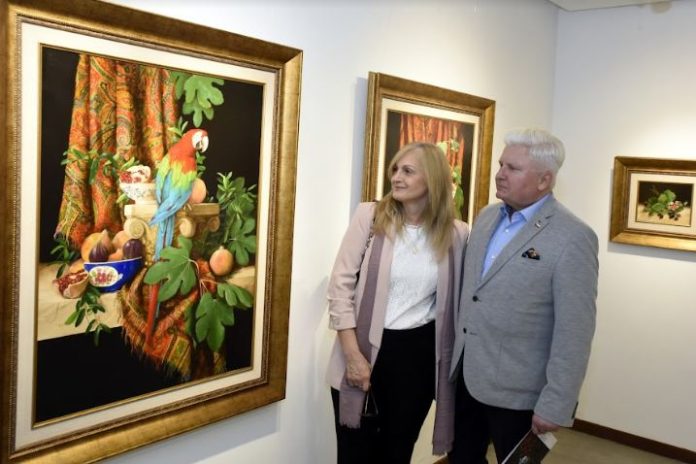
ISLAMABAD, JAN 30 /DNA/ – Ambassador of Czech Republic to Pakistan, Ladislav Steinhubel and others attended an exhibition “Life and some Other Beautiful Things” by IRFAN CHEEMA at Tanzara Art Gallery.

The guests discovered the beauty the artist captured in every brushstroke in his skillfully rendered paintings.

Heavyweights Join Raqami Islamic’s Shariah Board

RIDB

Islamabad, JAN 30 /DNA/ – Raqami Islamic Digital Bank (RIDB) obtained a no objection certificate (“NOC”) and in-Principal Approval (IPA) from the State Bank of Pakistan (SBP) to establish an Islamic digital retail bank in Pakistan under the Licensing and Regulatory Framework for Digital Banks (the Framework).

In keeping with its vision to provide Shariah-compliant financial services, the bank has succeeded in putting together a high-powered Shariah Board, led by Dr. Mufti Muhammad Imran Ashraf Usmani as Chairman and Mufti Hassaan Kaleem as Deputy Chairman.  Other members on RIDB’s five-member Shariah Board include Muhammad Ashja Khan, Resident Shariah Board Member; Mufti Azfer Iqbal, Board Member; and Mufti Muhammad Muaz Ashraf, Board Member.

Sheikh Dr. Mufti Imran Usmani graduated with a specialization in Islamic Fiqh from Jamia Darul Uloom, Karachi and also holds an LLB and PhD in Islamic finance. Presently Dr. Imran Usmani serves on the boards of multiple local and international financial institutions and is also a member of the Steering Committee on Implementation of Islamic Banking and Finance, chaired by the Finance Minister and the SBP Governor.

Mufti Hassaan Kaleem has vast experience in matters of Shariah teachings and advisory and is on the Shariah boards of several local and international financial institutions, including the Islamic Development Bank. Mufti Hassaan is also Trainer of Shariah Standards at Accounting and Auditing Organization for Islamic Financial Institutions (AAOIFI), Bahrain and visiting faculty member of National Institute of Banking and Finance (NIBAF).

Muhammad Ashja Khan completed 10 years’ religious studies in Islamic Jurisprudence (Dars-e-Nizami) from Wafaqul Madaris Al Arabiya, Pakistan. Mr Ashja also pursued a 3-year specialisation in writing Shariah rulings (Takhassus-fil-Ifta) from Jamia Darul Uloom, Karachi and obtained certification as a Certified Shariah Advisor & Auditor from AAOIFI Bahrain.  Mr. Ashja is registered as a Shariah Advisor with the Securities & Exchange Commission of Pakistan (SECP).

Mufti Azfer Iqbal, a registered Shariah Advisor (SECP), completed his Shahadat ul A’alimiyyah from Wifaq-ul-Madaris al-Arabiah, Pakistan.  In 2004, he completed his Takhassus-fil-Ifta from Jamia Darul Uloom, Karachi and achieved his MPhil (Islamiat) degree in 2020 from the Federal Urdu University of Arts, Science, and Technology.

Muhammad Muaz Ashraf is a Certified Shari’ah Advisor & Auditor (CSAA-AAOIFI Bahrain), Certified Halal Lead Auditor (Malaysia/Pakistan) and Registered Shariah Advisor with Security & Exchange Commission of Pakistan (SECP). Muhammad Muaz Ashraf completed his graduation as a Shariah Scholar (Shahadat-ul-Almiyah) and specialization as a Mufti (Takhassus Fil Ifta) from Jamia Darul Uloom, Karachi. In addition, he has completed his Mphil in Islamic Banking & finance from The University of Management & Technology and is perusing a PhD in Islamic FinTech.

Highlighting the need for Islamic and digital financial services in Pakistan, Dr. Imran Usmani remarked, “Raqami bank will play a very important role in promoting Islamic banking and economic system for sustainable and inclusive development. The Sharia Board will provide guidance and supervision to ensure banking operations and transactions are Shari’ah compliant at all times, InshAllah.”

Mufti Hassaan Kaleem said, “I expect from Raqami Islamic Digital Bank to play a role in eradicating Riba from the small-ticket size segment and to introduce halal alternatives seamlessly to those who are more deserving and less connected.”

Mr. Nadeem Hussain, Coach Raqami Islamic Digital Bank said, “As we build our operational readiness as a fully Shariah-compliant digital bank, we remain committed to learning from the best! I and team Raqami are indeed fortunate to have teachers like Raqami’s Shariah Board to guide our journey as we push the needle on responding to the aspirations of Pakistanis and crafting inclusive and socially responsible banking services.”

Speaking about Raqami’s newly constituted Shariah Board, the Chairman of Raqami Islamic Digital Bank, Mr. Abdullah Al-Mutairi stated, “The global Islamic Financial Services Industry (IFSI) demonstrates a notable acceleration in its yearly growth trajectory, as indicated by the Islamic Finance Services Board’s annual stability report, which estimates the global IFSI’s value at USD 3.25 trillion in 2022, compared to USD 3.06 trillion in the preceding year.

Within this dynamic landscape, Pakistan emerges as a paramount market for Islamic finance products, given its substantial estimated population of 240 million. The country boasts a robust Islamic banking industry with assets soaring to an impressive figure exceeding PKR 8 trillion as of June 2023, constituting nearly 20 percent of the local market share.

It is with great satisfaction that I note Raqami Islamic Digital Bank’s commendable progress in aligning with the trajectory of this burgeoning industry. The bank has garnered the support of distinguished Islamic scholars in Pakistan, renowned for their expertise in Islamic finance. This strategic collaboration positions Raqami Islamic Digital Bank effectively to address the escalating demand for Islamic financial services within the country, while simultaneously establishing a benchmark for digital innovation and customer responsiveness.”

As Raqami gears up to establish a digital retail bank, it is committed to building a customer-centric approach providing tailored Islamic financial services to a diverse customer base, with focus on five segments—SMEs, agri sector, freelancers and blue-collar workers, women and youth.

Pakistan, US sign cultural property agreement

Pakistan

Faisal Sheikh / DNA

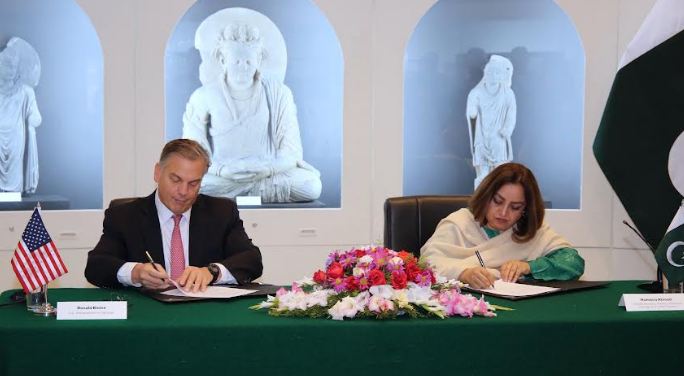
ISLAMABAD – U.S. Ambassador to Pakistan Donald Blome and Pakistan Secretary of National Heritage and Culture Humaira Ahmed signed an agreement on cultural property protection in Islamabad on January 30, 2024.  The agreement establishes import restrictions on certain types of archaeological and ethnological materials originating from Pakistan and entering the United States.  The agreement facilitates the return of these cultural objects to the people of Pakistan.  The cultural property agreement demonstrates the strong U.S. and Pakistani commitment to disrupt the theft and trafficking of cultural objects and our shared goal of protecting Pakistan’s rich and diverse cultural heritage.  This agreement commits both parties to work together to counter looting and trafficking of objects, promote a clean market for Pakistani art and antiquities in the United States, and increase opportunities for U.S. museums and the American public to learn about and experience Pakistan’s history and culture.

“This agreement protects unique and historically significant artifacts for future generations … It also demonstrates U.S. support for the principles of tolerance and respect for diversity – principles by which the people of this region have lived for centuries,” said Ambassador Blome.

Today’s signing underscores the United States’ global commitment to cultural heritage protection and preservation.  The United States has been unwavering in its commitment to protect and preserve cultural heritage around the world and to restrict trafficking in cultural property, which may be used to fund terrorist and criminal networks.  To date, the United States has returned over 175 cultural objects to Pakistan, and this agreement simplifies the process.

Since 2001, the United States government has supported 35 cultural heritage preservation projects across Pakistan with more than $8.4 million USD.  U.S.-funded preservation projects include the conservation of Gandhara archaeological treasures and Mughal architectural heritage, documentation of historic manuscripts, the digitization of museums, and the restoration of historically significant Sufi shrines and Hindu monuments, among other projects.  This new bilateral cultural agreement highlights the diversity of the Pakistani people and sets the stage for further bilateral cooperation.

€10 billion boosts Europe-Central Asia Trade Corridor at Investors Forum

€10 billion boosts Europe-Central Asia Trade Corridor at Investors Forum

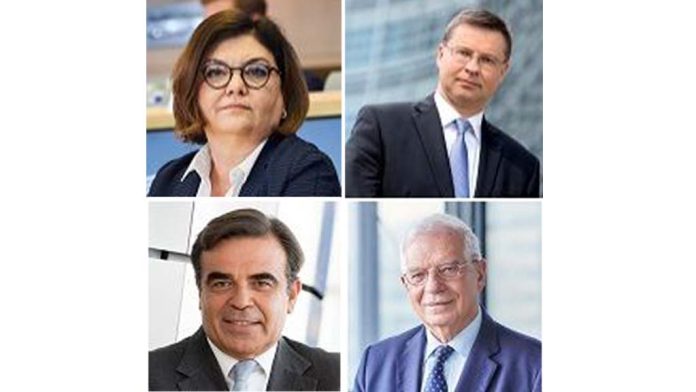
The Global Gateway Investors Forum for EU-Central Asia Transport Connectivity opened today in Brussels, bringing together governments, financing institutions, businesses and civil society from Europe, Central Asia and beyond. European Commission Executive Vice President Valdis Dombrovskis announced that European and international financial institutions present at the Forum will commit €10 billion in support and investments towards sustainable transport connectivity in Central Asia.

Over the next two days, participants will discuss the required investments to transform the Trans-Caspian Transport Corridor into a cutting-edge, multimodal, and efficient route, connecting Europe and Central Asia within 15 days.

Russia’s invasion of Ukraine has underlined the urgency to find alternative reliable efficient trade routes between Europe and Asia that do not transit Russia. In addition to opening new possibilities for businesses, the development of transport connectivity is also a means to strengthen the regional integration and economic development of Central Asia. This is why the Investors Forum focuses on transport connections that comply with all aspects of sustainability, in line with the trusted connectivity principles of Global Gateway.

The €10 billion commitment is a mixture of ongoing and planned investments which, following extensive consultations with international partners present at the Forum, the European Commission foresees to be mobilised for sustainable transport development in Central Asia in the short term.

In concrete terms, several significant commitments are being made on the first day of the Forum as part of the overall €10 billion. These include:

The European Investment Bank (EIB), represented by its Vice President Teresa Czerwińska, signed Memoranda of Understanding totalling €1.47 billion with the Governments of Kazakhstan, Kyrgyzstan and Uzbekistan as well as the Development Bank of Kazakhstan. These loans will be made possible by guarantees provided by the European Commission.

Later today, the European Bank for Reconstruction and Development (EBRD), represented by its Vice President Mark Bowman, will sign a Memorandum of Understanding with Kazakhstan, with an investment pipeline worth €1.5 billion with projects already under preparation for the overall development of transport connectivity in the Central Asian region.

Background

The Investors Forum brings together high-level representatives from the European Commission, EU Member States, Central Asia as well as Caucasus countries and Türkiye. Other participants include G7 nations, other like-minded countries, financial institutions and the private sector.

The Investors’ Forum builds upon the findings of the June 2023 study on Sustainable Transport Connections between Europe and Central Asia, which was led by the European Commission and conducted by the European Bank for Reconstruction and Development (EBRD). The study identified 33 hard infrastructure needs and 7 soft connectivity key actions the delivery of which would greatly enhance the operational efficiency and economic attractiveness of the trans-Caspian transport networks. These were presented at the 2nd EU-Central Asia Economic Forum, which took place in May 2023 in Almaty, Kazakhstan.

Since the publication of the study, the European Commission has worked towards operationalising the study’s findings. The EU and its partners, in Team Europe and beyond, are together mobilising €10 billion. The European Commission is confident that the discussions taking place at the Investors’ Forum will unblock further funding for the development of key transport networks in Central Asia.

The EU’s longstanding partnership with the five Central Asian countries (Kazakhstan, Kyrgyzstan, Tajikistan, Turkmenistan, and Uzbekistan) has been further strengthened, building on the relationship established in 1991 and upgraded in 2019. The Investors Forum deepens this collaboration as the EU moves decisively to foster the establishment of direct transport links with Central Asia through the Black Sea and Caucasus regions, in full partnership with Central Asian countries, Türkiye, as well as those of the Eastern Partnership, who are actively participating in the Investors Forum.

The Global Gateway strategy is the EU’s positive offer to reduce the worldwide investment disparity and boost smart, clean and secure connections in digital, energy and transport sectors, and to strengthen health, education and research systems. In a Team Europe approach that brings together the European Union, EU Member States, and European development finance institutions, together we aim to mobilise up to €300 billion in public and private investments from 2021 to 2027, creating essential links rather than dependencies, and closing the global investment gap.

Quote(s)

In the spirit of collaboration and progress, the Investors’ Forum marks a pivotal step towards realising the ambitious vision of the Trans-Caspian Transport Corridor. Together, we strive to achieve a faster, more reliable connection between Europe and Central Asia, fostering stronger ties and opening new avenues for cooperation and trade. I am very pleased to see that international partners present today are committing to provide €10 billion in investments to develop sustainable transport connectivity in Central Asia, including new European Commission and European Investment Bank commitments of €1.5 billion, with more to come through the Commission’s open architecture for investment guarantees.

Valdis Dombrovskis, Executive Vice-President for an Economy that Works for People

The Investors’ Forum is an important milestone in the EU-Central Asia partnership, bringing together public and private investors from both regions to kickstart the work on the Trans-Caspian Transport Corridor to link Europe and Central Asia in a fast, safe and sustainable way, in line with the EU Global Gateway strategy. This ambitious transport network will support economic growth, create local jobs, connect people to services, while contributing to regional integration.

Margaritis Schinas, Vice-President for Promoting our European Way of Life

In a world of increasing uncertainties, there is a need for closer partnerships to address global challenges. Central Asia has become a crucial partner for the EU with its vast potential notably in terms of security and connectivity, as well as energy and resource diversification. To be better prepared to face today’s challenges, both Europe and Central Asia need to strengthen their resilience and diversify their political and economic relationships. Today’s Investors Forum is an important step in that direction.

High Representative/Vice-President Josep Borrell

A modern Trans-Caspian Transport Connecting the Central Asian countries is the cornerstone of our efforts to promote increased regional economic integration and further growth in the region, as well as better connections with Europe. We have identified 33 physical infrastructure investment needs, ranging from modernising railways to increasing port capacity and fleet renewal. Today’s Investor’s Forum demonstrated the large interest from both institutional and private investors in supporting these projects.

Adina Vălean, Commissioner for Transport

Stay Connected

64FansLike
60FollowersFollow

Latest Reviews

Exchange Rates

USD - United States Dollar
EUR
1.17
GBP
1.35
AUD
0.67
CAD
0.72