Home Blog Page 83

US media slam Trump’s ‘spin job’ over Iran war agreement

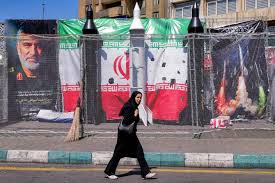
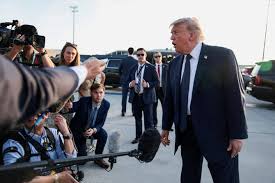
WASHINGTON: Pre-war objectives abandoned, Iran’s power bolstered, tens of billions of dollars guzzled away: US media appear unanimous in condemning Donald Trump’s concessions to Iran in an agreement meant to end the war.

The US president put his signature to a memorandum of understanding on Wednesday at a candlelit dinner outside Paris, aiming to draw a line under the war which has engulfed the Middle East and rocked the global economy.

But Trump’s return to the United States on Thursday is set to bring him back to reality, with a barrage of criticism expected from both opponents and supporters of the war.

“The White House agreed to this ceasefire extension that met none of its prewar objectives while providing enormous financial concessions to Tehran,” said US TV network MS NOW.

“Now, the administration is desperately trying to argue otherwise. Quite simply, Trump got played by the Iranians, and no one is buying his spin job.”

“As a first step, Islamic Republic of Iran will instantly reopen the Strait of Hormuz and the United States of America will immediately lift the naval blockade,” Prime Minister Shehbaz Sharif of Pakistan, which mediated the agreement, said on X.

Under the text, Washington also commits to immediately waive oil sanctions that have crippled Iran’s economy.

‘Huge’ benefits for Iran

The deal is only a temporary arrangement meant to give time for starting detailed negotiations on the far more complex issue of long-term control over the nuclear power ambitions of Iran, which Washington has long suspected of harboring a secret bomb-making program.

The agreement is “widely seen as the biggest foreign-policy bet of the president’s second term,” according to the Wall Street Journal, who noted Trump “will face resistance from Iran policy hawks who say the president is giving up far more than he is getting.”

Even the signing of the deal appeared to fall into disarray, with the business daily reporting that Trump inked the agreement for a second time on Wednesday night, surprising some of his aides and derailing plans for a signing ceremony later this week.

Fox News, the usually Trump-friendly news channel, cited critics who said the agreement gave Iran “huge financial benefits” without requiring the dismantlement of its nuclear program.

Once a final agreement is reached on the Islamic republic’s nuclear program, the United States will facilitate the release of a $300 billion reconstruction fund supported by regional nations, according to the deal.

“President Donald Trump’s proposed Iran agreement is drawing sharp criticism from some of his strongest supporters, who argue the deal rewards Tehran before it has agreed to fully dismantle its nuclear program,” Fox said.

The network quoted British broadcaster Piers Morgan, who said the deal was “about as far removed from ‘unconditional surrender’ as any deal in the history of Planet Earth.”
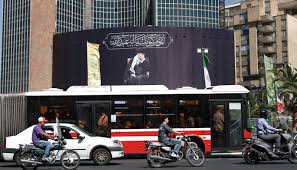
What challenges could stand in the way of a final US-Iran deal?

When US and Iranian negotiators sit down in Switzerland on Friday after nearly four months of war, the stakes couldn’t be higher as they face an array of hurdles that could derail efforts to reach a comprehensive peace agreement.

While a breakthrough cannot be ruled out, most analysts are skeptical the two sides can forge a final settlement within the 60-day window laid out in a “memorandum of understanding” that President Donald Trump and Iranian leaders approved this week.That interim pact kicked the hardest issues down the road to the next phase of negotiations, with no guarantee they will ever be resolved. The following are potential spoilers:

Can they close nuclear gaps?

The fate of Iran’s nuclear programme — which Trump cited as his main reason for going to war — may carry the greatest potential to unravel the talks. Trump has already touted Iran’s commitment never to develop a nuclear weapon, but that largely restates long‑standing pledges by Tehran.

Where the negotiations could falter is over what to do with Iran’s stockpile of near-bomb-grade uranium. Trump has said he wants it shipped out or destroyed. Iran wants neither, though it has indicated a possible willingness to dilute the material.

Another sticking point is Iran’s future uranium enrichment. The US has at times demanded zero enrichment in Iran. Iran says it will not give up its right to enrich. Sources have said the two sides have previously discussed a potential moratorium of anywhere from 5 to 20 years, but ⁠compromise remains elusive.

Also in question is whether Iran will accept the level of international inspection conducted under the nuclear deal that former President Barack Obama reached in 2015 and which Trump ditched in 2018.

Could Strait of Hormuz complicate matters?

Questions remain about the strait, which Iran effectively blocked, triggering a global energy supply shock, after the US and Israel attacked on February 28. Under the MoU, the waterway, which normally carries one-fifth of the world’s oil, will be reopened on Friday, but shippers remain cautious.

The US says it will be toll-free. Iran, which gained leverage with control of the channel that it lacked pre-war, insists it will retain a management role.

What about sanctions and frozen assets?

Also standing in the way: Iran wants Trump to quickly lift sanctions and unlock billions in frozen funds, while the US says easing will be gradual and tied to Iranian compliance. According to the text of the MoU read out by US officials on Wednesday, Iran would immediately receive waivers to sell oil again, a conciliatory gesture that has added to criticism from Iran hawks that Trump is giving up too much.

Trump may be reluctant, however, to be seen handing over money to Iran anytime soon. The MoU is already being compared to the deal under Obama, whom he has long berated for returning some Iranian funds.

Could Israel be a spoiler?

Israeli Prime Minister Benjamin Netanyahu, who helped convince Trump to launch the war, ⁠has insisted Israel is not bound by any US-Iran agreement in its fight against Iran-aligned Hezbollah in Lebanon.

Though hostilities there have abated since Trump rebuked Netanyahu this week, further escalation could threaten the talks. Iran says the deal also requires a ceasefire in Lebanon.

Will negotiating styles clash?

The US team — Vice President JD Vance, envoy Steve Witkoff and Trump’s son-in-law Jared Kushner — and their Iranian counterparts may have a hard time reconciling disparate negotiating styles.

Trump is known to demand quick results; Iran prefers drawn-out bargaining. This posed a problem in past rounds that ended in failure and could mean a similar outcome this time.

Trump told reporters this stage of negotiations would be “easier” than the first. Both sides are looking to wrap up the conflict. The president is under growing pressure ⁠at home over high gasoline prices, and Iran has been battered militarily and economically.

The US team, however, is expected to be short on technical expertise and up against veteran negotiators with a history of dragging out talks. That means 60 days may be too tight to craft a detailed agreement. The Obama deal took around two years to finalise.

Even if a deal is reached, there could be doubts about implementation. Trump helped broker a ceasefire last year in the Israel-Hamas war in Gaza but the process ⁠has stalled since then.

Could distrust be a factor?

Iran is deeply suspicious of Trump, who twice in the past year attacked in the middle of negotiations.

Whether or not the Iranians are willing to compromise could also hinge on their supreme leader, Ayatollah Mojtaba Khamenei, considered more hardline than his father, who was martyred along with other family members in a US-Israeli strike.

The US will also be distrustful, watching to see if Iran is stringing ⁠them along, as Trump aides say they have experienced before.

If they cannot overcome differences to secure a comprehensive settlement, there is still the possibility of a limited agreement or extending talks — though the risk of renewed hostilities would also loom.

Other ways talks could falter

If Trump makes the kind of harsh threats he has issued during the conflict, prompting Iran to break off negotiations.

If Trump bows to pressure from Iran hawks to resist concessions;

If already conflicting interpretations of the MoU create unrealistic expectations;

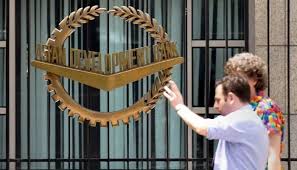
ADB okays $700m loan to support insurance sector reforms in Pakistan

The Asian Development Bank (ADB) has approved a $700 million policy-based loan to support reforms aimed at strengthening insurance in Pakistan.

The programme seeks to expand insurance coverage and reduce protection gaps, according to press release issued by ADB, adding the loan would help stimulate private sector participation and support sustainable economic growth.The Asian Development Bank (ADB) has approved a $700 million policy-based loan to support reforms aimed at strengthening insurance in Pakistan.

The programme seeks to expand insurance coverage and reduce protection gaps, according to press release issued by ADB, adding the loan would help stimulate private sector participation and support sustainable economic growth.

Iran says missile program not part of talks with US

TEHRAN: Iran said on Thursday that its missile program would not be part of future negotiations with the United States, after the two sides agreed a framework deal for ending their war.

US President Donald Trump and Iranian President Masoud Pezeshkian signed a memorandum of understanding early Thursday, ending a regional war that erupted on February 28 with US-Israeli strikes.

The agreement lays the groundwork for detailed negotiations on Iran’s nuclear program and sanctions relief for Tehran.

There is no mention in the deal of Iran’s missile program, a longstanding concern for Washington and its ally Israel.

“Our missiles do not like at all to be talked about by anyone,” foreign ministry spokesman Esmaeil Baqaei said in an interview with Iranian state television.

“Iranian missiles are only for firing, not for negotiations. Iran’s defense capability will not be discussed in any way, in any process or with any party.”

During the nearly 40-day war, Iran’s missile infrastructure came under heavy US-Israeli bombardment, but Tehran continued to respond with missile and drone attacks across the region.

Before the war, US Secretary of State Marco Rubio had warned that Iran would need to negotiate over its ballistic missile arsenal, which Washington views as a threat to Israel and US military bases in the region.

Iran has repeatedly refused to discuss what it describes as its defensive capabilities.

On Wednesday, Trump appeared to soften his position, saying it would be “unfair” for Iran not to have missiles.

“I’m saying that if other countries have them, it’s a little bit unfair for them not to have some,” Trump said.

“A ballistic missile is not the same thing as what we are talking about when we talk nuclear.”

NATO says it agrees to modernize nuclear capabilities

BRUSSELS: NATO agreed on Thursday to modernize its ​nuclear capabilities and strengthen its nuclear planning capacity, the alliance’s senior body for nuclear deterrence said in a statement.

All ‌NATO allies ‌except ​France ‌are ⁠members ​of the ⁠Nuclear Planning Group, which serves as a forum for consultation and decision-making on nuclear deterrence.

Defense ⁠ministers taking part ‌in ‌the meeting “recalled that the ​strategic ‌nuclear forces of ‌the Alliance remain the supreme guarantee of Allied security and underpin NATO’s ‌extended deterrence architecture,” the statement said.

“NPG Ministers ⁠agreed ⁠to continue enhancing NATO’s nuclear deterrence mission by modernizing NATO’s nuclear capabilities, strengthening its nuclear planning capacity, and adapting to achieve its security interests,” ​the group ​said. 

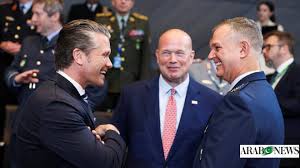
Meanwhile, US Defense Secretary Pete Hegseth told NATO Thursday the Pentagon will review its force presence in Europe within the next six months, as Washington pressures allies to step up their defenses amid anger over their response to the Iran war.

“This will be a real review. It will be designed to ensure that NATO is moving fast and irreversibly toward Europe leading, stepping up to take primary responsibility for the defense of Europe,” Hegseth told a meeting of NATO defense ministers in Brussels.

“It’s a review that some countries will fail, and others will pass with flying colors.”

The Pentagon chief said the move was also aimed at ensuring US “access, basing and overflight are clearly delineated and assured” after some European imposed restrictions on US forces during the Iran war.

“It was shameful. These allies, they put America’s sons and daughters, our sons and daughters, at risk,” he said. “There’s no excuse for that.”

The US is piling on the pressure ahead of a NATO summit next month as it seeks to make sure that allies make good on a pledge made last year to massively ramp up defense spending.

Hegseth said going forward Washington paying its dues to cover NATO organizational running costs — roughly some $790 million in 2026 — would be “contingent” on allies reaching spending targets.

“Where other allies do not spend with urgency, our dues contributions will go down,” he said.

The broadside from the US defense chief — who had initially signalled a conciliatory tone — will send a jolt through NATO allies concerned over US commitment to defending Europe.

US President Donald Trump had lashed out against European allies over their response to his war in Iran.

But there was hope the US peace deal with Tehran could help NATO put the bad blood behind it by the time alliance leaders meet in Turkiye.

“Too many allied capitals seem to still miss something in translation,” Hegseth said.

Trump “gave our allies a test to support America when we asked for their help, and too many failed it,” he added.

Despite the tough language, Hegseth did acknowledge strides by many members of NATO to ramp up their defenses and said progress was being made.

“Some of our allies have gotten the message and stepped up. You know who you are, and we very much appreciate it,” he said.

NATO will look to showcase increased expenditure by Europe to prove to Trump it is progressing on a pledge last year to reach five percent of GDP on defense-related spending.

“Europe and Canada spending in 2025 more than $90 billion extra compared to 2024, which is almost a 20 percent increase in defense spending,” NATO boss Mark Rutte said.

Washington has been clear with Europe that it wants NATO allies on the continent to take over primary responsibility for their own conventional defense as US focus shifts toward China.

As part of that process the Pentagon has already told allies it is reducing the number of assets worldwide that it makes available for NATO operations.

The US move has sparked fear it could leave Europe vulnerable in the face of an aggressive Russia as allies still rely on Washington for some key weaponry.

Rutte said that while the US reductions were “immediate,” it didn’t mean that Washington wouldn’t be there if NATO faced an attack.

“Then all allies, including the US, will max out what they can do to make sure we can fight the war,” he said.

US and German media reported that the cuts include a third of the 150 US F-16 and F-15 jets designated for NATO, plus refueling and reconnaissance aircraft, bombers and drones.

The reports said a submarine that can launch cruise missiles is also being taken out, along with one of two aircraft carrier groups.

“By and large, we’ll be able to compensate for many things. But we need a bit more time, and that is the clear message,” German defense minister Boris Pistorius said.

“It is difficult and dangerous for the security of NATO territory in Europe if capabilities are withdrawn very quickly without it being clear when they can be offset.”

While NATO focuses on its own security, allies will also hold talks on bolstering support for Ukraine.

President Volodymyr Zelensky will join a meeting of Kyiv’s military backers — and Rutte said he expected new pledges of weaponry for Ukraine.

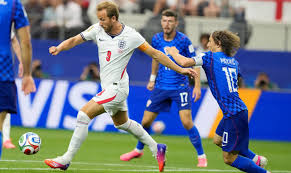
Kane scores twice as England beat Croatia to launch World Cup charge

Jude Bellingham, immediately after half-time, and substitute Marcus Rashford with five minutes to go ensured a winning start for Thomas Tuchel’s side after Croatia had fought back to level at 2-2.

The prolific Kane twice put England ahead in the first half — one a retaken penalty — only for Martin Baturina and Petar Musa to hit back for 2018 runners-up Croatia.

With both sides shaky at the back, the second half threatened another goal glut, Bellingham needing just two minutes to put England ahead again in front of a crowd of 70,000.

England had numerous chances to extend their lead immediately after, but did not take them until Rashford popped up.

The meeting was a repeat of the 2018 semifinal, which Croatia won 2-1 after extra-time, although England have since had the edge against one of the older squads at the tournament in North America.

Thomas Tuchel’s side, bidding to deliver England a first major trophy since 1966, made a nervy start in front of a packed house at the impressive air-conditioned home of the Dallas Cowboys.

Then the drama came. Croatia’s talismanic captain Luka Modric dangled out a leg and caught Noni Madueke in the box.

Kane saw his unconvincing penalty saved by Dominik Livakovic, only for French referee Clement Turpin to order a retake after video replays deemed the stopper had come off his line.

Turpin once sent off Tuchel in the Champions League and the referee taking charge of the game had been highlighted by English media this week.

Bellingham to rescue

Bayern Munich predator Kane held his nerve second time around, again going to Livakovic’s left but this time in more ruthless fashion to give England the lead after 12 minutes.

Now it was all England, and Real Madrid midfielder Bellingham — preferred to Morgan Rogers in the number 10 role — surged upfield, forcing Livakovic to smother.

Loud boos rang out for the drinks break, given the match was under a roof and not the unforgiving Texas sun.

On the half-hour England should have gone 2-0 up, Bellingham narrowly failing to make contact with Madueke’s delicious low cross.

On 36 minutes Croatia drew level.

England squandered the ball in midfield, then Petar Sucic left John Stones on the floor with some neat footwork to set up Baturina.

The 23-year-old met the ball first time and whipped it past Jordan Pickford, who got a hand to the ball.

Zlatko Dalic’s side were level for just six minutes as a Declan Rice corner found Kane unmarked and the captain nodded home.

It took skipper Kane to 10 World Cup goals, the most of any England player along with Gary Lineker.

Tuchel, who has made it clear that winning the World Cup is his aim, barely smiled.

Putting the seal on a frenetic first half, Musa took advantage of more poor England defending in the fifth minute of injury time to stroke the ball in from close range for 2-2.

The second half started just as the first ended — with a goal — as Bellingham galloped down the right unchallenged and rolled the ball into the corner.

Kane and Nico O’Reilly twice each, and Bellingham, had good chances for a 4-2 lead as England pummelled the Croatia goal.

With 15 minutes left and England retreating, Croatia had several opportunities, before Rashford made the three points safe.

Ghana beat Panama 1-0 in World Cup opener after injury-time winner

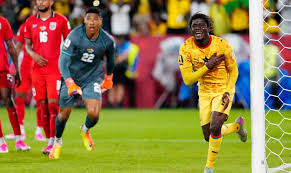
TORONTO, Canada: Ghana scored a dramatic 1-0 victory over Panama in their opening World Cup Group L clash in Toronto on Wednesday.Caleb Yirenkyi bundled in the winning goal in the fifth minute of stoppage time, sending thousands of Ghanaians in Canada’s largest city into a frenzy and settling an otherwise attritional battle.

Both sides largely struggled to generate chances in the first half after Panama striker Cecilio Waterma’s second minute attempt was steered away by outstretched Ghana goalkeeper Lawrence Ati Zigi.

The Black Stars didn’t attempt a shot on goal through the first half.

The second half played out under steady rain at the Toronto Stadium but saw more sustained attacking play.

Cristian Martinez triggered a massive roar from the loud Panamanian contingent when he lashed a shot into the side-netting in the 60th minute.

But the match looked headed for a scoreless draw until Yirenkyi put the Black Stars ahead.

Ghana’s veteran coach Carlos Queiroz turned to his side’s fans after the goal, urging them on in celebration.

Queiroz only took charge of the Black Stars a couple of months before the start of the tournament.

Wednesday’s fixture made him only the second coach to appear in five consecutive World Cups, after leading Portugal in 2010 and Iran in 2014, 2018 and 2022.

Loud boos rang out across the crowd of nearly 43,000 during a second-half hydration break under pouring rain.

Ghana triumphed despite being without Villarreal midfielder Thomas Partey, who is facing trial on rape charges in Britain. Canadian authorities denied him a World Cup visa, over the British case.

Portugal coach defends keeping Cristiano Ronaldo on in draw

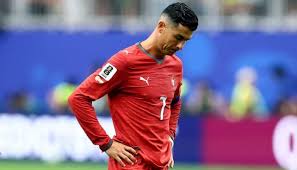
Portugal coach Roberto Martinez dismissed questions about Cristiano Ronaldo’s role after a frustrating World Cup opener, defending his decision to keep the captain on for the full 90 minutes in Wednesday’s 1-1 draw with the Democratic Republic of the Congo.

Ronaldo went without a shot on target in Houston, extending his scoreless streak to five straight World Cup matches and 10 consecutive games at major tournaments. The 41-year-old forward hasn’t scored a non-penalty goal at a World Cup or European Championship since June 2021, but Martinez said removing him was never a serious consideration while Portugal chased a winner.”It makes no sense to get the best goal scorer in world football out in a game that you need goals,” Martinez said.

Ronaldo, Portugal’s all-time leading scorer with 143 international goals, became only the second player to appear in six World Cups, following Lionel Messi. But unlike Messi, who scored a hat trick Tuesday, Ronaldo’s bid to become the first player to score in six different World Cups will have to wait.

Portugal started strong, with Joao Neves scoring in the sixth minute, but the early advantage didn’t lead to sustained pressure. Martinez said the goal had the opposite effect, with Portugal becoming too cautious in possession and allowing DR Congo to reset defensively.

“We started very, very well,” Martinez said. “Scoring the goal — which is normally a moment when the emotion of scoring helps you keep control of the match and try to score a second goal — had the opposite effect.”

Portugal continues Group K play on Tuesday against Uzbekistan in Houston.

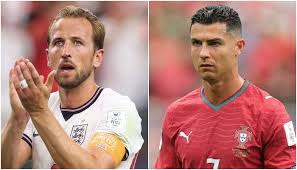
Kane double fires England World Cup bid as Ronaldo’s Portugal stumble

LOS ANGELES: England launched their World Cup bid with a rollercoaster 4-2 win against Croatia on Wednesday as Cristiano Ronaldo and Portgual stumbled to a draw against the Democratic Republic of Congo.

In an enthralling Group L game at the Texas home of the Dallas Cowboys NFL team, Harry Kane scored twice before goals from Jude Bellingham and Marcus Rashford made the game safe as England began their bid to end a 60-year wait for a major trophy.Kane got the ball rolling by slotting home a penalty at the second attempt after the referee allowed him to re-take it when Croatian ‘keeper Dominik Livakovic was adjudged to have been off his line.

Croatia fought back and Martin Baturina brought them level after 36 minutes before unmarked Kane equalled Gary Lineker’s England record of 10 World Cup goals with a thumping header.

But the English defensive frailties were on show when Petar Musa equalised for Croatia in first-half stoppage time.

Only in the second half did England impose their will. Bellingham scored a classy goal after outrunning his defender before substitute Rashford took his time before slotting the ball into the net on 85 minutes.

Kane revealed that England’s German coach Thomas Tuchel had addressed the players at half-time.

“The manager gave us a speech at half-time just to say, look, if we lose, we lose. We’re losing our way,” Kane said.

“And I think you saw that, the way we come out in the second half. We went full gas. And they couldn’t live with it.”

Struggling Ronaldo

Earlier, Portuguese great Ronaldo, 41, equalled the record of six World Cups set on Tuesday by his old nemesis Lionel Messi but his side were held to an upset 1-1 draw by DR Congo.Ronaldo found the going tough against a resolute Congolese defence in Houston.

Joao Neves opened the scoring for the Portuguese in the first half but Yoane Wissa of English Premier League club Newcastle equalised with a headed goal in first-half injury time to give the Congolese their first-ever World Cup point.

The result once again renewed scrutiny of Portugal coach Roberto Martinez’s insistence on starting the ageing Ronaldo. But Martinez defended the veteran’s selection despite an ineffective performance.

“It makes no sense to take off the best goal scorer in world football out in a game that you need goals,” Martinez said.

Ronaldo left the field without speaking to reporters but later posted on Instagram: “It’s not the start we wanted, but it’s a long road and it’s not finished.”

The DRC’s achievement was even greater given that their preparations have been disrupted by the Ebola outbreak in their country.

“It is a tremendous source of pride to have earned DR Congo’s first-ever point at the Fifa World Cup, as well as its first goal,” their coach Sebastien Desabre said.

“I am very proud of my players because they represented the Congo in a very positive way and the entire country deserves it.”

Several Portugal players meanwhile wore wrist bands in tribute to late team-mate Diogo Jota, who was killed in a car crash last year.

In other games Wednesday, Ghana snatched a 1-0 victory over Panama with an injury-time winner in Toronto to join England on three points in Group L.

An attritional battle looked to be destined to finish in a goalless draw until Caleb Yirenkyi bundled in the winning goal in the fifth minute of stoppage time for the Black Stars.

Ghana reached the quarter-finals of the 2010 World Cup but have been eliminated in the group stage at their two most recent appearances in the tournament in 2022 and 2014.

The African side will play England in their second Group L game in Boston on June 23.

In Wednesday’s late game, Colombia beat World Cup debutants Uzbekistan 3-1 on thanks to an inspired performance from Luis Diaz at the Estadio Azteca in the Group K game.

The Colombians went ahead when Daniel Munoz volleyed in Diaz’s superb pass after 40 minutes but Abbosbek Fayzullaev equalised before Diaz settled the contest in the 65th minute and Jaminton Campaz scored a third in the dying seconds.

Azerbaijan’s role in addressing global displacement

Saifullah Ansar

Forced displacement has become one of the most pressing humanitarian challenges of our time. Today, more than 120 million people worldwide are struggling with the consequences of being uprooted from their homes. Finding an effective solution to this crisis is impossible without the united efforts of the international community. Within this global context, Azerbaijan’s experience offers both lessons and hope.

The Azerbaijani nation has endured displacement for over a century. Azerbaijanis living in Western Azerbaijan territories now part of present-day Armenia were subjected to systematic ethnic cleansing and forced expulsions. Waves of deportations in 1918–1921, 1948–1953, and 1987–1991 drove hundreds of thousands of Azerbaijanis from their ancestral lands. As a result, Armenia became a mono-ethnic state, erasing centuries of Azerbaijani presence and cultural heritage.

Armenia’s actions extended beyond displacement. Historical sites, mosques, graveyards, and settlements were destroyed, including damage to the Art of Azerbaijani Ashiq, recognized by UNESCO as part of humanity’s cultural heritage. Only the Blue Mosque in Yerevan survived, though even this monument has been subjected to attempts at distortion and rebranding.

Despite these injustices, Azerbaijan never abandoned its pursuit of truth. The Patriotic War of 2020, culminating in Azerbaijan’s victory, opened the door for displaced citizens from Garabagh and East Zangezur to return home. This triumph was not only a military success but also a reaffirmation of international law. The ongoing State Program on the Great Return is steadily restoring life in liberated territories, symbolizing resilience and renewal.

Azerbaijan’s strength lies not only in its victories but also in its inclusive vision for society. The country treats all its citizens equally, ensuring that minorities living in Azerbaijan are well cared for and enjoy full rights. This commitment to diversity and equality demonstrates Azerbaijan’s dedication to building a peaceful and just society, setting an example for nations grappling with displacement and ethnic divisions.

The Western Azerbaijan Community advocates for the peaceful, safe, and dignified return of Azerbaijanis to their ancestral lands. This is not a territorial issue but a human rights matter, enshrined in international law. Armenia’s refusal to engage in dialogue and its rejection of UNESCO fact-finding missions only deepen mistrust. Genuine peace requires Armenia to recognize these rights and cooperate in restoring cultural heritage.

The international community must support Azerbaijan’s initiatives, particularly the Concept of Return, which emphasizes peaceful reintegration. Conferences dedicated to safeguarding the rights of displaced Western Azerbaijanis are vital platforms for dialogue, truth-telling, and global cooperation. By amplifying these voices, the world can move closer to resolving the broader crisis of displacement.

Stay Connected

64FansLike
60FollowersFollow

Latest Reviews

Exchange Rates

USD - United States Dollar
EUR
1.15
GBP
1.35
AUD
0.70
CAD
0.71