Home Blog Page 810

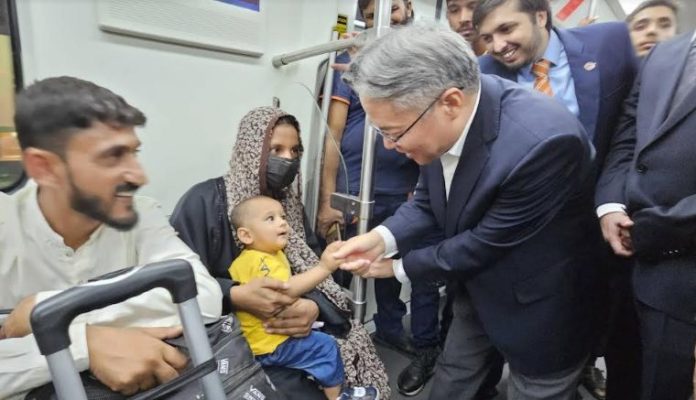
Ambassador Jiang Zaidong joins local commuters on Lahore Orange Line

Ambassador Jiang Zaidong joins local commuters on Lahore Orange Line

LAHORE, SEPT 25 (DNA) – Chinese Ambassador to Pakistan, Jiang Zaidong, took a ride on the Lahore Orange Line alongside local commuters, marking a significant milestone in the success of the project. Since its inauguration, the Orange Line has served 200 million passengers, reflecting the tangible benefits of the China-Pakistan Economic Corridor (CPEC) for the people of Pakistan.

The Orange Line, a flagship CPEC project, continues to enhance urban mobility in Lahore, providing a modern, efficient transportation option for millions of Pakistanis. This milestone underscores the growing impact of CPEC initiatives on the daily lives of the local population.

Nawaz Sharif, CM Punjab Maryam Nawaz meet Chinese Ambassador Jiang Zaidong

Nawaz Sharif, CM Punjab Maryam Nawaz meet Chinese Ambassador Jiang Zaidong

DNA

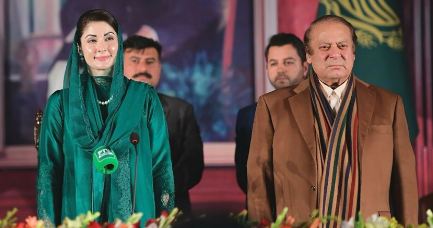
LAHORE, 25 Sept /DNA/  – Pakistan Muslim League (N) President Muhammad Nawaz Sharif along with Chief Minister Punjab, Maryam Nawaz Sharif met Ambassador of the People’s Republic of China H.E. Jiang Zaidong to review possibilities of promoting ties in technology, business and investment.

PML-N President Muhammad Nawaz Sharif said on the occasion that ”China is our reliable friend and we are proud of our relationship with this great nation.” He shared that Maryam Nawaz Sharif is leading many welfare projects for the people of Punjab and further stated that Punjab will welcome China’s cooperation in infrastructure and technology.

Madam Chief Minister said, ”Together with China, we can create economic miracles.” She added, ”We are always ready to welcome our Chinese friends in Punjab.” The Chief Minister proposed to establish “Special Chinese Economic Zones” committed to provide incentives and facilities for the Chinese investors.

Chief Minister Maryam Nawaz Sharif said, ”We consider the success of China as our own success.” She added,”Pakistan can benefit greatly and learn from the Chinese model to reduce poverty.”

Ambassador of the People’s Republic of China H.E. Jiang Zaidong said that China too greatly values its friendship with Pakistan and has made great strides under the PML-N governments. He further said that they will welcome the inclusion of Punjab in the upgraded vision of CPEC which also includes development of Special Economic Zones.  He shared that China is keen on investing in the Agriculture Sector in Punjab. He appreciated the initiatives of the CM pertaining to Farmer Card, Tractor Scheme among others and shared that high yielding hybrid rapeseed was being cultivated on 5 lakh acres in Punjab and now they want to double the area. He added,”1000 farmers of Pakistan will be trained in modern farming techniques by Chinese experts”.  The Chief Minister underscored the importance of mechanization and efficient use of water in agriculture and that Chinese expertise in these areas will add great value.

H.E. Jiang Zaidong said that they would like to take this opportunity to invite the Chief Minister, Madam Maryam Nawaz Sharif to visit China, which she accepted with gratitude. The Chinese Ambassador said, ”Maryam Nawaz Sharif will be welcomed in China as Pakistan’s first woman Chief Minister.” He added that “There was a long history of Pakistan-China relations during the Prime Ministership of Muhammad Nawaz Sharif. During the government of Muhammad Nawaz Sharif, Pakistan-China relations moved to great heights and hoped to take it even further with Maryam Nawaz Sharif”

Senator Pervaiz Rashid and Senior Provincial Minister Marriyum Aurangzeb attended the meeting. Chief Secretary Zahid Akhtar Zaman and other relevant officers were also present on the occasion.

Pakistan’s Integration into the China-Russia Axis

Pakistan’s Integration into the China-Russia Axis

Dr. Muhammad Akram Zaheer

The involvement of the United States in Ukraine the South China Sea exemplifies its longstanding rivalry with China Russia. This rivalry has led to the formation of new alliances that could potentially support territorial disputes, with these groups pitted against one another while simultaneously coordinating economic security cooperation. Consequently, the Pakistan-China-Russia alignment is largely shaped by their shared interests.

The China-Pakistan Economic Corridor (CPEC) plays a significant role in this alignment as it has the potential to bring Pakistan closer to Pan-Eurasian integration. As the flagship project of the Belt Road Initiative (BRI), CPEC could link Pakistan with the Russian-led Eurasian Economic Union (EAEU), Iran, SAARC, China. Although CPEC does not directly run through Russia, there is a possibility of branch routes connecting through Xinjiang to the Central Asian Republics (CARs) potentially extending to Russia. The Altai Republic, which borders Xinjiang, could also be linked to CPEC through a northern branch route. This could give Russia access to energy-rich regions global markets, which it could leverage to develop its Siberian region.

Russia’s grand strategic vision of becoming a dominant force in the Eurasian supercontinent has inspired its leadership to revisit relations with Pakistan. This has led to a game-changing inclusive partnership with Pakistan to address common challenges, such as the threat posed by ISIS in Afghanistan, to collaborate on the CPEC initiative. The emerging defense relationship between Russia Pakistan serves as the backbone of their evolving rapprochement reflects new strategic thinking by both countries toward South Asia.

Furthermore, defense exports from Russia could enhance Pakistan’s capacity to counter terrorism lay the foundation for expanded military cooperation, potentially including the acquisition of jets, tanks, other munitions if conditions are favorable. In recent years, India has diversified its defense partnerships with countries like the United States, Japan, Israel, France, which have eroded Russia’s dominance in India’s defense market. As a result, Russia is seeking new arms markets in the region to expand its defense relationships. The joint military drill between Russia Pakistan, known as Druzhba, in 2016 marked a fast-track trajectory in developing these ties amid the changing geopolitics of South Asia.

The most promising area of cooperation between Russia Pakistan in the near future is Afghanistan. Moscow has hosted several peace conferences in recent years, Pakistan’s participation in these talks demonstrates the growing alignment between Russia Pakistan regarding the future role of the Taliban as an anti-terrorist force. This shift in Russia’s strategic calculus, away from its Cold War stance, is driven by concerns about ISIS infiltrating the CARs, which could destabilize the region. Instead of relying on military might, Russia has turned to diplomatic solutions, using regional actors like Pakistan to achieve results in the fight against terrorism. Given Pakistan’s long border with Afghanistan its historical relations with both Kabul the Taliban, strategic coordination between Islamabad Moscow could open new avenues of cooperation in the future.

The convergence of interests between Russia Pakistan, particularly regarding ISIS, the recognition of the Taliban as a legitimate actor, the stability of Afghanistan, is bringing the two states closer at a rapid pace. Additionally, the energy sector offers another area for deepening relations between the two countries. Pakistan Russia have already initiated cooperation with the construction of the North-South gas pipeline. Pakistan, which needs alternative energy resources to meet its growing demand, can benefit from Russia’s expertise in this field. The evolving cooperation between Islamabad Moscow signals to the world that both states are working within a traditional framework of cooperation. Pakistan could potentially benefit from Siberian resources by utilizing the Xinjiang-CPEC route for energy imports. If the Turkmenistan-Afghanistan-Pakistan-India (TAPI) pipeline project faces political obstacles, the Altai-Xinjiang pipeline could be an ideal alternative for Pakistan.

The strong leg of the China-Russia-Pakistan triangle is the China-Pakistan link. Pakistan China have been traditional allies, supporting each other historically in areas such as military equipment diplomacy. China has assisted Pakistan in building nuclear reactors, Pakistan, in collaboration with China, has developed the JF-17 fighter jet. Pakistan is one of the largest importers of Chinese defense equipment is set to acquire eight Chinese S20 or Yuan-class submarines. China has also invested in the Karakoram Corridor Gwadar Port. The growing strategic partnership between India the United States in areas of shared defense interests is a source of concern for Pakistan. The relationship between Pakistan the United States has been turbulent, it reached a low point with the Trump administration’s policy on Afghanistan.

The alignment of interests between Russia, China, Pakistan largely stems from their shared opposition to the United States. For Russia China, the United States is seen as a hegemonic force that threatens their security. Pakistan, due to its longstanding conflict with India, is willing to be part of an Asian security architecture designed by China. Russia, meanwhile, sees an opportunity to establish a strategic relationship with Pakistan as India diversifies its list of military suppliers to include the United States Israel.

Regarding technology energy supplies, Russia offers an alternative source for the region. Russia could gain access to new markets for its defense equipment may continue to supply arms to both India Pakistan. Russia’s decision to arm Pakistan is significant because it indicates that Moscow is no longer giving preferential treatment to its old strategic partner, India. While India remains an important economic partner for Russia, the divergence of interests between Moscow New Delhi is becoming more apparent as Russia grows closer to China. China, with its strong economy substantial foreign reserves, is looking to invest secure energy supplies. Pakistan, with its large youthful population, needs energy resources defense equipment. The new alignment will give Pakistan access to Russian technology, which is often the source of many Chinese products.

The mutual interests driving the Moscow-Islamabad partnership are contributing to a shift in international relations. In Europe, Russia is involved in a confrontation with the West over Ukraine is under Western sanctions due to its actions in Crimea. In the Asia-Pacific, tensions have escalated between China neighboring countries due to China’s actions in the South China Sea. These developments have pushed China Russia to seek new allies, which explains the growing rapport between the two powers. However, the question remains whether this partnership can evolve into a formal alliance given the historical distrust between the countries. The old adage “the enemy of my enemy is my friend” seems to apply here, as the shared perception of the United States as a common adversary is the most important factor driving this alignment, superseding other considerations. China needs new allies to reshape the global order, this process begins in Asia.

Experts stress strategic investments in space technologies for Pakistan’s economic growth

Experts stress strategic investments in space technologies for Pakistan’s economic growth

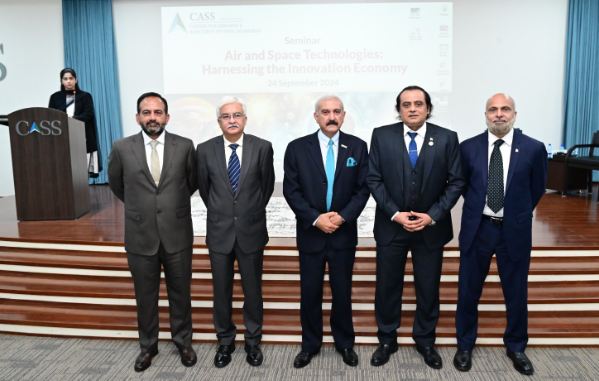
ISLAMABAD, 24 Sept /DNA/ – The Centre for Aerospace & Security Studies (CASS), Islamabad, successfully concluded a seminar on the ‘Air and Space Technologies: Harnessing the Innovation Economy.’ This event convened distinguished experts from the defence, technology, and academic sectors to discuss strategies for leveraging space and technological advancements to prosper in an innovation-driven economic landscape in Pakistan.

Air Vice Marshal Nasser Wyne (Retd), Director (Aerospace Warfare) at CASS, set the stage for the seminar sharing how the rise of air power in the Twentieth Century transitioned into aerospace power, incorporating space exploration, satellite technology, and autonomous systems. This shift, he stressed, presents strategic opportunities for nations to bypass traditional developmental barriers and capitalise on cutting-edge innovations for both defence and economic growth. AVM Wyne further asserted that the innovation economy, fueled by the commercialisation of new technologies, was playing a crucial role in this transformation.

In his Keynote Address on ‘Future of Air and Space in National Defence and the Global Innovation Economy’, Air Marshal Zahid Mehmood (Retd), Former Vice Chief of the Air Staff, Pakistan Air Force, highlighted the evolution of aerospace from a defence-centric industry to a key driver of economic growth and technological innovation. He pointed out that while the sector originated in military needs, it has since expanded to foster commercial aviation, space exploration, and private sector involvement. He asserted that technological advancements in areas like satellite deployment, AI, and space exploration are creating new markets and opportunities globally. To capitalise on these, he emphasised the need for strategic investments and the development of skilled human capital, warning that countries that fail to adapt may fall behind. The Air Marshal also stressed the need for developing countries, like Pakistan, to harness aerospace innovations through strategic investments, technology transfer, and human capital development. He urged policymakers to foster public-private partnerships (PPPs) and invest in building capacity to secure their position in the rapidly evolving aerospace landscape.

In his presentation on ‘Space and Technology Nexus: Boosting National Security & Economic Prosperity,’ Dr Najam Abbas Naqvi, Chairman National Centre for GIS and Space Applications, outlined how advancements in satellite technology, earth observation, and global navigation systems are providing innovative solutions for sectors like agriculture, urban planning, and disaster management. Dr Naqvi acknowledged the importance of building a skilled workforce and fostering collaborative research between academia and industry to further leverage these technologies. He urged policymakers to incentivise private sector involvement through funding and tax benefits while advocating for the establishment of aerospace innovation clusters to drive research and commercialisation. Dr Naqvi stressed that leveraging PPPs would be essential in sharing risks and advancing large-scale space projects. He forecasted that with the right strategies in place, Pakistan could position itself to benefit from the growing global space economy, projected to be worth USD 1.8 trillion by 2035.

In his address on ‘Aerospace Evolution in Pakistan: Initiatives and Impacts,’ Air Vice Marshal Dr Liaquat Ullah Iqbal, Director General Public Relations & Publications at the National Aerospace Science and Technology Park (NASTP), outlined the strategic vision behind PAF’s flagship initiative. He articulated the critical role of NASTP as the driving force for the Triple Helix Model, highlighting the interconnectedness of the IT, computing, and aerospace industries. Dr Iqbal provided an overview of the various initiatives undertaken under NASTP’s infrastructure, which spans five cities, each focusing on distinct domains. He also briefly touched upon the business strategies and future prospects of innovative technologies and their incubation within NASTP. Commending the collaborative efforts of multiple ministries, he emphasised the critical role played by thorough documentation and approvals at various levels in securing the Special Economic Zone (SEZ) status for NASTP. He affirmed that youth development, private sector engagement, diaspora outreach, and international collaborations are essential pillars for NASTP’s sustained growth, positioning it as a key player in advancing Pakistan’s aerospace sector.

In his Concluding Remarks and Vote of Thanks, Air Marshal Javaid Ahmed (Retd), President CASS Islamabad, articulated the need to evaluate both the positive and negative aspects of technology. He remarked that the Ukraine conflict highlighted how unmanned systems are reshaping modern warfare, while the recent events in Beirut underscored the growing risk of consumer technology weaponisation. He stressed that technology was evolving rapidly; delivering solutions at an unprecedented pace but oversight and regulations remain far behind. President CASS also warned that if the global technological divide between East and West deepens, Pakistan might be forced to make a critical choice. He acknowledged Pakistan’s pockets of excellence in academia and among individuals, advocating for the continued harnessing of these capabilities. In the end, he reflected on the enduring spirit of indigenisation and innovation in the country, which, he asserted, remains key to future progress.

The seminar was followed by active participation from a diverse audience, including retired military officers, scholars, journalists, and students, who engaged in an interactive question and answer session, enriching the discourse on this critical subject.

Finance Minister Aurangzeb hopeful of IMF review tomorrow

Finance Minister Aurangzeb hopeful of IMF review tomorrow

ISLAMABAD, Sept 24: Finance Minister Muhammad Aurangzeb on Tuesday said that the government remained “very hopeful” regarding the International Monetary Fund (IMF)’s review of the 37-month $7 billion Extended Fund Facility (EFF) taking place tomorrow.

The IMF said that the Fund’s board will meet on September 25 to discuss the EFF for Pakistan. The decision came following speculation that the disbursement of funds was tied to delays in debt rollover confirmation from China, Saudi Arabia, and the UAE.

The delay was also speculated to be related to the government’s failure to arrange for fresh funds to cover the external financing gap of $2bn for the present fiscal year.

“We are very hopeful that the board will approve the 37-month seven billion dollar programme under which we are very committed to doing structural reforms,” Aurangzeb said during an interview with Geo News.

The finance minister noted that with the KIBOR and policy rates coming down, the government wanted to send “a very clear message” that it was not “desperate to borrow”.

“If we were to borrow domestically, we will borrow at our terms,” he said, citing examples of the government rejecting bids for T-Bills and Pakistan Investment Bonds (PIBs).

“Now, this is all on the back of the Fund programme and we successfully concluded the nine-month SBA,” he stated.

The minister added that he wanted to thank the government of China “in terms of the support that we’ve had on the Fund programme as a long-standing partner of the country”.

“Now we need to move forward and that means we need to stay with the reform agenda — whether it’s on the taxation side, whether on the energy side, whether it’s on the state-owned enterprises and privatisation side,” he said, adding that the government will stay on course.

Pakis­tan and the IMF had reached a three-year, $7 billion aid package deal in July, with the new programme set to allow the country “cement macroeconomic stability and create conditions for stronger, more inclusive and resilient growth”.

The country also completed its previous $3 billion loan programme in April and secured a credit rating upgrade from both Moody’s Ratings and Fitch Ratings late last month.

Launch of Book Titled “CHINA LEADS”

Launch of Book Titled “CHINA LEADS”

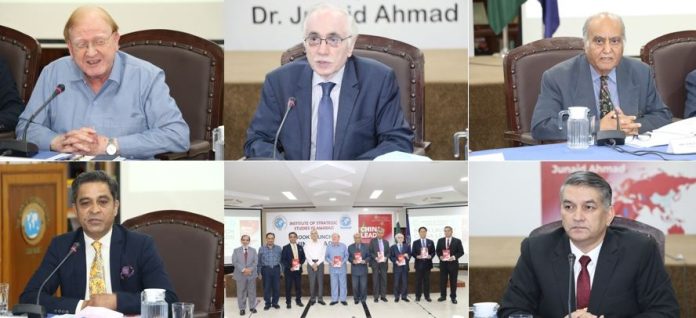
ISLAMABAD, Sept 24 /DNA/ – The Institute of Strategic Studies Islamabad (ISSI) organized the launch of China Leads by Dr. Junaid Ahmad. The book was reviewed by eminent scholars, including Ambassador Masood Khalid, former Ambassador of Pakistan to China, and Dr. Tahir Mumtaz Awan, former Director of the China Study Centre, COMSATS University Islamabad.

Ambassador Masood Khalid praised the book for offering a rich historical context on China’s rise, from its ancient civilization to its modern achievements under the Communist Party of China. He highlighted the book’s insights on socio-economic development, and its pivotal role in global politics. He praised the book’s detailed historical account, covering dynastic periods, China’s modernization under Mao Zedong, and its current trajectory under President Xi Jinping. The book offers valuable insights into China’s modernization efforts, poverty alleviation, and its strategic foreign relations, making it an essential resource for researchers and policymakers. He also suggested future editions should include discussions on China’s Global Development, Security and Civilization Initiatives, further enhancing the book’s relevance. Ambassador Khalid also commended the detailed research, making the book a valuable resource for those interested in China’s history, foreign policy, and future direction.

Dr. Tahir Mumtaz Awan commended the book for its comprehensive account of China’s rise as a global leader, not only economically, but also culturally, geopolitically, and ideologically. He highlighted the book’s historical insights, China’s strategic use of soft power, and its impact on global perceptions, particularly regarding the China-Pakistan Economic Corridor (CPEC).

Dr. Junaid Ahmad, the author of the book stated that China Leads emphasizes that the Chinese civilization and language embody wisdom and knowledge accumulated over 5,000 years. Throughout its history, China has neverbeen an aggressor. It has only defended itself against numerous aggressors. Chairman Mao laid the foundation for China’s global stature by making it a nuclear power in 1964. His successors, starting with Deng Xiaoping, guided China towards a market economy, with leaders like Xi Jinping continuing this trajectory, positioning China as a global leader in various fields.

Earlier in his remarks, Dr. Talat Shabbir, Director of the China Pakistan Study Center at ISSI, welcomed the audience, describing the book as a timely and insightful work on China’s journey of leadership, innovation, and peace. He emphasized China’s transformation from a nation to a global leader in economics, technology, and diplomacy, and highlighted the book’s comprehensive narrative on China’s rise and its contributions to global development.

Ambassador Khalid Mahmood while giving concluding remarks highlighted China’s remarkable journey since 1949, driven by Confucius philosophy and consistent leadership under the Communist Party. He emphasized China’s role as a stabilizing force in the emerging global order, promoting multilateralism and win-win cooperation. He contrasted China’s policies of mutual respect with Western unilateralism, noting China’s alignment with the developing world.

The event was attended by a large number of academics, scholars, diplomats, government officials and members of civil society.

PM Shehbaz attends inaugural session of United Nations General Assembly (UNGA)

PM Shehbaz attends inaugural session of United Nations General Assembly (UNGA)

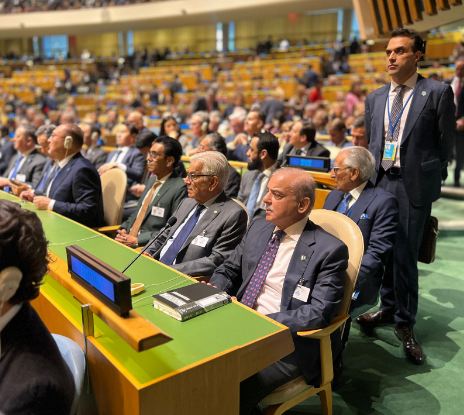
ISLAMABAD, 24 Sept (DNA) – Prime Minister Muhammad Shehbaz Sharif attended the inaugural session of the United Nations General Assembly (UNGA) in New York today. The session marked the beginning of high-level deliberations on key global issues, including sustainable development, climate action, and international peace.

Army Chief praises high morale of troops in South Waziristan

Army Chief praises high morale of troops in South Waziristan

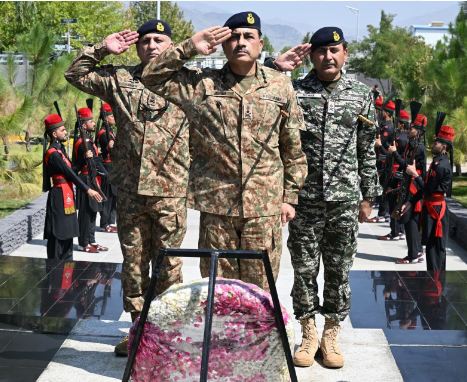
Rawalpindi, 24 Sept /DNA/ – General Syed Asim Munir, Chief of Army Staff (COAS), NI (M), visited Wana, South Waziristan District, where he received a comprehensive briefing on the prevailing security situation, ongoing counter-terrorism operations, and development initiatives.

During his interaction with officers and troops, COAS appreciated the high level of preparedness and exceptional morale to counter hostile threats. He reaffirmed Pakistan Army’s unwavering commitment to thwarting the nefarious designs of hostile forces and their facilitators.

COAS paid heartfelt tribute to the security forces and law enforcement agencies (LEAs) who have made ultimate sacrifices in the line of duty. He emphasized that Pakistan Army will continue to provide steadfast support and technical assistance to LEAs, particularly KPK Police, to enhance their capacity.

London hospital to use drones for fast blood sample delivery

London hospital to use drones for fast blood sample delivery

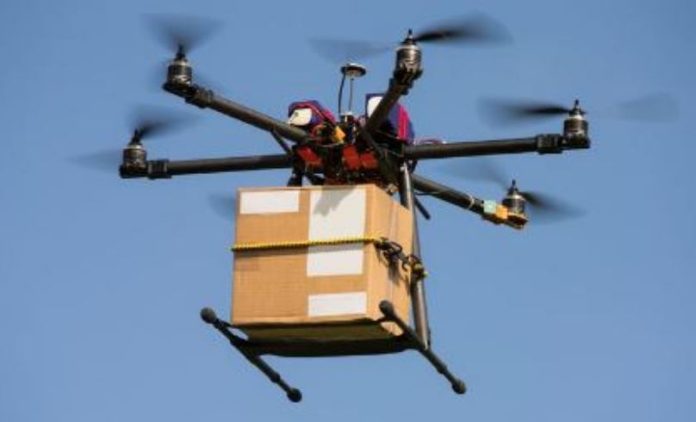
LONDON – In a major hospital in London, the patients’ blood samples will be sent for analysis via drones to avoid traffic in the city.

The foreign news agencies said that the hospital officials were of the view that samples could be sent in significantly less time as compared to road transport.

The medical staff at Guy’s and St Thomas’ NHS Foundation Trust has launched a pilot scheme that will use drones to send blood samples between hospitals.

The officials said that transferring samples via van or motorcycle between Guy’s Hospital and St Thomas’ Hospital’s laboratory could take over half an hour by road, but drones could accomplish the same transfer in less than two minutes.

Besides it, the use of drones is expected to have a positive impact on the environment.

This new six-month project (which will be carried out under the Civil Aviation Authority) will involve transporting blood samples for patients undergoing surgery who face more complex risks related to bleeding issues.

The pilot scheme, tested in collaboration with healthcare logistics company Apian and drone delivery company Wing, is expected to launch in 2024.

PM’s meeting with Dr. Muhammad Yunus at UNGA sparks optimism in Bangladesh

PM’s meeting with Dr. Muhammad Yunus at UNGA sparks optimism in Bangladesh

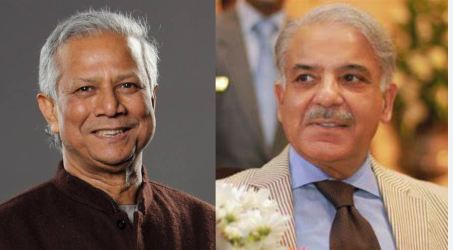
ISLAMABAD, (DNA) – The scheduled meeting  between PM Shabaz Sharif and Dr Muhammad Yunus on the sidelines of UN General Assembly is being keenly  anticipated in Bangladesh as a very welcoming development.This was shared by renowned International relations experts from Bangladesh at a roundtable discussion held by the Institute of Regional Studies (IRS) on the “Post Hasina Wajid Bangladesh”.

Professor Saber Chaudhry, Dean at Dhaka University and Professor Shahab Enam Khan from Jhangirnagar University, Dhaka, highlighted the goodwill and desire for enhancing multifaceted cooperation shared by the peoples of Pakistan and Bangladesh. They also expressed their optimism about Bangladesh’s future under the leadership of Dr. Yunus, noting that Bangladesh had the potential to achieve political stability, economic growth, and balanced foreign relations. However, they acknowledged that the reform process might face challenges due to highly politicized institutions in the country.

Ambassador Jauhar Saleem, President of IRS, emphasized the importance of building on the significant  economic cooperation between Bangladesh and Pakistan to further substantiate the bilateral ties. He also underlined  the need for both countries to work together for the betterment of the entire region, through promoting intra- regional cooperation. In this regard, he highlighted the significance of SAARC; particularly since the current Secretary General of SAARC, Mohd Golam Sarvar, hailed from Bangladesh. He recalled that during his recent visit to Pakistan the SAARC Secretary General had spoken at IRS and shared his aspiration for revitalizing SAARC.

Renowned International relations expert, Dr Syed Riffat Hussain, in his remarks on the occasion, stressed the need for caution as the situation in Bangladesh was still unfolding. He also noted that, Sheikh Hasina’s legacy would continue to pose challenges to interim government’s reform process.

Recalling his experience as the former High Commissioner to Bangladesh, Ambassador Imran Ahmed Siddiqi, Additional Foreign Secretary (Asia-Pacific) at the Ministry of Foreign Affairs, said that despite political challenges in the last 15 years, he had witnessed deep affection for Pakistan among the ordinary Bangladeshis. He emphasized Pakistan’s commitment to strengthen relations with Bangladesh and hoped that the strong desire of the peoples of the two countries to forge closer ties  would guide them towards a harmonious, and prosperous future.

Professor Shahab Enam highlighted the need to identify potential areas of greater cooperation such as tourism, exchange of scholars, and business interactions, so to further cooperation between the two countries.

Ambassador Syed Ahmed Maroof, Pakistan’s High Commissioner to Bangladesh, emphasized that the interim government of Dr Muhammad Yunus had the backing of all major political parties for comprehensive economic and constitutional reforms. He dismissed the notion of continued ethnic or communal violence in Bangladesh and attributed the spread of misinformation to Indian propaganda.

Professor Saber Ahmed Chowdhry explained that the student led protests were a result of years of marginalization of younger generations from mainstream politics, as well as widespread corruption, and highly politicized institutions. He highlighted the significance of involving the youth in the reform process concerning key sectors  such as police, judiciary, and election commission.

The event drew a diverse audience, including diplomats, researchers, academics, and students from universities across Islamabad.

Stay Connected

64FansLike
60FollowersFollow

Latest Reviews

Exchange Rates

USD - United States Dollar
EUR
1.18
GBP
1.36
AUD
0.73
CAD
0.73