Home Blog Page 809

Treating “Maritime Numbness” – tapping the blue potential of Pakistan

Global Misperceptions

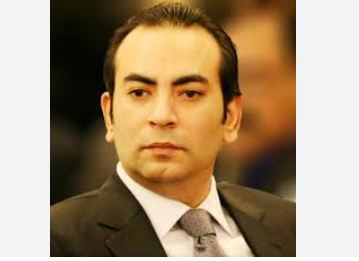
By Shah Faisal

World Maritime Day is being celebrated on 26th September 2024. World Maritime Day was first held in 1978 to mark the 20th anniversary of the International Maritime Organization (IMO) Convention’s entry into force. Celebrations are held throughout the world to highlight the importance of maritime sector, shipping safety, maritime security and the marine environment, and to emphasize any particular aspect of IMO’s work.

This year’s theme as announced by the IMO is “Navigating the Future: Safety First!”. The aim of this theme is to emphasize on maritime safety and security, protection of the marine environment and to anticipate the fast pace of technological change and innovation. This theme focusses on number of UN Sustainable Development Goals (SDGs) which include; use of modern and clean energy in maritime sector, promoting sustainable economic growth, combating climate change and most importantly using the oceans/ seas for sustainable development.

In fact, oceans are vital for life on earth. They provide key natural resources including food, medicines, biofuels and help with the breakdown and removal of waste and pollution. These are the world’s largest ecosystem, home to nearly a million known species and containing vast untapped potential for scientific discovery and their coastal ecosystems act as buffers to reduce damage from storms. The Almighty has placed countless bounties for the humankind in the seas. Large part of the world’s population resides in immediate vicinity of the seas. Some of the sectors associated with the seas include shipping, ship building, ship recycling (ship breaking), fishing, extraction of oil/ gas, tourism etc. As it is said in the Quran:

He is the One who has subjugated the sea, so that you may eat fresh meat from it, and may take out from it ornaments you wear, and you see the boats cleaving through it, and so that you may seek His bounty, and that you may be grateful

                        (Surah An Nahl Ayat 14)

Pakistan has 1000 km long coastline with sandy beaches, marshy lands, creeks and mangroves. At sea, Pakistan has 290,000 sq km of sea area under its jurisdiction with immense resources. However, on the occasion of World Maritime Day, the question arises that how much use of these resources is being made by us? Ironically, the answer is that Pakistan is not doing well in Blue Economy (a term used to represent economic activities related to the seas).

Reviewing the shipping first, international shipping transports more than 80 percent of global trade to peoples and communities all over the world. Shipping is the most efficient and cost-effective method of international transportation for most goods; facilitating commerce and helping to create prosperity among nations and peoples. Unfortunately, our national entity, Pakistan National Shipping Corporation, PNSC, owns just a handful of merchant ships out of over 100,000 vessels plying across oceans of the world. Quran emphasizes importance of shipping in these words:

In the creations of the heaven and the earth, in the cycle of night and day, in ships that plough the sea, to mankind’s benefit, ……. In these are signs for people who reflect
(Surah Al Baqarah Ayat 164)

Coming to ship building & repair, Pakistan has only one shipyard i.e Karachi Shipyard and Engineering Works (KS & EW) which was established in 1956. One of the regional giants of that time, however, it couldn’t keep pace with new trends and technologies and has not upgraded itself to build or repair large vessels. Its capabilities and contracts are limited to constructing ships and submarines for the Navy. Though it is a strategic asset of vital importance, yet lack of modernization and capacity building has considerably reduced its viability.

When it comes to ship breaking, Pakistan’s record is not that bad. Pakistan is ranked number 3 after Bangladesh and India. Ship breaking yard at Gadani can dismantle around 125 ships per year. However, working conditions are quite hazardous and pose serious risks to the laborers’ lives. Pertinent to mention here is the unfortunate fire incident onboard a ship being dismantled which claimed at least 28 precious lives in 2016. Post incident reports revealed poor safety practices and deplorable working conditions. It may be noted that Hong Kong International Convention for the safe and environmentally sound recycling of ships being implemented on 26 June next year may reduce recycling business in case of noncompliance by Pakistan.
Talking about fishing industry, fishing is a profitable profession that can bring significant foreign exchange to a country. Seafood industry of Pakistan is worth US$ 2.8 to 3.5 billion with proper value addition; however, presently fish exports receive around just US$ 400 million per annum. Despite tremendous potential, fishing industry’s contribution to national GDP remains less than 1 %. There are number of issues like overfishing, use of illegal nets, unhygienic conditions in fish handling and storage, use of primitive techniques and equipment and lack of modernization.
Pakistan has tremendous potential in the maritime sector and with effective policy making by the government it can thrive in the blue economy. Pakistan Navy, in addition to efficiently performing its core tasks, had been trying her best to raise awareness about this neglected sector. The Pakistan Navy has undertaken a number of initiatives to create maritime awareness at the national level by engaging various segments of civil society, including intelligentsia, chambers of commerce, maritime industry, universities and the media, to bring to fore the importance of the maritime sector and its immense potential into the national discourse. Establishment of National Institute of Maritime Affairs (NIMA) is one of the major steps in this direction which is aimed to act as a think tank of Pakistan in maritime policy research and raising public awareness.
While the world celebrates maritime day, we need to critically review our progress in the maritime sector and beware of the tremendous potential that we have, so as to contribute towards betterment of national economy. First step in this regard would be to overcome the Maritime Numbness which we are suffering from as a nation and start sensing the maritime potential that has been gifted to us by the Almighty.

The writer is a commentator on Maritime Affairs
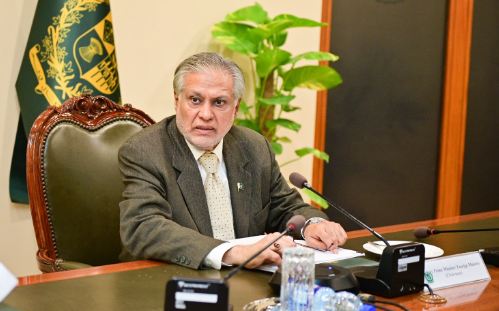
Deputy PM emphasizes expert advisory committee for Pakistan sovereign wealth fund

Deputy PM emphasizes expert advisory committee for Pakistan sovereign wealth fund

ISLAMABAD, SEPT 25 (DNA) – Deputy Prime Minister/ Foreign Minister Mohammad Ishaq Dar today chaired the meeting of the Cabinet Committee on Transfer of OGDCL Shares with the Privatization Commission. Participants included the Minister for EAD, Chairman SECP, and senior government officials.

The Committee discussed the transfer of OGDCL shares to the Sovereign Wealth Fund and measures for early operationalization of the Fund. The Deputy Prime Minister emphasized that the Advisory Committee envisaged under the Pakistan Sovereign Wealth Fund Act 2023, shall consist of leading experts in finance, economics or other relevant fields to achieve the objectives under the Act.

Govt action against non-filers is the right decision: Atif Ikram

Govt action against non-filers is the right decision: Atif Ikram

ISLAMABAD, SEPT 25 (DNA) – President Federation of Pakistan Chambers of Commerce and Industries Atif Ikram Sheikh has said that the government’s decision to take action against non-filers is correct while tax burden should be reduced on tax payers.Action against non-payers of taxable income should have been decided earlier.Action should be taken against taxpayers and facilitating officers involved in tax evasion, he expressed these views while talking to Chairman Capital Office Karim Aziz Malik, Vice President Tariq Jadoon, Chairman Coordination Malik Sohail and others.

President Federation Atif Ikram said that tax collection must be increased to improve the economy of Pakistan, to increase the tax revenue it is necessary to increase the number of taxpayers, tax net does not increase by imposing more taxes on taxpayers rather people start evading taxes, so instead of increasing the tax rate on those who are already paying taxes, steps should be taken to bring people into the tax net by themselves.

Naval Chief message on World Maritime Day – 2024

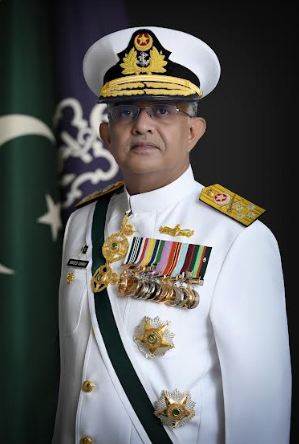
Naval Chief message on World Maritime Day – 2024

World Maritime Day, a significant reminder of maritime safety, security and environmental conservation is marked annually, urging nations to work together for sustainable maritime practices. This year, IMO has selected ‘Navigating the Future: Safety First’ as the theme for World Maritime Day, which is observed on the last Thursday of September each year. This theme reflects IMO’s work in the aforesaid areas and its drive towards ensuring regulatory development processes are integrated with the fast paced technological changes and innovation. This year is also significant as it marks the 50 years since the adoption of 1974 SOLAS Convention, which is the key IMO treaty regulating maritime safety.

Since shipping transports about 90% of global trade by volume; it also obligates safe, secure and efficient international shipping industry for future sustainable green economic growth. It is therefore, evident that improving the safety of ships and reducing their Green House Gas (GHG) emissions must go hand in hand. Both are critical to achieving a sustainable and efficient maritime industry. This year’s theme is also closely linked to UN 2030 Agenda for Sustainable Development and aligned with several of the UN’s Sustainable Development Goals (SDGs).

To achieve them, we need to keep pace with the digitalization and automation that are revolutionizing the shipping industry. This calls for introduction of newer technologies for enhancing safety, security and efficiency, optimizing performance, reducing environmental impact and ensuring sustainability. These measures can greatly help in improving overall efficacy and competitiveness of the shipping industry, making it possible to design, construct and operate ships more efficiently, handle more cargo, reduce costs and enhance customer satisfaction.

The thrust on ‘safety’ in this year’s theme has been an integral component of Pakistan Navy operations and processes, next only to their efficient conduct, which is continuously reviewed to address any gaps that may arise. Pakistan Navy has instituted exacting measures to ensure ‘safety first’ principle, onboard as well as ashore. Our efforts towards maritime safety bear testimony to our unwavering commitment and emphasis on implementation of SOPs, in their true letter and spirit.

On this World Maritime Day, as we take stock of our shared maritime achievements, let us also look forward with determination and resolve to align our national objectives with the ongoing global shift towards sustainable and green marine practices. I urge all the stakeholders to embrace these evolving trends and reiterate Pakistan Navy’s commitment in ensuring maritime safety and upholding environmental mandates.

Let us recommit to the principle of maritime safety and reaffirm our solemn pledge that in pursuing, ‘Navigating the Future: Safety First’, we shall spare no effort, neither in spirit nor in action. I look forward to a profound and cumulative response by all stakeholders.

Another Sham Elections in IIOJK

Another Sham Elections in IIOJK

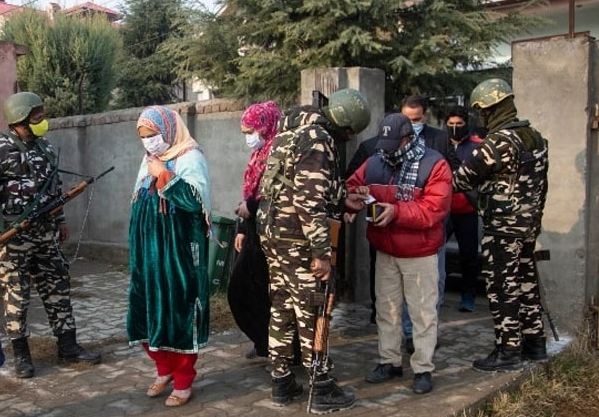
The people of Indian Illegally Occupied Jammu and Kashmir  (IIOJK)  are enduring another round of agony in the form of the state assembly’s sham elections. The polls are taking place after a gap of 10 years. The voting process will be held in three phases, and the result will be declared on the 8th of October. The outcome of these elections is eagerly awaited to gauge how the people of IIOJK react to the annulment of the Indian Constitution’s Articles 370 and 35A on the  5th of August 2019.

Some of the key political parties of India and the IIOJK vehemently oppose the abrogation of these constitutional provisions, including:  Congress, Communist Party of India, Communist Party of India (Marxist), National Conference, Peoples Democratic Party, Dravida Munnetra Kazhagam (DMK), and Trinamool. Congress and its major IIOJK-based political ally, the National Conference, are jointly contesting the assembly elections on a manifesto to restore the expunged constitutional articles.

All Kashmiris irrespective of their caste creed, or religion are suffering, particularly due to the revocation of Article 35A, which has affected their ability to secure jobs, and buy or sell properties. Combined with the issuance of thousands of illegal domiciles of Jammu & Kashmir to non-Kashmiris, the demographic structure of IIOJK is undergoing an undesirable transformation.

The Bharatiya Janata Party (BJP) aims to win the upcoming IIOJK elections, at any cost, to further consolidate the illegal annexation of Jammu and Kashmir. Hence, panic has set in among the top BJP leadership.  India’s external affairs, defence and interior ministers are working in overdrive to secure a BJP victory, by hook or crook. To achieve this, they are struggling to legitimise the illegitimate Indian action of 5 August.

When asked about the status of IIOJK on 30 August, Indian External Affairs Minister Dr S Jaishankar said that Kashmir’s issue stood resolved through the abrogation of Article 370. He added after this, not much was left to discuss with Pakistan, therefore “the era of uninterrupted dialogue with Pakistan is over”.  Home Minister Amit Shah, while unveiling the BJP’s manifesto for the upcoming IIOJK elections, ruled out the restoration of Article 370, claiming that the provision had “become history”. Additionally, while addressing an election rally in IIOJK, Defence Minister Rajnath Singh remarked “No power can restore Article 370.” This reflects the collective mindset of the RSS-BJP alliance.

Pakistan rejected these Indian claims about IIOJK, labelling them as “misleading” and “dangerously delusional”. On 1 September, Pakistan’s Foreign Office spokesperson emphasised that the Kashmir dispute is an “internationally recognised issue that must be resolved through the United Nations Security Council (UNSC) resolutions and according to the wishes of the Kashmiri people”. India’s unilateral actions in IIOJK cannot change this reality. Pakistan has also urged India to abandon its “provocative rhetoric” concerning the region and engage in a meaningful dialogue for a just and lasting resolution of the IIOJK dispute.

The Kashmir dispute is an unfinished agenda from the partition of Indian subcontinent in 1947. The Kashmir conflict has been on the UN agenda since 1948, making it one of the oldest disputes of the contemporary world order. Interestingly, it was not Pakistan that took the issue to the UN; India did it!  India sought the settlement of the Kashmir issue through the UN good offices on 1 January 1948. Since then, the UN has adopted over a dozen resolutions, all of which India has defied with impunity.

The first UNSC resolution on Kashmir was 38/1948. It “established the United Nations Commission for India and Pakistan (UNCIP) to investigate the issues and mediate between the two countries”. The second landmark resolution was 47/1948,  passed on 21 April 1948, whereby India and Pakistan agreed to resolve the dispute through a UN-supervised plebsite. This also led the way to the establishment of the “United Nations Military Observer Group in India and Pakistan (UNMOGIP) to monitor the ceasefire line. The UNMOGIP continues to have its offices in Pakistan and India. The last Kashmir conflict-specific resolution was passed in the aftermath of the nuclearisation of both countries [UNSCR 1172/1998]. This resolution “urges India and Pakistan to resume dialogue on all outstanding issues to find mutually acceptable solutions that address the root causes of such tensions, including Kashmir”.

India’s relationship with Pakistan remains volatile, with border disputes in Jammu and sowing Kashmir as a perpetual flashpoint. It is out of the question that the IIOJK dispute, has been, or could be, settled unilaterally by India. Such claims by India are not only misleading but dangerously delusional. If East Timor and South Sudan can be granted the right to self-determination, there is no justification for denying this fundamental right to the Kashmiri people.

The resolution of this long-standing conflict is pivotal to achieving viable stability in South Asia. The UN Secretary General needs to appoint a special representative for Kashmir and initiate the process for holding a UN-supervised plebiscite in IIOJK. While Pakistan remains committed to diplomacy and dialogue, any hostile actions by India will be met with unyielding resolve.

Air Commodore Khalid Iqbal (Retd) is Director at the Centre for Aerospace and Security Studies (CASS), Lahore Pakistan. He may be reached at [email protected]

Practical IPP actions expected soon: Mian Zahid Hussain

Practical IPP actions expected soon: Mian Zahid Hussain

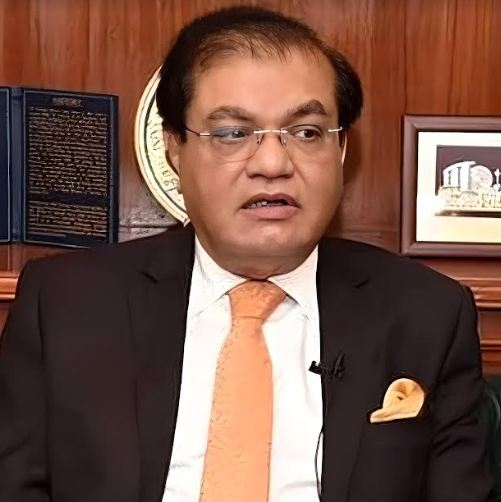
ISLAMABAD, SEPT 25 (DNA) – The Chairman of the FPCCI Advisory Board and National Business Group Pakistan, President of Pakistan Businessmen and Intellectuals Forum and All Karachi Industrial Alliance, and former provincial minister Mian Zahid Hussain said on Wednesday that the power sector has held the people and the economy hostage for the last thirty years.

He added that the public and the business community across the country are being charged a heavy price for keeping the incompetent and corrupt power sector afloat. Still, they can’t bear the burden now.

Mian Zahid Hussain said that the Federation of Pakistan Chambers of Commerce has highlighted this issue and created public awareness, so the government is now inclined to conduct a forensic audit of IPPs to satisfy the public.

Talking to the business community, the veteran business leader said that the government is compelled to take real and effective measures.

Federal Minister of Energy Owais Ahmed Khan Leghari has promised that electricity prices will be reduced this month and brought to par with other countries in a few more months so that Pakistani manufacturers can reduce their costs and sell their products.

Making exporters able to compete in global markets at competitive prices is welcomed by businesses,  he informed.

Mian Zahid Hussain said that the IPPs and supportive bureaucrats have created a trap against the people and the economy that has become impossible to escape, but despite this, dozens of new IPPs are being set up.

Non-transparent contracts, payment in dollars instead of profits in rupees, collusion with private power company owners, over-invoicing by IPP owners, tax exemptions, violation of open bidding laws, and record corruption in power companies inevitably result in circular debt.

The burden of this debt has left the economy almost dead. While making contracts with IPPs, the electricity transmission and distribution system was not upgraded, so trillions of rupees could be paid to private power plants without generating electricity.

To solve all these problems, a policy of continuous increase in the price of electricity was adopted. As a result, the people’s and the industrialists’ purchasing power was lost, and many industries were closed.

He said that to survive, people started taking loans to install solar systems in this situation, which gave discos another opportunity to make money.

Presently, Discos are receiving up to fifty thousand rupees in bribes for installing a single residential green meter, which is distributed very honestly from top to bottom.

Power plants worldwide are paid up to thirty-five percent according to their capacity, which in Pakistan is between sixty-two and seventy percent.

He informed that, at present, the government itself is taking fifty percent of such payments, while China’s coal-fired power plants are receiving thirty-five percent.

Mian Zahid Hussain said that, like the tax system, the electricity system has also been made so complicated that most consumers cannot understand it.

This gives the power companies an opportunity for further corruption while consumers are left high and dry.

Therefore, taxes on the electricity tariff system should be reduced by 30%, and different slabs should be made easy to understand.

He demanded that all discos be privatized and that consumers and the private sector be allowed to participate in important decisions to reduce corruption.

Transparency and accountability should also be introduced in Nepra and the Central Power Purchasing Agency.

Political chaos in Pakistan, Chinese envoy tells Nawaz

Pakistan: A Pivotal Bridge Aligning Economic Interests Between China and the Middle East

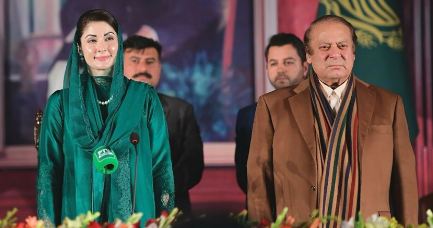
PML-N President Muhammad Nawaz Sharif along with CM Punjab, Maryam Nawaz Sharif Meets Chinese Ambassador Jiang Zaidong

DNA

Lahore, 25 Sept: Chief Minister Punjab, Maryam Nawaz Sharif has said the Chinese Ambassador to Pakistan during his meeting with her and Nawaz Sharif said that there is political chaos in Pakistan.

She expressed these views while talking to a public rally in Faisalabad.

Earlier, Pakistan Muslim League (N) President Muhammad Nawaz Sharif along with Chief Minister Punjab, Maryam Nawaz Sharif met Ambassador of the People’s Republic of China H.E. Jiang Zaidong to review possibilities of promoting ties in technology, business and investment.

PML-N President Muhammad Nawaz Sharif said on the occasion that ”China is our reliable friend and we are proud of our relationship with this great nation.” He shared that Maryam Nawaz Sharif is leading many welfare projects for the people of Punjab and further stated that Punjab will welcome China’s cooperation in infrastructure and technology.

Madam Chief Minister said, ”Together with China, we can create economic miracles.” She added, ”We are always ready to welcome our Chinese friends in Punjab.” The Chief Minister proposed to establish “Special Chinese Economic Zones” committed to provide incentives and facilities for the Chinese investors.

Chief Minister Maryam Nawaz Sharif said, ”We consider the success of China as our own success.” She added,”Pakistan can benefit greatly and learn from the Chinese model to reduce poverty.”

Ambassador of the People’s Republic of China H.E. Jiang Zaidong said that China too greatly values its friendship with Pakistan and has made great strides under the PML-N governments. He further said that they will welcome the inclusion of Punjab in the upgraded vision of CPEC which also includes development of Special Economic Zones. He shared that China is keen on investing in the Agriculture Sector in Punjab. He appreciated the initiatives of the CM pertaining to Farmer Card, Tractor Scheme among others and shared that high yielding hybrid rapeseed was being cultivated on 5 lakh acres in Punjab and now they want to double the area. He added,”1000 farmers of Pakistan will be trained in modern farming techniques by Chinese experts”. The Chief Minister underscored the importance of mechanization and efficient use of water in agriculture and that Chinese expertise in these areas will add great value.

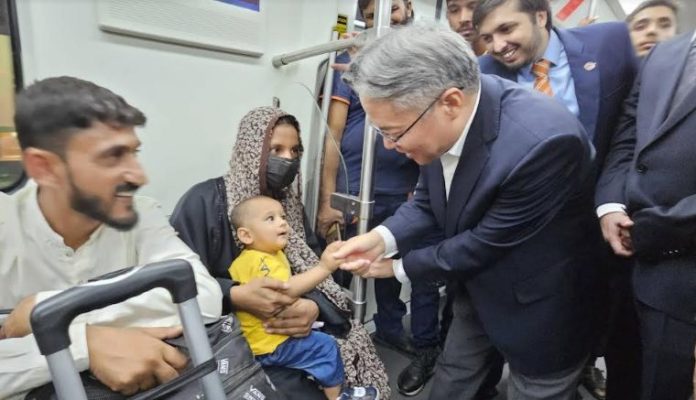
Ambassador Jiang Zaidong joins local commuters on Lahore Orange Line

Ambassador Jiang Zaidong joins local commuters on Lahore Orange Line

LAHORE, SEPT 25 (DNA) – Chinese Ambassador to Pakistan, Jiang Zaidong, took a ride on the Lahore Orange Line alongside local commuters, marking a significant milestone in the success of the project. Since its inauguration, the Orange Line has served 200 million passengers, reflecting the tangible benefits of the China-Pakistan Economic Corridor (CPEC) for the people of Pakistan.

The Orange Line, a flagship CPEC project, continues to enhance urban mobility in Lahore, providing a modern, efficient transportation option for millions of Pakistanis. This milestone underscores the growing impact of CPEC initiatives on the daily lives of the local population.

Nawaz Sharif, CM Punjab Maryam Nawaz meet Chinese Ambassador Jiang Zaidong

Nawaz Sharif, CM Punjab Maryam Nawaz meet Chinese Ambassador Jiang Zaidong

DNA

LAHORE, 25 Sept /DNA/  – Pakistan Muslim League (N) President Muhammad Nawaz Sharif along with Chief Minister Punjab, Maryam Nawaz Sharif met Ambassador of the People’s Republic of China H.E. Jiang Zaidong to review possibilities of promoting ties in technology, business and investment.

PML-N President Muhammad Nawaz Sharif said on the occasion that ”China is our reliable friend and we are proud of our relationship with this great nation.” He shared that Maryam Nawaz Sharif is leading many welfare projects for the people of Punjab and further stated that Punjab will welcome China’s cooperation in infrastructure and technology.

Madam Chief Minister said, ”Together with China, we can create economic miracles.” She added, ”We are always ready to welcome our Chinese friends in Punjab.” The Chief Minister proposed to establish “Special Chinese Economic Zones” committed to provide incentives and facilities for the Chinese investors.

Chief Minister Maryam Nawaz Sharif said, ”We consider the success of China as our own success.” She added,”Pakistan can benefit greatly and learn from the Chinese model to reduce poverty.”

Ambassador of the People’s Republic of China H.E. Jiang Zaidong said that China too greatly values its friendship with Pakistan and has made great strides under the PML-N governments. He further said that they will welcome the inclusion of Punjab in the upgraded vision of CPEC which also includes development of Special Economic Zones.  He shared that China is keen on investing in the Agriculture Sector in Punjab. He appreciated the initiatives of the CM pertaining to Farmer Card, Tractor Scheme among others and shared that high yielding hybrid rapeseed was being cultivated on 5 lakh acres in Punjab and now they want to double the area. He added,”1000 farmers of Pakistan will be trained in modern farming techniques by Chinese experts”.  The Chief Minister underscored the importance of mechanization and efficient use of water in agriculture and that Chinese expertise in these areas will add great value.

H.E. Jiang Zaidong said that they would like to take this opportunity to invite the Chief Minister, Madam Maryam Nawaz Sharif to visit China, which she accepted with gratitude. The Chinese Ambassador said, ”Maryam Nawaz Sharif will be welcomed in China as Pakistan’s first woman Chief Minister.” He added that “There was a long history of Pakistan-China relations during the Prime Ministership of Muhammad Nawaz Sharif. During the government of Muhammad Nawaz Sharif, Pakistan-China relations moved to great heights and hoped to take it even further with Maryam Nawaz Sharif”

Senator Pervaiz Rashid and Senior Provincial Minister Marriyum Aurangzeb attended the meeting. Chief Secretary Zahid Akhtar Zaman and other relevant officers were also present on the occasion.

Pakistan’s Integration into the China-Russia Axis

Pakistan’s Integration into the China-Russia Axis

Dr. Muhammad Akram Zaheer

The involvement of the United States in Ukraine the South China Sea exemplifies its longstanding rivalry with China Russia. This rivalry has led to the formation of new alliances that could potentially support territorial disputes, with these groups pitted against one another while simultaneously coordinating economic security cooperation. Consequently, the Pakistan-China-Russia alignment is largely shaped by their shared interests.

The China-Pakistan Economic Corridor (CPEC) plays a significant role in this alignment as it has the potential to bring Pakistan closer to Pan-Eurasian integration. As the flagship project of the Belt Road Initiative (BRI), CPEC could link Pakistan with the Russian-led Eurasian Economic Union (EAEU), Iran, SAARC, China. Although CPEC does not directly run through Russia, there is a possibility of branch routes connecting through Xinjiang to the Central Asian Republics (CARs) potentially extending to Russia. The Altai Republic, which borders Xinjiang, could also be linked to CPEC through a northern branch route. This could give Russia access to energy-rich regions global markets, which it could leverage to develop its Siberian region.

Russia’s grand strategic vision of becoming a dominant force in the Eurasian supercontinent has inspired its leadership to revisit relations with Pakistan. This has led to a game-changing inclusive partnership with Pakistan to address common challenges, such as the threat posed by ISIS in Afghanistan, to collaborate on the CPEC initiative. The emerging defense relationship between Russia Pakistan serves as the backbone of their evolving rapprochement reflects new strategic thinking by both countries toward South Asia.

Furthermore, defense exports from Russia could enhance Pakistan’s capacity to counter terrorism lay the foundation for expanded military cooperation, potentially including the acquisition of jets, tanks, other munitions if conditions are favorable. In recent years, India has diversified its defense partnerships with countries like the United States, Japan, Israel, France, which have eroded Russia’s dominance in India’s defense market. As a result, Russia is seeking new arms markets in the region to expand its defense relationships. The joint military drill between Russia Pakistan, known as Druzhba, in 2016 marked a fast-track trajectory in developing these ties amid the changing geopolitics of South Asia.

The most promising area of cooperation between Russia Pakistan in the near future is Afghanistan. Moscow has hosted several peace conferences in recent years, Pakistan’s participation in these talks demonstrates the growing alignment between Russia Pakistan regarding the future role of the Taliban as an anti-terrorist force. This shift in Russia’s strategic calculus, away from its Cold War stance, is driven by concerns about ISIS infiltrating the CARs, which could destabilize the region. Instead of relying on military might, Russia has turned to diplomatic solutions, using regional actors like Pakistan to achieve results in the fight against terrorism. Given Pakistan’s long border with Afghanistan its historical relations with both Kabul the Taliban, strategic coordination between Islamabad Moscow could open new avenues of cooperation in the future.

The convergence of interests between Russia Pakistan, particularly regarding ISIS, the recognition of the Taliban as a legitimate actor, the stability of Afghanistan, is bringing the two states closer at a rapid pace. Additionally, the energy sector offers another area for deepening relations between the two countries. Pakistan Russia have already initiated cooperation with the construction of the North-South gas pipeline. Pakistan, which needs alternative energy resources to meet its growing demand, can benefit from Russia’s expertise in this field. The evolving cooperation between Islamabad Moscow signals to the world that both states are working within a traditional framework of cooperation. Pakistan could potentially benefit from Siberian resources by utilizing the Xinjiang-CPEC route for energy imports. If the Turkmenistan-Afghanistan-Pakistan-India (TAPI) pipeline project faces political obstacles, the Altai-Xinjiang pipeline could be an ideal alternative for Pakistan.

The strong leg of the China-Russia-Pakistan triangle is the China-Pakistan link. Pakistan China have been traditional allies, supporting each other historically in areas such as military equipment diplomacy. China has assisted Pakistan in building nuclear reactors, Pakistan, in collaboration with China, has developed the JF-17 fighter jet. Pakistan is one of the largest importers of Chinese defense equipment is set to acquire eight Chinese S20 or Yuan-class submarines. China has also invested in the Karakoram Corridor Gwadar Port. The growing strategic partnership between India the United States in areas of shared defense interests is a source of concern for Pakistan. The relationship between Pakistan the United States has been turbulent, it reached a low point with the Trump administration’s policy on Afghanistan.

The alignment of interests between Russia, China, Pakistan largely stems from their shared opposition to the United States. For Russia China, the United States is seen as a hegemonic force that threatens their security. Pakistan, due to its longstanding conflict with India, is willing to be part of an Asian security architecture designed by China. Russia, meanwhile, sees an opportunity to establish a strategic relationship with Pakistan as India diversifies its list of military suppliers to include the United States Israel.

Regarding technology energy supplies, Russia offers an alternative source for the region. Russia could gain access to new markets for its defense equipment may continue to supply arms to both India Pakistan. Russia’s decision to arm Pakistan is significant because it indicates that Moscow is no longer giving preferential treatment to its old strategic partner, India. While India remains an important economic partner for Russia, the divergence of interests between Moscow New Delhi is becoming more apparent as Russia grows closer to China. China, with its strong economy substantial foreign reserves, is looking to invest secure energy supplies. Pakistan, with its large youthful population, needs energy resources defense equipment. The new alignment will give Pakistan access to Russian technology, which is often the source of many Chinese products.

The mutual interests driving the Moscow-Islamabad partnership are contributing to a shift in international relations. In Europe, Russia is involved in a confrontation with the West over Ukraine is under Western sanctions due to its actions in Crimea. In the Asia-Pacific, tensions have escalated between China neighboring countries due to China’s actions in the South China Sea. These developments have pushed China Russia to seek new allies, which explains the growing rapport between the two powers. However, the question remains whether this partnership can evolve into a formal alliance given the historical distrust between the countries. The old adage “the enemy of my enemy is my friend” seems to apply here, as the shared perception of the United States as a common adversary is the most important factor driving this alignment, superseding other considerations. China needs new allies to reshape the global order, this process begins in Asia.

Stay Connected

64FansLike
60FollowersFollow

Latest Reviews

Exchange Rates

USD - United States Dollar
EUR
1.18
GBP
1.36
AUD
0.73
CAD
0.73