Home Blog Page 805

ETO commits to expand user-friendly services

ETO commits to expand user-friendly services

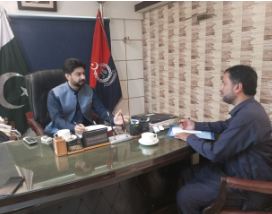
ISLAMABAD, SEP 29 (DNA) — Director Excise & Taxation Department, Islamabad, Bilal Azam on Sunday assured his department’s commitment to providing more transparent and user-friendly services for residents, particularly in vehicle registration and token tax payment.

In an exclusive interview with media, he highlighted the importance of leveraging digital solutions to enhance accessibility for residents while actively working to eliminate the role of agents who contribute to corrupt practices.

Admitting the agent mafia’s existence despite a number of modern solutions, especially mobile facilities, he underscored citizens’ role to utilize the department’s digital online services, which are designed to simplify processes and reduce the reliance on intermediaries. By fostering awareness and engagement, Azam believes the community can play a vital role in transforming service delivery and promoting transparency.

Responding to a number of queries and public concerns raised by this agency’s scribe, Azam outlined a two-step process for vehicle registration and transfer. Applicants can simply call the department’s helpline at 111-383-383 to provide their details and schedule a visit from a mobile registration van, which may arrive on the same day or the next.

 This initiative not only caters to individual needs but also represents a move towards personalized public service. Additionally, mobile vans are stationed at five locations throughout the week, expanding access for those who prefer to handle their affairs in person. —DNA

Army, WAPDA, Customs reach quarter final in National Junior Hockey C’ship

Army, WAPDA, Customs reach quarter final in National Junior Hockey C’ship

By our correspondent

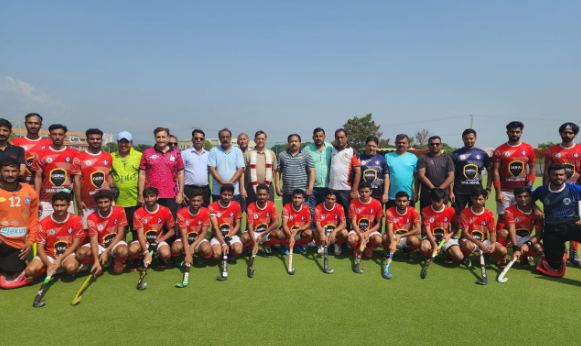
ISLAMABAD: Pakistan Army, WAPDA and Customs teams reached into the quarter-final round of on-going 37th National Junior Hockey Championship at the Naseer Banda Hockey Ground, Islamabad.

Pakistan Navy Director Sports Captain Muhammad Kamran was the chief guest  on the fifth day of the championship while tournament director Olympian Anjum Saeed and other dignities were also present on the occasion which was organised by Pakistan Hockey Federation (PHF).

In group round matches, WAPDA team reached the quarter-final round by winning 10-0 against Balochistan. Yasir Babar, Muhammad Hassan, Nadeem Khan scored two goals each from WAPDA. The second match played between Navy and Punjab Red ended in a draw with 2-2 goals. Navy’s Rana Waleed and Muhammad Usman while Punjab’s Muhammad Uzair and Muhammad Adeel scored one goal each during the match.

Pakistan Education Boards defeated Sindh Blue by 1-0. Customs defeated Punjab Whites by 3-0 while Army team won against Islamabad with 7-0 goals.

Sixteen teams are competing in the tournament, which will run until October 5. The quarter-finals, semi-finals, and final will also take place on the same day.

Aurangzeb says ‘DNA’ of Pakistan’s economy needs fundamental reform for IMF deal to be last one

Aurangzeb says ‘DNA’ of Pakistan’s economy needs fundamental reform for IMF deal to be last one

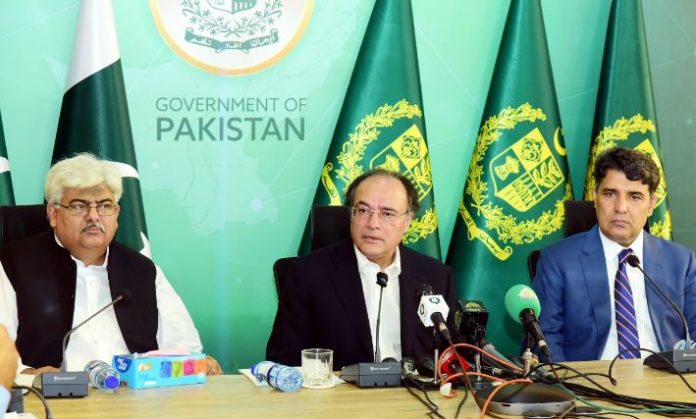
ISLAMABAD, SEPT 29: Finance Minister Muhammad Aurangzeb stated Sunday that Pakistan economy’s “DNA needed to be fundamentally changed” to ensure that the latest International Monetary Fund (IMF) agreement is the country’s final one. The minister also stated that Pakistan must declare a “nuclear war” against the cash-based economy as part of the reforms.

The minister made the remarks during a news conference in Islamabad, where he, sitting alongside chairman of the Federal Board of Revenue (FBR), outlined many fiscal issues and the government’s efforts to address them.

At the start of the press conference, he stated that the newly negotiated IMF deal is good news for Pakistan.

China, UAE, Saudi Arabia: Pakistan wins additional financing assurances: IMF

The IMF Executive Board on September 25 approved the 37-month, $7-billion Extended Fund Facility for Pakistan. The Pakistani authorities and the IMF team reached staff-level agreement on the EFF in the amount equivalent to SDR 5,320 million (or about USD 7 billion) on July 12.

Aurangzeb stated clearly that Pakistan’s economic stability will continue to be threatened until major reforms in multiple sectors are implemented.

IMF Executive Board approves Pakistan’s $7bn bailout package: PMO

The minister stated that Pakistan must declare a “nuclear war” against the cash-based economy.

Reforms cannot be enacted unless the economy has been thoroughly documented, he said.

He stated that the current account surplus over the previous month can be attributed to robust remittances and other encouraging economic indicators.

The finance minister stated that we would need to make substantial adjustments to the economy to ensure that the current IMF arrangement is the last.

The finance minister stated that the FBR’s tax audit capabilities needed to be reviewed. The minister stated that 2,000 chartered accountants will be employed in this regard.

IMF executive board to discuss Pakistan programme on September 25: spokesperson

He also stated that in order to prevent people from being harassed by auditors, a new interface for monitoring the activity will be developed.

He also stated that adjustments were required to overcome existing loopholes in tax collection.

“We must control under-filing in a structured and professional manner,” the minister said.

He stated that independent auditors will investigate and consult with people on this matter.

The minister also addressed the issue of stalled dividends and profits for international investors in Pakistan. He stated that one topic we have been asked often during meetings with various international stakeholders is what we would do with profits and dividends that are restricted in Pakistan.

Existing investors require that we handle this issue in order to alleviate their concerns, he said.

Speaking about the government’s approach to the matter, he stated that we have begun the new fiscal year with a clean slate, and investment earnings and dividends have been cleared.

When asked about the broader benefits of economic stability on Pakistan, the finance minister stated that inflation and policy rates had both decreased.

He stated that the “industry should focus on Kibor rather than the policy rate.”

“The kibor is in negative,” according to the minister.

“I am hopeful that as inflation falls, the policy rate will follow.”

Aurangzeb added that Pakistan will continue to tap its salaried class and manufacturing sector for taxes unless it introduces reforms in the system.

Pak Boards team wins match in 37th National Junior Hockey Championship

Pak Boards team wins match in 37th National Junior Hockey Championship

ISLAMABAD, Sep 29 (APP): In the ongoing 37th National Junior Hockey Championship 2024, the Pakistan Boards Hockey team secured a thrilling 1-0 victory over Sindh B in a closely contested match.

The match was held at the Pakistan Sports Complex, where both teams showcased exceptional skill and sportsmanship.

The Chief Guest for today’s match was the Chief Executive Officer of the Inter Board Coordination Commission (IBCC), Dr. Ghulam Ali Mallah, accompanied by the Vice President of the Pakistan Hockey Federation, Mr. Muhammad Ramzan Jamali.

The esteemed guests were warmly welcomed by the Assistant Tournament Director, Mr. Muhammad Aslam Khan Niazi, along with the field jury and umpires.

Before the match, the Chief Guest, Dr. Ghulam Ali Mallah, was introduced to both teams, followed by a group photograph with the players. Dr. Ghulam Ali Mallah commended the teams for their enthusiasm and dedication to the sport and wished them success in their future endeavors.

The player of the match was Pakistan Boards’ Muhammad Ali, who scored the decisive goal, leading his team to victory. The goal came in the closing moments of the match, securing a memorable win for the side. Both teams played with excellent defensive and attacking strategies, but Pakistan Boards ultimately prevailed.

After the match, the Vice President of the Pakistan Hockey Federation, Mr. Muhammad Ramzan Jamali, also interacted with the players and praised their performance.

This victory strengthens Pakistan Boards Hockey Team’s position in the championship, and their upcoming matches are sure to be highly anticipated.

Pakistan slams Israel’s growing adventurism in ME

Pakistan slams Israel’s growing adventurism in ME

ISLAMABAD, Sep 29 (DNA): Pakistan on Sunday strongly condemned the growing Israeli adventurism in the Middle East and said that its unbridled attacks on civilian populations and disregard of international law have reached alarming levels.

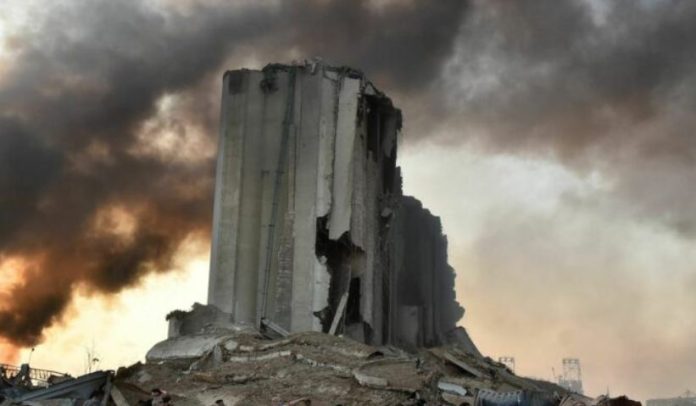
“For the last several days, Israeli forces have engaged in unacceptable violation of the sovereignty of Lebanon, relentlessly targeting civilian population centers, and undermining its stability and security. We extend our deepest condolences to the families of the victims of Israeli aggression and the people of Lebanon,” the Foreign Office Spokesperson said in a press statement.

Yesterday’s reckless act of killing the Secretary General of Hezbollah in Lebanon constitutes a major escalation in an already volatile region.

“Pakistan continues to stand in solidarity with the people of Lebanon. We urge the United Nations Security Council to restrain Israel from its adventurism in the region and violations of international law and restore peace in the Middle East,” it was further added.

Building Bridges: The Impact of Pak-UK Security Cooperation

Building Bridges: The Impact of Pak-UK Security Cooperation

Abdullah Hamid Gul

The Historical Foundations and Evolution of UK-Pakistan Relations

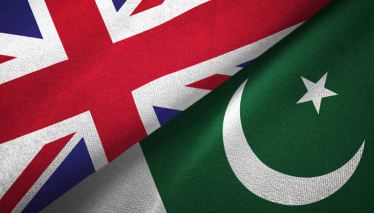
The relationship between the United Kingdom and Pakistan is deeply rooted in history, dating back to the colonial era. When Pakistan gained independence in 1947, it maintained close ties with the UK, based on shared political, economic, and cultural interests. Over the years, this bilateral relationship has evolved, shaped by global geopolitics, security challenges, and a robust Pakistani diaspora in the UK. The Commonwealth connection and diplomatic cooperation have reinforced this relationship, while trade and defense partnerships have been pivotal in solidifying it. Today, as the UK navigates its post-Brexit landscape and Pakistan faces the complexities of South Asian geopolitics, both countries are looking to strengthen their partnership. This article explores the future of UK-Pakistan relations, with a particular focus on economic security, international cooperation, and global security collaboration.

Strategic Cooperation and Post-9/11 Partnership in UK-Pakistan Relations

UK-Pakistan relations have long been anchored in strategic cooperation, particularly in areas like counterterrorism, defense, and intelligence sharing. After 9/11, Pakistan became a critical partner for the UK in the global War on Terror. British aid and assistance have played a key role in stabilizing Pakistan’s security situation, particularly in the tribal regions. In recent years, Brexit has reshaped the UK’s foreign policy, leading to a renewed focus on strengthening trade relations with non-European countries. Pakistan, with its growing economy and strategic location, has become an increasingly important partner. Bilateral trade between the two nations stands at nearly £3 billion annually, with potential for further growth. The UK’s Generalized Scheme of Preferences (GSP) has provided Pakistan with favorable trade terms, allowing its exports—particularly textiles—to thrive in the UK market.

Defense Cooperation and Economic Security in UK-Pakistan Relations

Defense cooperation between the UK and Pakistan remains strong, with joint military exercises and capacity-building programs aimed at enhancing Pakistan’s counterterrorism capabilities. Additionally, the UK continues to provide significant development aid to Pakistan, focusing on education, healthcare, and poverty alleviation.

Economic security is central to the future of UK-Pakistan relations. Pakistan has faced numerous financial challenges in recent years, including a high public debt burden, a volatile currency, and a large current account deficit. For Pakistan, strengthening economic ties with key partners like the UK is essential to ensure financial stability and growth. The UK has long been one of Pakistan’s largest development partners, providing aid for education, infrastructure, and healthcare. However, there is now a growing focus on trade and investment as key drivers of economic security. British companies are increasingly exploring investment opportunities in Pakistan, particularly in sectors like technology, telecommunications, and renewable energy.

Post-Brexit Trade Opportunities and the Potential for a UK-Pakistan Free Trade Agreement

Post Brexit reshaping the UK’s foreign trade policy, new opportunities are emerging for enhanced trade cooperation with Pakistan. As a Commonwealth member with a rapidly expanding economy, Pakistan is an attractive partner for the UK. Bilateral trade is already significant, but there is considerable potential for growth, particularly in sectors like agriculture, information technology, and textiles. A key priority for both countries in the post-Brexit era is negotiating a comprehensive trade agreement. A free trade agreement (FTA) between the UK and Pakistan could significantly boost Pakistan’s exports, while offering the UK access to South Asia’s dynamic market. The UK’s departure from the EU allows it to forge closer trade ties with Commonwealth countries, and Pakistan stands to benefit from this shift.

The Role of the China-Pakistan Economic Corridor (CPEC) and UK’s Involvement

The China-Pakistan Economic Corridor (CPEC) is another key factor in Pakistan’s economic security. As part of China’s Belt and Road Initiative (BRI), CPEC is a multi-billion-dollar infrastructure project aimed at improving Pakistan’s roads, railways, and energy sector. While CPEC is primarily a China-Pakistan partnership, there are opportunities for the UK to play a supportive role. The UK has expressed interest in collaborating with Pakistan on infrastructure projects, particularly in renewable energy and digital connectivity. By leveraging its expertise in these areas, the UK can contribute to Pakistan’s economic development while strengthening bilateral ties. However, the UK will need to carefully balance its involvement in CPEC with its broader foreign policy, which includes maintaining strategic alliances with the US, a country that views China’s growing influence in South Asia with caution.

Expanding UK-Pakistan Cooperation on Climate Change and Sustainability

As global challenges become increasingly interconnected, UK-Pakistan cooperation has expanded into new areas like climate change, migration, and public health. Pakistan is one of the countries most vulnerable to climate change, with rising temperatures, floods, and droughts posing significant threats to food security and economic stability. The UK, a leader in global climate action, has partnered with Pakistan to mitigate the effects of climate change through joint initiatives in renewable energy, reforestation, and sustainable agriculture. Cooperation on climate resilience is likely to intensify in the coming years, with both countries recognizing the urgent need for collective action.

UK-Pakistan Cooperation on Migration and the Role of the Pakistani Diaspora

Migration is another area where UK-Pakistan cooperation has proven effective. Pakistan continues to host large numbers of Afghan refugees, and the UK has played a key role in supporting Pakistan’s efforts to manage these populations. As regional instability persists, particularly in Afghanistan, migration flows could increase, necessitating further collaboration between the UK and Pakistan on refugee integration, humanitarian assistance, and border management.

The UK is home to one of the largest Pakistani diaspora communities, with over 1.6 million people of Pakistani origin residing there. This community has played a significant role in strengthening bilateral relations by contributing to the UK’s economy, culture, and political landscape. Education is a key motivator for many Pakistanis moving to the UK. In recent years, the number of Pakistani students studying in the UK has steadily increased, with 8,500 Pakistani students enrolling in UK institutions in 2022 alone. The UK is regarded as a premier destination for higher education, offering a wide range of academic opportunities. For Pakistani students, UK universities provide high-quality education, exposure to global networks, and the potential to contribute to Pakistan’s economy upon their return. Over the years, thousands of Pakistanis have migrated to the UK for education, employment, and better living conditions. According to the UK Home Office, Pakistan ranked among the top five countries for visa applications to the UK in 2023. This includes a significant number of skilled workers and professionals settling in the UK, contributing to the British economy across sectors like healthcare, engineering, and information technology.

The Pakistani diaspora has also had a positive impact on Pakistan’s economy through remittances, with over £1 billion annually sent back home, supporting families and contributing to national development. The presence of this vibrant community is a cornerstone of UK-Pakistan relations, fostering cultural and economic ties that benefit both nations.

Opportunities for UK-Pakistan Relations Under New UK Government Leadership

The recent change in the UK government has opened up new possibilities for UK-Pakistan relations. Under the leadership of the new Prime Minister, the UK is expected to adopt a more outward-looking foreign policy, with an emphasis on strengthening ties with Commonwealth countries and emerging economies like Pakistan. This government’s focus on expanding global trade networks, enhancing diplomatic engagement, and promoting green energy aligns well with Pakistan’s development needs. The new UK government has signaled its intention to increase trade and investment with Commonwealth countries, including Pakistan. With a renewed emphasis on economic diplomacy, the UK will likely prioritize the negotiation of a free trade agreement with Pakistan, providing both countries with opportunities for growth. This government’s commitment to lowering trade barriers and encouraging British businesses to invest abroad could lead to increased FDI in Pakistan’s technology, energy, and infrastructure sectors.

Climate Action as a Central Focus of the New UK Government’s Foreign Policy and UK-Pakistan Collaboration

One of the key priorities of the new UK government is climate action. The UK has pledged to become a global leader in tackling climate change, and it is expected that this agenda will play a central role in its foreign policy. For Pakistan, which is already collaborating with the UK on climate resilience initiatives, this focus presents an opportunity to deepen cooperation in areas like renewable energy, disaster management, and green infrastructure development.

Continued Focus on Security and Defense Cooperation Amidst New Government Leadership in the UK and Pakistan

Security and defense cooperation are likely to remain cornerstones of the UK-Pakistan relationship. The new UK government has expressed its commitment to maintaining strong defense ties with key partners, and Pakistan’s strategic importance in South Asia ensures that it will remain a priority. Joint military training, intelligence sharing, and counterterrorism efforts are expected to continue, with the UK playing an active role in enhancing Pakistan’s security capabilities.

The recent election of a new government in Pakistan also provides an opportunity to strengthen UK-Pakistan relations. The new leadership, which has placed economic revival and anti-corruption at the top of its agenda, is expected to work closely with the UK on trade, governance, and development.

Trump’s Election: Plunging Middle East into a World War Zone

Qamar Bashir

Qamar Bashir

Donald Trump is focusing on predominantly white voters, wealthy corporations, and influential lobbies, especially pro-Israel and Jewish groups. His campaign often features exaggerated claims that frequently lack supporting evidence or logical reasoning. For instance, he has claimed he could end the Russia-Ukraine war in a day, warned that Israel would be annihilated if he’s not re-elected, and made offensive remarks about immigrants, suggesting they consume pets of white Americans.

Kamala Harris, on the other hand, has adopted a more inclusive strategy, aiming to appeal to a broader range of voters. She maintains a compassionate stance toward immigrants while ensuring that white voters are not alienated. Harris has been clear in her support for Ukraine against Russia and seeks to appeal to middle-class families by advocating for social benefits, funded by taxing the wealthy and high-profit corporations. On the Israel-Palestine conflict, Harris supports Israel but emphasizes human rights and the pursuit of a two-state solution to achieve lasting peace.

Among all the key issues, the Israel-Palestine conflict stands out as one of the most critical, with significant implications for peace and stability in the Middle East and beyond.

Donald Trump is strategically leveraging this position to appeal to influential pro-Israel and Jewish lobbying groups in the U.S., aiming to tap into their substantial financial resources and political support. His approach reflects a clear intention to benefit from the deep pockets and influence of these lobbies in advancing his campaign objectives.

His success is proven as many pro-Israel and Jewish lobbying groups and individuals are supporting Donald Trump due to his impressive pro Israeli record in his previous administrations. He recognized Jerusalem as Israel’s capital and moved the U.S. embassy there, acknowledging Israeli sovereignty over the Golan Heights, and facilitating the Abraham Accords, which normalized Israel’s relations with several Arab countries. Trump’s administration also cut aid to the Palestinian Authority and proposed a peace plan favoring Israeli interests. Zionist Organization of America and Sheldon Adelson, strongly backed Trump, seeing his policies as significantly strengthening the U.S.-Israel alliance.

Based upon Trump’s record, in the 2024 election cycle, pro-Israel and Jewish donors have been making notable contributions to Republican candidates, including support for Donald Trump. Major donors such as Jeffrey Yass, co-founder of Susquehanna International Group, have donated over $13 million primarily to Republican causes. Bernard Marcus, co-founder of Home Depot and a longtime Trump supporter, has historically contributed significantly, with about $9.7 million donated to Republican campaigns overall in recent cycles. Additionally, other Jewish donors have supported various GOP contenders, including significant donations to Ron DeSantis and Nikki Haley, indicating that pro-Israel contributions continue to be a substantial force within the Republican landscape.

To validate his pro Israeli stand, Donald Trump has been  critical of President Biden for not being firm enough in supporting Israel and has indicated that he would provide Israel with more freedom in military actions, refrain from pushing for ceasefires, and maintain a hard stance against groups like Hamas. His advisors suggest that Trump would support Israel winning any conflict decisively without U.S. micromanagement, and he claims that his previous pressure on Iran had limited funding to groups like Hamas and Hezbollah.

Donald Trump’s re-election will  potentially escalate tensions and will increase the risk of broader regional conflicts starting with escalating tension particularly with Iran. Trump has historically taken a hardline stance against Iran, withdrawing from the 2015 Iran Nuclear Deal and imposing severe sanctions. If he resumes or intensifies this approach, it could provoke a military response from Iran or encourage Iran to expand its influence through proxies like Hezbollah in Lebanon, the Houthis in Yemen, and militias in Iraq, escalating the risk of full-fledged war.

Trump’s election will embolden Israel to take more aggressive measures against Hamas in Gaza, Hezbollah in Lebanon, or even Iranian targets in Syria and Iraq. This could trigger retaliatory attacks, dragging Lebanon, Iraq, and potentially even Egypt into a broader regional conflict.

Trump’s reelection could fuel extremism and militancy across the region spiraling into a broader regional war, sucking the larger powers like Russia, Iran, and China into the war theater. The emerging scenario could be extremely dangerous and destabilizing, with far-reaching implications for regional and global peace.

Russia has a significant military presence in Syria and views itself as a power broker in the Middle East. If Israel or the U.S. attacks Iranian assets in Syria, Russia might feel compelled to intervene to protect its interests. If Russia directly supports Iran or Syrian forces it could lead to a dangerous standoff between Russian and American forces, raising the risk of direct military confrontation between two nuclear powers.

An escalating conflict could threaten China’s energy security, prompting it to take a more active role, either diplomatically or through indirect support for Iran. While China is unlikely to engage militarily, it might provide Iran with economic and political support, forming a counterbalance to the U.S.-Israeli actions. This could lead to a realignment of power blocs in the Middle East, with China and Russia forming a more united front against U.S. influence.

A conflict involving Iran, which controls the Strait of Hormuz, a critical choke point for global oil supplies, would disrupt oil shipments, causing a dramatic spike in global oil prices. This would lead to economic instability, especially in developing countries that are heavily dependent on oil imports.  As energy prices rise and supply chains are disrupted, the global economy could plunge into a recession. Developing countries would be hit hardest, facing inflation, food shortages, and increased poverty rates.

If the U.S. is drawn into a direct military confrontation with Iran and Russia and China intervenes, there is a real risk of a larger, more devastating conflict involving the world’s major powers. A full-scale regional war could displace millions, overwhelm humanitarian agencies, and create a refugee crisis on a scale not seen since World War II, affecting Europe, Asia, and beyond. This scenario would have devastating consequences for regional peace, economic stability, and global security, risking not just a regional war but potentially drawing the world into a broader conflict reminiscent of past world wars.

Qamar Bashir

Former Press Secretary to the President

Former Press Minister to the Embassy of Pakistan to France

Former MD, SRBC, CEO, ATV

Serena Hotels celebrates World Tourism Day

Serena Hotels celebrates World Tourism Day

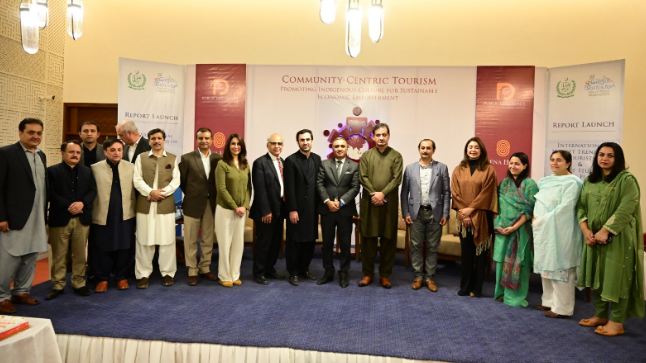
ISLAMABAD, SEPT 28 (DNA) -Serena Hotels celebrated World Tourism Day 2024 with a significant panel discussion titled “Community-Centric Tourism: Promoting Indigenous Culture for Sustainable Economic Empowerment” at Hunza Serena Hotel. The event brought together experts, government officials, and industry leaders to explore how community-centric tourism can preserve cultural heritage and foster sustainable economic empowerment in Gilgit-Baltistan.

The discussion highlighted the potential of local traditions and crafts as drivers of tourism, helping to preserve indigenous culture while creating economic opportunities for local communities. Lal Bano, one of the panelists and Manager of Karighar, highlighted how community-focused initiatives empower local artisans, especially women, by providing platforms to showcase their crafts and preserving traditional skills. Her insights emphasized the vital role these programs play in fostering economic independence and cultural preservation.

Zameer Abbas, Secretary of Tourism, Sports & Culture, Gilgit-Baltistan, emphasized the government’s role in supporting sustainable tourism, outlining initiatives that encourage cultural preservation while boosting tourism opportunities. He stressed the importance of public-private partnerships to ensure long-term benefits for local communities.

The event also focused on the challenges of promoting sustainable tourism in mountain regions, with Raja Ali Anwar Khan, General Secretary of the Gilgit Baltistan Association of Tour Operators, offering insights into responsible tourism practices that protect the environment and benefit local populations economically.

Prof. Dr. Attaullah Shah, Vice Chancellor of Karakoram International University, added academic perspectives, emphasizing the role of education in promoting sustainable tourism models that balance environmental, cultural, and economic goals. His input underscored the need for a well-rounded approach to tourism development in the region.

The panel discussion concluded with several key takeaways, including the need to preserve indigenous culture as a core component of tourism and strategies to empower local communities through tourism-related opportunities. Recommendations were made for stronger collaborations between government, the private sector, and local communities to support sustainable tourism practices in Gilgit-Baltistan.

Serena Hotels reaffirmed its commitment to responsible tourism and community empowerment by highlighting the company’s ongoing efforts to preserve the cultural heritage of the regions in which they operate while ensuring tourism serves as a tool for sustainable economic growth.

This event was part of Serena Hotels’ Raabta Initiative, a platform designed to foster meaningful dialogues on topics crucial to communities and society at large. Through Raabta, Serena Hotels aims to create spaces for impactful conversations that drive positive change, addressing the diverse challenges and opportunities faced by the regions in which they operate.

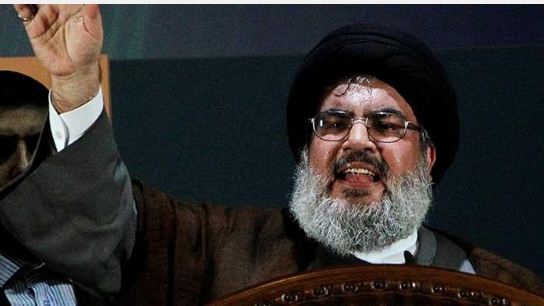
Hassan Nasrallah martyred in Israeli airstrike, Hezbollah confirms

Hassan Nasrallah martyred in Israeli airstrike, Hezbollah confirms

Lebanon’s Hezbollah vows to continue the battle against Israel. Lebanon’s Hezbollah confirmed on Saturday that its leader Sayyed Hassan Nasrallah was killed.

The group said in a statement it would continue its battle against Israel “in support of Gaza and Palestine, and in defence of Lebanon and its steadfast and honourable people”. Israel said earlier on Saturday it had killed Nasrallah in an airstrike in Beirut’s southern suburbs a day earlier.

Hezbollah’s Al-Manar TV started airing Quran verses after the announcement of Nasrallah’s death.

PM Shehbaz, US President Biden exchange good wishes during UNGA reception

PM Shehbaz, US President Biden exchange good wishes during UNGA reception

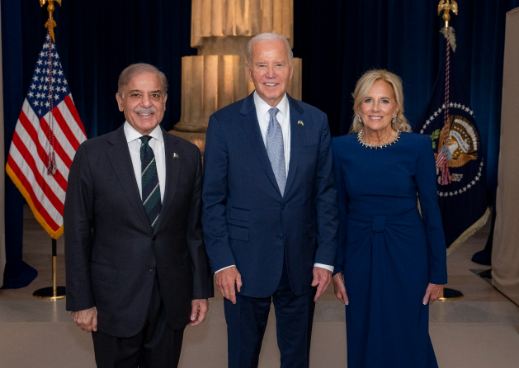
New York: 28 Sep (DNA) – Prime Minister Muhammad Shehbaz Sharif’s attended a reception hosted by US President Joe Biden in honor of the heads of government participating in the United Nations General Assembly session

US President Joe Biden and Prime Minister Muhammad Shehbaz Sharif met during the reception.

Both the leaders expressed good wishes for each other.

The heads of state of other countries also attended the dinner.

Stay Connected

64FansLike
60FollowersFollow

Latest Reviews

Exchange Rates

USD - United States Dollar
EUR
1.17
GBP
1.36
AUD
0.72
CAD
0.73