Home Blog Page 804

Security and Economic Recovery in Mexico

Security and Economic Recovery in Mexico

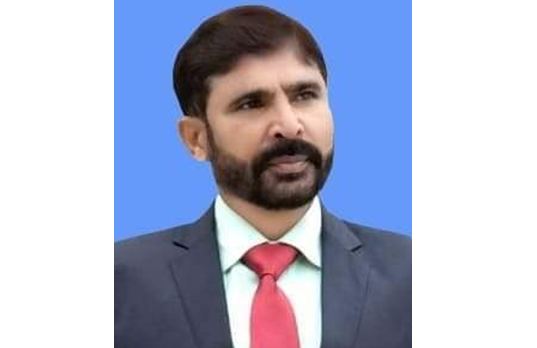
Dr. Muhammad Akram Zaheer

In Mexico, the issues of security and economic recovery are closely connected. People in power and regular citizens both know that criminal groups in the country pose threats to both these aspects. While there is a general agreement that something needs to be done, there’s no consensus on the best way forward.This is partly due to the geography of Mexico, with its mountains, deserts, peninsulas and other features creating divisions that make it challenging for the central government in Mexico City to effectively govern all regions. This has led to power vacuums, giving rise to independence movements, warlords and even parallel governments throughout history. The current organized criminal groups, like the Sinaloa and Jalisco New Generation cartels are seen as a modern expression of this historical reality.

The federal government faces a challenge in dealing with the power these criminal groups have accumulated. One factor contributing to their strength is the significant number of defections from the Mexican armed forces. When Vicente Fox took office in 2000, his government changed its relationship with the military, leading to a loss of privileges, operational freedom, financial benefits and social status for the servicemen. This shift empowered the cartels, as they gained capabilities comparable to the forces meant to combat them.During the COVID-19 pandemic, cartels expanded their local influence at a low cost by providing essential goods in remote areas where the national government struggled. This allowed organized crime to deepen its presence in communities across the country.

These criminal groups now control significant parts of both the formal and informal economies. While they still engage in illegal activities such as human, arms, and narcotics trafficking, they also function like multinational corporations. Their leaders have business steps; they control all aspects of their operations, collaborate with subsidiaries and have strong connections with criminal groups in Latin America and the Caribbean. In the formal economy, they act as if they are part of government services, monopolizing local control of internet providers, pharmaceuticals and engaging in legal businesses like manufacturing and selling their own cigarette brands. Nationally, they impose taxes and quotas on industries like avocado and lime, and they have even made inroads into the beer market.

There’s a big problem in Mexico because criminal groups are getting more powerful in places where businesses usually operate. This is a threat to the country. In the past, their presence scared away foreign investors or made it more expensive to keep things safe. Now, it is a question of who controls different parts of the country’s economy. This is especially important as Mexico tries to recover from the pandemic. However, there is a disagreement among politicians on how to deal with this.One idea is to make deals with these criminal groups so they don’t cause trouble. The government would let them operate as long as they follow some rules. The benefit is that it might avoid violence, but the problem is it gives power to these criminal groups and weakens the government. Some people, especially in security and defense, don’t like this idea.

The other idea is to take a strong action against these criminal groups, trying to eliminate their power and corruption. This would need a lot of money and effort, and it might cause problems in the short term. It was tried before with not much success.Both ideas have pros and cons. The first might reduce violence but harm businesses and make it hard for foreign investors to trust the situation. The second could bring long-term gains but needs a lot of money and might scare away investors in the short term. Either way, implementing these ideas will face political challenges.On a bigger scale, this issue is about whether the government can control its territory and economy despite challenges from geography and history. One strategy wants to work within these challenges, while the other believes Mexico can overcome them if it’s willing to pay the price.
FRIA seeks need for raising country’s export base

FRIA seeks need for raising country’s export base

DNA

Lahore – Raising serious concern over the constant falling trend of Pakistan exports the Ferozepur Road Industrial Association (FRIA) has said that the country’s exports declined by around 2.99 percent during the first seven months of July-Jan of the current fiscal year and stood at $9.738 billion compared to $10.038 billion during the same period of 2022-23.

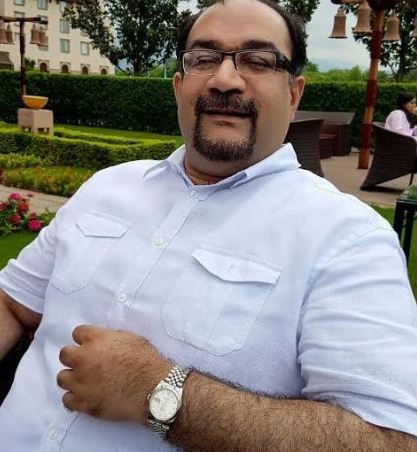
The FRIA Senior vice chairman and PIAF EC member Shahbaz Aslam advocated the need for raising the country’s export base so that tax-to-GDP ratio improves from current poor level. He urged the trade officers to explore opportunities to diversify exports of goods and services in their respective areas, asking them to meet the challenges faced by Pakistan in European markets. He also suggested the ministry to devise strategies for promotion of Pakistani products, calling upon trade officers to take advantage of opportunities offered by China-Pakistan Economic Corridor (CPEC).

Shahbaz Aslam said that the country’s overall exports during July-January 2023-24 totaled $17.778 billion (provisional) against $16.481 billion during the corresponding period of last year showing an increase of 7.87 percent.

The exports in January 2024 were $2.792 billion (provisional) as compared to $2.822 billion in December 2023 showing a decrease of 1.06per cent over December 2023 but increased by 24.81 percent as compared to $2.237 billion in January 2023. The data on exports and imports released by PBS revealed that on a month-on-month basis, textile exports registered 3.98per cent growth in January 2024 and stood at $1.455 billion compared to $1.399 billion in December 2023.

On a year-on-year basis, textile exports increased by 10.10 per cent in January 2024 when compared to $1.321 billion in Jan 2023.

Cotton yarn exports increased by 49.04per cent during the first seven months of the current fiscal year as it stood at $669.824 million compared to $449.418 million during the same period of the last fiscal year.

On a year-on-year basis, cotton yarn exports registered 19.78per cent growth and stood at $81.295 million when compared to $67.873 million in January 2023, while on a MoM basis, it registered 14.65 per cent negative growth when compared to $95.252 million in December 2023.

Rice exports increased by 95.26 per cent during the first seven months of the current fiscal year and stood at $2.115 billion when compared to $1.083billion during the same period of the last fiscal year.

Food group exports increased by 57.66per cent during the first seven months of the current fiscal year and stood at $4.267 billion when compared to $2.706 billion during the same period of the last fiscal year.

The main commodities of exports during January 2024 were rice others (Rs108,803 million),knitwear (Rs102,331 million), readymade garments (Rs93,462 million), bed wear (Rs70,662 million),cotton cloth (Rs44,773 million), towels (Rs26,930 million), rice basmati (Rs25,055 million), cotton yarn(Rs22,789 million), vegetables (Rs20,449 million), and petroleum products (Rs19,362 million).

Shahbaz Aslam said that Pakistan has remained a potential market for foreign investors, who still have plans to make fresh investment in the country, but they have continued to wait for the return of economic stability. He highlighted uncertainty in the rupee-dollar parity as one of the major concerns of foreign investors. He said a slowdown in the economy had badly impacted business confidence. It is must for the authorities concerned to first create an enabling environment for the local businessmen desiring to make new investment.

Australian HC collaborates with participants in climate finance course

Australian HC collaborates with participants in climate finance course

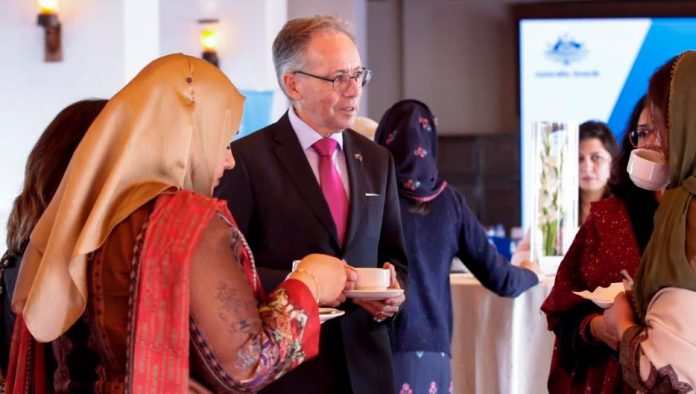
ISLAMABAD: /DNA/ – Australian High Commissioner Neil Hawkins interacts with the dynamic and impressive women leaders gearing up for a Women in Executive Leadership Development course in Australia, alongside participants in a Climate Finance course, supported by Australian Awards. DNA

Pak downgraded, now classified as ‘authoritarian regime’

Pak downgraded

Pakistan’s score on Democracy Index fell by 0.88 to 3.25, resulting in fall of 11 places in global ranking table

DNA

LONDON: Pakistan has been downgraded to an “authoritarian regime” in the Economist Intelligence Unit’s (EIU) Democracy Index 2023 report, registering the greatest deterioration of any country in the region classified as “Australia and Asia”.

The EIU Democracy Index provides a snapshot of the state of democracy in 165 independent states and two territories.

Of the 28 countries in the region that are included in the index, 15 recorded a decline in their score and only eight registered an improvement.

Pakistan’s score on the Democracy Index fell by 0.88 to 3.25, resulting in a fall of 11 places in the global ranking table, to 118th.

The EIU report mentioned that alongside meddling in the electoral process and government dysfunction, the independence of the judiciary has been severely curtailed in the country.

Pakistan is the only Asian country to be downgraded, having been reclassified from a “hybrid regime” to an “authoritarian regime”.

Pakistan’s score on the democracy index remained a little over 4 since 2008. It was for the first in 2023 that the country’s score tumbled to 3.25 during the coalition government primarily comprising of Pakistan Muslim League-Nawaz (PML-N), Pakistan Peoples Party (PPP) and Jamait Ulema-e-Islam Fazl (JUI-F).  

Interestingly, Pakistan’s 2023 score on the democracy index is even worse than 2006 (3.92) when military ruler Gen (retd) Pervez Musharraf was at the helm of the affairs. 

Speaking to Geo.tv, Pakistan Institue of Legislative Development and Transparency (Pildat) Ahmed Bilal Mehboob termed Pakistan’s downgrading as “disappointing”.

“This is a very disappointing development as Pakistan has scored the lowest since 2017 and our category has also been downgraded from a hybrid regime’ to an authoritarian regime,” he added.

He also urged all stakeholders to “undertake serious soul searching at this state of affairs”.

Democratic standards across the world fell in 2023 amid the spread of wars, authoritarian crackdowns and declining levels of trust in mainstream political parties, the EIU said.

The number of countries classified as democracies increased by two, to 74, in 2023. However, measured by other metrics, the year was not an auspicious one for democracy, as per the report.

Read Pakistan successfully concludes the National Reader’s Conference

Read Pakistan successfully concludes the National Reader's Conference

DNA

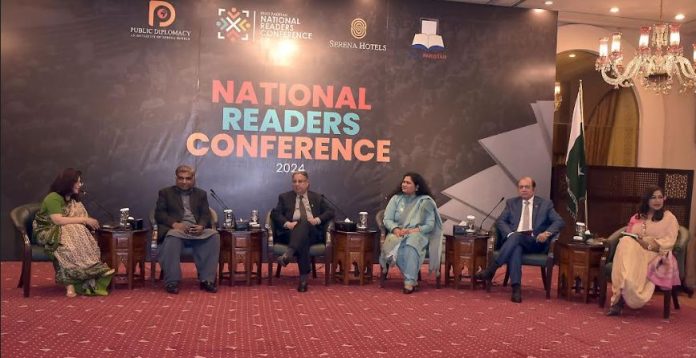
ISLAMABAD: Read Pakistan, a distinguished organisation committed to promoting literacy and fostering a passion for reading nationwide, held the National Reader’s Conference on the 16th of February at Kehkashan Hall, Serena.

Read Pakistan has been at the forefront of initiating numerous campaigns and projects over a decade. The organization’s largest campaign for school libraries in the country has already established 54 libraries.

The National Reader’s Conference, hosted by Read Pakistan, is a flagship occasion in the organization’s annual calendar. Every year, it brings together luminaries and intellectuals from diverse fields to celebrate the importance of reading and its profound impact on society.

This year’s conference featured distinguished speakers who had made substantial contributions to their respective fields. Among the honoured speakers were Miss Nigar Nazar, a renowned artist and female cartoonist, and Mr Rashidally Soobadar from the Mauritius High Commission in the most e, memorable way highlighted the importance of reading. Mr Zia Ur Rehman, a notable author who has received a Lifetime Achievement Award and served in civil services for 36 years, spoke passionately about the importance of inculcating reading habits among the youth. Senator Fauwzia Arshad appreciated the cause of Read Pakistan in a very modest way.

In addition to the esteemed speakers, the conference hosted a compelling panel discussion with prominent participants, including Muhammad Rafique Tahir, Former Joint Educational Advisor, Ministry of Federal Education & Professional Training, Dr. Waqar Azeem, a multi-talented individual with expertise in playwriting, directing, and acting, discussed “The Joy of Reading Plays”, Sumbhal Naveed, Founder and CEO of the Institute of Learning for a Better Tomorrow (ILFABET), delved into the “Pedagogy of Reading Habit in Pakistan”, Munir Ahmed explored the theme of “Storytelling to Inculcate Reading Interest,” while published author Madiha Arsalan discussed the “Role of Language in Literature SDGs 2030.” Miss Sadaf Raza who is a poet, mystic, and healer and has authored three collections of poems, moderated the whole panel discussion.

The event was concluded by CEO Read Paksitan, Miss Syeda Fatima Hasan Gilani a passionate philanthropist who has dedicated herself to promoting reading and love for books in Pakistan has authored more than ten children books.

In a grand culmination, the Winners of the 50 Bay Competition were awarded. Yasir Nawab and Wafa Batool from Wah University were awarded the prestigious Read Pakistan 50 Books A Year Award, while almost 30 other winners from more than 15 partner universities received appreciation certificates.

US Deputy Chief of Mission bolsters U.S.-Pakistan ties during visit to Karachi

US Deputy Chief of Mission

DNA

Karachi – The Deputy Chief of Mission (DCM) of the United States Mission in Pakistan Andrew Schofer reinforced U.S. efforts to promote democracy, economic growth, and women’s economic empowerment, and to further strengthen ties with the people of Pakistan during his visit to Karachi February 13-16.

“We are committed to deepening our partnership with Pakistan and working together on our shared priorities that promote democracy, inclusive economic growth, and stability in the region. This visit to Karachi is the reflection of our commitment to our continued engagement with diverse stakeholders and reinforcing our bilateral ties,” said DCM Schofer.

DCM Schofer stated the United States demonstrated its support for the people of Sindh during the time of climate disaster and post floods recovery efforts by extending over $215 million in support for Sindh since 2022. With a focus on education, clean water, malnutrition, and healthcare, the United States has been actively engaged in supporting the people of Sindh in their efforts to recover from the floods and build disaster resilience.

Underscoring the U.S. commitment to promote women’s entrepreneurship, DCM Schofer visited the USAID-supported Terry Tex International company in Karachi, an example of how USAID’s support can empower local businesses to expand their horizons.

Deputy Chief of Mission (DCM) Schofer’s visit to the Lincoln Corner at the Pakistan American Cultural Center brought together dynamic youth leaders, providing them with a unique platform for discussion.

During his visit, DCM Schofer seized the opportunity to meet with private sector and civil society leaders across various sectors, including finance, pharmaceuticals, and textiles. These dialogues reinforced the importance of inclusive private sector-led growth, trade, and investment between Pakistan and the United States.

DCM Schofer’s visit also underscored the United States’ commitment to addressing the challenges faced by Afghan refugees and vulnerable religious minorities in Pakistan. During his trip to Karachi, Deputy Chief of Mission Andrew Schofer met UNHCR officials and discussed pressing issues facing Afghan refugees, showcasing a commitment to humanitarian aid and support. The DCM’s meeting with religious minorities was marked by a special interaction with the Parsi community in Karachi. This event served as a valuable opportunity for DCM Schofer to gain a deeper understanding of Karachi’s diverse religious and cultural fabric, fostering greater harmony and appreciation among its inhabitants.

Thieves of public mandate have robbed PTI of 85 NA seats: PTI

Thieves of public mandate have robbed PTI of 85 NA seats: PTI

Feb 8 elections biggest voter fraud in country’s history: Raoof

Salman Akram terms incidents of election night a massive assault on democracy, says fictitious Form-47 created overnight

Rehana Dar reveals results tampered for Kh Asif’s victory

PTI’s clear victory converted into defeat through vote theft: Shandana

DNA

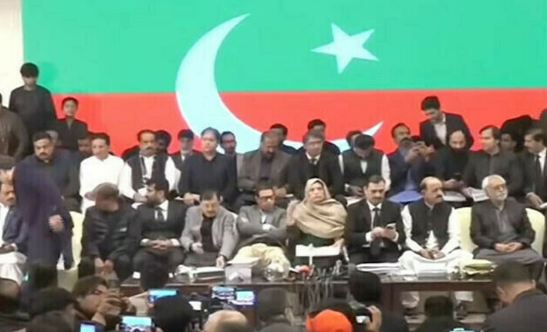
ISLAMABAD: Pakistan Tehreek-e-Insaf (PTI) termed the general elections 2024 as a biggest vote fraud and a major assault on democracy because the party was clearly winning over 177 seats in the national assembly; however it was deprived of 85 NA seats by stealing the public mandate in the midnight robbery.

PTI leaders and the party backed candidates expressed these views while addressing the international and national media here on Friday at a function organized by PTI to expose mega polls robbery and present solid, documented and undisputed evidences regarding rigging in polls.

Speaking on the occasion, PTI Central Information Secretary Raoof Hasan stated that the people of the country penned high hopes with the long-delayed general elections that it would bring political and economic stability and would help restore rule of law and supremacy of the country.

However, he said that tragically it was one of the worst and biggest votes fraud inflicted on PTI, as the party was fraudulently deprived of its constitutional mandate.

Raoof highlighted that PTI clinched around 177 national assembly seats in 2024 general elections as per form 45; however 85 seats were fraudulently snatched from the party during midnight polls robbery and only 92 were awarded to them. “The party is taking constitutional and legal steps in this regard,” he added.

He went on to say that the mega polls theft could be judged from the fact that there was shocking discrepancies between form 45 and form 47, which was a blatant attempt to undermine PTI’s mandate as well as democracy, besides that large scale discrepancies between the votes polled in the national as well as provincial assemblies, adding that in several constituencies, the rejected were more than the margin of victory between the candidates.

Providing further details, PTI CIS stated that the party had verified data concerning 46 seats and is in the process of compiling information for the remaining 39 seats which would soon be completed.

Speaking on the occasion, PTI leader and senior lawyer Salman Akram Raja termed the rigging in election 2024 as an assault on democracy.

He said that usually rigging was carried out in the polling stations in the past; however, this time around it was very tragic and shocking that rigging was done at ROs’ offices and in the process of tabulation in the midnight.

PTI leader went on to say that he was winning by a huge margin before being thrown out of the RO office, adding that it was virtually a death to democracy because factitious results were prepared, putting serious question on viability and utility of the expensive elections exercise if really public mandate was not respected and accepted.

Salman Akram Raja noted that every elections would be farce; hence they have to take up the gauntlet to reverse the farce or else it would be death to democracy.

He stressed the need for transparency and fairness in the election process to uphold democracy, which could only ensure stability in the country.

PTI candidate dubbed the incidents of the election night and February 9 a “massive assault” on democracy, alleging that “fictitious” Form 47s were created and Form 45 “tampered with”.

He asked: “What is the point in holding an election if you are going to create a result out of thin air? “Such an exercise means death for democracy in Pakistan. This was not just an election fraud, it was a wholesale assault on democracy in Pakistan,” he added.

PTI leader recalled that PTI and its leaders and workers were subjected to all coercive measures as in atmosphere of fear was created but people roared back and registered a historic turnout, as there were a carnival atmosphere because he was winning on each and every polling station.

He made it clear that they would take the issue of mega poll robbery to its logical ends come what may because PTI was the  only political party that emerged as the sole federal political party.

Meanwhile, PTI backed candidate Rehana Dar said that results were tampered at the RO office to ensure Khawaja Asif’s victory, adding that the people of Silakot voted for PTI but the results were changed.

Rehana Dar said she decided to contest the election from Sialkot after police raided her house at the alleged behest of Khawaja Asif.

She announced filing a case against District Police Officer (DPO) Iqbal Hassan for raiding her house. Rehana Dar appealed to the Election Commission of Pakistan for the provision of justice like Nosheen Iftikhar in Daska.

She said: “I, a single mother, came out against the cruelty that was forced upon me and broke the idols of fear”. She expressed gratitude towards the people of Sialkot for their unwavering support during her tumultuous journey, highlighting their solidarity amidst challenging circumstances. She said that all votes cast to her were in favour of Imran Khan.

“I said let’s do politics and not injustice,” she said, urging for fairness and integrity in the political landscape. She stated that she had all all Form 45 documents, which validated her victory.

Party member Shandana Gulzar gave a presentation on the large scale rigging took place in the elections across the country, pointing out disparities in the allocation of seats compared to the party’s vote count.

Seemabia Tahir said that PTI backed candidates had all solid documented and video proof against mega polls robbery across the country depriving PTI of its clear majority.

She said that scale of robbery could be judged from the massive country-wide protests, which clearly reflected the public anger against snatching of their mandate. 

First directly elected MNA from Khyber-Pakhtunkhwa (KP) Shandana Gulzar Khan said that there was a sheer scale of vote theft, as the PTI’s candidates clear lead were converted into a defeat through poll theft in middle of the night.

She said that the country-wide robbery via form-47 in violation of Article 92 of the Election Act, 2017. “We obtained 1.25 million votes in Karachi, yet we did not get a single seat. Similarly, the Jamaat-e-Islami grabbed 700,000 votes but did not get a single NA seat in the city,” she said.

Moreover, she further said, the party-backed candidates got 13.6 million votes but were given 55 seats in Punjab. “This is a joke with the people of Pakistan,” she expressed, displaying graphics on a screen at the back. She further claimed that as per the results at 3am on February 9, the PTI had won 154 seats in the National Assembly, while the PML-N and PPP had each got 47.

The PTI-backed candidates were winning 42 seats in Khyber Pakhtunkhwa, but they were given 37 and the rest were stolen from them, she further explained, adding that similarly, from Islamabad, they were winning all three seats that they were eventually robbed of.

“In Punjab, we were winning 115 NA seats and only 55 have been given to us. And in Balochistan, we got four seats, but got one,” she added.

Shandana Gulzar pointed out that the party secured victory on 7 national assembly seats but it was given only one seat in Balochistan.

Speaking on the occasion, Ayaz Amir, PTI-backed independent candidate, said that he visited the RO office at 6pm on February 8, but was kicked out around 7:30-8pm. “Which means that the RO and other people were inside and they could do what they wanted,” he added.

PTI leader Khurram Sher Zaman said that what he called daylight robbery in Karachi during the polls, criticizing the handing out of seats to the MQM-P and highlighting discrepancies in the vote count.

Ambassador Asif Durrani to represent Pakistan at UN-Led Talks on Afghanistan

Ambassador Asif Durrani

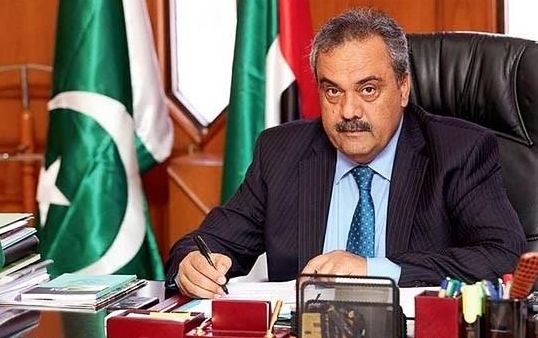
ISLAMABAD: /DNA/ – Ambassador Asif Durrani, Pakistan’s Special Representative on Afghanistan, will lead the Pakistan delegation at the Meeting of the Special Envoys on Afghanistan to be held on 18-19 February 2024 in Doha. The meeting is being convened by the UN Secretary-General to discuss approaches for international engagement with Afghanistan in a more coherent and structured manner.

Pakistan’s participation in the meeting is part of our efforts to actively engage with the international community, including the United Nations, to strengthen the efforts for lasting peace and prosperity in Afghanistan.

Senator Mushahid applauds President Putin’s stance on Islamophobia during Moscow visit

Senator Mushahid applauds President Putin's stance on Islamophobia

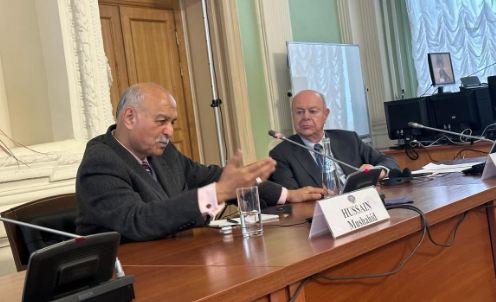
MOSCOW, FEB 16 /DNA/ – Senator Mushahid Hussain Syed on the invitation of United Russia Party (Ruling and Largest political party in RF) paid a visit to Moscow to participate in the Constituent Meeting of the Forum of Supporters of the Struggle Against Modern Neocolonialism Practices for the Freedom of Nations.

As part of the visit program Senator MHS participated as a panelist in the Forum and held a tete-a-tete with Deputy Chairman of the Security Council of Russia/Chairman of the Standing Committee of the Global Forum Against NeoColonialism and for Freedom of Nations Mr. Dmitry Medvedev (Former President of Russian Federation).

During the visit Senator MHS also delivered a lecture at the Russian Diplomatic Academy. The topic of the talk was Pakistan and the changing regional scenario. Senator Hussain during his talk also highlighted the growing relations between Pakistan and Russia especially in the field of energy, connectivity, regional security including Afghanistan and cooperation at multilateral fora including SCO and UN. He also appreciated President Putin’s stance on Islamophobia. The lecture was followed by a question and answer session from the students of the diplomatic academy. Senator Chizhov of the Russian Federation Council also graced the occasion.

Post the lecture the Senator held a meeting with the Rector of the Diplomatic academy to exchange views on the emerging trends in global politics as well as on bilateral cooperation between Pakistan and Russia. The exchange of views proved to be constructive as both sides displayed congruence on a number of issues of mutual interest.

Overall Senator Mushahid Hussain had a very successful visit to Moscow and his engagements with the Russian leadership and intelligentsia were a great contribution towards strengthening Pakistan-Russia relations.

Kyrgyz embassy holds photo exhibition

Kyrgyz embassy holds photo exhibition

DNA

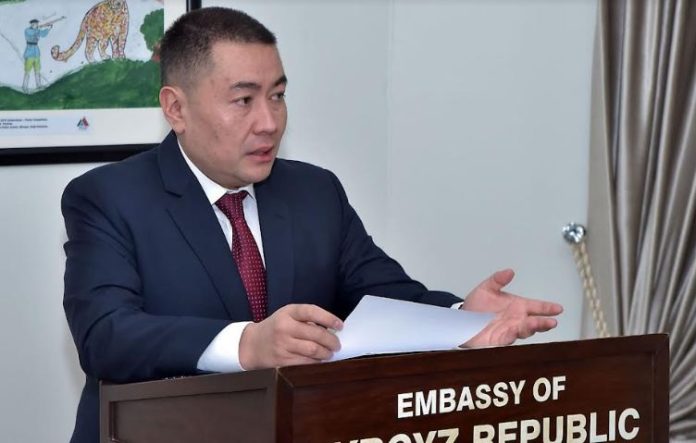
ISLAMABAD: A solemn event dedicated to the 80th Аanniversary of the Ministry of Foreign Affairs of the Kyrgyz Republic and the 100th Аanniversary of the formation of the Kara-Kyrgyz Autonomous Region was held at the Embassy of the Kyrgyz Republic to the Islamic Republic of Pakistan in Islamabad.

During the event, a photo exhibition was organized for the participants about the history of the formation of the Kara-Kyrgyz Autonomous Region, the Ministry of Foreign Affairs of the Kyrgyz Republic, as well as the establishment of diplomatic relations between Kyrgyzstan and Pakistan. Participants were shown video clips and materials demonstrating beautiful places and elements of Kyrgyzstan’s culture, tourism and investment opportunities.

The Ambassador Extraordinary and Plenipotentiary of the Kyrgyz Republic to the Islamic Republic of Pakistan Ulanbek Totuiaev in his speech provided detailed information on the formation of the Kara-Kyrgyz Autonomous Oblast and bilateral relations between two countries.

The Ambassador informed that today Kyrgyzstan is aimed at strengthening interaction with the countries of the region. Noting the importance of promoting cooperation with Pakistan, he proposed focusing on the development of cultural-humanitarian cooperation as the most promising connecting element between the two friendly countries.

Stay Connected

64FansLike
60FollowersFollow

Latest Reviews

Exchange Rates

USD - United States Dollar
EUR
1.17
GBP
1.34
AUD
0.67
CAD
0.72