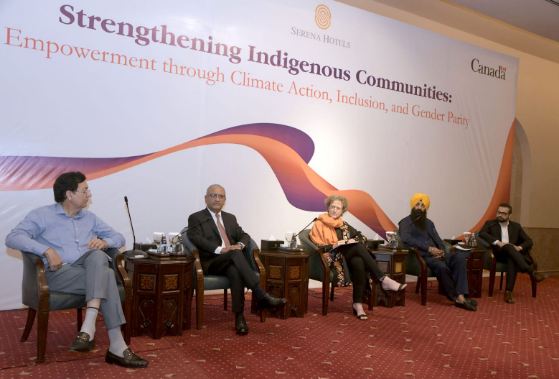
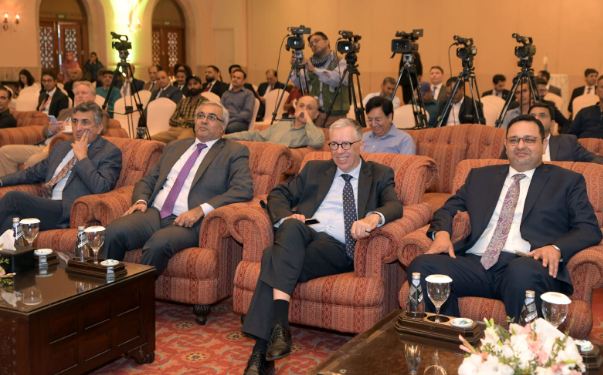
ISLAMABAD, SEP 30 /DNA/ – A high-level strategic dialogue called “Strengthening Indigenous Communities: Empowerment through Climate Action, Inclusion, and Gender Parity” took place today at the Islamabad Serena Hotel. Co-hosted by Serena Hotels and the High Commission of Canada, the event brought together prominent speakers, including H.E. Leslie Scanlon, Canadian High Commissioner to Pakistan; Aziz Boolani, CEO of Serena Hotels and Chairman of the Aga Khan Rural Support Programme (AKRSP); Sardar Ramesh Singh Arora, Minister for Minorities Affairs, Government of Punjab; and key leaders from civil society organizations working to support socio-economic inclusion and empowerment of local communities and marginalised groups in Pakistan.
Canada, at home and around the world, is working to advance reconciliation and promote engagement with Indigenous Peoples, based on recognition of rights, respect, cooperation, and partnership. It involves listening to, learning from, and working in partnership with First Nations, Inuit and Métis peoples in Canada, as well as with local communities around the world, to address the unique challenges that these communities face.
Reflecting on the significance of the event, Canadian High Commissioner Scanlon remarked, “On this day of Canada’s National Truth and Reconciliation, the dialogue was an opportunity for us to amplify the voices of Indigenous and marginalized communities, as well as leaders, here in Pakistan. Canada is built on the ancestral lands of First Nations, Inuit, and Métis peoples, and as we continue our reconciliation journey we are committed to applying a reconciliation lens across our diplomacy and global advocacy efforts. Whether it’s promoting socio-economic inclusion, empowering youth, women, and girls in all their diversity, or supporting climate resilience for those on the frontlines of the climate crisis, we are committed to working with Pakistan to help build a sustainable, resilient, and equitable future. Today’s dialogue, with the participation of Pakistani leaders who are working to support local communities, highlighted the importance of collective policies, actions, and partnerships to support local communities’ unique needs.”
Speaking at the event, Mr. Aziz Boolani, CEO of Serena Hotels, emphasized, “At Serena Hotels, we believe that sustainability is not just an agenda, but a responsibility. By supporting indigenous communities, we can amplify their voices and experiences in shaping policies and solutions for climate resilience. Today’s dialogue underlines our commitment to advancing inclusive growth and ensuring that the impacts of climate change are addressed with the unique needs of these communities in mind.”
Serena Hotels, through its Public Diplomacy initiative, has long been committed to fostering meaningful dialogues on pressing global issues, with a particular focus on climate action, social inclusion, and the empowerment of marginalized communities. This event was reflective ofSerena’s dedication to addressing the profound impact of climate change on indigenous communities, who are often on the frontlines of environmental challenges. By bringing together leaders, policymakers, and civil society, Serena Hotels & the High Commission of Canada aimed to contribute to a broader understanding of the interconnectedness of climate resilience and socio-economic inclusion, ensuring that no community is left behind in the face of global environmental shifts.
BY CENTER FOR RESEARCH AND SECURITY STUDIES (CRSS)
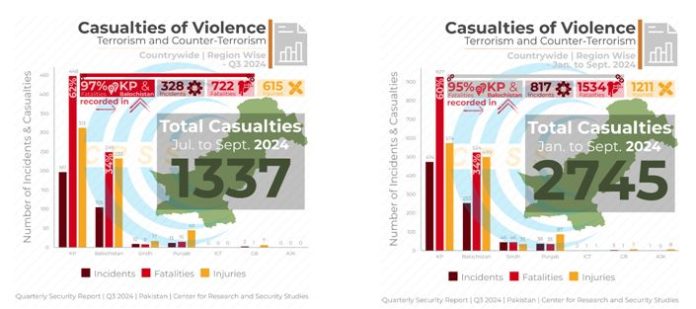
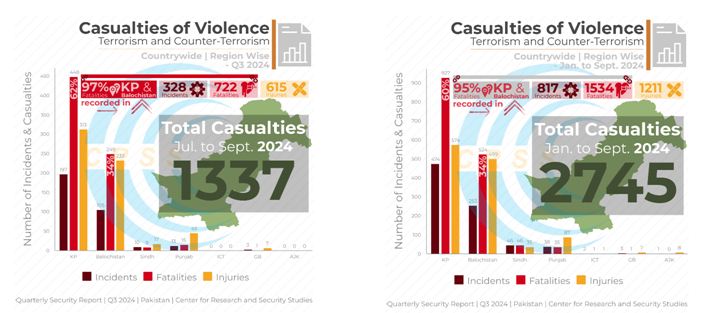
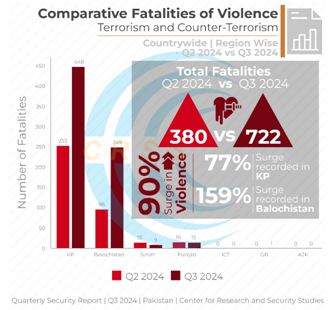
The third quarter of 2024 saw a sharp increase in fatalities of terrorist violence and counter-terrorism campaigns,with a 90% surge in violence. A total of 722 people were killed, including civilians, security personnel, and outlaws, while 615 others were wounded in as many as 328 incidents recorded during the period under review. Nearly 97% of these fatalities occurred in Khyber Pakhtunkhwa (KP) and Balochistan- marking the highest percentage in a decade, and over 92% of these incidents of terror attacks and security forces’ operations were recorded in the same provinces. The total fatalities from three quarters of this year have now surpassed the total fatalities recorded for the entire 2023; the number of fatalities rose to at least 1534 in the first three quarters compared to 1523 in 2023. Despite the security forces’ continued anti-terror campaign – on the average at least 112 intelligence-based operations daily (as claimed by ISPR chief Maj General Ahmed Sharif, July22), the state writ over vast swaths of Balochistan and Khyber Pakhtunkhwa has considerably deteriorated – evidenced in the staggering numbers of victims – both security and non-security Pakistanis. Open outrage by political leaders, people at large and even police – particularly in Lakki Marwat, Bannu, and Swat – against the growing incidence of target-killings and the helplessness of the civilian law-enforcement – also underscores the aggravating security situation, with police increasingly expressing distrust in the military’s control of anti-terror operations. This has invariably eroded the state authority and widened the wedge between the public and the security apparatus. Meanwhile, terrorist groups continue to reorganize and beef up their ranks. Unverified reports indicate that the number of militant groups aligned with the banned Tehrik-i-Taliban Pakistan (TTP) has swelled to 60, with the latest addition being members of the Naeem Bukhari group from Lashkar-e-Jhangvi, based in Karachi . Most of the terror attacks remained unclaimed by terrorist or insurgent groups, likely for tactical reasons. However, some groups did take responsibility for some incidents, including the Balochistan Liberation Army (BLA), United Baloch Army (UBA), Tehrik-i-Taliban Pakistan (TTP), and the Gul Bahadur Group. The Iran-based militant group Jaishul-Adl is also suspected of involvement in the killing of five Afghan nationals, whose dead bodies were discovered hanging from electric poles in the Chagai district. Additionally, both Daesh (Islamic State) and its regional affiliate, Islamic State Pakistan Province (ISPP), claimed responsibility for one attack each.
While Punjab and Sindh witnessed a decline in attacks and fatalities, violence in KP and Balochistan surged dramatically, recording a 77% and 159% respective increase in violence. The ongoing anti-terror operations seem to have had minimal impact on the relentless wave of violence if judged by data i.e.90% surge in overall violence between Q2 and Q3, 2024 (with 722 fatalities recorded in Q3and 380 in Q2, 2024). The worsening security crisis – with the Pakistan military still in charge of most of the security in the newly-merged districts (former Federally Administered Tribal Areas -FATA) prompted Awami National Party (ANP) Central President Aimal Wali Khan to issue a stark warning, claiming that nearly half of KP is now outside the effective control of the police .
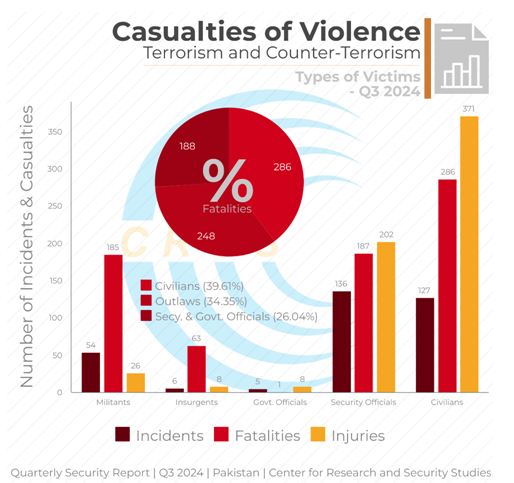
In the third quarter, civilians bore the brunt of the violence, followed by security personnel and government officials – accounting for 66% of the total fatalities, with their fatal losses combined, while militant and insurgent deaths made up only 34%. The proportion of attacks targeting civilians, security personnel, and government officials was significantly higher, representing 82% of the total, compared to just 18% resulting from security operations against outlaws. This growing disparity between terrorist attacks and counterterrorism efforts has been a persistent trend, and this quarter was no exception.
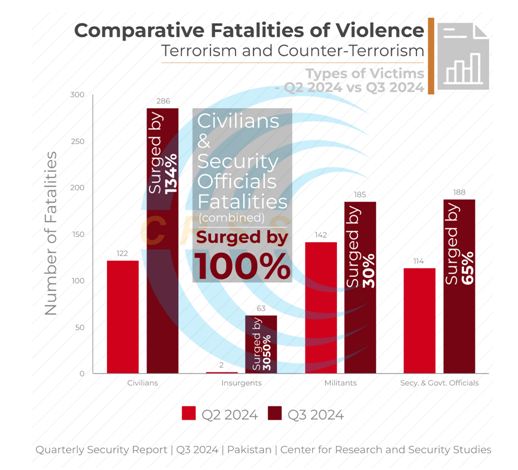
In general, the third quarter was marked by an uptick in militant and insurgent fatalities. The sharp rise in civilian and security personnel’s fatalities, nevertheless trumped the losses of outlaws, which denotes an alarming trend in how civilians are once again the target of terrorist groups. Compared to last quarter, the fatalities of civilians and security officials increased by over 100% in this quarter.
The targeting of non-Baloch workers has emerged as a disturbing new trend in militant violence across the country. A total of 38 workers – employed in construction, embroidery, coal mining, and hairdressing – became victims of attacks. The majority of these workers hailed from Punjab, with the exception of three individuals: a Sindhi businessman and two laborers stationed at a Frontier Corps (FC) check post in South Waziristan. Except for the two laborers, all victims were executed in Balochistan.
In one incident alone, as many as 23 workers traveling from Punjab to Balochistan were pulled out from their busses by terrorists in Musakhel and executed them on the spot after ascertaining their Punjabi origins. The Balochistan Liberation Army (BLA) claimed responsibility for this atrocity. Musakhel District, located on the northeastern border of Balochistan and adjacent to KP and Dera Ghazi Khan in Punjab, is a Pashto-speaking region, with 86% of its population speaking Pashto. As a mark of intensified terrorist violence, this was the first time Baloch separatists conducted a deadly operation in a predominantly Pashto-speaking area.
In response to the massacre, the Pakistan Army launched a search operation and claimed to have eliminated about 21 insurgents. However, the clash also led to the martyrdom of 14 soldiers [1].
BLA carried out a suicide attack on an army camp in Lasbela, Balochistan, on August 27, 2024. Notably, one of the suicide bombers was a woman, Mahal Baloch – also known as Zalan Kurd. In a surprising development, a Kurdish organization in Syria, operating in a region under Kurdish control, dedicated its newly inaugurated women’s empowerment center to Mahal Baloch, honoring her as a symbol of defiance[2].
This also suggests a possible nexus among groups which constitute a chain of proxy terrorist groups operating in different regions with the sole objective of destabilisation through indiscriminate terrorist activities.
The sectarian violence in Kurram District was the deadliest incident this quarter, claiming over 100 lives and leaving 143 wounded. The conflict was initially sparked by a land dispute between the Turi (Shia) and Bangash (Sunni) tribes, but the involvement of Tehrik-i-Taliban Pakistan (TTP) militants escalated the situation further.
This also shows how proxy terrorists jump in to exploit internal fault-lines such as shia-sunni conflict.
In addition to the clashes in Kurram, sectarian violence continued to spread elsewhere too. An Ahmadi doctor was gunned down in Alipur village near Lalamusa, Punjab, while Zakir Hussain Baloch, the deputy commissioner of Panjgur, was assassinated in Mastung while en route to Panjgur. The All Pakistan Muslim Zikri Anjuman condemned the killing of Zakir Hussain Baloch and called for swift justice to be served on those responsible[3].
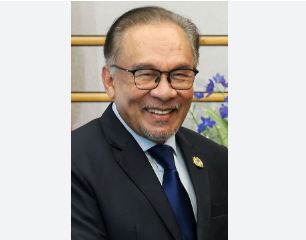
ISLAMABAD, SEP 30 /DNA/ – At the invitation of Prime Minister Muhammad Shehbaz Sharif, Prime Minister Dato’ Seri Anwar Ibrahim of Malaysia will undertake an official visit to Pakistan from 2-4 October 2024. He will be accompanied by a high-level delegation comprising Ministers, Deputy Ministers and senior officials.
Prime Minister Dato’ Seri Anwar Ibrahim will hold meetings with Prime Minister Muhammad Shehbaz Sharif. The two sides will discuss a wide-ranging agenda to further strengthen Pakistan-Malaysia ties in diverse fields including trade, connectivity, energy, agriculture, halal industry, tourism, cultural exchanges and people-to-people contacts. They will also discuss regional and global developments.
Pakistan and Malaysia enjoy strong bilateral ties anchored in history, culture and faith. This visit provides an important opportunity to further strengthen Pakistan-Malaysia relations.
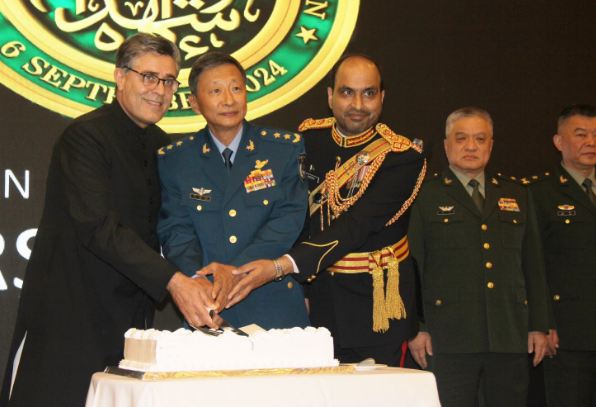
BEIJING, SEP 30 /DNA/ – Today, the Embassy of Pakistan in Beijing commemorated Defence and Martyrs Day with a solemn ceremony, honoring the bravery and sacrifices of the Pakistan Armed Forces. The event was attended by a large number of distinguished guests including senior Chinese civil and military officials, members of the diplomatic corps, Defense Attaches, media, members of Pakistani community and officers of the Embassy. Air Marshal Jia Zhigang, Deputy Commander Peoples Liberation Army (Air Force) of China graced the occasion as Chief Guest.
The ceremony began with playing of the national anthem, followed by a moment of silence to pay homage to the martyrs who laid down their lives in defense of Pakistan.
Addressing the ceremony , Ambassador of Pakistan to China, H.E Khalil Hashmi , while highlighting the salience of Defence Day, paid rich tributes to the valor, resolve and ultimate sacrifices made by members of the Pakistan Armed Forces in defence of our homeland.
Ambassador Khalil Hashmi also underscored the strong bond between Pakistan and China, emphasizing the deep-rooted partnership and cooperation in the field of defence between the two countries. He underlined that Pakistan highly values its strong ties with China and remains committed to further deepening them to advance the shared goals of peace and security in the region. The ceremony also featured a presentation on the historic events of the 1965 war, including acts of heroism displayed by Pakistan’s armed forces. A short video highlighting the modern achievements of the military and its role in disaster relief, peacekeeping missions, and contributions to regional stability was screened.
ISLAMABAD, SEP 30 /DNA/ – The Oil and Gas Regulatory Authority (OGRA) has notified the maximum Price of LPG, effective October 01 2024, as under;
Notified LPG Producer prices
Rs. / Ton
Rs / 11.8 kg Cylinder
October -2024 ( w.e.f 01-10-2024)
210,003.79
2,478.04
September -2024
202,691.77
2,391.76
Increase / (Decrease)
7,312.04
86.28
Notified LPG Consumer prices
Rs. / Ton
Rs / 11.8 kg Cylinder
October -2024 ( w.e.f 01-10-2024)
251,303.79
2,965.38
September -2024
243,991.77
2,879.10
Increase / (Decrease)
7,312.04
86.28
2. The LPG price Notification for the month of October 2024 is readily available at OGRA website www.ogra.org.pk.
3. The LPG producer price is linked with Saudi Aramco-CP and US$ dollar exchange rate. As compared to previous month Saudi Aramco-CP has increased by 3.84%. The average Dollar exchange rate has slightly decreased by 0.125% resulting to increase in LPG consumer price by Rs.86.28/11.8 kg cylinder (2.99%). The per Kg increase in LPG consumer price is Rs.7.31
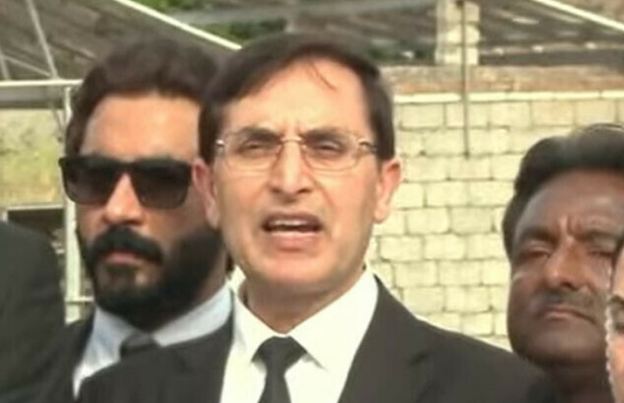
ISLAMABAD, SEPT 30: Pakistan Tehreek-e-Insaf (PTI) has raised formal objections regarding the constitution of the Supreme Court bench hearing the review case on the interpretation of Article 63-A.
A petition was filed by PTI’s lawyer Barrister Ali Zafar challenging the bench’s formation.
In the petition, Zafar argued that the bench was not constituted in accordance with Section 2 of the Act under the Presidential Ordinance, which requires the Judges’ Committee to consist of three members.
According to the law, a minimum of three judges is necessary to decide on the composition of the bench.
The petition further stated that the bench can only be constituted through the collective wisdom of three judges. However, the application pointed out that only two judges, instead of the required three, were present at the committee meeting on September 23, as Justice Mansoor did not attend. As a result, the petition contends that the decision made by two judges cannot be considered valid under the law, rendering the formation of the bench improper.
During the proceedings, Chief Justice Qazi Faiz Isa responded to the objections raised by Barrister Ali Zafar, stating, “I do not agree with you. If this happens, then this court will become inactive.”
He emphasized that not all cases can be left to the discretion of a single person, countering PTI’s claims.
Barrister Ali Zafar maintained that the Practice and Procedure Committee can only form a bench when all three members are present. Chief Justice Isa, however, rejected this interpretation, arguing that restricting the court’s ability to function due to the absence of one judge would hinder the Supreme Court’s operations.
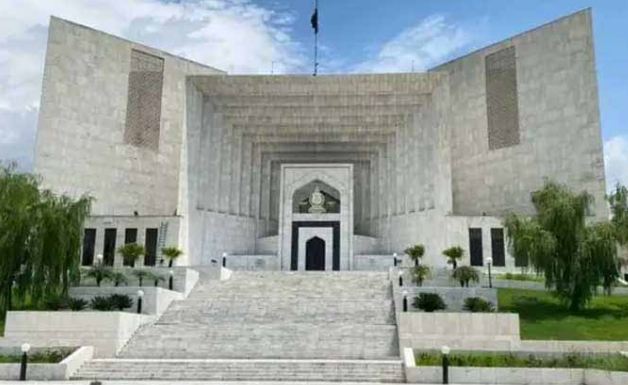
ISLAMABAD – The Supreme Court on Monday nullified the decision of the Lahore High Court (LHC) regarding formation of election tribunals in Punjab.
A five-member bench, led by Chief Justice of Pakistan (CJP) Qazi Faez Isa, announced the reserved verdict.
The CJP announced the majority 5-0 verdict in which appeals of the Election Commission of Pakistan (ECP) were accepted.
“Not a single judge opposed the verdict, however, Justice Jamal Mandokhail and Justice Aqeel Abbasi wrote additional notes,” said the CJP.
He further cautioned against institutional confrontation, adding that the LHC verdict could never be presented as a precedent.
It must be noted that the LHC had rejected the ECP’s decision of appointing four judges in the election tribunals to which the ECP had approached the apex court.
WHEN DID SC RESERVE VERDICT IN ELECTION TRIBUNALS CASE?
The hearing on the appeal of the Election Commission of Pakistan (ECP) regarding the formation of election tribunals in Punjab was held in the Supreme Court (SC) on Sept 24 last.
A five-member larger bench, headed by Chief Justice of Pakistan (CJP) Qazi Faez Isa, heard the case.
At the outset of the hearing, petitioner Salman Akram Raja raised objection to CJP Isa’s presence on bench. The objection was raised by Raja’s lawyer Advocate Hamid Khan.
“My lord! we want to submit an application,” said Khan. “You are a senior lawyer and I respect you, kindly have a seat, first let the order be read,” the CJP replied.
The irate CJP asked Raja to get himself separated from the case if he wanted and asked Attorney General Mansoor Awan to keep reading the order of previous hearing.
“We have objections as we don’t want you to be part of this bench,” Khan objected.
“Kindly be seated, we will hear you later,” responded CJP.
On this snub from the CJP, Khan left the court room in a huff.
During the hearing, ECP’s lawyer Sikander Bashir told the court that the Lahore High Court (LHC) chief justice had already established four tribunals, adding that other four tribunals would be established by the ECP.
“It means matter has been settled between the ECP and Chief Justice of the LHC?” asked Justice Aqeel Abbasi.
“Yes, as the law was changed so the new four tribunals would be established by the ECP,” replied ECP lawyer Bashir.
“The tenure of parliament is five years which cannot be extended. The cases of stay orders also come before the SC. Resolve those matters by yourselves which do not come under the court jurisdiction, I am tired of requesting again and again, look at the constitution what does it say?” remarked CJP Isa.
“The chief justice of the high court is not an ordinary person. Both the ECP and high courts are honourable institutions, the matter of likes and dislikes on the appointment of judges in tribunal should end now,” said Justice Jamal Khan Mandokhail.
“I don’t know how many cases are pending in Punjab and Balochistan,” he added.
Later, the apex court reserved the verdict on the ECP’s appeal.
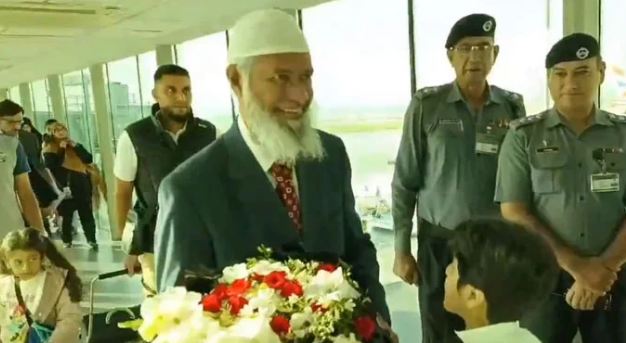
ISLAMABAD: Eminent religious scholar and public speaker Dr Zakir Naik on Monday reached Pakistan at the invitation conveyed by the government.
During his stay in Pakistan, which will continue till October 28, Dr Naik will hold public gatherings in multiple cities, lead Friday prayers and is also expected to meet senior government officials.
The renowned scholar’s visit comes after he confirmed in a social media post on X regarding his Pakistan tour along with his son Shaikh Fariq Naik.
The renowned scholar’s visit comes after he confirmed in a social media post on X regarding his Pakistan tour along with his son Shaikh Fariq Naik.
As per the schedule shared by Dr Naik, he will address public talks in Karachi on October 5 and 6, followed by those in Lahore set to take place on October 12 and 13.
Meanwhile, the scholar will address public gatherings in Islamabad on October 19 and 20.
Upon his arrival today, Dr Naik was received by PM’s Youth Programme Chairman Rana Mashhood, Additional Secretary Ministry of Religious Affairs and Interfaith Harmony Dr Syed Attaur Rehman Parliamentary Secretary for Religious Affairs Shamshir Ali Mazari and other officials.
The esteemed scholar has been living in Malaysia for years, where he enjoys a permanent residence, as he is wanted in India over alleged involvement in money laundering and inciting extremism, Hindustan Times reported.
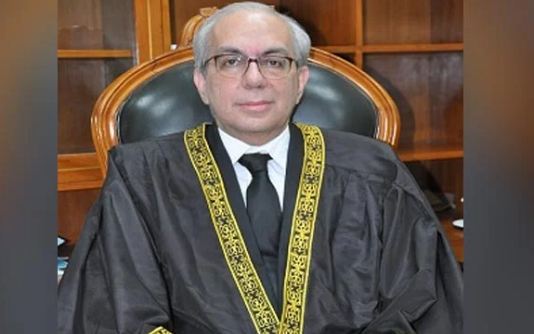
ISLAMABAD: The Supreme Court has adjourned the hearing on a review petition challenging its judgement on the defection clause under Article 63-A of the Constitution after Justice Munib Akhtar refused to become part of the five-member bench.
The originally formed five-member bench, headed by Chief Justice of Pakistan (CJP) Qazi Faez Isa, had comprised Justice Aminuddin, Justice Jamal Khan Mandokhail, Justice Mazhar Alam, and Justice Munib.
However, as the hearing began today, Justice Munib was unavailable from the bench, following which the CJP adjourned the hearing till tomorrow (Tuesday), saying that the judge would be requested to rejoin the bench.
“We will try to bring Justice Munib Akhtar back to the bench, otherwise, the bench will be reconstituted,” said the chief justice.
In his letter, Justice Munib said that he did not recuse from the bench, saying he cannot be a part of a bench that was constituted by Practice and Procedure Committee.
“My letter should be made a part of the case record,” said Justice Munib, to which CJP Isa said this could not happen. He added that it would have been appropriate had Justice Munib given his opinion after being part of the bench.
The CJP said that he respects Justice Munib’s opinion, however, the case has been pending for more than two years and the Article 63-A case is very important.
The SCBA in 2022 approached the Supreme Court, seeking a review on the interpretation on Article 63(A) pertaining to the treatment of dissidents.
The SC, while wrapping up the presidential reference seeking interpretation on Article 63(A) had ruled on May 17, 2022 that the votes of dissident members of Parliament (MPs), cast against their parliamentary party’s directives, cannot be counted.
In a split decision, three judges — then-CJP Umar Ata Bandial, Justice Ijazul Ahsan, and Justice Munib — agreed that dissident members’ votes should not be counted.
Meanwhile, Justice Mandokhail and Justice Mazhar disagreed with the verdict.
The SCBA filed a plea moving the apex court to take back its opinion on the verdict’s paragraph about not counting the votes of dissidents by reviewing the interpretation made on May 17, 2022. It maintained that the dissidents should only be de-seated but their votes are supposed to be counted as per the Constitution of Pakistan.
“The apex court’s opinion about not counting the dissident’s votes is against the Constitution and equal to interference in it,” the SCBA stated in the plea.
What is Article 63(A)? Article 63(A) of the Constitution of Pakistan deals with the defection of parliamentarians.
According to the article, a lawmaker can be disqualified on the grounds of defection if they vote or abstain from voting in the House contrary to any direction issued by the parliamentary party to which they belong.
However, this is restricted to three instances where they have to follow the party’s directions:
Election of the prime minister or chief minister; Vote of confidence or a vote of no-confidence; Money bill or a Constitution (amendment) bill. Per the article, the head of the party is required to present a written declaration that the MNA concerned has defected.
However, prior to presenting the declaration, the head of the party will have to give the MNA concerned a chance to explain the reasons for defection.
Following that, the party chief will then forward the written declaration to the speaker, who would, in turn, hand it over to the chief election commissioner (CEC).
The CEC will have 30 days at their disposal to confirm the declaration. Once confirmed, the MNA concerned will no longer be a member of the House and their “seat shall become vacant”.
ISLAMABAD, SEPT 29 /DNA/ – Pakistan dispatched its 10th relief consignment consisting of medical relief items for the people of Palestine on 29 September 2024. In this regard, a ceremony was organized at Jinnah International Airport Karachi followed by departure of cargo flight to Amman, Jordan.
On the special instructions of the Prime Minister, Chief Guest of the ceremony was Dr. Darshan, MNA(Sind). While the Deputy Prime Minister & Foreign Minister directed the Additional Foreign Secretary, Ambassador Najeeb Durrani to represent Ministry of Foreign Affairs.
Pakistan’s Ambassador in Amman, Jordan has been assigned to extend fullest cooperation for the early clearance and delivery of the relief assistance to Palestinian people.
The ceremony was also attended by other high-level officials from the relevant departments including National Disaster Management Authority (NDMA) and especially the sponsoring foundation.