Home Blog Page 801

Olympian Sadaf selected for IOC Course abroad

Olympian Sadaf selected for IOC Course abroad

By our correspondent 

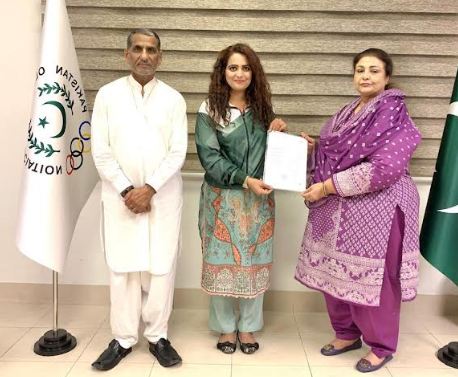
ISLAMABAD: Olympian Sadaf Siddiqui has been selected for the International Coaching Course in General Conditioning starting in the first week of October at the Hungarian University of Sport Sciences, Hungary. 

The course is a part of International Olympic Committee (IOC) efforts to impart latest training to improve the overall standard of coaches and officials in the developing countries.

 Sadaf Siddiqui, who met with the Pakistan Olympic Association (POA) Vice President Begum Ishrat Ashraf and POA Secretary General Muhammad Khalid Mahmood to share her future plans in the field of women sports development and management. 

 Begum Ishrat Ashraf during her interaction with Sadaf said that the international coaching and management course will provide the platform to Sadaf to improve her skills.

“ This course is very important as it would help educate our women coaches in the longer run . The Course provides coaches with a systematic way to improve their knowledge and skills in the theoretical, technical and practical aspects of coaching,” she said. 

Sadaf, represented Pakistan in the 2008 Summer Olympics in Beijing, China as well as in Commonwealth Games, Asian Games, SAF Games and other international sports events. She also represented the Army in many national events and carried out the national duty to find and groom fresh  talent in the field of athletics.  

“Its an honour for me to represent my country and my mother departmet Pakistan Army. I respect the Olympic values of dedication, teamwork  and passion,” said Sadaf Siddiuqi adding that this experience will allow her to attain key skills and qualities such as leadership, teamwork, and a deep commitment for the development of women’s sports in Pakistan.

“As a passionate advocate for women’s participation in sports, I am determined to inspire the next generation of female athletes in Pakistan,” she said.  

“My participation in the IOC Program will not only help improve my own skills and experience, it will also serve as an opportunity to support the IOC in its commitment for women’s empowerment in sports on a global scale.”

FS Baloch reaffirms commitment to preserving Pak archeological heritage

FS Baloch reaffirms commitment to preserving Pak archeological heritage

Foreign Secretary Amna Baloch expressed her deep pride in the country’s rich and multi-layered legacy. She highlighted how the ancient civilizations of the Indus Valley and Gandhara, which flourished in present-day Pakistan, continue to inspire modern society

Mahnoor Ansar

ISLAMABAD: The International Conference on ‘Celebrating Pakistan’s Ancient Archeological and Civilizational Heritage’, organized by ISSI, concluded with the Foreign Secretary of Pakistan, Ms. Amna Baloch, reaffirming commitment to preserving and promoting Pakistan’s rich archeological and civilizational heritage. The one-day conference drew a significant gathering of diplomats, cultural experts, and academics, underscoring the keen interest in exploring, preserving, and promoting Pakistan’s rich archaeological and civilizational heritage.

The Inaugural Session, addressed by Senator Mushahid Hussain Sayed and Federal Secretary for National Heritage and Culture, Hassan Nasir Jamy, was followed by three insightful working sessions.

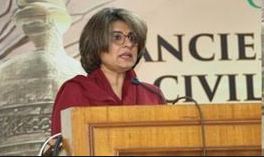
Addressing the concluding session, Foreign Secretary Amna Baloch expressed her deep pride in the country’s rich and multi-layered legacy. She highlighted how the ancient civilizations of the Indus Valley and Gandhara, which flourished in present-day Pakistan, continue to inspire modern society. The Foreign Secretary emphasized the importance of preserving heritage, noting that the values of innovation, resilience, and coexistence seen in these ancient cultures remain relevant today. She called for a balanced approach to conservation, tourism, and development, ensuring that Pakistan’s cultural assets are safeguarded for future generations. She lauded the ISSI’s initiative of focusing on this subject. The Foreign Office, she re-assured, would remain a committed stakeholder and partner in these efforts, working closely with local communities and international experts to protect and promote Pakistan’s shared legacy.

Earlier, the first working session titled ‘Journeying through Pakistan’s Ancient Treasures’ was moderated by Mr. Zafarullah Siddiqui, Former Joint Secretary Development. Dr. Muhammad Hameed, Chairman of Archaeology Department at Punjab University, called for new expeditions and monument restoration, stressing the need for collaboration between heritage and tourism sectors. He also emphasized the importance of heritage as national pride. Prof. Ruth Young, Professor of Archaeology at the University of Leicester, U.K, underscored the importance of religious sites, especially Buddhist sites, in shaping Pakistan’s identity. She acknowledged the government’s efforts to use heritage to enhance Pakistan’s global image. Mr. Anjum Javaid, Deputy Director, Directorate General of Archeology, emphasized Harappa’s advanced urban planning and urged for pride in the Indus civilization, which he noted surpasses Egyptian and Mesopotamian heritage. Professor Hridaya Bajracharya, Former Vice Chancellor, Lumbini Buddhist University, Nepal, highlighted the shared heritage between Nepal and Pakistan’s Gandhara civilization, stressing the importance of celebrating Gandhara’s cultural influence and its potential to foster shared narratives.

The second working session was titled ‘Reflecting on Pakistan’s Rich Heritage’ and was moderated by Dr. Abdul Samad, Directorate Archeology KPK. Ms. Heba Hashmi, Maritime Archaeologist and CEO of Heritage Archaeology Cultural Heritage Associates, outlined preservation strategies, including digital heritage trails, and climate change adaptation. She emphasized the need for flood risk management in archaeological efforts. Professor Luca Maria Oliveri, Director of the Italian Archaeological Mission to Pakistan, highlighted the mission’s start in 1955 in Swat Valley, exploring late ancient Swat and Himalayan Buddhism. He emphasized that conservation sites can become training hub for developing new professionals. Ms. Kiran Afzal, Senior Private Sector Specialist at the World Bank, highlighted the bank’s efforts in preserving historical sites in Punjab and KP, focusing on job creation and tourism promotion. She emphasized the need for more resources due to rising maintenance costs and noted the success of solarizing sites and collaboration between KP and Punjab. Ms. Parveen Talpur, historian and archeologist based in the U.S., highlighted the region’s historical significance, the overlap of Buddhism and the Indus Civilization at Mohenjo-Daro, and called for digital preservation. She emphasized on protecting cultural artifacts from smuggling and theft.

The third working session titled ‘Building Bridges Through Cultural Tourism’ was moderated by Mr. Amir Jahangir, Founder and Chief Executive Officer, Mishaal, Pakistan which is the partner institute of the World Economic Forum. Ambassador Asim Iftikhar Ahmed, Ambassador of Pakistan to France, Permanent Delegate to UNESCO, emphasized that Pakistan’s historic civilizations, such as Mohenjo-Daro and Taxila, form a shared global legacy. He highlighted the need for preservation, cultural tourism, and policy measures to promote heritage sites at both national and local levels. Professor Iftikhar H. Malik, Professor Emeritus at Bath Spa University, said that Pakistan’s history extends far beyond 1947, with a rich ancient past. He urged the preservation of historical sites and the inclusion of the Indus Valley Civilization in updated textbooks to better educate future generations. Dr. Christina Menegazzi, Culture and Heritage Expert UNESCO Pakistan, highlighted Pakistan’s rich cultural heritage and its potential for tourism, noting the importance of stability for growth. She underlined UNESCO’s efforts in advancing sustainable tourism through education and cultural preservation. Mr. Imran Shaukat, a heritage tourism expert, highlighted the potential of religious tourism, particularly Buddhist sites, to generate income with minimal investment. He called for streamlined visa processes and aggressive marketing to improve Pakistan’s global image.

The Key Takeaways of the Conference were presented by Dr. Talat Shabbir, Director China Study Centre (CPSC). He highlighted the need for comprehensive preservation strategies, including field expeditions, digital preservation, and addressing climate-related risks. Dr. Shabbir also stressed the importance of cultural and religious tourism in fostering global connections, promoting Pakistan’s heritage, and creating economic opportunities. He concluded by underscoring the need to cherish these ancient treasures as symbols of shared history and potential.

In his closing remarks, Ambassador Khalid Mahmood, Chairman Board of Governors, the Institute of Strategic Studies Islamabad, underscored the vital role of cultural and civilizational heritage in shaping Pakistan’s national identity and image. He noted that Pakistan is blessed with immense cultural and civilizational treasures and stressed the importance of community involvement in preserving these assets. He highlighted the economic potential of cultural and religious tourism, which could create opportunities for local communities and contribute to Pakistan’s economic development.

Champions Trophy 2025: BCCI VP breaks silence on India’s travel to Pakistan

Champions Trophy 2025: BCCI VP breaks silence on India’s travel to Pakistan

ISLAMABAD, OCT 1: Board for Cricket Control in India (BCCI) vice-president Rajeev Shukla has opened up about the possibility of the Indian cricket team visiting Pakistan for the upcoming ICC Champions Trophy 2025.

Pakistan are scheduled to host the prestigious ICC tournament in February next year, however, India’s participation remains uncertain as the BCCI seeks the government’s approval to visit the country.

“No decision has been taken (yet). But our policy is that for international tours, we always seek the permission of the government. It’s up to the government to decide whether our team should go to any country or our team should not go to any country,” Shukla said while talking to an Indian news channel.

Furthermore, the BCCI vice-president said: “In this case (also), whatever the government will decide, we will abide by that.”

India has not travelled to Pakistan since 2008 and both the historical rivals have not had any bilateral series since 2012-13.

The ICC Champions Trophy 2025 is set to feature eight elite teams including India, Australia, New Zealand, England, South Africa, Bangladesh, and Afghanistan, based on their performances in the 2023 ODI World Cup.

Three venues — Karachi, Rawalpindi and Lahore — will host the matches of eight teams and according to PCB’s proposed schedule to ICC, all of India’s matches will take place in Lahore.

The PCB also allocated Rs12.80 billion for upgradation of three stadiums. Lahore’s Gaddafi Stadium, Karachi’s National Bank Cricket Arena and Rawalpindi International Cricket Stadium will be elevated ahead of the marquee event.

Except India, all seven teams that will participate in the Champions Trophy have already played in Pakistan and the PCB believes that India has no strong reason not to come here.

Pakistan are currently the defending champion of the coveted tournament, as the Men in Green, led by former captain Sarfaraz Ahmed, clinched the Champions Trophy in 2017 in England after defeating India in the final.

Forging Ahead: Pakistan-Malaysia bilateral ties and opportunities

Forging Ahead: Pakistan-Malaysia bilateral ties and opportunities

Muhammad Mohsin Iqbal

The longstanding relationship between Pakistan and Malaysia is rooted in shared cultural, religious, and political values, reinforced by mutual respect and cooperation across various sectors. Both nations, being Muslim-majority countries, have developed close diplomatic ties, often collaborating in regional and global forums. The upcoming visit of Malaysian Prime Minister Dato’ Seri Anwar Ibrahim to Pakistan highlights the strength of these ties and presents an opportunity to expand cooperation in key areas like trade, energy, and tourism.

Dato’ Seri Anwar Ibrahim, accompanied by a high-level delegation, will visit Pakistan from Wednesday to Friday at the invitation of Prime Minister Shehbaz Sharif. This visit underscores the importance of Pakistan-Malaysia relations, with discussions set to focus on enhancing cooperation in trade, connectivity, agriculture, the halal industry, and cultural exchanges. The two leaders will also address regional and global developments, reflecting their mutual commitment to progress in the broader Islamic world.

Historically, the relationship between Pakistan and Malaysia has been shaped by shared aspirations for development. Diplomatic engagements have emphasized economic cooperation, defense collaboration, and educational exchanges. Since the 1960s, when both nations were newly independent, high-level bilateral visits have played a crucial role in strengthening ties. Notably, Malaysia’s long-serving Prime Minister Dr. Mahathir Mohamad was instrumental in expanding trade and economic cooperation between the two countries. His multiple visits to Pakistan highlighted Malaysia’s desire to collaborate on trade, education, and technology.

On Pakistan’s side, leaders like President General Pervez Musharraf and Prime Minister Imran Khan have also played significant roles in strengthening the relationship. The signing of the Malaysia-Pakistan Closer Economic Partnership Agreement (MPCEPA) in 2007 was a turning point, as it significantly boosted bilateral trade by reducing tariffs and facilitating market access. As a result, both nations have benefited from expanded trade, with Pakistan exporting textiles, rice, and agricultural products, while Malaysia supplies palm oil, electronic goods, and machinery.

Malaysia is currently one of Pakistan’s largest trading partners in Southeast Asia, and both nations are now looking to further expand this relationship. Areas of focus during Prime Minister Anwar Ibrahim’s visit will likely include agriculture and the halal industry, as both nations seek to capitalize on the growing global demand for halal products. The halal industry holds significant potential, with both Pakistan and Malaysia being well-positioned to lead global production in sectors ranging from food to pharmaceuticals.

Energy cooperation is another area of mutual interest. With Pakistan’s growing energy needs and Malaysia’s expertise in renewable energy, both countries have an opportunity to collaborate on sustainable energy solutions. Malaysia has made considerable progress in solar and hydropower, and Pakistan could benefit from this expertise as it works to diversify its energy sources and address chronic power shortages. Both nations recognize the importance of energy infrastructure and are likely to explore partnerships that promote innovation and sustainable growth.

Education has also played a key role in strengthening ties between the two countries. Over the years, many Pakistani students have pursued higher education in Malaysia, benefiting from the country’s high-quality universities. This exchange of knowledge not only enhances individual capacities but also strengthens people-to-people ties. Expanding these academic exchanges would further enhance the intellectual and professional capabilities of both nations, deepening the relationship on a societal level.

In defense, Pakistan and Malaysia have collaborated closely over the years, engaging in joint military exercises and sharing expertise in defense technologies. Both countries are committed to maintaining regional stability, and defense cooperation is likely to remain an important aspect of the relationship. In multilateral forums such as the United Nations and the Organization of Islamic Cooperation (OIC), Pakistan and Malaysia often align on key issues affecting the Muslim world, including the plight of the Rohingya and the Palestinian cause.

A lesser-known but highly significant aspect of Pakistan-Malaysia cooperation lies in the intellectual domain, particularly in the area of economic development. Dr. Mehboob-ul-Haq, a renowned Pakistani economist and architect of the Human Development Index (HDI), played a key role in advising Malaysia on its economic policies during the 1980s. His work was instrumental in shaping Malaysia’s development strategies, focusing on human development, poverty reduction, and equitable growth. His contribution is a testament to the intellectual bonds that have tied Pakistan and Malaysia together in their pursuit of economic progress.

As Dato’ Seri Anwar Ibrahim’s visit approaches, it is evident that both Pakistan and Malaysia are looking to strengthen their historical ties in ways that will benefit both nations in an increasingly interconnected world. The focus on trade, energy, education, and people-to-people contacts will likely drive future cooperation. Both countries recognize the strategic importance of enhancing their partnership in light of regional and global challenges, from climate change to economic instability.

In conclusion, the relationship between Pakistan and Malaysia is built on a foundation of shared values and strategic interests. The upcoming visit provides an opportunity to further enhance this relationship in areas that matter most to both nations—economic development, sustainable growth, and regional stability. As both countries look toward the future, this visit is expected to mark another step in deepening their partnership, benefiting Pakistan, Malaysia, and the broader region.

IRS hosts book launch of “Al-Mahallab” – A new chapter in Pakistan’s Islamic legacy

IRS hosts book launch of

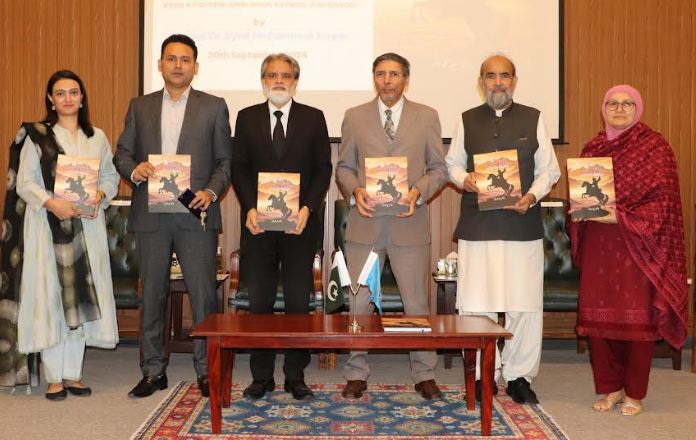
ISLAMABAD, OCT 1 /DNA/ – Justice Dr. Syed Mohammad Anwar’s book “Al-Mahallab, Khita-e-Pakistan main Islam ka pehla Alambardar ” was launched in Institute of Regional Studies Islamabad.

The event was attended by a large number of professors, writers, journalists and scholars. Dr. Khurram Iqbal of NDU gave the introduction and highlighted the importance of the book in the context of the history of Islam.

Dr. Anjum of the History Department of Quaid-e-Azam University presented the thematic review of the book.

The former chairman of the Islamic Ideological Council Dr. Qibla Ayaz made a detailed analysis of the book. The author of the book, Justice Dr. Syed Muhammad Anwar, while expressing his opinion on the contents of the book, said that Al-Mahallab is a person of unique importance in the history of Pakistan, who took Islam through the Khyber Pass about forty years before Muhammad Bin Qasim in the region of Pakistan.

Al-Mahallab is considered to be the most important figure in Islamic history to end the Kharijite sedition. The audience expressed deep interest in the book written on the life of this unsung hero of Islamic history and was greatly impressed by the effort of the author.

In his concluding remarks, Ambassador Jauhar Saleem, President IRS congratulated the author of the book and referred the book as a milestone for young people involved in research.

The Complexity of China-North Korea Relations

The Complexity of China-North Korea Relations

Dr. Muhammad Akram Zaheer

The relationship between China and North Korea is a multifaceted and deeply complex one, shaped by an intricate web of historical, ideological and strategic imperatives. Understanding this relationship requires a careful examination of the geopolitical factors that influence both nations’ policies toward each other and the broader international context in which they operate.The China-North Korea relationship is rooted in shared ideological foundations, dating back to the Cold War era. Both nations were part of the communist bloc, united by a common Marxist-Leninist ideology. During the Korean War (1950–1953), China played a critical role in supporting North Korea against the United States and South Korea. This historical solidarity created a sense of camaraderie between the two nations that has persisted despite evolving political and economic circumstances.The Chinese Communist Party (CCP) and the Korean Workers’ Party (KWP) share a mutual commitment to maintaining their respective political systems, both rooted in single-party rule. North Korea’s Juche ideology—an autarkic interpretation of socialism that emphasizes self-reliance—also has ideological affinities with China’s state-centric economic model, especially during Mao Zedong’s era. Over time, however, their economic and political systems have diverged significantly, with China embracing market-oriented reforms under Deng Xiaoping, while North Korea remained economically isolated. Nevertheless, the ideological bond between the two countries continues to shape their relationship, as both regimes prioritize political stability and resist external pressure to democratize.

The Korean Peninsula holds immense strategic importance for China, given its geographical proximity and the security risks associated with instability in the region. Beijing is acutely aware of the delicate balance of power in Northeast Asia, where any shift could have far-reaching consequences for regional stability. The peninsula is situated at the intersection of several major powers, including the United States, Japan, Russia and China, making it a geopolitical flashpoint.For China, the stability of North Korea is crucial not only for maintaining regional peace but also for preserving its own influence in Northeast Asia. A destabilized Korean Peninsula would pose significant challenges for Beijing, including the risk of a humanitarian crisis spilling over its borders and the possibility of a U.S.-aligned, unified Korea. Such an outcome would bring American military forces closer to China’s borders, undermining Beijing’s security interests. Therefore, while China has supported international efforts to curb North Korea’s nuclear ambitions, it remains deeply committed to preventing the collapse of the regime in Pyongyang.

One of China’s foremost strategic concerns regarding North Korea is the risk of nuclear conflict on the Korean Peninsula. North Korea’s pursuit of nuclear weapons has long been a source of tension in the region, drawing condemnation from the international community and resulting in numerous sanctions against Pyongyang. For Beijing, a nuclear war on the peninsula would have catastrophic consequences, not only for North Korea but for China and the entire region. Such a conflict could lead to massive destruction, regional destabilization and a severe humanitarian crisis that would directly affect China.A nuclear exchange could also draw in other major powers, particularly the United States and its allies, further complicating the global security landscape. The presence of U.S. military forces in South Korea and Japan, combined with Washington’s security commitments to its East Asian allies, has already heightened tensions in the region. A nuclear conflict would exacerbate these tensions and could escalate into a broader confrontation between China and the West. Thus, China has a vested interest in preventing any escalation of the nuclear issue on the Korean Peninsula.However, Beijing faces a significant dilemma. While it wants to curb North Korea’s nuclear ambitions, it must do so without pushing Pyongyang toward collapse. The implosion of the North Korean regime would likely result in a refugee crisis along China’s borders, as well as the potential unification of the peninsula under a pro-U.S. government. Such a scenario would severely undermine China’s strategic position in Northeast Asia, leaving it with a far less favorable security environment.

To prevent such a collapse, China provides substantial economic and diplomatic support to North Korea. Despite international sanctions and Pyongyang’s frequent provocations, Beijing continues to offer North Korea lifelines in the form of trade, food aid and energy supplies. This support is essential for sustaining the North Korean economy, which has been severely strained by sanctions and mismanagement.China’s economic assistance is also a means of maintaining leverage over North Korea, ensuring that Pyongyang remains dependent on Beijing for its survival. This economic dependence allows China to exert influence over North Korea’s policies, particularly in areas where Pyongyang’s actions could destabilize the region.Diplomatically, China has often acted as a mediator between North Korea and the international community, particularly through its participation in the Six-Party Talks aimed at denuclearizing the Korean Peninsula. While these talks have yielded limited results, Beijing’s role as a mediator underscores its commitment to preventing the isolation of North Korea. China believes that isolating Pyongyang entirely could push the regime toward more aggressive and unpredictable behavior, further destabilizing the region.

Despite China’s efforts to manage North Korea’s behavior, the relationship between the two countries is often fraught with tension. North Korea’s frequent missile tests, nuclear advancements and belligerent rhetoric have undermined Beijing’s broader strategic goals in the region. Pyongyang’s actions contributing to regional insecurity and have prompted South Korea and Japan to strengthen their defense capabilities, leading to an arms race in Northeast Asia.Moreover, North Korea’s provocations have led to a stronger U.S. military presence in the region, as Washington reinforces its security commitments to its East Asian allies. This increased U.S. presence is undesirable for China, as it threatens to undermine Beijing’s influence and security in the region. Thus, North Korea’s actions often complicate China’s efforts to maintain regional stability and navigate its broader strategic interests.At the same time, North Korea’s economic dependence on China creates a delicate balancing act for Beijing. While China needs to support the regime to prevent its collapse, it also must curb Pyongyang’s more destabilizing actions. Beijing is particularly concerned that North Korea’s continued pursuit of nuclear weapons could trigger a military response from the United States or its allies, leading to a broader conflict that would engulf the region.

China’s relationship with North Korea must also be understood in the context of its broader strategic interests, particularly its desire to stabilize relations with the United States and other major global players. In recent years, China’s economy has faced significant challenges, including trade tensions with the U.S., slowing growth and the need to attract foreign investment. These economic concerns have prompted Beijing to prioritize improving its relationship with Washington, even as it navigates the complexities of its ties with Pyongyang.Additionally, China has sought to strengthen its relationship with South Korea, a key U.S. ally in the region. Beijing views improved relations with Seoul as a potential pathway to stabilizing the Korean Peninsula and reducing tensions with the United States. A more stable relationship with South Korea could also help Beijing achieve its long-standing goal of denuclearizing the peninsula, which would remove a significant source of regional instability.

The relationship between China and North Korea is likely to remain a complex and delicate one, shaped by both nations’ competing strategic priorities. While China seeks to preserve stability on the Korean Peninsula and prevent the collapse of the North Korean regime, it must also manage the risks posed by Pyongyang’s nuclear ambitions and provocative behavior. At the same time, China’s broader strategic goals, including its desire to improve relations with the United States and South Korea, will continue to influence its approach to North Korea.In this context, Beijing’s policy toward Pyongyang is one of delicate balancing, as it seeks to maintain its influence in Northeast Asia while preventing regional instability. As long as North Korea remains economically and diplomatically isolated, China will continue to play a pivotal role in shaping the future of the Korean Peninsula. However, managing this relationship will require Beijing to carefully navigate the complex dynamics of regional security, international diplomacy and its own domestic priorities.

Both historical ties and contemporary strategic imperatives define Tthe China-North Korea relationship. While China is committed to preventing the collapse of the North Korean regime and maintaining stability on the Korean Peninsula, it also faces significant challenges in curbing Pyongyang’s nuclear ambitions and managing its broader regional relationships. As the geopolitical landscape in Northeast Asia continues to evolve, China’s ability to balance these competing interests will be critical in shaping the future of the region.

Use and Misuse of Charter of Democracy

Qamar Bashir

Qamar Bashir

One of the biggest flaws in most Muslim societies, especially in Pakistan, is the selective and self-serving interpretation of Quranic injunctions, teachings, Sunnah, and Hadith. We have developed a habit of choosing verses from the Holy Quran and quoting Hadiths and Sunnah to suit specific occasions and events, only to forget them once those events are over. We tend to recite Quranic verses that align with our narrative and then disregard them once our objectives are achieved.

It doesn’t take a rocket scientist to understand that any system, way of life, political philosophy, agreement, or charter must be implemented fully and comprehensively; selective application defeats the very purpose of any agreement or charter.

Therefore, the impact of using Quranic verses, Hadith, or Sunnah will only have the intended effect when the entire Islamic System of Shariah is practiced in both letter and spirit. Selective use, outside the context of the Shariah system or a holistic Islamic framework, is counterproductive and detrimental to any society.

This selective approach may explain why not a single Islamic country, or even all Islamic countries collectively, has the courage, means, or resolve to leverage their power to put an end to the Israel’s genocide of Muslims in Palestine, Lebanon, or elsewhere, despite being surrounded by Muslim-majority countries.

Our selective use of Quranic verses and other religious authorities has also permeated our political ecosystem. All allied political parties are fully prepared and committed to bringing about constitutional changes to establish Constitutional Courts, arguing that the Charter of Democracy (CoD), signed on May 14, 2006, by the leaders of all political parties, including Pakistan’s two major political parties—the Pakistan Peoples Party (PPP), led by Benazir Bhutto, and the Pakistan Muslim League-Nawaz (PML-N), led by Nawaz Sharif—promised to do so.

Forgetting that the main thrust of the CoD was not the formation of a constitutional court but to allow democracy to flourish, enable democratic forces to take deep roots, end military intervention, ensure free and fair elections, uphold judicial independence, and above all, guarantee the supremacy of the Constitution while working towards a parliamentary system with checks and balances to prevent military interference in politics.

The most important and foremost point was a pledge to end military involvement in politics and curb the influence of intelligence agencies in civilian matters, ensuring that the armed forces remain subordinate to civilian authorities. This included abolishing the National Security Council (NSC), which had allowed military leaders to influence national security and foreign policy matters. The agreement emphasized ending the political role of intelligence agencies like the ISI and MI, ensuring that they operate strictly within their defined mandates.

The second and third most important points were ensuring an independent judiciary by reinstating judges who were removed unconstitutionally and making the process of judicial appointments more transparent, as well as ensuring free, fair, and transparent elections, with an independent and autonomous Election Commission to oversee the electoral process.

The third, fourth, and fifth important elements of the CoD called for strengthening the parliamentary system, empowering the parliament, and making the prime minister the chief executive, thereby reducing the power of the president. This was coupled with establishing a fair and transparent accountability mechanism to tackle corruption without political victimization, ensuring that accountability institutions operate independently, and a commitment to good governance, devolution of powers, reforms in public institutions, and respect for human rights, freedom of the press, and the rule of law.

The Charter of Democracy (CoD)  also proposed the establishment of a Federal Constitutional Court in Pakistan to handle constitutional matters exclusively, ensuring the Supreme Court could focus on other judicial responsibilities. This court would comprise experienced judges who had previously served as chief justices or judges of the Supreme Court or High Courts, ensuring expertise in constitutional interpretation. The CoD emphasized a transparent and merit-based appointment process for these judges to maintain independence and prevent political interference. The aim was to strengthen judicial independence, uphold the Constitution’s supremacy, and create an impartial forum for constitutional issues, reflecting the broader goals of ensuring democratic values and a fair judicial system in Pakistan.

Finally, the signatory parties agreed to respect each other’s political mandate, avoid political victimization, and work together for the country’s democratic and economic development.

However, all sections of CoD have been trampled, disregarded, overlooked, and set aside, while only the part calling for the establishment of a Federal Constitutional Court has been selectively picked up and used as one of the most powerful arguments in favor of constitutional amendments. If these amendments are passed, they would defeat the main objectives of the CoD by selectively pushing for the establishment of the Constitutional Court, and re-endorsing the establishment’s role in politics, the executive, parliament, and the judiciary.

The Charter of Democracy (CoD) could have played a significant role in shaping Pakistan’s political landscape if it had been applied in a holistic manner. In its proper application CoD could have served as a roadmap for restoring democratic norms, particularly after military rule, by emphasizing the need for free and fair elections, an independent judiciary, and parliamentary supremacy.

It could have  played a crucial role in curbing military interference in politics, reinforcing judicial independence and encouraging reforms and accountability mechanisms to promote good governance and transparency.

However, the CoD has also been subject to misuse, often diverging from its original intent. Political actors have selectively implemented its provisions to suit their immediate interests, ignoring key aspects such as reducing military influence and ensuring transparent elections.

Recently, parties have used the CoD’s call for a Federal Constitutional Court to justify constitutional amendments that undermine judicial independence, contrary to the CoD’s broader objectives. This selective approach has also reinforced political vendettas, marginalized parliamentary supremacy, and failed to establish truly independent accountability mechanisms, ultimately undermining the CoD’s vision of democratic stability, fair governance, and constitutional supremacy. This pattern reflects a tendency among political parties to prioritize short-term gains over the long-term goals of the CoD.

Qamar Bashir

Former Press Secretary to the President

Former Press Minister to the Embassy of Pakistan to France

Former MD, SRBC, CEO, ATV

President Zardari expresses condolence with DPM Dar

President Zardari expresses condolence with DPM Dar

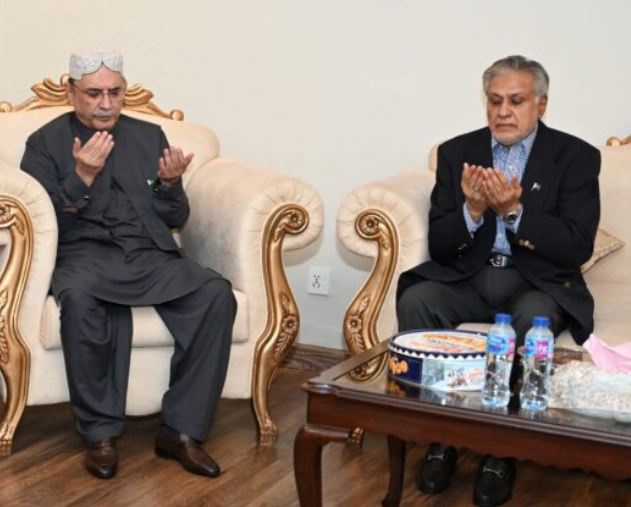
ISLAMABAD, Sep 30 (APP) President Asif Ali Zardari on Monday visited the residence of Deputy Prime Minister and Foreign Minister Senator Mohammad Ishaq Dar to offer condolence on the death of his elder brother.

The president offered Fateha for the departed soul and expressed his deep grief, President Secretariat Press Wing said in a press release.

He also prayed for the high ranks of the departed soul and for the bereaved family to bear the loss with fortitude. On the occasion, Speaker National Assembly Sardar Ayaz Sadiq and Minister for Interior Syed Mohsin Naqvi accompanied the president.

CPO holds open court to address citizens’ complaints

CPO holds open court to address citizens’ complaints

RAWALPINDI, SEP 30 (DNA) — City Police Officer (CPO) Syed Khalid Mehmood Hamdani held an open court to address citizens complaints here on Monday, informed police spokesman. The senior police officials including SSP investigation, SDPOs, and SHOs were present on the occassion.

During the open court at Airport police station, CPO Hamdani listened to various complaints and promptly issued orders for the concerned officers to take action.  The CPO further directed the concerned officers to take legal action and report on the marked applications within the given time frame.

He emphasized the importance of addressing citizens’ issues at the police station level, following the guidelines set by Inspector General of Police Punjab, Dr. Usman Anwar. CPO Hamdani reiterated a commitment to excellent service delivery, stating that there would be zero tolerance for any delays in addressing complaints.

He highlighted that, in line with the Chief Minister of Punjab’s vision, timely and effective resolution of issues raised by citizens remained a top priority. —DNA

Serena Hotels, Canadian High Commission co-host event on indigenous empowerment and climate resilience

Serena Hotels, Canadian High Commission co-host event on indigenous empowerment and climate resilience

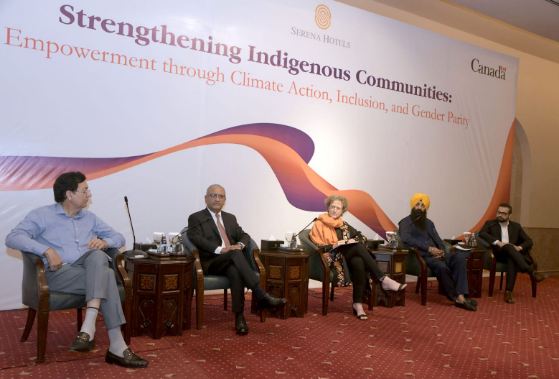
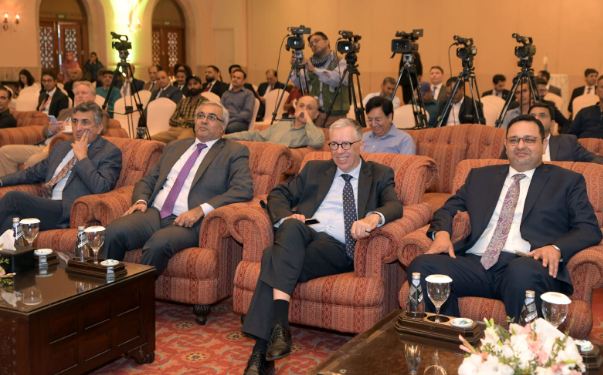
ISLAMABAD, SEP 30 /DNA/ – A high-level strategic dialogue called “Strengthening Indigenous Communities: Empowerment through Climate Action, Inclusion, and Gender Parity” took place today at the Islamabad Serena Hotel. Co-hosted by Serena Hotels and the High Commission of Canada, the event brought together prominent speakers, including H.E. Leslie Scanlon, Canadian High Commissioner to Pakistan; Aziz Boolani, CEO of Serena Hotels and Chairman of the Aga Khan Rural Support Programme (AKRSP); Sardar Ramesh Singh Arora, Minister for Minorities Affairs, Government of Punjab; and key leaders from civil society organizations working to support socio-economic inclusion and empowerment of local communities and marginalised groups in Pakistan.

Canada, at home and around the world, is working to advance reconciliation and promote engagement with Indigenous Peoples, based on recognition of rights, respect, cooperation, and partnership. It involves listening to, learning from, and working in partnership with First Nations, Inuit and Métis peoples in Canada, as well as with local communities around the world, to address the unique challenges that these communities face.

Reflecting on the significance of the event, Canadian High Commissioner Scanlon remarked, “On this day of Canada’s National Truth and Reconciliation, the dialogue was an opportunity for us to amplify the voices of Indigenous and marginalized communities, as well as leaders, here in Pakistan. Canada is built on the ancestral lands of First Nations, Inuit, and Métis peoples, and as we continue our reconciliation journey we are committed to applying a reconciliation lens across our diplomacy and global advocacy efforts. Whether it’s promoting socio-economic inclusion, empowering youth, women, and girls in all their diversity, or supporting climate resilience for those on the frontlines of the climate crisis, we are committed to working with Pakistan to help build a sustainable, resilient, and equitable future. Today’s dialogue, with the participation of Pakistani leaders who are working to support local communities, highlighted the importance of collective policies, actions, and partnerships to support local communities’ unique needs.”

Speaking at the event, Mr. Aziz Boolani, CEO of Serena Hotels, emphasized, “At Serena Hotels, we believe that sustainability is not just an agenda, but a responsibility. By supporting indigenous communities, we can amplify their voices and experiences in shaping policies and solutions for climate resilience. Today’s dialogue underlines our commitment to advancing inclusive growth and ensuring that the impacts of climate change are addressed with the unique needs of these communities in mind.”

Serena Hotels, through its Public Diplomacy initiative, has long been committed to fostering meaningful dialogues on pressing global issues, with a particular focus on climate action, social inclusion, and the empowerment of marginalized communities. This event was reflective ofSerena’s dedication to addressing the profound impact of climate change on indigenous communities, who are often on the frontlines of environmental challenges. By bringing together leaders, policymakers, and civil society, Serena Hotels & the High Commission of Canada aimed to contribute to a broader understanding of the interconnectedness of climate resilience and socio-economic inclusion, ensuring that no community is left behind in the face of global environmental shifts.

Stay Connected

64FansLike
60FollowersFollow

Latest Reviews

Exchange Rates

USD - United States Dollar
EUR
1.17
GBP
1.36
AUD
0.72
CAD
0.73