Home Blog Page 800

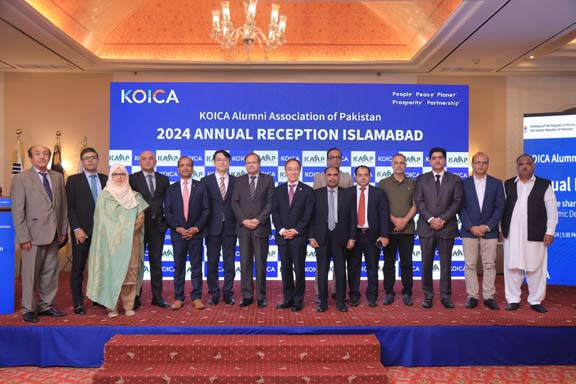
KOICA Alumni Association Pakistan successfully hosts 2024 annual reception

KOICA Alumni Association Pakistan successfully hosts 2024 annual reception

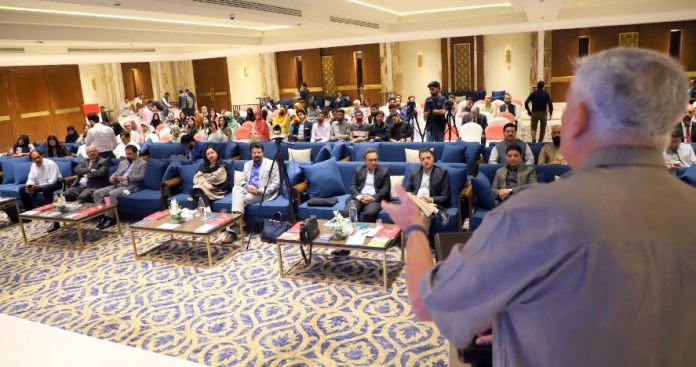
ISLAMABAD, OCT 2 /DNA/ – KOICA Pakistan Office and KOICA Alumni Association Pakistan (KAAP) successfully held its Annual Reception and Knowledge Sharing Seminar on October 1, 2024 in Islamabad. The event was organized to encourage knowledge sharing among alumni of KOICA trainees in Pakistan and to strengthen the development cooperation network between Korea and Pakistan.

The event was attended by H.E. Park Ki-jun, the Ambassador of the Republic of Korea and Mr. Yeon Je-ho, Country Director of KOICA Pakistan Office, Special Secretary of the Economic Affairs Division, Mr. Muhammad Humair Karim, and Joint Secretary of the Economic Affairs Division Mr. Sajid Manzoor. H.E. Park Ki-jun, the Ambassador of the Republic of Korea said “The development cooperation partnership between Korea and Pakistan will be further strengthened through the knowledge dissemination and exchange of KOICA trainees,”  ”We are very pleased to support Pakistan’s sustainable development through the exchange of knowledge and skills between our two countries and promote prosperity for future generations through human resource capacity building.”

The event featured two Training program alumni who shared their lessons learned from Korea. A trainee from Exploration of Good Research and Development Agricultural Productivity of Pakistan presented Agricultural Productivity: a pathway to Nutrition & Food Security in Pakistan, highlighting the impact of agricultural productivity in Pakistan on nutrition and food security, and emphasizing the important role of the agricultural sector in the country’s economic and social development. Another trainee from Capacity Building for Formulating and Evaluating Economic Development presented Economic Development Strategy and Policy in Pakistan, analyzing the country’s economic development strategy and policies and suggesting effective policies for economic development.

The KOICA Pakistan office reported on the main activities of KAAP in 2024. They shared the knowledge sharing events held this year in Quetta (June) and Peshawar (September), as well as the active participation of alumni members through the Earth Day plogging Campaign in May. “We are grateful for the active participation of many alumni in volunteer activities and look forward to continuing these activities,” said KOICA Pakistan.

The event also promoted the upcoming KOREA WEEK, which will be hosted by the Korean Embassy in Pakistan from October 22nd to 27th. The event aims to promote cooperation and cultural exchange between Pakistan and Korea, and many members were encouraged to attend and further strengthen the relationship between the two countries.

To date, a total of 1,834 alumni members  have been trained from KOICA’s training programs in Pakistan, and since the establishment of KAAP in 2010, various activities and seminars have been held every year through the Knowledge Sharing seminar. This year, 243 trainees attended the Knowledge Sharing seminar, and the KOICA Pakistan office said, “We expect that such knowledge sharing and cooperation will maintain the friendly relations between Pakistan and Korea and serve as a driving force for regional and national development.”

With this event, KOICA Pakistan and the alumni members pledged to continue their efforts in knowledge dissemination and human resource capacity building between Korea and Pakistan, and plan to maintain a mutually beneficial partnership.

PIDE celebrates five years of leadership and achievements under Nadeem ul Haque

PIDE celebrates five years of leadership and achievements under Nadeem ul Haque

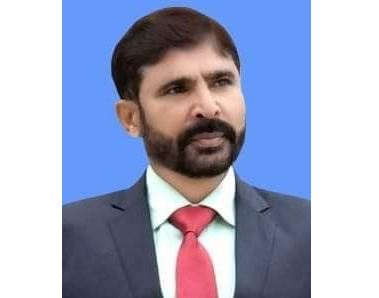
ISLAMABAD, OCT 2 /DNA/ – The Pakistan Institute of Development Economics (PIDE) proudly marks five transformative years under the leadership of Dr. Nadeem Ul Haque as Vice Chancellor. Since his appointment in October 2019, Dr. Haque has spearheaded innovative reforms in economic policy research and public policy discourse, positioning PIDE as a leading public sector think tank in Pakistan and globally.

Over the past five years, Dr. Haque’s leadership has revitalized PIDE, aligning its research with pressing macroeconomic and governance challenges. His dynamic approach reshaped the institute’s research agenda, focusing on crucial areas such as economic growth, urban development, regulatory reform, energy policy, education, healthcare, and public sector management. His groundbreaking work on the cost of bureaucracy and regulatory burdens has been widely recognized by policy circles and academics worldwide, fostering greater dialogue between policymakers, scholars, and international institutions. These contributions have played a pivotal role in shaping Pakistan’s policy landscape.

Under Dr. Haque’s stewardship, PIDE expanded its platforms for knowledge dissemination, including books, the renowned Pakistan Development Review journal, policy briefs, and academic conferences. Initiatives such as the EconFest and PIDE’s YouTube channel have extended the institute’s outreach, engaging a diverse audience beyond academia, including policymakers and the general public. Dr. Haque’s tenure also saw the launch of the Research for Social Transformation and Advancement (RASTA), the largest public policy research grant program in Pakistan. This initiative, aimed at fostering local research and solutions, has connected over 65 universities and 3,200 researchers, creating a robust knowledge network. This program is pivotal in generating high-quality, evidence-based research that informs policy decisions across the country.

With a vision for inclusive academic dialogue, Dr. Haque organized the prestigious Annual General Meeting and Conference of the Pakistan Society of Development Economists (PSDE) across multiple regions, including Peshawar, Quetta, and Multan. This outreach has strengthened ties between academia, policymakers, and development practitioners nationwide.

The Pakistan Institute of Development Economics (PIDE) proudly celebrates five years of driving reason, rigor, and research in shaping evidence-based policies. Reflecting on the institute’s journey, Dr. Nadeem Ul Haque, Vice Chancellor of PIDE, emphasized the pivotal role PIDE has played in addressing Pakistan’s socio-economic challenges through independent research. He reaffirmed the institute’s unwavering commitment to fostering data-driven solutions for national development.

“PIDE has always championed ideas that drive change and progress. Through relentless dedication and a focus on evidence-based research, the institute has contributed significantly to Pakistan’s policy-making process,” Dr. Haque stated. He further stressed the importance of embracing innovative ideas, encouraging a collective shift in mindset away from dependence on government alone, and towards individual responsibility and ownership for meaningful progress.

PIDE continues to cultivate a thriving network of knowledge, connecting researchers, policymakers, and practitioners to create sustainable growth. “Ideas survive through networks, and knowledge thrives through connections,” Dr. Haque remarked, acknowledging PIDE’s role in fostering these vital intellectual exchanges.

Dr. Durre Nayab, former Director of Research and Pro Vice-Chancellor of PIDE, presented a comprehensive research showcase, highlighting the institution’s achievements over the past five years.

She said that since 2019, PIDE has significantly diversified its research output, introducing a variety of publications including monographs, policy viewpoints, knowledge briefs, PIDE Analytics, and webinar briefs. The institute’s innovative approach has also led to the launch of discourse magazines, animated videos, and documentaries, making research more accessible and impactful for a wider audience.

PIDE’s research spans crucial areas of Pakistan’s socio-economic development, focusing on cities and urban development, public sector management, agriculture and real estate markets, power sector reform, fiscal policy, youth opportunities, housing, and foreign aid. By addressing these diverse themes, PIDE remains dedicated to generating evidence-based policy research that influences sustainable solutions to national and global challenges.

The institute’s digital presence has grown significantly, with over 540 webinars featuring 32 Nobel Laureates and international academicians. PIDE’s YouTube platform has produced 1,091 videos, attracting 2.2 million views and over 215,000 hours of watch time, cementing its role as a leader in digital engagement and knowledge dissemination.

The event also featured several panels on key topics, with active participation from leading experts:

The Macroeconomy panel, moderated by Mahmood Khalid, focused on concurrent issues and reforms needed to stabilize Pakistan’s economy. Speakers Hafsa Hina, Uzma Zia, and others, presented actionable insights on fiscal policy, inflation control, and economic growth.

The Regulatory Burden & Sludge panel, moderated by Ahmed Waqar Qasim, featured experts like Nasir Iqbal and Usman Qadir, who critically examined Pakistan’s regulatory environment and called for streamlined processes to reduce inefficiencies in governance.

The session on Opportunities and Digital Rights, moderated by Shahid Mehmood, brought attention to the increasing importance of digital transformation in Pakistan, with panelists like Fizzah Khalid Butt and Henna Ahsan advocating for inclusive digital policies.

The Cities as Engines of Growth session emphasized the role of urban centers in driving economic progress. Moderated by Muhammad Shaaf Najib, panelists such as Saba Anwar and Lubna Hassan discussed the need for sustainable urban planning and infrastructure development.

The final panel on Markets: Energy, Agriculture & Real Estate featured insightful discussions by experts like Afia Malik and Abedullah Anjum, who highlighted the critical challenges and opportunities in Pakistan’s key markets.

A key highlight of the day was the Grand Conversation with Nobel Laureate Michael Spence, moderated by Nadeem Ul Haque. Spence offered valuable insights on Development Strategies in a More Complex and Difficult Global Economy, emphasizing the importance of strategic reforms in emerging markets like Pakistan. His discussion provided global context to Pakistan’s challenges, offering a roadmap for navigating a complex global economic environment. Professor Spenser greatly appreciated the work PIDE has produced during Dr Nadeem’s tenure and wished that the successor would keep this momentum going for larger impact on policy decisions.

Middle East Dynamics and Future of U.S. Foreign Policy

Middle East Dynamics and Future of U.S. Foreign Policy

Dr. Muhammad Akram Zaheer

As the U.S. presidential election approaches, the United States confronts several pressing economic, social, and political challenges that will critically shape the outcome of the contest between Kamala Harris and Donald Trump. Persistent inflation, the widening wealth inequality, and deeply polarized opinions on immigration and border policies have emerged as key domestic concerns influencing the electorate. Beyond these internal matters, however, the election will also carry significant consequences for U.S. foreign policy.The predominant foreign policy issue in this election is the intensifying economic rivalry with China, coupled with the escalating tensions in the South China Sea, a vital maritime route through which approximately one-third of global trade passes. Additional priorities include the ongoing Russia-Ukraine conflict and the Israel-Hamas war, with its broader regional implications. While the divide between the Republican and Democratic stances on the Ukraine war may be irreconcilable, their differences concerning the Middle East, particularly regarding the Gaza conflict, are relatively minor. Both candidates are expected to prioritize U.S. strategic interests in the region while minimizing deep involvement in Middle Eastern affairs.

Five enduring principles guide U.S. policy toward the Middle East. The first is the unwavering commitment to Israel’s security and ensuring its military superiority in the region. This is evident in the advanced military technologies provided to Israel compared to the comparatively less sophisticated equipment supplied to other states. The second principle pertains to safeguarding the flow of oil through strategic waterways, notably the Straits of Hormuz and Bab el-Mandeb, ensuring uninterrupted access to global markets. U.S. involvement in this area is designed to counter potential threats from Iran to disrupt navigation in the Persian Gulf or from Houthi forces to block the Red Sea.The third principle is the prevention of external powers, particularly Russia and China, from exerting dominance over Middle Eastern political affairs, a priority well understood by the region’s leadership. Fourth, the U.S. remains steadfast in its commitment to nuclear nonproliferation, working to prevent the spread of nuclear weapons. The final guiding principle is the ongoing effort to combat terrorism, a key aspect of U.S. foreign policy.Despite these constants, the U.S. has recognized the complexities of Middle Eastern politics and the limitations of its influence. This understanding stems from the failures following the 2003 Iraq invasion, where heavy investments in democratization and reconstruction did not yield the intended outcomes. As a result, U.S. interest in the region has diminished over time, a trend that began with the Obama administration’s strategic “pivot to Asia.”

Moreover, the concerns of the American electorate, with the exception of Arab and Muslim Americans, remain largely disconnected from Middle Eastern issues. While the Gaza conflict may capture significant media and activist attention, it does not reflect the priorities of most U.S. voters, who are more concerned with domestic issues.If Donald Trump secures the presidency, his foreign policy is expected to emphasize the “America First” doctrine, characterized by a preference for signing trade agreements, a reluctance to engage in military interventions abroad, and a reduction of international commitments, including to NATO. In the Middle East, Trump has shown minimal interest in addressing the ongoing crises in Syria, Iraq, Libya, and Yemen, focusing instead on domestic challenges. Regarding the Israeli-Palestinian conflict, he has displayed little support for a two-state solution, preferring instead to pursue quick, often impractical solutions.A key focus of Trump’s Middle East policy will likely be normalizing relations between Israel and its neighboring countries, particularly Saudi Arabia. In 2020, Trump facilitated similar agreements between Israel and several Gulf states. Saudi Crown Prince Mohammad bin Salman has expressed willingness to sign a peace treaty with Israel, even without a commitment to the establishment of a Palestinian state. However, the finalization of such a treaty may be delayed until after the U.S. election, as both bin Salman and Israeli Prime Minister Benjamin Netanyahu may prefer credit for the deal to go to Trump rather than to Kamala Harris. Trump might also consider formalizing a defense treaty with Saudi Arabia to encourage peace with Israel, though this would face significant challenges, including securing the support of two-thirds of the U.S. Senate. Once an agreement between Israel and Saudi Arabia is reached, Trump would likely pressure other Gulf states, such as Qatar, Kuwait, and Oman, to follow suit.

Regarding U.S.-Iran relations, Trump’s approach is expected to be more confrontational, relying on sanctions and economic pressure rather than military force. He has suggested the possibility of negotiating with Tehran, but only on terms favorable to the U.S. The election of a reformist president in Iran may open the door to such negotiations, although it remains unclear whether Iran can endure another four years of stringent U.S. sanctions. While Republicans and Democrats differ in their methods of addressing Iran’s nuclear program and regional influence, the core U.S. position remains consistent. Trump’s withdrawal from the Iran nuclear deal in 2018 set the tone for future relations, and although Joe Biden had promised to restore the agreement, negotiations during his presidency failed to produce results, leaving Trump-era sanctions in place.On the Democratic side, congressional candidates have generally supported Israel but have adopted a more nuanced stance, emphasizing human rights, the plight of Gaza’s civilians, and the need for a two-state solution. This contrasts with Republican candidates, who offer unconditional support to Israel, bolstered by the influence of right-wing Christian groups. The Democratic base, however, is divided, with younger, non-white voters expressing more sympathy for the Palestinian cause, while older white voters remain staunchly pro-Israel. Despite growing criticism of Israeli actions, particularly in Gaza, Democratic Party leaders have refrained from extreme positions due to the mainstream unpopularity of anti-Israel views.Kamala Harris, if elected, will likely adhere to core Democratic principles such as defending democratic values, promoting human rights, and strengthening alliances, especially with NATO. Her foreign policy will also focus on confronting global challenges such as climate change, nuclear proliferation, and Russian aggression in Ukraine, as well as curbing Chinese influence in the Pacific. While she has largely avoided addressing Middle Eastern policy during her time as vice president, Harris may be compelled to engage more actively with the region’s complexities if she assumes the presidency. Although U.S. support for Israel is unlikely to change drastically, Harris has shown signs of diverging slightly from Biden, such as her call for a ceasefire in Gaza and her decision to boycott Netanyahu’s speech before Congress.

In terms of U.S.-Saudi relations, Harris has historically been critical of U.S. arms sales to Saudi Arabia and its involvement in the Yemen conflict. In 2020, she advocated for a reevaluation of U.S.-Saudi relations to ensure they align with American values and interests, though she did not specify what those values were. Nevertheless, her administration would likely continue efforts to strengthen security cooperation with Saudi Arabia and pursue collaboration on technological and green energy initiatives. Regarding Iran, Harris would likely adopt a balanced approach, seeking to renegotiate the nuclear deal, particularly in light of escalating tensions between Iran and Israel.The limitations of U.S. foreign policy in the Middle East are well understood within the region. Middle Eastern leaders recognize that while the U.S. is committed to combating terrorism and ensuring open sea lanes for trade, it is less inclined to involve itself in regional conflicts that do not directly affect American interests. For example, despite President Obama’s warning to Syrian President Bashar Assad not to use chemical weapons against his own people, the U.S. refrained from military intervention when Assad’s forces used sarin gas in 2012. Similarly, Trump’s decision not to retaliate after Houthi attacks on Saudi oil installations in 2019 signaled a limited U.S. commitment to defending Saudi interests when the impact on U.S. oil imports was minimal.The United Arab Emirates has also recognized these limitations, signaling that it does not intend to resume talks with the U.S. regarding the purchase of F-35 fighter jets, regardless of the outcome of the election. This reflects a broader understanding that primarily vital national interests, rather than a deeper commitment to regional stability or human rights drive U.S. engagement in the region. The region’s authoritarian leaders have thus been able to act with impunity, confident that U.S. involvement will remain limited as long as their actions do not conflict with American strategic interests.

Ethiopia, Pakistan discuss youth exchanges to strengthen people-to-people contacts

Ethiopia, Pakistan discuss youth exchanges to strengthen people-to-people contacts

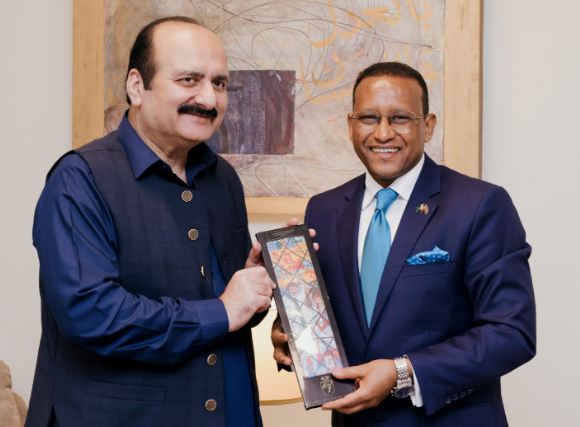
ISLAMABAD, OCT 2 /DNA/ – The Federal Democratic Republic of Ethiopia (FDRE) and the Islamic Republic of Pakistan on Wednesday discussed potential areas to further promote people-to-people relations between the two countries, especially by exchanging delegations of youth leaders.

The discussion to this end took place during a meeting between Dr. Jemal Beker Abdula, Special Envoy, Ambassador Extraordinary and Plenipotentiary of the FDR Ethiopia to Pakistan and Rana Mashhood Ahmed Khan, Chairman of the Prime Minister of Pakistan’s Youth Programme.

Both sides discussed matters of mutual interest including bilateral collaboration to empower youth of both the countries, mainly by imparting trainings, education and skills in modern technologies.

H.E. Ambassador Dr. Jemal Beker said both the countries have young population which needed to be equipped with modern technologies such as Artificial Intelligence, Blockchain and others to build the effective workforce which would eventually increase productivity for achieving faster economic growth.   

He said Ethiopia and Pakistan, both could learn from each other experiences and share best practices to empower the youth in both the countries.

The Ambassador informed the Chairman Youth Programme about the home-grown economic reforms 2.0 which was undertaken by the Government of the FDR Ethiopia following the success of its first phase that has corrected macroeconomic imbalances, increased Ethiopia’s productivity and attracted the foreign direct investment.

There is a huge potential in Africa for the IT services, the Ambassador said, while urging the Pakistani entrepreneurs to participate in the Single Country Exhibition being held in Addis Ababa, Ethiopia in January 2025.

The Ambassador said Ethiopia has been playing key role in the Look Africa and Engage Africa policy of the Islamic Republic of Pakistan especially by launching the Ethiopian Airlines operations in Karachi which has given a major boost to the people-to-people and business-to-business relations between the two countries.

The Chairman of the Youth Programme acknowledged the Ethiopian Airlines’ role in connecting Pakistan with the African continent of more than 1.4 billion people.

Rana Mashhood said he is deeply impressed by the socio-economic development in Ethiopia under the leadership of Dr. Abiy Ahmed, Prime Minister of the FDR Ethiopia.

He said the Government of the Islamic Republic of Pakistan is looking forward to strengthen bilateral relations with the FDR Ethiopia, and would like to collaborate with Ethiopia for empowering youth of both the countries.

BREAKING: Iran launches massive missile attack on Israel

BREAKING: Iran launches massive missile attack on Israel

TEHRAN, OCT 1: Iran launched massive missile attack on Israel. IDF claims missiles launched from Iran into Israel. The Israeli military claimed Iran fired rockets at the country with all the civilians inside the bomb shelters.

The military’s claim come after a White House official United States has indications that Iran is preparing to imminently launch a ballistic missile attack against Israel.

Pakistan eliminates TRACHOMA as public health threat, WHO certifies

Pakistan eliminates trachoma

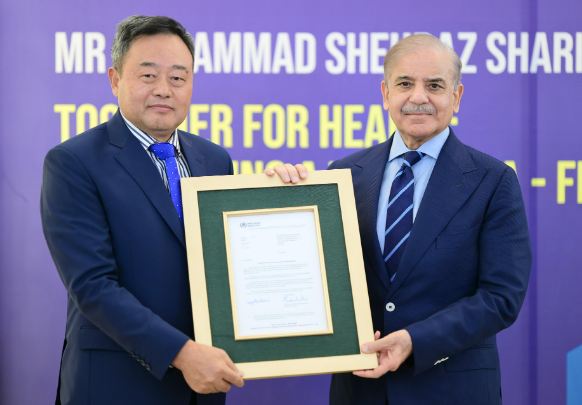
ISLAMABAD, OCT 1 /DNA/ – The Head of Mission of the World Health Organization (WHO) in Pakistan, Dr. Lou Dapeng, officially presented a certificate of the elimination of TRACHOMA as a public health problem in Pakistan to Prime Minister Muhammad Shehbaz Sharif on 1st October 2024.

Prime Minister Shehbaz Sharif praised the collaborative efforts of health authorities, international partners, and WHO in achieving this remarkable success.

CDA Chairman reviews beautification drive ahead of SCO Summit in Islamabad

CDA Chairman reviews beautification drive ahead of SCO Summit in Islamabad

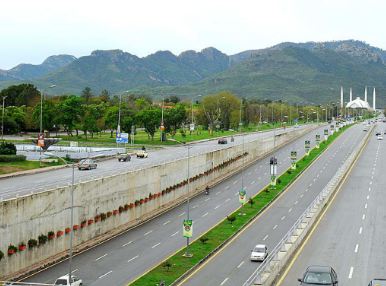
ISLAMABAD, OCT 1 /DNA/ – An important meeting was held by Chairman Muhammad Ali Randhawa while the Member Administration, Member Engineering and other relevant senior officers also attended it. The meeting reviewed the ongoing beautification drive across Islamabad as well as the renovation and uplift of the Jinnah Convention Center (JCC) in the wake of the upcoming Shanghai Cooperation Organization (SCO) meeting.

The Chairman CDA was briefed about the preparations which include extensive renovations at the Jinnah Convention Center and a city-wide beautification drive. He was briefed about the key initiatives which involved the lighting, renovation, and aesthetic enhancement of interchanges, overhead bridges, underpasses, and pedestrian bridges. Besides, main roads are undergoing repairs and maintenance to ensure smooth traffic flow during the international event.

Furthermore, the meeting briefed about the ongoing landscaping and horticultural work around the Convention Center, as well as along green belts and median strips on major roads across Islamabad. The restoration of fountains, lane marking, and the installation of kurb stones and signboards are being fast-tracked.

 The Chairman instructed that the field teams of CDA should work round the clock to complete these tasks.

Afterwards, Chairman CDA, Muhammad Ali Randhawa, also conducted a detailed visit and inspected the ongoing work at the Jinnah Convention Centre.

During the visit, Chairman CDA was briefed about the various improvements being made, aimed at bringing the Convention Center at par with the international standards. He overall expressed satisfaction on the progress of the work and instructed to complete the minor work immediately. He was briefed that CDA is going to hand over the ground floor of the Jinnah Convention Center to Ministry of Foreign Affairs (Mofa) and while the remaining parts of the Center will be handed over to Mofa soon after the finishing of minor works. 

He inspected the installation of state-of-the-art equipment such as SMD screens, digital boards, and advanced conferencing systems. Additionally, modern lighting, state of the art sound system, interpretation system and high-speed internet facilities have been inspected to ensure smooth operations during the SCO. Furniture and carpets have been replaced with premium quality stuff and material.

Chairman CDA was also briefed that landscaping and horticultural would enhance the surrounding environment of the Center as well.

Chairman Randhawa emphasized that the goal of these renovation efforts is to make the Jinnah Convention Centre a premier venue to receive and welcome delegates and dignitaries for the SCO Summit and other high-profile events.

Railways to restore Jaffar Express

Railways to restore Jaffar Express

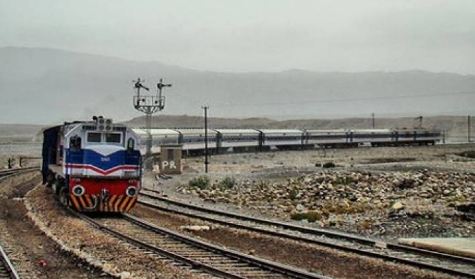
ISLAMABAD, OCT 01 (DNA) — Pakistan Railways is all set to restore the Jaffar Express passenger train run between Quetta and Peshawar by the next week, after a weeks-long suspension.

“The 39-Up and 40-Down Jaffar Express, which operates between Quetta and Peshawar Cantonment will resume its service during the second week of October according to the summer timetable,” an official in the Ministry told media.

He said that the train services were suspended across the country on August 26 after a key railway bridge between Kolpur and Mach was destroyed in a blast carried out by the banned organization of Balochistan.

The official said the blast was a part of multiple coordinated attacks carried out that night by dozens of armed militants in Lasbela, Musakhail, Kachi, Kalat and Mastung districts.

He said following the destruction of the railway bridge, Pakistan Railways halted all incoming and outgoing passenger and goods train services from Quetta to Karachi, Lahore, and Peshawar.

The official said that 90 percent of the repair work of the bridge had been completed, and matters had also been settled with the local administration and the FC to ensure the safety of the railway track, bridge, and train.

“A trial run will be conducted after the railway track is laid on the newly constructed bridge, which is expected next week,” the official added.

Currently, the official said that no passenger or goods train services are operational between Quetta and the rest of the country.

To a question, he said the expenditure of only three heads including regular salaries, pension, and operational fuel (HSD) is about 89 percent of the total expense, thus leaving only 11 percent of its total budget for utilities, repair, and maintenance of its operational assets.

The official said that in addition, Pakistan Railways is bound to follow the Federal Government pay and pension structure, adding that pension, with exponential growth, is a fundamental challenge that had adversely impacted its performance.

He said that Pakistan Railways is bearing all its operating expenses including salary, and fuel from its revenues except pension which is provided by the federal government through annual grants in aid. In view of the explained position, the Pakistan Railways cannot be considered as a loss-making entity. —DNA

Usman Shaukat sworn in as RCCI President

Usman Shaukat sworn in as RCCI President

𝐎𝐚𝐭𝐡 𝐓𝐚𝐤𝐢𝐧𝐠 𝐂𝐞𝐫𝐞𝐦𝐨𝐧𝐲 𝐨𝐟 𝐑𝐂𝐂𝐈 𝐍𝐞𝐰𝐥𝐲-𝐄𝐥𝐞𝐜𝐭𝐞𝐝 𝐄𝐱𝐞𝐜𝐮𝐭𝐢𝐯𝐞 𝐁𝐨𝐝𝐲 𝟐𝟎𝟐𝟒-𝟐𝟎𝟐𝟔

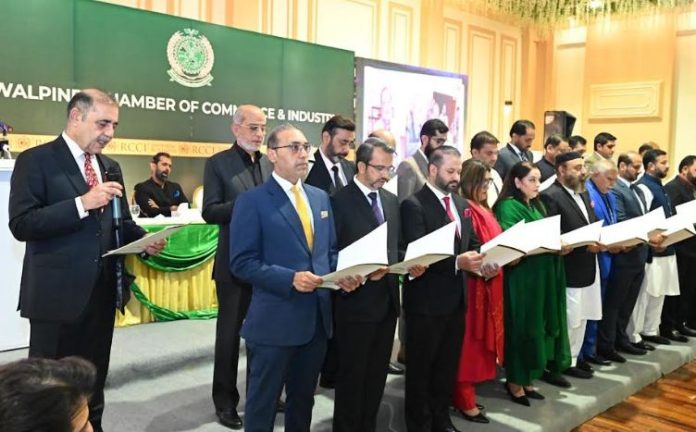
ISLAMABAD, OCT 1 /DNA/ – The Oath Taking Ceremony of the newly elected office bearers and executive members of the Rawalpindi Chamber of Commerce and Industry (RCCI) for the term 2024-2026 was held at a local hall in Rawalpindi.

Mr. Sohail Altaf, Group Leader of RCCI, appreciated the commendable efforts of the outgoing team and extended a warm welcome to the newly elected members. He emphasized the critical role the Chamber plays in supporting the business community and expressed confidence in the new leadership’s ability to take RCCI to greater heights.

During the ceremony, Mr. Usman Shaukat was sworn in as the President of RCCI, Mr. Khalid Farooq Qazi assumed office as the Senior Vice President, and Mr. Fahad Barlas was appointed as the Vice President. The oath was administered by Mr. Sohail Altaf, who congratulated the newly elected officials and executive members on their successful election.

The event was attended by Former Presidents, members from trade associations, diplomats, friends from media and a large number of RCCI members.  The presence of these esteemed individuals highlighted the Chamber’s continued focus on fostering unity and collaboration within the business community.

The newly elected President, Mr. Usman Shaukat, in his address, expressed his gratitude for the trust placed in him and the executive team. He outlined his vision for RCCI, focusing on enhancing member services, promoting trade and investment, and strengthening ties with both local and international business communities.

Usman Shaukat said the early completion of Rawalpindi Ring Road Project will be actively pursued with the relevant authorities and termed it a game changer project for the Rawalpindi.

Describing the project as a major infrastructure initiative, he said the creation of a circular road around the city would improve connectivity, reduce traffic congestion, and stimulate economic growth by providing an efficient transportation corridor.

Usman Shaukat also said an industrial zone will be developed exclusively for Rawalpindi alongside the ring road. He said an RCCI think-tank on economy headed by Sohail Altaf will be made effective and active in policy making and business promotion with the relevant government departments.

Newly-arrived Maldives HC pays courtesy visit to Indian acting envoy

Newly-arrived Maldives HC pays courtesy visit to Indian acting envoy

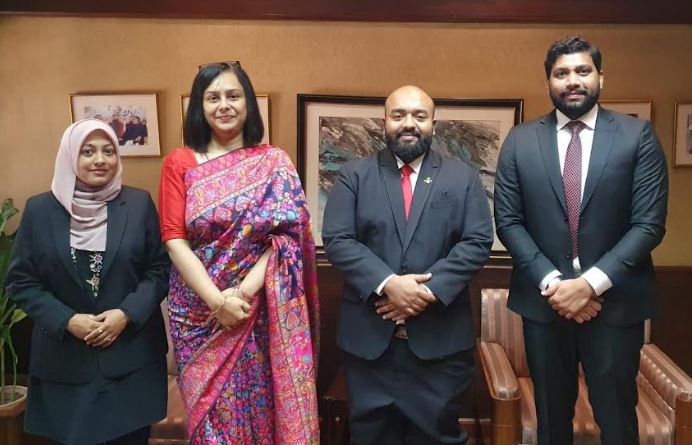
ISLAMABAD, Oct 1 /DNA/ – The newly-appointed High Commissioner of the Maldives, Mohamed Thoha, paid a courtesy call on the Acting High Commissioner of India, Ms. Geetika Srivastava, in Islamabad.

During the meeting, both sides engaged in discussions on matters of mutual interest, underscoring the importance of strengthening bilateral ties between the two nations.

Stay Connected

64FansLike
60FollowersFollow

Latest Reviews

Exchange Rates

USD - United States Dollar
EUR
1.17
GBP
1.36
AUD
0.72
CAD
0.73