Home Blog Page 799

ECP forms committee to probe Rawalpindi commissioner’s explosive allegations of polls rigging

ECP forms committee to probe Rawalpindi commissioner's explosive allegations of polls rigging

ISLAMABAD: Startling claims by Liaquat Ali Chatha of abetting large-scale electoral rigging throw shade at polls result. The Election Commission of Pakistan (ECP) has formed a high-level committee to probe the serious allegations levelled by Rawalpindi Division Commissioner Liaqat Ali Chatha.

The decision was made during an emergency meeting held to discuss the commissioner’s allegations. Chief Election Commissioner Sikandar Sultan Raja attended the meeting via video link.

Security forces neutralize 9 terrorists in two operations in KP: ISPR

Security forces neutralize 9 terrorists in two operations in KP: ISPR

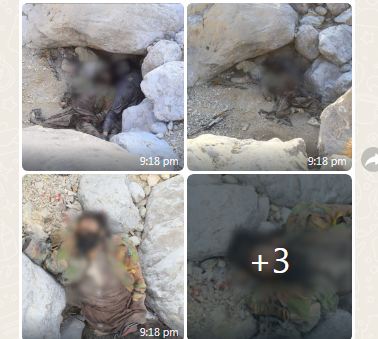
RAWALPINDI, 17 FEB /DNA/ – On 16-17 February 2024, 9x terrorists have been sent to hell by security forces in two separate operations in Khyber Pakhtunkhwa Province.

In an intelligence based operation conducted by the security forces in Tank District, two terrorists; HVT Terrorist Rehmat Ullah @Badar Mansur and Ts Amjad @Babri were killed.

In an another operation conducted in South Waziristan District, after intense fire exchange, seven terrorists were sent to hell.

Weapons, ammunition and explosives were also recovered from the killed terrorists, who remained actively involved in numerous terrorist activities in the area against the security forces as well as extortion and target killing of innocent civilians.

However, during the operation, a brave son of the soil, Sepoy Shahzeb Aslam (age 29 years; resident of district Haripur), having fought gallantly, embraced Shahadat.

Security forces of Pakistan are determined to wipe-out the menace of terrorism from the country and such sacrifices of our brave soldiers further strengthen our resolve.

Meeting in Qatar of special envoys on Afghanistan begins Sunday

Meeting in Qatar of special envoys on Afghanistan begins Sunday

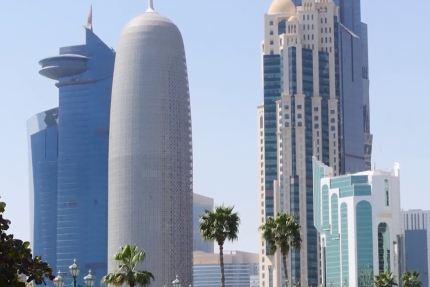
DOHA: On Sunday, Qatar will host a meeting of the special envoys on Afghanistan. The UN Secretary General’s spokesperson, Stephane Dujarric, said that in the Doha meeting, the voices of Afghan women will be heard very loud and clear.

Dujarric said that envoys will meet with the “Taliban,” civil society and women’s groups, although in Saturday, although in a statement on Saturday the Islamic Emirate said it would not attend unless its conditions were met. 

“The centre point of our concern and of our work in Afghanistan has been the restoration of the dignity, the human rights of women and girls. This meeting will be a meeting of envoys on Afghanistan.  So, both from regional organizations, from Member States — there will be a meeting with the Taliban, but there will also be a meeting of envoys with civil society, including women’s groups, because it’s important that the voices of Afghan women be heard very loud and clear,” Dujarric added.

Ahead of the upcoming UN-convened meeting of Special Envoys on Afghanistan taking place in Doha on February 18 and 19, Deprose Muchena, Senior Director at Amnesty International, said that the Doha meeting is a significant opportunity for a unified and concerted action to protect the rights of all Afghan people.

“The upcoming Doha meeting is a significant opportunity for a unified and concerted action to protect the rights of all Afghan people, particularly the rights of women and girls. The culture of impunity that enables the Taliban’s ongoing grave human rights violations needs to be addressed urgently,” Muchena said.

“Afghan people, especially women and girls, expect the Doha meeting to take practical steps to ensure their security and rights,” Lima Shirzai, a women’s rights activist.

Meanwhile, Georgetown Institute for Women, Peace and Security said in a statement: “As the special envoys navigate how to engage with Afghanistan, their approach must also incorporate the perspectives of Afghan women and girls.”

“If the Independent Assessment is meant to serve as the roadmap for the international community’s strategy towards Afghanistan, then its recommendations cannot afford to forsake the status of half of the population. As the special envoys navigate how to engage with Afghanistan, their approach must also incorporate the perspectives of Afghan women and girls,” the statement reads.

In the meantime, the Ministry of Foreign Affairs of Pakistan said in a statement that Asif Durrani, Pakistan’s Special Representative on Afghanistan will lead the Pakistani delegation at the Meeting of the Special Envoys on Afghanistan.

Pakistan’s MOFA added: “Pakistan’s participation in the meeting is part of our efforts to actively engage with the international community, including the United Nations, to strengthen the efforts for lasting peace and prosperity in Afghanistan.”

“International institutions, including the UN and other countries, are interested in finding solutions to Afghanistan’s economic, political and social problems, which they can address by starting political and diplomatic dialogues between Afghans,” said Najib Rahman Shamal, a political analyst.

Earlier, TOLOnews has seen a list showing that representatives from Russia, China, Iran, India, Japan, Tajikistan, US, France, Germany, and the EU will take part in the Doha meeting.

The Foreign Ministry of the Islamic Emirate in a statement said the participation of the Islamic Emirate in the Doha meeting would be “unbeneficial.”

“The Islamic Emirate of Afghanistan believed that the meeting of Special Envoys for Afghanistan being convened by UN Secretary-General António Guterres in the capital of Qatar, Doha, was a good opportunity to hold frank and productive dialogue on issues of disagreement. The Ministry of Foreign Affairs has clarified to the UN that if the Islamic Emirate is to participate as the sole official representative of Afghanistan and if there exists an opportunity to hold frank talks between the Afghan delegation and the UN about all issues on a very senior level, then participation would be beneficial. Else, ineffective participation by the Emirate due to non-progress in this area was deemed unbeneficial,” the statement reads.

Public at Risk: Experts demand action on illegal tobacco sales

Public at Risk: Experts demand action on illegal tobacco sales

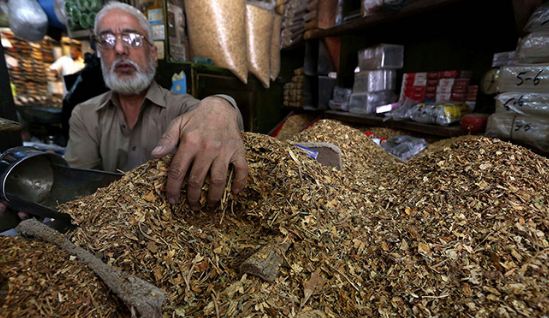
ISLAMABAD, FEB 17 /DNA/ – National laws, WHO guidelines violated as cheap cigarettes flood market Multinational companies have flagrantly violated the Federal Excise Act and introduced a low-priced cigarette product with an aim to boost its sales at the cost of health hazards, Capital Calling warned.

Malik Imran, representative of Campgain for Tobacco Free Kids stated that the Federal Excise Act, 2005 says, “No manufacturer or importer of cigarette can introduce or sell a new cigarette brand variant at the same existing brand family at a price lower than the lowest actual price of the existing variant of the same brand family. For the purposes of this restriction, the current minimum price variant of the existing brand means the lowest price of a brand variation on the day of the announcement of Budget”.

He said it has been observed that Pakistan Tobacco Company, a multinational subsidiary of British American Tobacco, has introduced a new product, Capstan International, at the price of Rs164. “This, prima facie, is a clear violation of the law. The existing brand is by the name of Capstan by Pall Mall, sold at Rs. 212,” he said.

He said no company is allowed to sell any product below the price set by the government in the Federal Excise Act 2005.

Similarly, said Malik , Philip Morris International, another multinational is flagrantly violating not only the above restriction imposed under the law, but also another restriction which states: “For the purpose of levy, collection and payment of duty at the rates specified in column 4, against serial number 9 and 10, no cigarette manufacturer shall reduce retail price from the level adopted on the day of the announcement of the latest budget.”

Marlboro brand belonging to Philip Morris International falls in serial number 9. However, they have introduced “Crafted by Marlboro” in serial number 10 (which attracts lower tax levy). This is specifically prohibited under the law and any attempt to use fanciful labels to bypass the law is a direct violation of the laws of Pakistan, aimed at increasing smoker numbers. The principle behind increasing taxation is to make cigarettes more expensive; whilst these two multinationals are finding new ways of abusing Pakistani laws.

Dr Hassan Shehzad, from IIUI, said, seemingly, these actions run counter to WHO Framework Convention on Tobacco Control, to which Pakistan is a signatury. The WHO guidelines, he said, mentions that “Parties (countries) should require the tobacco industry and those working to further its interests to operate and act in a manner that is accountable and transparent. The tobacco industry should be required to provide Parties with information for effective implementation of these guidelines.”

Malik Imran said it is illegal because it is avoiding tax.

Tobacco expert Dr. Muhammad Zia said such introduction and dissemination/marketing of the products falls in the category of promotion of the tobacco product, which is completely illegal and ban in Pakistan by law. This is an additional violation of the law.

“Niether a company, nor any retailer can sell cigarettes by violating federal excise law.

Dr. Zia also said the tobacco control cell of the Ministry of National Health Services has become ineffective and not taking any action on such promotional activities.

Post-Election Transition: Caretaker govt appeals for patience, mutual understanding

Post-Election Transition: Caretaker govt appeals for patience, mutual understanding

ISLAMABAD, FEB 17 /DNA/ – The recently conducted General Elections in the country has been a step towards promoting democracy. Significant turnout from all segments of society, including both genders, has been acknowledged internationally. Post elections, it is imperative that all stakeholders realise that victory and defeat are inherent aspects of democratic processes.

Parties and individuals who harbor any concerns regarding electoral irregularities are encouraged to pursue legal recourse through the available channels. Pakistan’s legislative, judicial, and executive branches are resilient and stand ready to deliver impartial justice to all.

While peaceful protest and assembly are fundamental rights, any form of agitation, violence, or incitement for vigilantism will not be condoned and law would take its course without any hesitation.

Anarchy and disorder will not be tolerated at this crucial time. This only serves to advance the agenda for hostile forces, both domestic and foreign, to exploit and create grave law and order challenges. The caretaker government implores patience, as political parties engage in consultations to form governments at both the federal and provincial levels, in accordance with democratic traditions and norms. We hope that this process concludes as early as possible with mutual understanding and respect. 

No country aspires to achieve progress sans public participation: President

People have shouted their will!

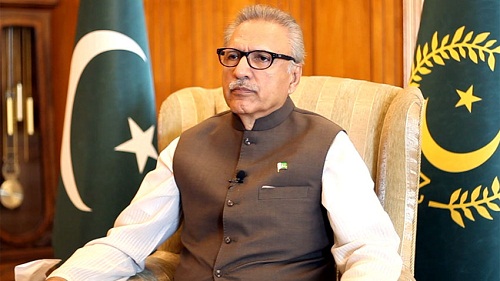
ISLAMABAD, Feb 17 (APP/DNA): President Dr Arif Alvi on Saturday said that no country could aspire to attain progress and prosperity without the participation of its people and Pakistan being the fifth populous country in the world, possessed immense potential to excel in every field of life.

Addressing an awards distribution ceremony of the annual Invitational Golf Tournament held at Margalla Greens Golf Club, the president said that the people were a vital driving force for making contributions to the overall progress of a country.


“About 250 million people of Pakistan with their collective efforts can make a difference; they can transform and rebuild Pakistan by utilizing their potential and intellect,” he observed.
Under the ‘Sports Diplomacy’ initiative, Serena Hotels hosted the tournament in collaboration with the Margalla Greens Golf Club. A number of golfers, diplomats and sports buffs attended the event.


In his address, President Alvi further underscored the significance of promoting active lifestyles and outdoor pursuits, emphasizing the positive impact on national well-being and the betterment of communities.
Congratulating the organizers, he said that the event was enjoyable amidst the natural verdant atmosphere.
He observed that due to the modern lifestyle, people were accustomed to the latest facilities and moving away from hectic physical activities which were not beneficial for health.


The human body responds to different exercises daily and they continue to decline with the passage of age, if no proper physical activity was adopted, he added.
The president further said that during Covid 19, Pakistan emerged as the third most successful performing country in the world due to the collective efforts by all the institutions and compilation of data.
He said that precedent could be taken as a guiding event that could help overcome different issues being faced by the country, adding that about 26 million children were out of school besides, the numerous issues of malnutrition and stunting being faced in the health sector.


The president stressed that Pakistan should also learn from the experiences of different developed countries that wade through diverse challenges.
“Things in Pakistan will turn around, I have firm belief as the people have huge potential,” he opined.
Speaking on the occasion, CEO Serena Hotels Aziz Boolani said that they would continue to utilize sports as a platform to connect with people from different segments of society to foster stronger relationships and cultivate a spirit of teamwork.


In the closing ceremony, the president gave away prizes to the winners and runners-up across all four categories.
Golfers from a diverse range of categories, including diplomatic, government, and armed forces officials, corporations, and women participated in the event.
With approximately 110 golfers in attendance, including a notable contingent of women players, the competition showcased an impressive display of skill and technique across the course.

Call for Accountability: Stakeholders urged to pursue legal recourse for electoral concerns

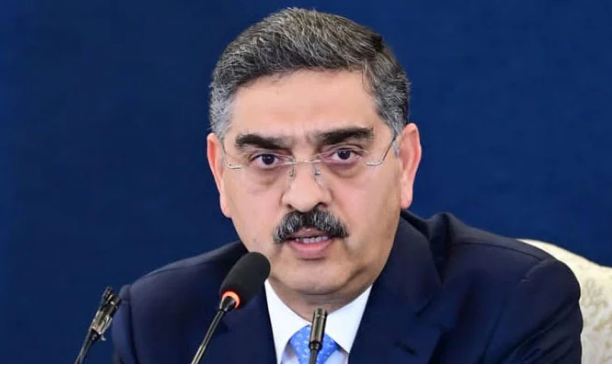
Situation at borders won’t impact elections: PM Kakar

ISLAMABAD, FEB 17 /DNA/ – The recently conducted General Elections in the country has been a step towards promoting democracy. Significant turnout from all segments of society, including both genders, has been acknowledged internationally. Post elections, it is imperative that all stakeholders realise that victory and defeat are inherent aspects of democratic processes.

Parties and individuals who harbor any concerns regarding electoral irregularities are encouraged to pursue legal recourse through the available channels. Pakistan’s legislative, judicial, and executive branches are resilient and stand ready to deliver impartial justice to all.

While peaceful protest and assembly are fundamental rights, any form of agitation, violence, or incitement for vigilantism will not be condoned and law would take its course without any hesitation.

Anarchy and disorder will not be tolerated at this crucial time. This only serves to advance the agenda for hostile forces, both domestic and foreign, to exploit and create grave law and order challenges.

The caretaker government implores patience, as political parties engage in consultations to form governments at both the federal and provincial levels, in accordance with democratic traditions and norms. We hope that this process concludes as early as possible with mutual understanding and respect.

Experts urge inclusive economic reforms implementation, broader tax base and political maturity

Experts urge inclusive economic reforms

ISLAMABAD, FEB 17 /DNA/ – An inclusive political economy shall be the top priority of the Pakistan government without any political fiddling by any of the stakeholders. Politicians shall sit in the parliament to do the legislation and ensure its implementation in letter and spirit. Whatever party comes into power shall limit the federal ministries count to ten. The ministers shall pass on the vision and mandate to the teams of the technocrats as they know their job well. The performance of the governments world over depends on the technocrats based on ‘right person for the right job’.

The IMF is not a villain but a fiscal regulator. We need to listen to their proposed measures and take them accordingly. All the political parties and other stakeholders shall come together to handle the budget deficit, increase tax base, to get rid of the subsidies and reduce the state expenses.

Shrinking the bureaucracy and implementation of civil service reforms is a must to reduce burden on the national exchequer. The sluggishness and red-tapism are the hallmark of Pakistan’s bureaucracy. The other one is the politics of agitation that shall come to an end. Public at large shall say no to such protests that are carried out for the vested interests of the political figures. 

The webinar on the subject “The Prospects of Charter of Economy for the new government and the new IMF deal” was organized by the Devcom-Pakistan (Development Communications Network) and DTN. The keynote speakers included former Deputy Chairman of the Planning Commission of Pakistan and Vice Chancellor Pakistan Institute of Development Economics (PIDE) Dr. Nadeem ul Haq, and the former Senior Economist at US Treasury Department’s Office of Economic Policy. Others who spoke on the occasion included Devcom-Pakistan Executive Director Munir Ahmed, political activist Amina Sadaf, Anoosha Iftikhar, Ateeqa Mazhar and Esha Bashir.

Dr. Nasir Khilji said Pakistan is a victim of generosity of friends such as the USA, China, Saudi Arabia, UAE, and Qatar. Their support has been misunderstood and misused in Pakistan. The country has also been a victim of vested interest of leadership across the board where, in many cases, the integrity lacked and reigned over the motivated objectives. Pakistan is a library of recommendations but no implementation of any proposed frameworks. 

Dr. Khilji said: All the stakeholders of the country have to take the responsibility of inclusive economic reforms and their true implementation. The reforms shall include a comprehensive strategy to handle the budget deficit and reduce the nonproductive and operational costs. Pakistan has to broaden its tax, wipe off subsidies and reduce the financial burden of bureaucracy that produces hurdles only. Some major surgery is required for Pakistan’s entire financial management and governance system. It is not possible without having all the stakeholders on the same page. They have to come on the same page if they care about 250 million people.

Dr. Nadeem ul Haq said: Pakistan is facing the brunt of political immaturity, inefficient governance system, bureaucratic negligence and stagnancy. Public expenses are huge for no output. The economic crisis cannot be addressed without addressing the cartel of banks, stock market malpractices, and the absence of technocrats in the governance decision-making. There is a crisis of social contract and distrust among the politicians and other stakeholders. Pakistan’s economic issues cannot be resolved without a larger consensus on an economic framework. This will not be done by the politicians alone.

Dr Haq said we need to talk about the foundation issues for a larger national interest. Transparent and inclusive deregulation and an open market policy perhaps would help a lot to attract domestic and foreign investment in the soaring infrastructure. He urged to abolish 40 federal ministries which are no longer needed after the 18th amendment, and to limit the federal cabinet to only 10 ministers. Parliamentarians shall work in the house on legislation, and let the relevant technocrats to design and implement the development agenda with the minimalist bureaucratic system. Pakistan cannot overrule the IMF observations and recommendations.

Devcom-Pakistan Executive Director Munir Ahmed urged the need of civil society observers in the political governance as a watchdog. They should have a role of oversight on the performance of the governance system, and their suggestions and recommendations shall be incorporated into the implementation of policy frameworks.=DNA

============

Security and Economic Recovery in Mexico

Security and Economic Recovery in Mexico

Dr. Muhammad Akram Zaheer

In Mexico, the issues of security and economic recovery are closely connected. People in power and regular citizens both know that criminal groups in the country pose threats to both these aspects. While there is a general agreement that something needs to be done, there’s no consensus on the best way forward.This is partly due to the geography of Mexico, with its mountains, deserts, peninsulas and other features creating divisions that make it challenging for the central government in Mexico City to effectively govern all regions. This has led to power vacuums, giving rise to independence movements, warlords and even parallel governments throughout history. The current organized criminal groups, like the Sinaloa and Jalisco New Generation cartels are seen as a modern expression of this historical reality.

The federal government faces a challenge in dealing with the power these criminal groups have accumulated. One factor contributing to their strength is the significant number of defections from the Mexican armed forces. When Vicente Fox took office in 2000, his government changed its relationship with the military, leading to a loss of privileges, operational freedom, financial benefits and social status for the servicemen. This shift empowered the cartels, as they gained capabilities comparable to the forces meant to combat them.During the COVID-19 pandemic, cartels expanded their local influence at a low cost by providing essential goods in remote areas where the national government struggled. This allowed organized crime to deepen its presence in communities across the country.

These criminal groups now control significant parts of both the formal and informal economies. While they still engage in illegal activities such as human, arms, and narcotics trafficking, they also function like multinational corporations. Their leaders have business steps; they control all aspects of their operations, collaborate with subsidiaries and have strong connections with criminal groups in Latin America and the Caribbean. In the formal economy, they act as if they are part of government services, monopolizing local control of internet providers, pharmaceuticals and engaging in legal businesses like manufacturing and selling their own cigarette brands. Nationally, they impose taxes and quotas on industries like avocado and lime, and they have even made inroads into the beer market.

There’s a big problem in Mexico because criminal groups are getting more powerful in places where businesses usually operate. This is a threat to the country. In the past, their presence scared away foreign investors or made it more expensive to keep things safe. Now, it is a question of who controls different parts of the country’s economy. This is especially important as Mexico tries to recover from the pandemic. However, there is a disagreement among politicians on how to deal with this.One idea is to make deals with these criminal groups so they don’t cause trouble. The government would let them operate as long as they follow some rules. The benefit is that it might avoid violence, but the problem is it gives power to these criminal groups and weakens the government. Some people, especially in security and defense, don’t like this idea.

The other idea is to take a strong action against these criminal groups, trying to eliminate their power and corruption. This would need a lot of money and effort, and it might cause problems in the short term. It was tried before with not much success.Both ideas have pros and cons. The first might reduce violence but harm businesses and make it hard for foreign investors to trust the situation. The second could bring long-term gains but needs a lot of money and might scare away investors in the short term. Either way, implementing these ideas will face political challenges.On a bigger scale, this issue is about whether the government can control its territory and economy despite challenges from geography and history. One strategy wants to work within these challenges, while the other believes Mexico can overcome them if it’s willing to pay the price.

FRIA seeks need for raising country’s export base

FRIA seeks need for raising country’s export base

DNA

Lahore – Raising serious concern over the constant falling trend of Pakistan exports the Ferozepur Road Industrial Association (FRIA) has said that the country’s exports declined by around 2.99 percent during the first seven months of July-Jan of the current fiscal year and stood at $9.738 billion compared to $10.038 billion during the same period of 2022-23.

The FRIA Senior vice chairman and PIAF EC member Shahbaz Aslam advocated the need for raising the country’s export base so that tax-to-GDP ratio improves from current poor level. He urged the trade officers to explore opportunities to diversify exports of goods and services in their respective areas, asking them to meet the challenges faced by Pakistan in European markets. He also suggested the ministry to devise strategies for promotion of Pakistani products, calling upon trade officers to take advantage of opportunities offered by China-Pakistan Economic Corridor (CPEC).

Shahbaz Aslam said that the country’s overall exports during July-January 2023-24 totaled $17.778 billion (provisional) against $16.481 billion during the corresponding period of last year showing an increase of 7.87 percent.

The exports in January 2024 were $2.792 billion (provisional) as compared to $2.822 billion in December 2023 showing a decrease of 1.06per cent over December 2023 but increased by 24.81 percent as compared to $2.237 billion in January 2023. The data on exports and imports released by PBS revealed that on a month-on-month basis, textile exports registered 3.98per cent growth in January 2024 and stood at $1.455 billion compared to $1.399 billion in December 2023.

On a year-on-year basis, textile exports increased by 10.10 per cent in January 2024 when compared to $1.321 billion in Jan 2023.

Cotton yarn exports increased by 49.04per cent during the first seven months of the current fiscal year as it stood at $669.824 million compared to $449.418 million during the same period of the last fiscal year.

On a year-on-year basis, cotton yarn exports registered 19.78per cent growth and stood at $81.295 million when compared to $67.873 million in January 2023, while on a MoM basis, it registered 14.65 per cent negative growth when compared to $95.252 million in December 2023.

Rice exports increased by 95.26 per cent during the first seven months of the current fiscal year and stood at $2.115 billion when compared to $1.083billion during the same period of the last fiscal year.

Food group exports increased by 57.66per cent during the first seven months of the current fiscal year and stood at $4.267 billion when compared to $2.706 billion during the same period of the last fiscal year.

The main commodities of exports during January 2024 were rice others (Rs108,803 million),knitwear (Rs102,331 million), readymade garments (Rs93,462 million), bed wear (Rs70,662 million),cotton cloth (Rs44,773 million), towels (Rs26,930 million), rice basmati (Rs25,055 million), cotton yarn(Rs22,789 million), vegetables (Rs20,449 million), and petroleum products (Rs19,362 million).

Shahbaz Aslam said that Pakistan has remained a potential market for foreign investors, who still have plans to make fresh investment in the country, but they have continued to wait for the return of economic stability. He highlighted uncertainty in the rupee-dollar parity as one of the major concerns of foreign investors. He said a slowdown in the economy had badly impacted business confidence. It is must for the authorities concerned to first create an enabling environment for the local businessmen desiring to make new investment.

Stay Connected

64FansLike
60FollowersFollow

Latest Reviews

Exchange Rates

USD - United States Dollar
EUR
1.16
GBP
1.34
AUD
0.67
CAD
0.72