Home Blog Page 791

Indigenization is a top policy of naval headquarters: Naveed Ashraf

Indigenization is a top policy of naval headquarters: Naveed Ashraf

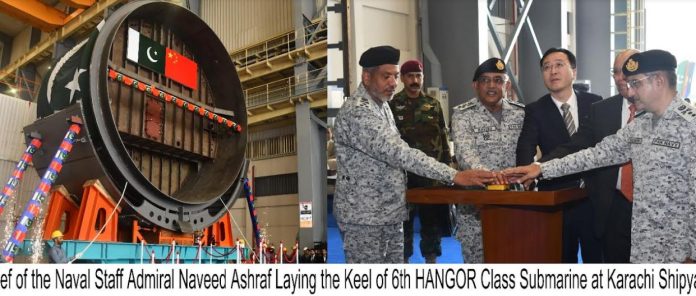
KARACHI, FEB 14 /DNA/ – Achieving another milestone in indigenous submarine development project at Pakistan, the Keel Laying Ceremony of second HANGOR Class Submarine was held at Karachi Shipyard & Engineering Works (KS&EW). Chief of the Naval Staff Admiral Naveed Ashraf graced the occasion as Chief Guest.

As per the defence agreement between Pakistan and China for development of 08 x HANGOR Class Submarines, 04 submarines are under construction at Wuchang Shipbuilding Industry in China whereas remaining 04 are being built at KS&EW under Transfer of Technology (ToT) agreement. This is the 2nd Submarine to undergo Keel Laying at KS&EW. Earlier, in Dec 2022, Keel Laying of first Submarine was successfully undertaken and currently it is at advanced stage of construction.

Speaking on the occasion, Chief of the Naval Staff Admiral Naveed Ashraf said that it is a matter of great pride to witness the Keel Laying of HANGOR Class Submarine at Karachi Shipyard in collaboration with China Shipbuilding & Offshore International Co. Ltd (M/s CSOC). He lauded the joint efforts and performance of Ministry of Defence Production, Pakistan Navy, Karachi Shipyard (KS&EW) and M/s CSOC for construction of these Submarines. Chief of the Naval Staff highlighted that indigenization is a top priority of Naval Headquarters policy which is being manifested by construction of these state of the art Submarines at KS&EW.

Earlier during his welcome address, the Managing Director KS&EW, Rear Admiral Salman Ilyas highlighted that Karachi Shipyard is fully cognizant and completely aligned with the goals set forth by Government and Pakistan Navy in pursuing self-reliance in submarine construction. These submarines are a testimony of our commitment to this national cause. He also thanked Ministry of Defense Production and Pakistan Navy for their continued support and cooperation in realizing various projects at hand.

The ceremony was attended by representatives of Embassy of China, M/s CSOC (China), M/s WSIG (China) and other high-ranking government officials including distinguished guests from MoDP and armed forces of Pakistan.

Nawaz sacrifices PM slot for his daughter Maryam

Nawaz sacrifices PM slot for his daughter Maryam

The prevailing uncertainty surrounding the election results may have prompted Nawaz Sharif to reconsider his political position and thus not to present himself as the next prime minister of Pakistan

Ansar M Bhatti

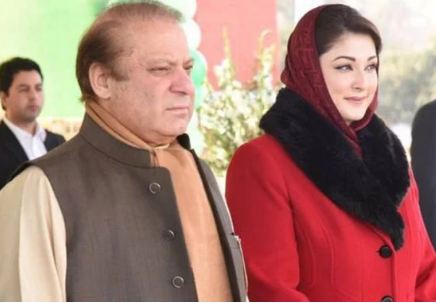
ISLAMABAD: PML-N leader Nawaz Sharif appears to have made a strategic move by relinquishing his prime ministership, potentially paving the way for his daughter, Maryam Nawaz, to be nominated for the Chief Minister position in Punjab. Analysts speculate that Nawaz’s decision may have been influenced by advice to step back due to the contested nature of his election to the national assembly seat. There is a concern that an unfavorable decision could pose challenges for him.

Another contributing factor to Nawaz Sharif’s change of stance is the lackluster performance of the PML-N in the general elections. Preliminary reports suggest that the party secured only 30 to 40 seats. While these reports await confirmation, it is evident that a significant number of losing candidates have turned to the courts to challenge the election outcomes. The prevailing uncertainty surrounding the election results may have prompted Nawaz Sharif to reconsider his political position and thus not to present himself as the next prime minister of Pakistan.

Over the course of history, the relationship between Nawaz Sharif and the Establishment has consistently proven to be tumultuous, marked by frequent conflicts that have led to the overthrow of Nawaz Sharif’s government on three separate occasions, either through military intervention or judicial processes. Given this historical backdrop, the anticipation was high that the dynamics between these two entities would continue to be strained in the recent political scenario.

It was foreseeable that the powers-that-be were inclined to keep Nawaz Sharif away from the prime minister’s office once again, considering the challenges and conflicts that had arisen in the past. This recurrent pattern suggested a deep-rooted difficulty in the coexistence of Nawaz Sharif and the Establishment.

Even amidst uncertainties surrounding the amicable coexistence between Maryam Nawaz and the Establishment, given her historically assertive stance, it remains crucial to observe the trajectory of their relationship in the days ahead. The Sharif family, by retaining key positions, may face criticism, particularly concerning the concentration of power within their ranks.

Notably, Aleem Khan, the IPP President and a candidate for the chief minister role, seems to have diminished prospects based on recent developments. The evolving political landscape demands a nuanced analysis of power dynamics and potential repercussions for both Maryam Nawaz and the broader political landscape. The dynamics between key figures and the distribution of roles within the Sharif family will undoubtedly be subject to scrutiny, shaping the narrative and perceptions in the coming days.

JUI (F) rejects elections results

JUI (F) rejects elections results

If Establishment thinks elections are  fair then it means its (Army) May 9 narrative is buried

ISLAMABAD, 14 FEB (DNA) – Chief of JUI F Maulana Fazr ur Rehman has hinted at talks with the PTI saying the elections 2024 were badly rigged. He said if the Establishment thinks that the elections were free and fair then it means the narrative build by the Establishment is dead and buried.

He said the Establishment should withdraw from politics. If they do so, we will extend all love and affection to them. But if they will do politics then we will response in the political language.

Elections are the Battle of Hearts and Minds

Elections are the Battle of Hearts and Minds

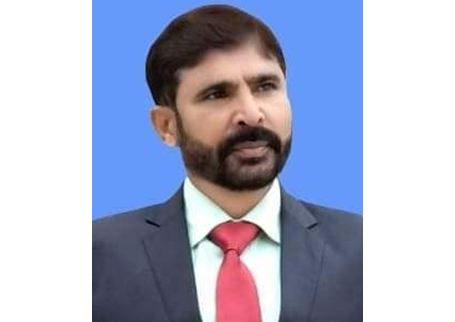
Dr. Muhammad Akram Zaheer

Elections are like a big decision-making event where people pick a leader for their country. They do this by voting in public. The leader they choose will have power and important duties. Elections are a formal way for a group of people to make decisions, and the person they pick becomes a public official. This is a really important part of democracy, making sure the government is for the people and chosen by the people. One important thing in elections is suffrage, which means the right to vote. Not everyone gets to vote, and it’s a big question deciding who can. Usually, people under a certain age, like 18 in Pakistan, can’t vote. They’re not considered adults yet. Choosing a person to run in the election is another important part. This is called nomination. It’s like officially suggesting someone to be the leader. People might also publicly support a candidate by giving endorsements or testimonials. The way votes are counted and how decisions are made is called the electoral system. It’s like the rules and systems that make sure the votes turn into a choice for a leader. The first step is counting all the votes, and different systems use different ways, like using ballots.

So, elections are a big deal in democracy. They let people have a say in who leads the country. Voting is a right, but not everyone can do it, like kids or young people. Before the election, people suggest who should run, and others show support for their favorite candidate. The way votes are counted is called the electoral system, and it makes sure the people’s choice becomes the leader. Next, we determine the outcome based on the count of votes. Elections often fall into two types: proportional or majoritarian. Scheduling involves planning and managing elections. Those chosen by the public are responsible to them and must seek approval regularly to stay in office. Most countries hold elections at set intervals. Election campaigns are crucial during this process, as they aim to positively influence a specific group’s decision-making. Politicians compete to gain support from more individuals. The elections are a peaceful and effective method of selecting political leaders. Citizens use their votes to choose leaders whose views align with theirs. This allows people to express their preferences through political leadership. An election serves as a platform for citizens to voice their concerns. If dissatisfied with a leader, voters can remove them from power and replace them with a better alternative. Elections offer a significant opportunity for political participation. They also provide a platform to bring new issues to the public’s attention. In most democratic countries, ordinary citizens can independently run for office. Determining the result of an election involves counting the votes. Elections are often categorized as either proportional or majoritarian. Scheduling is the organization and control of elections. Those elected are accountable to the people and must seek approval regularly to stay in office. Most countries hold elections at fixed intervals. Election campaigns play a crucial role as politicians strive to influence a specific group’s decision-making by appealing to more individuals.

Elections are a peaceful and effective way to choose political leaders. Citizens use their votes to select leaders whose views resonate with them, allowing them to express their preferences through political leadership. Elections also serve as a means for people to voice their dissatisfaction. If unhappy with a leader, voters have the power to remove them from office and choose a better alternative. Elections provide a significant opportunity for political participation and offer a platform to raise new issues in the public sphere. In democratic countries, ordinary citizens can independently run for office. In most democratic countries, an individual can start a new political group and join elections. Elections are essential to make sure that the people in power are doing the right thing. If the ruling parties make mistakes, they might lose the election, so they try not to do anything harmful to the public. Elections work as a good way to control and check the power of those who are in charge. Now, let’s talk about Pakistan and its upcoming 2023 election. The country is facing many serious problems that need quick attention. Pakistan has a huge population of over 241 million, and it’s growing at a rate of 2.55%. This means the nation is at a very important point in its development. In this detailed article, we will explore the various challenges that Pakistan is dealing with, emphasizing how crucial the role of political leadership is as the country gets ready for this significant election. The challenges that Pakistan is facing are diverse and urgent. They need immediate action and attention from the leaders. The population is large, and the growth rate is significant, making it crucial for the government to address various issues. The article will discuss these challenges in detail, highlighting the importance of having strong and capable political leaders during this crucial time.

Election 2024: Accusations of rigging

Election 2024: Accusations of rigging

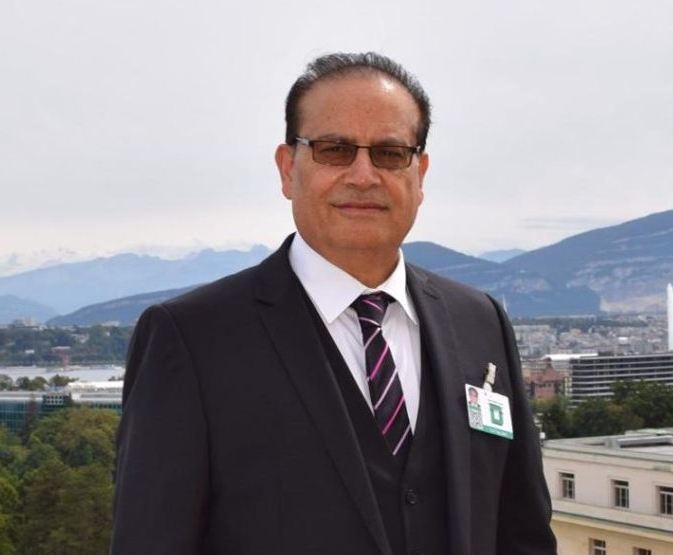
Waheed Hussain

Since 1985, I have been watching conduct of general elections, the winners always declared the process free, fair and transparent, while, the losers called it rigged. The last week elections ended up with the same old narrative of accusations and counter-accusation of massive rigging and irregularities across the country. In interior Sindh the GDA, in Karachi Jamat-i-Islami, Tehreek Labaaik Pakistan and Pakistan Tehreek Insaf, in Baluchistan the nationalists and JUI (F), in Khyber PakhtunKhwa Awami National Party, while in Punjab PTI were protesting against the ECP blaming it for failing to hold free, fair and transparent polls on February 8, 2024.

Other than Pakistan Tehreek-i-Insaf (PTI), most of these protesting political parties have ethic, regional and religious outlook. Even in the past they used to win seats in a single digit, except when they had formed election alliances either at the provincial or national levels. For Example, Jamaat-i-Islami along with other religious like-minded parties formed a Islami Jamhoori Ittehad (IJI) in 1990 elections against the Pakistan Peoples’ Party. The leading party in IJI was Pakistan Muslim League (Nawaz). Again, in 2002 multi-party religious alliance Muttahida Majlis-i- Amal (MMA) was formed including Jamaat Islami (JI) and Jamiat Ulema-i-Islam (Fazal) and others. The alliance had won good number of seats in the national assembly and formed a government in Khyber Pakhtunkhwa (KPK) province.

However, as a single political party, they never won a big number of national or provincial assemblies’ seats to form an independent government.

No doubt, Tehreek Labbaik Pakistan (TLP) has huge following in the country. It succeeded in getting millions of votes from various constituencies in 2018, as well as in the present general elections. However, it needs some more time to win election and reach to the national or provincial assemblies.

Awami National Party (ANP) has been wining seats in various districts of the KPK province including Charsadda, Mardan, Peshawar, Sawabi, Nowshera and Malakand districts in the past. But since 2013 the PTI has defeated ANP like other political parties in the province. As for as Grand Democratic Alliance in Sindh was concerned, It was facing a tough competition from PPP.

Former President of Pakistan and co-chairman, Asif Ali Zardari’s controlled and managed party was ruling the Sindh province for past 15 years. The party has a strong hold on the provincial politics. It has won the election for fourth consecutive time and ready to form another provincial government in few days. We should not forget the fact that Pakistani politics is combination of popularism, power and money. In the recent elections voters in Baluchistan preferred to elect the main stream national political parties instead of supporting the regional ethnic ones. Most of the seats in the province were being won by the PPP, JUI (F) and the PML (N).

Keeping in mind the Pakistani political and administrative structure, no doubt, that there must have been some irregularities and short-comings in the election process in some constituencies, yet, declaring the entire election exercise a faulty, is a sweeping statement based on a political point scoring. I am sure when the prominent lawyers like Salman Akram Raja and Shohaib Shaheen, who were contesting election for the national assembly from Lahore and Islamabad constituencies would present a credible evidence of rigging in the court.

The massive rigging narrative is being crafted by the PTI social media teams to target the ECP, political opponents as well as the establishment.  Suppose if any state institution was involved in the rigging, then how PTI-backed independent candidates could win hundreds of national and provincial assemblies’ seats? The final results tell that the party stood first in the National Assembly, won 85 percent seats in KP, grabbed more than 115 seats in Punjab. Was the rigging done to benefit the PTI? Many PML (N) senior leaders such as Khawaja Saad Rafeeq, Rana Sanaullah, Khuram Dastagir and Abid Sher Ali, who have been winning elections for decades from their respective constituencies have lost the election and respectfully accepted their defeat. If the rigging was done, why they were left out of the assembly? If the rigging was done why Nawaz League got just 73 seats out of 266?

Looking at the number of seats being captured by different parties, it suggests, that PTI is the actual beneficiary of the so-called rigging, if there was any? Imran Khan in 2013 elections presented the narrative of 35 punctures. He held 126 days sit-in in front of the Parliament House along with his former associate Dr. Tahir ul Qadri. Later in a TV interview he explained that he got this figure of 35-punctures from one of the TV programs. He could not prove anything regarding his claim in the superior court. The rest is the history. When his party won the election in 2018, the PDM accused him of rigging. He was accused of being a product of RTS. For four years he was tagged as selected instead of an elected Prime Minister of Pakistan. This political attitude has to change. This problem is not only with the PTI but most of the political parties have the same undemocratic, negative and selfish approach.

Every citizen has the constitutional right to protest, however, such demonstration must be peaceful. The crowd should not harm the public and private properties. They should ensure the safety of the citizens.  They should ensure free movement of the masses. But again, will these protests will address the actual issue until the candidates and the political parties approach the right forums. At the end of the day, they have to reach out to ECP and courts for the redressal of their complaints.

The problem with the PTI is that its leadership has always been using an abusive, harsh and derogatory language against all institutions including the judiciary and military. Unfortunately, the party’s social media teams follow the same practice. Social media is a platform to inform, educate and entertain the public. It’s a good source of political communication too. But some of our political parties used the platform for targeting state institutions and personalities. The social media intolerance is giving birth to the digital violence in the society. Culture of digital intolerance is harming the young generation. It’s the responsibility of all political parties specially PTI and PML (N) to follow a code of conduct on the social media while expressing their political opinions, issuing statements or reactions. After the last week elections trends on the ‘X’ platform have been launched not to criticize the election conducting body but to damage the security institutions of the country.

From political point of view the purpose of PTI protests and social media campaign regarding election results must be a strategy to put maximum pressure on the institutions and legal forums to get some kind of relief for the party leadership. With all difficulties and hurdles in the elections, PTI has performed well. It is going to form a government in PK. It has good numbers at center and Punjab. However, Imran Khan has decided not to sit with PPP, PML (N) and the MQM in coalition. Like other political parties, PTI does not have sufficient MNAs to form a government on its own. Naturally, it will sit on the opposition benches both at center and in Punjab. As an opposition it can give tough time to any future government. Learning from the past mistakes, PTI should remain part of a parliamentary system. In assemblies it will be able to challenge decisions of the government. All political players are supposed to give up their personal agendas and give the country first priority.

The writer is a senior print and broadcast journalist

PTI’s Challenges: Stolen & Reserved Seats, and Shifting Loyalties

Qamar Bashir

By: Qamar Bashir

Pakistan Tehreek-e-Insaf (PTI) finds itself embroiled in a multifaceted crisis, grappling with significant challenges that threaten its political standing and influence in both the National and Provincial Assemblies. At the heart of this turmoil is a contentious legal struggle to reclaim seats that PTI alleges were unjustly wrested from its grasp, amidst accusations of a biased Election Commission and state machinery ostensibly arrayed against it. This situation is further compounded by the unsettling trend of PTI-endorsed candidates, who secured their victories largely through the party’s support and the charismatic appeal of its former chairman, Imran Khan, now defecting under the pressures of coercion or the allure of incentives.

Faced with this precarious scenario, PTI’s ability to retain its elected representatives is severely constrained, leaving the party in a vulnerable position. The shifting allegiances of its candidates not only undermine PTI’s legislative strength but also pose profound questions about party loyalty and political integrity in Pakistan’s tumultuous political landscape.

In response to these daunting challenges, PTI must tread carefully, adhering scrupulously to the stipulations of the Elections Act, 2017 (Section 104). This legal framework, while offering a pathway to address grievances, also demands meticulous compliance and strategic acumen from PTI as it seeks to navigate these turbulent waters. The party’s journey ahead is fraught with legal, political, and ethical hurdles, requiring a delicate balance between legal recourse, political strategy, and the maintenance of its core principles and public image.

Given this legal context, PTI’s options to prevent defections are primarily political rather than legal. They may engage in negotiations or employ party-level strategies to retain their members. It may rely on internal rules or moral suasion to influence members’ loyalty. Legally, the party should rely on pre-election agreements, if any, or party constitutions that candidates may have agreed to, which might include clauses related to party loyalty or penalties for defection PTI could explore enforcing these agreements.

However, the enforceability of such agreements is contingent upon their specific terms and compatibility with Pakistani law. Additionally, PTI could consider filing election petitions if there is substantial evidence of electoral fraud or malpractice associated with the defection. Nonetheless, the effectiveness of these legal measures is uncertain, given the lack of clear statutory provisions addressing post-election party loyalty. In Pakistan’s political landscape, such issues of defection and party loyalty have historically been more amenable to political resolutions rather than legal interventions.

In  the case of reserve seats, PTI has limited options.  Since PTI could not file the initial list submission reflecting the party’s eventual electoral strength or diversity, PTI could explore forming alliances or negotiating coalition agreements with other parties. These political maneuvers would involve discussions around policy concessions or legislative support in exchange for backing PTI’s nominees for key positions, thereby indirectly enhancing their representation in the assembly. Such alliances not only require adept negotiation skills but also a willingness to engage in give-and-take, balancing the party’s immediate needs with its long-term policy objectives.

PTI faces formidable challenges in its quest for justice concerning allegations of extensive electoral rigging that ostensibly transformed its potential victories and defeats. The party contends that it is up against an overwhelming adversary, with accusations that the entire Election Commission, along with various state institutions, is determined to thwart PTI’s aspirations for a majority government, particularly at the federal level. This perceived alliance against PTI is accused of employing a wide array of tactics, both within and beyond the legal framework, to systematically undermine the party’s electoral success and political influence.

The avenues available to PTI for contesting these allegations and seeking redress are notably constrained under these circumstances. The party’s battle is not merely legal but also deeply political, entailing a struggle against a network of powerful forces allegedly aligned in opposition. This situation places PTI in a precarious position, necessitating a multifaceted strategy that goes beyond conventional legal challenges. It requires mobilizing public support, international advocacy for fair play, and engaging in diplomatic channels to highlight the perceived injustices. The party’s endeavor to overturn the alleged manipulation and secure its rightful place in the political arena is a testament to the turbulent nature of democratic processes in contexts where the impartiality of electoral bodies and state institutions is called into question.

The electoral framework in Pakistan, as delineated by the Elections Act, 2017, is structured to uphold the sanctity and integrity of the voting process through a series of meticulous procedures and checks. From the initial step of voter identification, which leverages both traditional ID cards and advanced technologies like biometric verification, to the methodical issuance and tracking of ballot papers marked with indelible ink, the system is designed to mitigate the risks of impersonation and double voting. The public announcement of provisional results, followed by a transparent consolidation process in the presence of contesting candidates or their representatives, further enhances the credibility of the electoral process. These procedural safeguards, coupled with the option for any grievances to be thoroughly investigated by Election Tribunals, including the verification of thumb impressions against electoral rolls, form a robust framework intended to deter and detect malfeasance.

However, the efficacy of this system in delivering justice, particularly in the face of allegations of widespread rigging, hinges on the integrity with which these procedures are implemented. While the law provides a comprehensive blueprint to safeguard electoral integrity, its success ultimately depends on the impartial execution by election officials and the vigilant oversight by political parties, candidates, and civil society.

The provisions for legal recourse and the establishment of Election Tribunals serve as a critical backstop, offering a pathway to challenge and rectify potential irregularities. This multi-layered approach, combining preventive measures with mechanisms for redress, embodies the legislative intent to create a foolproof electoral system. Yet, the true measure of its effectiveness lies in its application, underscoring the importance of vigilance, transparency, and accountability at every stage of the electoral process.

In the intricate tapestry of Pakistan’s political arena, PTI emerges as the dominant force at the Centre, yet finds itself short of achieving a simple majority. This scenario necessitates alliances for governance, but ideological rifts with major parties like PPP and PML(N) sharply limit PTI’s options, steering it towards a probable tenure in opposition. This position compels PTI to focus on reclaiming what it alleges are its unfairly lost seats, while navigating the complex dynamics of parliamentary politics.

Despite the challenging circumstances, there’s a simmering discourse among PTI leaders about the potential for a coalition with PPP. Such a partnership, though fraught with complexities due to fundamental ideological divergences, holds a glimmer of possibility. Realizing this alliance would require exceptional diplomatic finesse and a willingness to engage in pragmatic policy compromises. For PTI, this path demands a strategic recalibration to forge a united front with PPP, ensuring that governance is marked by cohesion and effectiveness despite the underlying ideological disparities.

Conversely, in provinces like Punjab and Sindh, where PTI is not the dominant force, the party faces a more complex situation. In Punjab, where PML(N) leads, and Sindh, predominantly under PPP control, PTI’s prospects for forming a government are slim. The political dynamics in these regions might compel PTI to adopt a role in the opposition, focusing on legislative influence and preparing for future electoral opportunities.  Whereas, Balochistan offers a unique challenge where PTI didn’t do well compared to any other national party.

Navigating the tumultuous waters of Pakistan’s political landscape, PTI stands at a crossroads, facing daunting challenges that test its resilience, strategic acumen, and ideological commitment. The party’s struggle to reclaim its allegedly stolen seats, counter the shifting loyalties of its representatives, and grapple with the complexities of forming alliances underlines the intricate balance between political pragmatism and principled governance. As PTI endeavors to solidify its position, whether in governance or opposition, its actions will not only shape its own future but also have profound implications for the democratic fabric of Pakistan. The path PTI chooses to pursue in this critical juncture will be a testament to its vision for the nation, its commitment to justice, and its capacity to navigate the intricate interplay of power, loyalty, and ideology in the quest for a more transparent and accountable political order.

Marriott Hotel opens Japanese restaurant ‘Kiku’

Marriott Hotel opens Japanese restaurant ‘Kiku’

Kiku’s culinary team, led by Chef Mario with a passion for Japanese cuisine, has crafted a menu that showcases the finesse of contemporary Japanese dishes. Guests can anticipate a diverse selection of sushi, sashimi, and tempura, alongside a variety of creative dishes that capture the essence of Japan’s seasonal and artful food culture

ISLAMABAD, 14 Feb (DNA) – The Islamabad Marriott Hotel is thrilled to announce the opening of its latest gastronomic venture, Kiku, a contemporary Japanese restaurant that promises an authentic journey through the culinary landscapes of Japan.

The restaurant is now open to guests and is located on the ground floor , shows a sophisticated ambiance that perfectly matches the innovative and refined flavors presented on the plate.

Kiku’s culinary team, led by Chef Mario with a passion for Japanese cuisine, has crafted a menu that showcases the finesse of contemporary Japanese dishes. Guests can anticipate a diverse selection of sushi, sashimi, and tempura, alongside a variety of creative dishes that capture the essence of Japan’s seasonal and artful food culture.

“We are excited to bring Kiku to the heart of Islamabad,” said Mr. David Richard O’Hanlon, General Manager of the Islamabad Marriott Hotel. “Our goal is to offer an unparalleled dining experience that transports our guests to Japan through each bite, and we are proud to present a menu that reflects both the tradition and innovation of Japanese cooking.”

Join us at Kiku for a taste of Japan, where every meal is a masterpiece, and every visit is an experience to remember.

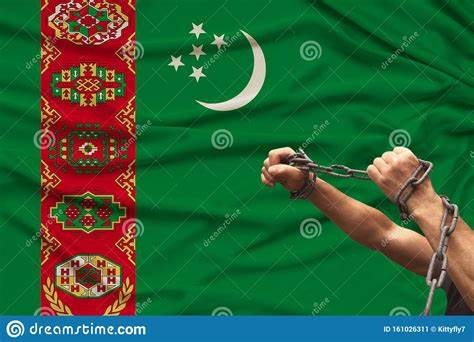
Turkmenistan faces ‘parallel reality’ media landscape

“We know about Facebook, Instagram and YouTube. But we can’t access them — everything here is blocked,” said Byashim Ishanguliyev, a fruit seller in the Turkmen capital of Ashgabat

          Ashgabat, Turkmenistan, Feb 14 (AFP/APP):”We know about Facebook, Instagram and YouTube. But we can’t access them — everything here is blocked,” said Byashim Ishanguliyev, a fruit seller in the Turkmen capital of Ashgabat.

                  To keep information from the outside world hidden from its citizens, Turkmenistan, one of the world’s most closed and isolated countries, exercises almost total control over the internet.

                  Getting round the ban is no small feat.

                  “Some people manage to connect to a VPN, but that’s only temporary, it will also be blocked,” 19-year-old Ishanguliyev told AFP at a market in Ashgabat, referring to a Virtual Private Network.

                  “Plus the internet is slow. So if somebody manages to download an interesting video, clip or film, we all watch it together,” he said.

                  Despite the effectiveness of the Turkmen firewall, the regime is constantly stepping up measures to prevent outside information seeping into the energy-rich Central Asian nation.

                  President Serdar Berdymukhamedov last month announced his intention to “strengthen the country’s cybersecurity”.

                  Berdymukhamedov, in power since 2022 — the country’s third leader since the fall of the Soviet Union in 1991 — has followed in his predecessors’ footsteps in exerting maximum control.

                  His father, Gurbanguly Berdymukhamedov, previously ruled the ex-Soviet country for 15 years with an iron fist.

                  Alongside social media, services like WhatsApp, Viber, Signal and Telegram are also blocked.

                  Instead, Turkmenistan has Bizbarde, a local messenger under the government’s control.

                  For video, the authorities have launched Belet, a YouTube alternative purged of any content — both news and entertainment — that could show what life is like beyond the isolated country’s borders.

                  “There is no media landscape,” said Ruslan Myatiev, whose Turkmen.News site is blocked inside the country.

                  At home, the Turkmen population see nothing but “propaganda to promote the cult of personality of the Berdymukhamedovs — father and son,” the Netherlands-based Myatiev said.

                  “To prevent this parallel reality created by the media from collapsing, the rulers block the internet,” he added.

                  All media outlets inside the country are state-owned. They only broadcast official news, reporting heavily on people offering their praise and thanks to the Berdymukhamedov regime.

                  “Turkmen television is very boring, not informative, with the same shows over and over again,” said Yusup Bakhshiyev, a 38-year-old civil servant who lives in the capital.

                  He used to be able to watch some foreign channels via a satellite link. But that is no longer possible.

                  “Some local officials came to my house and told me to remove the satellite dish, as it was spoiling the architecture of the town,” he told AFP.

                  After that, he subscribed to Turkmen cable TV.

                  “The state controls the information and it receives income from the subscription,” he said.

                  Some Western channels — including France 24, BBC and Euronews — are authorised.

                  But in a country where English is hardly spoken, their audience is minimal.

                  On their TV screens, Turkmens see endless footage of President Berdymukhamedov in action — reprimanding sheepish government ministers, planting trees in the desert, or receiving rapturous applause.

                  His father, who has the official title of Hero-Protector — or “Arkadag” in Turkmen — maintains immense privileges and is still the subject of an intense personality cult.

                  He is often filmed at sports events, holding weapons or playing instruments.

                  Sometimes the absurdity spills towards the extreme.

                  The Arkadag newspaper recently reported that Gurbanguly travelled to Arkadag — a town named in his honour — to congratulate the players of the local football team, named Arkadag.

                  Behind the carefully controlled headlines lies a country with a bleak human rights record.

                  The Freedom House NGO ranks Turkmenistan among the “worst of the worst” for political freedoms and civil liberties.

                  It scores just two of 100 possible points in its rankings — lower than North Korea.

                  Turkmenistan is also bottom of the Reporters Without Borders’ press freedom index.

                  But none of this appears to bother Oksana Shumilova, a 40-year-old who works for a construction company in the capital.

                  Reading a copy of the “Neutral Turkmenistan” newspaper — featuring the inevitable photo of the president on its front page — she is happy that her country is stable.

                  Reading the state-controlled news gives her a “feeling of stability and tranquillity,” she told AFP.

                  “It contains no critical articles or negative information,” she said.

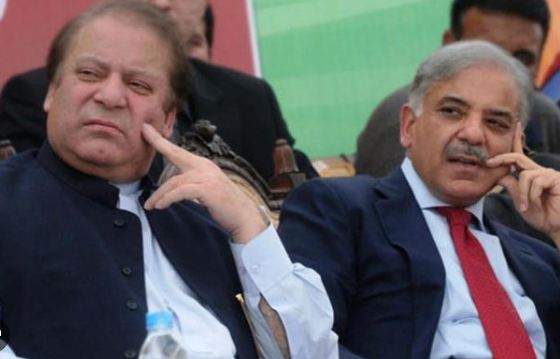
Nawaz Sharif nominates Shehbaz as Prime Minister

Nawaz Sharif nominates Shehbaz as Prime Minister

ISLAMABAD, FEB 13 /DNA/ – The leader of Pakistan Muslim League (N) Muhammad Nawaz Sharif has nominated Former Prime Minister Muhammad Shahbaz Sharif for the premiership of country, while he also nominated Maryam Nawaz Sharif for the post of Chief Minister of Punjab, PMLN leader Maryam Auranzaib said on X.

PTI to join hands with MWM to form govts in Centre, Punjab over Imran Khan’s directives

PTI to join hands with MWM to form govts in Centre, Punjab over Imran Khan's directives

ISLAMABAD: Pakistan Tehreek-e-Insaf (PTI) Central Information Secretary Raoof Hasan said that PTI Chairman-for-life Imran Khan had given the go ahead to the party to forge coalition with the Majlis Wahdat-i-Muslimeen in the Centre and Punjab because PTI having a clear-cut majority with 180 seats in the National Assembly.

Addressing a press conference after meeting PTI Founding Chairman on Tuesday, PTI Central Information Secretary said that PTI would form coalition government with Jamaat-e-Islami (JI) in Khyber-Pakhtunkhwa (KP) for reserved seats.

He said: “On the instructions of Imran Khan, we will form the government in the two provinces and will redouble our efforts to form government in the Center as well.”

Conveying Imran Khan’s clear message, Raoof Hasan said that formation of a government was the right of who had emerged victorious on February 8 general elections as it was their right do so and the power wielders must introspect their actions.

He said that PTI Founding Chairman tasked him to hold talks with all political parties for formation of a coalition government. However, he added that PTI Chairman-for-life categorically ruled out possibility of any talks with Pakistan Muslim League-Nawaz (PML-N), Pakistan Peoples Party (PPP), and Muttahida Qaumi Movement-Pakistan (MQM-P) in this regard.

“I have been given the mandate by Khan to approach all political parties for coalition partnership to continue the party’s political struggle for democratic values not for powers,” Raoof added.

He also revealed that PTI Founding Chairman nominated PTI KP President Ali Amin Gandapur as the Chief Minister candidate of the KP. “It is up to Ali Amin Gandapur to form the government as per the instructions of the PTI Founding Chairman,” he added.

“Aamir Dogar had once again been appointed as the chief whip in National Assembly to interact with PTI backed elected members of national assemblies,” Raoof said.

About party elections, PTI CIS said that it has also been directed to hold the PTI intraparty elections soon.

About PTI Chairman-for-life, Raoof said that he was very concern about the prevailing country’s situation, as he was saying that the country was heading fast towards economic disaster.

He stated that Imran Khan pressed that everyone top priority should be to improve Pakistan’s financial health, adding that he believed that going to IMF would not be the best and viable option because the financial body attached severe conditionality with their funding that would further compound the miseries of the inflation-ridden and poverty-stricken masses.

Therefore, Raoof said that as per Khan, the best option to get the country out of the prevailing economic quagmire was to lure expatriates and large multi-cooperation companies to invest in Pakistan that could improve financial health of the country. However, He went on to say that it was only possible with politically stable and public mandated government.

“We do not have enough time and decisions should be made at the earliest,” Raoof said, adding that a conscious and strong efforts were going on to impose the country’s biggest money laundering syndicate on the country, which is being controlled by Sharif family.

He stated that Imran Khan revealed that it would further shatter the confidence, which would further escalate Pakistan’s economic problems.

PTI CIS pointed out that people expressed their confidence in PTI and emerged it as a lead political force with 180 NA seats as per form-45; however these were drastically reduced through poll fraud.

He said that PTI would continue its struggle within the ambit of constitution and law to get the stolen mandate given by the people of the country.

Stay Connected

64FansLike
60FollowersFollow

Latest Reviews

Exchange Rates

USD - United States Dollar
EUR
1.17
GBP
1.35
AUD
0.67
CAD
0.73