Home Blog Page 790

What to expect at two-day SCO CHG summit

What to expect at two-day SCO CHG summit

Faisal Sheikh

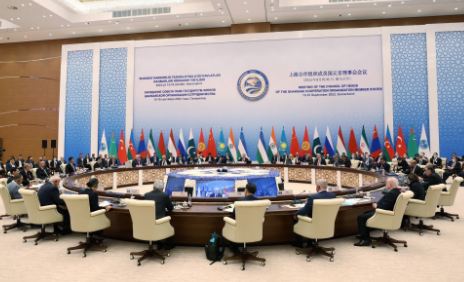
ISLAMABAD, The two-day 23rd meeting of the Council of the Heads of Government (CHG) of the member states of the Shanghai Cooperation Organization (SCO) is starting today with the delegates from members and other invited states already arriving in the federal capital.

To be held at the Jinnah Convention Center, the annual meeting of the SCO CHG – the second highest forum within the SCO – will be chaired by Prime Minister Shehbaz Sharif as the current chair of the Council. Pakistan had assumed the rotating chair of the SCO CHG for 2023-24 at the previous meeting held in Bishkek on October 26, 2023.

The leaders from the SCO member states attending the summit include China’s Premier of the State Council Li Qiang, Prime Minister of Belarus Roman Golovchenko, Prime Minister of Kazakhstan Olzhas Bektenov, Russian Prime Minister Mikhail Mishustin, Tajik Prime Minister Kohir Rasulzoda, Uzbek Prime Minister Abdulla Aripov, Kyrgyzstan’s Chairman of Ministers’ Cabinet Zhaparov Akylbek, Iran’s First Vice President Mohammad Reza Aref, and Indian External Affairs Minister Subrahmanyam Jaishankar.

Besides, Mongolia is participating in the summit as an Observer State being represented by Prime Minister Oyun-Erdene Luvsannamsrai and Turkmenistan as Special Guest represented by Deputy Chairman of the Cabinet of Ministers Rashid Meredov.

Among other dignitaries attending the moot include SCO Secretary-General Zhang Ming, Director of Executive Committee SCO Regional Anti-Terrorist Structure (RATS) Ruslan Mirzayev, Chairman of the Board of SCO Business Council Atif Ikram Shaikh and Chairman of the Council of SCO Interbank Union Marat Yelibayev.

On Tuesday evening, Prime Minister Shehbaz Sharif will host the welcome dinner for the dignitaries participating in the moot.

On Wednesday the regional leaders would gather at the Jinnah Convention Centre to discuss ongoing cooperation in the fields of economy, trade, environment, socio-cultural linkages and review the performance of the Organization. The leaders will also adopt important organizational decisions to further enhance cooperation among SCO member States and approve the budget of the Organization.

Before the formal session begins, Prime Minister Shehbaz will welcome the leaders at the venue, followed by a group photo.

The proceedings of the moot will start with Prime Minister Shehbaz’s opening remarks before the statements by the participating leaders.

The prime minister will deliver his concluding remarks after the signing of different documents by the participating leaders. Afterward, Deputy Prime Minister and Foreign Minister Ishaq Dar, along with SCO Secretary-General Zhang Ming will deliver media statements to discuss the highlights and outcomes of the two-day summit.

On Wednesday, Prime Minister Shehbaz will also host an official luncheon for the participating leaders.

Foreign Office spokesperson Mumtaz Zahra Baloch, in a statement, had said that the hosting of CHG by Pakistan reflected the abiding commitment of Pakistan to the purposes and principles of the SCO Charter and the values of the Shanghai Spirit.

Since becoming an SCO member in 2017, Pakistan has worked consistently and constructively to strengthen good neighbourly relations and mutually beneficial cooperation among SCO member states, she added.
The SCO Summit: Some Musings

The SCO Summit: Some Musings

Abdullah Hamid Gul

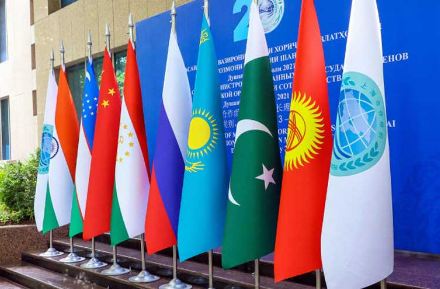
Today, Islamabad asserts its role as the diplomatic hub of South Asia by hosting the SCO Summit, signaling a new chapter in Pakistan’s foreign policy and regional integration efforts. As a crucial member of the SCO, Pakistan spearheads this significant assembly of Asian nations committed to enhancing economic, political, and security cooperation. The presence of leaders from member states, including Russia’s Prime Minister Mikhail Mishustin and China’s Premier Li Qiang, underscores Pakistan’s geostrategic significance in facilitating key discussions on trade, security, and cultural exchanges. Pakistan’s diligent preparations have fostered an environment conducive to effective and positive negotiations. By hosting this summit, Pakistan not only reaffirms its strategic importance in the region but also its commitment to regional prosperity. This gathering in Islamabad represents a shift towards deeper integration and connectivity, advocating a unified vision for Asia’s future, with Pakistan playing a central role.

 Summit’s Agenda

The current SCO Summit in Islamabad is carefully focussing on the following key areas: It’s seen as a way to bring people together from different cultures, bring their economies together, or make the region safe. The goal of this year’s summit is to improve business cooperation between member countries. It plans to make the trade interchange’s infrastructure better and look into possible energy projects that could help the area economy reach a whole new level. Another big topic of conversation is security, including ways to fight terrorism, make the area more stable, and make the program of cooperative defence of SCO member states stronger. The summit also wants to improve cultural exchange, which will help people from different countries understand each other better within the SCO and make the organisation stronger as a whole. Good things about this summit, which is attended by heads of state and government as well as other top officials from SCO member countries. This shows that the SCO is an important place to meet in the area. They are also a sign of how important the summit is diplomatically and that Pakistan is ready to host important foreign talks whenever it wants to. The most important leaders in the region need to be at this meeting to support and push for reaching the big goals set at the summit, make sure that the changes that are being made have the support they need to be successful across the region, and encourage a lot of cooperation.

Pakistan’s Role and Strategic Importance

Since joining the SCO, Pakistan’s place within this organization has been diplomatic weightage and geopolitical location, making the country an irreplaceable part of the SCO system. It is located in a strategic position and provides a direct link between the South Asian and Central Asian regions for transit and trade. This position makes it possible for Pakistan to improve and play a strategic role in the transit of goods, energy, and people across two vibrant regions as an active member of SCO in developing economic corridors like the China-Pakistan Economic Corridor. This corridor positively contributes to Pakistan’s economy and gives other SCO member states more direct access to international markets. In diplomacy, Pakistan uses its SCO membership to expand relations with other large neighbors, including China and Russia, and to navigate the tensions between India and the Central Asian republics. Thus, hosting the SCO Pakistan also signals that it is able and willing to take a leading role in regional problems, confirming its role as a mediator and cooperative partner in managing regional issues. It strengthens Pakistan’s diplomacy and shapes other regional policies and cooperation processes that benefit all members within the framework of the SCO.

Government Initiatives and Praise

It is pertinent to appreciate the efforts made by the government of Pakistan and state institutions to prepare for the event and host the SCO Summit. Several measures undertaken to create a conducive environment for productive discussions reflect Pakistan’s desire and its responsibility as the host of the SCO and its active members. Hosting such a credible international event speaks volumes about Pakistan’s management abilities to host and facilitate discourse on pertinent regional and global issues. With this in view, the government has adopted stringent security and logistical measures to enhance the holding of the summit. Security measures include hiring thousands to ensure the venue and the surroundings are safe. These measures eliminate any security threats that may threaten the dignitaries and the delegates at the summit so that the maximum focus can be achieved on the productive sessions of the summit.

Regarding transportation and communication, the government has put its best foot forward to manage the influx and movement of international visitors in and around Islamabad. Measures to avoid any hindrances to traffic flow have been observed, and unique pathways have been set aside for traffic flow in the various activities involving the participants. Further, the high-level meetings that will be held at the summit venue will ensure that all modern facilities have modern technology to facilitate the interactions between the leaders and their delegations.

The Future of Regional Cooperation

The upcoming SCO Summit in Islamabad will undoubtedly drastically impact the further development of cooperation within the organization. It can establish an innovative plan for interstate relations for years ahead. The expected outcome of this summit includes further discussions and decisions aimed at increasing economic cooperation, the development of security cooperation, and cultural interaction in the region. One of the main topics of the summit is a resolution of the essential disturbances affecting the area, including trade restrictions, security risks, and cultural concerns, to create a stable foundation for enhanced Asian connections.

As the host of the SCO Summit, Pakistan is very active by providing the right pace to this important event as the Summit is taking place in Islamabad. The opening meetings of the summit have convened leaders and representatives of the states in the region and proved that Pakistan possesses the potential to host significant multilateral talks and negotiations. The execution of this extensive event shows that Pakistan had restored plans for the continual growth of regional interaction and harmony. In the future, the effects of this summit on Pakistan and the region will be more profound. The talks and decisions made here are expected to increase the relations between the SCO member states and advance economic integration and cooperation in the sphere of security and cultural and personal exchanges. For Pakistan, the successful organization of the SCO Summit is not only an upgrade in its recognition at the international level but also a potential for expanding business and economic cooperation and new opportunities for becoming an active member of the diplomatic community. The summit acts as a vehicle for Pakistan to strengthen its participation in the regional economy and to be at the forefront of the efforts to carve the geography of Asia.

Canada, India expel diplomats

Canada, India expel diplomats

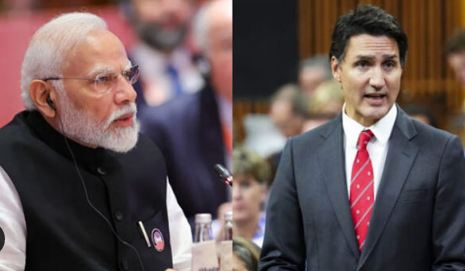
India-Canada relations have been tense since 2023 when Trudeau said Canada had credible evidence to link Indian agents to the assassination of Sikh leader

OTTAWA, OCT 14: Canada has expelled six Indian diplomats after a police investigation into “criminal activity” uncovered a “campaign of violence” against dissidents.

A US newspaper reported on Monday that the diplomats had been expelled, and it in a tit-for-tat move, the Indian foreign ministry said that New Delhi had expelled six Canadian diplomats, giving them until Saturday to leave the country.

That came hours after India said it was withdrawing its top envoy to Ottawa and other diplomats because the Canadian government is investigating them as “persons of interest” in an investigation.

India-Canada relations have been tense since September 2023 when Prime Minister Justin Trudeau said Canada had credible evidence to link Indian agents to the assassination of Sikh separatist leader Hardeep Singh Nijjar on Canadian soil earlier that year.

Nijjar supported a Sikh homeland in the form of an independent Khalistani state and was designated by India as a “terrorist” in July 2020.

India has repeatedly denied the allegation that its agents killed him, challenging Canada to share evidence to back its claim.

In a press conference, the commissioner of the Royal Canadian Mounted Police, Michael Duheme, said that the police had learned “a significant amount of information on the breadth and depth of criminal activity orchestrated by agents of the government of India, and consequential threats to the safety and security of Canadians and individuals living in Canada”.

Italian Navy carrier strike group arrives in Karachi for bilateral exercise

Italian Navy carrier strike group arrives in Karachi for bilateral exercise

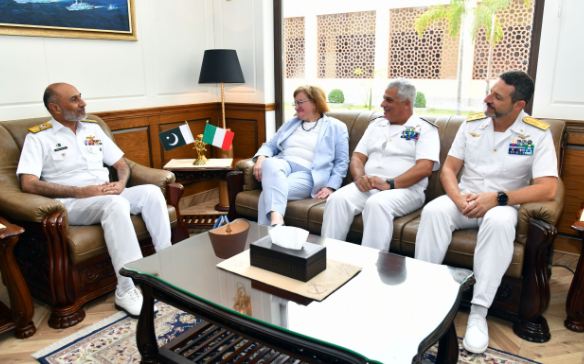
KARACHI, OCT 14 /DNA/ – The Italian Navy Carrier Strike Group comprising Aircraft Carrier ITS CAVOUR and Frigate ITS ALPINO, arrived in Karachi on a three-day visit followed by a bilateral exercise.

Upon arrival in Karachi, the Italian Navy ships were warmly welcomed by senior officials of Pakistan Navy and the Ambassador of Italy.

Following the arrival, an Italian delegation led by the Ambassador of Italy, Marilina ARMELLIN, along with Rear Admiral Stefano BARBIERI, Capability Director of the Italian Defence General Staff, called on Commander Pakistan Fleet, Rear Admiral Abdul Munib. During the meeting, matters of mutual interest including interoperability, avenues for future collaboration to enhance regional maritime security and defense cooperation were discussed.

Commander Karachi, Vice Admiral Muhammad Faisal Abbasi also visited ITS CAVOUR and was briefed about the Aircraft Carrier’s capabilities by Commanding Officer Captain Francesco FAGNANI.

The capabilities of Italian defence industries were also showcased in a Defence Industries Exhibition held onboard ITS ALPINO.

ITS CAVOUR also hosted a comprehensive brief for Pakistani media. During the media brief, Ambassador of Italy, Capability Director of Italian Defence General Staff, and Commander of the Carrier Strike Group endorsed the role of Pakistan Navy in regional maritime security and highlighted the importance of interoperability between the two navies.

PM Shehbaz, Chinese Premier Li inaugurate Gwadar airport

PM Shehbaz, Chinese Premier Li inaugurate Gwadar airport

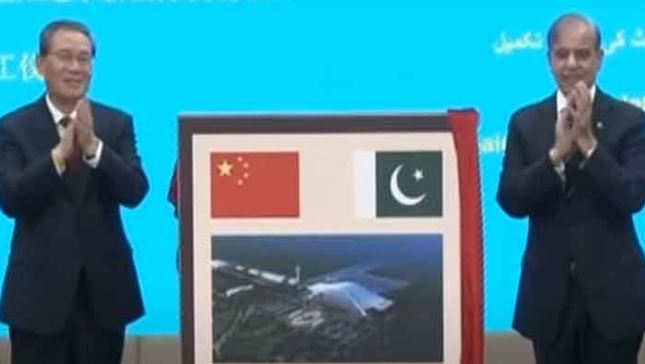
ISLAMABAD: Prime Minister Shehbaz Sharif and Chinese Premier Li Qiang, who landed in Islamabad on a four-day official visit earlier today ahead of Shanghai Cooperation Organisation (SCO) summit, virtually inaugurated the Gwadar International Airport part of the multi-billion dollars CPEC project.

Both prime ministers were at hands to unveil the plaque of Gwadar airport during the ceremony held at Prime Minister’s (PM) House. The ceremony was attended by members of the both delegations, ministers, military leadership and senior officials.

Play Video
“The landmark achievement was all about time-tested friendship between the two countries,” PM Shehbaz said while addressing the inauguration ceremony of the newly completed Gwadar airport.

He expressed the hope that the completion of this international airport would transform Gwadar’s economy in particular and the economy of Pakistan in general.

The prime minister said that today, both sides had witnessed the signing and exchange of MoUs between the two countries in various fields of industry, commerce and agriculture.

“No doubt these MoUs will shape into agreements very soon through joint efforts of both countries. Once again, I thank you for your visit to Pakistan out of your busy schedule which is a reflection of your commitment to promoting friendship between the two countries,” the minister told the Chinese premier.

The prime minister also thanked President Xi, the Chinese premier and the people of China for their generous gift in shape of Gwadar International Airport.

“This gift is another feather in CPEC’s cap” he said, assuring his Chinese counterpart to work closely with him to complete the second phase of China Pakistan Economic Corridor (CPEC) and the peace and security of the people of Pakistan and China.

Prime Minister Sharif further said that the completion of project reflected the untiring efforts of the Chinese and Pakistani engineers and workers who made it possible as world class airport.

Speaking on the occasion, Chinese Prime Minister Li Qiqang congratulated the Pakistani nation and the government on behalf of the Chinese government and his people on the completion of Gwadar airport.

He said that it was a critical step for realising the vision of regional connectivity and whatever they had achieved in the last many years, demonstrated the strength of Pak-China friendship, adding the inauguration would significantly capitalise to promote shipping and port activities and enhance regional connectivity in the entire region.

Premier Li further said that as a symbol of deepening cooperation, ‘CPEC played a positive role in Pakistan’s economic and social development and regional integration’.

He said that it was all possible owing to the consistent efforts of both sides.

The Chinese prime minister assured that China would continue to work closely with the intimate Pakistani friends in building and benefiting together by pursuing the goals of high standards, sustainability and high quality of Belt and Road initiative.

Li Qiang, referring to the Pak-China ties, termed them as of ‘special relationship and friendship’ and said that this all-weather strategic partnership was further deepening.

“The unique and unbreakable time-tested ironclad friendship stood the global changing landscape,” he added

He reiterated to work hand in hand with the Pakistani friends to accelerate the mutual economic development in the future.

’13 MoUs signed’
The two sides also signed 13 accords to boost bilateral cooperation in multiple sectors including security, education, agriculture, human resources development and science and technology.

They exchanged documents of the accords after PM Shehbaz and Chinese premier held the delegation-level talks wherein they discussed all aspects of Pakistan-China relations including economic and trade ties and cooperation under the China-Pakistan Economic Corridor (CPEC).

Both countries exchanged the documents of a handing over certificate of Smart Classrooms project inked by Economic Affairs Minister Ahad Khan Cheema, and Chinese Commerce Minister Wang Wentao.

They exchanged the minutes of 13th meeting of the CPEC Joint Coordination Committee and 7th Joint Working Group on Gwadar under CPEC.

Planning Minister Ahsan Iqbal and Lou Zhaohui, Chairman of China International Development Cooperation Agency exchanged an MoU on Promoting Cooperation on Livelihood Working Group of CPEC.

Pakistan and China also reached an understanding to strengthen cooperation in the fields of “Information and Communication”, “Water Conservancy Facilities, Flood Control and Calamity Reduction”, and “Security.” The MoUs in this regard were exchanged by Economic Affairs Minister Ahad Khan Cheema and Luo Zhaohui, Chairman of China International Development Cooperation Agency.

Ahad Cheema and Luo Zhaohui also exchanged documents of Letters of Exchange on “Human Resource Development under the GDI” and “Assistance Program of Fire Fighting Vehicles to Islamabad.”

Two countries exchanged an MoU on Jointly Supporting the Joint Laboratories inked by Secretary Ministry of Science and Technology Sajid Baloch and Chinese Ambassador Jiang Zaidong.

The countries also agreed on the “Co-production of TV Programs” and the document was signed by Secretary Ministry of Information and Broadcasting Ambreen Jan and Chinese Ambassador Zaidong.

Minister for National Food Security and Research Rana Tanvir Hussain and Jian Zaidong, Ambassador of China to Pakistan exchanged the documents of protocol on Quarantine Requirments of export of donkey meat to China.

The neighbouring countries also signed a Currency Swap Agreement and a Protocol on Quarantine Requirements for the export of donkey meat to China.

Earlier, as Premier Li arrived at PM House, Prime Minister Shehbaz warmly received him at the formal welcome ceremony where he was given a guard of honor before proceedings for the meeting and delegation-level talks.

PODA pushes for formal recognition of rural impact in Pakistan

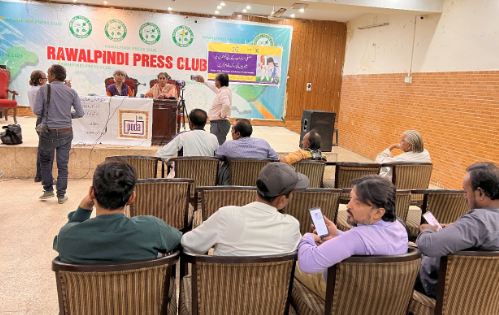
RAWALPINDI, OCT 14 /DNA/ – On the eve of International Rural Women’s Day, celebrated globally on 15 October, rural women leaders in 70 districts across Pakistan today demanded the government should officially recognize 15 October as a National Day for Rural Women like other countries, and celebrate it annually at the national level. Speaking from the platform of Rural Women Alliance, facilitated by Potohar Organization for Development Advocacy (PODA), the rural women representatives in each district made these demands addressed issues of women’s rights, development, and gender equality, urging the attention of the government, judiciary, political leaders, and industrialists so that 50 percent women population can prosper. These 15 demands, reflecting the concerns and suggestions of over 150 rural women representatives, were formulated after a series of consultations held across 70 districts. They presented the following charter of demands:

1.            Rural Women of Pakistan call for greater political participation, emphasizing the need to enhance women’s representation in district-level decision-making bodies such as Musalhati dispute resolution committees, District Peace Committees, District Voter Education Committee and other forums. They stressed the importance of making these bodies fully functional and operational.

2.            Rural Women demand equal representation in Local Governments System and demanded that the Local Bodies system should be made functional in all the provinces and the Local Government elections should be immediately held in Punjab province.

3. To combat the rising Gender-Based Violence (GBV) against women and children, the rural women leaders recommended community awareness campaigns, enactment and implementation of domestic violence prevention laws and anti-rape laws, awareness of Union Council officials and set up of more shelter homes for survivors of violence.

4. On economic empowerment, the rural women leaders demanded formal recognition of rural women working in agriculture as Farmers, on par with men so that their work can be recognized and counted as labour and this would help to increase the number of working women in Pakistan that is often presented in lower numbers even though more women work in agriculture sector than men. They demanded equal access for women for agricultural schemes, easy loans, subsidies and allocation of land for landless workers.

5. Land ownership rights of women and their participation in land transfer process should be ensured timely and women should also be hired as officials (Patwaris and Gardawars) should be hired at Land Record and Revenue departments. The process for registration of women agricultural workers’ unions under the Sindh Women Agriculture Workers Act 2019 should be simplified and such laws should be made in other provinces as well.

6. The rural women leaders demanded setting up district-level business support centers for skilled women to market their products and access to loans on easy terms and training for on-line businesses and demanded special markets for women businesses in every district.

7. Addressing climate change, the women urged government and NGOs to consult rural women on climate adaptation strategies and involve them in tree plantation drives. They stressed their suggestions should be given serious consideration.

8. For health and well-being of rural women and girls, the leaders demanded improved access to reproductive health awareness and services from government departments and civil society. They also recommended incorporating nutrition, menstrual hygiene, reproductive health education in school curriculum so that girls can learn in timely way.

9. The rural women leaders demanded that NADRA should establish staff at Union Council level to assist rural parents with birth certificates, Form B & CNIC access to ensure right to legal identity for girls after 18 years & voter registration with Election Commission.

10. For education, the rural women leaders demanded the government to ensure basic education as guaranteed in Article 25-A of the Constitution of Pakistan for all children including girls from age 5 to 16 and also called for access to digital literacy programs to help rural women and girls keep pace with modern technology and suggested 12 classes education for Matric degree so that girls can become 18 years of age by time of Matric.

11. The rural women leaders demanded government and legislators to work towards laws and policies to stop child marriages and raise the minimum age of marriage for girls to 18 years of age in all parts of Pakistan following the good practice of government of Sindh and for making CNIC provision mandatory for both the boy and girl at time of marriage. They suggested that police, Union Council officials and Nikah Khawan to be trained also.

12. To curb violence against women and girls, the rural women demanded training for police to investigate gender based crimes and sexual crimes with women’s rights perspective.

13. The women demanded attention to women and girls’ physical and mental health through provision of sports, exercise and self-defense training facilities at school and colleges and provision of parks for women to walk with safety to avoid health problems in old age.

14. For peace and progress in Pakistan, the rural women urged the political parties to shun their petty rivalries to defuse the rising polarization and political unrest in the country and demanded that political parties should focus on promoting peace and harmony in society and get serious about how to serve the masses who have voted them to power.

15. The last demand was made to the media to also give special attention to public welfare issues such as poverty, unemployment, violence against women and girls, education, health, transport, water and electricity problems in prime time shows ( 6 to 9 pm) instead of showing fights of political parties and also give priority and coverage to important initiatives like 15 October – the international day of rural women to inform the public about the issues and work of the rural women and their role in Pakistan’s development.

Premier Li Qiang, Gen. Asim Munir strengthen ties with cordial meeting ahead of SCO Summit

Premier Li Qiang, Gen. Asim Munir strengthen ties with cordial meeting ahead of SCO Summit

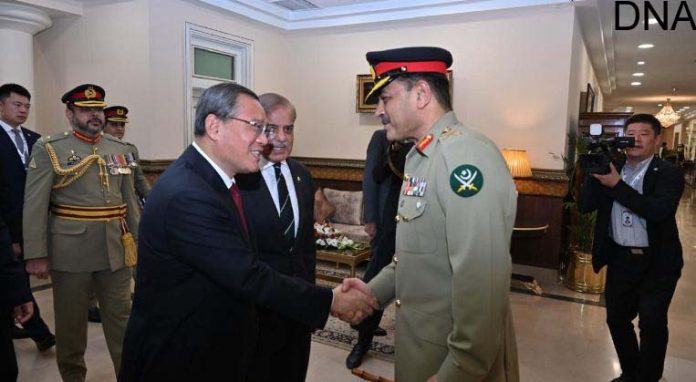
ISLAMABAD, OCT 14 /DNA/ – The Shanghai Cooperation Organization (SCO) meeting in Islamabad marked the arrival of Chinese Premier Li Qiang.

The Premier was warmly received by Pakistan’s Army Chief, General Syed Asim Munir, Nishan-e-Imtiaz (Military), who greeted him with great enthusiasm.

During the cordial meeting, Premier Li Qiang and General Munir exchanged a warm handshake, reflecting the strong ties between China and Pakistan.

The visit emphasizes both nations’ commitment to cooperation and partnership within the SCO framework.

OIC strongly condemns escalation of Israeli crimes in northern Gaza strip

OIC strongly condemns escalation of Israeli crimes in northern Gaza strip

JEDDAH, OCT 14 /DNA/ – The Organization of Islamic Cooperation (OIC) expressed its strong condemnation of the continued escalation of war crimes committed by the Israeli occupation against Palestinian citizens, especially in the northern Gaza Strip, considering this as part of attempts aiming at forced displacement, ethnic cleansing, and genocide against the Palestinian people.

The OIC held the Israeli occupation responsible for the continuation of this aggression and organized terrorism practiced against the Palestinian people, which resulted in the martyrdom of more than 42,654 citizens, and the injury of more than 100,000 others, most of whom are women and children, in addition to thousands of missing persons under the rubble. The OIC called for the need to impose sanctions on Israel, the occupying power, and hold it accountable for all ongoing crimes and violations.

The OIC also renewed its call on the UN Security Council to assume its responsibilities, implement its resolutions, impose an immediate and comprehensive ceasefire, and put a definitive end to the continued violations of international law and relevant UN resolutions committed by the Israeli occupation.

PPP, MQM leaders hold meeting at Sindh House to discuss constitutional amendment

PPP, MQM leaders hold meeting at Sindh House to discuss constitutional amendment

ISLAMABAD, OCT 14 /DNA/ – Vice President of the Pakistan People’s Party (PPP) Senator Sherry Rehman, and Dr. Asim Hussain met with the Muttahida Qaumi Movement (MQM) delegation at Sindh House.

The MQM delegation included Governor Sindh Kamran Tessori, Dr. Farooq Sattar, and Amin ul Haque.

During the meeting, both parties reached a consensus on moving forward with constitutional amendments in a transparent and collaborative manner. The discussions focused on maintaining ongoing communication and fostering cooperation between the two parties.

Senator Sherry Rehman highlighted that, on the instructions of Chairman Bilawal Bhutto Zardari, PPP is actively engaging all stakeholders in the process of constitutional reforms. “Today, we briefed MQM leadership about the establishment of constitutional courts,” she stated.

The meeting is part of a broader consultation process in alignment with Chairman Bilawal Bhutto-Zardari’s vision for a dedicated constitutional court to handle constitutional matters efficiently and ensure equal representation for all provinces at federal level.

This reform is a critical part of the unfinished agenda of 2006 Charter of Democracy. It will ensure that no government can manipulate the judiciary for political gains, as envisioned by Shaheed Mohtarma Benazir Bhutto to uphold democratic principles.

In the meeting, both delegations exchanged views on their respective priorities, highlighting the importance of continuing constructive dialogue. Senator Rehman emphasized the significance of the longstanding relationship between PPP and MQM, adding, “Our discussions today were fruitful, and we are committed to maintaining this engagement moving forward.”

At a short press briefing later, MQM leader Farooq Sattar reiterated that politics is the way to keep engaged with all relevant stakeholders, while Sherry Rehman said that political people know how to break deadlocks. Both agreed to move forward in the parliament with a core minimum agenda.

Islamabad in focus as top leaders due for SCO summit

Islamabad in focus as top leaders due for SCO summit

ISLAMABAD: Pakistan will play host to a major diplomatic event as a high-level meeting of the Shanghai Cooperation Organisation (SCO) is set to begin in the nation’s capital Islamabad starting from tomorrow (Wednesday).

The summit will bring together top leaders from approximately eight countries, including two of the world’s leading nuclear powers, China and Russia, highlighting the geopolitical significance of the gathering.

In coordination between multiple agencies, including the Army, Rangers, Frontier Corps and provincial police, extensive security measures have been taken for the SCO summit.

Moreover, all of the business centres, wedding halls, gyms, and busy markets along with the main roads of the foreign dignitaries’ movements will be closed from October 12 to 16 in light of the security measures.

Additionally, heavy traffic has been banned in the twin cities as authorities have directed a shut down of the Metro bus service from October 14 to 16.

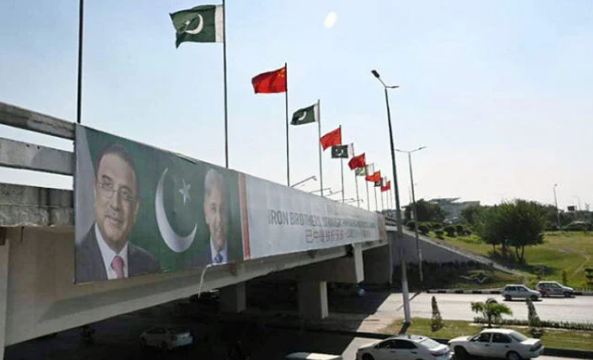
Notably, the city of Islamabad is adorned with vibrant decorations as it prepares to welcome distinguished guests, including China’s Prime Minister Li Qiang. 

He is anticipated to arrive as a key ally of Pakistan in the region. Alongside him, Russian Federation’s Prime Minister Mikhail Vladimirovich Mishustin is also scheduled to attend, leading a large delegation to the summit.

Sources within the Foreign Ministry confirm that both the prime ministers will hold separate, high-stakes meetings with Pakistan’s Prime Minister Shehbaz Sharif and President Asif Ali Zardari. 

These discussions are expected to cover a wide range of topics crucial to regional security and cooperation. 

Moreover, elaborate luncheons and dinners are also planned in honour of the attending dignitaries, underscoring the importance of diplomatic relations between these nations.

Prime Minister Li Qiang’s visit to Islamabad will extend over four days, segmented into two distinct phases. While the initial phase centres on active participation in SCO summit activities, the latter part will focus on enhancing bilateral ties through the signing of various agreements with Pakistan. 

This strategic partnership is anticipated to strengthen economic and infrastructural collaboration between the two countries.

Further adding to the high-profile nature of the event, the Ministry of Foreign Affairs has confirmed the attendance of several other prominent leaders. 

These include Kazakhstan’s Prime Minister Alikhan Smailov, India’s External Affairs Minister Subrahmanyam Jaishankar, Iran’s First Vice-President Mohammad Reza Aref, Kyrgyzstan’s Chairman of the Cabinet of Ministers Akylbek Japarov, Tajikistan’s Prime Minister Kokhir Rasulzoda, Uzbekistan’s Prime Minister Abdulla Aripov, Mongolia’s Prime Minister Oyun-Erdene Luvsannamsrai and Turkmenistan’s Deputy Chairman of the Cabinet of Ministers Rashid Meredov.

Complementing their presence, key figures such as SCO Secretary-General Zhang Ming, SCO Executive Committee Director Arslan Murzikhov, SCO Business Council Board Chairman Atif Ikram Sheikh, and SCO Interbank Consortium Council Chairman Marat Elybayev are also expected to engage in discussions, that are aimed at fostering economic cooperation and addressing pressing regional issues.

As the summit begins, the spotlight will be on Islamabad, with global attention focused on the discussions and potential outcomes of this significant diplomatic convergence.

Stay Connected

64FansLike
60FollowersFollow

Latest Reviews

Exchange Rates

USD - United States Dollar
EUR
1.18
GBP
1.36
AUD
0.72
CAD
0.73