Home Blog Page 777

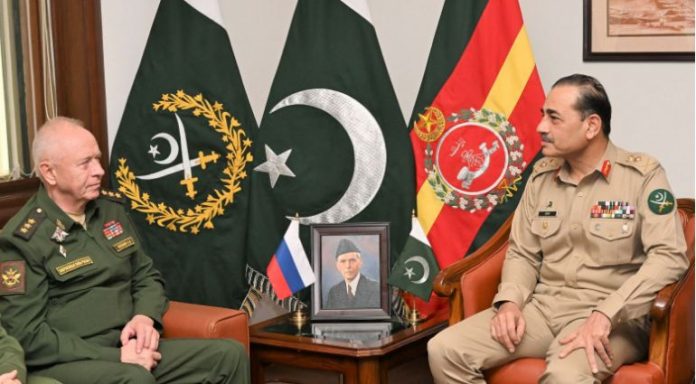
Russian Deputy Minister of Defence meets COAS Asim Munir

Russian Deputy Minister of Defence meets COAS Asim Munir

Rawalpindi, OCT 29 /DNA/- Colonel General Alexander V. Fomin, Deputy Minister of Defence of the Russian Federation, met General Syed Asim Munir, NI (M), Chief of Army Staff (COAS) at the General Headquarters (GHQ) today.

The meeting addressed the regional security environment and matters of mutual interest, including the enhancement of bilateral defense and security cooperation.

COAS reiterated Pakistan’s commitment to strengthening traditional defense ties with Russia, while both sides affirmed their dedication to bolstering collaboration in various security and defense domains.

Colonel General Fomin commended the Pakistan Army’s achievements in combating terrorism and highlighted the importance of a unified, cooperative approach among the global community to counter extremism.

JS Bank’s Success Story: The Role of Ali Jahangir Siddiqui towards financial innovation in Pakistan

Ali Jahangir Siddiqui has been one of the key industry leaders who have worked towards transforming the financial sector of Pakistan.

JS Group transformation 

JS Bank’s journey began in 2006, when Ali Jahangir Siddiqui played a key role in expanding JS Group’s portfolio from investments into commercial banking. Initially, JS Group focused on investments and financial services, but the strategic decision to enter the banking sector came with the merger of Jahangir Siddiqui Investment Bank Limited with American Express Bank’s Pakistan operations in 2006. This merger laid the foundation for JS Bank, bringing together international banking expertise with local market knowledge. Ali Jahangir Siddiqui’s involvement helped steer the direction of the bank during its formative years, contributing to its growth and expansion. Today, JS Bank is recognized as one of the country’s fastest-growing financial institutions, offering a range of services from retail and corporate banking to digital solutions, underpinned by a vision of customer-centricity and innovation.

Ali Jahangir Siddiqui recognized early on that the future of financial services in Pakistan would be shaped by digital banking and evolving customer needs. In response to this, JS Bank introduced several digital banking solutions, including JS Mobile, Zindigi 2.0, and JS Internet Banking. These initiatives were aimed at meeting the growing demand for convenient, technology-driven banking services. By launching these products, JS Bank positioned itself as a bank attuned to market changes, adapting to the shift towards digitalization and enhancing its customer experience in the process.

With Ali Jahangir Siddiqui’s guidance, JS Group prioritized financial inclusion, focusing on underserved segments like small businesses, women entrepreneurs, and rural communities. By offering low-cost credit products, the group aimed to support grassroots entrepreneurship and drive economic growth.

A key initiative involved empowering women through tailored financial products, enabling them to pursue entrepreneurial ventures and make informed financial decisions, promoting broader economic inclusion and community development.

Diplomatic Contributions

In addition to work he did for the finance sector, Ali Jahangir Siddiqui served in diplomatic positions. He served as Pakistan’s ambassador to the United States, where he enhanced economic cooperation between Pakistan and the world through foreign investment. The experience in both business and diplomacy provided him with a rare insight into how one could take advantage of international relationships and make Pakistan an attractive destination for investment.

Siddiqui served as a medium in the fostering of foreign investment as an ambassador. This encouraged global investors to consider Pakistan as a market, hence further attracting foreign direct investments, which have proved crucial for Pakistan’s economic growth. Building relations with international stakeholders has contributed positively to enhancing Pakistan’s features within the global financial space.

Recent Impact

From his impactful leadership at JS Bank to his contributions in foreign diplomacy, Ali Jahangir Siddiqui has left a lasting mark on Pakistan’s financial sector. His focus on digital banking and financial inclusion significantly changed how banking services are delivered, while his initiatives helped attract foreign investment into the economy.

During his time at JS Bank, Siddiqui was instrumental in advancing digitization and inclusiveness within the banking system. These efforts continue to reshape the landscape of banking in Pakistan, making financial services more accessible and less cumbersome for people across the nation.

Italian Ambassador meets DPM Ishaq Dar

Italian Ambassador meets DPM Ishaq Dar

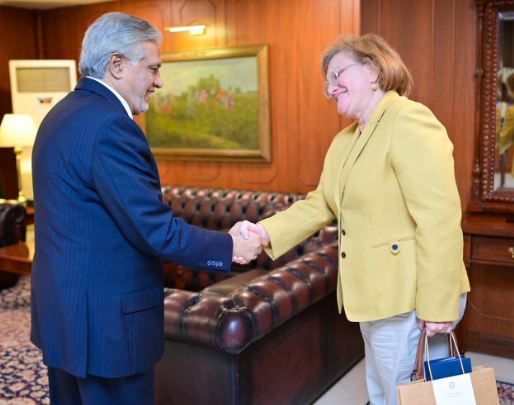
ISLAMABAD, OCT 29 /DNA/ – Deputy Prime Minister/ Foreign Minister Mohammad Ishaq Dar @MIshaqDar50 received Italian Ambassador Marilina Armellin at the Ministry of Foreign Affairs, today.
DPM highlighted the importance Pakistan attached to its relations with Italy and exchanged views on issues of mutual interest with a focus on trade and investment, migration and mobility, education and people to people contacts. Regional and global issues also came under discussion.

State visit of the French President to Morocco

President

RABAT, OCT 29 /DNA/ – The King of Morocco Mohammed VI, held, today, at the Royal Palace in Rabat, talks with the President of the French Republic, H.E. Mr. Emmanuel Macron, who is paying a State Visit to Morocco, from October 28 to 30, at the invitation of the Sovereign.

Talks between the two Heads of State focused on the transition to a new era of strong relations between Morocco and France, within the framework of a renewed exceptional Partnership and a strategic roadmap for the years to come.

In this regard, the two Heads of State intend, through this renewed partnership, to give a decisive boost to the excellent multidimensional relations between Morocco and France, to take into account the ambitions of the two countries and to jointly face the international developments and challenges.

Discussions also focused on regional and international issues. Thus, the two Heads of State agreed to work together to strengthen the Euro-Mediterranean, African and Atlantic projection, in a process of joint action to promote prosperity and human and sustainable development.

They stressed the importance of renewing, in depth, the partnership between the two shores of the Mediterranean, in order to build a more stable, sustainable and prosperous future for the whole region, while meeting today’s socio-economic and environmental challenges.

The President of the French Republic also commended the constructive role of the King Mohammed VI, Chairman of the Al-Quds Committee, for peace in the Middle East. The two Heads of State called for an immediate halt to the attacks in Gaza and Lebanon, while stressing the priority of protecting civilians, and the importance of guaranteeing and facilitating the delivery of sufficient humanitarian aid, all while ending the regional conflagration. The Sovereign and the French President recalled the urgent need to reactivate the peace process, within the framework of a two-State solution, with an independent Palestinian State on the June 4, 1967 border, with East Jerusalem as its Capital. 

The President of the French Republic extended an official invitation to King Mohammed VI, to pay a State visit to France, which the Sovereign accepted. The date of this visit shall be agreed through diplomatic channels”.

Also, during this Stat visit, the King Mohammed VI and the President Macron, presided over, on the evening of Monday, October 28, 2024, the signing ceremony of several agreements between two countries.

Regarding the issue of the Sahara, the Declaration on the “Enhanced Exceptional Partnership” between the Kingdom of Morocco and the French Republic, underlines that “The two Heads of State stressed that the “Enhanced Exceptional Partnership” between Morocco and France was intended to be implemented in the broadest possible territorial scope, in light of the French position expressed on the occasion of the 25th anniversary of King of Morocco accession to the Throne, in which the President of the Republic stressed: “I consider that the present and future of Western Sahara are part of Moroccan sovereignty. For France, autonomy under Moroccan sovereignty is the framework within which this issue must be resolved. Our support for the autonomy plan proposed by Morocco in 2007 is clear and constant. For France, this now constitutes the only basis for achieving a just, lasting and negotiated political solution in accordance with the resolutions of the United Nations Security Council.

PM Shehbaz reaches Riyadh on two-day visit to attend investment moot

PM Shehbaz reaches Riyadh on two-day visit to attend investment moot

RIYADH: Prime Minister Shehbaz Sharif on Tuesday arrived in Riyadh on a two-day official visit to Saudi Arabia to attend the 8th edition of the Future Investment Initiative (FII).

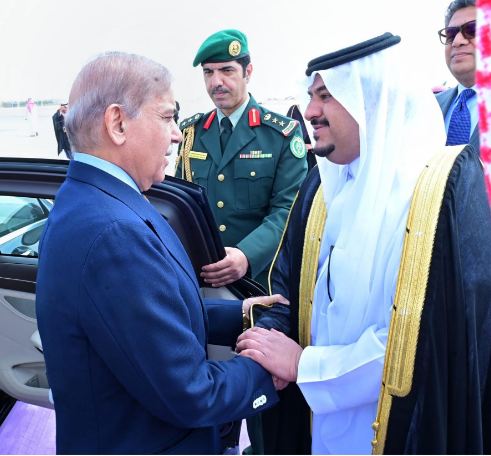
According to an official statement, Deputy Governor of Riyadh Province Prince Mohammed bin Abdulrahman bin Abdulaziz warmly received the premier at the Royal Terminal of King Khalid International Airport.

The ambassador of Pakistan to Saudi Arabia and senior Saudi officials were also present at the airport.

PM Shehbaz will participate and address the plenary session of the investment moot which will be held at the King Abdulaziz International Conference Center from October 29-31.

The Future Investment Initiative (FII) serves as an important platform for countries to showcase their economic strength, draw foreign investments, and engage in dialogue to shape a sustainable future.

This year’s FII is themed “Infinite Horizons: Investing Today, Shaping Tomorrow” and will focus on global investments aimed at addressing major issues such as artificial intelligence, robotics, education, energy, space, finance, healthcare, and sustainability.

The premier is also expected to call on the Crown Prince and Prime Minister Mohammed bin Salman Al Saud as well as other senior Saudi leadership.

After his arrival, PM Shehbaz took to X saying, “Just landed in the beautiful city of Riyadh at the invitation of my brother HRH Crown Prince Mohammed bin Salman to participate in the 8th Future Investment Initiative Conference.”

Prime Minister Shehbaz Sharifs post on X. — X/@CMShehbaz
Prime Minister Shehbaz Sharif’s post on X. — X/@CMShehbaz
He said that he looked forward to attend this impressive gathering of political, business and corporate world leaders to shape a better future for all.

The prime minister said that in his meetings with the Saudi leadership, he would reaffirm our common desire to further cement Pak-KSA ties through robust and mutually beneficial partnerships in trade and investment.

Earlier this month, Pakistan and Saudi Arabia inked several memorandums of understanding (MoUs), worth over $2 billion, to boost bilateral trade and investment during the Islamabad visit of a Saudi delegation, headed by Minister for Investment Khalid bin Abdulaziz Al-Falih.

The Khalid-led delegation comprised Saudi companies from various sectors including construction, engineering, financial services, IT, hospitality, agriculture, food, energy, and petroleum are part of the visiting delegation.

The agreements include a $70 million investment in the agriculture sector, the establishment of advanced semiconductor chip manufacturing in Saudi Arabia, the establishment of a textile industry, a white oil pipeline project, an MoU for exploring investment opportunities, a hybrid power project, development of transformer manufacturing facilities in both the countries, cyber security measures for customers and businesses, and the export of spices and vegetables from Pakistan.

Additionally, the agreements outline the establishment of a manufacturing facility for surgical and dental equipment and collaboration on the federal government’s E-Taaleem and digitalisation programmes.

Terrorism is a common enemy of Pakistan and Afghanistan: Religious Scholars

Terrorism is a common enemy of Pakistan and Afghanistan: Religious Scholars

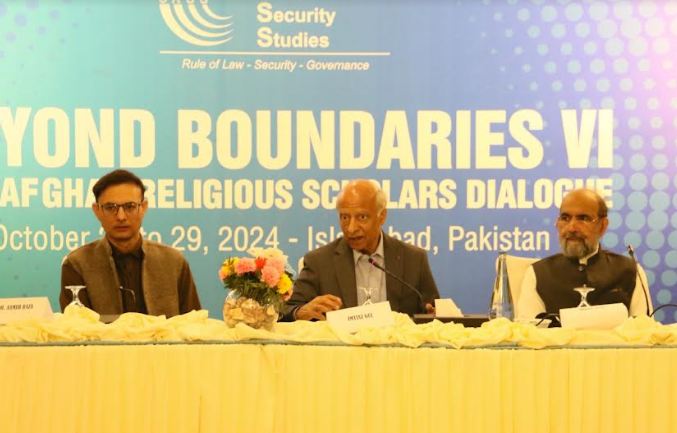
ISLAMABAD, OCT 29 /DNA/ – Respect for the writ of the state is the prerequisite for any dialogue or negotiation between the state and group or individual. No state negotiates with terrorists; Tehreek-e Taliban Pakistan (TTP) – declared as Fitna al Khawarij by the government of Pakistan – has contributed to severe violence in the country, including attacks on civilians and community elders and security forces. While the TTP’s presence in Afghanistan is an acknowledged reality, Pakistani stakeholders believe that the Taliban government could play a constructive role in addressing this threat to Pakistan’s national security and its relationship with Afghanistan.

The remarks were made by the former chairman of the Council of Islamic Ideology Dr. Qibla Ayaz, currently amember of the Shariat Appellate Bench of the Supreme Court (SC), during the 5th round of Pak-Afghan Religious Scholars Dialogue held in Islamabad by the Center for Research and Security Studies (CRSS).

In the context of education, Dr. Ayaz highlighted that internationally accepted educational models, such as Indonesia’s, could be adapted in Afghanistan to provide a curriculum that aligns with both sharia guidelines and modern standards, without requiring an extensive overhaul. This approach was suggested as a pragmatic response to the complexity of revising hundreds of books. The Afghan government must consider the international asks on the matters of girls and women rights to work and education; reversing restrictions on their fundamental rights can actually pave way for their recognition by the global communities including states and citizens, whereas conditioning education on international recognition will create more obstacles to the acceptance and might even risk reducing international aid and support to the country already undergoing severe humanitarian crisis.

The participants acknowledged that terrorism is a common threat and underlined counter-terrorism cooperation between two sides to jointly tackle the threats to both sides’ national as well as regional security. They appreciated the initiatives like Iqra in Kabul and Aazmaish in Kunduz and suggested to resume education for girls and women while replicating these models of education successfully running in Afghanistan to bridge the gap between the opportunities for education on offer by the state and educational needs of the female members of community.The participants suggested to build special economic zones, and create and provide opportunities for participation in the economic activities in border regions between Pakistan and Afghanistan.The absence of such provisions and opportunities makes the youth in the region ever more vulnerable to the influence of extremist groups always ready to thrive of the unemployment and poverty.  They said that the relationship is worthy of being seen through economic lens and not the one that we most often use to look at it, i.e. security lens.

Participants emphasized the need for media in both countries to counteract divisive narratives, especially those that foster hatred or animosity. While social media can be used to disseminate negative stereotypes and misinformation, which can exacerbate tensions, the same medium can also be used to connect and understand each other better. Engaging well-known figures and scholars from both countries to speak positively and accurately about sensitive topics could help counteract one-sided narratives. Participants mentioned that credible voices can shape public opinion and mitigate misunderstandings.

They also requested the Pakistan government stakeholders to adopt a people friendly visa policy which can simultaneously serve a range of objectives like trade relationship, smooth movement of people especially those in urgent need of medical treatment, and also be conducive to the women’s access to education in the institutes in Pakistan, if not in Afghanistan as a stopgap arrangement.

The participating female religious scholars stressed that while Afghan women face significant challenges, media portrayals often exaggerate the situation. They acknowledged positive developments, such as the Taliban permitting admissions to healthcare programs like nursing and midwifery and issuing decrees on women’s inheritance rights. However, the closure of schools beyond grade 6 and shrinking employment opportunities have severely impacted women’s ability to contribute to nation-building. Economic hardships have further marginalized them, limiting their participation in public life. The scholars advocated for sustainable solutions, including community-based education, vocational training centers, and women-only cottage industries and factories. They urged the Taliban to reopen girls’ schools and called on the international community to release frozen assets and honor aid commitment.

Dr. Aamer Raza from the Dept. of Political Science, University of Peshawar, moderated the dialogue and noted that Pakistan and Afghanistan do not necessarily have dissenting views on all the issues that involve and concern both sides. The consensus also exists on different issues especially when we look at the people to people side of relationship including education and trade relationship. Such consensus is an opportunity worth building on as it can not only help keep the conversation going but also open channels for official and unofficial communication on more serious and contentious issues.

Imtiaz Gul, Executive Director, Center for Research and Security Studies (CRSS) said that the purpose of the dialogues like Beyond Boundaries extremely relevant and crucial for two countries to resume formal dialogue, address differences, and issues of terrorism and shift from entrenched positions toward a common ground; a position where a formal dialogue can take place and deliberation in the interest of issues of concern to people on both sides and international stakeholders.

President condemns terrorist attack in Panjgur

President condemns terrorist attack in Panjgur

KARACHI, OCT 29 (DNA): President Asif Ali Zardari condemned the firing of armed men in Panjgur and expressed grief and sorrow over the loss of precious lives in the terrorist attack.

According to President House press wing statement, President Asif Ali Zardari expressed his condolences to the families of those who lost their lives in the incident

President Zardari said that terrorists were enemies of the country’s development and prosperity of the province. He said that terrorists do not want to see Balochistan to develop.

The President prayed for the speedy recovery of the injured of the attack.

The President also prayed for high ranks of the departed souls in Jannah and patience for the bereaved families.=DNA

ICCI President for launching diplomatic offensive to boost exports

ICCI President for launching diplomatic offensive to boost exports

ISLAMABAD, OCT 29 /DNA/ – President Islamabad Chamber of Commerce and Industry (ICCI) Nasir Mansoor Qureshi has impressed upon the country’s diplomatic corps and trade officials to embark on an aggressive trade diplomacy, highlighting the nation’s exports in an engaging and impressive manner to capture the attention of foreign investors and propel economic recovery.

In a statement issued here on Tuesday he said that Pakistan has set an ambitious target of boosting exports to $100 billion by 2030 under its Vision 2030 and to achieve this goal relies heavily on the active role of Pakistani Embassies and Consulates worldwide to act as spirited Sales Promoters.

Nasir Qureshi emphasized the need to prioritize key sectors to boost Pakistan’s economy, including,  IT, IT Services, value added agricultural produce, mineral, chemicals as well as the export of skilled labour to  put the economic wheel in motion and thereby strengthen country’s economy, adding that these  sectors have immense potential to drive economic growth, increase exports and strengthen Pakistan’s economy. He further said that by focusing on these areas, Pakistan can diversify its export base, increase foreign exchange reserves, create employment opportunities and stimulate economic recovery with effective support from government and stakeholders.

ICCI President further said that market research is vital to identify demand and trends, quality control measures must be implemented to ensure consistency and reliability as well as trade agreements like FTAs and PTAs will expand market access.

Nasir Mansoor Qureshi reaffirmed the organization’s commitment to strengthening its role in promoting economic growth by planning to develop linkages with Chambers of Commerce in friendly countries, promoting global collaborations and knowledge sharing. The organization will also host various events, including seminars, discussions, Business Opportunity Conferences and tourism summits, to facilitate business-to-business connections and promote Pakistan’s export potential. These initiatives demonstrate ICCI’s dedication to enhancing the business environment and driving economic progress, he concluded.

Prime Minister Shehbaz Sharif arrives on a two days official visit to the Kingdom of Saudi Arabia

Prime Minister Shehbaz Sharif arrives on a two days official visit to the Kingdom of Saudi Arabia

RIYADH, OCT 29 /DNA/ – Prime Minister of Pakistan Muhammad Shehbaz Sharif arrived in Riyadh, Kingdom of Saudi Arabia today.

His Royal Highness, Prince Mohammed bin Abdulrehman bin Abdulaziz, Deputy Governor of Riyadh Province, warmly received the Prime Minister at the Royal Terminal of King Khalid International Airport. Ambassador of Pakistan to the Kingdom of Saudi Arabia and senior Saudi officials were also at the airport.

The Prime Minister will participate and address the plenary session of the 8th edition of the Future Investment Initiative (FII) being held in the King Abdulaziz International Conference Center Riyadh from
29-31 October.  Held under the Royal Patronage of the Custodian of the
Two Holy Mosques, King Salman Bin Abdulaziz Al-Saud, the theme for this edition is ‘Infinite Horizons: Investing Today, Shaping Tomorrow.’ The delegates will ignite discussions on how investment can serve as a catalyst for a prosperous and sustainable future.

Prime Minister Shehbaz Sharif is also expected to call on the Crown Prince and Prime Minister Prince His Royal Highness Prince Mohammed bin Salman Al Saud as well as other senior leadership of the Kingdom of Saudi Arabia.

NUML celebrates 101st anniversary of Turkish Republic Day

NUML celebrates 101st anniversary of Turkish Republic Day

ISLAMABAD, OCT 29 /DNA/ – The Turkish Language Department at the National University of Modern Languages (NUML), today hosted an event to celebrate the 101st Anniversary of Turkish Republic Day, honoring Turkiye’s rich history and its enduring friendship with Pakistan. The celebration was graced by Dr. Mehmet Toyran, Education Counselor at the Turkish Embassy, as the esteemed guest of honor. Heads of Departments and faculty members from across the university also attended, contributing to the lively and enthusiastic atmosphere of the event.

In his address, Dr. Mehmet Toyran highlighted Turkiye’s proud history and the visionary leadership of Mustafa Kemal Atatürk, who led the country’s freedom struggle and established the independent Turkish Republic. Dr. Mehmet spoke passionately about the unique, lasting friendship between Turkiye and Pakistan, rooted in shared values, heritage, and culture. He expressed heartfelt gratitude for the support of Quaid-e-Azam Muhammad Ali Jinnah and Allama Muhammad Iqbal for Turkiye’s independence, adding that both nations would continue to support each other across all spheres.

The head of the Turkish Language Department, Nur Yasemin Rahojoo, and the Head of the Department of Azerbaijan also shared their reflections on the significance of the Turkish Republic Day and the strong ties between the two brotherly countries. They emphasized the celebration as a powerful reminder of the deep-rooted friendship and mutual respect between Pakistan and Turkiye.

The highlight of the event was the heartfelt performances by students from the Turkish Department, who showcased their talents through poetry recitations and a theatrical presentation honoring the sacrifices made for Turkiye’s victory. Their moving performances captivated the audience, earning enthusiastic applause.

The event concluded with a cake-cutting ceremony, symbolizing the unity and shared spirit between the people of Pakistan and Turkiye. The celebration was an unforgettable tribute to the enduring relationship between these two brotherly nations.

Stay Connected

64FansLike
60FollowersFollow

Latest Reviews

Exchange Rates

USD - United States Dollar
EUR
1.17
GBP
1.36
AUD
0.72
CAD
0.73