Home Blog Page 776

The Challenges Facing the Russian Economy

The Challenges Facing the Russian Economy

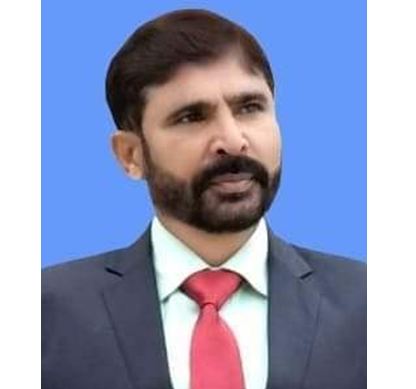
Dr. Muhammad Akram Zaheer

The Russian economy is currently grappling with a complex interplay of factors that have placed substantial strain on its overall stability and growth prospects. These factors include international sanctions, disrupted logistics, rising prices, inflation expectations and the difficulty of replacing banned imports with homegrown substitutes. Each of these challenges contributes to a precarious economic landscape, affecting both short-term growth and long-term sustainability.The imposition of international sanctions on Russia, particularly in the wake of its geopolitical actions, has severely restricted its access to global markets and financial systems. Sanctions targeting key sectors such as energy, finance and defense have resulted in a decline in foreign investment and technological transfer, essential for modernizing the Russian economy. This economic isolation has not only hampered Russia’s growth prospects but has also forced it to seek alternative markets, particularly in Asia, to compensate for losses in the West. However, these efforts have been met with varying degrees of success, leading to a reliance on countries like China for trade and investment, which brings its own set of challenges and dependencies.Compounding the impact of sanctions are disrupted logistics and supply chain issues. The war in Ukraine and subsequent geopolitical tensions have led to significant disruptions in transportation networks and trade routes. These challenges have made it increasingly difficult for Russian businesses to import necessary raw materials and components, as well as to export their products efficiently. The result is a series of bottlenecks that have led to increased production costs and delays in manufacturing. Consequently, industries reliant on timely deliveries, such as automotive and electronics, are particularly affected, leading to reduced output and a further strain on the economy.

As the cost of imports has risen due to sanctions and logistical disruptions, the Russian economy is facing significant inflationary pressures. Rising prices for essential goods and services have led to a decline in consumer purchasing power, which in turn affects overall consumption. While the government has attempted to control inflation through various measures, including price controls on basic commodities, these strategies have had limited success. Inflation expectations remain high among consumers, creating a vicious cycle where businesses raise prices in anticipation of future cost increases, further exacerbating the economic challenges.One of the significant challenges faced by the Russian government is the difficulty in replacing banned imports with domestically produced substitutes. While there have been efforts to boost local production in response to sanctions, the transition has proven to be slower and more complex than anticipated. Many industries lack the necessary technology and expertise to produce high-quality alternatives to previously imported goods, leading to a decline in product quality and competitiveness. This situation is particularly evident in sectors such as consumer electronics, pharmaceuticals and machinery, where reliance on foreign technology has left a significant gap that domestic producers have struggled to fill.In the short term, the Russian government has employed various measures to conceal the challenges facing the economy. Initiatives to boost wages, consumption and production have resulted in several months of strong growth, creating an illusion of economic resilience. However, recent GDP data and other economic indicators suggest that this growth is not sustainable. The data reveal emerging imbalances in supply and demand, indicating that the underlying challenges have not been adequately addressed.

The limited production capacity, exacerbated by a weak ruble and tighter Western sanctions, continues to constrain economic growth. Labor shortages have further complicated recovery efforts, as many skilled workers have left the country or shifted to other sectors less affected by sanctions. Consequently, businesses are struggling to maintain productivity, leading to increased operational costs and reduced competitiveness.The Central Bank of Russia faces a challenging dilemma as it seeks to navigate these economic pressures. On one hand, it must control inflation to protect the purchasing power of consumers and stabilize the economy; on the other hand, easing monetary policy to encourage growth could exacerbate inflationary pressures. As a result, the central bank has been hesitant to implement aggressive measures to stimulate the economy, opting instead for a more cautious approach. This reluctance to lower interest rates has stifled investment and consumption, further contributing to the slowdown.Despite high levels of demand in certain sectors, business sentiment in Russia is deteriorating. The uncertainty created by international sanctions, ongoing geopolitical tensions and internal economic challenges has led to a cautious approach among investors and business leaders. Many are hesitant to commit to long-term investments, fearing that the current economic environment will not support sustainable growth. This pervasive uncertainty not only affects domestic investment but also discourages foreign businesses from engaging with the Russian market.
General Mirza meets President Ilham Aliyev, highlights Pakistan-Azerbaijan military cooperation

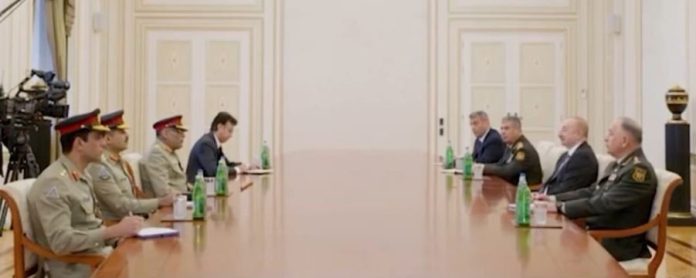
General Mirza meets President Ilham Aliyev, highlights Pakistan-Azerbaijan military cooperation

RAWALPINDI, OCT 30 /DNA/ – General Sahir Shamshad Mirza, Chairman JCSC on an official visit to Republic of Azerbaijan called on President of Azerbaijan Ilham Aliyev, Minister of Defence Colonel General Hasanov Zakir Asgar, Foreign Minister Mr Jeyhun Aziz Oghlu Bayramov, 1st Deputy Defence Minister and Chief of General Staff Colonel General Karim Tofig Oghlu Valiyev and Minister of Defence Industry Mr Vugar Mustafayev.

During the interaction, both sides appreciated deep and historic relations between the two countries and discussed matters of mutual interest including evolving security dynamics of the region and enhancement of existing defence ties in multiple domains. Chairman JCSC highlighted the importance of enhanced military cooperation between Pakistan and Azerbaijan, and reaffirmed collective commitment towards peace and stability.
Azerbaijani leadership appreciated the professionalism and sacrifices of Pakistan Armed Forces and acknowledged the commonality of views to expand existing cooperation by exploring multiple avenues to forge deeper ties with Pakistan.

Pakistan condemns Israeli actions to undermine UNRWA

ISLAMABAD, OCT 29 /DNA/ – Pakistan unequivocally condemns the latest Israeli attempt to dismantle the operations of the United Nations Relief and Works Agency for Palestine Refugees in the Near East (UNRWA).

This latest step is yet another Israeli violation of international law and the UN Charter. Preventing UNRWA from carrying out its vital tasks is a manifestation of Israel’s systematic campaign to deny the much needed humanitarian aid to the Palestinian people.

The international community, in particular the United Nations Security Council, should hold Israel accountable for its actions and ensure the unimpeded operations of UNRWA, in accordance with the UN General Assembly Resolution 302 (IV) of 1949. The international community also needs to step in to end Israel’s genocidal campaign against the Palestinians in Gaza.

Pakistan reiterates its call for an immediate and unconditional ceasefire in Gaza, and for the provision of unhindered humanitarian assistance to alleviate the suffering of the people of Gaza.

Sustainable peace in the region cannot be possible without the Palestinian people exercising their inalienable right to self-determination; and the creation of a viable, secure, contiguous and sovereign State of Palestine on the basis of the pre-1967 borders with Al-Quds Al-Sharif as its capital.

President greets Turkish govt, people on 101st Republic Day

President Asif Ali Zardari

ISLAMABAD, Oct 29 (APP) – President Asif Ali Zardari extended his greetings to the government and people of Turkiye as they celebrated the 101st Republic Day on Tuesday. The president said that over the past century, Turkiye had achieved immense development in various fields and expressed the hope that the country would reach more milestones under the leadership of President Recep Tayyip Erdogan, according to a President House press release. He said that Turkiye always raised voice on the issues faced by the Muslim world. The president said that the government and people of Pakistan desired the progress and prosperity of Turkiye as both countries supported each other in difficult times. He also observed that the bilateral relationship between Pakistan and Turkiye were getting stronger with the passage of time.

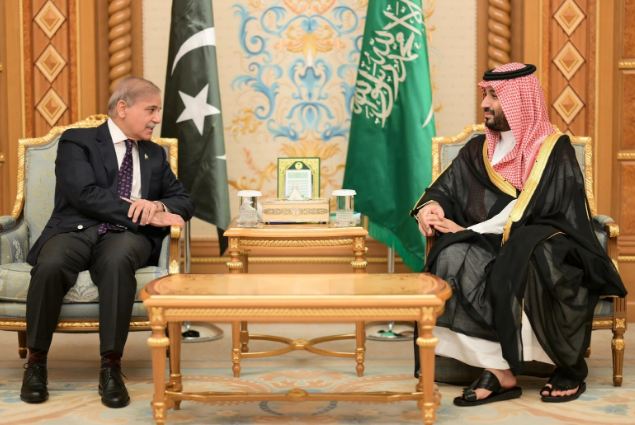
PM Shehbaz meets Saudi Crown Prince

ISLAMABAD, OCT 29 /DNA/ – Had the honor of meeting HRH Mohammed Bin Salman, the Crown Prince of Saudi Arabia along with my delegation. Thanked him for his gracious hospitality.

Pakistan’s ties with Saudi Arabia are historical and time-tested.

During our very productive talks we reviewed the progress in Pakistan-KSA relations across multiple sectors and reaffirmed our commitment to strengthening bilateral ties, particularly in areas such as trade and investment , culture, innovation, technology, and beyond.

National Day of Turkiye

National Day of Turkiye

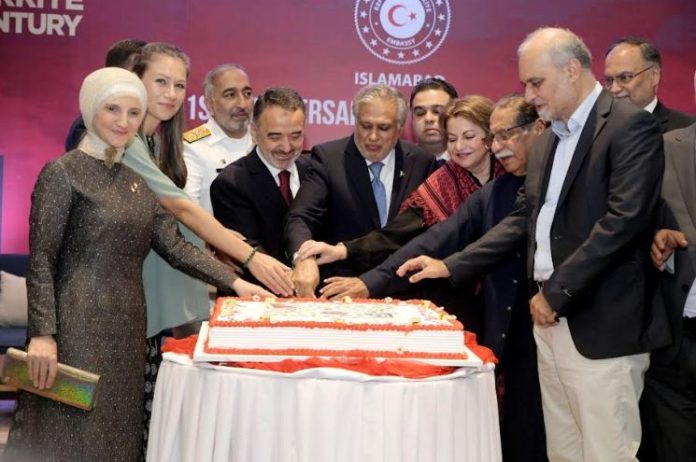
Islamabad, OCT 29 /DNA/ – Deputy Prime Minister Ishaq Dar, Amir Jamaat e Islami Hafiz Naeem, Ambassador of Turkiye Dr Irfan Naziroglu and others cutting cake to celebrate National Day of Türkiye. DNA

EU visits Sindh Assembly for Strategic plans 2024-2029

EU visits Sindh Assembly for Strategic plans 2024-2029

Nazir Siyal


KARACHI: Jeroen Willems, Head of Cooperation at the European Union Mission to Pakistan, called upon Speaker of the Provincial Assembly of Sindh, Syed Awais Qadir Shah, here on Tuesday.

CEU Mission to Pakistan leader Jeroen was accompanied by Ms. Huma Ikramullah, Provincial Coordinator for Mustehkam Parlimaan, and Ms. Barbara.
Speaker SA Awais Qadir Shah welcomed the European Union delegation to the Sindh Assembly.

On the occasion, key matters, including capacity building of the Provincial Assembly of Sindh, parliamentarians, caucuses, committees, and the training of officers was discussed during the meeting.

Strategic plans for 2024-2029 were also deliberated, focusing on how the European Union and the Provincial Assembly of Sindh can collaborate to ensure effective implementation.

Important issues such as the Internship Program, E-Parliament Program, and Inter-Parliamentary Exchange Programs were also part of the discussions.

The European Union delegation thanked Speaker Syed Awais Qadir Shah for his time and valuable input during the meeting.

Speaker Syed Awais Qadir Shah expressed his gratitude to the European Union for its efforts toward the welfare of the people of Pakistan and for being a steadfast partner to the country.

As a gesture of honor, Speaker Awais Qadir Shah presented the delegation with a legacy shield of the Provincial Assembly of Sindh, along with a traditional Sindhi Ajrak and historical Sindhi Cap.

Pakistan committed to CPEC-II to deepen agri, industrial cooperation: DPM

Pakistan committed to CPEC-II to deepen agri, industrial cooperation: DPM

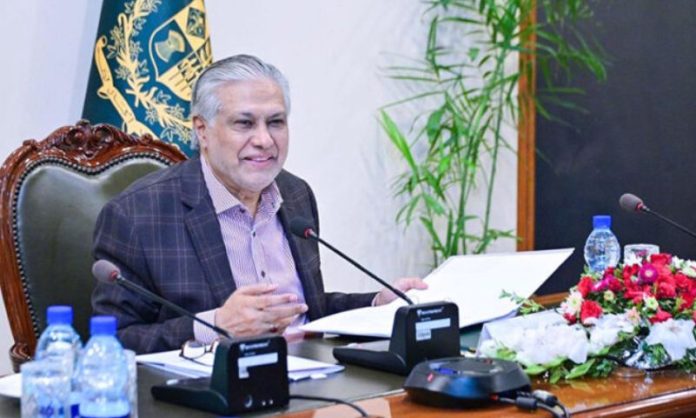
ISLAMABAD, OCT 29  (DNA) — Deputy Prime Minister and Foreign Minister Senator Ishaq Dar on Tuesday calling the China-Pakistan Economic Corridor (CPEC) a “wonderful gift” of China to Pakistan, said that his country was committed to taking the project to the next level to deepen cooperation in the fields of agriculture, industrialization, renewable energy and others.

The deputy prime minister in his remarks at the International Conference “China at 75: A Journey of Progress, Transformation and Global Leadership” said that being the symbol of China-Pakistan cooperation, CPEC helped uplift the country’s energy infrastructure to address the load-shedding woes of the people.

He said the government was taking action to materialise the Chinese offer of sending 1,000 students to China for training in agricultural technology. He said that Pakistan deeply valued China’s support in addressing long-standing issues including Kashmir and Palestine and reaffirmed Pakistan’s unwavering support to the One-China policy.

He said that being time-tested friends, both China and Pakistan supported each other in all circumstances whether they were natural disasters, economic disruptions, or geopolitical shifts.

Lauding China’s development journey, Deputy Prime Minister Dar said that over the past 75 years, China, despite leg pulling from certain parts of the globe, unprecedentedly achieved a milestone through a “light-speed” and was also contributing to a better world.

Citing the commitment and hard work of the Chinese leadership and the people, he expressed the hope that China would become the biggest economy in due course. He said from space exploration to artificial intelligence, medical science, green development and cutting-edge technology, China had achieved a massive transformation to become an economy with over $17 trillion GDP.

Ishaq Dar also appreciated the Chinese contribution to peace and stability at global political and economic landscape besides strengthening the role of multilateral diplomacy.

He told the gathering that after a hiatus of 27 years, Pakistan had successfully hosted a mega event of SCO CHG meeting which drew admiration from the participating leaders including Chinese and Russian premiers.

On the issue of Dr Aafia, the deputy prime minister highlighted the government’s efforts to persuade the American leadership for pardon which could not bear fruit.  He said Prime Minister Shehbaz sent a letter to the US President requesting to pardon Dr Aafia on humanitarian grounds as the US presidents usually grant certain pardons before relinquishing the office.

However, he said a three-member committee had been formed to meet the US parliamentarians to lobby in favour of her pardon, release, and sending her back to Pakistan. Coming to unabated Israel’s barbarism in Gaza, he said that Pakistan was one of the rare countries which spoke vocally in favour of the Palestinian people and called for an immediate end to genocide, and implementation of the UNSC resolutions and ICJ rulings.

He said 48, 000 innocent Palestinian people have been killed with the majority of them being women and children and another 80,000 injured.  Expressing concerns over the attacks in Lebanon and Iran, he said Pakistan had sent 10 big consignments of relief goods to Gaza and had started hosting Palestinian medical students in Pakistan’s public and private medical colleges to make them complete their education. —DNA

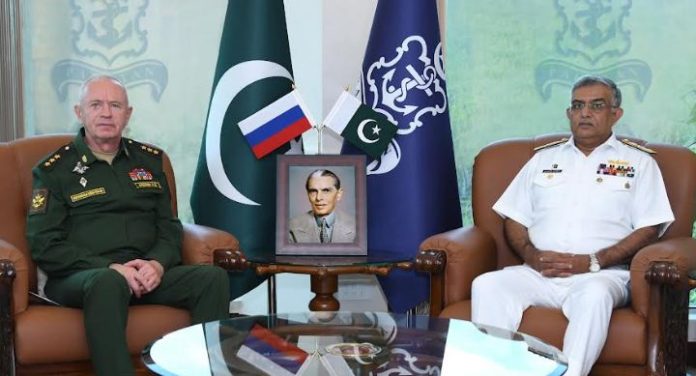
Russian Deputy Minister For Defence meets Naval chief

Russian Deputy Minister For Defence meets Naval chief

ISLAMABAD, OCT 29 /DNA/ – Russian Federation’s Deputy Minister for Defence, Colonel General Alexander V. Fomin called on Chief of the Naval Staff Admiral Naveed Ashraf at Naval Headquarters, Islamabad. During the meeting, professional matters of mutual interest including bilateral collaboration and regional maritime security were discussed. The Naval Chief expressed that Pakistan greatly values its relations with the Russian Federation and desires to forge a long-term, multi-dimensional partnership with Russia. Various avenues  including bilateral training, exchange of visits and conduct of bilateral naval exercises between the two Navies were also focused.

The visiting dignitary appreciated and acknowledged the Pakistan Navy’s efforts and commitments in support of collaborative maritime security. Both the leaders agreed to further strengthen and diversify the scope of existing bilateral defence relationship particularly in maritime domain and naval technologies.

Russian delegation visits PNCA

Russian delegation visits PNCA

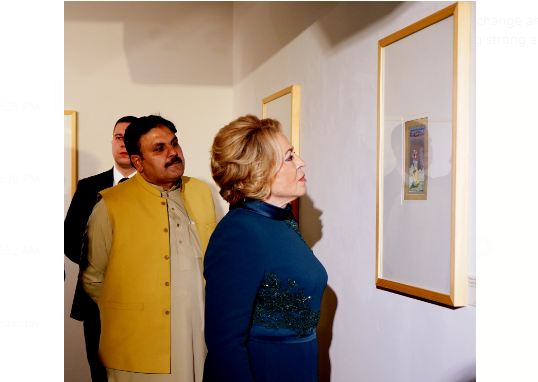
ISLAMABAD, OCT 29 /DNA/ – A distinguished Russian delegation, led by H.E. Ms. Valentina Matvienko, Speaker of the Federation Council of the Russian Federation, visited the Pakistan National Council of the Arts (PNCA) on 29th 9ctober, 2024. The delegation was warmly welcomed by Dr. Bilal Karim, Director PRR, along with PNCA officers, including Ms. Saba Zia, Designer VAD, who guided the delegation on a tour of the Council’s galleries.

The delegation had the opportunity to experience a diverse array of Pakistani art, particularly showcasing impressive artwork of Masters and modern masters. The Russian representatives expressed their admiration for the creativity and cultural depth embodied in these works.

During this visit, both sides engaged in meaningful discussions on shared interests and potential collaborations in arts and culture, further strengthening the cultural ties between Pakistan and Russia. Dr. Bilal Karim, Director PRR and Ms. Saba Zia Designer VAD, expressed their gratitude for the visit and presented an overview of PNCA’s key initiatives and achievements.

To commemorate the occasion, PNCA presented the delegation with cultural books as a token of friendship and mutual respect.

This visit marks an encouraging step toward cultural exchange and cooperation, and PNCA remains committed to fostering strong artistic connections on an international scale.

Stay Connected

64FansLike
60FollowersFollow

Latest Reviews

Exchange Rates

USD - United States Dollar
EUR
1.17
GBP
1.36
AUD
0.72
CAD
0.73