Home Blog Page 769

President Emomali Rahmon greets Prime Minister Shehbaz Sharif on election victory

ISLAMABAD, MAR 5 /DNA/ - President of the Republic of Tajikistan Emomali Rahmon held a telephone conversation with Prime Minister of the Islamic Republic of Pakistan Shehbaz Sharif today, the Founder of Peace and National Unity, the Leader of the Nation, the President of the Republic of Tajikistan, Emomali Rahmon, had a telephone conversation with the Prime Minister of the Islamic Republic of Pakistan, Shehbaz Sharif. At the beginning of the conversation, the Leader of the Nation warmly congratulated the esteemed Shahbaz Sharif on his election to the high post of Prime Minister of the Islamic Republic of Pakistan with wishes of health and new successes in public activities. During the conversation, the parties discussed the state and prospects of Tajik-Pakistani friendly relations and multifaceted cooperation. In this context, they noted the steady dynamics of the development and expansion of the complex of partnership relations between the two states based on long-standing good traditions and principles of mutual understanding, mutual respect and trust. In this regard, the President of the Republic of Tajikistan, stressing the special importance of continuing the interstate dialogue, invited the Prime Minister of the Islamic Republic of Pakistan to pay a visit to Tajikistan. At the end of the conversation, the Head of our State wished friendly Pakistan and its noble people peace, tranquility, well-being and sustainable prosperity.

ISLAMABAD, MAR 5 /DNA/ – President of the Republic of Tajikistan Emomali Rahmon held a telephone conversation with Prime Minister of the Islamic Republic of Pakistan Shehbaz Sharif today, the Founder of Peace and National Unity, the Leader of the Nation, the President of the Republic of Tajikistan, Emomali Rahmon, had a telephone conversation with the Prime Minister of the Islamic Republic of Pakistan, Shehbaz Sharif.

At the beginning of the conversation, the Leader of the Nation warmly congratulated the esteemed Shahbaz Sharif on his election to the high post of Prime Minister of the Islamic Republic of Pakistan with wishes of health and new successes in public activities.

During the conversation, the parties discussed the state and prospects of Tajik-Pakistani friendly relations and multifaceted cooperation.

In this context, they noted the steady dynamics of the development and expansion of the complex of partnership relations between the two states based on long-standing good traditions and principles of mutual understanding, mutual respect and trust.

In this regard, the President of the Republic of Tajikistan, stressing the special importance of continuing the interstate dialogue, invited the Prime Minister of the Islamic Republic of Pakistan to pay a visit to Tajikistan.

At the end of the conversation, the Head of our State wished friendly Pakistan and its noble people peace, tranquility, well-being and sustainable prosperity.

PN continues to provide humanitarian assistance in Gwadar

PN continues to provide humanitarian assistance in Gwadar

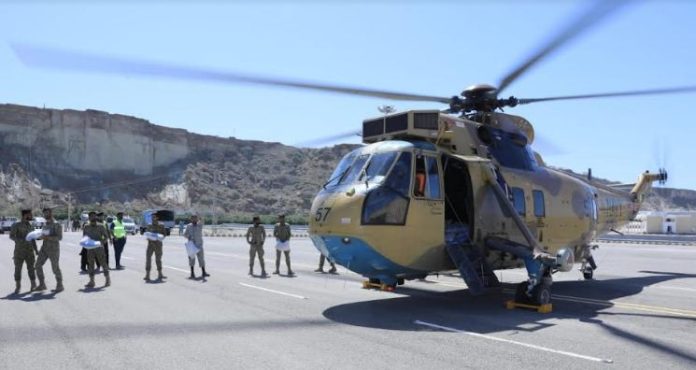
KARACHI, 5 Mar /DNA/ – Pakistan Navy, alongwith civil government continously providing ration, medicines and warm clothes to flood stricken people of Gwadar District.

Pakistan Navy is utilizing helicopters to ensure continous supply of relief goods to Jiwani, Ganz, Pishukan and Kappar. Pakistan Navy troops are reaching out to stranded people in other far-flung flood affected areas as well to distribute relief goods.

Pakistan Navy special response forces providing their support to local flood-affected communities to drain rain water from their homes and street with all available resources.

Japan provides grant assistance to five NGOs for development projects

Japan provides grant assistance to five NGOs for development projects

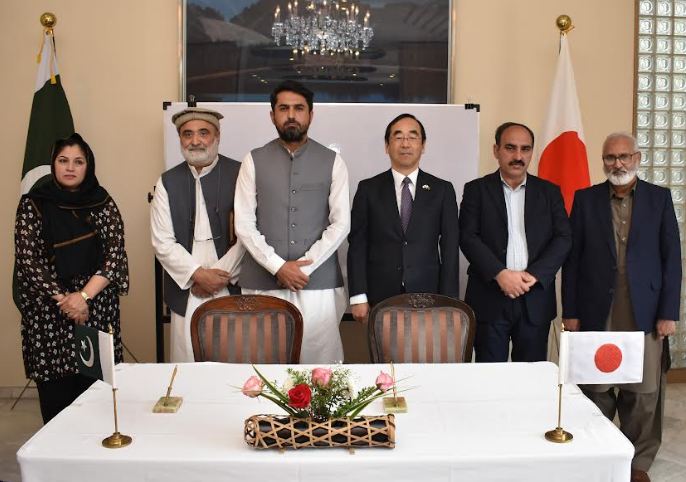
ISLAMABAD, MAR 5 /DNA/ – The Government of Japan has decided to provide grant assistance up to USD 300,800 (equivalent to around PKR 84 million) in total to five local NGOs for development projects in Pakistan. Three out of the five projects are flood rehabilitation projects in the areas affected by the 2022 Pakistan floods.

The grant contracts were signed between His Excellency, Mr. WADA Mitsuhiro, Ambassador of Japan to the Islamic Republic of Pakistan and representatives of the five NGOs at the Embassy of Japan in Islamabad on March 5, 2024. The five NGOs that will implement the projects are (1) Association for Behavior & Knowledge Transformation (ABKT), (2) Fortified Services for Reforms & Transformation (FSRT), (3) Actions For Human Advancement (AHAT), (4) Lok Sudhar Association and (5) Safe Hands Foundation.

ABKT will receive a USD 63,518 grant (equivalent to around PKR 17.7million) to reconstruct three flood-damaged suspension bridges in District Upper Dir, Khyber Pakhtunkhwa. This project will enhance the security of school children and local community members when natural disasters such as flood occur. It will also provide a safe passage to the school children as well as the local people to reach their school safely in this area.

FSRT will receive a USD 60,506 grant (equivalent to around PKR 16.8million) to reconstruct flood-affected school building for girls’ primary course in Malakand Division, District Swat, Khyber Pakhtunkhwa. This project will provide school children with a safe place for learning, resulting in improving overall literacy rate of Swat, a city with one of the lowest literacy rates in Pakistan.

AHAT will receive a USD 57,684 grant (equivalent to around PKR 16million) to reconstruct a flood-affected primary and middle school in Tehsil Jampur, District Rajanpur, Punjab. This project will enhance learning environment for the children in one of the most flood-affected areas during the 2022 floods in Pakistan.

Lok Sudhar Association will receive a USD 51,407 grant (equivalent to around PKR 14.3 million) to establish an ophthalmology operation theater to expand eye care facility in Havelian, District Abbottabad, Khyber Pakhtunkhwa. This facility will provide eye-related treatment to the patients in accessible and affordable way. In particular, the people will have the opportunity to access to cataract surgery for the first time in this locality. This project will lead to the improvement of the health sector in the area.

Safe Hands Foundation will receive a USD 67,685 grant (equivalent to around PKR 19million) to construct the primary-school building to promote child education in village Khaisata Gul Kalay, District Khyber in KP. The project will provide, in one of the most deserving and vulnerable areas, the school building equipped with a solar system that can accommodate about 200 primary school children including those currently studying in an open-air classroom.

At the signing ceremony, His Excellency, Mr. WADA Mitsuhiro expressed his expectation that these development projects in cooperation with local communities would have a positive impact on uplifting the living standards of Pakistani people at the grassroots level.

The Government of Japan will provide further flexible and timely support to local NGOs through grant assistance to improve the social wellbeing of the people of Pakistan at the grassroots level.

Pakistan hosts SCO seminar addressing challenges in military medicines

Pakistan hosts SCO seminar addressing challenges in military medicines

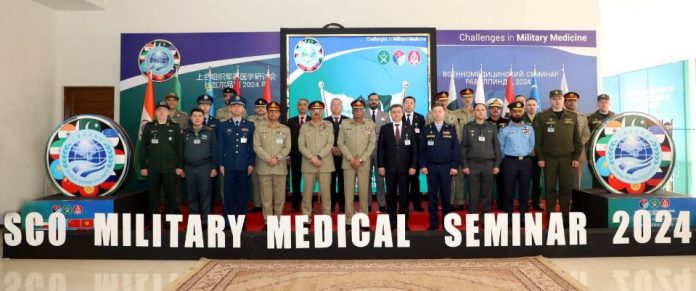
RAWALPINDI, MAY 5 /DNA/ – General Sahir Shamshad Mirza, Chairman Joint Chiefs of Staff Committee (JCSC), today attended the opening session of SCO Members States Seminar being hosted by Pakistan at Rawalpindi on theme of “Challenges in Military Medicines”.

The Chairman JCSC in his address highlighted that emergence of new and complex healthcare challenges, Pandemics and humanitarian crisis merit crafting of collective preparedness, response strategies and more importantly strengthening of multilateral collaboration amongst SCO nations especially in field of military medicines.

CJCSC reiterated that both Pakistani nation and Pakistan Armed Forces take great pride in our partnership with SCO and are fully committed to further expand this cooperation.

He expressed his gratitude to SCO for affording this platform for dialogue and cooperation; and the delegates from partner countries for their whole hearted attendance.

NIMA held an International seminar

NIMA held an International seminar

DNA

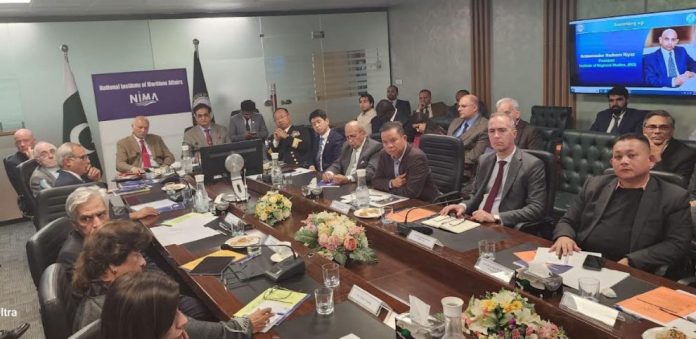
ISLAMABAD, MAR 5: NIMA in collaboration with the Royal Malaysian Navy – Sea Power Centre (RMN – SPC), Pakistan Embassy in France, Centre for International Studies (CeSI) Italy,  and Institute of Regional Studies held an international hybrid seminar at NIMA Head office, Islamabad. Senator Mushahid Hussain Sayed was the Chief Guest. Asim Iftikhar Ahmed, Pakistan’s Ambassador to France also joined as the Guest of Honor through Zoom.

The main focus of this seminar was to develop an understanding on regional and international perspectives about the Indian and Pacific Oceans, and their challenges in 21st Century. Renowned regional & international scholars shared their insights about this important subject. In opening remarks, President NIMA highlighted the significance of the Indian and Pacific Ocean, its security, related issues, and its effect on maintenance of good order at sea.

Ambassador Masood Khalid articulated China’s viewpoint on emerging challenges in the Indian-Pacific region, while Rear Adm (Retd) Jean Mathieu Rey, Senior Research Fellow FMES, France, presented the European perspective. Mr. Tiziano Marino, Head Asia Pacific Analysis Unit at CeSI, Italy, shared Italy’s insights. Rear Admiral Dato Pahlawan Abd Halim bin Hj Shaari (RMN-SPC) proffered the perspective of ASEAN countries. Rear Admiral Faisal Ali Shah elaborated Pakistan’s thought process, and the seminar was succinctly summarized by President IRS, Amb. Nadeem Riyaz.

In his concluding address by Chief Guest, Senator Mushahid Hussain Sayed pointed the disruptive behavior of India in the Indian Ocean. Impounding of Pakistani bound commercial cargo, was characterized as a state sponsored piracy.

The event was well-attended by academia, professionals, diplomatic corps, reps of think tanks, subject matter specialists, government officials, faculty members, defense officers, and key maritime stakeholders.

Trade, submarines feature at ASEAN talks in Australia

submarines feature at ASEAN talks in Australia

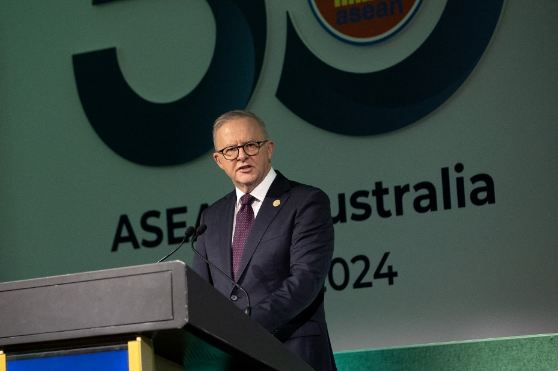
Melbourne, Mar 5 (AFP/APP/DNA): Australia unveiled plans to ramp up investment in Southeast Asia on Tuesday, setting aside US$1.3 billion to bolster trade in a region of rising economic might.

Prime Minister Anthony Albanese announced the funding as leaders from the 10-nation ASEAN forum met in Melbourne for a three-day summit.

“The government I lead has made it clear. More than any other region, Southeast Asia is where Australia’s future lies,” Albanese told a business forum on the summit’s sidelines.

Following a series of bruising disputes, Australia has increasingly looked to build economic ties outside of major trading partner China.

Fuelled by years of swift and sustained population growth, the ASEAN bloc is widely seen as an emerging economic powerhouse.

With vast deposits of critical minerals and a booming appetite for electricity, Southeast Asia is also poised to play a major role in the global push for clean energy.

Australia’s new funding package will provide export financing and loans geared largely toward infrastructure and renewable energy projects.

Albanese said it was “the most significant upgrade of Australia’s economic engagement with ASEAN for a generation”.

– Nuclear submarines –

While leaders were eager to focus on trade and business, more sensitive questions about China’s growing sway in Southeast Asia were never far from mind.

Singapore Prime Minister Lee Hsien Loong said the city-state would gladly host Australia’s fleet of nuclear-powered submarines once they were up and running — an offer likely to raise Beijing’s hackles.

The United States and the United Kingdom have pledged to help Australia acquire a fleet of nuclear-powered subs as part of joint plans to counter China’s influence in the region.

While some ASEAN members have expressed reluctance to back the so-called AUKUS defence pact, former British colony Singapore has been full throated in its support.

“I’ve said before, and I repeated to the prime minister on this visit, that when the new Australian submarines are ready, we welcome them to visit Changi naval base,” Lee told reporters on Tuesday.

Climate change also looms large on the summit’s agenda.

Southeast Asia’s hunger for energy is largely fed by fossil fuels, while Australia remains one of the world’s biggest exporters of gas and polluting thermal coal.

Both are increasingly eager to pivot toward renewable energy.

Int’l Collaboration is Vital for strengthening climate resilience of agriculture in Pakistan, Chairman PARC

Int’l Collaboration is Vital for strengthening climate resilience of agriculture in Pakistan, Chairman PARC

ISLAMABAD, MAR 4 /DNA/ – PARC and ADB collaborated to host a groundbreaking workshop focused on Promoting climate-smart agricultural research in Pakistan. The event, held at National Agricultural Research Centre (NARC) Islamabad, brought together esteemed participants from various national and international research organizations. Chairman PARC, Dr. Ghulam Muhammad Ali, expressed his gratitude to all attendees, including Ms. Noriko Sato senior Natural Resources Specialist ADB, Dr. Takashi Yamano, principal economist ADB and others for their valuable contributions to the cause. Chairman PARC reiterated that Climate smart agriculture research is crucial in addressing the challenges posed by rapidly changing climatic conditions to ensure sustainable food production and agricultural resilience. Dr. Ali also underscored the importance of engaging with international institutions and experts to leverage their knowledge and experiences for the benefit of agricultural research in the region.

During her remarks, Ms. Noriko Sato provided a comprehensive overview of ADB’s initiatives in Pakistan. Dr. Takashi Yamano presented insights on climate change impacts, including temperature variations, crop damage from floods, and greenhouse gas emissions in agriculture. The discussions also encompassed potential solutions to mitigate these emissions, such as promoting low-carbon rice cultivation and developing climate-resilient and drought-tolerant crop varieties. Dr. Ruben Lampayan, ADB consultant highlighted the inefficiencies in water usage in rice cultivation and emphasized the adoption of water conservation techniques, Alternate Wetting and Drying (AWD) practices, and other effective water management technologies to enhance rice production while minimizing water consumption. Senior specialist, Dr. Krishna Dev Joshi highlighted the importance of the delivery of climate smart crop varieties to transform Agri-food system of Pakistan and to address the challenges of climate change and ensure food security in the country.  Climate Change specialist, Dr. Hiz Jamali emphasized that low water productivity in rice poses a significant challenge to sustainable agriculture practices in Pakistan, exacerbated by key climate challenges such as water scarcity, unusual rainfall patterns, and rising temperatures impacting crop yields

Director Water Institute NARC, Dr. Bashir Ahmed, and Director NIGAB, Dr. Shaukat Ali shared insights on success stories by PARC on climate smart agriculture in Pakistan enhancing water productivity in rice, developing climate-resilient crop varieties, addressing climate change implications on water availability, and tackling key climate challenges in country’s agriculture sector. The meeting concluded with a commitment between PARC and ADB to collaborate for the advancement of sustainable agricultural practices and fostering global partnerships to address the evolving environmental conditions affecting food security and economic growth in the country.

Turkish President Tayyip Erdoğan greets Shehbaz Sharif

Turkish President Tayyip Erdoğan greets Shehbaz Sharif

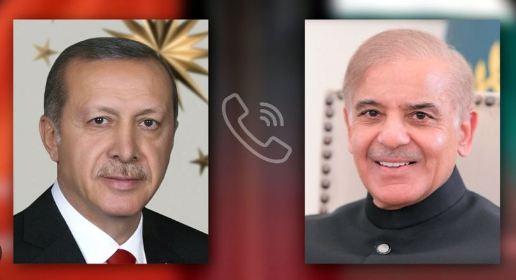
ISLAMABAD, MAR 4 /DNA/ – Today, the President of Republic of Turkiye, Recep Tayyip Erdoğan, called Prime Minister Shehbaz Sharif and congratulated him on his election as the Prime Minister of Pakistan.

The Prime Minister expressed his gratitude to President Erdoğan for this gracious gesture of brotherhood and fraternity. He underlined that enduring people-to-people bonds and strong religious and cultural linkages underpinned robust Pakistan-Turkiye relationship.

Prime Minister Sharif also conveyed that Pakistan looked forward to welcoming President Erdoğan for the upcoming session of Pak-Turkiye High-Level Strategic Cooperation Council (HLSCC) being scheduled to be held in Islamabad in near future. 

Recalling strong bonds of friendship that exist between the governments and peoples of the two countries, the two leaders expressed their desire and commitment to work closely with each other to take the bilateral relationship to unprecedented heights of cooperation and fraternity.

The two leaders also exchanged views on the worsening humanitarian situation in Gaza and reaffirmed their commitment for a just, comprehensive and lasting solution to the Palestinian question anchored in international law and in line with relevant United Nations and OIC resolutions.

Launch of Dr. Maleeha Lodhi’s book “Pakistan: Search for Stability” at ISSI

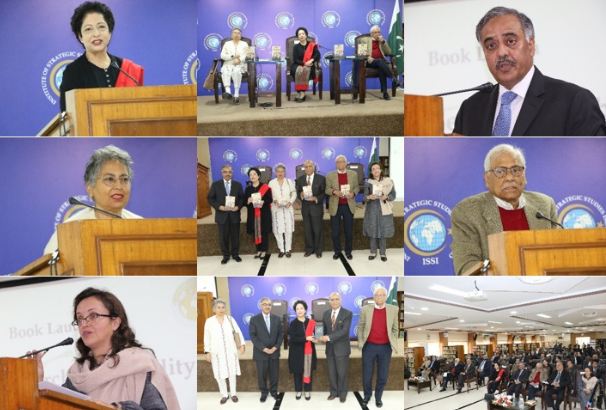
ISLAMABAD, MAY 4 /DNA/ – The Centre for Strategic Perspectives (CSP) at the Institute of Strategic Studies Islamabad (ISSI), organized launch of the book tiltled “Pakistan: Search for Stability”, edited by Dr. Maleeha Lodhi. Two other contributors to the book — Mr. Zahid Hussain, a prominent journalist; and Dr. Dushka Saiyid, a former professor of History at QAU — were also present. The event was attended by eminent members of foreign and civil services, academia, civil society, media, and the diplomatic corps in Islamabad.

During her initial remarks, Dr. Neelum Nigar, Director of CSP, underscored the importance of Dr. Lodhi’s book, which delves into the complexities of Pakistan’s policy formulation in its pursuit of stability. Dr. Nigar stated that this book has the potential to greatly enhance people’s understanding of the crucial subject-matter that it addresses.

In his welcoming address, DG ISSI Ambassador Sohail Mahmood highlighted Dr. Maleeha Lodhi’s extensive experience and valuable contributions to Pakistan throughout her long public career, including as an accomplished political scientist, journalist, and diplomat. He also commended the other 18 eminent contributors to the book, analysing Pakistan’s history, politics, economy, society and foreign relations from their respective academic, professional and practitioners’ viewpoint and proposing a practical way forward.

Ambassador Sohail Mahmood noted that Dr. Lodhi’s latest book builds upon her previous work and explores Pakistan’s pursuit of stability amidst its current challenges, outlining the requisite solutions as well as strategies. In essence, he said, the book carries a message of hope and optimism, reassuring that it is indeed possible to overcome the challenges and to be on the path of recovery and renewal. Rather than overwhelming readers with daunting obstacles, it serves as a reinforcement of self-belief and contains a call to decisive, achievable, and transformative action. Ambassador Sohail Mahmood further stressed that the book is a serious and non-partisan contribution to the policy discourse in Pakistan, serving as a valuable resource for policy-makers as they navigate the beginning of a new political cycle. The timing of its release is particularly opportune for learning and insight.

In her address, Dr. Lodhi emphasized the importance of seeking opportunities amidst crises. She noted that in Pakistan, political dynamics have yet to catch up with the socio-economic changes occurring in the country. Dr. Lodhi lauded all the contributors to the book, acknowledging their comprehensive set of policy guidelines covering a wide array of topics. Furthermore, Dr. Lodhi highlighted Pakistan’s youthful and highly talented demographic, expressing optimism about their potential to drive positive political change. However, she lamented that the governance structure remains entrenched in outdated thinking, and the situation marked by a number of political, social and structural fault-lines. The polarisation and absence of consensus, mutual respect and tolerance within Pakistan’s political system, she argued, contributes to destabilization.

Moreover, Dr. Lodhi pointed out the economic challenges facing Pakistan, including its entrapment in a debt cycle leading to increased inequality perpetuated by a minority elite’s control. She remarked that the book aims to chart a course towards overcoming the existing fault-lines within Pakistan’s system and needs to be read with care and attention by the policy circles.

Dr. Dushka Saiyid emphasized the importance of educating the younger generation about historical figures, particularly highlighting the life and teachings of Pakistan’s founder, Quaid-e-Azam Mohammed Ali Jinnah. In her talk, she navigated through historical contexts to emphasize the enduring relevance of Jinnah’s principles in shaping a progressive and united Pakistan for generations to come. She underscored Jinnah’s democratic, secular and inclusive principles as well as his emphasis on constitutionalism, education and women emancipation as essential for contemporary Pakistan, which she has elaborated upon in her chapter in the book.

Mr. Zahid Hussain stressed the necessity for policymakers to glean insights from historical precedent, which has often resulted in Pakistan facing persistent crises, whether in politics or economics. He noted that the internal security situation was further exacerbated by challenges such as climate change and population growth. Highlighting concerns at three of Pakistan’s four borders, he particularly emphasized the serious situation along the Pakistan-Afghanistan border. Mr. Hussain highlighted the spillover effects of the situation in Afghanistan, contributing to heightened insecurity in Pakistan, and advocated for a reassessment of Pakistan’s Afghan policy, a subject he has addressed at length in his chapter in the book.

Following the presentations, participants engaged in an interactive discussion. In the end, Ambassador Khalid Mahmood, Chairman of the Board of Governors, ISSI presented the Institute’s Shields to the speakers followed by a group photo.

Launch of commemorative stamps as part of Pakistan-Belarus 30 years of diplomatic ties

Launch of commemorative stamps as part of Pakistan-Belarus 30 years of diplomatic ties

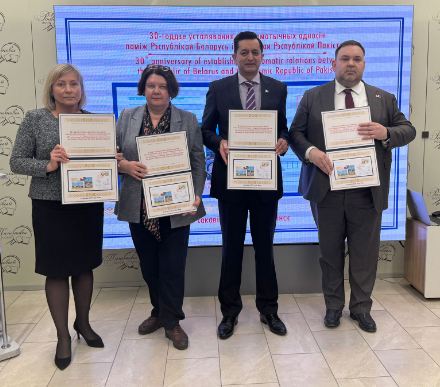
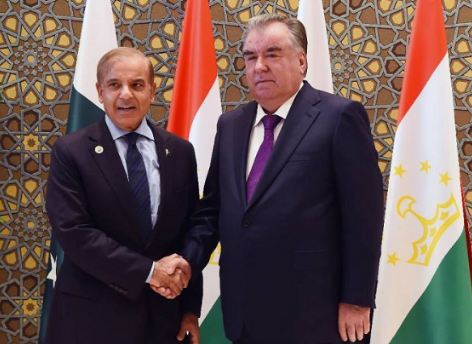
MINSK, MAY 4 /DNA/ – The launch ceremony held at Belarusian Post headquarters was attended by Pakistan Ambassador to Belarus Sajjad Haider Khan and Belarusian dignitaries including Mr. Eugeny Shestakov, Deputy Foreign Minister, and Ms. Ryabowa Anna, Deputy Minister of Informatization.

In his remarks, Ambassador Khan expressed gratitude for the fruitful partnership that has evolved over the past three decades. He emphasized the establishment of embassies in each other’s capitals in 2014 and 2015 as a significant milestone, underscoring the commitment to engagement and collaboration.

Deputy Foreign Minister Shestakov highlighted the history and ongoing cooperation between Pakistan and Belarus.

The event highlighted the enduring friendship and ongoing cooperation between the two nations.

The two countries are committed to further strengthening their bonds through upcoming events including high-level visits and cultural exchanges.

Stay Connected

64FansLike
60FollowersFollow

Latest Reviews

Exchange Rates

USD - United States Dollar
EUR
1.17
GBP
1.34
AUD
0.67
CAD
0.73