Home Blog Page 768

Pakistan Embassy in Minsk hosts grand reception marking 84th Pakistan Resolution Day

Pakistan Embassy in Minsk hosts grand reception marking 84th Pakistan Resolution Day

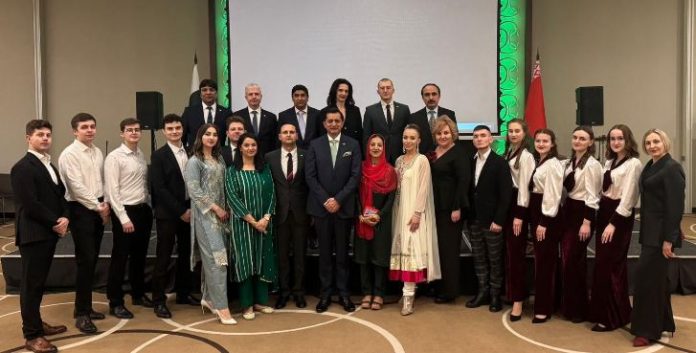
MINSK, MAR 6 /DNA/ – Pakistan Embassy in Minsk holds a Reception Celebrating the 84th Pakistan Resolution Day and 30th Anniversary of Pakistan-Belarus Diplomatic Relations.

The Embassy of Pakistan in Belarus organized a Reception in commemoration of 84th Pakistan Resolution Day and 30th Anniversary of the establishment of Pakistan-Belarus Diplomatic Relations. His Excellency Mr. Viktor Karankevich, Minister of Energy of the Republic of Belarus was the Chief Guest, whereas over 250 other guests, including Ambassadors, Belarusian dignitaries, media personnel and expatriate Pakistanis attended the event.

Reflecting on the historic significance of March 23rd, Ambassador of Pakistan to Belarus Sajjad Haider Khan, paid homage to the visionary founding fathers especially Quaid-i-Azam Mohammad Ali Jinnah, whose leadership led to the birth of Pakistan as an independent nation on August 14, 1947.

Ambassador Khan underscored Pakistan’s stature as the world’s second-largest Muslim nation, with a population of 240 million and a robust economy boasting a GDP of $1.283 trillion in terms of purchasing power parity. The contributions of Pakistan’s 10 million expatriates, who annually remit around $30 billion, were lauded for their role in the nation’s socio-economic development.

Ambassador Khan reaffirmed Pakistan’s commitment to the principles of equality, justice, and non-alignment in international affairs, as enshrined in the UN Charter. He underscored Pakistan’s active participation in multilateral and regional organizations, advocating for peace, cooperation, and regional development.

Turning to the bilateral relations between Pakistan and Belarus, Ambassador Khan highlighted the development of the partnership over the past three decades, characterized by mutual respect and cooperation. Significant agreements, including the visa abolition for diplomatic and official passport holders, and over 80 other MoUs and agreements, have laid the foundation for diverse cooperation across various sectors.

The Ambassador also spoke about the Cultural exchanges between Pakistan and Belarus which have flourished, enriched by film, art, music, sports, and educational initiatives. As part of the 30th-anniversary celebrations, a series of events, including book launches, cultural festivals, art exhibitions, and musical concerts, are planned to further strengthen cultural ties between the two nations.

During his speech, the Belarusian Minister of Energy Viktor Karankevich expressed warm congratulations to Pakistan on its National Day and highlighted the significant milestones achieved since the Lahore Declaration in 1940. He commended Pakistan’s journey to becoming a respected global player and emphasized the strengthening of bilateral relations over the past 30 years.

The Minister highlighted successful elections in both countries, cooperation within the Shanghai Cooperation Organization, and key achievements in trade and education. He thanked Ambassador Sajjad Haider Khan and the Embassy team for their contributions and expressed optimism for continued cooperation and partnership between Belarus and Pakistan.

A special feature about the event was the live performance by students of the State University of Culture & Arts on instrumental tunes of Pakistani national songs.

The Ambassador expressed gratitude to the Belarusian government for their steadfast support and concluded by expressing confidence in the continued strengthening of Pakistan-Belarus relations in the years to come.

Pakistan desires to expand trade, economic cooperation with friendly countries: President

President Arif Alvi

ISLAMABAD, MAR 6 (APP/DNA): President Arif Alvi on Wednesday said that Pakistan desired to expand its trade and economic relations with the friendly countries. The president expressed these views during separate meetings with Ambassador-designate of Pakistan to Portugal Dr Muhammad Khalid Ejaz and Ambassador-designate of Pakistan to Myanmar Imran Haider, who called on him at the Aiwan e Sadr.

Pakistan desires to expand trade, economic cooperation with friendly countries: President Talking to ambassador-designate to Portugal, the president urged him to work for further strengthening of bilateral trade ties with his host country, adding that Pakistan was ensuring conducive environment for the economic and trade activities. The foreign investors should avail of such business-friendly environment in Pakistan, President Secretariat Press Wing, in a press release, quoted the president as saying. President Alvi also underlined the need of enhancing political, cultural and people to people contacts between Pakistan and Portugal, besides strengthening of exchanges at the political level. Portuguese IT companies could benefit from the skilled human resources of Pakistan in the respective sector, he opined. The president, during his meeting with ambassador designate to Myanmar, stressed upon further cementing of bilateral relations between the two countries. He stressed that both countries were required to enhance their cooperation in business sector to promote trade. Ancient Buddhism heritage in Pakistan could further bring the two countries closer in tourism and cultural sectors. On the occasion, the president also separately expressed his good wishes for the success of both envoys.

Cutting-Edge HAIDER tank rolled out at heavy industries Taxila, showcasing Pakistan’s defence prowess

Cutting-Edge HAIDER tank rolled out at heavy industries Taxila

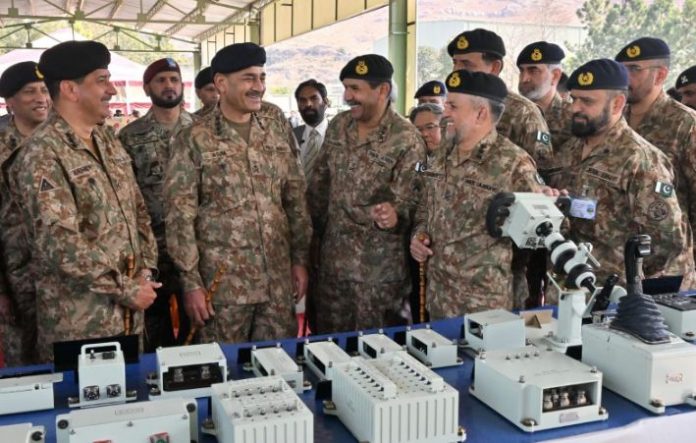
RAWALPINDI, MAR 6 /DNA/ – General Syed Asim Munir, NI (M), Chief of Army Staff (COAS), visited Heavy Industries Taxila (HIT) today as chief guest at the rollout ceremony of HAIDER tank (Pilot Project).

The ceremony was attended by Ambassador of the Peoples Republic of China, key officials of Chinese state company NORINCO, high officials of Government of Pakistan & Pakistan Army, and various military and civilian officials of HIT. During the ceremony, HIT unveiled its new Tank HAIDER, which has been indigenously manufactured through collaboration with NORINCO China and various industries of Pakistan.

HAIDER embodies cutting-edge technology and impressive capability in the domain of tank warfare having remarkable firepower, protection and manoeuvre characteristics. Crafted with state-of-the-art advanced technologies, HAIDER stands as a testament to Pakistani defence industry’s relentless pursuit of excellence in defence innovation.

COAS was briefed in detail about the technical capabilities of the HAIDER tank and the progress being made in achieving indigenization in arms and armament.

COAS also visited other manufacturing facilities within the Heavy Industrial Complex and appreciated the commitment of the officers and workforce in successful achievement of another technological milestone.

Earlier on arrival, COAS was received by Chairman HIT.

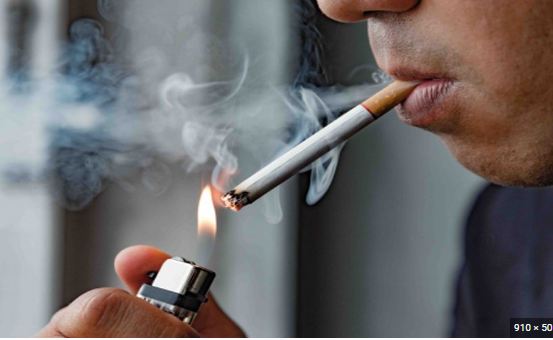
9 percent of Pakistanis being wasted to smoking

ISLAMABAD, MAR 6 /DNA/ - The uphill task for the new government is to synchronize efforts of health and finance ministries to counter the menace of smoking. With 24 million active tobacco users, Pakistan is among the world’s top tobacco-consuming countries, says a report prepared by Pakistan Institute of Development Economics (PIDE). Capital Calling, a think tank, has stated in a report that Pakistan has become a breeding ground for multinational cigarette companies. As a result, the markets are filled with cheap and illicit cigarettes. According to an estimate, cigarette prices are the cheapest in Pakistan as compared to other countries in the region. The think tank pressed on the need to tax cigarettes in accordance with the guidelines set by the WHO, that calls for holding cigarettes companies to account for the health and environment losses they make. It added, “The cigarette industry managed to influence decision making, which not only resulted in Rs567 billion loss in potential revenue but also put extra burden on the country’s fragile healthcare system.” The PIDE report, however, adds that tobacco use is associated with many adverse health effects, but the tax revenue it generates cause tobacco tax policy inertia in Pakistan and other countries. “Despite evidence that higher tobacco taxation discourages tobacco consumption, Pakistan’s tax policy is among the weakest action areas in the country’s fight against tobacco,” it says. “One explanation could be that the policymakers, who consider the tobacco industry a major contributor to government coffers, are reluctant to raise taxes fearing the revenue loss,” it says. However, when the government abolished the third tax tier in 2019 which effectively reduced the tobacco industry’s maneuvering space to sell cheaper cigarettes by avoiding taxes, the tax contribution of the industry actually increased to 120 billion Pakistani rupees (Rs) compared to Rs 92 billion in 2016. This raised the tobacco industry’s share of total tax collection to 3 percent from 2.15 percent in FY16.The government’s reluctance to change tobacco tax policy is partly due to its failure to fully appreciate the smoking-attributable fraction (SAF) of health and social costs. This makes its benefit-cost analysis of tax revenue faulty and compromised over e health outcomes. The PIDE resport further states, “Smoking prevalence in Pakistan is 8.8 percent…Nationally, cardiovascular diseases are the most prevalent in the year 2019. Cardiovascular diseases are also most prevalent, followed by cancer, in urban regions, across both genders, and in Punjab and Khyber Pakhtunkhwa (KP) provinces. The total smoking-attributable fraction of the direct cost of three diseases is Rs 100.3 billion ($0.63 billion) of which the medical cost is 96 percent (Rs 96.24 billion or US$ 0.60 billion) and non-medical cost is four percent (Rs. 4.06 billion US$0.03 billion. Smoking-attributable indirect morbidity cost is Rs 56.32 billion ($0.35 billion). The morbidity cost is 56 percent.” Prof. Muhammad Zaman, from Quaid-i-Azam University (QAU), said that hazards of smoking should not be calculated in segments. “The policymakers should look at it in totality. It is high time to discourage tactics of cigarette companies to influence governments the world over. We expect that the new government will not walk into the trap by these companies and will fix the loopholes in tax system to catch the big fish.”

ISLAMABAD, MAR 6 /DNA/ – The uphill task for the new government is to synchronize efforts of health and finance ministries to counter the menace of smoking.

With 24 million active tobacco users, Pakistan is among the world’s top tobacco-consuming countries, says a report prepared by Pakistan Institute of Development Economics (PIDE).

Capital Calling, a think tank, has stated in a report that Pakistan has become a breeding ground for multinational cigarette companies.

As a result, the markets are filled with cheap and illicit cigarettes. According to an estimate, cigarette prices are the cheapest in Pakistan as compared to other countries in the region.

The think tank pressed on the need to tax cigarettes in accordance with the guidelines set by the WHO, that calls for holding cigarettes companies to account for the health and environment losses they make. It added, “The cigarette industry managed to influence decision making, which not only resulted in Rs567 billion loss in potential revenue but also put extra burden on the country’s fragile healthcare system.”

The PIDE report, however, adds that tobacco use is associated with many adverse health effects, but the tax revenue it generates cause tobacco tax policy inertia in Pakistan and other countries. “Despite evidence that higher tobacco taxation discourages tobacco consumption, Pakistan’s tax policy is among the weakest action areas in the country’s fight against tobacco,” it says. “One explanation could be that

the policymakers, who consider the tobacco industry a major contributor to government coffers, are reluctant to raise taxes fearing the revenue loss,” it says.

However, when the government abolished the third tax tier in 2019 which effectively reduced the tobacco industry’s maneuvering space to sell cheaper cigarettes by avoiding taxes, the tax contribution of the industry actually increased to 120 billion Pakistani rupees (Rs) compared to Rs 92 billion in 2016. This raised the tobacco industry’s share of total tax collection to 3 percent from 2.15 percent in FY16.The government’s reluctance to change tobacco tax policy is partly due to its failure to fully appreciate the smoking-attributable fraction (SAF) of health and social costs. This makes its benefit-cost analysis of tax revenue faulty and compromised over e health outcomes.

The PIDE resport further states, “Smoking prevalence in Pakistan is 8.8 percent…Nationally, cardiovascular diseases are the most prevalent in the year 2019. Cardiovascular diseases are also most prevalent, followed by cancer, in urban regions, across both genders, and in Punjab and Khyber Pakhtunkhwa (KP) provinces.

The total smoking-attributable fraction of the direct cost of three diseases is Rs 100.3 billion ($0.63 billion) of which the medical cost is 96 percent (Rs 96.24 billion or US$ 0.60 billion) and non-medical cost is four percent (Rs. 4.06 billion US$0.03 billion. Smoking-attributable indirect morbidity cost is Rs 56.32 billion ($0.35 billion). The morbidity cost is 56 percent.”

Prof. Muhammad Zaman, from Quaid-i-Azam University (QAU), said that hazards of smoking should not be calculated in segments. “The policymakers should look at it in totality. It is high time to discourage tactics of cigarette companies to influence governments the world over. We expect that the new government will not walk into the trap by these companies and will fix the loopholes in tax system to catch the big fish.”

PM, COAS discuss security, army’s professional matters

PM, COAS discuss security, army's professional matters

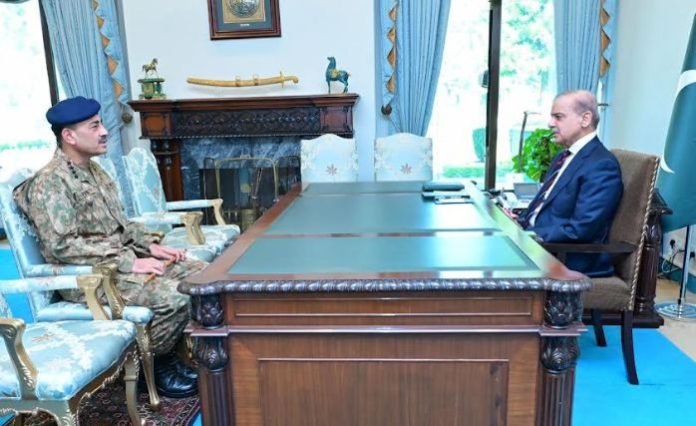
ISLAMABAD, MAR 6 /DNA/ – Chief of the Army Staff General Syed Asim Munir on Wednesday called on Prime Minister Shehbaz Sharif here at the Prime Minister’s House.

In the meeting, they discussed the Pakistan Army’s professional as well as the security-related matters, a PM Office press release said.

The army chief also congratulated Prime Minister Shehbaz on assuming the office and expressed good wishes for him.

Centreline/Daily Islamabad POST Editor presents special report on Gaza to Ambassador Ahmed Rabei

Centreline/Daily Islamabad POST Editor presents special report on Gaza to Ambassador Ahmed Rabei

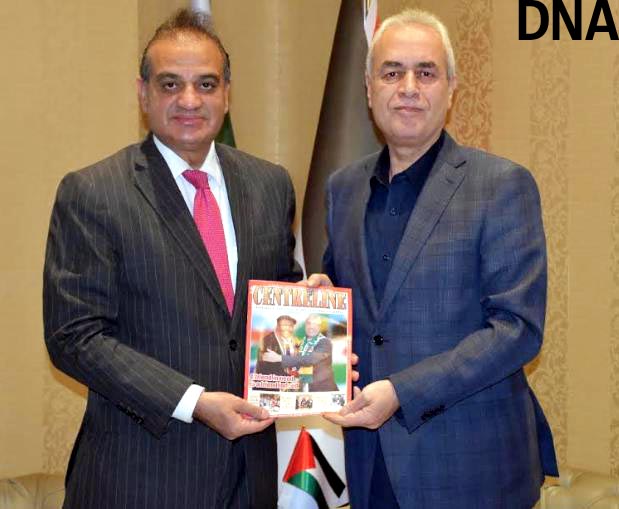
ISLAMABAD, MAR 6 /DNA/ – Chief Editor Centreline/Daily Islamabad POST Ansar Mahmood Bhatti presenting a copy of Centreline magazine, which carries a special report on Gaza, to Ambassador of Palestine Ahmed Rabei.

The Ambassador briefed the senior journalist about the latest Gaza situation. The Ambassador thanked the government and the people of Pakistan for extending whole-hearted support to Palestine at this particular juncture. =DNA

Islamabad Marriott Hotel Launches ‘Kiku’: A Gateway to Authentic Japanese Cuisine

Islamabad Marriott Hotel Launches ‘Kiku’: A Gateway to Authentic Japanese Cuisine

DNA

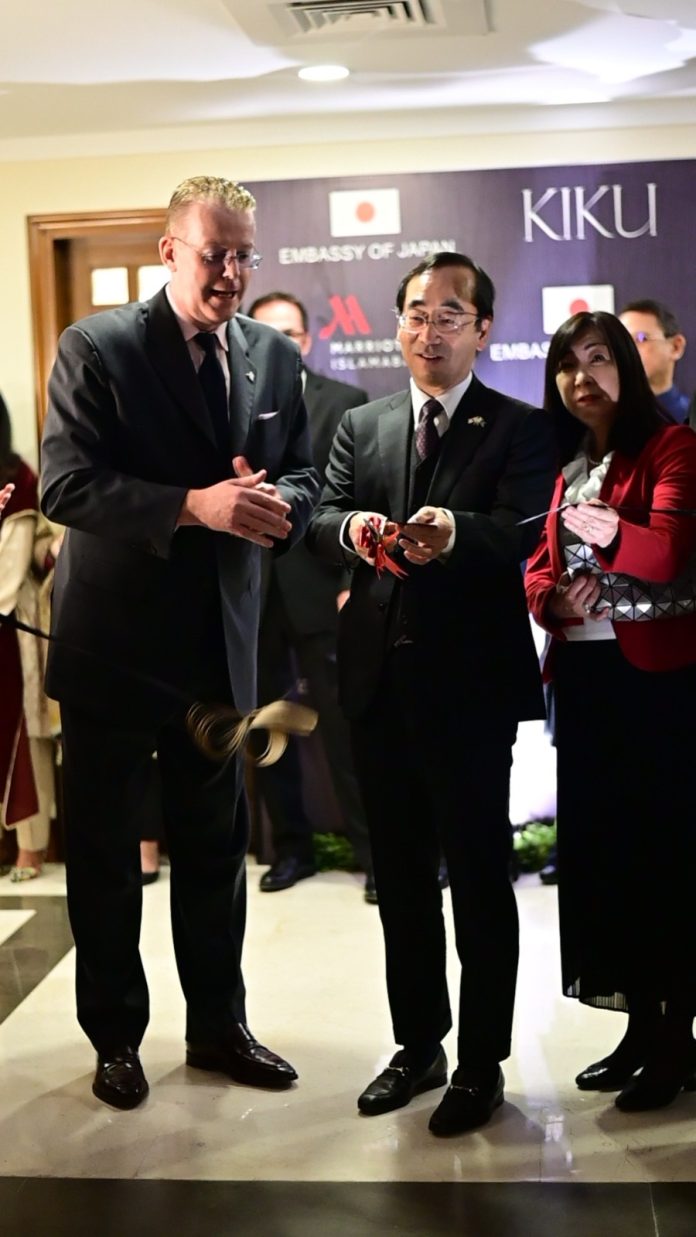
The Islamabad Marriott Hotel has announced the grand opening of ‘Kiku’, an elegant new addition to Islamabad’s culinary scene. The inauguration ceremony was attended by the Ambassador of Japan, H.E. Mr. WADA Mitsuhiro, who expressed his delight and endorsement of Kiku as “the only authentic Japanese restaurant in Islamabad.” The restaurant’s name, Kiku, translates to ‘chrysanthemum’ in Japanese, a symbol of rejuvenation and nobility, reflecting the restaurant’s commitment to providing guests with an authentic and exquisite dining experience. The restaurant offers a meticulously curated menu of contemporary Japanese cuisine, prepared by highly skilled chefs who have mastered the art of Japanese culinary arts. There is also a live sushi bar, teppanyaki and Robatayaki stations complemented by vibrant music played by a  DJ.


Kiku’s interior has been designed to transport diners to Japan, with a serene and elegant ambiance that combines traditional and modern design elements. The opening of Kiku marks a significant milestone in the city’s dining landscape, promising an unforgettable journey into the heart of Japanese culture and cuisine. Mr. David Richard O’Hanlon, the General Manager of the Islamabad Marriott Hotel said: “Kiku is more than just a restaurant; it’s an invitation to explore and appreciate the rich culinary traditions of Japan.”

The cultural bridge is being built through the culinary exchange, and Islamabad Marriott is proud to offer its guests an unparalleled authentic Japanese dining experience.

ECP finally uploads election-related forms

ECP finally uploads election-related forms

Election regulator uploads forms almost two weeks after expiry of stipulated time

Faisal Sheikh

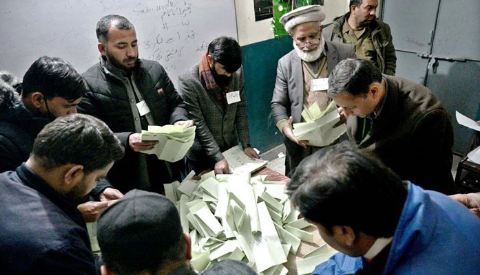
ISLAMABAD: After a prolonged delay, the Election Commission of Pakistan (ECP) has finally uploaded Forms 45, 46, 48, and 49, related to the February 8 general elections, amid allegations of massive rigging and tempering results.

The election regulator uploaded the election-related forms of all the constituencies of provincial and national assemblies, almost two weeks after the expiry of the stipulated time. The deadline for publishing the forms expired on February 22.

Last month, a senior ECP official conceded it was unlikely for the electoral body to meet the legal deadline despite the best efforts, something it could not do in the past as well, owing to various reasons.

He explained that some 300 petitions, regarding the difference between forms 45 and 47 had landed at the ECP on the orders of high courts.

The official pointed out that many petitioners were carrying Forms 45 which were different from the ones the respondents had in possession.

Earlier this week, lambasting the eight-party ruling coalition in the National Assembly, PTI leader and Sunni Ittehad Council (SIC) lawmaker Omar Ayub Khan dubbed newly elected Prime Minister Shehbaz Sharif a “product” of Form 47 — a document which provides insight into unconfirmed results of a constituency, including the number of votes cast and cancelled.

The PTI claimed its mandate was stolen in the February 8 general elections and results were changed in Form 47s.

The Imran Khan-founded party also claimed they won 180 NA seats as per the statistics of Form 45s.

It is pertinent to mention here that Form 45, also known as the Presiding Officer’s Results of the Count, is the form that the presiding officer (PO) is required to sign and provide with his thumb impression and signature to the polling agents.

This form records the number of votes cast in a polling station. It also separately mentions how many votes a candidate received from that polling station.

The purpose of this form is to prevent any alteration during the process, ensuring transparency in the results. This is admissible in court too.

Form 46 is the form that has the count for the ballot papers. It has the number of ballot papers received at a polling station, the number of ballot papers taken out of the ballot box, tendered ballot papers, challenged, spoiled, stray, and cancelled ballot papers at a polling station.

Form 47 is another important form related to polling stations. In this form, the count of votes from all the polling stations of a constituency is recorded by the Returning Officer.

This makes a provisional consolidated result of the constituency sans postal ballots. A postal ballot is a ballot of a registered voter and it is filled and sent to the voting centre through postal mail by the person eligible for postal ballot.

Ethiopian Embassy Islamabad commemorates 128th Adwa Victory Day

Ethiopian Embassy Islamabad commemorates 128th Adwa Victory Day

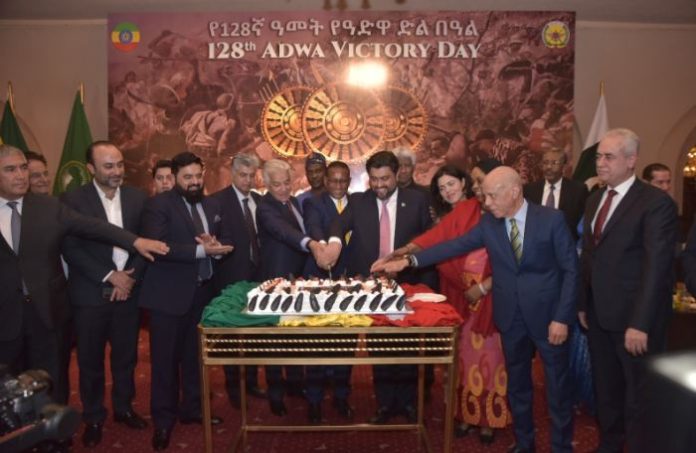
ISLAMABAD, MAR 5 /DNA/ – The Embassy of the Federal Democratic Republic of Ethiopia (FDRE) in the Islamic Republic of Pakistan on Tuesday celebrated the 128th Adwa victory day in Islamabad in the presence of a large number of government officials from different Ministries and Armed Forces, Members of Parliament, diplomatic corps, business community, civil society, media, and above all Ethiopian Diaspora in Pakistan.   

Celebrated with a national zeal and fervor, the commemoration day featured multiple events including documentaries on history of the Adwa victory of Ethiopia against the then colonizers, Ethiopia’s role in laying the foundation of Pan-Africanism and its consistent diplomacy for promoting the regional integration.  

Senior Parliamentarian and Member of the National AssemblyKhawaja Asif graced the celebration ceremony of the Adwa victory Day as the chief guest. 

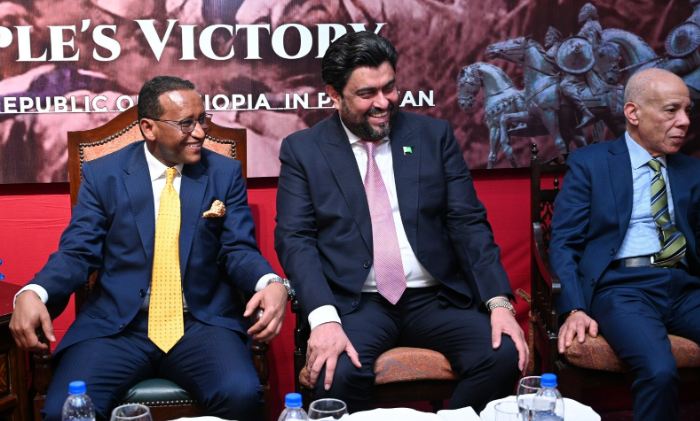
Governor Sindh Kamran Tessori was the guest of honour at the ceremony.

Speaking on the occasion, H.E. Jemal Beker Abdula, Ambassador Extraordinary and Plenipotentiary of the FDRE to Pakistan, extended his felicitations to the whole Africa especially the people of Ethiopia on the occasion of 128th Adwa Victory Day commemorated under the theme of “Adwa Black People’s Victory”. 

He expressed gratitude to the people of Pakistan for gracing the 128th anniversary of the Black People’s Vicotry in such a large number.

H.E. Ambassador Jemal Beker briefed the honorable participants in Islamabad on historical role played by the Adwa battle in igniting movements for freedom, equality and liberty in the whole Africa and in other continents against the colonization.

On March 2, 1896, a united Ethiopia achieved the biggest victory in battle field against the invading forces which, indeed, changed the course of history, humanity, political and social narration at the global level, the ambassador noted. 

Adwa’s victory is an inspiration and spirit of Pan-Africanism that ignited anti-colonial movements all across the world, the ambassador remarked.

The Adwa victory symbolized Ethiopian unity and pan-Africanism, he said while highlighting the major initiatives of the reformist Government of Ethiopia that further fostering regional integration in the region.

He said Ethiopia had built Grand Ethiopian Renaissance Dam which would further promote regional integration through energy export. Ethiopia was already sharing its resources with the people of neighboring countries and would continue to do so.

The ambassador said Green Legacy Initiative of H.E. Dr Abi Ahmed, Prime Minister of Ethiopia, was also another major initiative of the government to boost collaboration with regional countries in mitigating global issues like climate change and food insecurity.

32.5 billion seedlings of different fruits, plants, trees and animal feed were planted during the last four years under the Green Legacy campaign, he added.

The ambassador also expressed resolve to further strengthen the bilateral ties between the two countries through economic diplomacy.

He announced Hijra Trip II, another business delegation of Pakistani business community to Ethiopia in this year, for boosting the trade between the two countries.

Last year, the Embassy of Ethiopia mobilized a historic delegation of 75 business persons to Ethiopia, the ambassador added. 

Chief Guest Khawaja Muhammad Asif also congratulated the people of Ethiopia and Africa on the Adwa victory day.

He also stressed the need for the Pakistani business community to explore African markets especially through Ethiopia which was a gateway to the African continent.

PIDE calls for uniformity in taxing cigarettes

PIDE calls for uniformity in taxing cigarettes

ISLAMABAD, MAR 5 /DNA/ – Health experts and anti-tobacco activists urge the government to harmonize cigarette taxes with WHO guidelines to protect the country’s youth from falling victim to smoking, a consequence of the current affordability of cigarettes*.

Imposition of low taxes on cigarettes in Pakistan make them cheaper that not only increases the number of smokers every year but also smoking related diseases and health bill for the government.

Dr Maleek Haider has an unending number of patients of smoking-induced ailments.

“Most of my patients are poor and bread-winners in their families. I have observed that they start smoking at an early age and fall sick by the time they cross 30,” he said.

His observation strikes a chord with the findings of one of the latest studies on smoking in Pakistan conducted by Pakistan Institute of Development Economics.

It says that 86 percent of the cost of smoking-induced diseases is borne by individuals in 35–64 age group.

Alarmingly, it also states that total cost of mortality and morbidity by smoking accounts for 1.6 percent of GDP of a country that spends less than 1 percent of its GDP on healthcare.

Shedding light on why cigarettes are cheap, the study says that it is due to overlooking at the guidelines set by the World Health Organization (WHO).

The WHO guidelines state that “threshold of 70 percent of the retail price or the level required to cover the costs tobacco makes the country incur. In the latter case, the increase would be four to five times what the tax rate is now. In the short-run, the rates on the two tax tiers should be increased with a higher increase for the second tier so that the gap between them is minimized. In the long run, however, the two-tier system should be abolished to have a single-tier system. This would help in bringing the poor out of the vicious cycle of poverty in addition to reducing the smoking-related disease burden.”

The total revenue collected from cigarettes taxation in the fiscal year 2021-22 was Rs 150 billion. Hence, the economic and health cost imposed by smoking on society is 3.65 times higher than the overall tax collected from the tobacco industry.

Similarly, the smoking-attributable direct cost is 8.3 percent of the total health expenditures, which is significantly high. Likewise, the total economic cost of smoking is almost equal (1.03 times) to the public sector health spending (both federal and provincial), says the PIDE report. 

Anti-tobacco activists have called for increasing taxes on cigarettes instead of utilities such as electricity and gas.

Malik Imran Ahmad, Country Head of the Campaign for Tobacco-Free Kids (CTFK), also pointed out high prevalence of tobacco use in the country, with 31.9 million adults (15 years and above) consuming tobacco products, accounting for about 19.7% of the adult population.

It is estimated that smoking-induced illnesses, such as cancer, diabetes, and heart diseases, contribute to over 160,000 deaths annually in Pakistan.

Dr. Aman Khan director Waseela Foundation says that multi-national cigarette manufacturers know how to manipulate media to mislead the masses into smoking.

He said research has shown that hardly 16 percent of the cigarettes are illicit but the companies propagate that they account for 40 percent. These multinational companies are influential enough to stifle voices of sanity on media, he added.

He said the government needs to build a narrative on modern lines keeping in view the changing nature of media to counter smoking.

Stay Connected

64FansLike
60FollowersFollow

Latest Reviews

Exchange Rates

USD - United States Dollar
EUR
1.17
GBP
1.34
AUD
0.67
CAD
0.73