Home Blog Page 763

ISSI hosts roundtable discussion on combatting Islamophobia

ISSI hosts roundtable discussion on combatting Islamophobia

ISLAMABAD, MAR 15 /DNA/ – To commemorate the International Day to Combat Islamophobia, the Centre for Strategic Perspectives (CSP) at the Institute of Strategic Studies Islamabad (ISSI), hosted a Roundtable Discussion titled, “Importance of Global Solidarity to Combat Islamophobia”, bringing to the fore a global dialogue aimed at addressing the prejudices, intolerance, violence and injustices faced by Muslims worldwide. Dr. Qibla Ayaz, Chairman of the Council of the Islamic Ideology (CII), was chief guest; Ambassadors of Iran and Turkiye and noted academic and senior Foreign Office official joined as panellists.

In her introductory remarks, Dr. Neelum Nigar, Director CSP thanked the esteemed panellists and other participants and emphasized the importance of combating Islamophobia in contemporary times, which is marred by multiple global conflicts and issues.

DG ISSI Ambassador Sohail Mahmood, in his welcoming remarks, highlighted the journey since the March 2019 Christchurch terrorist attacks in New Zealand, highlighting the pivotal moments and global actions, including Pakistan’s leading role in the OIC and the UN General Assembly, culminating in the designation of March 15 as the ‘International Day to Combat Islamophobia.’ While tracing the evolution and myriad manifestations of Islamophobia in recent decades, he emphasized that Islamophobia was not just prevalent in some Western countries but in non-Western parts of the world as well, including in Pakistan’s neighbourhood where it was growing in the wake of the ‘Hindutva’ ideology. Noting that the world was experiencing extreme levels of tumult, he stressed that this was the time to build bridges, not to accentuate religious or cultural fault-lines or create further divisions. People of goodwill in all faiths should come forward and play their part in forging greater mutual respect, understanding, and inter-faith harmony, he concluded.

A special video message by the Honourable Secretary General of the Organisation of Islamic Cooperation (OIC) His Excellency Hissein Brahim Taha for the occasion was shared. The Secretary General emphasized the urgent need to combat and address the widespread prejudice and discrimination against Muslims globally and the importance of fostering a culture of tolerance, respect, and mutual understanding across different faiths and communities. Moreover, he called for international solidarity, legal measures against hate speech and discrimination, and educational initiatives to dispel myths and misconceptions about Islam and its followers.

Dr. Muhammad Israr Madani from the Islamic Research Council of Religious Affairs, provided a scholarly exposition on the multifaceted nature of Islamophobia, tracing its historical roots and present-day manifestations. His analytical insights into the contributing factors of Islamophobia, from media misrepresentation to the socio-political dynamics in Western countries, offered a comprehensive overview of the complexities involved. Dr. Madani’s emphasis on strategic engagement, media literacy, and educational reforms proposed a constructive framework for counteracting Islamophobic narratives.

Ambassador Rizwan Saeed Sheikh, Additional Secretary Ministry of Foreign Affairs (MOFA), delved into the political and legal dimensions of Islamophobia, advocating for a balanced approach between freedom of expression and respect for religious sentiments. His call for utilizing international human rights frameworks as a common ground for dialogue and action resonated with the audience, highlighting the significance of diplomacy and legal recourse in combating Islamophobia.

H.E. Dr. Reza Amiri Moghadam, Ambassador of the Islamic Republic of Iran, enriched the discussion by contextualizing Islamophobia within the broader historical and geopolitical narratives. His critique of Islamophobia as a tool for political manipulation and his call for unity among Muslim nations underscored the importance of solidarity and collective identity in overcoming adversities.

H.E. Dr. Mehmet Paçaci, Ambassador of Türkiye to Pakistan, pointed to the alarming rise of Islamophobia globally, especially in the Western and certain non-Western countries including India. His discourse on the political misuse of Islamophobia and the urgent need for international accountability and cooperation offered a compelling call to action for both Muslim and non-Muslim countries to address this pressing issue.

Chief Guest Dr. Qibla Ayaz delivered an illuminating address, providing deep historical insight into Islamophobia, identifying its roots and evolution over the centuries. Dr. Ayaz recommended fostering deeper understanding of Western cultures, promoting inter-faith dialogues, and the strategic use of media and academia to combat Islamophobia highlighting a path toward mutual respect and understanding.

Specifically, he stressed the importance of ‘working in the West’ on the one hand, and developing better understanding of the West within Muslim societies on the other hand.  Dr. Qibla Ayaz also underlined the need for “retrospection” – noting that extremist actions of individual Muslims or disrespect for the rights of minorities in Muslim countries would neither result in better image nor help forge mutual understanding. In essence, he said he saw a ‘ray of hope’ and that, despite prevalent negativity and formidable challenges, collective action could help bring about positive change. 

Remarks by the esteemed speakers were followed by an interactive discussion session in which all participants took part enthusiastically. The discussion emphasized the importance of youth engagement, global solidarity, informed dialogue, and proactive measures to address Islamophobia.

In the end, Ambassador Khalid Mahmood, Chairman BOG ISSI presented the honourable participants of the discussion with ISSI mementos, which was followed by a group photograph.

Maryam Nawaz directs to use her helicopter for emergency transfer of patients to hospitals

Maryam Nawaz directs to use her helicopter for emergency transfer of patients to hospitals

LAHORE, MAR 15 /DNA/ – “Our people lose their lives for not reaching hospitals in time, in case of an accident especially in the remote areas,” said Chief Minister Maryam Nawaz Sharif, while chairing a meeting on the launch of Air Ambulance Project in Punjab.

Madam Chief Minister recalled,”It was heartbreaking to see a heart attack patient helpless in Sargodha Hospital.” She added,”It is essential to get the accident victims to the hospitals in time.”

Madam Chief Minister said,”Air ambulance service will be , started in Punjab very soon.”, “Rescue 1122 service will also be started on the highways,” she added.

Senior Provincial Minister Marriyum Aurangzeb, Former Senator Pervaiz Rashid, Minister for Specialized Healthcare and Medical Education Khawaja Salman Rafiq, Minister for Primary and Secondary Health Khawaja Imran Nazir, Chief Secretary, Chairman P&D, Secretary Finance, Dr. Adnan, Secretary Emergency Department and other senior officers concerned attended the meeting.

U.S. Engagement with Ukraine

U.S. Engagement with Ukraine

Dr. Muhammad Akram Zaheer

As the conflict between Russia and Ukraine continues, people are getting tired of emotional appeals about Ukrainian bravery and Russian actions. Republicans have valid concerns: they want to cut government spending, make sure U.S. aid to Ukraine isn’t misused by corrupt officials, and figure out where helping Ukraine fits in U.S. priorities. One thing most Americans agree on is the importance of a strong U.S. military. However, President Biden is providing enough aid for Ukraine to keep fighting but not enough to win. There’s a strong argument from conservatives to increase U.S. assistance to Ukraine.

For a relatively small cost, Americans can support Ukraine in a war that NATO was worried about. It’s important to note that a significant portion of U.S. aid to Ukraine goes to American companies that produce weapons for Kyiv. Engaging with Ukraine is also revealing weaknesses in the U.S. defense system. To fund defense adequately, changes to entitlement programs like Social Security and Medicare are necessary. Both Democrats and Republicans need to reconsider their stance on entitlement reform, as these programs make up a large portion of federal spending. If not addressed, the cost of entitlements will limit spending on defense and other domestic programs.

There’s also a need for better border policies. Many Americans don’t understand why the U.S. military doesn’t protect the country’s borders. Immigration policy is closely tied to foreign policy and the U.S. economy. A majority of Americans think the U.S. is doing a poor job managing its borders, and there’s a surge in illegal border crossings. The military is restricted by the Posse Comitatus Act from acting as a domestic police force, but political leaders should invest in border security. This includes more funding for the U.S. Customs and Border Protection Agency, as well as technology to track migrant movements.

Cooperation with Mexico and addressing the root causes of migration are also crucial. Failure to regulate immigration properly hinders the U.S. from maximizing its geopolitical opportunities, especially in North American cooperation. Clearer immigration policies could lead to stronger collaboration with neighboring countries, benefiting the U.S. economy. However, until Americans are confident in border control, they may be hesitant to support these cooperation opportunities. According to experts at the Brennan Center, many Americans are confused about why the U.S. military doesn’t protect the country’s borders. Republicans could improve their policies on this issue.

Immigration is crucial for foreign policy and the U.S. economy. A survey in January 2021 by Pew Research Institute showed that 68% of Americans believe the U.S. is not managing its borders well. Indeed, since January 2020, about 200,000 people try to enter the U.S. illegally every month through the Mexican border, the highest in 20 years. Contrary to what the media says, most of these people are adults, not kids. The 1878 Posse Comitatus Act stops the military from acting like a police force within the U.S. Generals, who are already busy, don’t want to protect the borders, fearing it might harm people’s respect for the military.

To get more support for U.S. activities abroad, leaders need to show they can put more effort and resources into border security. A survey in January 2023 found that most Americans want to give more money to the U.S. Customs and Border Protection Agency. It’s not just about money and more people. Over 60% of recent migrants aren’t from Mexico or Central America but start their journey in places like Colombia, Cuba, Peru, and Venezuela.

The U.S. should invest in surveillance and technology to track migrants in Central America, speed up asylum claims in new immigration courts, work more with Mexico to stop migrants passing through, and engage with migrants’ home countries to solve problems and help those who don’t meet U.S. immigration rules return. Not handling immigration properly makes the U.S. miss its biggest opportunity for North American cooperation. Politicians should worry more about Mexico becoming unsafe and find creative ways to make Canada, Mexico, and the U.S. work together in energy, labor, and manufacturing. With better immigration policies, we can relocate supply chains to Mexico, strengthen energy grids in California and Texas by trading energy with Canada and Mexico, and create opportunities for neighbors to prosper, boosting the U.S. economy. But until Americans trust that the U.S. controls its borders, they may not support these cooperation opportunities.

The world that the United States and its friends made after World War II made America safer and richer. But we must remember that if the U.S. doesn’t make sure this global order is followed, someone else will, probably China. If China takes charge, the world could become dangerous. China, along with its authoritarian allies like Russia and Iran, might gather enough military and economic power to force a repressive vision on the world. To make things better, the U.S. should rejoin the Trans-Pacific Partnership, make and approve other trade agreements, spend more on defense while fixing entitlements and reducing national debt, secure the U.S.-Mexican border, and help countries fighting for their freedom.

These are big goals. Fred Kagan, a scholar at the American Enterprise Institute, says people don’t want to die for the international order because it’s too vague. But convincing voters to support a foreign policy that helps other countries might not be as hard as politicians think. They should focus on concrete arguments based on U.S. national interest. The Biden administration and some Republican leaders are making misleading appeals that say internationalism makes the U.S. weaker or that caring about the U.S. national interest means ignoring the world. This is not true. The choices the U.S. makes internationally affect its own well-being. Right now, leaders are making confusing foreign policy decisions that make the country less safe and less prosperous, and fixing them will be difficult later on. The U.S. is divided politically, and many people are confused and disappointed.

A Pew poll from June-July 2023 found that only 16% of Americans trust the federal government, the lowest in 70 years. Only 10% feel hopeful about politics. In an August Wall Street Journal poll, 93% of likely Republican voters thought the U.S. is headed in the wrong direction. These are not good results, but they also present an opportunity for good policies because people are clearly unhappy. The solution is not to adopt policies that give up on trade, weaken the military, leave the U.S.-Mexican border in chaos, and stop helping deserving allies. Americans still want the U.S. to be a leader in the world for the sake of the country and their own safety and prosperity. U.S. leaders need to prove they know how to do it.

Economy is improving and confidence is rising

Economy is improving and confidence is rising

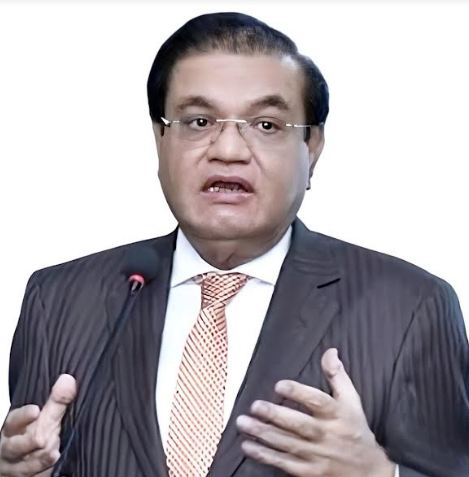
KARACHI, MAR 15 /DNA/ – Chairman of National Business Group Pakistan, President Pakistan Businessmen and Intellectuals Forum and All Karachi Industrial Alliance, and former provincial minister Mian Zahid Hussain said on Friday that the country’s economic conditions are improving.

The improved situation infuses confidence in the local and foreign investors, while the central bank is also considering some reduction in the interest rate.

Mian Zahid Hussain said the business community wants the Central Bank to slash interest rates by at least four percent. 

Talking to the business community, the veteran business leader said that during the current year, the overall economic conditions are better than last year.

However, it is the new government’s responsibility to improve further the conditions, and they will continue to receive the unconditional support of the business community. 

The business leader said there is yet to be an immediate solution to Pakistan’s economic problems. A long battle will have to be fought for this, which will be a test of the new government and the finance minister, and success will be the only option. 

Mian Zahid Hussain said promoting investment is needed instead of relying more on loans. He said there is an urgent need to reduce the burden of taxes on the public and the industrial sector and that the tax base needs to be increased. 

He said that to increase the tax revenue, it has become necessary to levy tax on wholesale, retail, property, and agricultural income. At the same time, the FBR’s system should be modernized to increase its effectiveness and transparency. 

Mian Zahid Hussain said that the salaries are currently being paid by taking loans, and this situation can only continue for a short time, so there is a need to reduce the expenses. 

Transparency in the salary and pension system, elimination of ghost employees, sale of loss-making public companies, and elimination of losses in the electricity and gas sector have become necessary. 

He said the government had completed all the targets for receiving the IMF’s last tranche of the current standby program. The review negotiations are ongoing, which will have a positive result in case of a success.

Pakistan will receive 1.1 billion dollars from the IMF, which will pave the way for a new long-term package. The IMF has asked for a solid plan to eliminate power losses, privatize failed government institutions, increase the tax base, and innovate the FBR. 

If Pakistan agrees to correct the problems, all long-standing economic issues will be solved, and the economy will be revived. 

Mian Zahid Hussain further said that PTI should return to the national mainstream and play a positive role, including supporting the IMF program and GSP Plus.

Ambassador Blome hosts iftar dinner for prominent Pakistani business figures

Ambassador Blome hosts iftar dinner for prominent Pakistani business figures

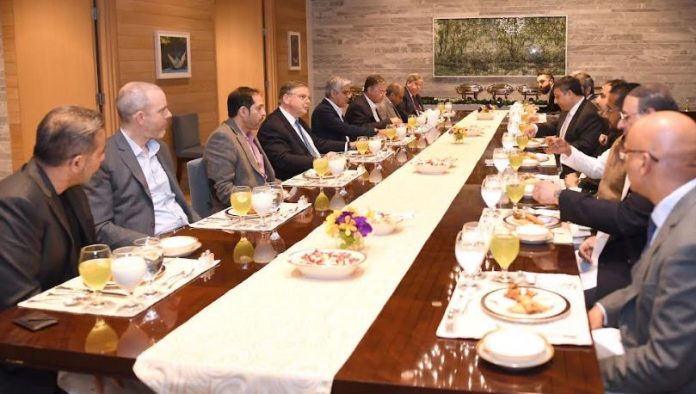
ISLAMABAD, MAR 15 /DNA/ – The United States Ambassador to Pakistan, Donald Blome, hosted a prestigious Iftar dinner for distinguished business leaders of Pakistan. The event, held at the Ambassador’s residence, served as a platform for fostering stronger bilateral ties and promoting economic cooperation between the two nations.

Among the notable attendees were the Chief Executive Officer of Murree Brewery, renowned for its quality beverages, and Member of the National Assembly (MNA) Isphanyar Bandhara, representing the business community with his insightful perspectives.

Ambassador Blome emphasized the importance of such gatherings in enhancing mutual understanding and exploring avenues for collaboration in various sectors. He highlighted the significance of economic partnerships in bolstering the relationship between the United States and Pakistan.

NATO to establish innovation centers in Finland

NATO to establish innovation centers in Finland

HELSINKI, Mar 15 (Xinhua/APP/DNA): The North Atlantic Treaty Organization (NATO) is set to establish an accelerator and two test centers for communications and quantum technology in Finland, the government announced on Friday.

A press release issued by the government said the Board of Directors of NATO’s Defense Innovation Accelerator for the North Atlantic (DIANA) has approved Finland’s proposal to establish the facilities. The Ministry of Defense will be responsible for the project.

The Technical Research Centre of Finland (VTT) will establish an accelerator in Espoo, southern Finland, in collaboration with the Aalto University and the University of Helsinki.

The accelerator will focus on next-generation communications and quantum technology.

The government said that one test center will be installed at the University of Oulu in northern Finland, while the other will be at a VTT office in Otaniemi, Espoo.

The Otaniemi center will concentrate on cyber-secure communications, quantum technologies and space technologies, while the center at the University of Oulu will provide companies with opportunities to test 6G network technologies.

NA denounces continued Israeli aggression against people of Palestine

NA denounces continued Israeli aggression against people of Palestine

ISLAMABAD, Mar 15 (APP/DNA): The National Assembly Friday unanimously passed a unanimous resolution condemning the ongoing Israeli aggression against the people of Palestine.

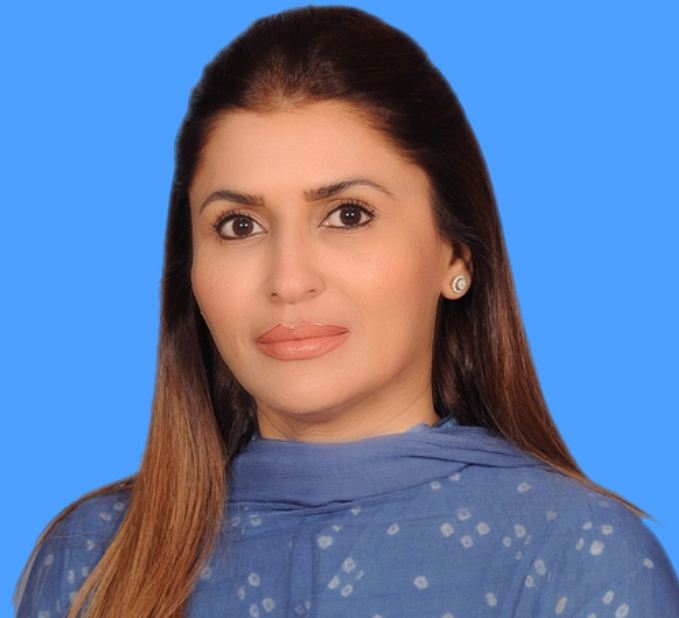
The resolution was moved by Pakistan Peoples Party Member of the National Assembly, Shazia Marri.

She said that all political parties in the House had signed the resolution.

The resolution recognized this day as the International Day to Combat Islamophobia and reiterated that Islam is a religion of peace, tolerance, and acceptance.

“The House recognizes this day as the International Day to Combat Islamophobia. It reiterates that Islam is a religion of peace, tolerance and acceptance” the resolution said.

The resolution, “categorically condemns Israel’s war on Palestine, where the latest attack cost 21 lives of Palestinians standing in the line for aid during the holy month of Ramazan denounces the continued Israeli aggression, which has led to the loss of over 30,000 lives since October 7, 2023.”

It called upon the federal government to play a more proactive role in pushing the international community to enforce a ceasefire.

Somalia: Militants attack hotel in capital Mogadishu

Somalia: Militants attack hotel in capital Mogadishu

Mogadishu, MAR 15: Militants from the Al-Shabaab group, backed by Al-Qaeda, have accepted responsibility for attacking the SYL hotel near the presidential palace in Somalia’s capital Mogadishu, on Thursday, AFP reported.

Gunmen stormed the popular hotel which hosts prominent figures all year round, at 9:45pm, local time.

According to security officer Ahmed Dahir: “Several gunmen forced their way into the building after destroying the perimeter wall with a heavy explosion.”

Witnesses reported blasts and heavy gunfire coming from the hotel. Up till now no casualties have been reported.

Hassan Nur who escaped by scaling a wall, said, “I don’t know about the casualties but there were many people inside when the attack started.”

According to national news agency SONNA, Somali President Hassan Sheikh Mohamud met defense officials in a “strategic meeting” to discuss the battle against al-Shabab.

The Al-Qaeda-linked jihadists have been waging an insurgency against the internationally backed federal government for more than 16 years and have often targeted hotels, which tend to host high-ranking Somali and foreign officials.

Although the militants were driven out of the capital by an African Union force, they retain a strong presence in rural Somalia and regularly carry out attacks against political and civilian targets, including in Mogadishu.

The beleaguered central government launched a major offensive against the Islamists in August 2022, joining forces with local clan militias.

But the offensive has suffered setbacks despite early gains.

PHC rejects SIC’s plea on reserved seats

PHC rejects SIC's plea on reserved seats

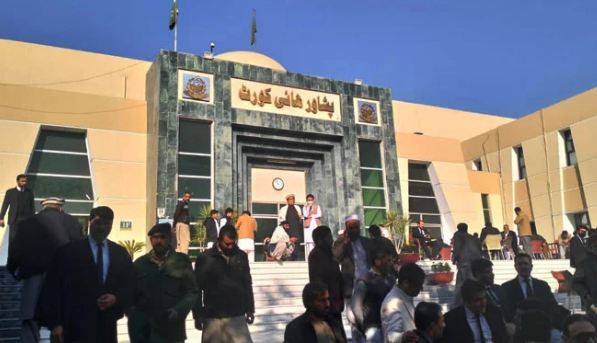
PESHAWAR: The Peshawar High Court Thursday dismissed the Pakistan Tehreek-e-Insaf (PTI)-backed Sunni Ittehad Council’s (SIC) petition challenging the Election Commission of Pakistan’s (ECP) ruling that denied reserved seats to the party.

“Petitions are unanimously rejected,” the court maintained.

Earlier today, the PHC resumed the hearing being conducted by a five-member bench led by Chief Justice Mohammad Ibrahim Khan and comprising Justice Ijaz Anwar, Justice Ishtiaq Ibrahim, Justice Shakeel Ahmad and Justice Arshad Ali.

During his arguments, SIC’s lawyer Barrister Ali Zafar said the Constitution does not mention when a party has to submit a list of names for reserved seats to the ECP.

“It is not written anywhere that you cannot resubmit the list or when it has to be submitted,” the barrister argued, adding that there is no restriction on providing a second list and that the ECP could have issued a second schedule, as it did for the general elections.

“As per the law, those who participate in elections will get seats,” Justice Anwar remarked.

The court then questioned Barrister Zafar if it wasn’t clearly stated anywhere that the second schedule cannot be issued.

“The law does not prevent the Election Commission from issuing another schedule,” the lawyer responded.

Justice Arshad remarked that Section 104 explains the mechanism for reserved seats as it states that when a list is submitted then another list can be given.

“Section 104 says that if a political party participates in an election, it will give a list,” the lawyer argued.

He earlier argued that whoever wins the number of seats, they get reserved seats in the same proportion.

“Their seats cannot be increased.”

“If these seats are not given, the parliament will not be complete,” remarked the chief justice, responding to which the lawyer requested the court to interpret the Constitution in a way that there remains no gap in its interpretation.

Barrister Zafar told the court that the ECP has the authority to [make] laws to maintain justice. He added that there is also an election for reserved seats, and that, too, should be transparent.

While discussing the admissibility of the application, the lawyer said that the pleas filed in Punjab and Sindh were limited to the respective provincial assemblies, but the one being heard by PHC pertains to the reserved seats of the province issued in the National and KP provincial assembly.

He argued that while the SIC had not submitted the list, the Lahore High Court had given a decision that there was no prohibition.

Before concluding his arguments, Barrister Zafar then directed the court towards a declaration regarding the Balochistan Awami Party (BAP) which he had taken from ECP’s website. The lawyer earlier argued that the party was also given reserved seats later by the electoral authority in the past.

The electoral body, on March 4, had accepted applications of the opposing parties and decided that the seats in the National Assembly and provincial assemblies would not remain vacant and would be allocated by a proportional representation process of political parties on the basis of seats won by political parties.

Hashoo Foundation wins prestigious CSR award for community impact

Hashoo Foundation wins prestigious CSR award for community impact

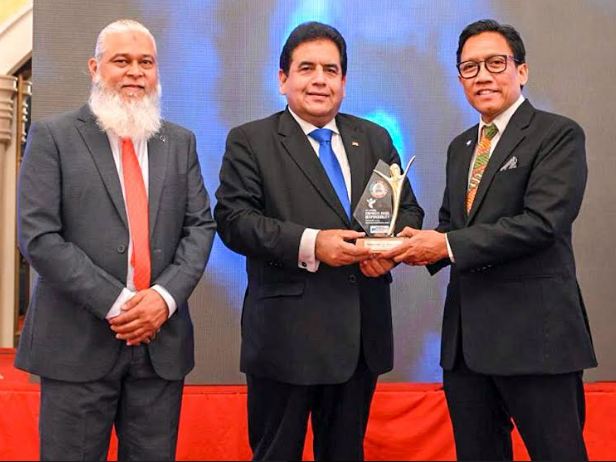
ISLAMABAD, MAR 14 /DNA/ – Hashoo Foundation, the sustainability arm of Hashoo Group, has won a CSR award in the “Community Impact” category for its pivotal role in empowering communities across Pakistan through multifaceted initiatives encompassing education, financial inclusion, entrepreneurship, training, and support for over 35 years. Zulfiqar Malik, General Manager of the Pearl-Continental Hotel Karachi, collected the award at the 13th Annual CSR Awards ceremony organized in Karachi by The Professionals Network.

Established in 2011, the CSR Awards stand as a significant recognition platform under The Professionals Network’s stewardship, celebrating the impactful contributions of corporations and NGOs towards Pakistan’s socio-economic uplift.

The Corporate Social Responsibility Awards 2024 is the most Prestigious Recognition Awards program for Corporate Social Responsibility registered with the IPO (Intellectual Property Rights Organization) and copyright protected.

Sharing his thoughts on this prestigious accolade, Abdul Waheed, Director of Finance at Hashoo Foundation, expressed, “Our mission has always been to create lasting change within underserved communities and enable them to live empowered and sustainable lives. We are honoured with this recognition from The Professionals Network, and we will continue expanding our footprint to enlighten as many lives as possible.”

Hashoo Foundation serves underprivileged communities through humanitarian and capacity-building approaches across the country, aligned with the Sustainable Development Goals set by the United Nations. The Foundation has been making concerted efforts to drive positive change in Climate Change, Entrepreneurship, Economic Growth, and Social Sector Development by engaging with the public sector, academia, national and international networks, and private sector entities.

Hashoo Group is Pakistan’s premium conglomerate with a diversified business portfolio spanning both national and international markets. The Group owns and operates the Pearl-Continental Hotels & Resorts and PC Legacy & Hotel One brands in Pakistan and has business interests encompassing the information technology, investment, travel & tourism, and real-estate sectors.

Stay Connected

64FansLike
60FollowersFollow

Latest Reviews

Exchange Rates

USD - United States Dollar
EUR
1.17
GBP
1.34
AUD
0.67
CAD
0.73