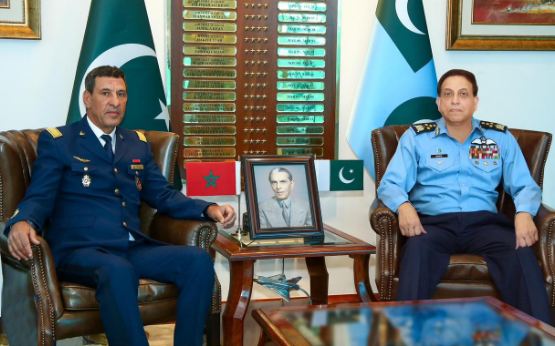
RAWALPINDI, NOV 13 /DNA/ – Major General Mohammed Gadih, Inspector Royal Moroccan Air Force, called on Air Chief Marshal Zaheer Ahmed Baber Sidhu, Chief of the Air Staff, at Air Headquarters, Islamabad. The meeting covered a wide array of matters related to military cooperation, joint training and collaboration in the industrial domain.
On his arrival, a smartly turned out contingent of Pakistan Air Force presented Guard of Honour to Major General Mohammed Gadih.
During the meeting, Chief of the Air Staff conveyed his warm wishes to Inspector Royal Moroccan Air Force on his maiden visit to Pakistan. The Air Chief highlighted that both brotherly countries enjoy long-standing historical ties and reiterated his resolve to strengthening military partnership through full collaboration in joint training initiatives in the entire spectrum of air power application, which will include basic and tactical level training for Moroccan Air Force personnel. Both the dignitaries expressed a deep desire to consolidate the existing ties focusing on collaborative training programs, joint military exercises and industrial cooperation.
Major General Mohammed Gadih lauded the technological advancement of Pakistan Air Force and expressed the desire of Moroccan Air Force to learn from aerospace industrial strides of Pakistan Air Force in order to enhance its operational capabilities. He conveyed his admiration for the state of the art technological ecosystem witnessed during his visit to National Aerospace Science & Technology Park and shared his deep interest in exploring avenues of collaboration in the industrial domain. The dignitary also visited various installations and technological infrastructure established at Air Headquarters, Islamabad including National ISR & Integrated Air Operations Centre and PAF Cyber Command.
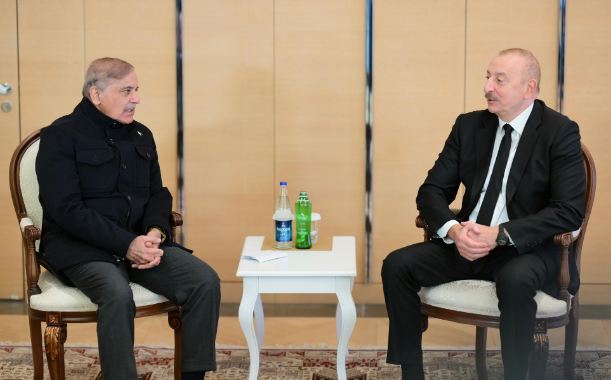
BAKU, NOV 13 /DNA/ – On the sidelines of the World Leaders Climate Action Summit (COP-29), Prime Minister Muhammad Shehbaz Sharif held a productive bilateral meeting with Ilham Aliyev, President of the Republic of Azerbaijan. Prime Minister Shehbaz Sharif congratulated President Aliyev on successful holding of the World Leaders Climate Action Summit in Baku, Azerbaijan. He commended President Aliyev’s vision and commitment to enhance international cooperation to address challenges posed by climate change.
The Prime Minister assured him that Pakistan being itself among the most affected countries due to climate change despite its negligible contributions, is committed to work with Azerbaijan and the international community on climate change related challenges.
Both leaders reviewed the entire range of bilateral relations. They expressed their commitment to further strengthen the strategic partnership between Pakistan and Azerbaijan, particularly in the areas of economic and defence cooperation; as well as people to people and cultural ties.
The Prime Minister praised the strong ties between Pakistan and Azerbaijan, expressing optimism about further enhancing cooperation in various fields, including technology sharing and joint ventures in renewable energy. The two leaders also exchanged views on the escalating situation in the Middle East and other regional and international developments.
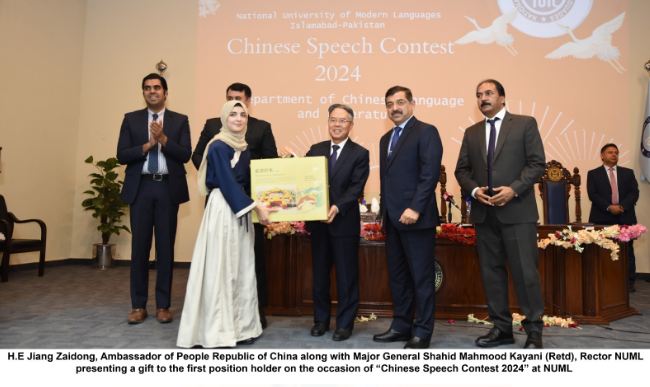
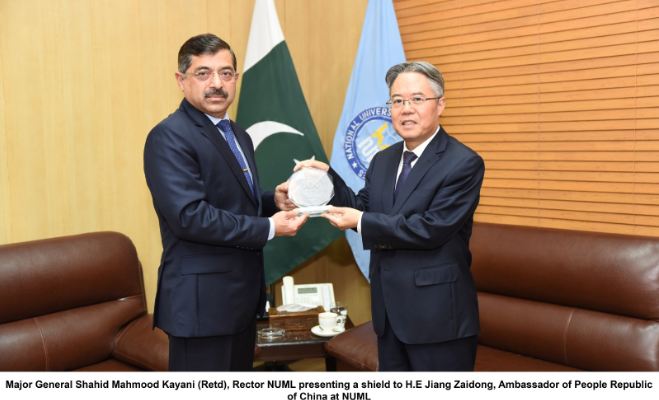
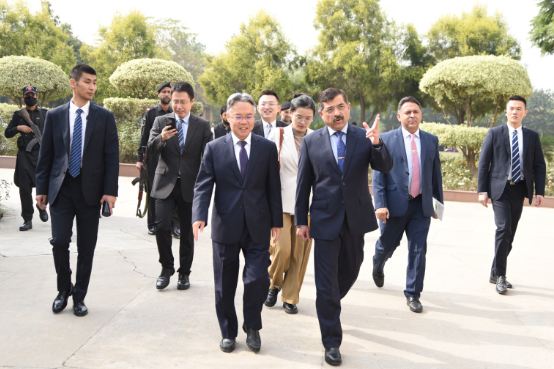
ISLAMABAD, NOV 13 /DNA/ – The Chinese Ambassador to Pakistan H.E Jiang Zaidong today visited NUML university and called on Rector NUML Maj Gen (r) Shahid Mehmood Kayani HI (M) at his office to discuss expanding academic and research collaboration between the universities of both nations, focusing on educational excellence and language as a bridge connecting the people of Pakistan and China.
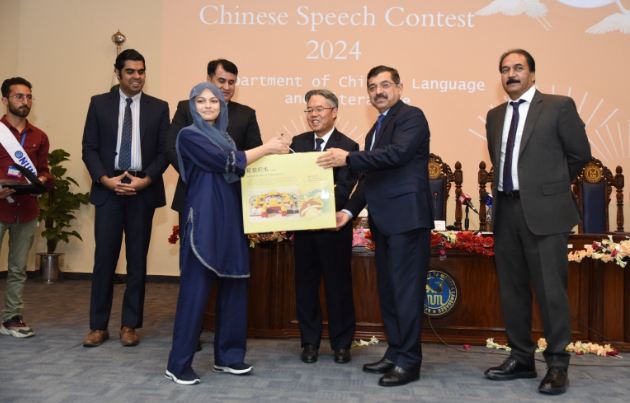
The Chinese Ambassador, joined by the Rector and the Director General NUML Brig Shahzad Munir, witnessed an inspiring display of talent as NUML students showcased their language proficiency and cultural performances representing China and Gilgit-Baltistan. In his address, the Ambassador praised the university’s efforts in promoting Chinese language and cultural understanding, thanking the administration for fostering educational and cultural exchange.
Engaging directly with students in a lively question-and-answer session, H.E Jiang Zaidong emphasized the value of resilience and hard work. “Education involves challenges, and happiness is found through struggle,” he remarked, inspiring students to pursue their studies with dedication.
The Ambassador expressed optimism for Pakistan’s future, citing the nation’s abundant resources, strategic location, and youthful population. He noted the country’s recent economic progress, with GDP growth from negative to 2.5% and a forecast of 3.2% in the coming fiscal year. “Pakistan is poised to thrive as a pivotal nation in Asia,” he added, highlighting the strong collaboration between China and Pakistan.
He underscored China’s commitment to supporting Pakistan’s development, particularly through the China-Pakistan Economic Corridor (CPEC), which he described as a “landmark of bilateral cooperation.” Additionally, he outlined various initiatives aimed at empowering Pakistani youth, including scholarships, exchange programs, and internship opportunities in Chinese enterprises operating in Pakistan.
Pakistan ranks third globally in securing Chinese scholarships, with approximately 20,000 Pakistani students currently studying in China. He announced future initiatives such as the Chinese Ambassador’s Scholarship for Pakistani students, expanded vocational training, and enhanced collaboration with Pakistani institutions.
The event concluded with an awards ceremony for the contest winners and remarks from the Rector NUML, Maj Gen (r) Shahid Mehmood Kayani who lauded the participants’ linguistic achievements and cultural presentations. The Rector extended his gratitude to the Chinese Ambassador for his unwavering support for cultural exchange and highlighted NUML’s vision for students to gain expertise in diverse fields, particularly Information Technology, through study opportunities in China.
The event celebrated the enduring friendship between Pakistan and China and reaffirmed the shared commitment to educational growth and cross-cultural understanding.
ISLAMABAD, NOV 13 /DNA/ – Secretary Defence Launches CBCare Mobile App and Portal to Enhance Digital Access to Civic Services in Cantonment Areas In line with the Government of Pakistan’s Digital Pakistan Policy and the mission of the Military Lands and Cantonment (MLC) Department, a new digital interface has been launched to provide streamlined access to civic services for residents of cantonment areas.
Secretary Defence, Lt. Gen. (Retd.) Muhammad Ali inaugurated the CBCare mobile app and CBCare portal in Rawalpindi, marking a significant step forward in e-governance and digital transformation. At the inauguration ceremony, Secretary Defence commended the department’s proactive efforts in modernizing service delivery and making it more accessible to the public.
He praised the MLC Department for embracing e-governance solutions that empower residents of cantonment areas with efficient, transparent, and user-friendly access to local government services. The CBCare mobile app and CBCare portal serve as a comprehensive platform for residents to interact with their respective cantonment boards digitally.
Through the CBCare mobile app, now available on both Android and iOS devices, residents can apply online for a variety of civic services, including the registration of birth and death certificates, property tax exemptions, downloadable bills, payment verification, and status checks on registered complaints and applications. The complete list of features is available on the CBCare portal at cbcare.cantonment.gov.pk
BRISBANE, NOV 13: Mohammad Rizwan is set to lead Pakistan’s T20I team, becoming the 12th man to be in charge, after a drought-breaking ODI series win over Australia last week. Pakistan will take on Australia in the three T20I matches on 14, 16 and 18 November in Brisbane, Sydney and Hobart, respectively.
Six players – Jahandad Khan, Mohammad Abbas Afridi, Omair Bin Yousuf, Sahibzada Farhan, Sufiyan Moqim and Usman Khan joined the T20I squad in Brisbane on 11 November after undergoing a five-day training camp in Karachi.
Pakistan and Australia’s last bilateral face-off in the T20I format came in March 2022 when the two teams played a one-off T20I in Lahore which Australia won. In Pakistan’s last T20I series in Australia in November 2019, the hosts won 2-0 after the opening game ended up as no result.
Josh Inglis will lead Australia in the T20I series while Tim David and Nathan Ellis have joined Australia’s T20I squad. Josh Philippe has replaced injured Cooper Connolly.
Mohammad Rizwan, Pakistan T20I captain:
“We are confident after beating Australia in the ODI series but international cricket is always challenging so we aim to do things as better as we can going into this T20I series against Australia.
“We have determined the roles of various players in the team and look forward to executing our best plans not just in this series but also in the upcoming white-ball fixtures against Zimbabwe and South Africa.
“My intent is to keep everyone in the group involved and positive about the game. Of course, the conditions have helped the bowlers on this tour so far but we also want to prove our mettle as a batting unit and I look forward to an exciting contest in the three matches.”
Pakistan T20I squad for Australia T20I series:
Mohammad Rizwan (captain – wicket-keeper), Salman Ali Agha (vice-captain), Arafat Minhas, Babar Azam, Haris Rauf, Haseebullah, Jahandad Khan, Mohammad Abbas Afridi, Muhammad Irfan Khan, Naseem Shah, Omair Bin Yousuf, Sahibzada Farhan, Shaheen Shah Afridi, Sufyan Moqim, Usman Khan
Schedule of matches:
14 Nov – 1st T20I vs Australia; Brisbane Cricket Ground, Brisbane (6pm local time start) 16 Nov – 2nd T20I vs Australia; Sydney Cricket Ground, Sydney (7pm local time start) 18 Nov – 3rd T20I vs Australia; Bellerive Oval, Hobart (7pm local time start)
ISLAMABAD, NOV 12: The Special Investment Facilitation Council (SIFC) has launched a comprehensive Green Tourism initiative to enhance Pakistan’s tourism potential at the global level.
The program, collaborating with more than 30 government organizations, aims to showcase Pakistan’s diverse tourism offerings, including religious sites, mountaineering destinations, and heritage locations.
Green Tourism will establish a digital platform providing tourists with convenient access to booking services, professional guides, and accommodation facilities through mobile phones.
The initiative focuses on promoting Pakistan through sports and events, targeting both domestic and international audiences. Plans are underway to attract international events to Pakistan as part of efforts to elevate the country’s global profile.
SIFC is considering establishing a Human Resource Institute while promoting partnerships under the Green Tourism framework. The organization’s facilitation efforts, combined with positive government measures, are expected to expand Pakistan’s tourism sector.
The program represents a structured approach to highlight Pakistan’s tourist attractions, encompassing religious pilgrimages, mountaineering adventures, and historical heritage sites.
The recent dismissal of German Finance Minister Christian Lindner by Chancellor Olaf Scholz has ignited a political crisis that could precipitate snap elections. Scholz’s decision to dismiss Lindner, a representative of the pro-market Free Democratic Party (FDP), has placed the stability of Germany’s coalition government in jeopardy. This coalition, led by Scholz’s Social Democratic Party (SPD) and encompassing the FDP and the Greens, now faces substantial internal challenges. The unfolding situation in Germany highlights broader trends in the global political landscape, where alliances are increasingly volatile and governments face pressures to respond swiftly to both domestic and international challenges. Scholz, in a statement underscoring the gravity of the situation, emphasized Germany’s need for an “effective government that has the strength to make the necessary decisions for our country.” His call for a confidence vote in January demonstrates the strategic moves necessary to maintain leadership amid a fragmented coalition.
Beyond Germany, significant developments in global diplomacy have emerged. In a move with regional and international implications, Myanmar’s junta leader, Min Aung Hlaing, recently traveled to China, marking his first diplomatic visit to the country since taking power following a 2021 military coup. The coup led to an intensified armed insurgency and has created ongoing instability in Myanmar. Min’s meeting with Chinese Premier Li Qiang on the sidelines of the Greater Mekong Subregion Summit in Kunming underscores the strategic alignment between China and Myanmar. Li assured Min of China has continued support and reiterated Beijing’s commitment to strengthening economic and social cooperation. For China, this partnership not only reinforces its influence in Southeast Asia but also aligns with its broader foreign policy goals of securing alliances with neighboring states, especially those facing international isolation. Min, for his part, expressed gratitude for China’s economic assistance and its role in supporting peace and reconciliation, signaling Myanmar’s reliance on Chinese support in a time of heightened domestic challenges.
Iran and Pakistan, meanwhile, have engaged in high-level security dialogues, further highlighting the complexities of regional alliances and defense collaborations. The Iranian Deputy Defense Minister recently visited Islamabad, where he engaged in talks with Pakistani defense officials. Just prior to these discussions, Pakistan’s Chief of Army Staff met with Saudi Crown Prince Mohammed bin Salman in Riyadh. This sequence of meetings underscores Pakistan’s strategic efforts to maintain and deepen defense relationships across the Middle East and South Asia. Both Saudi Arabia and Iran have historically exercised considerable influence in Pakistan and Islamabad’s engagement with both countries reflects its balancing act between competing regional powers. As Pakistan strengthens its defense alliances, it must navigate the regional tensions between Iran and Saudi Arabia, while ensuring stability within its borders. These engagements also illustrate a broader trend of middle powers pursuing diversified alliances to safeguard national security and economic interests amid an evolving multipolar world.
In Central Asia, the strengthening ties between Russia and Kazakhstan illustrate the shifts in post-Soviet regional dynamics. Russian Foreign Minister Sergey Lavrov recently visited Kazakhstan, where he met with President Kassym-JomartTokayev and Foreign Minister Murat Nurtleu. Lavrov’s visit included a proposal to construct Kazakhstan’s first nuclear power plant, reflecting Russia’s strategic interest in maintaining influence over its former Soviet neighbors. Moreover, Lavrov confirmed that Kazakhstan had been formally invited to join the BRICS alliance as a partner country. This invitation comes amid Tokayev’s earlier decision to decline full membership, signaling Kazakhstan’s careful approach to balancing relations with Russia and other global powers. The recent meeting between the Security Council heads of Russia and Kazakhstan in Moscow, in anticipation of a Commonwealth of Independent States (CIS) summit, further highlighted the two nations’ collaboration on security concerns, including terrorism, extremism and regional development in the Caspian Sea area. Russia’s regional engagements, alongside its outreach to Kazakhstan, underscore its intent to secure alliances in Central Asia, especially amid its isolation from Western allies.
In the United States, discussions surrounding the potential easing of sanctions on Russia have gained momentum following former President Donald Trump’s re-election. According to a report by the Financial Times, leading Western banks have started speculating that Trump’s return to office may lead to the lifting of sanctions imposed on Russia. This possibility has had an immediate impact on the financial market, with Russian stocks experiencing a notable increase in value shortly after the election results were announced. The potential shift in U.S.-Russia relations could have significant ramifications for the balance of power in Europe and beyond, with implications for energy, trade and defense policies. This scenario underscores the geopolitical fluidity prompted by changes in leadership in major powers, with each new administration carrying the potential to reshape international relations.
Meanwhile, Afghanistan is closely monitoring the political developments in the United States. The Taliban, who regained control of Afghanistan in 2021, are hopeful that Trump’s re-election might lead to a shift in U.S.-Afghan relations. The Afghan Foreign Ministry has expressed a desire for a “pragmatic approach” from the U.S. under Trump’s leadership, noting that his administration previously negotiated the Doha Agreement, which ultimately led to the end of America’s 20-year presence in Afghanistan. The Taliban’s expectation of improved diplomatic relations with Washington highlights their efforts to achieve international legitimacy and engage with global powers despite ongoing domestic and international challenges.
In Central Asia, Kazakhstan’s decision to reduce fuel oil exports through Russia by 26 percent during the first nine months of 2024 marks a shift in energy logistics. Rather than relying on Russian routes, Kazakhstan has redirected its oil exports to the Georgian port of Batumi via the Trans-Caspian International Transport Route. This adjustment underscores Kazakhstan’s intention to diversify its trade pathways and lessen dependence on Russia, particularly as Moscow faces increased international isolation. Kazakhstan’s choice of alternate routes, including Georgian ports, signals a strategic realignment aimed at strengthening its economic independence and securing alternative markets.
Global concerns about geopolitical instability were also a central theme at the recent Organization of Turkic States summit, where Uzbek President ShavkatMirziyoyev delivered a candid address on the escalating international risks. Mirziyoyev warned of intensifying competition and deepening mistrust between major powers, identifying “new hotbeds of confrontation” around the world. His remarks underscore the shared apprehension among Turkic states regarding the consequences of geopolitical rivalries, especially as conflict looms in multiple regions, including the Middle East. Mirziyoyev’s call for a unified stance on key international issues reflects a growing recognition among smaller states of the need to collaborate in a world marked by polarization and fragmentation.
These developments reflect a global landscape characterized by heightened tensions, shifting alliances and recalibrated diplomatic engagements. Leaders across the globe are increasingly compelled to adopt nuanced and multifaceted approaches to international relations, balancing national interests with regional stability. From Germany’s political challenges to the strategic realignments in Central Asia and the shifting dynamics in U.S.-Afghan relations, the evolving international order demands enhanced diplomatic engagement, strategic foresight and adaptable foreign policy frameworks. As these shifts continue to unfold, countries will need to navigate the complexities of a multipolar world, where traditional alliances may falter and new partnerships offer both opportunities and risks. The need for resilience and proactive diplomacy is paramount as nations contend with the dual challenges of domestic instability and global uncertainty.
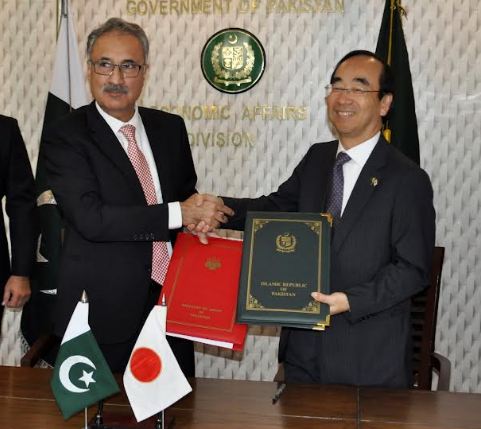
ISLAMABAD, NOV 13 /DNA/ – The Government of Japan has agreed to provide new grant assistance worth 2.831billion Japanese Yen (equivalent to around 18.5 million USD/ around 5.119billion PKR) for Flood Management Enhancement in the Indus Basin.
On 13 November 2024, a signing ceremony for the assistance was held at the Ministry of Economic Affairs in Islamabad. H.E. Mr. WADA Mitsuhiro, Ambassador of Japan, Dr. Kazim Niaz, Secretary, Ministry of Economic Affairs, and other officials from both countries attended this ceremony.
In 2022, Pakistan experienced the most devastating flood in the country’s history. In response, the Government of Japan has been dedicated to providing necessary assistance to support Pakistan’s recovery and reconstruction efforts.
This assistance will fund the construction of three embankments on the Indus River in Haripur district, KP, and install water and rain meters at 45 sites along the river in KP and Punjab.
The three embankments will protect local communities from potential human and economic losses due to flooding and data from the water and rain meters, managed by FFC and WAPDA, will be shared with various agencies to help predict and manage potential possible floods.
This project incorporatesthe concept of “Build Back Better”,which the Government of Pakistan strongly emphasizes.
In the signing ceremony, H.E. Mr. WADA Mitsuhiro stated, “I hope this project will provide reassurance to the people of Pakistan regarding possible future floods. Japan remains committed to providing assistance that will directly benefits vulnerable people in Pakistan.”.
The world, as we know, is progressing at lightning speed, yet, civil rights and social action remain two foundational pillars that deserve renewed commitment and revitalized action. People around the world take pride themselves on advancements in technology, science, and economic models, but the trajectory of human rights remains disturbingly erratic. Civil rights are not just about legal protection—they are about ensuring that everyone can live with dignity, regardless of race, religion, gender, or socioeconomic status. And social action is the bridge that transforms these ideals into lived realities.
Many amongst us face daily discrimination based on aspects beyond their control. Gender disparity, racial profiling, and systemic discrimination are still alive, often hiding in plain sight under the facade of modernity. Headlines on the news channels today echo similar struggles from the past: police brutality, gender violence, xenophobia, and disenfranchisement. These issues emphasize the need for a collective societal conscience that upholds not just the letter of the law but the spirit of justice.
Social action, in this context, demands more than isolated acts of charity or digital-advocacy; it calls for structural reform. Governments, institutions, and communities must prioritize policy changes that dismantle systemic biases, reimagine justice systems, and ensure that the marginalized find a voice in the spaces where decisions are made. Moreover, educational reforms play an essential role. Schools must integrate civics and social ethics, making civil rights not just a legal construct but a lived and cherished social value.
Activism, when propelled by informed youth, emboldened communities, and aware citizens, is what translates into enduring social change. Grassroots movements remind us of the power of collective action, and the stories of those who have fought tirelessly for justice continue to inspire. Yet, the fight for civil rights requires global solidarity because discrimination in one part of the world reflects the shared human experience everywhere. Recognizing this interconnectedness, we have an obligation to challenge oppression in all its forms, even when it is inconvenient or uncomfortable.
The struggle for civil rights is neither a relic of the past nor a task that has been completed. It is a living, evolving mission that each generation inherits. To honor the work of those who came before us and protect the freedoms of future generations, we must stay vigilant and remain committed to pushing forward. If history has taught us anything, it is that no right is guaranteed without action, and no freedom is preserved without courage. We must rekindle the spirit of justice within ourselves, for only in unity and shared purpose can we truly secure civil rights for all.
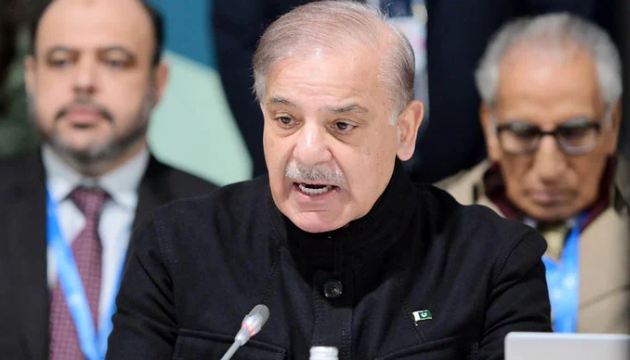
BAKU, NOV 12: Ahead of the 29th United Nations climate conference, also known as COP29, in Baku, Prime Minister Shehbaz Sharif has called for “redefining” the global climate finance framework to “effectively meet the needs of vulnerable nations”.
The premier made these remarks while addressing the Climate Finance Roundtable Conference, which was attended by multiple global leaders, held on the sidelines of “World Leaders’ Climate Action Summit” of the COP29.
While elaborating the purpose of the roundtable, PM Shehbaz briefed the participants that it was intended to foster new thinking on an old problem that was becoming complicated on all the international climate forums without yielding substantial results.Play Video
He emphasised the urgent need to build momentum for reforming international financial architecture, “forging a path where no nation is left behind in the global response to climate change.”
PM Shehbaz called climate financing an “urgent need of the hour”, stating that developing countries need to deliver Nationally Determined Contributions (NDCs) and “need an estimated $6.8 trillion by 2030 to implement less than half of their current NDCs.”
He underscored that the donor countries should fulfill their commitment to provide 0.7% of their gross national income as developing assistance and capitalise existing climate funds.
Furthermore, the prime minister said debt cannot become the “acceptable new normal” in climate financing which was why the world should focus on non-debt financing solutions enabling developing countries to fund climate initiatives without depositing an additional burden.
He explained that financing in the form of loans further enhance the debt of developing nations and potentially pushes them towards “mounting debt traps” which he referred to as “death traps”.
Pakistan can understand the agony and pain of other vulnerable developing countries as it had faced two devastating floods and still recovering from the loss, he said as he highlighted Pakistan’s recent experience with devastating floods.
“In order to spur some transparency and coordination into the financial commitments made to the developing countries on climate transfers, Pakistan alongside many other developing countries call for stronger, more equitable climate finance mechanisms under the UNFCCC,” he added.
He suggested a mechanism be set up to measure the unfulfilled pledges, fragmented at an incomplete landscape of climate funds to developing countries. “What I call INDCs whereby major historic emitters should account for climate finance commitments for both mitigation and adaptation pledges reflecting their proportionate responsibilities,” he added.
The prime minister also highlighted challenges to developing countries in embracing clean energy transition to offset their carbon emission from power sector.
He mentioned that the developing countries looking to enable energy transition should also get preferential capacity and technical assistance in fast tracking consortium financing through various financial instruments.
He suggested the UNFCCC to setup a committee to review internationally-determined contributions (IDCs) periodically.
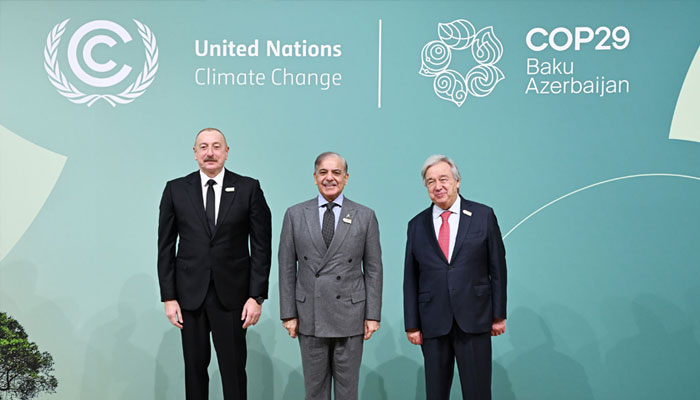
On arrival at the summit venue, UN Secretary-General Antonio Guterres and President of Azerbaijan Ilham Aliyev welcomed the prime minister.
Secretary General United Nations Antonio Guterres and President of Azerbaijan Ilham Aliyev receives Prime Minister Shehbaz Sharif upon his arrival at the inaugural session of COP29 Climate Action Summit in Baku, Azerbaijan on November 12, 2024. — PID
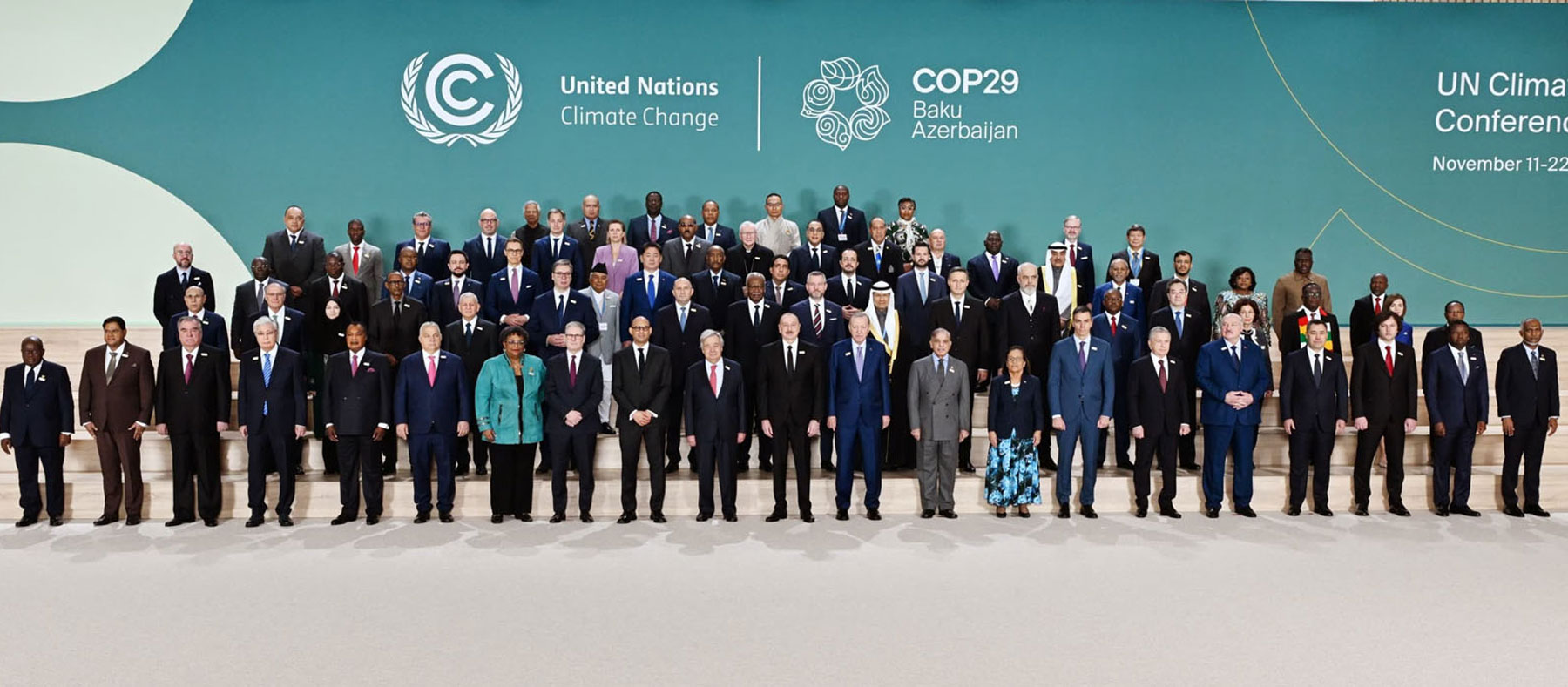
Later, he also posed for a family photo along with the participating leaders at the venue which followed the opening of the World Leaders Climate Action Summit.
Prime Minister Shehbaz Sharif in group photo at the inaugural Session of COP29 Climate Action Summit in Baku, Azerbaijan on November 12, 2024. — PID
Premier meets world leaders
As the participating leaders gathered for a group photo, PM Shehbaz held an informal interaction with them and exchanged pleasantries besides discussing matters of mutual interest.
PM Shehbaz interacted with United Arab Emirates (UAE) President Sheikh Mohamed bin Zayed Al Nahyan and discussed matters of mutual interest including bilateral cooperation in the climate change field.
During interaction with Turkish President Recep Tayyip Erdogan and Turkish First Lady Emine Erdogan, the two leaders discussed ways to cooperate in highlighting the issues of climate change and environmental pollution at the international level.
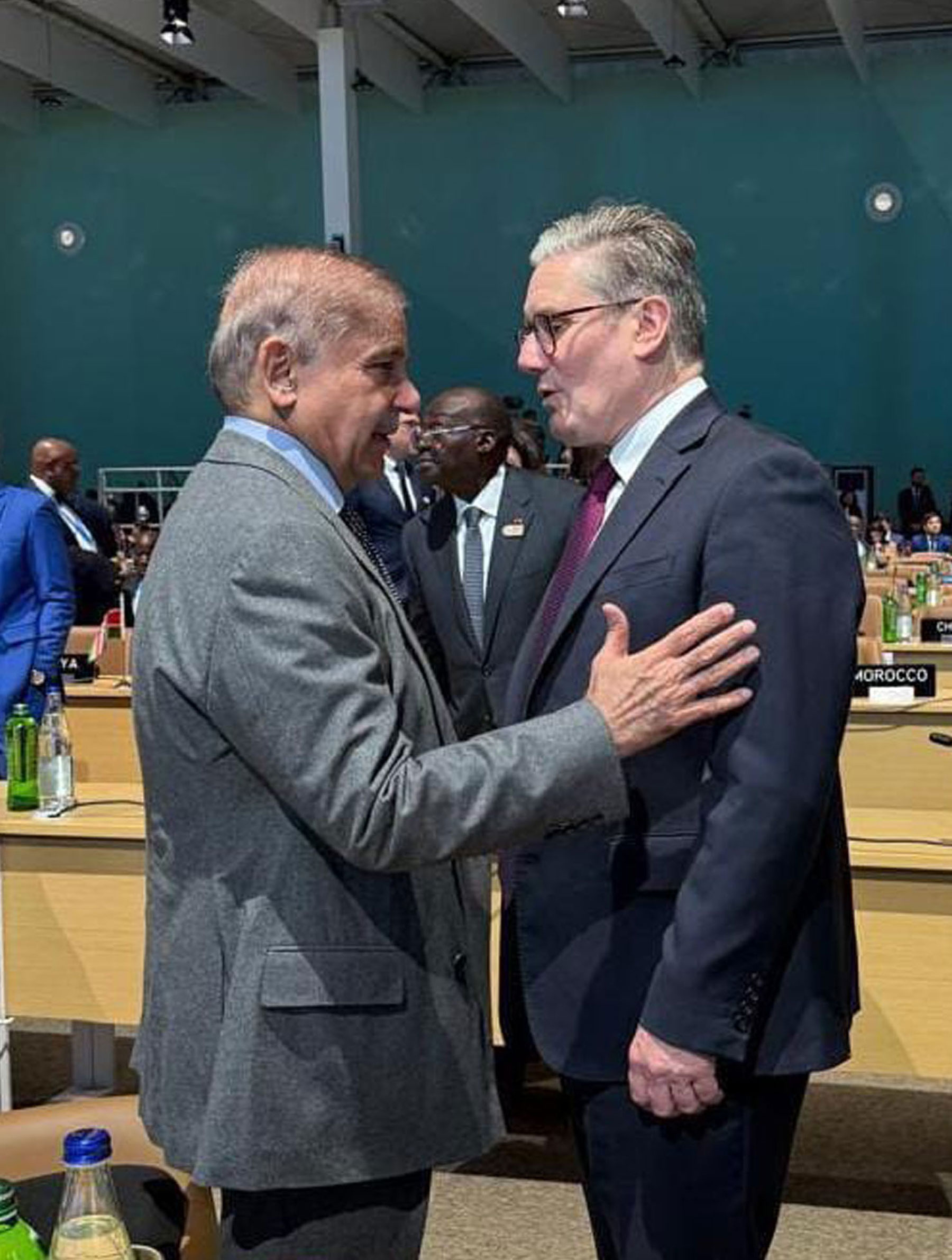
The premier also met with UK Prime Minister Sir Keir Starmer, where the two discussed enhancing Pakistan-UK cooperation.
Prime Minister Shehbaz Sharif meets UK Prime Minister Sir Keir Starmer on the sidelines of COP29 Climate Action Summit in Baku, Azerbaijan, November 12, 2024. — PID
In his interaction with Uzbek President Shavkat Mirziyoyev and Tajikistan President Emomali Rahmon, the leaders discussed protection of glaciers and water resources in Pakistan and Central Asia as well as the strengthening connectivity with both the countries.
In his meetings with Nepal’s President Ramchandra Paudel and Bangladesh’s Dr Muhammad Yunus, PM Shehbaz discussed growing temperatures, the threat of rising sea levels, and forest conservation in South Asia.
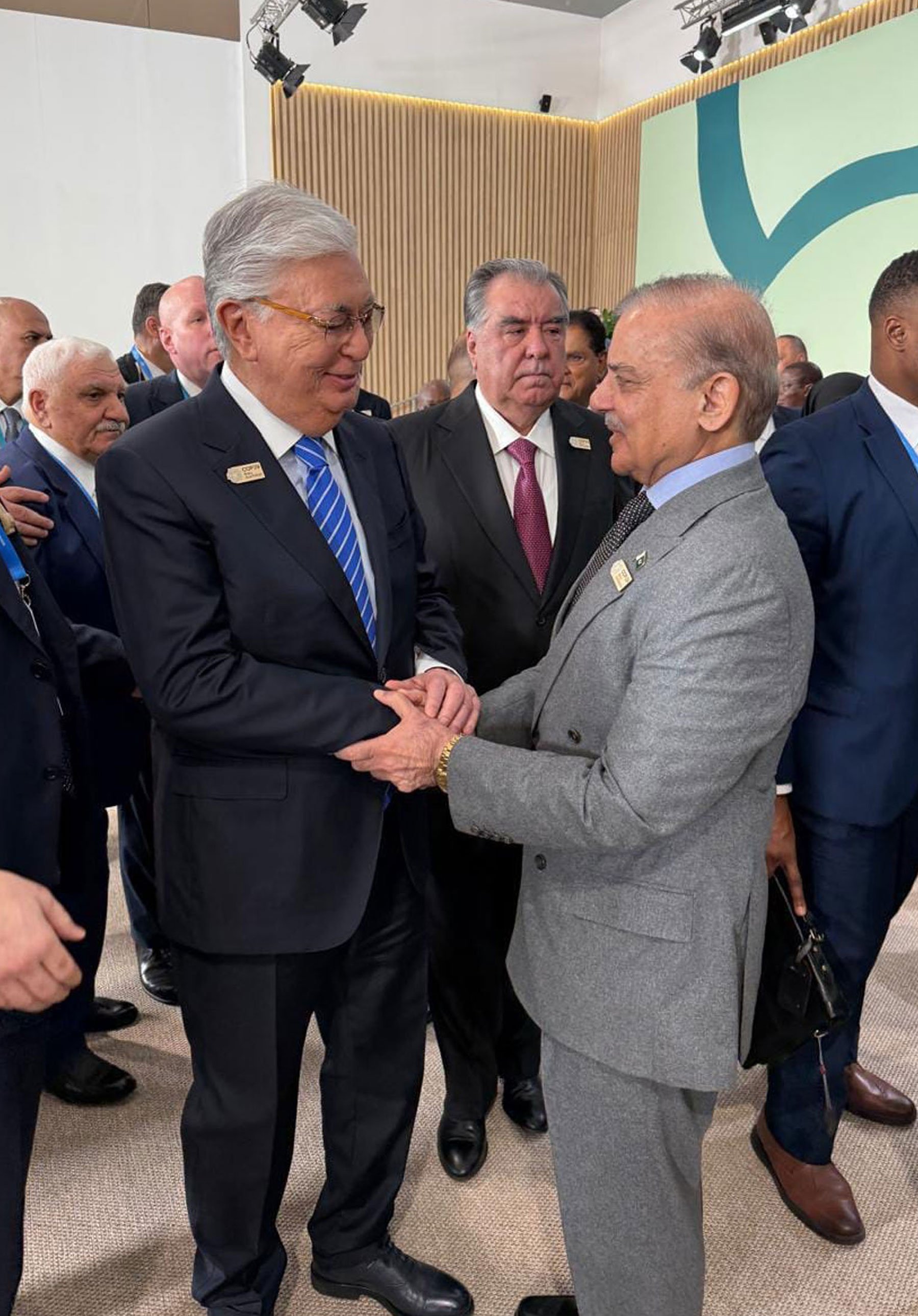
Prime Minister Shehbaz Sharif meets President of Kazakhstan Kassym Jomart Tokayev on the sidelines of COP29 Climate Action Summit in Baku, Azerbaijan, November 12, 2024. — PID
Meanwhile, he also interacted with Kazakhstan President Kassym-Jomart Tokayev and discussed strengthening bilateral relations and expanding regional connectivity.
Deputy Prime Minister and Foreign Minister Muhammad Ishaq Dar, Coordinator to Prime Minister on Climate Change Romina Khurshid Alam accompanied the prime minister.