Home Blog Page 76

Pakistan emerges key player in Iran talks as Vance praises Islamabad – analysis

Pakistan emerges key player in Iran talks as Vance praises Islamabad - analysis

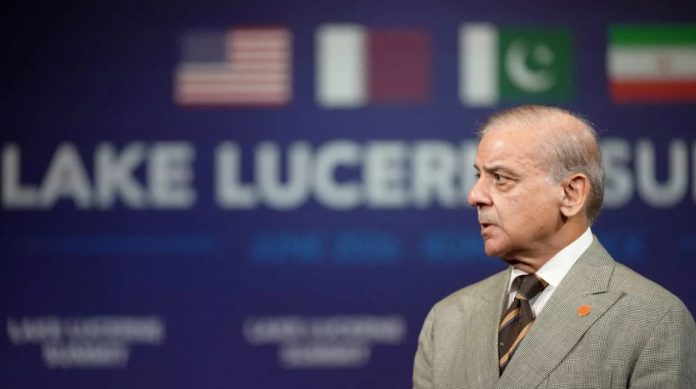
Pakistan continues to play a pivotal role in the ongoing US-Iran negotiations, as the warm body language between US Vice President JD Vance and Pakistan’s top leadership took center stage at the Lake Lucerne Summit. The meeting, aimed at implementing the Islamabad Memorandum of Understanding, has placed Pakistan firmly at the heart of regional diplomacy.

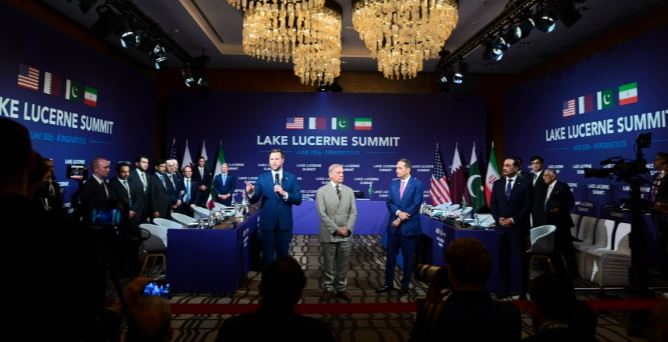
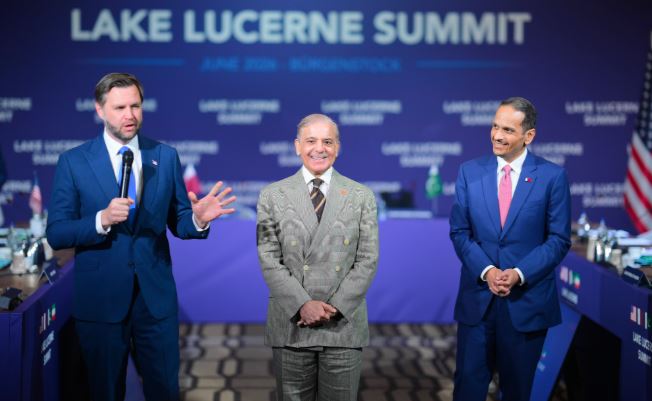
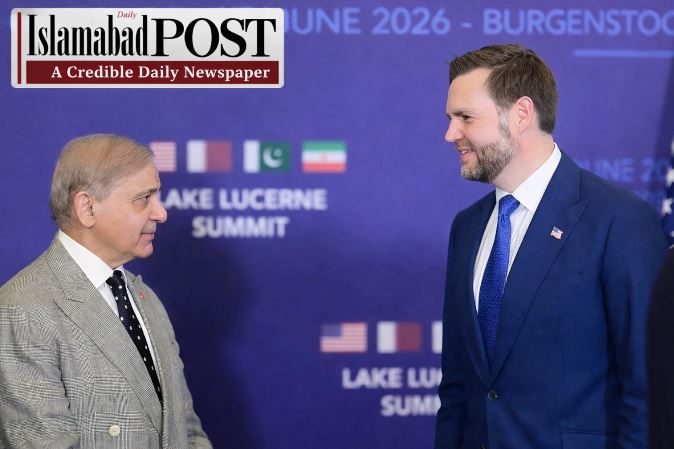
The visuals from Switzerland have become a major talking point. Vance was clearly keen to demonstrate the renewed US support for Islamabad. The two leaders met in front of a summit banner displaying the flags of Pakistan, Qatar, the United States, and Iran—with Pakistan and Qatar positioned in the middle, symbolizing their central mediating role.

Vance’s Special Praise for Pakistan’s Leadership

In remarks that will resonate deeply in Islamabad, Vance shared a personal joke to underline his close ties with Pakistan’s military chief. “I have joked that I have two very, very important people in my life. An Indian and a Pakistani. The Indian is my wife, and the Pakistani is Field Marshal Munir,” Vance said. He added that he had spoken to Munir more than anyone else in recent months, calling him a skilled diplomat.

“What the President has asked us to do is turn over a new leaf to transform our relationship with the people of Iran, and to extend an outstretched hand… if your leadership is willing to give up being a driver of regional instability, if they are willing to give up nuclear weapons ambitions for the long term, then the United States is willing to fundamentally transform our relationship.”— JD Vance, US Vice President (via Reuters)

Vance also acknowledged the hospitality he received from Prime Minister Shehbaz Sharif and Field Marshal Munir during his earlier visit to Pakistan for the negotiations. This public praise marks a significant shift in tone and is seen as a major diplomatic win for Islamabad.

Inside the Talks: Iran’s Cautious Approach

Turkey’s Anadolu Agency reported that Sharif and Munir are representing Pakistan in the technical talks on implementing the Islamabad Memorandum. Simultaneously, Sharif is holding parallel consultations with Qatar, reinforcing Pakistan’s “enduring commitment to dialogue and durable peace in the region,” according to a Foreign Ministry statement.

However, the Iranian delegation maintained its characteristic distance. CBS Chief Foreign Affairs Correspondent Margaret Brennan noted on X that the Iranian team refused to participate in the photo spray. Iranian Foreign Minister Aragchi entered last and did not shake hands, while Speaker Mohammed Bagher Qalibaf avoided the press pool entirely. This echoes Iran’s historical reluctance to engage in direct public optics with the US.

Pakistan’s Shifting Geopolitical Calculus

Pakistan is increasingly positioning itself as a key player in the Middle East alongside Saudi Arabia, Turkey, and Qatar. By leaning westward and playing a direct role in the US-Iran negotiations, Islamabad is diversifying its foreign policy away from an over-reliance on its eastern neighbor, India, or its traditional ties with China.

Historically, the US-Pakistan relationship has been a rollercoaster. From the close partnership during the Nixon era and the anti-Soviet Mujahideen campaign, things soured after 9/11 and the Abbottabad raid. The recent years under leaders like Nawaz Sharif, Benazir Bhutto, and Imran Khan saw complex dynamics. Now, the Trump administration’s overt warmth is a welcome change that Islamabad feels it rightfully deserves.

Israel’s Concerns and the Regional Sunni Bloc

From Israel’s perspective, the prominent roles of Pakistan and Qatar in the talks are raising eyebrows. Israeli strategic circles have grown increasingly critical of Sunni regional powers like Qatar, Saudi Arabia, Egypt, and Turkey, viewing them as potential long-term challenges now that Iran is weakened.

These Sunni-majority nations are likely seeking deeper ties with the US precisely because they sense a looming threat from Israel’s demonstrated military reach—from air superiority over Lebanon, Syria, Iraq, and Yemen, to an airstrike inside Qatar in 2025. For Pakistan, which shares a border with Iran, and for Egypt on Israel’s actual border, the security implications are direct and urgent.

Pakistan emerges as a potential major beneficiary of the Iran talks, but success hinges on Tehran’s willingness to stay the course. Past patterns suggest Iran may try to drag out the process. Vance’s personal chemistry with Field Marshal Munir and Prime Minister Sharif could be the smoothing factor needed to keep diplomacy on track.

Key Takeaways: Why This Matters

  • Diplomatic Spotlight: Pakistan is now openly recognized as the bridge between the US and Iran.
  • Personal Diplomacy: Vance’s bond with Field Marshal Munir adds a rare layer of trust to the negotiations.
  • Regional Rebalancing: Sunni powers are hedging against Israeli assertiveness by deepening ties with Washington.
  • Iran’s Reluctance: Tehran’s refusal to participate in standard photo ops underscores the fragility of the process.

With inputs from Reuters, Anadolu, CBS News, and Asharq al-Awsat.
Iranian lawmaker sparks legal storm after revealing Khamenei letters on US deal

Iranian lawmaker sparks legal storm after revealing Khamenei letters on US deal

TEHRAN, JUN 21: Legal proceedings have been initiated, and media officials have tendered their resignations after a hardline Iranian lawmaker appeared to publicly disclose private correspondence indicating Mojtaba Khamenei’s opposition to the terms of the memorandum of understanding with Washington, according to Iranian media reports.

Mahmoud Nabavian, a member of parliament’s National Security and Foreign Policy Committee, told the state-run Khabar Network that in correspondence dated April 5, April 19, and May 24, Khamenei voiced clear opposition to any MoU that didn’t recognize the Islamic Republic’s right to enrich uranium.

Khamenei also allegedly said that Iran would be responsible for managing the Strait of Hormuz, denying even shared control with Oman despite talks between the two countries’ foreign ministries on the issue.

“What has taken shape in the Pakistan negotiations is fundamentally different from what was supposed to happen and from what constituted the condition for the legitimacy of the negotiations,” he claimed.

Khamenei’s conditions for Iran-US negotiations
Nabavian claimed that Khamenei had set 11 conditions for the continuation of Iran-US negotiations, including preserving the right to enrich uranium, lifting sanctions, releasing Iran’s frozen assets, receiving compensation from the US, and exercising full sovereignty over the Strait of Hormuz.

Khamenei also allegedly asserted that negotiations on the nuclear issue could not begin until the US concedes that the Islamic regime has a right to continue enriching uranium.

Saeed Ajorloo, an Iranian political analyst central to the ongoing negotiations, claimed that Nabavian sent a distorted version of the texts, omitting the 17 other letters allegedly penned by Khamenei.

Such terms, Nabavian noted, were incompatible with the current talks, and thus against the wishes of the supreme leader.

Nabavian’s remarks were quickly cut off by the Iranian Broadcasting Corporation. The corporation’s public relations department also announced that it would pursue legal action against Nabavian, claiming that the publication of incomplete state documents violated the law.

In a statement, the department said the news network “expresses regret over this guest’s disregard for the rules of live broadcasting, accepts the resignation of the relevant director general of the network and will take the necessary disciplinary action for negligence in professional management.”

Nabavian stated he was ‘expressing the Leader’s perspective’
Despite the legal implications, Nabavian asserted on X/Twitter after the interview that he was “expressing the Leader’s perspective on why he opposes the Iran-America memorandum of understanding when it was left incomplete. The important part of it was the examination of the memorandum’s text, which would have made the reason for the Leader’s opposition even clearer. Inshallah, may God keep us steadfast in following our dear Leader.”

Elmira Sharifi, an Iranian Broadcasting Corporation (IRCC) anchor, responded: “Revealing the country’s confidential and classified letters is a violation of the law! The representative of the legislative branch does not respect the law and causes trouble and embarrassment for others.”

Member of Parliament Mojtaba Zarei also criticized Nabavian on Telegram, complaining that Nabavian had threatened the civil order in Iran with his need to prove himself right.

While IRIB has deleted the interview, it is still notably available on the IRGC-affiliated Fars News Agency.

Fars reported, “For the first time, Nabavian is revealing important details of the revolutionary leaders’ orders to the negotiating team, which it is essential for all people to take the time to watch these few minutes to understand why the revolutionary leader revealed in his recent message to the people that he had a different opinion, but because of the insistence of the officials, he issued a permit for the initial understanding with the United States.”

Security expert Roger Macmillan told The Jerusalem Post that the incident reflects a bigger issue than just a “hardliner’s outburst,” claiming it was a “rare public glimpse into a regime negotiating with itself as much as with Washington.”

Beyond displaying fractures in the regime’s ranks, the fact that a sitting member of the negotiating delegation breached Iran’s national security by sharing Khamenei’s classified correspondence, “accusing the team of breaching explicit red lines,” shows that the system is not “speaking with one voice.”

Trump warns of hitting Iran ‘very hard again’ amid peace talks

Trump warns of hitting Iran 'very hard again' amid peace talks

WASHINGTON, JUN 21: US President Donald Trump has warned of attacking Iran again if it does not stop what he calls its proxies in Lebanon, to stop “causing trouble” as Israel continued bombing Hezbollah locations despite a ceasefire.

“Iran must immediately stop their highly paid PROXIES in Lebanon from causing trouble,” Trump said on his social platform, Truth Social.


While top Iranian and US leadership meet in Switzerland along with mediators Pakistan and Qatar, the Strait of Hormuz — a critical oil supply route and a major talking point in talks between the warring countries — remains closed as per the Iranian military due to ceasefire violations by Israel.

Trump, in his post, added: “If they don’t, we’ll hit Iran very hard again, just like we did last week, only harder!!!”

Iran’s Tasnim news agency, citing a source close to the negotiating team, reported on Sunday that the Strait of Hormuz would not be reopened as long as a ceasefire in Lebanon was not respected.

The source said the waterway would also remain closed until waivers allowing the sale of Iranian oil were issued.

Meanwhile, Israeli Defence Minister Israel Katz said in a statement that there was and is no restriction on Israeli soldiers to act to eliminate threats in Lebanon, with troops remaining in positions in the security zone.

Israeli strikes killed at least 20 people in Lebanon on Saturday, Lebanon’s state news agency NNA reported, a day after a ceasefire with Hezbollah took effect after months of escalating violence.

Israel said the strikes were a response to projectiles fired by the Iran-backed group at its troops in southern Lebanon, prompting attacks on what an Israeli official described as “Hezbollah targets”.

Iranian officials have said Lebanon is the focal point for peace talks with the United States in Switzerland after Washington and Tehran signed a framework to halt the war between them that began at the end of February, escalating tension across the region.

Pakistan-mediated Switzerland talks begin
The technical-level talks between delegations from the US and Iran have begun in Switzerland, with Pakistan acting as mediator.

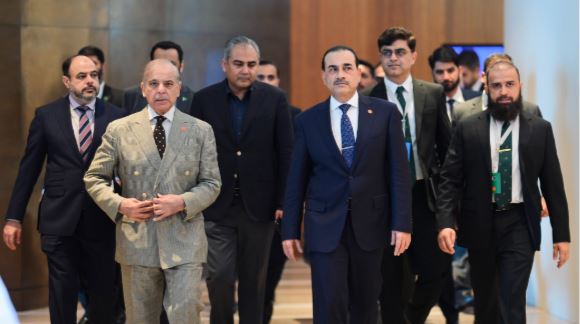
Ahead of the talks, US delegation — led by Vice President JD Vance and including special envoys Steve Witkoff and Jared Kushner — met Prime Minister Shehbaz Sharif and Field Marshal Asim Munir.

Later, the Iranian delegation — Parliament Speaker Mohammad Bagher Ghalibaf and Foreign Minister Abbas Araghchi — met the Pakistani side.

Vance expressed hope for additional progress in the coming hours during the talks, hailing the Pakistani leadership for their mediatory role.

Standing alongside the leadership of Pakistan and Qatar, Vance praised the roles played by PM Shehbaz and Field Marshal Munir for their contributions towards the US-Iran deal.

The US vice president said Pakistan’s role had been appreciated around the world and expressed a desire to build on the current momentum in the future.

The US vice president said Washington wanted Iran to play a positive role in efforts for peace, while adding that peace in the Middle East remained a priority.

He also voiced concern over the situation in Lebanon and said that Trump was working to reduce tensions in the country amid Israel’s continuous attacks against Hezbollah’s locations.

“The technical negotiations may not solve every disagreement, but it will allow us to sit together as teams for the first time in history,” he said, adding that Trump was committed to seeing a full regional ceasefire.

Pakistan hosts first US-Iran technical talks in Switzerland

Pakistan hosts first US-Iran technical talks in Switzerland

BURGENSTOCK, Switzerland – JUN 21 /DNA/ – In a significant diplomatic breakthrough, Pakistan convened the first technical-level talks between the United States and the Islamic Republic of Iran today, with Prime Minister Muhammad Shehbaz Sharif playing the role of host and mediator. The high-stakes dialogue, held at the scenic Burgenstock resort, aims to de-escalate tensions and explore pathways toward mutual understanding on regional security and nuclear-related issues.

Ahead of the closed-door sessions, Prime Minister Shehbaz Sharif, flanked by U.S. Vice President J.D. Vance and Qatar’s Prime Minister and Foreign Minister Sheikh Mohammed bin Abdulrahman bin Jassim bin Jaber Al Thani, addressed the international media corps in a brief but cordial interaction. The presence of the Qatari leader underscored Doha’s continued role as a key facilitator in Middle Eastern diplomacy.

Pakistan hosts first US-Iran technical talks in Switzerland

Prime Minister Sharif opened the interaction by emphasizing Pakistan’s historic responsibility as a nation that seeks peace and stability in the region. “Today, we are not just hosting a meeting; we are hosting a conversation. The world is watching, and the people of this region deserve a future free from conflict. Pakistan stands ready to facilitate every step that leads toward trust and understanding,” he stated.

He thanked Vice President Vance and Prime Minister Al Thani for their “unwavering support” in making this dialogue possible, noting that the Burgenstock venue was chosen for its neutrality and serenity, symbolizing the calm that both nations are striving to achieve.

Pakistan hosts first US-Iran technical talks in Switzerland

Vice President J.D. Vance, in his brief remarks, struck a measured tone, reflecting the Biden-Harris administration’s desire for a diplomatic off-ramp. “The United States has always believed that diplomacy, however difficult, is the most durable path to security. We have come here with an open mind and a clear objective: to listen to Iran’s concerns and to see if a responsible, verifiable framework can be established. This is a technical meeting, but it is the foundation upon which larger conversations can be built,” Vance said.

He specifically praised Pakistan’s role in creating a safe and impartial environment, calling Prime Minister Sharif “a sincere friend who understands that the world cannot afford another flashpoint in the Middle East.”

Qatar’s Mediating Role

Pakistan hosts first US-Iran technical talks in Switzerland

Prime Minister and Foreign Minister Sheikh Mohammed bin Abdulrahman bin Jassim bin Jaber Al Thani reiterated Qatar’s commitment to facilitating peace, highlighting the urgency of the moment. “We have seen the consequences of misunderstanding and miscalculation. Today’s technical-level talks are not about immediate breakthroughs, but about building a language of dialogue that has been missing for years. Qatar will continue to support any initiative that brings the parties closer to a tangible agreement,” he stated.

The Road Ahead

The technical talks are expected to focus on a range of contentious issues, including the nuclear program, sanctions relief, and regional security guarantees. While no formal agreements are expected from this initial round, both Washington and Tehran have agreed to a second session to be hosted by Qatar in Doha in late July.

Pakistan hosts first US-Iran technical talks in Switzerland

The Burgenstock meeting comes at a critical juncture, with global attention fixed on whether these low-level, expert-driven discussions can evolve into a broader diplomatic framework. For now, the photo of the three leaders shaking hands with the Swiss Alps in the background has already made headlines as a symbol of rare and hopeful multilateralism.

Talks move ahead with cautious optimism

Talks move ahead with cautious optimism

Standing alongside Prime Minister Shehbaz Sharif and Field Marshal Syed Asim Munir, U.S. Vice President JD Vance praised Pakistan’s leadership, calling their contributions “commendable”

Centreline Report

SWITZERLAND — Technical negotiations between the United States and Iran are moving forward with cautious optimism, as mediators from Pakistan and Qatar play a central role in facilitating dialogue.

Standing alongside Prime Minister Shehbaz Sharif and Field Marshal Syed Asim Munir, U.S. Vice President JD Vance praised Pakistan’s leadership, calling their contributions “commendable” and describing Munir as “an excellent military commander.” Vance added humorously: “There are two very important people in my life. An Indian, my wife, and a Pakistani, Field Marshal Munir.”

Vance emphasized that the ongoing technical negotiations mark a historic moment: “The technical negotiations may not solve every disagreement, but it will allow us to sit together as teams for the first time in history.” He expressed hope for “additional progress” in the coming hours and reiterated Washington’s desire for Iran to play a constructive role in regional peace efforts.

The U.S. vice president also voiced concern over Lebanon, noting that President Donald Trump is working to reduce tensions as Israel continues strikes against Hezbollah positions. “These kinds of ceasefires are always a little bit messy,” Vance said, but stressed that Trump remains committed to a “full regional ceasefire.”

Prime Minister Shehbaz Sharif credited President Trump’s leadership for making the talks possible, calling the moment “an important opportunity for global peace.” He highlighted Field Marshal Munir’s role in advancing negotiations, while Qatar’s Prime Minister Sheikh Mohammed bin Abdulrahman Al Thani also paid tribute to Pakistan’s leadership.

Still 29% tax on petrol, diesel prices

News Desk

ISLAMABAD: Taxes continue to account for 29% of the prices of both petrol and diesel despite the government’s latest reduction in fuel rates, sources in the Petroleum Division ..

The government on Saturday reduced the price of petrol by Rs74.28 per litre and diesel by Rs67.31 per litre, bringing the new prices to Rs299.50 and Rs311.47 per litre, respectively.

According to sources, the price of petrol includes Rs88.07 per litre in taxes. This comprises Rs19.32 in customs duty, Rs66.25 in petroleum levy and Rs2.50 in climate support levy.

The sources said the price of diesel also includes 29% in taxes, with total taxes amounting to Rs91.15 per litre.

The tax component in diesel includes Rs15.68 per litre in customs duty, Rs72.97 in levy and Rs2.50 in climate support levy, according to Petroleum Division sources.

The government, which would review the price of petroleum products on a fortnightly basis, has been reviewing petroleum prices on a weekly basis since the US-Israeli conflict with Iran on February 28.

The price of petrol was Rs258.17 per litre when the war began and jumped to as high as Rs458.41 per litre, before coming a little above Rs370 per litre, just a few days back. Meanwhile, diesel was at Rs275.7 per litre and jumped to as high as Rs520.35 per litre.

However, after US and Iran signed an interim peace deal, mediated by Pakistan, Prime Minister Shehbaz Sharif announced a reduction in petrol prices, saying he had fulfilled his promise.

King Charles to reveal tax details

King Charles to reveal tax details

News Desk

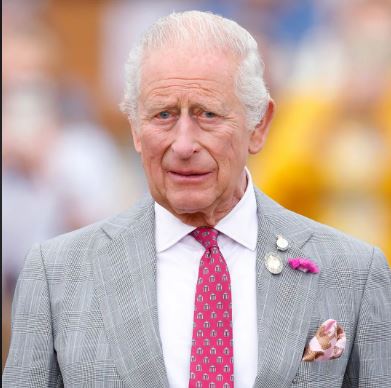
LONDON: Britain’s ‌King Charles will tell the public for the first time on Thursday how much tax he pays as monarch, a royal spokesperson said on Sunday, as Buckingham Palace seeks to be more accountable and transparent.

By law, Charles is not obliged to pay income tax, capital gains ‌tax or inheritance ‌tax on what ‌he ⁠received from Queen Elizabeth, but ⁠Charles has voluntarily agreed to pay income tax and capital gains tax when he sells private assets.

Details will come as part of annual royal accounts ⁠due for release on Thursday.

Charles ‌receives personal ‌income from land, private estates and investments ‌on top of the £132 million ($175 million) ‌he received from the government in the 2025/26 tax year to support royal duties.

A Buckingham Palace spokesperson said ‌the move aimed to “encourage wider understanding of our accountability.”

Charles ⁠provided ⁠information on his tax payments when he was Prince of Wales and intends to continue to do so in future years as king, the palace said.

The British parliament’s Public Accounts Committee launched an inquiry into residential property arrangements provided to members of the royal family last year. ($1 = 0.7557 pounds)

CASS Lahore Seminar explores water as a weapon in modern-day conflict

CASS Lahore Seminar explores water as a weapon in modern-day conflict

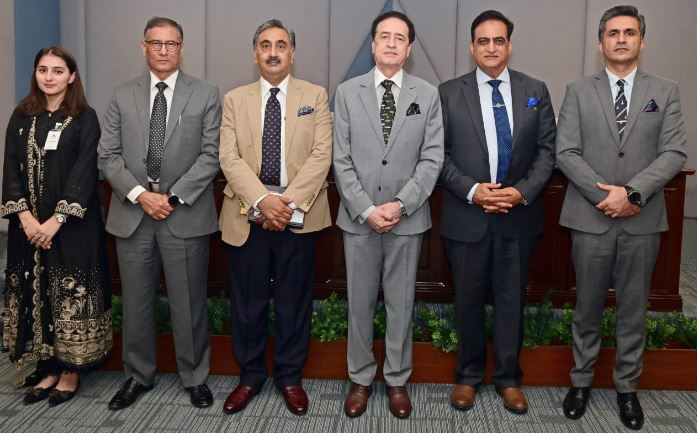
ISLAMABAD, JUN 21 (DNA): The Centre for Aerospace and Security Studies (CASS) Lahore organised a seminar titled, “Water as a Weapon in Modern-day Conflict: From International Treaties to Maritime Chokepoints,” on 18 June 2026. As an independent think tank, CASS Lahore organises academic events for scholars and practitioners interested in national security in its wider context. The event was attended by academics, intellectuals, and domain experts.

Air Marshal Irfan Ahmad, Director National Security at CASS Lahore, delivered the opening address.

Pakistan Commissioner for Indus Waters on Hydro-Strategy and IWT

Syed Muhammad Mehar Ali Shah, Pakistan Commissioner for Indus Waters, framed South Asian water governance as “hydrostrategy,” blending infrastructure, law, and political signalling. He noted that the Indus Waters Treaty (IWT) has provided stability in post-1948 water sharing, while the Indus Basin underpins Pakistan’s reliance on dams and barrage systems.

He highlighted emerging challenges like data control, flow regulation and “hydro-coercion,” where water management can be used as a tool of strategic pressure. He called for coordinated legal, technical, and diplomatic efforts, better storage, and evidence-based policies to achieve sustainable water governance.

Vice Admiral Ahmed Saeed on Maritime Strategic Assets

Vice Admiral Ahmed Saeed described waterways as strategic assets including ports, sea routes, chokepoints, and maritime law. He explained that UNCLOS 1982 ensures balance between navigation freedom and coastal states’ rights.

He highlighted Pakistan’s advantageous position in the Indian Ocean, where around 95% of trade and energy imports move by sea, serving as a bridge with global maritime trade. He emphasised Pakistan’s $40 billion untapped maritime potential, and called for sustained investment, governance, and consistent policies for sustainable growth.

International Law and the Kashmir Dispute: Insights by RSIL President

Ahmer Bilal Soofi, President RSIL, explained that international law operates through peacetime, armed conflict, and occupation regimes. He described academic and institutional processes shaping doctrines like self-defence under Article 51, including anticipatory interpretations.

Under UNCLOS 1982, freedom of navigation, blockades, and accountability for conflict damages were discussed. He referred to India’s abrogation of Article 370, developments in IIOJK, and hydrological measures, stating that “Sindoor 2.0” perpetuates a conflict mindset, undermining regional stability.

CASS President Warns Against Weaponisation of IWT and Strait of Hormuz

In his concluding remarks, Air Marshal Asim Suleiman (Retd), President CASS, Lahore, highlighted water’s use as a geopolitical instrument. He emphasised Indus Rivers’ importance to Pakistan’s economy, raising concerns over India’s use of water as a weapon of mass destruction, for which it has to face extreme consequences.

He stated that India’s unilateral decision to put the IWT in abeyance is not accepted by Pakistan, and denies it vehemently. He stated that IWT remains legally binding and cited PCA’s ruling upholding Pakistan’s position. He observed that Iran used its prerogative according to the UNCLOS to block the Strait of Hormuz as its security was under threat. He concluded that weaponisation of IWT and Strait of Hormuz carry serious economic implications for the region and globe.

Interactive Session Highlights

The event concluded with a lively interactive session. It highlighted navigation charges, blockade’s effects, and India’s violations of international law. The participants appreciated CASS Lahore’s initiative in hosting an engaging and thought-provoking discussion.

ICT admin acts against illegal LPG use; 9 shopkeepers detained

ICT admin acts against illegal LPG use; 9 shopkeepers detained

ISLAMABAD, JUN 21: The Islamabad district administration has stepped up action against the illegal use of LPG cylinders in weekly markets, with nine shopkeepers taken into custody during an operation at the H-9 Sunday Bazaar.

The move is part of efforts to enforce a ban on LPG cylinder use in public market areas and improve safety arrangements for visitors and vendors, said the spokesman of ICT administration here.

The district administration announced that the use of LPG cylinders has been prohibited in Sunday bazaars across the federal capital. Officials said the restriction was introduced to reduce safety risks in crowded marketplaces and ensure smoother movement for shoppers.

During an inspection at the H-9 Sunday Bazaar, the Assistant Commissioner found several vendors using LPG cylinders in violation of the ban. Authorities also noted that some cylinders had been placed in the middle of market pathways, causing obstructions for customers.

As a result, nine shopkeepers were detained and shifted to a local police station. According to officials, the action was taken for blocking public passageways and for the unauthorized use of LPG cylinders despite clear instructions from the administration.

The district administration said that enforcement teams would continue monitoring markets to ensure compliance with safety regulations. The officials warned that further violations would lead to legal action.

Meanwhile, the Deputy Commissioner of Islamabad has directed all Assistant Commissioners to strictly implement the ban in their respective areas. The administration has been instructed to carry out regular inspections and take immediate action against any violations.

The authorities said the campaign aims to maintain public safety and prevent incidents that could arise from the improper use of LPG cylinders in crowded market environments.

24 people detained, 5 premises sealed as ICT admin steps up dengue enforcement drive

24 people detained, 5 premises sealed as ICT admin steps up dengue enforcement drive

ISLAMABAD, JUN 21: The Islamabad district administration has intensified its anti-dengue campaign, detaining 24 individuals and sealing five premises during operations carried out across different sectors of the federal capital.

The action was taken against violations of dengue prevention regulations as authorities continue efforts to keep the city protected from the spread of the mosquito-borne disease.

According to the district administration on Sunday, daily inspections and enforcement activities are being conducted to identify and remove conditions that can lead to mosquito breeding. Teams have been directed to take action against individuals and businesses that fail to follow dengue prevention guidelines.

During operations in the F-6 and F-7 sectors, the authorities detained 13 people for violating anti-dengue standard operating procedures (SOPs). In G-6, four more individuals were taken into custody over similar violations.

The administration also carried out inspections in the Red Zone, where five people were shifted to a local police station after being found in breach of dengue prevention regulations.

In E-11, the enforcement teams sealed two offices and three shops for failing to comply with anti-dengue measures. Four individuals were also detained and transferred to a police station during the operation.

Meanwhile, in G-13, two people were taken into custody and one office was sealed following violations of dengue-related rules and regulations.

Officials said the operations focused on locations where stagnant water, poor sanitation conditions, or other factors could contribute to the breeding of dengue-carrying mosquitoes. Authorities stressed that strict compliance with preventive measures is necessary to reduce the risk of dengue transmission.

The Deputy Commissioner of Islamabad has instructed all field teams to continue enforcement activities on a daily basis. Officials have been directed to monitor residential, commercial, and public areas and take immediate action wherever violations are identified.

The district administration stated that the anti-dengue campaign will remain active throughout the season, with regular inspections and legal action against those who fail to implement preventive measures. Authorities have also urged residents and business owners to cooperate with inspection teams and ensure that their premises remain free from conditions that can support mosquito breeding.

The administration said continued vigilance and public cooperation are essential to limiting the spread of dengue and maintaining public health across the capital.

Stay Connected

64FansLike
60FollowersFollow

Latest Reviews

Exchange Rates

USD - United States Dollar
EUR
1.15
GBP
1.35
AUD
0.70
CAD
0.71