Home Blog Page 759

Unity in Action: COAS, Saudi Crown Prince align on key regional issues

Unity in Action: COAS, Saudi Crown Prince align on key regional issues

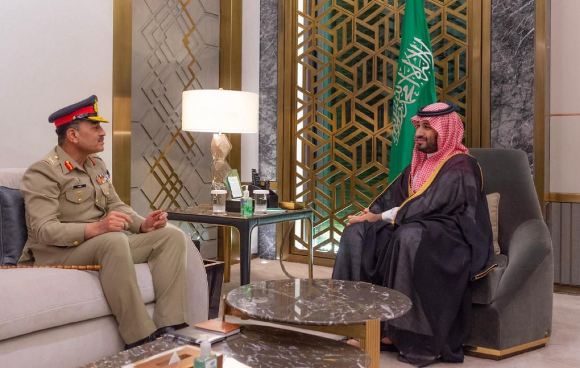
RIYADH, MAR 20 /DNA/ – General Syed Asim Munir, NI (M), Chief of the Army Staff (COAS) visited Kingdom of Saudi Arabia (KSA) on an official visit.

During the visit, COAS called on Prince Mohammad bin Salman bin Abdulaziz Al Saud, The Crown Prince and Prime Minister of KSA; HRH Prince Khalid bin Salman bin Abdulaziz Al Saud, Defence Minister of KSA; His Excellency General Fayyadh Bin Hamed Al-Ruwaili, Chief of General Staff (CGS) Saudi Armed Forces and Engineer Talal Abdullah Al Otaibi, Assistant Minister of Defence of KSA and other senior military leadership.

Wide ranging issues of mutual interest, including regional peace and security, bilateral defence & security cooperation came under discussion.

HRH Prince Mohammad Bin Salman highlighted that KSA and Pakistan have historic brotherly and strong relations, and both countries have always stood up for each other. The Crown Prince also expressed desire to further strengthen the bilateral ties and that KSA will always standby with Pakistan in future as well.

COAS thanked the Saudi leadership for the warm sentiments and support for Pakistan.

The new Palestinian prime minister maps out his vision for a path to peace

The new Palestinian prime minister

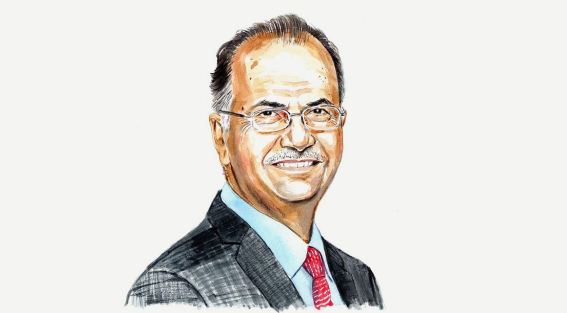
It will require reunification—and reforms—across the Palestinian territories, says Mohammad Mustafa

As i step into the role of prime minister-designate of the Palestinian National Authority (PNA) under excruciating and unprecedented circumstances, I am acutely aware of the monumental challenges that lie ahead. The Palestinian people find themselves at yet another critical juncture, facing a tragic confluence of crises that are testing our resilience and ingenuity, qualities we have proved we possess in abundance time and time again.

There are, however, at least a couple of differences this time: the injustices are more horrific than ever, and they are on global display.

At this pivotal moment, Palestinians and the international community aremore galvanised and determined to create real change than perhaps ever before. It is therefore imperative that we chart a clear path forward to stop the humanitarian catastrophe in Gaza, end the occupation and establish an independent Palestinian state in the West Bank and the Gaza Strip with East Jerusalem as its capital. It is time we were given a fair chance at realising our collective aspirations for justice, freedom, security, peace and prosperity—fundamental rights that Palestinians have been denied for 76 years.

Foremost among our priorities is addressing the dire situation that has transpired since October 7th. The devastation wrought by the continuing Israeli bombardment and deprivation (on top of years of siege) has left our people in Gaza in ruins, with unimaginable human suffering.

The statistics are staggering, and the personal stories behind them are devastating. In less than six months, more than 30,000 people have been killed in Gaza, at least 13,000 of them children. On average, ten children every day lose at least one limb, and more than 17,000 are now considered “unaccompanied”, or without a parent. At least 70,000 people are injured and 1.7m—75% of the population of the Gaza Strip—have been internally displaced. Over 60% of housing units have been destroyed or damaged, the education and health systems have completely collapsed, and food and water insecurity have reached catastrophic levels. Nothing can justify the hell that the people of Gaza are experiencing.

Nor, for that matter, can anything excuse the deterioration that is occurring at the same time in the West Bank. As settlers ramp up violence and the occupation’s restrictions continue to make it difficult to pay salaries and live stable lives, the pressing security and economic situations have again become impossible to ignore.

Immediate action is needed to end this suffering. Our priority, therefore, will be to continue to work with regional and international partners to secure an immediate and permanent ceasefire and lead a humanitarian relief campaign to help our people in Gaza. In parallel, we aim to establish an independent, competent and transparent agency for Gaza’s recovery and reconstruction and an internationally managed trust fund to raise, manage and disburse the required funds. The siege must end, and the Palestinian people of Gaza (and the West Bank) must be allowed to live and thrive.

Crafting a proactive blueprint is essential. This blueprint must not only tackle the immediate crises we face, but also pave a path for a sustainable and prosperous Palestinian state that allows for the inalienable right of the Palestinian people to self-determination, a cornerstone for peace and stability in the region.

To realise this vision we must bring together various parties and voices that are committed to the principles and frameworks established by the Palestine Liberation Organisation (plo). Acknowledging the complexities on the ground, we must forge a non-partisan, technocratic government that can gain both the trust of our people and the support of the international community. This government will foster the engagement of all Palestinian factions and parties in a constructive dialogue at the plo level. The aim should be to reach a consensus on how to bring about peace, an independent Palestinian state and the democratic governance of our institutions.

Central to this vision is the reunification of our institutions and laws across Gaza, the West Bank and East Jerusalem under cohesive governance, facilitating economic integration and ensuring freedom of movement and access (until the establishment of a permanent territorial link). This vision has been the international consensus and the only accepted way forward to lasting peace and stability, yet its implementation remains long overdue.

The incoming Palestinian government is determined to undertake all necessary internal reforms to gain the trust of our people and to succeed in the enormous tasks ahead. We will undertake comprehensive reforms that include improving financial controls and transparency, streamlining the bureaucracy, strengthening the rule of law, safeguarding the independence of the judiciary, fighting corruption, upholding human rights and freedom of expression, empowering civil society and oversight bodies, and preparing for elections.

To be clear, we will pursue a policy of zero tolerance towards corruption and full commitment to transparency. An effective and accountable government is crucial not only for garnering international support and credibility but, more important, for gaining the trust of our own people.

The scepticism that greets declarations of reform may be understandable given the history of our governance. But I am committed to showing progress and accountability. My government’s measures will include putting together a credible and professional cabinet and establishing a Transformation Office tasked with charting the required reforms and implementing them in co-operation with civil-society groups and international organisations with relevant experience, such as the World Bank and the undp. To succeed, this will require support from the international community, to ensure that the restrictive and disabling policies of the Israeli government are brought to an end.

An essential step in regaining the trust of our people and ensuring the legitimacy of our governance is the commitment to hold democratic elections. We aim to hold both presidential and parliamentary elections, a vital step towards reinvigorating our democratic institutions. We will strive for a process to make these free, fair and inclusive. However, the realities on the ground in Gaza, the West Bank and East Jerusalem must be conducive to ensuring these elections are genuinely representative.

Improving the fiscal stability of the pna and revitalising our economy will be an important task, but also a daunting one given our significant reliance on dwindling external aid and the systemic restrictions imposed by the occupation. However, it is not insurmountable. Israeli restrictions must be removed. Then, with the assistance of the international community and our private sector, including in the diaspora, we will be able to diversify our revenue sources, reduce dependence on external aid and create a thriving, resilient economy.

Moving forward requires bold ideas and reforms, decisive action, engagement, transparency and pragmatism. It is time for the suffering of Palestinians to finally end. We are a strong and capable people, but we cannot do this alone. The support of the international community and our regional partners is indispensable in fostering peace, security, stability and prosperity for Palestinians and the region. The time is now to free Palestine—once and for all. ■

Mohammad Mustafa is the prime minister-designate of the Palestinian National Authority.

Minister Aurangzeb highlights CPEC’s role in Pakistan’s economic strategy

Minister Aurangzeb highlights CPEC's role in Pakistan's economic strategy

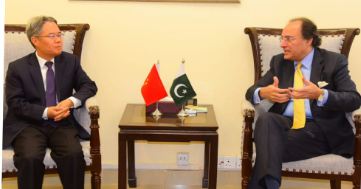
ISLAMABAD, MAR 19 /DNA/ – Ambassador of China,  Jiang Zaidong called on Minister for Finance & Revenue Mr. Muhammad Aurangzeb to discuss key matters pertaining to economic cooperation and bilateral relations between Pakistan and China, at Finance Division, today.

Ambassador of China H.E. Mr. Jiang Zaidong extended felicitations to Mr. Muhammad Aurangzeb upon his appointment as Federal Minister for Finance and Revenue and expressed confidence towards further strengthening of economic ties between the two countries.

Minister for Finance & Revenue Mr. Muhammad Aurangzeb expressed gratitude towards the Chinese leadership for their invaluable support to Pakistan in various sectors, particularly highlighting the roll-over of SAFE deposits and the refinancing of commercial loans, which have significantly contributed to Pakistan’s economic stability. He further emphasized the paramount importance of the China-Pakistan Economic Corridor (CPEC) in Pakistan’s growth strategy and overall economic recovery.

Both sides agreed to advance their collaboration in various sectors, including industrial zones, agriculture, mineral and mining, as well as renewable energy. It was discussed that next phase of CPEC would focus on monetisation of gains made during the first phase.

Concluding the meeting, both sides reiterated the desire to collaborate closely to further deepen and enhance the economic relationship between the two countries, reflecting the strong bonds of friendship and cooperation that exist between Pakistan and China.

US Ambassador, FM Aurangzeb discuss bilateral cooperation

US Ambassador, FM Aurangzeb discuss bilateral cooperation

ISLAMABAD, MAR 19 /DNA/ – Ambassador of the United States to Pakistan, Mr. Donald Blome, paid a courtesy visit to Minister for Finance & Revenue Muhammad Aurangzeb at the Finance Division today, to discuss important matters related to bilateral cooperation and mutual interests between Pakistan and the United States.

Ambassador of the US, Mr. Donald Blome, extended felicitations to Mr. Muhammad Aurangzeb upon his appointment as Minister for Finance and Revenue and conveyed confidence towards further strengthening of economic ties between the two countries.

Minister for Finance & Revenue Mr. Muhammad Aurangzeb warmly welcomed Mr. Donald Blome and underscored the significance of Pakistan-US bilateral relations, highlighting their importance at political, economic, and security levels.

Minister Aurangzeb shared that the new government is fully prepared to tackle the economic challenges and is determined to bring about macroeconomic stability in the country. He reiterated the government’s commitment to completing the ongoing IMF program and continuing the economic reform process initiated under the Extended Fund Facility (EFF) 2019 and Stand-By Arrangement (SBA) 2023, with a focus on achieving fiscal and debt sustainability, social protection, and rebuilding foreign exchange reserves.

Highlighting the priority areas for reforms, Minister Aurangzeb outlined the the government’s foremost priority of bringing reforms in the Federal Board of Revenue (FBR) to prevent revenue leakages through end-to-end digitization, enhancing the State-Owned Enterprise (SOE) reforms, strengthening social protection measures, improving public financial management, implementing energy sector reforms, removing distortionary subsidies, and fostering private sector-led economic growth. Recognizing the United States as one of Pakistan’s largest trading partners and a significant source of foreign direct investment, Minister Aurangzeb expressed appreciation for the economic ties between the two nations.

Ambassador Blome congratulated Government on positive step taken so far that resulted in visibly positive signs in the economy and hoped that it will help further stabilise the economy.

Concluding the meeting, both sides acknowledged the critical nature of the relationship between Pakistan and the United States and expressed the desire to continue enhancing bilateral relations between the two countries.

Chinese, Pakistani vocational institutions sign agreement

 China’s Yantai Vocational College (YOC)

ISLAMABAD, MAR 19 (DNA) — China’s Yantai Vocational College (YOC), Chinese logistics firm Sino Mall (Pvt) Ltd., and Government Monotechnique Institute, Mehrabpur, Sindh on Monday signed a framework agreement to co-construct Ban·Mo College in Pakistan.

In this connection, the Ban Mo College signing, unveiling and opening ceremony of the first phase training course was held at the YOC, which was attended online by officials of Pakistan’s Embassy, Beijing and Sindh Technical Education and Vocational Training Authority (STEVTA), Gwadar Pro reported on Tuesday.

The agreement aims to deepen international exchanges and cooperation in vocational education, particularly in line with the ‘Belt and Road’ initiative, according to TANG Int’l Education Group.

As per the agreement, the YOC will provide pre-job training for Sino Mall’s Chinese employees in overseas logistics management, as well as Chinese + Professional skills training for its local employees in Pakistan.

Development of logistics, Chinese teaching resources and vocational education courses, facilitating international academic education and exchange visits for Pakistani students, and responding to Sino Mall’s language and skill training needs in other specialties are also part of the agreement.

Utilizing YOC’s teaching resources and online platforms for education services in Pakistan, developing professional standards and course standards recognized by Pakistani education authorities, conducting community activities, volunteer services, and vocational training for Pakistani residents are also included in the scope of the agreement.

The three parties will jointly develop the logistics Chinese teaching resource base and construct characteristic vocational education courses and co-construct a high-level logistics industry-college-research training base, integrating practical teaching, enterprise production and social technology services.

The agreement envisages construction of a Ban Mo College in Mehrabpur, Sindh, according to Mansoor ul Hassan Siddiqui, Director General TANG Pakistan. — DNA

Defence Minister engages with naval chief on maritime challenges

Defence Minister engages with naval chief on maritime challenges

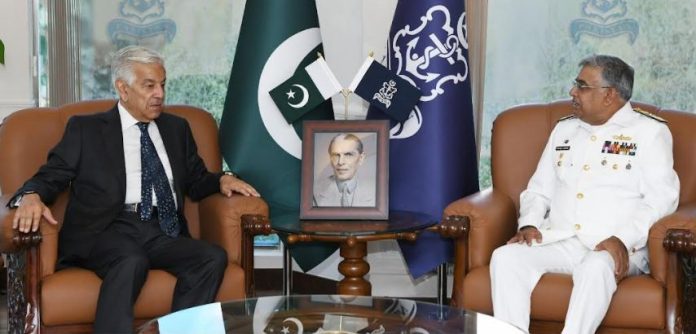
ISLAMABAD, MAR 19: /DNA/ – Defence Minister Khawaja Muhammad Asif visited Naval Headquarters Islamabad and called-on Chief of the Naval Staff Admiral Naveed Ashraf. Upon arrival at Naval Headquarters, the visiting dignitary was received by Chief of the Naval Staff and was presented guard of honour. The Defence Minister was also introduced to the Principal Staff Officers at Naval Headquarters.

During the meeting, matters pertaining to Regional Maritime Security milieu and operational readiness of Pakistan Navy were discussed. Naval Chief apprised the Defence Minister on roles, capabilities and future modernization plans of Pakistan Navy. He briefed the minister on recent acquisitions of state-of-the-art platforms and equipment to ensure an invincible seaward defence of the country.

Later on a detailed briefing was presented by Deputy Chief of Naval Staff (Operations) on the prevailing maritime environment, challenges being faced by Pakistan Navy and response by Pakistan Navy to meet the challenges. At the end of the briefing recommendations were given to the Defence Minister for capability enhancement of PN and promotion of maritime sector (Blue Economy) for revival of the national economy.

 The Defence Minister appreciated the importance of Pakistan Navy to safeguard maritime interest of the country. The Defence Minister assured that his Ministry will make all efforts to meet the requirements of Pakistan Navy despite the prevailing economic constraints.

NTC aims to attain signatory status of the Sydney accord

NTC aims to attain signatory status of the Sydney accord

DNA

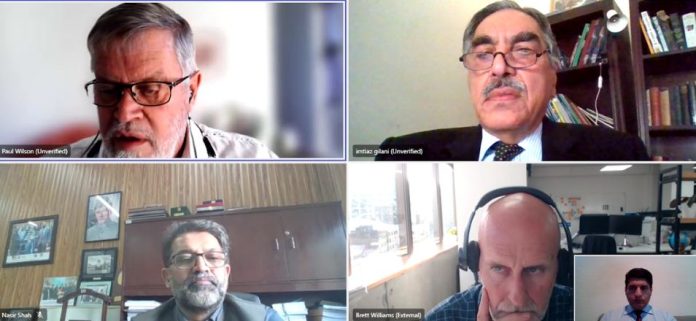
Islamabad, Mar 19: The National Technology Council (NTC) has taken an important step towards attaining provisional signatory status of the Sydney Accord. The Accord is an international mutual recognition agreement for qualifications in the field of Engineering Technology, and its members are called signatories.

To apply for signatory status, aspiring countries must have two mentors recognized by the Sydney Accord who help in achieving provisional signatory status. For this purpose, NTC is working with Malaysia and New Zealand. New Zealand has nominated Dr. Paul Wilson, Managing Director, Vintage Lane Consulting Limited, NZ, as a mentor while Malaysia has yet to decide.

In this connection, an online meeting was organized, which was attended by Engr. Imtiaz H. Gilani, Chairman NTC, Mr. Bret Williams, General Manger, Global, Engineering, New Zealand, Dr. Paul Wilson, Mentor, Mr. Nasir Shah, Director General, Quality Assurance Agency, HEC, and Mr. Fahd Amin, Assistant Director NTC.

The Chairman NTC thanked Mr. Bret Williams and Mr. Paul Wilson for agreeing to help NTC achieve provisional signatory status. He explained that NTC is a subsidiary of HEC with full administrative, financial, and academic powers, with Chairman HEC as its controlling authority. This autonomy is a fundamental requirement for signatory status.

The Chairman NTC said, “Becoming a signatory to the Sydney Accord will be a crucial step for the future for Pakistani engineering technology graduates and give our skilled manpower global recognition.”

“We at NTC are thankful to all the stakeholders, and with the continued support from HEC, we are hopeful to achieve the signatory status of the Sydney Accord,” he said.

It is pertinent to mention that as part of the mentoring exercise, the mentor must physically be involved in one or two accreditation visits conducted by NTC. September 2024 has been tentatively decided as a suitable time for the visit of Paul Wilsons.

During the discussion, many queries were raised regarding procedures, delineation of HEC and NTC responsibilities as regulators to avoid duplication, frequency of regulatory visits etc. Mr. Imtiaz Gilani, Mr. Nasir Shah and Mr. Fahd Amin clarified issues to the complete satisfaction of Mr. Bret Williams and Mr. Paul Wilson.

Sri Lankan envoy keen to enhance bilateral trade upto $800 million with Pakistan

Sri Lankan envoy keen to enhance bilateral trade upto $800 million with Pakistan

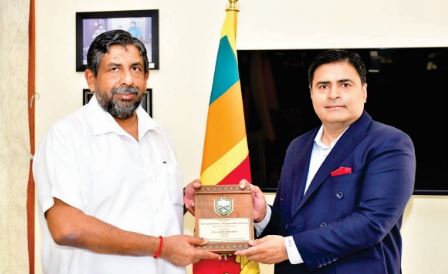
ISLAMABAD, MAR 19 /DNA/ – High Commissioner of Sri Lanka to Pakistan, Ravindra Chandrasiri Wijegunaratne has said that he is keen to enhance the bilateral trade between Pakistan and Sri Lanka up to $800 million, for which the potential in various sectors in both countries has to be exploited.

At present, the bilateral trade potential between the two countries is $1 billion, which is achievable, but he is committed to take the bilateral trade to the target of $800 million  during his tenure.

The High Commissioner said this while talking to a delegation of Islamabad Chamber of Commerce and Industry (ICCI) led by its President Ahsan Zafar Bakhtawari.

Former President of Islamabad Chamber of Commerce and Industry and United Business Group, FPCCI Secretary General, Zafar Bakhtawari and Executive Member of ICCI, Amir Hamza were also included in the delegation.

The envoy said that the bilateral trade between the two countries was $400 million last year, which was less than that of $510 million in year 2018. He added that Pakistan and Sri Lanka signed a Free Trade Agreement in 2005, which was Pakistan’s first FTA with any country.

He said that there are multiple cooperation opportunities between the two countries especially in agriculture, industry, tourism and religious tourism.

The envoy further said that geo-strategically Pakistan is of utmost importance especially its land link with Central Asia and that its economic integration is also very useful for Sri Lanka. He expressed the hope that strengthening of economic and trade relations between Pakistan and Sri Lanka will take the bilateral trade between the two countries to a higher level once again.

The High Commissioner said that at one time Pakistan used to import 70 percent of Tea from Sri Lanka, which has now reduced to 2 percent , which needs to be increased.

The envoy went on to say that Pakistan’s Basmati Rice and Citrus are very popular in Sri Lanka so Pakistan’s trade in this field can be increased.

He said that Pakistan has many opportunities in religious tourism for Sri Lankans, there are Buddha relics from Khyber Pakhtunkhwa to Taxila. He said that 5 flights are coming to Karachi and Lahore every week from Sri Lanka, which can have a good impact on tourism and trade.

He further said that a ceremony will be held at the beginning of the new year of Sri Lanka in coming April 24, and a Sri Lankan restaurant will be opened in any major city including Islamabad and Lahore.

On this occasion, Islamabad Chamber of Commerce and Industry, President Ahsan Zafar Bakhtawari said that the Free Trade Agreement between Pakistan and Sri Lanka was signed in 2005, but its true potential has not been exploited.

Ambassador of Kuwait calls on PM Shehbaz

Ambassador of Kuwait calls on PM Shehbaz

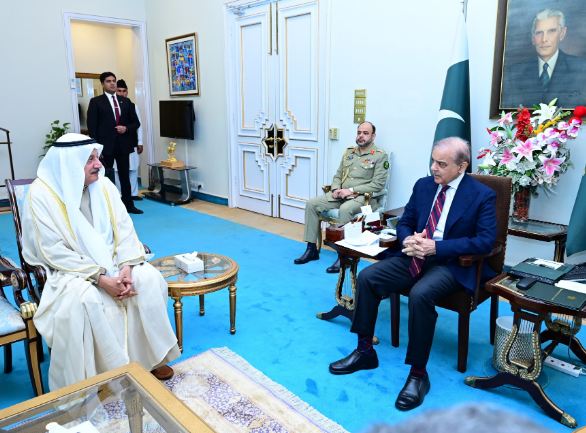
ISLAMABAD, MAR 19 /DNA/ – Amb. Nassar Abdulrahman Jasser Almutairi, Ambassador of the State of Kuwait to Pakistan, paid a courtesy call on Prime Minister Muhammad Shehbaz Sharif earlier today.

The Prime Minister said Pakistan attached great importance to its historic and deep-rooted ties with Kuwait. He thanked the Kuwaiti leadership, including the Amir of Kuwait His Highness Sheikh Mishal Al Ahmad Al Jaber Al Sabah, for the warm wishes and felicitations on his re-election. He expressed the desire to work closely with them to further strengthen the bilateral relationship, with a focus on trade and investment. He also extended an invitation to the Amir of Kuwait to visit Pakistan at his earliest convenience.

The Prime Minister noted with satisfaction that seven Agreements were signed between the two countries in November 2023, worth US$ 10 billion, relating to diverse areas including food security, technology, hydel power, mining and minerals, water supply and mangrove rehabilitation. He urged concerted efforts by both sides to ensure early implementation of the agreements. In this context, he emphasized the role of Special Investment Facilitation Council (SIFC) that provides a robust and efficient mechanism to attract foreign investment into Pakistan.

The Kuwaiti Ambassador thanked Pakistan for its support to Kuwait in difficult times. The Ambassador profoundly thanked former Prime Minister Muhammad Nawaz Sharif for his strong public support to Kuwaits independence and sovereignty during the 1990-91 crisis. He also expressed gratitude for Pakistans support to Kuwait during COVID-19 pandemic. The Ambassador reaffirmed Kuwaits strong commitment to build closer ties with Pakistan.

The Prime Minister appreciated Amb. Almutairis contribution in fostering stronger ties between Pakistan and Kuwait.

KOICA, CCP renews collaboration to enhance competition law enforcement

KOICA

DNA

ISLAMABAD, MAR 19: Korea International Cooperation Agency (KOICA) and the Competition Commission of Pakistan (CCP) have agreed to resume their collaboration efforts. KOICA has expressed its commitment to providing full support to CCP in capacity building, enhancing enforcement capabilities, and conducting joint research initiatives.

Mr. Je Ho Yeon, the Country Director of KOICA Pakistan Office, met with Dr. Kabir Ahmed Sidhu, Chairman of CCP, to discuss bilateral cooperation and capacity building.

KOICA has committed to facilitating an MOU between the Korea Fair Trade Commission (KFTC) and CCP for information sharing, joint research, and advocacy programs, particularly focusing on Korean companies operating in Pakistan’s private sector. This collaboration is expected to enhance CCP’s bid-rigging system and its ability to address competition issues in the digital economy.

One of the key points of discussion was KOICA’s interest in reinstating a fellowship program for CCP officers in Korea. In the past, KOICA’s fellowship program enabled 30 CCP officers to participate in a three-year training program in Korea. The program covered various aspects of competition law and included training sessions conducted by competition experts and senior KFTC officials.

The renewed cooperation is expected to further deepen the officers’ expertise and broaden their perspective, enabling them to effectively address emerging challenges in competition law and policy. It will also facilitate the exchange of best practices between Korea and Pakistan, ultimately strengthening the enforcement framework and promoting fair competition in both countries.

Stay Connected

64FansLike
60FollowersFollow

Latest Reviews

Exchange Rates

USD - United States Dollar
EUR
1.17
GBP
1.35
AUD
0.67
CAD
0.73