Home Blog Page 758

PRCS celebrates Pakistan Day with enthusiasm and spirit

PRCS celebrates Pakistan Day with enthusiasm and spirit

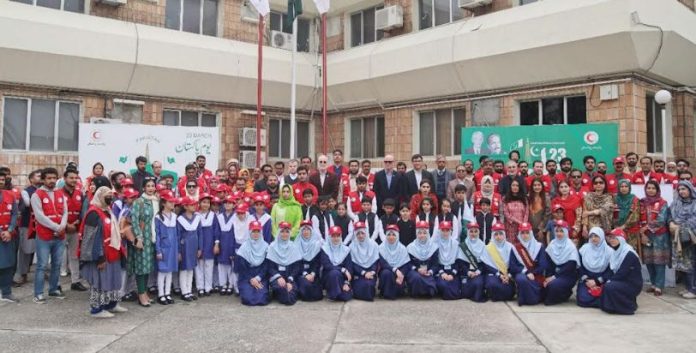
ISLAMABAD, MAR 22 /DNA/ – To honor Pakistan Day, the Pakistan Red Crescent Society (PRCS) organized a dynamic ceremony at its National Headquarters here on Friday. The event was graced by the esteemed presence of Secretary General PRCS, Muhammad Abidullah Khan, along with Mr. Peter (Piwi) Ophoff, Head of Delegation for the International Federation of Red Cross and Red Crescent Societies (IFRC) in Pakistan, Mr. Nicolas Lambert, Head of Delegation for the International Committee of the Red Cross (ICRC) in Pakistan, as well as delegates from the German Red Cross, Turkish Red Crescent, and Norwegian Red Cross, along with representatives from the RCRC Movement Partners. Furthermore, the ceremony warmly embraced Red Crescent staff, volunteers, and students.

Secretary General PRCS, Muhammad Abidullah Khan, led the flag hoisting ceremony, amidst applause and national anthems, symbolizing our collective aspirations for the safety, progress, and happiness of Pakistan. The event was further adorned by musical performances and tableaus presented by students from private schools.

In his message on this occasion, Chairman PRCS, Sardar Shahid Ahmed Laghari, emphasized the pivotal role of March 23, 1940, in laying the foundation of our independent homeland. He underscored how the resolution for Pakistan’s creation uplifted the spirits of Muslims, and credited Quaid-e-Azam Muhammad Ali Jinnah’s steadfast efforts for the realization of Pakistan. Chairman Laghari paid tribute to the sacrifices and struggles of our ancestors, urging every individual to contribute fully to the progress and prosperity of Pakistan.

During the inauguration, Secretary General PRCS, Muhammad Abidullah Khan, reflected on the significance and historical importance of Pakistan Day celebrations.

As the event concluded, prayers were offered for the peace and prosperity of Pakistan.

Pakistan, US explore collaborative opportunities in energy sector

Pakistan, US explore collaborative opportunities in energy sector

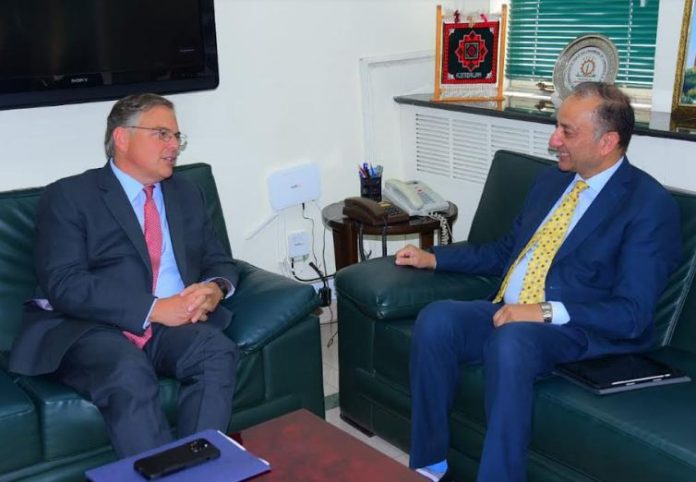
ISLAMABAD, MAR 22 /DNA/ – Ambassador of the United Stated of America, Donald Blome called on the newly appointed Federal Minister for Petroleum, Musadik Malik. the ambassador extended his congratulations to Dr. Musadik Malik on assuming the office and expressed high hopes for the transformation of the energy sector. Federal Minister appreciated H.E. Ambassador Blome for always extending his support and reaffirmed that together both the countries can achieve the shared energy goals.

Taking the opportunity, both sides discussed in detail the potential areas of cooperation, including technology transfer, investment opportunities, and capacity building initiatives in the energy sector and regional projects. Ways and means to promote sustainable carbon friendly footprint, renewables, green hydrogen were also discussed.

During the meeting, Minister highlighted Pakistan’s commitment towards fostering stronger ties with the United States. The Minister apprised the US ambassador regarding Pakistan’s vast potential in the energy sector, particularly in the minerals sector.

Ambassador Blome informed the Minster that a high-level economic dialogue is scheduled to be held in April at Washington where energy related matters including minerals would take the center stage.

Ethiopian Airlines’ playing vital role in bringing Pak-Ethiopia business community closer: Jemal Beker Abdula

Ethiopian Airlines

Pakistani business community is eager to reach out to Ethiopian entrepreneurs to explore new avenues of investment: Ahsan Zafar Bakhtawari

ISLAMABAD, MAR 22 /DNA/ – Ambassador of Ethiopia to Islamabad H.E. Jemal Beker Abdula has said that his country considers Pakistan as a strategic and reliable partner and that both the countries are determined to enhance their bilateral relations especially business and trade ties.

He said that Ethiopia has been striving to connect the whole region by sharing its resources with brotherly countries to ensure just and equitable development across the region.

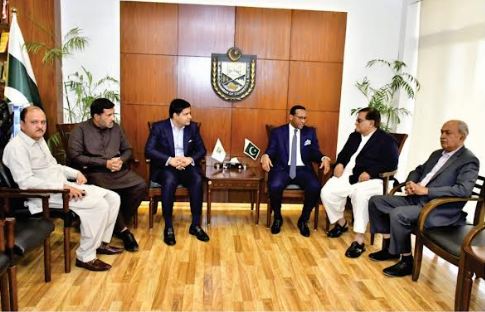
The envoy was talking at Islamabad Chamber of Commerce and Industry where he was accorded a warm welcome by President Ahsan Zafar Bakhtawari and other office bearers.

He expressed gratitude for the support of Pakistan Government in the start of Ethiopian Airlines’ operations in Karachi which is playing an important role in implementing ‘Look Africa and Engage Afrcia’ policy of Pakistan to strengthen G2G, P2P and B2B relations between the two countries.

He added that his country wants to increase trade volume between the two countries and that for this purpose he is doing his best to start the Ethiopian Airlines’ operations from Lahore and Islamabad and that he is also contemplating to arrange a trip of business community to Ethiopia in the month of May.

President Islamabad Chamber of Commerce and Industry said that Pakistan highly values its ties with Ethiopia including trade and economic relations and that Ethiopian Airlines’ is playing an important role in the promotion of the two countries’ relations.

He said that expansion of Ethiopian Airlines operation to Lahore and Islamabad will surely connect Pakistan with African continent and prove beneficial for the business community of both the sides.

He added that the Pakistani business community is excited to reach out to Ethiopian entrepreneurs to explore new avenues of businesses and that Ambassador’s plan to arrange a visit of businessmen to Ethiopia will be a milestone in strengthening two countries connectivity.

Ahsan Zafar Bakhtwari stated that ICCI is also planning to hold a Tourism Summit in May or June to which Ethiopian businessmen relating to Tourism will also be invited.

The Ambassador highly appreciated the idea of former President ICCI Zafar Bakhtawari that ICCI would like to hold a Pakistan-Afrida Business Froum in coming May by saying that it will definitely play a vital role in further bringing the business communities of Pakistan and Africa.

Executive Members Ch. Muhammad Ali, Raja Muhammad Imtiaz and former SVP ICCI Chaudhry Khalid also attended the meeting.

Indian PM Modi in Bhutan to shore up ties with eye on China

Narendra Modi

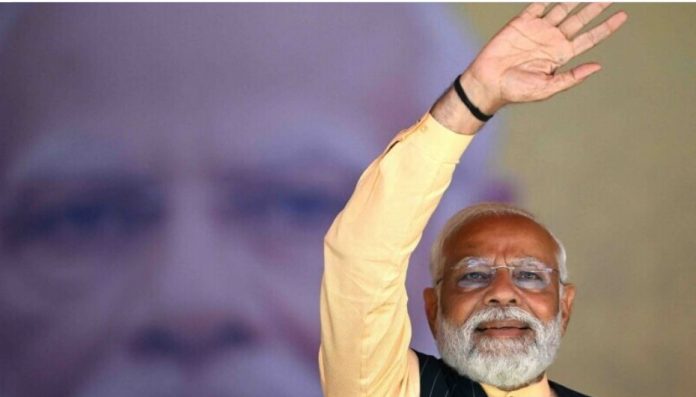
Indian Prime Minister Narendra Modi landed in Bhutan on Friday for a two-day state visit to the tiny but strategic Himalayan nation also being courted by China.

Landlocked Bhutan, known for its policy of prioritising “Gross National Happiness” over growth, has long been regarded by New Delhi as a buffer state firmly within its orbit.

India is determined not to let China gain further toeholds across what it sees as its natural sphere of influence, following trade and infrastructure deals Beijing sealed over the years with other neighbours.

“The visit is in keeping with the tradition of regular high-level exchanges between India and Bhutan and the Government’s emphasis on its Neighbourhood First Policy,” said a statement from Modi’s office announcing his arrival.

India effectively oversaw Bhutan’s foreign policy until 2007, the year before the kingdom’s first multi-party elections.

Bhutan does not have formal diplomatic relations with China but the two countries inked a “cooperation agreement” last October after talks over their long-disputed frontier.

A December report from Britain’s Chatham House think tank included satellite photographs it said showed an “unsanctioned programme of settlement construction” by China in Bhutan’s northern frontier region.

It added that the developments could “become permanent Chinese territory” if a border deal was struck.

Modi last week hosted Bhutanese Prime Minister Tshering Tobgay in his first official overseas visit after returning to office for a second term in January.

Revitalising the Spirit of Pakistan Day: A Call for Unity and Progress

Revitalising the Spirit of Pakistan Day: A Call for Unity and Progress

The story of Pakistan, its struggle and its achievement, is the very story of great human ideals, struggling to survive in the face of great odds and difficulties. (Quaid-e-Azam’s Address at Chittagong on 23 March 1948).

Mustafa Bilal

As dawn breaks on the 23rd of March, Pakistan will once again resonate with the echoes of 1940 which marked the conception of a country built on the ideals of freedom, justice, and unity. The journey from the Lahore Resolution to the present day has been one of triumphs and tribulations. People across the nation pause to commemorate Pakistan Day and its legacy with military parades and televised ceremonies, which are a spectacle of patriotism, especially the aerial acrobatics performed by the Sherdils of PAF.

Yet, as we revel in the grandeur of parades and the echoes of patriotic songs, a lingering question haunts our collective conscience: Have we, the heirs of the Lahore Resolution, strayed too far from the vision that once united us under the banner of Pakistan? For if we navigate through the annals of our history, we will confront a series of paradoxes that have undermined our historical narratives.

The dream of a unified nation, as envisaged in 1940, has been marred by internal strife and political upheaval. Similarly, the essence of the Lahore Resolution, a fervent commitment to the principles of democracy, social justice, and communal harmony has been diluted in the quagmire of partisan politics, sectarian divisions, and economic disparities.

Moreover, the lack of social cohesion and political polarisation has eroded the once fervent determination to collectively confront our national challenges. Despite this, Pakistan Day has always been morally uplifting and a reminder to take ownership of our country. It is the need of the hour to instil faith and hope for a better future for Pakistan given that the day that once reawakened national resolve now serves as a stark reminder of how far we have drifted from what was envisioned in 1940.

Today, national resolve seems to be waning especially among the younger generation, who often view Pakistan Day as just another public holiday and are in despair because of the prevailing socio-economic circumstances. Yet, the spirit of 23rd March reminds us that we are masters of our destiny. This indomitable spirit pushed our forefathers to preserve despite the seemingly insurmountable odds.

It now urges us to reclaim the gloomy narrative of our nation from the clutches of despair as our challenges today pale in comparison to the ones overcome during the movement for Pakistan’s independence. Therefore, a pressing national imperative exists to revitalise the spirit of unity and determination. In doing so, we must also realise that we owe the liberties we have been enjoying for the past 75 years to the struggles of an entire generation.

The Minar-e-Pakistan in Lahore stands as a testament to their unshakable resolve. While it is an iconic monument, millions of underprivileged children might never know what the Minar symbolises or about our historical struggles for independence. It is for these children, and future generations, for whom we should make Pakistan the country that previous generations envisioned it to be. The sacrifices they endured to turn the idea of Pakistan into reality are a debt we must now repay through our collective altruism.

Therefore, we must altruistically work for a cause that is bigger than all of us. Indeed, being citizens of Pakistan, each of us has a role to play in fulfilling the dreams of our forefathers of creating a prosperous country. These dreams can only be realised if we look beyond short-sighted and self-centred interests.

In this regard, our political leaders need to reconcile their differences and draw inspiration from their predecessors who set aside individual interests and joined hands to lead our struggle for Independence. Thus, Instead of harbouring anger towards those with opposing political views, we should remember that our democracy was established on the principle of collaboration among individuals with different interests and perspectives.

The true commemoration of Pakistan Day hence lies in a collective resolve to address the issues that have hindered our progress as a nation and our national development as a country. It is high time to bridge the chasm between the Pakistan envisioned in 1940 and the Pakistan of today by embodying the ideals that were the bedrock of our inception.

On this Pakistan Day, let us not just bask in the nostalgia of our historical triumphs. It is a day to recognise that the creation of Pakistan was not the culmination of our struggle but the beginning of a new chapter in our history, a chapter that we are still writing. For in the heart of every Pakistani, the dream of a better and more united nation still flickers, waiting to be rekindled.

Mustafa Bilal is a researcher at the Centre for Aerospace and Security Studies (CASS), Lahore, Pakistan. He can be reached at [email protected]

Bloody Nose to India, Iran and Afghanistan

Qamar Bashir

By: Qamar Bashir

Pakistan’s geopolitical trajectory has been deeply intertwined with the interests of superpowers since its inception. Positioned as a frontline state during the Cold War, Pakistan found itself at the epicenter of the ideological battle between communism and capitalism. Opting for the latter, Pakistan forged significant alliances with the United States and its allies through agreements such as SEATO and CENTO, positioning itself in direct opposition to the Soviet Union. This geopolitical alignment exposed Pakistan to intense regional tensions, exacerbated by the infiltration of communist ideology within its society.

The resulting confrontation between the state and socialist elements contributed to significant internal strife, further compounded by periods of dictatorship and political discord. This turbulent backdrop ultimately led to three devastating wars, draining Pakistan’s precious resources that could have otherwise been allocated to the nation’s growth and development. Additionally, the culmination of these conflicts resulted in the secession of East Pakistan, giving rise to the independent state of Bangladesh.

In the late seventies and eighties, Pakistan grappled with a tumultuous period marked by social, cultural, religious, and political upheaval. This era was characterized by a double jeopardy scenario: on one hand, the USSR’s expansionist ambitions led to the subjugation of Afghanistan, bringing Soviet forces dangerously close to Pakistan’s borders. Simultaneously, Pakistan endured the imposition of another dictatorship, which sought to instill jihadist fervor within the populace, fostering a climate conducive to waging jihad against the USSR in Afghanistan and later against India in Indian Illegally Occupied Jammu and Kashmir. 

The influx of Afghan refugees, coupled with the presence of die-hard elements from foreign intelligence agencies and armed forces, transformed Pakistan into a battleground of ideologies, low-intensity operations, psychological warfare, and overt and covert operations across the nation. Among the Baloch population, grappling with abject poverty, the allure of communist ideology served as a catalyst for the emergence of the Baloch insurgency, particularly along the borders with Iran’s Balochistan and Sistan provinces. This insurgency led to cross-border movements of Baloch insurgents, sparking tensions with Iran.

The sour relations with India at one hand, and Iran on the other hand finally culminated in surgical strikes by India inside Pakistan on 26th Feb, 2019 allegedly targeting terrorist hideouts, with no consequence  and Iranian missile and drone attacks inside Pakistan’s Balochistan province on 16 January 2024, claiming that it had targeted the Iranian Baloch militant group Jaish ul-Adl.

In response to India’s miscalculated and non-professional strikes, which resulted in minimal damage, Pakistan’s armed forces demonstrated exceptional precision, control, and professionalism in their strategic operations. Employing surgical precision, they locked the high-value industrial and military assets deep inside India, disengaged and unloaded their load away from them ensuring minimal collateral damage while maximizing effectiveness. This strategic execution not only took India by surprise but also garnered international recognition for Pakistan’s adept military capabilities.

In contrast to India’s anticipated surgical strikes, Iran’s missile and drone attacks inside Pakistani territory resulted in civilian casualties, eliciting shock from both civilian and military leadership in Pakistan and drawing international attention. Responding swiftly, Pakistan’s armed forces executed precise and targeted counterattacks, effectively neutralizing high-value terrorists sheltered within Iran while safeguarding civilians from harm.

Much like India’s experience, Iran also gleaned a valuable lesson: the repercussions of provoking Pakistan’s armed forces. These incidents highlight the imperative of dialogue, diplomacy, and restraint in de-escalating cross-border tensions. They reaffirm Pakistan’s dedication to protecting its citizens and territorial integrity while promoting regional stability through peaceful resolution of disputes.

In the late 1990s and early 2000s, Pakistan found itself thrust into the global spotlight once again, this time in the fight against a new adversary: Al-Qaeda. This stateless terrorist organization, adept at recruiting volunteers and jihadists from various regions, including the Swat Valley, Pashtun belt, and other parts of the country, posed a significant threat. Initially supported and armed to combat the Soviet Union, Al-Qaeda shifted its focus to the United States, leveraging its newfound power, influence, and vast military and financial resources.

Following the devastating coordinated attacks orchestrated by Al-Qaeda on iconic symbols of American power, including the destruction of the Twin Towers and an attack on the Pentagon, the United States was driven to a state of fury. In response, the U.S. issued a stark ultimatum, threatening to bomb Pakistan into the Stone Age unless it collaborated in the fight against Al-Qaeda and the Taliban government in Afghanistan, which provided sanctuary to extremists.

Consequently, Pakistan found itself once again entangled in the affairs of a superpower. Sensing the urgency to dismantle Al-Qaeda, the U.S. orchestrated a change in Pakistan’s civilian government, replacing it with a military dictator who, in the subsequent decade, aligned with U.S. objectives. However, this collaboration came at a price as it drew the ire of Al-Qaeda and its Pakistani affiliates, such as Tehrik-e-Taliban (TTP), resulting in heightened internal strife and security challenges for Pakistan.

As a result, Al-Qaeda and Tehrik-e-Taliban Pakistan (TTP), steadfast in their commitment to wage war against the United States, deemed Pakistan a friend of the U.S. and their staunch enemy. Fueled by access to modern and lethal American weaponry, TTP militants seized control of the Swat and Buner valleys, imposing their draconian laws on the populace. The gravity of the situation dawned upon the Pakistani government and armed forces when TTP forces advanced towards Islamabad, threatening to impose their version of Shariah nationwide.

In response, Pakistani forces launched a courageous operation, resulting in the martyrdom of numerous soldiers who valiantly fought against TTP operatives. While many militants fled across the border to Afghanistan, seeking refuge in safe havens, the imposition of Taliban rule on 15th August 2021 emboldened these rogue elements. They became increasingly active, launching cross-border terrorist attacks within Pakistan, often with support from certain elements within the Afghan Taliban’s administration. Since 2021, TTP attacks have claimed the lives of over 2000 security personnel and civilians.

In the latest incident on March 16, 2024, a group of suicide bombers targeted a military checkpoint in Pakistan’s North Waziristan district, located in the Khyber Pakhtunkhwa province neighboring Afghanistan. The attack resulted in the martyrdom of seven soldiers, which infuriated the armed forces to the extent that they finally decided to teach TTP a befitting lesson.

The heinous and abhorrent attack prompted the Pakistani armed forces to undertake precise and intelligence-based anti-terrorist operations within border regions of Afghanistan as a last resort and killed over eight hard core terrorists belonging to the Hafiz Gul Bahadur Group, a faction of the Tehrik-e-Taliban Pakistan (TTP), which had claimed responsibility for numerous terrorist attacks inside Pakistan.

However, the aftermath of these attacks and counter  attacks has cast a shadow over Pakistan’s entire border regions. With borders spanning 559 km with India, 2670 km with Afghanistan, and 959 km with Iran (with the exception of China), the security situation has intensified dramatically. These border areas, often insecure and deserted, lack basic infrastructure such as roads, electricity, and gas, rendering them highly vulnerable and porous. This poses a grave risk to the lives of border guards and troops stationed there, while logistics and supply provision become arduous tasks, straining financial and economic resources.

Consequently, Pakistan faces the daunting challenge of allocating significant financial resources and deploying armed forces to these volatile borders. This reallocation of resources, predominantly from civilian sectors, to bolster military capabilities further exacerbates economic strains. The resulting higher inflation and financial burdens weigh heavily on the common man, already struggling to make ends meet. Thus, the nation finds itself grappling with multifaceted challenges that demand prudent management and strategic foresight to navigate through this turbulent period.

Indeed, the prevailing hostility and perceived security volatility in Pakistan, regardless of its justification, send shockwaves across the globe. These conditions instill fear among investors, traders, and businesspersons, deterring them from engaging with Pakistan. As a result, the country faces additional premiums and costs associated with investing, trading, and conducting business, further hindering its economic growth and development.

To address these pressing issues, it is imperative to prioritize intense diplomatic efforts led by our top diplomats, including the Prime Minister, Foreign Minister, the foreign ministry and the establishment. This necessitates comprehensive brainstorming sessions to devise strategic approaches aimed at engaging all neighbors with transparency, sincerity, and noble intentions. Establishing highly effective channels of communication, operational 24/7, is crucial for facilitating dialogue and resolving differences through bilateral or multilateral discussions.

Moreover, it is imperative to develop short-term, medium-term, and long-term plans to tackle underlying issues comprehensively. Emphasizing mutually beneficial trade, investment, and business relations can foster dependencies and overlapping interests across sectors, promoting stability and cooperation. Additionally, pursuing common interests with neighboring countries is essential, as it creates a scenario where resorting to kinetic power usage would prove detrimental to all parties involved.

Additionally, investing in people-to-people exchanges, cultural diplomacy, and educational initiatives can foster greater understanding and goodwill among citizens of neighboring countries, laying the foundation for enduring friendships and constructive engagement at the grassroots level. By adopting a multifaceted approach that combines diplomatic finesse, economic cooperation, regional collaboration, and people-centered initiatives, Pakistan can navigate its geopolitical challenges effectively and chart a course towards a more peaceful and prosperous future.

By: Qamar Bashir

Press Secretary to the President (Rtd)

Former Press Minister at Embassy of Pakistan to France

Former MD, SRBC

Eight terrorists neutralized in Gwadar port authority colony attack: ISPR

Eight terrorists neutralized in Gwadar port authority colony attack: ISPR

RAWALPINDI, MAR 20 /DNA/ – A group of eight terrorists attempted to enter Port Authority Colony in Gwadar, which was successfully thwarted by the security forces personnel.

Own troops employed for security responded immediately & effectively engaged the terrorists, and in ensuing fire exchange, all eight terrorists were sent to hell.

A large quantity of arms, ammunition and explosives was also recovered from the killed terrorists.

However, during the intense exchange of fire, two brave soldiers; Sepoy Bahar  Khan (age: 35 years, resident of District DG Khan) and Sepoy Imran Ali (age: 28 years, resident of District Khairpur) having fought gallantly, sacrificed their lives and embraced Shahadat.

Security forces of Pakistan, in step with the Nation remain determined to thwart attempts of sabotaging peace and stability of Balochistan, and such sacrifices of our brave soldiers further strengthen our resolve.

Islamabad Chamber backs initiative to streamline land records access for expats

Islamabad Chamber backs initiative to streamline land records access for expats

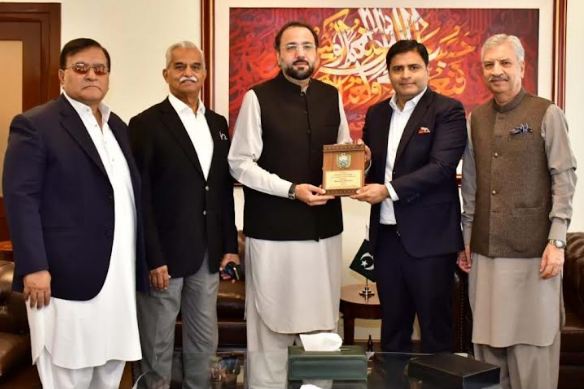
ISLAMABAD, MAR 20 /DNA/ – Federal Minister for Overseas Pakistanis and Human Resource Development Chaudhry Salik Hussain has said that the Government is all set to launch an online land record service for overseas Pakistanis to mitigate their difficulties with regard to transfer of properties and attract foreign inflows.

He said this while talking to a delegation of Islamabad Chamber of Commerce and Industry headed by its President Ahsan Zafar Bakhtawari. Former President ICCI, UBG and Secretary General FPCCI Zafar Bakhtawari, former President ICCI and Chairman Founder Group Khalid Iqbal Malik and  former executive member ICCI  Saeed Khan, were included in the delegation.

Initially, the delegation extended heartfelt congratulations to Chaudhry Salik Hussain on his appointment as Federal Minister.

The Minister added that his Ministry has started work on the project with NADRA and other relevant institutions and that  DHA will be onboard initially.

He elaborated that the services may be offered through the offices of community welfare attaches in foreign missions of Pakistan in countries with a substantially large Pakistani diaspora.

He went on to say that the Business Community will be given representation in different Boards in the Ministry.

 President of Islamabad Chamber of Commerce and Industry Ahsan Zafar Bakhtawari  said that overseas Pakistanis are valuable assets of Pakistan and Ambassadors of the country, therefore their difficulties should be resolved on priority basis.

He added that overseas Pakistanis have always played a vital role in the development of the country which is highly praiseworthy, therefore paramount attention should be paid to protect them from  any kind of exploitation at home or abroad,

At this stage he made some significant proposals for enhancing foreign remittances and imparting necessary training to the workforce in various trades so that they can get attractive salary packages.

Ahsan Zafar Bakhtawari added that Islamabad Chamber of Commerce and Industry will be ready to lend its support to the Ministry in enhancing  skill development of the workforce in different trades.

Appreciating the suggestions of the ICCI President said that his Ministry will try its level best to enhance the standard of vocational training and certification in consultation with all the stakeholders.

Pakistan High Commission officers in London advised to attract investments by foreign minister

Pakistan High Commission officers in London advised to attract investments by foreign minister

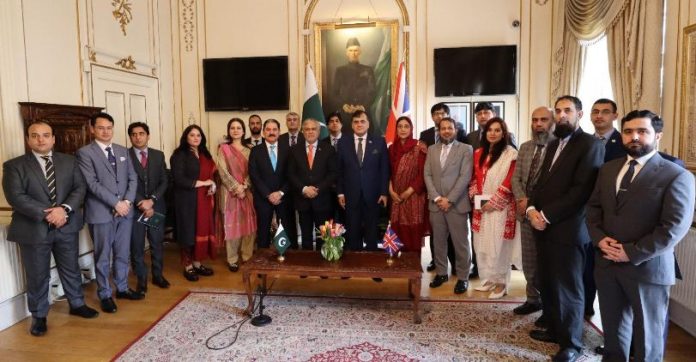
LONDON, MAR 20: /DNA/ – “Economic-diplomacy will strengthen Pakistan. Pakistan’s missions abroad should focus on attracting investments”; Foreign Minister Mohammad Ishaq Dar

“In addition to conventional diplomacy, Pakistan needs to prioritise economic-diplomacy in the current circumstances. In this regard, all missions of Pakistan abroad should focus on attracting investments”, stated the Foreign Minister Mr. Mohammad Ishaq Dar while interacting with officers of Pakistan High Commission in London today.

The Foreign Minister said that Pakistan is blessed with significant natural as well as high quality human resources. The country has all the potential to become a great economy provided a coherent approach is adopted to bring fiscal discipline and curtail external deficit.

The only requirement of the day is to manage these resources in an effective manner, the Foreign Minister said.

He said that all stakeholders, including line ministries, need to work hand-in-hand with a team spirit to strengthen Pakistan both internally and externally.

Mr. Dar said that Pakistan is undergoing challenging times, however, the incumbent government is committed to provide relief to the common man.
Moreover, on international fronts, Pakistan is engaging with partners for mutual cooperation.

Foreign Minister advised the officers to work hard and diligently to bring long-term investments in the country and enhancement of trade.

The Foreign Minister will be representing Pakistan in the First Nuclear Energy Summit, scheduled to be held in Brussels on 21 March 2024.

Minister Aurangzeb, UAE Ambassador hold talks on investment and privatization

Minister Aurangzeb, UAE Ambassador hold talks on investment and privatization

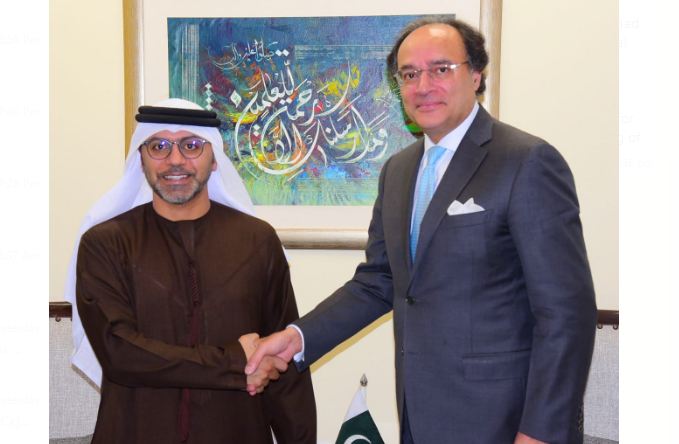
ISLAMABAD, MAR 20 /DNA/ – Ambassador of the United Arab Emirates (UAE) to Pakistan, Hamad Obaid Ibrahim Salim Alzaabi, called on Minister for Finance & Revenue, Mr. Muhammad Aurangzeb, at the Finance Division today, to discuss matters regarding bilateral relations and economic cooperation between Pakistan and the UAE.

Ambassador of UAE, Hamad Obaid Ibrahim Salim Alzaabi, extended felicitations to Mr. Muhammad Aurangzeb upon his appointment as Minister for Finance and Revenue and expressed confidence towards further strengthening of economic ties between the two countries.

Minister for Finance & Revenue, Mr. Muhammad Aurangzeb, expressed sincere appreciation for the long-standing brotherly relations between Pakistan and the UAE, which are deeply rooted in shared history, culture, and faith. He emphasized the cherished nature of these traditional and longstanding relations.

The Minister discussed the establishment of the Special Investment Facilitation Council (SIFC) in Pakistan, aimed at attracting investments from friendly countries in various sectors and highlighted the progress made with the government’s privatization program, specifically mentioning the privatization of Pakistan International Airlines (PIA).

The Ambassador of UAE appreciated the measures being taken by the government to bring reforms in various sectors of the economy. Concluding the meeting, both sides reaffirmed their commitment to strengthening bilateral relations and enhancing economic cooperation between Pakistan and the UAE.

Stay Connected

64FansLike
60FollowersFollow

Latest Reviews

Exchange Rates

USD - United States Dollar
EUR
1.17
GBP
1.35
AUD
0.67
CAD
0.73