Home Blog Page 757

Chairman CDA participates in Smog Awareness Symposium

Chairman CDA participates in Smog Awareness Symposium

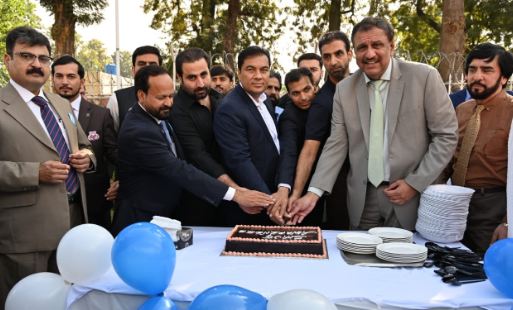
ISLAMABAD, NOV 18 /DNA/ –  Chairman CDA, Muhammad Ali Randhawa participated in the Smog Awareness Symposium and Walk as a chief guest hosted by Capital Hospital CDA. The event was aimed at raising public awareness about the growing environmental challenges posed by smog and air pollution.

The event was also graced by other guests including Member Administration, Mr. Talat Mehmood; Member Finance, Mr. Tahir Naeem Akhtar; Prof. Dr. Shajee, Head of the Medicine Department at PIMS; Dr. Shazli Manzoor, Pulmonologist; Dr. Imtiaz Paracha, Pulmonologist; and Dr. Akbar Siddique Satti, former Head of the Medicine Department.

During the Smog Awareness Symposium, Chairman CDA, Mr. Muhammad Ali Randhawa appreciated the initiative and emphasized the critical need for collaborative efforts in tackling the issue of smog and promoting sustainable urban development. He encouraged all sectors of society to play a role in improving air quality and protecting the health of the public. “Smog knows no boundaries, and it is a shared responsibility to work together to reduce pollution levels in our cities. The steps we take today will benefit generations to come,” Mr. Randhawa remarked.

Prof. Dr. Naeem Taj, who served as both the chief organizer and supervisor of the event, opened the symposium with a compelling address highlighting the importance of collective efforts to mitigate air pollution and promote clean, healthy environments for future generations.

“Increased levels of air pollution, particularly during the winter months, pose a significant threat to public health. Our goal today is not only to raise awareness but also to provide practical solutions that individuals, communities, and institutions can adopt to reduce their environmental impact,” said Prof. Dr. Taj.

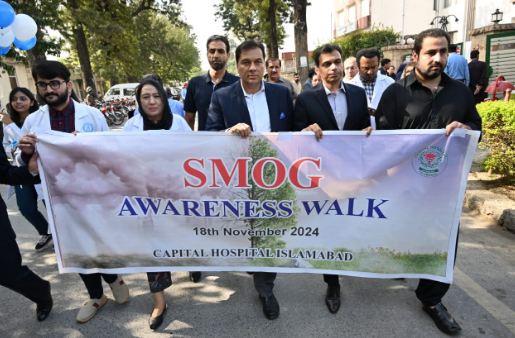
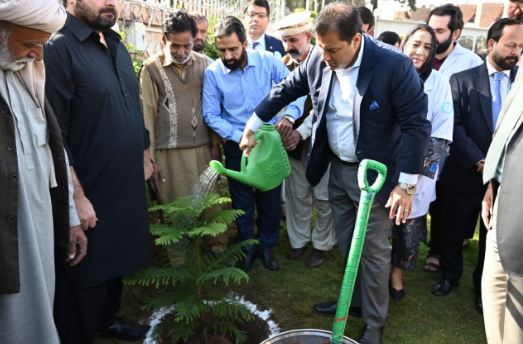
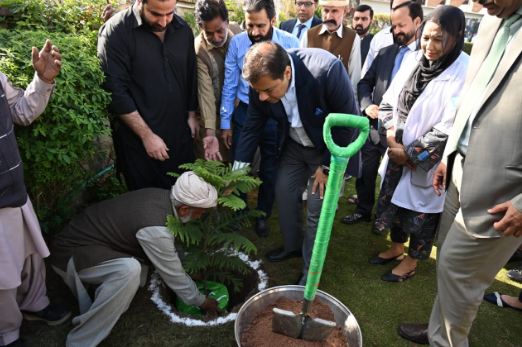
Following the symposium, Chairman CDA, Mr. Muhammad Ali Randhawa along with other participants took part in the Anti-Smog Walk fostering community engagement and environmental responsibility and a Tree Plantation Drive as part of the hospital’s ongoing environmental initiatives.

The Anti-Smog Walk aimed to highlight the urgent need for sustainable solutions to combat smog. The Participants including environmental experts, healthcare professionals and local authorities walked through designated areas around the hospital, carrying banners with messages about air quality, environmental protection, and the importance of clean air for public health. The walk was a powerful demonstration of solidarity and a call to action for everyone to take responsibility for their environment.

The volunteers, hospital staff, and community members worked together to plant a variety of trees on the hospital grounds, symbolizing a collective commitment to enhancing green spaces and combating the effects of air pollution.

Prof. Dr. Naeem Taj expressed his gratitude to all attendees, sponsors, and participants, saying, “Events like these are critical in raising awareness and inspiring meaningful change. It is through these efforts that we can protect the health of our communities and build a cleaner, greener future.”

The Smog Awareness Symposium and Walk concluded with a renewed sense of commitment from all involved to take immediate steps in addressing air pollution and to continue advocating for stronger policies to reduce smog and its harmful effects on public health.

Australia complete clean sweep against Pakistan with 3-0 series win

Australia complete clean sweep against Pakistan with 3-0 series win

HOBART, NOV 18: Australia pummelled Pakistan on Monday to secure a 3-0 T20I series victory after beating the visitors in the third and final match at the Bellerive Oval.

Set to chase a modest 118, Australia raced to the victory for the loss of just three wickets and 52 balls to spare.

The home side got off to a shaky start to the pursuit as both openers Jake Fraser-McGurk (two) and Matthew Short (18) returned to the dugout inside four overs with 30 runs on the board.

Skipper Josh Inglis then joined hands with Marcus Stoinis and registered an anchoring 55-run partnership for the third-wicket, which lasted with the former’s dismissal in the 10th over.

Inglis scored 27 off 24 balls with the help of four boundaries.

Following his dismissal, Stoinis switched gear and steered Australia over the line in 11.2 overs.

He top-scored for Australia, courtesy of his fifth T20I half-century, smashing an unbeaten 67 off just 27 deliveries with the help of five sixes and as many fours.

For Pakistan, Shaheen Shah Afridi, Jahandad Khan and Abbas Afridi could pick up a wicket apiece.

Opting to bat first, the touring side could accumulate 117 runs before getting bundled out on the first delivery of the penultimate over.

The new opening pair of Sahibzada Farhan and Babar Azam could not give visitors a steady start as the former walked back in the second over after scoring nine off seven.

Following the early hiccup, Babar and Haseebullah Khan registered an anchoring 44-run partnership for the second wicket.

The duo appeared in command against Australian bowlers until Adam Zampa got rid of Haseebullah in the seventh over to open the floodgates. The wicketkeeper batter scored 24 off 19 deliveries with the help of three boundaries.

Pakistan then lost two more wickets – Usman Khan (3) and skipper Salman Ali Agha (1) – before their mainstay Babar was cleaned up by Zampa in the 13th over with just 91 runs on the board.

Babar remained the top-scorer for Pakistan with a 28-ball 41, which featured four fours.

Playing XIs
Pakistan: Babar Azam, Sahibzada Farhan, Haseebullah Khan (wk), Usman Khan, Salman Agha (c), Irfan Khan, Abbas Afridi, Shaheen Shah Afridi, Jahandad Khan, Haris Rauf, Sufiyan Muqeem.

Australia: Jake Fraser-McGurk, Matt Short, Josh Inglis (c/wk), Glenn Maxwell, Tim David, Marcus Stoinis, Aaron Hardie, Xavier Bartlett, Nathan Ellis, Adam Zampa, Spencer Johnson.

US, Pakistan development partnership marks 75 years of progress

U.S. Ambassador Donald Blome

ISLAMABAD, NOV 18 /DNA/ – U.S. Ambassador Donald Blome highlighted the enduring partnership between the United States and Pakistan during a commemorative event attended by Minister for Planning, Development, and Reform Ahsan Iqbal and other distinguished guests.

The partnership, spanning more than 75 years, has resulted in significant infrastructure developments across Pakistan, including vital projects in transportation, education, power distribution, and water management. These initiatives have directly improved the lives of millions of Pakistani citizens.

“These projects continue to transform lives and create opportunities for individuals in all parts of the country,” stated Ambassador Blome, emphasizing the tangible impact of the long-standing bilateral cooperation.

The U.S. commitment to Pakistan’s development has manifested through the construction of roads, bridges, primary schools, universities, electric transmission lines, and water systems, demonstrating a comprehensive approach to infrastructure development.

Since 2005, the United States government has invested close to $2 billion in infrastructure across Pakistan.  The United States was one of the first countries to recognize Pakistan after its formation, and our development partnership started immediately and has grown from there.  Some of the most famous examples are the Tarbela and Mangla Dams, which the United States helped to construct in the 1960s and 1970s.  In 2013, we upgraded both dams to make sure they continued to meet the needs of another four million Pakistanis. And the work to maintain and upgrade those continues today.

We have also partnered with local governments to expand access to healthcare and education by rebuilding and refurbishing more than 60 health centers and hospitals, including a new state-of-the-art burn and trauma center in Peshawar, and a total of 345 primary, secondary, and high schools.  In higher education, the United States has partnered with Pakistan to establish top-notch institutions, including IBA Karachi, the Lahore University of Management Sciences, and the Centers for Advanced Studies in Water, Energy, and Food Security, which you have heard about today.

While we celebrate the benefits our partnership has delivered for the people of Pakistan, we should also acknowledge what made us so successful in the first place.  And that is the United States’ approach to development.  

First, our development assistance is provided without loans.  Instead, we provide grants that allow communities to benefit from modern infrastructure without the long-term burdens of debt payments.

Second, we invest in people, not just physical infrastructure.  U.S. projects prioritize job creation and capacity building for local people.  From the construction of roads and bridges to the establishment of university campuses and healthcare centers, our programs create jobs, they promote entrepreneurship and enhance local expertise – all of which put more money into the local economy.

Finally, the U.S. approach ensures that infrastructure investments serve the local community and provide services and opportunities directly to the people.  Whether we are rehabilitating irrigation canals, reconstructing schools, or providing solar energy solutions, our projects directly serve local needs and ensure that communities can maintain them. 

Taken together, this means that the people of Pakistan continue to see a return on these investments, long after the projects have been completed.

Looking ahead, the United States’ investments in infrastructure will continue to drive growth and opportunity in Pakistan.  Our partnerships in hydropower and solar electrification will be the cornerstone of Pakistan’s shift toward renewable energy and climate-smart growth.  Our road projects have laid the foundation for enhanced trade, connecting Pakistani businesses to global markets.  And our investments in education will continue to nurture future generations of leaders and experts.

This enduring legacy ensures that future collaboration between the United States and Pakistan will continue to be grounded in a foundation of shared values, mutual respect, and a commitment to progress.  We look forward to continuing to work together to invest in Pakistan’s future.  Thank you all for your longstanding support and for that partnership.

Pakistan on verge of whitewash in final Australia T20I match

Pakistan on verge of whitewash in final Australia T20I match

HOBART, NOV 18: Pakistan are on the verge of a whitewash in the third and final match of the T20I series, slated to happen today (Monday) in Hobart.

According to details, the Mohammad Rizwan-led team got drubbed at the hands of the Josh Inglis-inspired Australia in the first two T20I games.

The Green Shirts could not sweep past the home side despite some good performances from the players like Irfan Khan Niazi, Usman Khan, and Haris Rauf.

Earlier, Pakistan played the T20I series after gaining momentum by clinching the historic ODI series against Australia, which the Rizwan-inspired side won after 22 years.

But the Men in Green had continued to face the shortcomings in T20I format despite the change of the captain following the T20 World Cup 2024 debacle.

Unpacking Misconceptions About Trump

Qamar Bashir

By: Qamar Bashir

Macomb, Detroit, Michigan

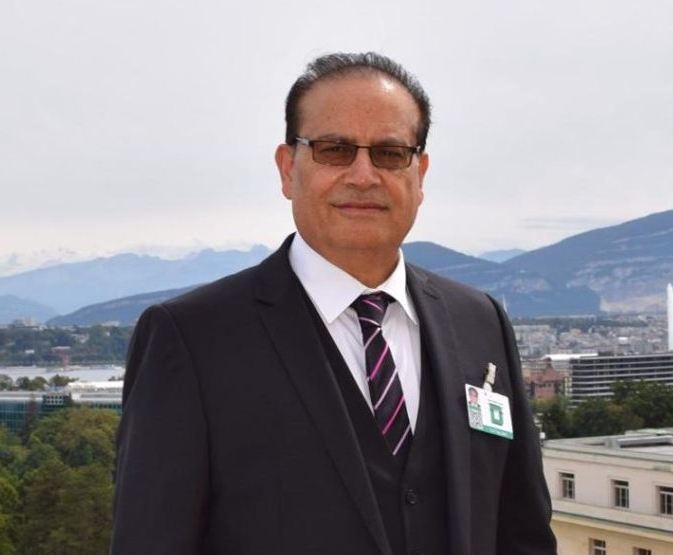
While walking through the streets of over 15 cities in Michigan and sitting in the comfortable drawing room of my brother-in-law, Mr. Mubeen Ahmed, in Macomb, a sprawling high-end white neighborhood, I reflected on the priorities of Donald Trump as he prepares to take the oath as the 47th President of the United States, becoming once again the most formidable and powerful person on earth.

Analyzing various statements made by Donald Trump and his close associates, several important and pivotal concepts and policy issues emerge that are likely to reshape how things are done in the U.S.

Unfortunately, bloggers, YouTubers are exploiting their platforms by airing misconceived, unauthenticated, and unverifiable commentaries and proving them as if they were factual truths.

A YouTuber said that three planes full of Indian immigrants had been sent back to their country while concentration camps in the U.S. were filled with immigrants from various countries, including Pakistan, who were being treated like animals, with transportation being arranged to deport them unceremoniously to their countries of origin.

On the contrary, Trump’s stance on immigration is straightforward. He has pledged to welcome and embrace immigrants who come to the United States legally and in compliance with the country’s laws, but will not tolerate illegal immigrants who enter the country unlawfully, those with criminal backgrounds, or individuals involved in activities like drug trafficking, illegal arms smuggling, kidnapping, and extortion. This approach is comparable to Pakistan’s policy toward illegal Afghan immigrants. Recognizing the detrimental impact of illegal activities such as drug trafficking and unauthorized businesses, the Pakistani government has expelled most of these individuals to protect the country’s interests.

One of Donald Trump’s most significant yet underreported policy promises is restoring freedom of speech and opinion to the people. He has accused elements of the government, including Homeland Security, the CIA, FBI, Pentagon, and the deep state, of eroding these rights through mass surveillance, control of social media, manipulation of traditional media and universities, and profiling dissenting voices using big data.

In a speech Trump pledged to identify and hold accountable those responsible for undermining these rights. He emphasized that the First Amendment, which guarantees freedoms of speech, assembly, religion, and press, has been diluted alongside the Second, Third, Fourth, Fifth, and Fourteenth Amendments, which collectively safeguard privacy, due process, equal protection, and other essential liberties. He argued that these constitutional violations must be corrected to secure America’s progress and prosperity, promising to initiate a comprehensive process to restore the nation’s constitutional integrity.

On the issue of transgender rights, Donald Trump was unequivocal and took a more religious stance. He stated clearly that in the United States, there are only two genders: male and female, with no recognition of a third gender. He emphasized that male transgender individuals would not have the right to use female bathrooms or changing rooms, nor would schools implement segregation based on a third gender. According to Trump, the sex assigned at birth would remain the individual’s gender for life.

During my door-to-door surveys, many expressed their strong opposition to gender reassignment through surgical procedures and chemical treatments to dissolve or alter sex organs and supported Trump’s stance, seeing it as a way to protect families, religious values, and the role of the church in society.

On Chinese economic influence in the U.S., Donald Trump articulated a clear and pragmatic approach. Instead of outright curtailing Chinese imports, he proposed two fiscal measures. First, he would impose tariffs on Chinese products to raise their prices to levels comparable with similar goods produced in the U.S., thereby providing a level playing field for American companies. Second, he aimed to address the tariffs and trade barriers that China imposes on U.S. goods and services, ensuring reciprocity in trade. A similar approach could benefit Pakistan if its government prioritized national interests by implementing measures to protect domestic industries from unfair competition.

In one of his speeches, which I personally watched, Donald Trump conveyed a pragmatic stance on global conflicts such as the Russia-Ukraine war and the Israel-Palestine issue. He acknowledged the devastating toll these wars have taken, with thousands of innocent lives lost. He pledged that his immediate priority after taking office would be to end these conflicts, calling them senseless madness. These sentiments strongly resonate with the global community, particularly Muslims, who yearn for peace and justice. We can only hope that Trump’s promises materialize in both letter and spirit.

Trump’s remarks on Iran were particularly striking. He expressed a desire for Iran to become a prosperous and progressive country but emphasized his deep concern over its potential to acquire nuclear weapons. According to him, such a development could severely destabilize the security and balance of the Middle East. His stance on Iran is notably more nuanced than the outright antagonistic tone many might expect, reflecting a pragmatic approach focused on addressing critical issues while maintaining regional stability.

To my surprise, during one of his interactions with college students, Trump asked them to take an oath to avoid drugs, refrain from smoking, and consume alcohol in moderation. He shared that he had followed the advice of his elder brother, who struggled with alcoholism, and as a result, he never smoked, drank, or used drugs in his entire life. This message aligns with the values many of us aspire to uphold and wish for the current and future generations to embrace.

On the subject of Afghan women wearing the veil, Trump was remarkably outspoken, expressing views that many might not have expected. He pointed out that in Western societies, women who choose to wear the hijab or veil often defend it as their fundamental right, citing centuries of tradition. However, when Afghan women or their society embrace the veil, they are met with criticism from the same Western observers. Trump argued that if Afghan women or their society prefer the hijab or veil, it is their choice, and others have no business interfering in their cultural or personal decisions.

After all, Trump is not as unhinged as many of us thought.

By: Qamar Bashir

Press Secretary to the President (Rtd)

Former Press Minister at Embassy of Pakistan to France

Former MD, SRBC

12 Wheelies arrested

12 Wheelies arrested

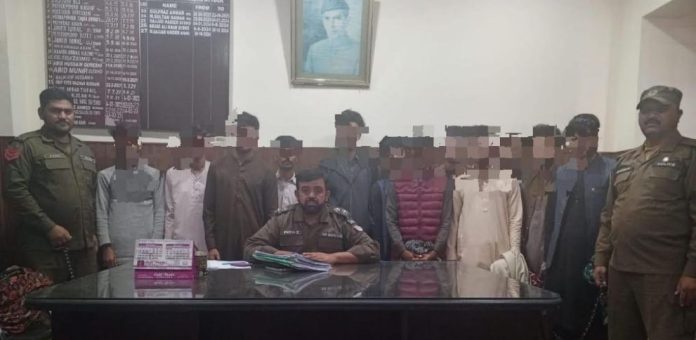
ATTOCK, Nov 17 (DNA): At least 12 motorbike riders were arrested for doing one wheeling on Sunday.

 According to the police spokesperson, the Hazro police team was on patrol near Musa Colony and saw 6 motorcycles on which 12 young boys were riding. They came wheeling and zig-zagging with extreme speed and carelessness, which was barely stopped.

Nabil Ahmed, Faizan Ali, Safian, Shahzeb, Muhammad Usman, Zeeshan Ahmed, Umar Farooq, Muhammad Adnan, Muhammad Ramadan, Muhammad Daniyal, Muhammad Kashif and Saqib were arrested by the police and a case was registered.

Pak-Syria direct flight to start from tomorrow, flight land in Lahore: Ambassador Ramez

Pak-Syria direct flight

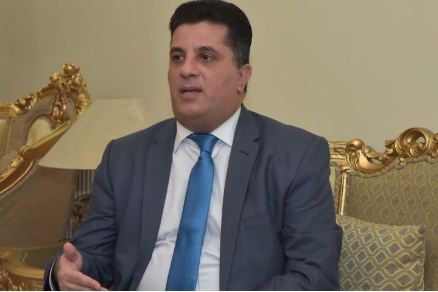
ISLAMABAD, Nov 17 (APP): Ambassador of the Syrian Arab Republic in Pakistan, Dr. Ramez Alraee on Sunday said that the direct flight between Pakistan and Syria will start from tomorrow, November 18th and the first flight will land in Lahore tomorrow morning.

Earlier, Syrian Air Line had started its flight operations from Karachi since 2019 and tomorrow this will be the first flight of Syrian Airline to Lahore, for which the Foreign Affairs Ministries and Embassies of both countries have made great efforts, Ambassador of the Syrian Arab Republic in Pakistan, Dr. Ramez Alraee told APP here.

The Ambassador said that tomorrow morning at 6:30 am, the first direct flight of Syrian Airline will land in Lahore, which will promote bilateral relations between the two countries.

He said that at this time, this direct flight will promote economic and trade relations between the two countries, and as the connections between the people of both countries will be established. The ambassador said that with the start of flight operations, where the business communities of both countries will be facilitated, tourism will also increase and mutual economic and trade relations will be promoted.

 Dr Ramez said that at this time, the business communities of both countries need to strengthen bilateral relations so that both sides economic relations can develop, and trade can increase. He said that many people from Pakistan go to Syria for Ziyhara and they will also get facilities after this flight operation and this will increase religious tourism.

Speaking to APP on the occasion, the President Federation of Pakistan Chambers of Commerce and Industry, Atif Ikram and the leadership of various chambers welcomed the direct flight from Syria to Lahore and called it important in promoting economic and trade relations between the two countries.

 On this occasion, the President of the Federation of Pakistan Chambers of Commerce and Industry, Atif Ikram, called the direct flight between Pakistan and Syria significant for promoting contacts between the business communities of the two countries and bilateral economic relations. He said that Pakistan’s economic relations with Syria will be further strengthened and prolonged with the flight from Syria to Lahore. Meanwhile, the President of the Gujranwala Chamber of Commerce and Industry, Rana Muhammad Siddique, said that Lahore is an important business center of Pakistan, and the business community of Gujranwala will also benefit from the direct flight from Syria to Lahore. He congratulated the authorities of both countries and described it as an excellent facility for the business communities of both countries.

Dialogue door not shut yet, Khawaja Asif tells PTI

Khawaja Asif

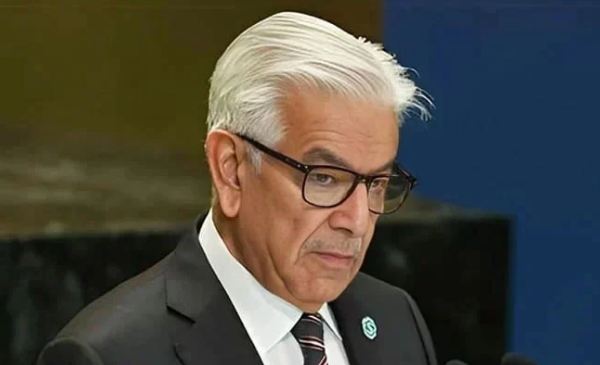
SIALKOT: Days before the Pakistan Tehreek-e-Insaf’s (PTI) planned nationwide protests, Defence Minister Khawaja Asif said that the federal government’s offer for dialogues with the Imran Khan-founded party still stands.

“From our side, dialogue offer to PTI still intact,” said the defence minister during his interaction with journalists in Sialkot on Sunday.

Last week, the incarcerated PTI founder called on his supporters to march to Islamabad on November 24. “Imran Khan says this is the final call for a [anti-government] protest. The PTI founder has stressed that the party’s entire leadership will be part of the march,” said his lawyer Faisal Chaudhry following a meeting in Adiala Jail.

Khan has been behind bars since August last year after he was sentenced in the Toshakhana case and subsequently sentenced in other cases.

Referring to the former ruling party’s recent protest marches towards Islamabad, Asif said that the PTI, under the leadership of Khyber Pakhtunkhwa Chief Minister Ali Amin Gandapur, “attacked” the federation twice.

The PTI held two protest rallies headed by KP firebrand CM in the federal capital in September and October amid riots and clashes with the police.

Mocking KP CM, the minister said: “CM Ali Amin Gandapur ran away and left protesting workers abandoned [in Islamabad].

In October march, the Gandapur went missing after entering the KP House in the federal capital. After a mysterious day-long disappearance, he resurfaced in the KP Assembly and addressed the lawmakers. His whereabouts remained unknown for over 30 hours after PTI tried to stage a protest in Islamabad.

In September, the CM had also went missing during the protests in Islamabad. This time he reached Peshawar after being “missing” for hours in the wake of the crackdown against the PTI leadership over alleged violation of law in relation to the party’s rally in Islamabad, with sources saying that Gandapur was “busy in various meetings” in the federal capital after the party’s power show.

Responding to a question, the minister said that the PTI leadership should bring their children to the protests if it was a matter of “do or die.”

“PTI founder only wants dialogue with the establishment,” said the defence minister, claiming that the leaders within the PTI were performing the role of “double agent”.

Palestinian Foreign Ministry: Gaza faces systematic starvation under Israeli blockade

Palestinian Foreign Ministry: Gaza faces systematic starvation under Israeli blockade

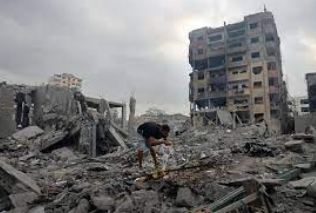
GAZA, NOV 17 /DNA/ – The Ministry of Foreign Affairs and Expatriates holds the international community responsible for the continuation of massacres, displacement and starvation that the Israeli occupation forces continue to commit against our people in the Gaza Strip in general and in the north in particular, as happened recently in Beit Lahia, Gaza City and elsewhere, which often leaves dozens of martyrs, wounded and missing under the rubble, in light of the complete destruction of all the necessities of life and the systematic starvation policy pursued by the Israeli government.

The Ministry calls for urgent international action to stop it immediately and to stop the war of extermination and displacement, and to force the occupying state to implement international resolutions and precautionary orders if the international community wants to preserve what remains of its credibility. Our people are not only victims of the occupation, but also victims of international double standards and the general international failure to respect international law and United Nations resolutions.

Did COP 29, like COP 27 & COP 28, conclude with speeches, meetings, & unfulfilled commitments from influential countries?

COP 29

Mumtaz Ahmed Bhatti

The 29th Conference of the Parties (COP 29) concluded with yet another set of promises, echoing the outcomes of COP 27 and COP 28. While the annual COP summits provide a unique platform for indigenous communities and under-resourced nations to address global leaders directly, their outcomes remain marred by the inaction and unfulfilled commitments of developed nations. These summits are vital opportunities to bridge the gap between policy and action, but without substantial contributions from the largest emitters, the fight against climate change remains largely rhetorical.

Since its inception, the COP summits have been pivotal in bringing together nations to discuss and coordinate efforts to address climate change. These gatherings offer a rare platform where marginalized voices—such as indigenous populations and representatives of under-resourced nations—can engage directly with global superpowers. For these communities, COP is a critical space to highlight the disproportionate impact of climate change on their lives and advocate for equitable solutions.The effectiveness of COP lies in the implementation of its resolutions, and therein lies its greatest weakness. Many developed countries, which hold the lion’s share of responsibility for historical and ongoing emissions, have failed to translate their commitments into tangible action.

Instead, these summits often end in vague promises, leaving under-resourced nations to bear the brunt of climate impacts.The lack of urgency among developed nations to fulfill their climate-related financial commitments is a recurring theme at COP. At COP 27 and COP 28, significant pledges were made to support climate adaptation and mitigation in vulnerable countries.These promises remain largely unmet, underscoring a troubling pattern of insensitivity and inaction.For instance, the Green Climate Fund (GCF), established to assist developing nations, has consistently fallen short of its financial targets. While billions of dollars have been pledged, actual disbursements are delayed or significantly lower than promised.

This financial shortfall severely hampers the ability of under-resourced nations to invest in critical areas such as renewable energy, disaster resilience, and sustainable agriculture.Pakistan serves as a case study in resilience despite limited resources. Despite facing severe climate-induced challenges, including devastating floods in recent years, the country’s forestry departments have demonstrated exemplary performance. Pakistan’s success with initiatives like Upscaling Green Pakistan Program UGPP offers a blueprint for sustainable development.Such efforts require international support to scale and sustain their impact.

Climate change is no longer a distant threat—it is a present reality with dire consequences. According to the Intergovernmental Panel on Climate Change (IPCC), one of the gravest effects of climate change is its potential to displace millions of people. In 2022 alone, approximately 32.6 million individuals were displaced within their own countries due to natural disasters, including floods, storms, and droughts. These figures highlight the growing crisis of climate-induced migration, which disproportionately affects vulnerable populations.Looking ahead, the World Bank estimates that by 2050, 216 million people could be internally displaced due to climate change. This massive displacement will strain social, economic, and political systems, particularly in under-resourced nations. Developed countries, despite being major contributors to global warming, often remain insulated from the worst impacts.This illusion of safety is fleeting—climate change knows no borders and will ultimately affect all nations indiscriminately.

Financial support is a cornerstone of effective climate action. Developed countries, as the primary contributors to global warming, have a moral and practical obligation to assist vulnerable nations in adapting to and mitigating climate impacts. Yet, the small amounts of funds pledged by these nations stand in stark contrast to the magnitude of the crisis.Adequate funding can enable under-resourced nations to invest in renewable energy infrastructure, build resilience to natural disasters, and implement sustainable development practices. Without this support, these countries are left to fend for themselves, often at great human and economic cost. It is imperative that developed nations disburse the promised funds promptly and ensure their effective utilization. limited resources, Pakistan has emerged as an example of effective climate action.

The country’s forestry departments have made remarkable strides in increasing forest cover and promoting sustainable practices. Initiatives like Upscaling Green Pakistan Program UGPP not only mitigate climate impacts but also create jobs, enhance biodiversity, and contribute to carbon sequestration.

Pakistan’s efforts demonstrate that meaningful action is possible even in resource-constrained settings.The fight against climate change demands collective action and accountability. All countries, irrespective of their economic status, must show seriousness and commitment to addressing this existential threat. This includes honoring financial commitments, implementing ambitious emissions reduction targets, and supporting vulnerable nations in their adaptation efforts.Developed countries, in particular, must recognize their historical responsibility and lead by example. This includes transitioning to clean energy, investing in sustainable technologies, and providing the necessary financial and technical assistance to under-resourced nations. Without such leadership, the goals of the Paris Agreement and other international climate frameworks will remain out of reach.COP 29, like its predecessors, ended with promises rather than decisive action. While the summit provides a crucial platform for dialogue and collaboration, its impact is limited by the inaction of developed nations. The urgency of the climate crisis demands immediate and sustained action, particularly from the largest emitters.

The consequences of inaction are stark—millions displaced, ecosystems destroyed, and livelihoods lost. However, there is hope in the form of initiatives like Pakistan’s reforestation efforts, which demonstrate the potential for resilience and innovation in the face of adversity. To realize this potential on a global scale, all nations must come together with a shared sense of purpose and accountability. Climate change is a universal threat, and only through collective action can we secure a sustainable future for all.

Stay Connected

64FansLike
60FollowersFollow

Latest Reviews

Exchange Rates

USD - United States Dollar
EUR
1.18
GBP
1.36
AUD
0.73
CAD
0.73